Just another WordPress.com site

Archive for November, 2019

Thursday 14 November 2019 – Las Breas etc

Not sure if the social unrest yesterday was to blame, but we were without internet for most of the day, so the page for Wednesday 13 September covering our trip to Botija will be published later.

We started with a visit to the Taltal Museum where a friend from previous visits was now working. We kept in touch on Facebook, so it was the least that we could do to pay her a visit. We enjoyed a lengthy chat before the call of cacti in the hills became too strong!

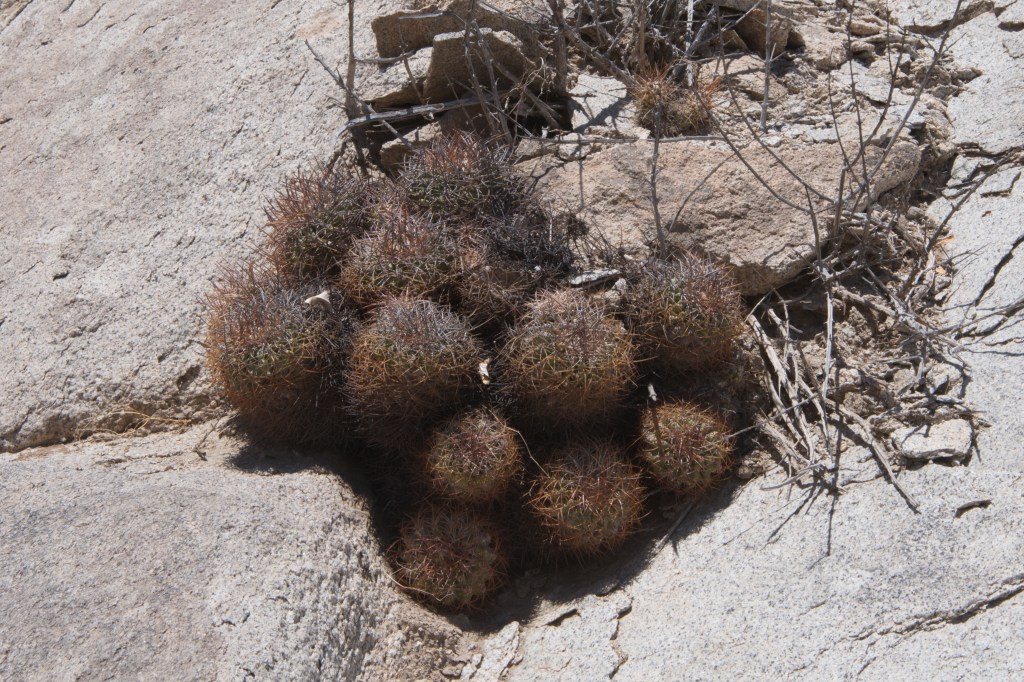
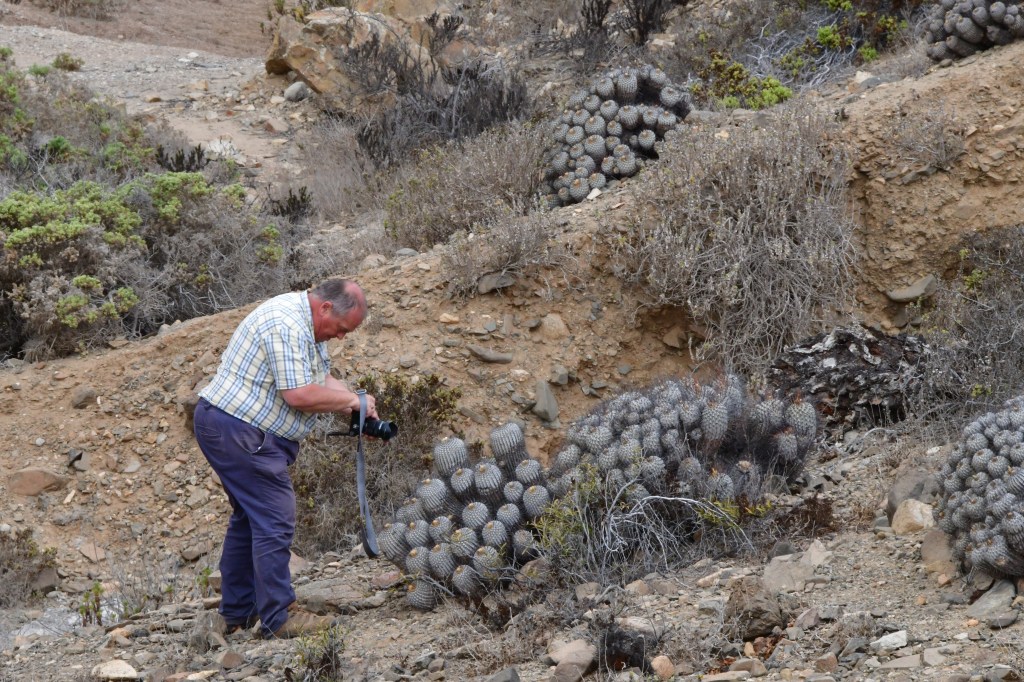
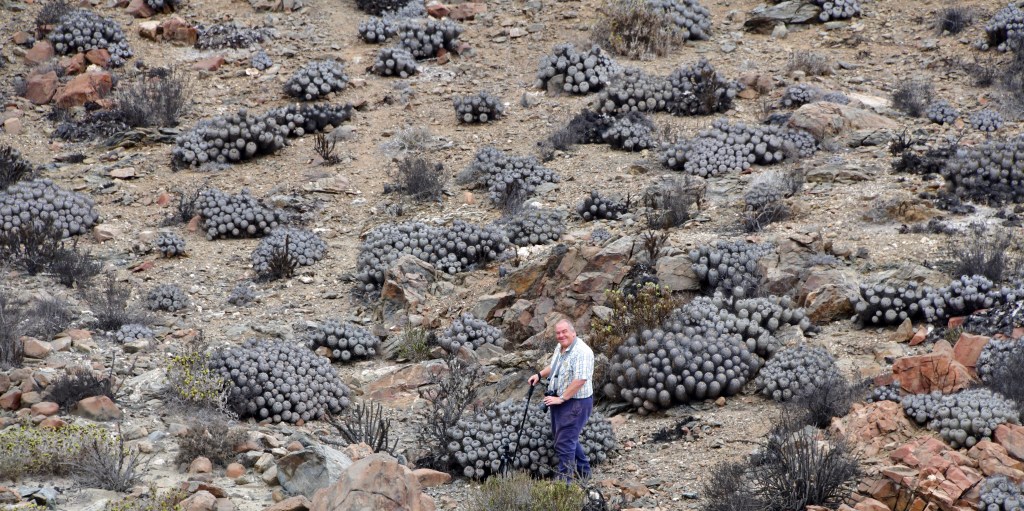
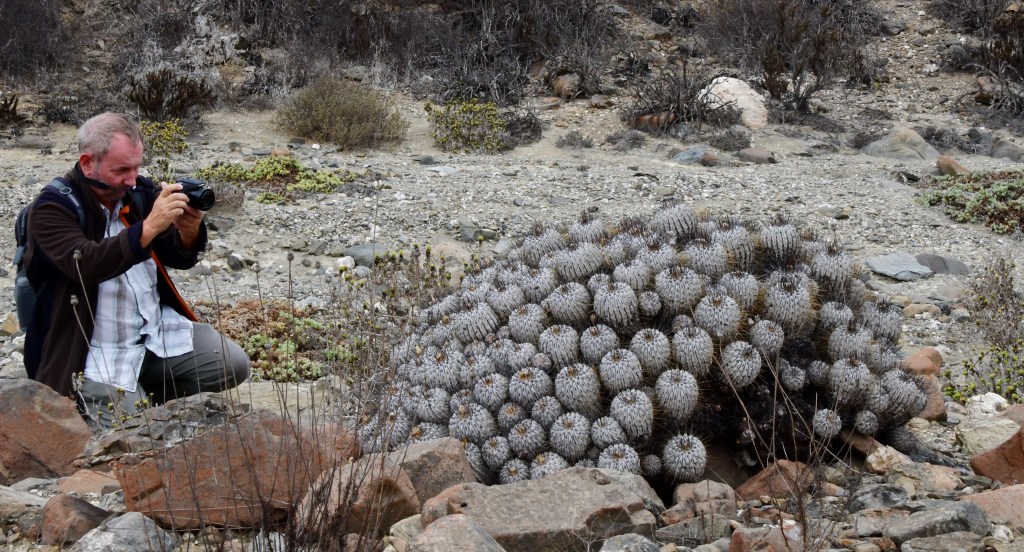
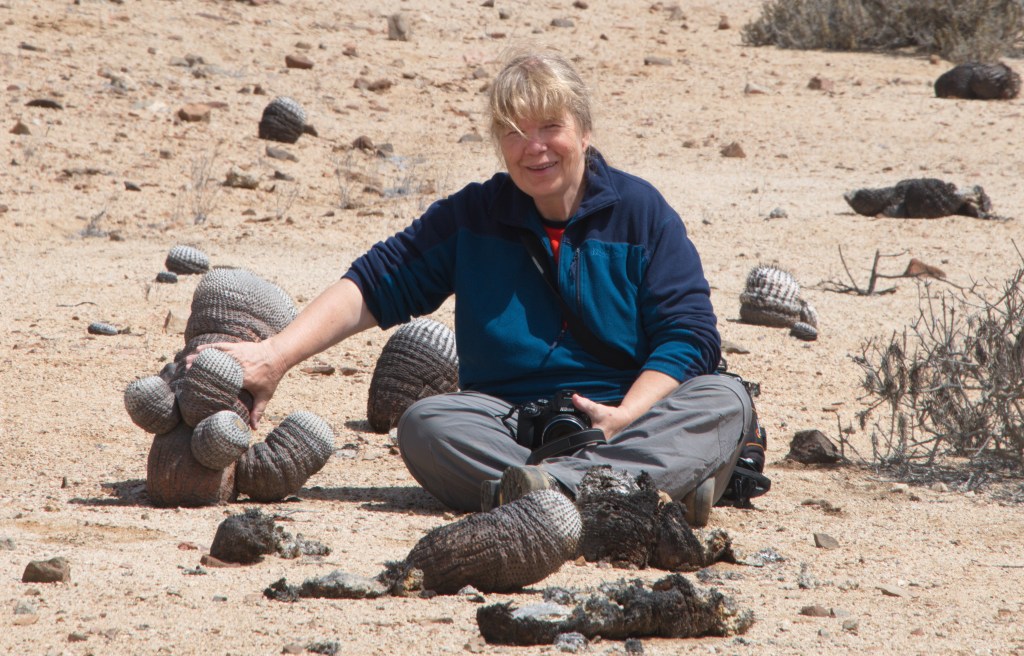
After yesterday’s rather long trip to Botija via El Cobre, we had decided on a rather easier day, a stop some 20 km east of Taltal at Las Breasas where in the past we would visit a huge population of Copiapoa cinerea subsp. cinerea. Ian and Al were suitably impressed, both by the number of plants (the comment: ‘Enough plants for every C&S Society member in the world!’ was heard. Yes, and on several planets more!)

They looked in reasonable health with small apical patches of white wool showing that they were in growth and even buds showing on a number of plants. This is the spot that we flew my drone on a previous visit in 2015 with Jonathan Clark as co-pilot and Brian Bates as himself. Bart and Marijke Hensel were on hand to lend moral support. On our first attempt we flew the drone very well and celebrated with a bottle of bubbly that Bart & Marijke had brought along for the occasion. We then raced back to the hotel to download the files on the disk where the movie file of the flight were stored. Disappointment awaited as either Jonathan or I had failed to press the ‘record’ button on one of the control panels. But this is not a blame game, so we promised to come back after first racing to Tocopilla as Brian new of spots where C. tocopilliana and Eriosyce laui could be photographed.

More disappointment as the track that Brian had used on a previous visit had a huge 10 m wide whole in it either caused by an earthquake or the heavy rains that had caused havoc in Chile early on in 2015. There was no obvious way to circumnavigate the hole and too hot and far to walk around it, tired as we were from the long drive from Taltal.

We left early the next day to drive back to Taltal and made a second attempt at flying the drone. This time Jonathan and I must have checked three times that the ‘record button’ had been pushed! Success!

But back to the here and now where Ian and Al had closed their mouths and seemed to be involved in a project to photograph every plant from at least two angles. We climbed a low hill offering a view along the valley that we were in, the valley next door and another flat area in the valley beyond hours. So why are cacti considered to be so endangered? At the entrance to this spot are huge concrete works to control water and sludge running down the hills and causing serious damage to the people and property in the town of Taltal. On that occasion, the flood must have wiped out a large number of plants. As the flood defense works were built another significant number of plants would have been destroyed. The plants grow in a material that appears ideal for building material. The beginning of the area is a huge quarry with truck in an almost continuous stream driving in, to be filled up and drive out again. These activities seem to have moved at least a km. into the area where the plants grow. Taltal is a growing place with lots of the ramshackle houses now replaced by modern but basic homes. There are posters showing the building plans of 2-3 floor apartment blocks, reminding me of similar building activity in Salisbury, UK. So why should the people in Taltal not enjoy similar living standards? No reason at all, but lets hope that in sourcing their building material they do not destroy their nature!

Friends in Europe had suggested that there was a new location where we could photograph Copiapoa krainziana without the need for the 7 km walk through the Quebrada San Ramon.

In 2015, while flying our drone at Las Breasas, Brian Bates found one lonely multi-headed plant of kraiziana among the billions of C. cinerea. Google Earth suggested that this location may be connected to the Las Breasas area and that this plant could reasonably have been washed down the hill, although I would have expected to find more plants then just the one.

So we decided to drive on as far as we could; a good deal farther than I had expected but not getting closer to the krainziana coordinates that we had. Ian had a number of SatNav / GPS tools on his mobile phone each providing different suggestions of where we should go, all agreeing that we were getting farther away. Cliff Thompson will be familiar with this when we were hunting for Uebelmannia spots in Brazil in 2009! Very frustrating!

We decided to return back to the main road where we could ask our tools for directions again. The mobile phone apps seemed in general agreement so we followed their instructions obediently, although it was blindingly obvious that nothing could grow in the area that we were being led to. Right on the spot indicated we stopped, on a good track but without any plants or signs of life. Angie volunteered to walk up a hill so that she could sing ‘So we do like to be beside the seaside’ but as she was facing east rather than west, that sea would have been the Atlantic Ocean, with the Andes and the whole of Argentina in the way! Thanks for the heroic effort, but clearly none of us were thinking straight!

We got back around five and enjoyed the new room that our hosts at Hotel Plaza had provided on the ground floor, having seen me struggle carrying bags up and down the stairs. Early signs of arthritis we think – must check what the impact might be on Travel Insurance costs and what can be done. More tablets? I already rattle like a pair of maracas since 2006’s heart-attack!

We’ll await until Ian Woolnough and party arrive in a few days time and use his geography expertise to find the most eastern Copiapoa krainziana!

But now it is time for food and check out the Chilean’s ability to make Margaritas! It will make a nice change from the Pisco Sours.
Wednesday, 13 November 2019 – around Taltal

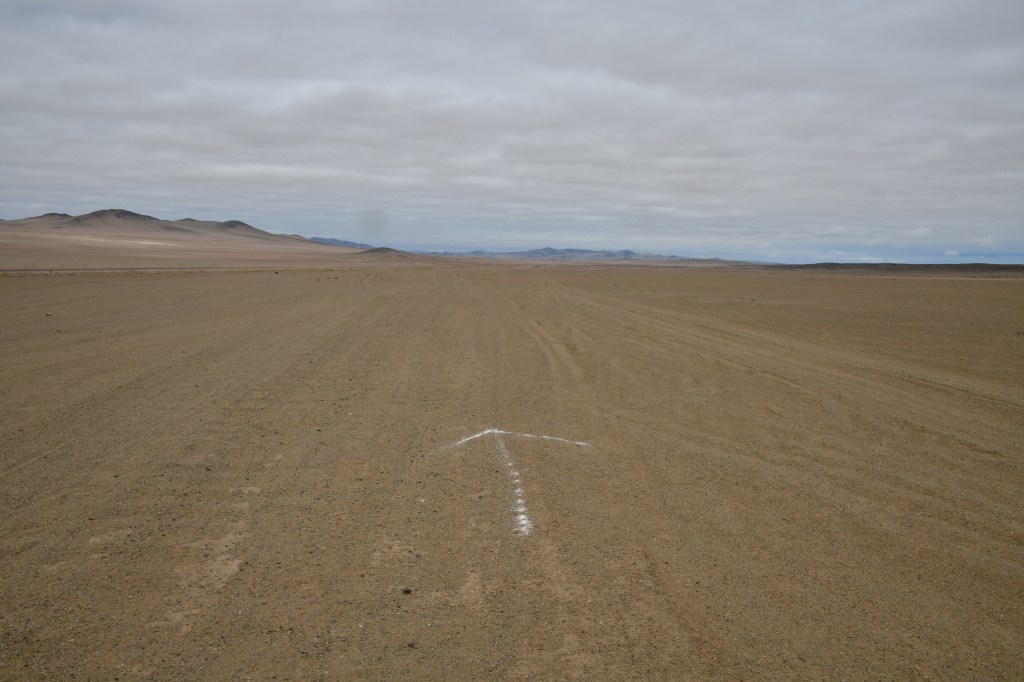
Today’s stops would be north of Taltal, over the ‘back road’ to El Cobre which some 50 years back was probably one of the largest ‘Plantas’ for copper mining. There are a number of routes that we could take, but I decided on driving to Paposo and then heading inland, past the monument of the ‘Paposo Virgin’ and past the Observatories at El Paranal, currently considered the largest Astronomical Observatory in the world, to the turning to El Cobre – the most northern point of our trip. This is now a very good road and there is even a small airport – well, at least a run way – to allow scientists to be flown in rather than have to dress up as cactus explorers for the journey from Antofagasta. We made several short stops to stretch our legs and stare in awe at the empty moonscape that had been used to test the lunar vehicles in the past – or had the whole moon landing been staged here? Images filed under S3840.

What once was ‘the turning with the three dead buses’ in ‘Rudolf Schulz speak’, was now a proper sign post, pointing us down a track with safety barriers and all sorts of traffic signs, winding down to the coast where Ian and Al promptly burst out into song about their love of the seaside.

S3841 was for images taken at the last part of our descent down to El Cobre. There is now a small settlement of fishermen and just scars on the landscape of what had been a very busy place 30-40 years ago. Most of the clumps of C. solaris were dead, but there is little here to enable Nature to recycle its dead.

As El Cobre disappeared behind us, the side side of the road was free of cacti. The salt track was in better shape than I had ever seen it this far north so we made good progress at about 70 kph. There were some bends coming up where in the past, rain had often washed away the track, but clearly, with the small settlement at El Cobre, the urgency with which this was patched up had increased. One year, Cliff and I had left the group at that time playing with the cacti at Botija and had taken a look at one of these bends where Copiapoa solaris (var. luteus) made a brief appearance, but like before, most of the stems had been dead. But don’t write off a dying clump of Copiapoa too soon! Through stem sacrifice, the clump might look dead, but there is probably enough life left in some stems to recover when conditions improve! And so it was at this spot. The road workings must have encouraged the truly dead plants to be removed and what was left was enough to satisfy the appetite for cactus images. Al spotted some much smaller cacti between the clumps: Copiapoa atacamensis seedlings that was a new site for me. Well spotted! So the desert was slowly fighting back? (S3842).

There was no need for a GPS to find Caleta Botija (S3843). Copiapoa ahremephiana was in flower and so helped to find what we had come to photograph. There was no time to walk to the T junction at Botija. I had hoped that we might have been able to drive in, but there was no evidence of the track that had suddenly appeared some eight years ago.

We made some short, leg stretch stops on the way to Taltal to record the variability in size of Copiapoa cinerea subsp. haseltoniana.

It had been a long day but tomorrow we’ll visit the habitat of Copiapoa cinerea subsp. cinerea, this time without a drone to add to the entertainment.

Tuesday 12 November 2019 Chanaral to Taltal

Yesterday we failed to find Smiler. Our fear was that it was Smiler RIP with the understanding that there was no guarantee that we would find its remains among the thousands of Copiapoa cinerea subsp. columna-alba. I experienced a strong feeling of loss and I knew that Angie felt worse. Smiler had been our friend since 2003!

We decided to go back, this time with the GPS coordinates on Ian’s GPS. And we took a different route up to the plateau where he grows. We carried on photographing interesting plants, candidates for Smiler #2 and so on while we let Angie follow her instincts.

All of a sudden, a yell, Angie with her arms up in the air, she had found Smiler. She gave him a stiff talking to about hiding from us, although it transpires that we must have walked by him the day before. Never mind, he was found now. And close to him Eriosyce (Thelocephala) aerocarpa, again a plant that I have seen and photographed since 2003. And slightly farther away, again photographed since 2003 or even 2001, Copiapoa serpentisulcata, way out of its usual range, near the southern entrance to the Pan de Azucar.

While we gave Smiler a nick-name, we never bothered with the other two taxa. So why not send in your suggestions? The internet connection is again too weak to post images tonight, but I will remedy the issue once that I’m back home in the UK.

Smiler (left) and Angie (right) 16 years after we first visited this plant!

Next we headed to Taltal and drove straight through to take a look at the monument of the Paposo Virgin (S3838) where we saw Copiapoa humilis in its various forms. We saw lot of plants, both in their juvenile short spination and adult plants with it’s more robust mature spination. Sadly, no flowers on show. We saw Copiapoa cinerea subsp. haseltoniana but this time the path was too narrow for me to risk life and limb. I left that to Al.

With today’s goal achieved, we drove back to Taltal. On the way I was happy for Al and Ian to call the stops for Copiapoa cinerea subsp. haseltoniana. More by accident then science, they selected a spot with large (gigantea) plants, some of which had fallen apart by the lack of water. (S3839)

We’re in Taltal for six nights and are contemplating the 106 km run to Botija (and 106 km back) tomorrow. Not for the faint-hearted as we don’t know how far the tarmac goes now. 10 km after Paposo it stopped abruptly in 2015.

Monday 11 November 2019 – Pan de Azucar

Today could be summed up with three words: Pan de Azucar. That is the Parque Nacional Pan de Azucar, named after the island that lies in the Pacific Ocean off the north side of Chanaral Bay. But with 147 images to file today, I’ve divided them over 5 stops.

S3832 starts with the statue of a lama on R5 that marks the turning to the southern entrance of the Parque. We drove across the plain that seems to be taking on a healthier colour as the chemicals from a spill at one of the mines much farther inland were finally cleaned away. At the time, the fishermen thought their luck was in as fish were easily caught doing the back stroke. The fish was eaten by the people of the town, many of whom still have ailments relating to Arsenic poisoning.

But today the sun was shining bright and we noted that today was the 11th day of the eleventh month, and that in about one hours time there would be a minute’s silence in those countries that had had soldiers involved in the two World Wars and other events since.

We started seeing clumps of Copiapoa cinerascens along the side of the road. We were all keen to take their picture but I urged everyone to wait just a little longer for a spot (S3833) where these silvery looking plants were growing on very dark rocks, with the very white sand and the waves crashing on to rocks provided the perfect setting for a photo shoot. I could have stayed here for days, but I have also seen it on days when the typical Chilean coastal weather covers the area with low hanging clouds, with a fine light drizzle in the air. Not so nice then. But today it was heaven.

The server still refuses to upload my images so you’ll have to come back in the future when the server at home is hopefully more obliging.

We arrived at the main ranger station and were pleasantly surprised to meet Domingo again, who five years ago had taken us to Angie’s Smiler, a crested Copiapoa cinerea subsp. columna-alba that she first found in 2003 and that we have visited every time since as we were passing. All the Copiapoa here had shrunk but some stems showed new off sets, so at least here, the plants were not done yet! We always knew that one day we would visit and Smiler would be gone. Angie normally walks straight to the plant, past some thousand C. columna-alba, but not this time. We’ll go back tomorrow with the GPS coordinates embedded in one of my images from previous visits, but the signs are not good.

But first we had been given the keys to the chain across the track to Las Lomitas. The rangers had told us that this area now had research projects in progress into the lichen that form a thin crust on the soil and also to protect the guanacos that have made this their favourite home. It wasn’t to be, as none of the keys in the bunch fitted the padlock with the same story again at the chain to El Mirrador.

And so, back to Chañaral where we found that most of the restaurants are closed on a Monday evening, but where we were fortunate to find a snack bar that sold typical Chilean bar food alongside pints of Crystal beer.

Tomorrow we move on to Taltal.

Sunday 10 November 2019 – Bahia Inglesa to Chañaral

And so the car continued north, making a first stop of the day (S3828) at Quebrada El Leon, to see Copiapoa leonensis and Eriosyce (Thelocephala) odieri subsp. krausi (Ritter) Ferryman.

Plants extremely dehydrated, looking black (Copiapoa). As usual, the Thelocephala are hidden below ground and apparently less affected by the lack of water, so far. The Copiapoa leonensis still look like C. mollicula. When I have shown images to audiences in presentation in the UK, they thought that the plants were C. mollicula.

Despite the shriveled and blackened appearance of the plants, I take the Eulychnia that we saw to be E. breviflora, until at the beginning of the trail into the hills there were signs along the lines of the BCSS signs at Pichidangui, that suggests that this is Eulychnia breviflora subsp. tenuissima, I believe credited to Helmut Walter.

Next we stopped at the Orbicular granite exhibit (S3829), a rare geological feature, a plutonic rock type which is usually granitic in composition.

S3830 was past km 910, our usually stop to see Copiapoa calderana, but this time shot by, due to lorries hot on our tail! Good move Ian!

We took the next turning east, signposted to El Moreno, not a name that I’m familiar with, but probably a mine, 56 km inland. We made some stops around km 10 and found more Copiapoa leonensis and some C. calderana I assume, again, ID made difficult due to dryness.

And finally, on to the last stop before the hotel (S3831), at the stop that we christened ‘Hoot the Virgin’, as there is a monument here that now has small statues of presumed virgins on display. As Chilean drivers come by, they hoot their car horns, requesting a blessing. Ian and Al soon understood as the cars passed by!

And guess what, again the scene was extremely dry. We did find small plants of Copiapoa calderana var. spinosior – it seemed there has been more regeneration here during the last five years than elsewhere with quite a few small single headed plants the side of a large orange.

Were staying two nights in Hotel Aqua Luna, where we stayed before 2015, opposite a Chinese restaurant at the time. In 2015 the hotel had been badly affected by the floods. There was mud right up to the ceilings on the ground floor! Now everything is cleaned up and refurbished. There is a new Chinese restaurant three blocks into town, on the left hand side of the road. These last few details for Ian who is playing catch up with us.

Tomorrow we’ll see how the Pan de Azucar is standing up to these drought conditions and if Smiler has survived.

PS The server here is not uploading my jpeg files tonight – will try later.

Saturday 9 November 2019 – Vallenar to Bahia Inglesa

I quite like days where we did not see much – there is just less to write up in the Diaries.

Ian and Al were keen to see the area where on previous (much wetter) occasions I had seen Euphorbia copiapina in flower. Sure, so we took the turning from R5 to Barranquillas where in 2004 the world had suddenly turned purple, with billions of Portulaca grandiflora in flower; with beetles stuffing themselves with pollen and with the sky filled with birdsong from birds feeding on the beetles. As I was taking pictures of this scene, my hands soon started to itch due to my allergy to Euphorbia latex.

In 2019 things were very much drier, resulting in no images of plants:

S3826: along the road from R5 to Barranquilla
No flora or fauna to observe. In 2004 this was a purple mass as far as the eye could see!

The second stop of the day was on Morro Copiapo where eventually we found our usual stop. It seems that a large are of rocks and hillside had been removed to be used for building materials to create new beach villages.

There were very few cacti to see. Many dead Eulychnia breviflora, a few still standing up and one with a flower and four buds! We eventually found a few clumps of Copiapoa marginata. This is the neo type of the Genus Copiapoa. Is this global warming at work?

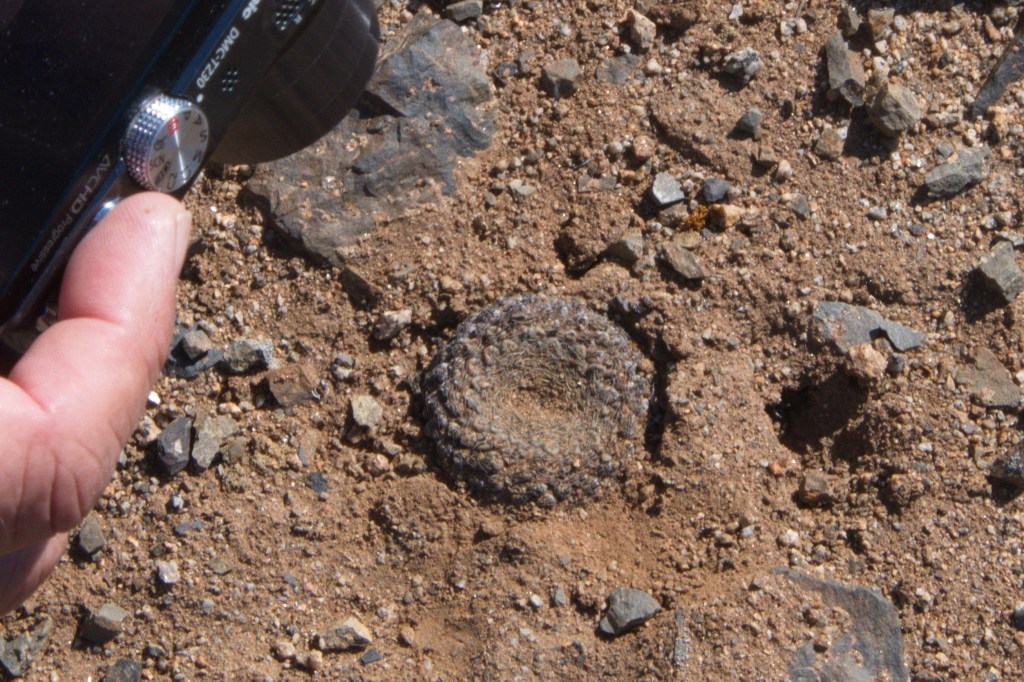
Finally the top challenge of the day: find Eriosyce (Thelocephala) odieri – again, this is its type locality: One plant found!

S3826 Eriosyce (Thelocephala) odieri

Tomorrow we move on to Chañaral. Ian Woolnough’s group, the Magnificent Seven, report landing safely in Chile and should catch up with us in Taltal in a few days time.

Friday 8 November 2019 – Around Vallenar

Technically we made four stops today with the last stop at the cake shop on the corner of the old R5 and the road to Vallenar, but as I took no photos here, I have not allocated a Stop number.

For the first stop of the day, (S3822) we headed north along R5 and turned east at the difficult to see sign to El Donkey. This is now a good salt track. We briefly hit the beginnings of a pea-souper fog as experienced in 2003, but it lifted quickly, producing a bright sunny day, again at the expense of the fauna and flora. The Eulychnia were simply too dry to give an accurate ID but so far from the Ocean it has to be E. acida. These plants practise stem-sacrifice at times of extreme drought. They also demonstrated spine sacrifice with bald stems surrounded by piles of long spines. Not sure that this is a good idea on their part as the spines are useful to catch fog droplets and direct them to the plants root. I was bluffing about my ability to find the location for Copiapoa coquimbana subsp. andina having only been there on three previous occasions, the last one five years ago! Of course, I had brought my Garmin Nuvii SatNav along, but the wrong one – this one had my US and Mexico data on while the one with my Chile data is still in England!

Never mind, the location where I had been shown them by Rudolf Schulz appeared in due course along the side of the road and sure enough,we were able to detect clumps of Copiapoa on the lower part of the hill. We walked over for closer inspection and I managed some nice pictures.

Copiapoa coquimbana subsp andina

On another occasion, with Bart & Marijke Hensel, we were taken to another location and another and another, but the track that we had been on could not be found this time.

We wasted a bit of time trying to find the turning but then decided to head back via the Parque Nacional de Challe to see if we could improve on yesterday’s hunt for Eriosyce (Thelocephala) challensis. Checking back in the hotel last night it transpired that we had been on the wrong hill, 790 meters from the coordinates where we had found them in the past. It took about an hour to get to the ‘next’ hill but once again, it was very dry, so the chance of finding them was slim.

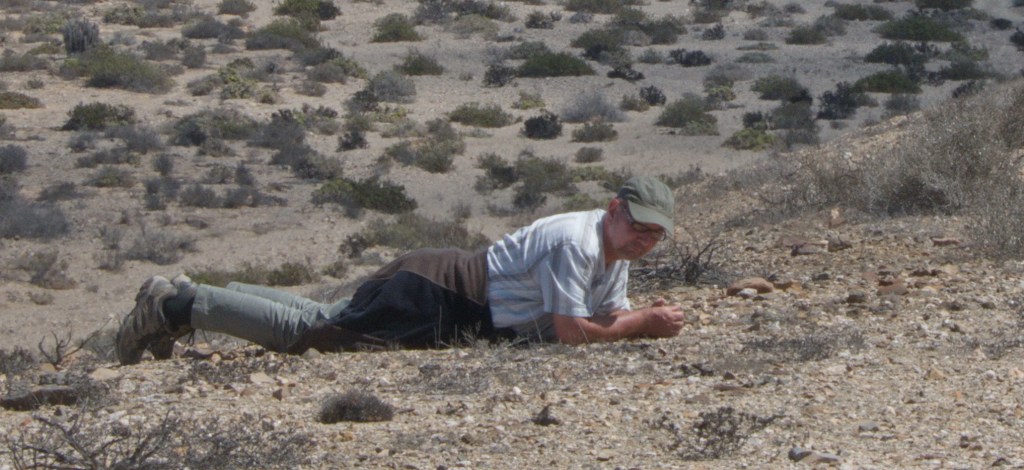
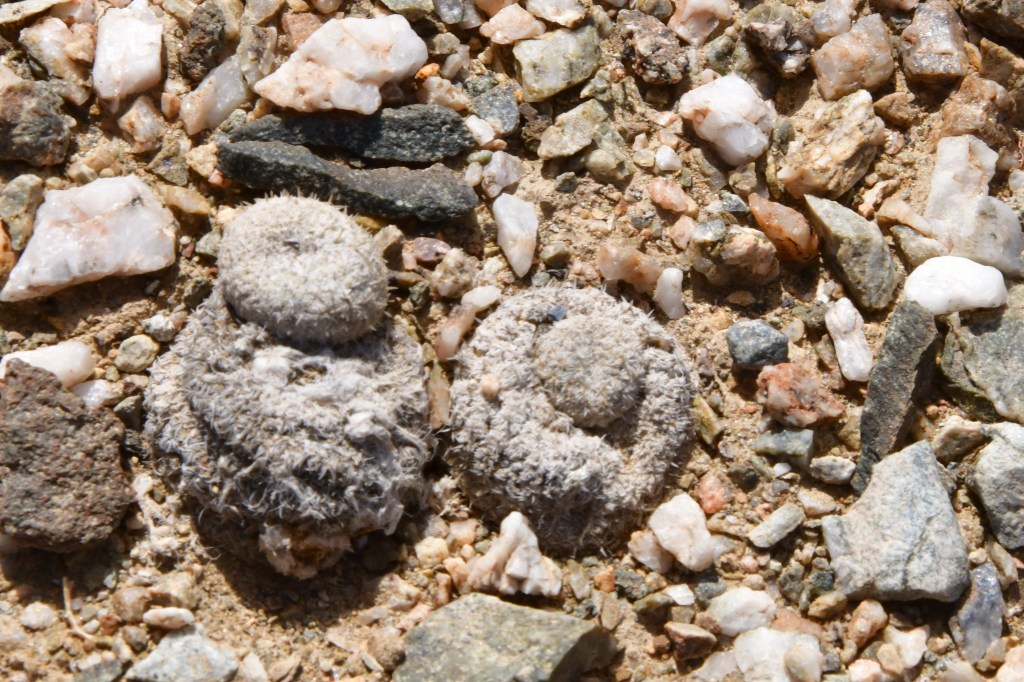
I saw Al lying flat on the ground and took a picture while composing the heading ‘BCSS Editor lies down on the job’ when he suddenly jumped up, did a little dance and called over: ‘Got them!’ And sure enough, he had found them, hence the stop at the cake shop where we had promised to pay for the cake of the first person to find the plant!

BCSS Editor lies down on the job and finds Thelocephala odieri subsp. challensis!
Eriosyce napina subsp. challensis

As usual, finding one leads to finding more.

As our special bonus we drove on in the direction of Carrizal Bajo where I knew of a population of Copiapoa dealbata – again, fewer in number and soon to become smaller still, as there were signs of a tunnel being built, presumably to stop the road from flooding.

Left: Ian; right Copiapoa dealbata at km 60 on road from R5 to Carrizal Bajo.

We took a good number of images before I allerted the others about the possible closing time of the Vallenar Cake Shop. Great how quickly everyone was back in the car.

PS Decided to go back to the Pizza restaurant on the Plaza, which was full of a happy family orientated crowd with lots of flag and banner waving people, all smiling, chanting and lots of pogo jumping. Ian and I bought a flag each in order to blend in. Got back safely to Hotel Atacama on Sereno.

Thursday 7 November 2019 around Vallenar

S3817 was at Quebrada Barracota, along the Huasco to Carrizal Bajo road. The Copiapoa could be seen from the car but we needed a stop for an ID – Copiapoa echinoides.

S3818 at Quebrada Mala was an old favourite, first our group photo in 2001 very close to the Pacific Ocean, but since then along new improved tracks farther inland. Ian just did not know which clump to photograph first!

As always, we asked ourselves and speculated how old these plants were!

Al taking a close up – Copiapoa dealbata

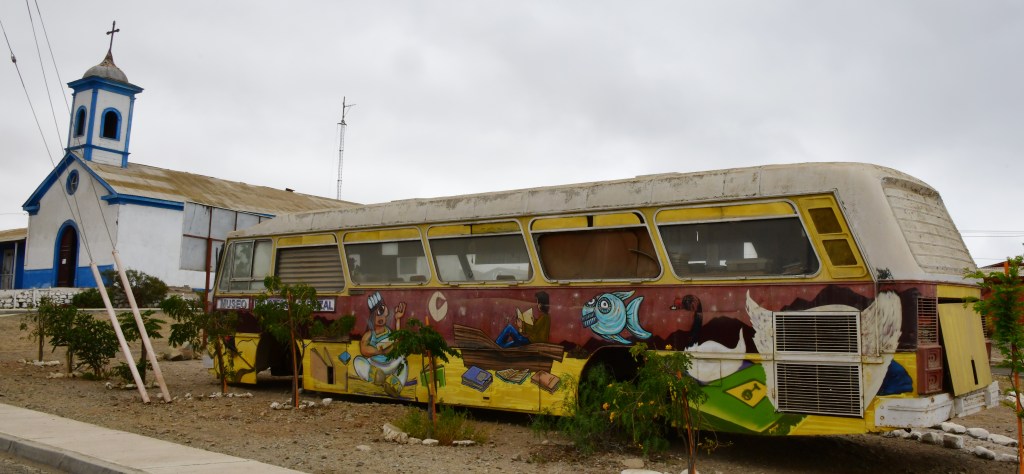
S3819 was time for a little culture: The Carrizal Bajo Library – it looks as though they replaced the old bus with a new(er) model!

We turned east and headed towards Vallenar. If we just made a short stop in the Llanos de Challe National Park, we should be in time for a treat at the Cake Shop at the Vallenar Crossroads, opposite the Copec station along R5.

In the Park, I was sure that we needed to climb the first low hill after entering the Park, driving past the ranger’s station at the northern entrance. Wrong! Back in the hotel it transpired that we should have climbed the second hill. Never mind, we would pass here again. Extremely dry!

Wednesday, 6 November 2019 – Los Choros to Vallenar

Yes, I know, they are a little (a lot!) out of synch, but it will all fall into place in time.

The plan for today had been to climb in a panga and be taken to two of the islands (Isla Choros and Isla Damas) in the Penguin Biosphere Reserve, north of La Serena. Cabanas, shops and the boats taking paying guests were were all in resting mode after partying during the recent Halloween festivities and the excitement and tension of the recent civil unrest. Many Chileans seem to have stayed at home to protect their property (?). Ruta 5 was practically empty.

After a cold night we woke up to the sight of flags flapping in the wind – not what we wanted to see! When we arrived at the harbour it was confirmed: too windy to make the trip!

OK, so over to Plan B: show my compadres ‘my’ Eulychnia chorosensis. Even in the poor light and their dehydrated state, they still looked like interesting, attractive plants.

Some years ago, Angie & I risked driving from Punta Choros across a barely marked track on very soft sand, but in a Toyota Hilux built for such challenges, to Carrizalillo. Now this was very easy on a smooth newly tarmacked road that would put most UK roads to shame. We finally found a shop open where we could buy some chocolate to replace breakfast this time.

The top quality tarmac continued all the way to Domeyko. Our second stop today was 17 km before R5 at the site for Copiapoa domeykoensis, said to be a giant form of C. coquimbana, in the north of that plant’s distribution area.

We hit R5 at Domeyko and headed north for Vallenar, where we missed the turning to our favourite cake shop and ended up on the road to Huasco. Never mind – cake would have to wait until later!

At Maitencillo we turned left on the track to Ojo de Agua for the third stop today for Eriosyce thelocephala lembckei. It really was very dry and the Eulychnia, Copiapoa coquimbana and Miqueliopuntia looked like shadows of their former selves. No Thelocephala found, although I feel sure that they were there, buried in the sand, laughing at us. Perhaps a but farther along? We we passed a sign to El Mirrador, offering a magnificent view? but now over chicken farms! All the previous plants mentioned were found, but no T. lembckei. I could hear the cakes calling my name at the R5 cross roads, so we continued back. Ian requested a quick look at a very similar layby with all the usual suspects and after some searching he waved to the car and begged us over. He had found Thelocephala lembcki, as small and hidden as I have ever seen them. Well done, Ian! Once we had spotted one plant, some two dozen more were readily found, but it is that first plant that matters!

For the 6th stop of the day I wanted to take us to the traditional Eriosyce napina site in view of the monster power station that burns oil pellets and spreads cancer among the people of Huasco. This has always proved a popular spot but this time there were wooden poles wrapped in barbed wire that blocked the road and it seemed that office buildings at the power station were still smouldering having been burned down, presumably by rioters.

We decided not to hang around in case of trouble and returned to Vallenar where this time we successfully made Stop 7 of the day: the cake shop!

We’ll be here for two – three more days so you may get a few more Diary updates.

Tuesday 5 November 2019 Guanaqueros to Los Choros

We managed to squeeze five people into the car as we had promised to give Carlos a lift to La Serena. The social unrest and public strikes had taken their toll on public services, with buses running while they could rather tan to a regular timetable. None of us were too certain where we were going, but just before I thought that we’d soon be out of town, Carlos asked to be dropped off and we continued our journey, at least until the Copec station for fuel and of course, a hot dog!

We didn’t see much of the Cuesta due to the Camanchaca that sounds a lot more interesting when you read about it than when you are driving around in it! We had made the exit to Los Choros before we knew it. (S3805) There seemed little point at looking for Eriosyce riperia in this drought, the plants would be well hidden, pulled down into the soil by their contractile taproot. Soon after the turn we stopped for a leg stretch. A lot had changed since our first stop here on 24 June 2003, when it gained my location reference L0202, although all the cacti reported then were still seen today: Copiapoa coquimbana, Cumulopuntia sphaerica, Eulychnia acida, with somewhat hairier buds than ‘normal’ E. acida, and Miqueliopuntia miquelii.

S3805Copiapoa coquimbana

By 2007, the then newly described Eriosyce (Thelocephala) napina subsp. riparia had been added to the list, but time constraints stopped us today to search for it.

Next stop S3806 will always be known to me as JA001, Juan Pablo Acosta’s first recorded cactus stop. The scenery, from the top of a low hill, down the dry Rio Choros is great and creates many angles where it forms the backdrop for the cacti that grow here. Again, it was striking how dry the plants were. The Eriosyce here is called E. (Horridocactus) simulans as it closely resembles the Copiapoa coquimbana (Ritter’s C. pseudocoquimbana) that is grows alongside with. Except that today there were no flowers or fruits to differentiate between the two taxa.

The Eulychnia has a low, upright growth, not procumbent like E. chorosensis, but the hypanthium is bristly, just like E. chorosensis. Another mystery Eulychnia! A transitional form or a different taxon? It’s all happening in this area!

S3807 was a stop for a herd of some dozen guanacoes and later joined by a family ? pack ? of foxes. We tend to carry some bread roll remnants, left over from breakfast and they were very happy with this sudden meal! Only when we drove on did we see the request not to feed the animals, in Spanish of course, as inappropriate food for animals under stress could kill them! We hope that they are all OK.

(S3807) Zorro chilla

We arrived at the port of Punta Choros that seemed deserted. Under the overcast skies the shacks looked impoverished. All the pangas seemed to be in. There was a bit of a breeze, too heavy to take passengers to Isla Choros and Isla Damas where Humboldt penguins build their nests under the stems of Eulychnia chorosensis. Perhaps tomorrow? Come at 8:00!

We found cabanas to sleep four and, after a walk through the village found a restaurant that was open (or did it open specially for us?)

Fingers crossed that tomorrow’s weather will allow us to make the boat trip!