
Just another WordPress.com site

Archive for the ‘Brazil’ Category

Monday, 16 November – Diamantina to Inhai and back

Yesterday’s disappointing day (although only in terms of Uebelmannia seen) was still fresh in our minds. I therefore suggested a change of plan and selected a road with at least two dead certain populations of Uebelmannia. We decided to go to the farthest away one first, just before Boa Vista, three km before the village of Inhai, that became famous after Rudolf and Marlon used the term ‘Inhai population’ for a form of Uebelmannia pectinifera in their book. Just as in 1999 we drove past the site, noting it for our way back and headed for a small bar at the far corner of the triangular square. The place had had a lick of paint since then. It was like stepping back in time, a bit eerie. After two small Colas each – partly frozen in the freezer, just like the beers had been in ’99.

But we had already made an impromptu stop (S1523) before arriving at Inhai. Cliff spotted a Discocactus in some snow white quartz sand by the side of the road. We had nearly forgotten about this genus that shares his area with Uebelmannia as globular cacti of interest.  I believe that they were D. placentiformis, but not sure what syn. was used for this population.

Having had our Colas in Inhai, it was not long before we were at the bridge labelled Rio Caite Mirim (S1524). Again, an eerie moment: I could see Brian Bates with his paper bag full of C. minensis fruits laughing, he had eaten twice as many fruits as he had collected for seed. And I could hear Keith getting excited about the ‘interesting’ stick Euphorbia, E. sipolisii, about which we gave him so much stick if you pardon the pun. I promised Cliff plenty of Uebelmannia here.

But what had gone wrong? We looked and looked but no Uebels to be seen. Were we struck with selective blindness? Had all Uebels become invisible? Perhaps higher up on the rocks? Yes, eventually Cliff found the first plant and then there was no stopping them, singles, groups, big ones, little ones, but none in flower. Also worth a mention were the two ceroids: Cipocereus minensis and a denser spined plant that seemed to want to form a pseudocephalium, Arthrocereus rondonianus (?) I’ll include pictures in today’s gallery and perhaps Marlon can confirm names. The Veloziaceae, the plants that often look so much like Yucca in the US and Mexico, were also around, many species, some in flower, as well as an orchid, Laelia rupestris, in flower, growing through the stick Euphorbia, somewhat enhancing that plant’s appeal.

We noted that unlike in so many other cactus habitats we had seen, there were no opuntioids to be seen. We’d see them farther north as the Tacinga would start to appear.

On to the next stop (S1525) was another stop that was fondly remembered from 1999. It was at a long bridge across the Rio Jequitinhonha. In ’99 I remember that we had parked the car before crossing the bridge and had looked at this well known HU (Horst/ Uebelmann) collection number site (notes at home will tell me the HU number).

For the non-cactologists, HU refers to Horst & Uebelmann. Werner Uebelmann is a long retired racing driver in Switzerland who had / has a cactus nursery there. He sponsored cactus exploration trips in the late 60s / early 70s by the late Leopoldo Horst, the gentleman whose son, Kurt Ingo, now runs the Horst cactus nursery in Imigrante, Rio Grande do Sul that we visited a few weeks ago. The other person on these exploration trips was the late Albert Buining, chairman of the Dutch / Belgian Cactus Society Succulenta. Buining would describe any new plants that they discovered. Horst would get a bonus for every new species discovered.

This was the hey-day of taxonomic ‘splitting’. Any small feature that differed from a known species justified a new name. In that climate, with the prospect of financial reward, it was easy to create new species. This is not a criticism, merely an explanation of how things were in those days and an observation that things have changed (certainly in the English speaking cactus communities) to a ‘lumping’ approach where people respect similarities and rank them higher than small differences. As a result, many of the Buining names have been merged under the earliest name. Even so, he described the Genus Uebelmannia in 1967 and, at the time, its appearance, quite unusual among cacti, caused quite a stir.

In those days, it was legal to collect and export cacti commercially, with Europe, the US and Japan as the main customers. As the number of plants in habitat was often limited, there was a distinct danger that plants, already living on the edge by challenges presented by their habitat, would become extinct in nature. Laws were passed, both in the countries where cacti grow naturally and internationally by laws that aim to control the trade of endangered species across boundaries (governed by CITES).     

Anyway, as usual, I digress. I had fond memories of this stop from ’99. We parked the car before crossing the bridge and, while searching for the Uebelmannia, saw a sizeable truck drive across the bridge to give us the confidence that it would carry our weight. This time, on our way to Inhai, there was a Toyota Hilux pick-up with load waiting to enter the bridge. One of its occupants was making an inspection, especially at the end of the bridge where various bits of woods had been arranged waiting to be put into the jigsaw puzzle. The two occupants had a brief chat, smiled at us and gave us the thumbs up, then crossed without incident. I filmed their crossing, followed by that of our car with Cliff driving. It did seem that this bridge was in need of some urgent repairs!

On our way back, 2 Colas later, we found the bridge with full repairs in progress. There were two cars wanting to come our way, with their occupants giving useful advice (?) to the workmen. We just parked the car, said hello and walked across for our plod in search of Uebelmannia. We found only four! With the distraction provided by the bridge works I had left the GPS and my hat in the car. I can not be 100% certain that we had the exact right spot along the river.

From memory (10 years + 6 months ago), we parked our car in a bend immediately after the bridge and then crossed a barbed wire fence to follow a foot path along the river for some 200 m, then, some 10 m from the river, there was a clearing with a rocky cliff rising, in front of which were the Uebelmannia. growing in the dappled shade of trees between the dried leaves of the trees.  We walked along much more than the 200 m, without me recognising the spot, until I was quite sure that we were seeing beaches and side gullies that we had not seen in ’99. It was bl**dy hot and Cliff was overheating. Common sense said to take as many relevant pics as possible with the camera’s GPS switched on and compare them with GPS readings from previous visits.

We found a total of four Uebelmannia pectinifera. There had been lots more in ’99, although with a self imposed limit of one roll of film (36 slides) per day, that might have been a distorted memory-recall. The logical conclusion was that we had missed the ‘clearing’ that perhaps had become overgrown. A worse thought was that perhaps the plants from this famous location had all been collected by hobbyists, each just taking one each to take home where the plants would almost certainly have died by now. Taking pictures home is by far the best strategy for the species survival. Mind sets need to be changed. Despite the lack of Uebelmannia found, I still managed 45 images at this stop, scenery, bridge repair work and other plants in flower. How fortunate we are to make these trips with today’s technology.

Still, we found an Epiphyllum, E. phyllanthus, in the forest that was new for me from here and of course recorded photographic evidence of all the other cacti (Cipocereus minensis, Pilosocereus floccosus and Cereus jamacaru) that we found.

We are booked in for at least five more nights at our Hotel and could stay longer if need be, so no worries (yet).

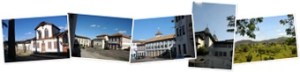
Sunday, 15 November – Diamantina to Pres. Kubitschek and back

A mixed day: excellent weather, bright and sunny but not too hot (c 25C I guess) and with a light breeze. We had selected four known localities for Uebelmannia pectinifera from our data set. All were along the road from Diamantina to the village of President Kubitschek, named after arguably the most popular and successful President of Brazil during his 5 year term from 1956 to 1961.  Juscelino Kubitschek de Oliveira was born and raised in this small village which is part of the Municipio of Diamantina where 33 years after his death he is still somewhat of a local hero.

But the first stop (S1519) was close to Diamantina. Here we hoped to find the form of Uebelmannia pectinifera that was sold in Europe under the name U. crebispina. We had the right idea and found a total of four plants about 500 m from the spot suggested and another two plants and four dead plants (borer beetle victims?) about 400 m. from the designated stop. Looking at Google Earth (no date for the images displayed there) it seemed to have been a lot wetter recently than at the time that the picture was taken. There was a sizeable bog between us and the location in the data base and the going was treacherous – there seemed to be huge cracks about 50 cm. (2ft) deep but covered in vegetation. These were half filled with water, if you were unfortunate to step into one of them. Google Earth suggested a nice ‘stone with quartz’ surface. Never mind, we were sure to find more at the next stop.

The next stop was at Datas, but was of a tourist nature, taking pictures of the architecture, particularly the church. We could always come back for the cactus location on the edge of town, although it was farther away from the main road then the other stops, but with ‘parking’ close to the town – it had looked a bit dodgy the day before as we passed with groups of youngsters enjoying themselves.

S1521 was the farthest away from Diamantina, a few km. before the turn to the village of Presidente Kubitschek. The plants were supposed to grow 10 m. from the road. The nearest ‘car park’ opportunity was a bit farther away but we recognised the habitat conditions, all the companion plants were there and we felt comfortable that we should find hundreds of Uebelmannia here.

Wrong! We found just one plant, less than 40 m. away from the spot that our database suggested. Cliff and I are convinced that on our way back to the car we actually walked over the database coordinates, but without finding any Uebelmannia.

Again, the place was thick with vegetation following October’s unusually heavy rains. But the ceroids here (Cipocereus minensis and ?? sp.) looked as though they had had a very hard time. Only recent new growth provided an indication to their identity. Cliff claims to have seen a third ceroid sp.

How did we know about these recent rains? We gave a lift back to Diamantina to a student couple. She was studying tourism and spoke very good English and he was reading agriculture. They had just finished a spell at the University farm looking after lambs. I was beginning to feel hungry.  The amount of water (bog sites) was another indication of recent rain. And the vegetation was going mad!

After 90 minutes looking high and low, literally, we decided to call it a day and after a quick visit to the village named after the former President (again, nice church) we returned to our hotel. Better luck tomorrow, we hope.

Saturday, 14 November – Lagoa Santa to Diamantina

A bit of re-packing, a visit to the Supermarket and we were on our way to Diamantina. There was no real expectation to see cacti, but anyone we saw would be a bonus. Initially the road was a splendid motorway – until we discovered that we were heading south instead of north – ooops! We found our way out of Lagoa Santa, this time heading in the right direction, but it took some time before we saw indications that we were on the right road. Street signs are still somewhat of a luxury I guess.

We made a scenic stop (S1516) as the road climbed steeply into the Serra do Cipó. The name suggested that we’d be seeing lots of Cipocereus, but none were spotted – we did not look very far – just alongside the road. We made some more short stops along the road up, still all filed as S1516. This included some pictures of a large statue of a man sitting in the field at Cachoeira do Capivara. No cacti were seen or photographed, but we did snap some field flowers, including a nice Orchid and our first Eriocaulaceae of the trip.

S1517 was for a Rhipsalis sp. (?) or an Epiphylum sp.? and nothing else, while S1518 was for a series of trees that stood out from a distance as their glaucus – silvery leaves stood out in sharp contrast with other plants in this area. No idea for a name, but plenty to research once I’m back at home for summer.

S1518 was for sightseeing in Diamantina – pictures of the well maintained Portuguese colonial houses, offices and churches that brought back many happy memories of my visit here in 1999. But a lot had changed. There was a lot more emphasis on tourism – lots of signs spoiling the fronts of buildings, lots of expensive looking hotels and pousadas and hotels, both in the centre of town and on the outskirts. Lots of noisy bars full of youngsters. This in a town where 10 years ago we struggled to buy some postcards that were not sepia prints and where the nightlife consisted of meals in one or two restaurants or a hamburger on the market square. Also a lot more police of various branches in various uniforms, the lady officers looking particularly attractive in their spray-on kit.

We found a nice hotel to the south on the outskirts of town and decided that this was easier to get out and back to than the hotels in town, particularly if we should have any rain – in 1999 Brian’s 4×4 struggled on the very smooth old stone slabbed streets, much too steep in wet weather.

More of the hotel at http://www.hotelestilodeminas.com.br/

We were aware that today we passed a number of Uebelmannia locations – the Datas sites, but wanted to find a hotel before getting side tracked by cactus explorations, so tomorrow we go back some 65 km to the most southern U. pectinifera site.

Friday 13 November Porto Alegre to Lagoa Santa

Our flight was not until 12:18, but we assumed two hours of check in time and allowed another 30 minutes for hotel check out and a taxi to the airport.  Check in was nice and easy with bags going straight through at Sao Paulo (hopefully to Belo Horizonte.

The only snag came at airport security where it was discovered to transfer his ‘field tool kit’ (multi purpose pocket knife, collapsible hand trowel and fold away pliers, plus, I’m sure, the omni-present and ever so useful (not) tool to remove stones from horses’ hooves) from his back pack to his hold luggage. The security personnel’s attitude was ever so refreshing. Instead of Cliff immediately becoming the  prime suspect of a terrorist plot to blow up the universe, they understood that it was just a simple oversight. But rules were rules, so a member of the security team accompanied Cliff back to the check in desk where his hold luggage was retrieved and opened to put in the offending articles. Wonder if that would have happened so smoothly at Heathrow. I remember Mike Harvey forgetting the Swiss Army pen knife in his hand luggage in 2007 and security people nervously getting ready to put on the latex gloves for a detailed inspection of his luggage and person. Of course Heathrow a a tad more busy than Porto Alegro and the security issues in the UK at that time were at a higher level of alert. Still, compliments to the Brazilian security staff for handling the situation in an efficient and friendly manner.

Our plane was 30 minutes late and with less than two hours transfer time in Sao Paulo reduced to 90 minutes we became worried that it might be another race against time – one that we had lost here when we arrived four weeks ago. We need not have worried as first we noticed that our departure Gate at Sao Paulo was the same that we had just arrived at and that our plane to Belo Horizonte was the same one that we arrived in from Porto Alegre. We shared our flights with a football team, Gremio, from Porto Alegre, playing in Serie A of the Brazilian league, playing against a team from Belo Horizonte tomorrow. They seemed well known as some passengers were taking pictures on their mobile phones and one lady asked them all for their signatures.

We had caught up with ourselves and even arrived 10 minutes early! On to the Localiza desk where a nice lady greeted us and showed us the mini bus to their car park which also had their main admin block. The rep we approached immediately referred us to Michelle, who spoke excellent English and had studied in London and has an English boyfriend. Lucky guy! 

The bad news was that the quote we had via the helpful hotel receptionist in Porto Alegre was wrong. Different rates apply in Porto Alegre to those in Minas Gerais. The good news was that the total cost now quoted was less than the quote we had received, including full insurance. And it was less than what we had paid for the Doblo. And it had only 2,688 km on the clock, with tyres that match that distance. We have a Meriva Joy that for the short distance to near by Lagoa Santa (12 km) has proven to be a joy to drive. It’s now a bit like driving your own new car, careful not to put any scratches on or make it dirty.

We are in Hotel Lund, which came up in one of my earlier internet searches. Cheap and cheerful with a wifi connection that’s fine for Cliff but not for me. Tomorrow we drive to cactus country.

Thursday, 12 November 2009 – Hotel Intercity, Porto Alegre

We have no car and the hotel is in one of these airport areas of town that has nothing to offer on foot for sight seeing. We don’t mind, as there is plenty of ‘trip admin’ to catch up on and we seem to have a stable and fast internet connection.

Now that the car has been returned, I can tell you that it covered 6,350 km (3,969 miles) between pick up and drop off.

I recorded 115 ‘Stops’, mainly habitat location where we took pictures of the cacti that grow there, but also some stops just to record that there were no cacti growing in nature here and some that just needed a reference for me to file my pictures under. I have 4,689 image files on my plug in hard drive taking up 33.4 GByte on my 500 GByte plug-in HD that was virtually empty when I left home. No panic there yet.

Rio Grande do Sul has added yet another dimension to my appreciation of how cacti survive in habitat. They continue to be plants that succeed in locations where there is less competition from other vegetation. There are also more epiphytic cacti here, plants that do not have their roots in the soil, but have their seed dispersed often by birds, who leave them on the mossy branches of trees where they find space to germinate and attach themselves to the bark of the tree. They are not parasites, as they do not feed from their host plant which is used, alongside Bromeliads, Orchids, ferns, mosses and lichens to keep out of harm’s way up in the air.

The state is the ninth largest in Brazil with an area of 281,748.538 km2 (108,783.719 sq mi) with a population (2006) of nearly 11 million people.

We’ve photographed many of the State’s wild flowers, some of which such as Begonia, Tradescantia, Sedum (non native), we grow on our window sills, while others such as Petunia, Sinningia, members of the family Verbenaceae and a range of Irises that are all popular garden plants in the UK and the rest of Europe. Not all of these are endemic and the climate is ideal for many plants from elsewhere in the world to find a niche in which they can thrive.

We saw unusual birds, lizards, spiders and butterflies and met a host of other insects that we did not necessarily see, but felt later, when their bites started to itch.

The past four weeks has opened up my eyes to the mass of names created – often by the German language cactologists that seem to have a different approach to naming new species, mainly after their friends and travel companions, than the more ‘lumper’ orientated approach used in the English speaking cactus communities. Marlon’s PhD work has enabled him to make a very detailed study of these plants, visiting many more locations than were possible (and reasonable) to fit into this trip. We saw most of the members of the Brasilicactus, Eriocactus, Notocactus and Wigginsia groups, once genera in their own right, but controversially according to some, now united in the genus Parodia.

Angie was able to see most if not all of the members of her favourite genus Frailea in habitat, cramped in the two weeks that she was able to be with us.

We saw the state’s small number of Gymnocalycium, mostly pulled down into the soil as protection against grazing cattle and fires as well as the epiphytic cacti mentioned earlier.

In contrast with southern Peru, where the majority of cacti are columnar ceroids, we only found Cereus hildmannianus widespread where it could.

We saw that agriculture has destroyed natural habitats in many places during the last century and that the increasing population of humans continues to put extra pressure on the land. Many areas still unspoilt during Marlon’s visits in 2005 and 2006 are now at risk of being lost due to the expansion of forestry with large managed pine and eucalyptus forests now covering areas that were once exposed arid locations ideal for cacti. The increase in human population has lead to the creation of many artificial lakes by dams that control the flow of water past their turbines and so generate electricity to meet the ever growing demand by industry and households.

We have found the people in hotels, restaurants and petrol stations friendly and unlike in some South American countries, never felt threatened. We drove through a fair number of surprisingly large cities with all the trimmings that we might expect in Europe and the US and as chaotic and therefore best avoided as big cities elsewhere. The Brazilian use of brightly coloured paint, especially when it comes to decorating their houses, reflects their happy sunny outlook on life. Yet some parts of the State had strong immigrant origins, mainly German and Italian and some Dutch. It seemed that these communities were slow to integrate as people who had been living in Brazil for 50 years or more still continued to speak their original native language between themselves. Not that strange, considering that I did the same with my parents and sister for more than 40 years since moving to the UK from Holland.

The food has been excellent, but not tremendously varied, with large quantities of meat as the main course, excellent for carnivores like myself, but I’ll be eating a lot more fish when I eventually get home.

As most of my travels are motivated by cacti, my current opinion is that I have enjoyed such an in depth introduction of the native cacti that I need not come back for a second visit, but can look for new (for me) habitats to explore.

Tomorrow we fly to Minas Gerais for a whole host of new cacti and experiences. (Fourth largest State, Area 586,528.29 km2 (226,459.84 sq mi), population 20 million (2nd highest state).

After four weeks in this state we fly on to Bahia, forth largest State with an area of 564,692 km2 (218,029 sq mi)

Just to give you an idea of the size of these states, the United Kingdom has a total area of 244,820 km2 (94,526 sq mi) and a population of 61 million, while the Netherlands is a mere 41,526 km2 (16,033 sq mi) but with a population of 16.5 million people – a lot more densely populated.

Wednesday, 11 November 2009 – Daltro Filho to Porto Alegre

And so our Fraileathon is nearly at an end. Marlon flies from Porto Alegre to Salvador Bahia at 8:30 tomorrow morning and will soon leave our hotel, near the airport to stay the night at his friend’s. We leave 24 hours later so will use the time to catch up on note writing and washing, ready for another month in the field.

We started the day with our first monastery breakfast ever and by 8:30 arrived back at Kurt Ingo Horst’s nursery in Imigrante. On the way we had dropped off our car at the garage in the village, recommended by Kurt Ingo, where they gave the the car a thorough clean up, inside and out, all for R$20.

While Cliff & I took more film clips (I should have some nice footage of hummingbirds feeding on Haworthia!) Marlon was doing the rounds with a shopping trolley buying a small nursery’s worth of plants. Some were depotted, others were squeezed into the box I got a few weeks ago when I bought my Gaucho hat. The box was too large for me and I will wear the hat.

We left soon after the clean car was returned and set off for the journey to Porto Alegre, stopping for lunch in Teutonia.

Nothing to report until the check in for the car, which was greeted by the world wide recognised sound of the deep intake of breath and shaking of the heads. We smiled and said that this was the car that had been subject to our phone calls and complaints by us on 4 November. This calmed them down a bit. Our chap explained that he had to mark up the differences between pick up and return of the car and we accepted and understood this.

Then to the girl at the airport desk. we was surprised to see us two days early. We explained that we had lost two days due to the delays caused by the problems with the tyres and as a result had to cut short the remainder of the trip even more. We went through the paper work and Marlon filed a report in Portuguese on my behalf. They asked if we had filed a police report and of course we had not. Our Budget lady, keen to have all her paper work complete pointed us across the hall to a civil police station where a bored desk sergeant was pleased to give us two identical forms and a sheet of carbonated paper to fill out an identical report to the one we had prepared earlier for budget. Three different rubber stamps on it and it was all official and the Budget girl had all the paper work she needed. The upshot of it all is that I have paid our dues for the days that we have actually rented and that they’ll leave my card open until the amount of damages and the liability have been decided.

This whole process would have been very nerve wrecking and stressful if Marlon had not been here to communicate on our behalf. Thanks again, Marlon.

Tuesday, 10 November 2009 – Salto do Jacui to Daltro Filho

As you’ll recall, yesterday we dreamt up a wonderful plan to see Parodia claviceps today by boat and take lots of pictures, this time from close up.

The day started great. When I got up at 6:30 and opened the doors to my balcony the sun was shining on the cloud that hang in the valley, just as it had done yesterday. Better take a long sleeved shirt in case of sun burn on the water!

During breakfast, the sun disappeared behind some clouds, but in previous mornings this had burnt away quickly. At 8:00 our captain Renato Mattoso, wearing a snazzy bright red jacket with Farmacia Jacui emblazoned on it, arrived in an old pickup truck and a motor boat on a trailer. He shook us warmly by the hand and directed a flood of Portuguese at me before Marlon told him that he was the only member of the party that understood that language. As we were visitors to the area, Renato was sure that we would be very interested in seeing his collection of Agate stones. He had seen the ones that we had collected in the car and had judged them to be rubbish. So a quick visit to his home where Marlon explained the problems of weight allowances and international air travel.

We finally we were on the road and arrived after the usual bumpy ride at the Barragem Itaúba, S1505 of last Sunday, where Renato had a chat with the dam’s security guard about keeping an eye on our cars while we were away. So we thought. After a considerable while, Renato returned and even Cliff & I understood that there was a problem. Yesterday, Renato had phoned a friend, a high ranking local official with the Electricity Board that was responsible for the dam and the lakes, and had obtained permission to launch his boat at the dam. It seemed that the (now ex-?) friend forgot to inform the security guard on duty. They had tried to contact said friend, but to no avail.

It started to rain.

More to-ing and fro-ing by Renato between the trailer + boat and the guard. Eventually, with the rain now quite persistent, Renato told us that the guard had told him of an alternative location to launch to boat. What he could not see did not matter. It took a while for Renato to find the turning onto a rarely used track that seemed doubtfully accessible by car.  We walked down the track for a quick inspection and found it flooded. The three of us quickly came to the same conclusion: today’s plan was not going to happen and there was no time for another day here. Through Marlon we thanked him politely for his efforts, understood that it was not his fault and Marlon took his contact details for when he was next visiting the area next time. The pictures for this drama are recorded as S1512.

So, much earlier than planned we set off for Lajeado. As we drove south, we crossed the bridge over the Rio Jacuizinho, last Sunday’s S1507. It was really raining hard now and the weather seemed to have set in for the day.

After a while, another bridge, and again with steep cliffs, visible from the bridge but impossible to get to. I poked my camera & zoom lens out from underneath the hood of my waterproofs and photographed all the exposed rock faces. (S1513). Tonight in the hotel, I can confirm that there were cacti growing on these cliffs too, most likely P. claviceps.

I promised you close up pictures of P. claviceps and I can deliver. Lots of plants of HU16, the original type locality, and of HU309, another near by location. Some of the plants are in flower.

How did I manage this? We arrived early at Lajeado and Marlon made a phone call with the result that we drove on to Imigrante and another visit to the nursery of Kurt Ingo Horst. There his father’s original plants were growing as seed factories from which he grows his plants and exports seed. Still interested in the pictures? I bet not.

Kurt Ingo recommended a hotel in the nearby village of Daltro Filho that is just amazing. It turns out that the place a working monastery with Franciscan monks. We have a ‘cell’ each and the shared toilet and shower facilities are marked ‘Ela’ i.e. ladies. We understand that the place was built in the 1940s by Dutch monks. It has some amazing plants growing in the gardens including monstrose Cereus hildmannianus and  trees laden with Rhipsalis sp.

A stroll into the village and we discovered a small bar, adjacent to the supermarket. An evening of beers and samples of the owners home made firewater (distilled orange and lemon juice!) came to R$6 each. Back at the monastery I saw fireflies in action for the first time in my life – amazing. Just to make it even better, the hill opposite the hotel has a steep cliff face with the correct exposure to sun – Kurt Ingo tells us that it’s covered in P. haselbergii. We believe them, having plenty of pictures of other locations already. Nice thought though!

Angie will remember the monastery because we commented on the strange building on the hill when we turned round in front of it when we took a wrong turn on the way to the airport when we dropped her off for her flight home.

By the way – it has stopped raining.

Life continues to be amazing! 

Monday, 9 November 2009 – around Salto do Jacui

Excited that we had at least found evidence (from afar) that P. claviceps was still around, we asked the hotel owners and various people in town for more information to get to places with steep cliffs.

The first of these tips led us through some streets to tracks at the edge of town. We again asked and were told that if we parked the car here, we could walk through their garden / fields and see the cliffs. We obtained indeed a wonderful view over the river, to cliffs that suggested that they might be some 100 m. tall ….. below the waterline. But we had learned at the P. leninghausi site that these plants like to grow at the tops of such cliffs, and pointing our zoom lenses that way had soon found things that could be clumps of P. claviceps. Could we get any closer? A bit of investigation revealed that we were standing on a similar cliff, but on the side of the river where the cliff face was mostly in the shade – so no plants.

We noticed that people had been hacking away at this cliff and in town had seen stone yards and souvenir shops selling Agate.  And here, we saw rounded stones used in making the rough track, cracked open to reveal beautifully coloured crystals that a skilled craftsman could turn into attractive jewellery or ornaments. We went to one shop selling this finished product, bought a few stones and obtained more information of where to look.  The information was not needed – the stone was everywhere and it was tempting to pick up every boulder we saw. But I digress.

From our cliff side view we thought that we could see a concentration of claviceps on one particular spot. We were unable to get to this spot, but could we get down to the river’s edge opposite this group of plants. We followed a track that eventually twisted and turned down the hill, ultimately through the usual dense vegetation but that ended up at least 750 m too for to the right of our spot. I could see clouds of insects around Marlon and Cliff and knew that I too had to be on the insect menu. More wrestling through the jungle – must pack a large machete next time – wonder what airport security will make of that – they’ll never believe that it’s just a tooth pick. Then our vague path joined a more established one and we finally arrived at the river’s edge, dead opposite where we wanted to be. This was actually the home for a local fisherman, with a small, single seater wooden boat, partially filled with water. Marlon chatted with him while our cameras clicked.  No, the boat was not big and strong enough to take a single passenger. As we were still taking pictures of the same plant, I’ll continue to use S1508 as my stop number to file away these pictures.

Having had some luck cactus spotting at one of the barragem – dams yesterday we decided to try a second one, Barragem Eng Maia Filho (S1509) but this one was only 24 m high and there was little evidence of cliffs, exposed or drowned near by. Another ‘no cacti’ stop.

For S1510 we travelled back to town and took another track that took us to a village where the indigenous people still lived in rather primitive conditions. We were told that we should take a gift and a bottle of brandy had been suggested, but in the end we offered some money and asked for R$10 to allow us to park our car and then pointed us to a good path that took us to a nice waterfall. Not very high, but with an enormous volume of water being pushed through a narrow gorge. I took some movie clips here and photographed Cereus hildmannianus for the record.

For the last excursion of the day we decided to take the old road from Salto do Jacui to Estrela Velha, the village from where we found our first claviceps cliff yesterday. Now that a new main road had been built elsewhere, the old road (just a dirt track) was not so well maintained. After bumping along for 6 of the 12 km between the villages we were wondering to just leave it and go back to the hotel. Just then Marlon spotted the tell-tale yellow flowers of Parodia linkii! Just a small group in area but large in number, crammed onto a rocky outcrop between the side of the road and the grain fields.    We took the usual 30 or so pictures and checked the extend of this population. At the far end of the rocky outcrop we still found Parodia, but here it was P. glaucina. As before when we found these two growing together there were no signs of intermediates or hybrids, so the barrier to these two species that flower together must be one of the less obvious ones. As there was a distinct gap (40 m.) between the two species, I decided to use two stop numbers, S1511a and S1511b.

Earlier, when we returned to the hotel for lunch, we all aired our frustrations of having tried so hard and still not found an accessible population of P. claviceps. At times like this it is good to dream of the solution – a boat to take us along the appropriate stretch of river where we could photograph the plants from close up. We then presented our ‘dream’ to the hotel owner who, after some phone calls, told us that a friend had a boat and tomorrow could collect us, take us in his pick up, with motor boat in tow, to yesterday’s dam from where he would take us for a morning’s run along the river. He was not cheap (R$400 – i.e. R$134 each) but eventually agreed that as we had come so far already and as Cliff and I were unlikely to return to this State again, it seemed churlish not to push on with this offer.

So, we have an 8 o’clock appointment with our captain and hope to show you some great pics afterwards (internet connections permitting). 

Sunday, 8 November 2009 – Passo Fundo to Salto do Jacui

Yesterday’s rainstorms seemed to have passed by, but the sky was still overcast and looked threatening. A good day for driving as we headed south-west to a huge man-made lake, the Repressa Passo Peal. At the very south of the lake were the three dams that had stopped the natural flow in the river and so had caused the formation of the lake.

But this bright Sunday morning we drove through a countryside reminiscent of counties in the south west of England on a sunny August day. Only the odd Araucaria and palm tree in the landscape and the lack of traffic and electricity pylons provided a hint that all was as not as it seemed and that we were in Brazil.

It was a bit worrying that whenever we had seen plants from the Eriocactus group in habitat, they tended to grow in impossibly difficult places – on high cliffs overlooking wide rivers, usually with us at the wrong side of the water. This was very much agriculture country and we were driving through fields heavy with grain and corn crops, ready to be harvested. Here we were driving through low gently rolling hills. Was Parodia (Eriocactus) claviceps different from its cousins in its habitat preference?

We  made a stop (S1503) for a tree, heavy with Tillandsia and Rhipsalis sp. growing epiphytically.

S1504 was for a rocky outcrop that on previous days would have given us P. linkii, but no cacti here. In the distance we could see the lake appearing.

Around 13:00 we arrived at Salto do Jacui, south of which was the area, along the Rio Jacui, where P. claviceps was supposed to grow or have grown. The type locality for this plant is now reported to be several meters below the water level of the man made lake. But were there any plants still alive in the area?  We asked the owners of our hotel for information and they confirmed that between the three dams there were indeed still stretches of river with steep cliffs along their edge.

For S1505 we arrived at one such dam, the Barragem Itaúba. Here we could see the steep cliffs, but they had been severely disturbed by the building of the dam. We inspected one of the cliffs just after the dam and found it covered for a distance of some ten meters with P. linkii, a very pretty form, particularly in its adolescent phase. They stopped abruptly where rainwater would wash any plant away as water from higher up the hill drained away over the cliff face. A bit farther along, the cliff was covered in 2-3 meter tall Cereus hildmannianus, with the plants leaning against the cliff face. Other plants reported from this short stretch of road include Begonia, just like the plants we grow on our windowsills or in garden bedding displays and a Sinningia sp. Less usual was another tarantula, out for a stroll, finding the road easier to negotiate then the vegetation. That’s probably why we see a good number as road kill.

As the road twisted away from the dam we seemed to have lost the river, so followed a warren of dirt tracks of varying quality looking for a waterfall that was alleged to exist her. It was a well kept secret, but eventually we spotted a small sign and then a bit farther on, the land fell away and we could see the expected cliffs. And just like on previous occasions we were on the wrong side. We took a number of pictures that back at the hotel we could blow up to show that indeed, this was the home of P. claviceps (S1506). But frustrated we had to turn round as there was no way to get closer and light was beginning to fade for photography.

S1507 was a bridge over the Rio Jacuizinho where we again took pictures of the cliff faces, much more distant here. We were unable to detect cacti on these pictures. And so back to the hotel.

Saturday, 7 November 2009 – São Joaquim to Passo Fundo

Yesterday’s rainstorm has settled in and it has the feel of a few days solid rain, as we have in England this time of year. The difference is that the temperatures are well up, giving a sort of steam bath affect. We’re back in Rio Grande do Sul after our brief stay in the next State to the north: Santa Catarina.

With just one cactus stop, when it stopped raining briefly, producing only 17 images of – you guessed it! – Parodia linkii, you may overcome your boredom through lack of Travel Diary info by looking at the finer details of this fine town at

http://en.wikipedia.org/wiki/Passo_Fundo

where you will learn that Passo Fundo is the home town of the football manager Luiz Felipe Scolari.

Always looking for the positive, today’s cactus explorer’s disaster means that I can catch up some more on my reports and add a few more pictures.