Just another WordPress.com site

Archive for the ‘Chile 2010’ Category

Tuesday, 15 October 2013 – Around Taltal: Botija

These days the 50 km drive to Paposo is quick on the well maintained asphalt coast road, Ruta 1 (S2839 – no cacti photographed). S2840 was for a leg stretch among the Copiapoa cinerea ssp haseltoniana.
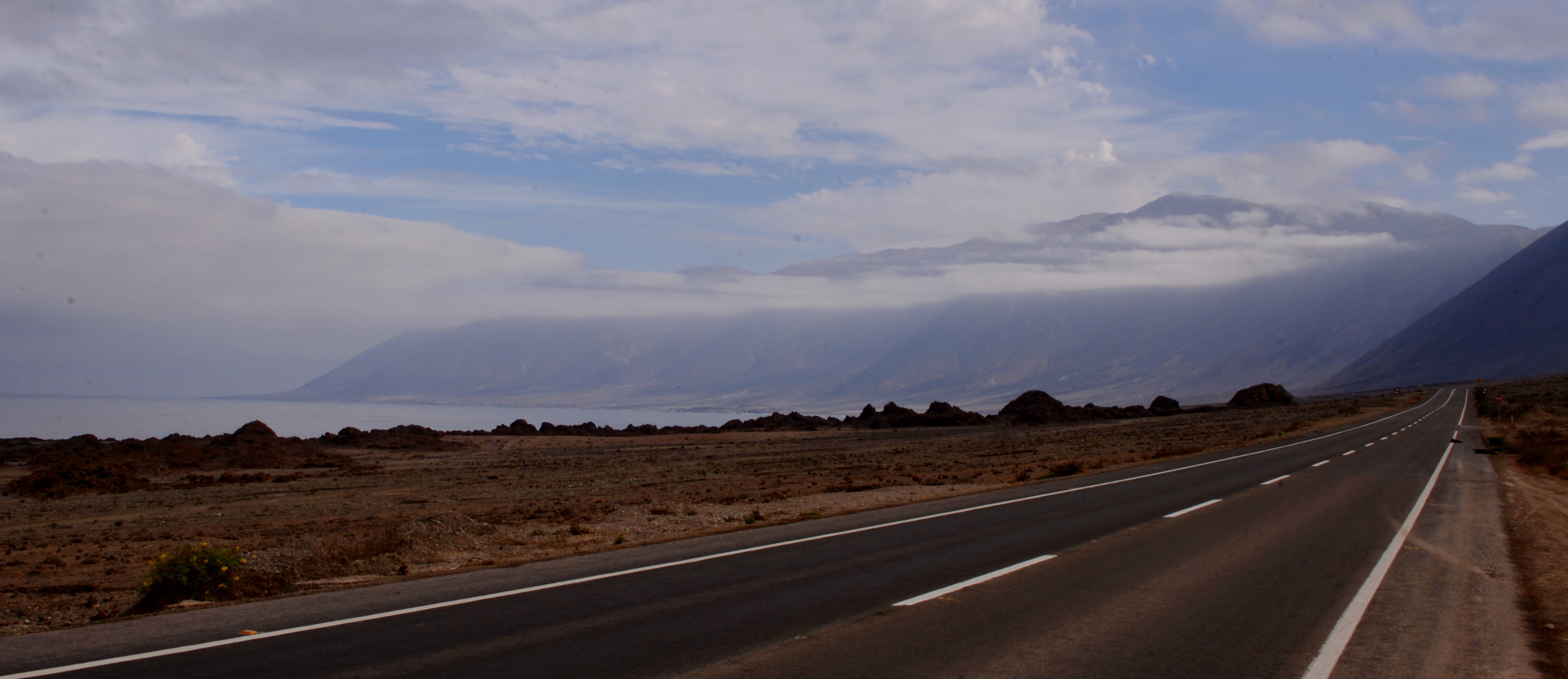
Ruta 1 - the coast road between Taltal and Paposo
Ruta 1 – the coast road between Taltal and Paposo

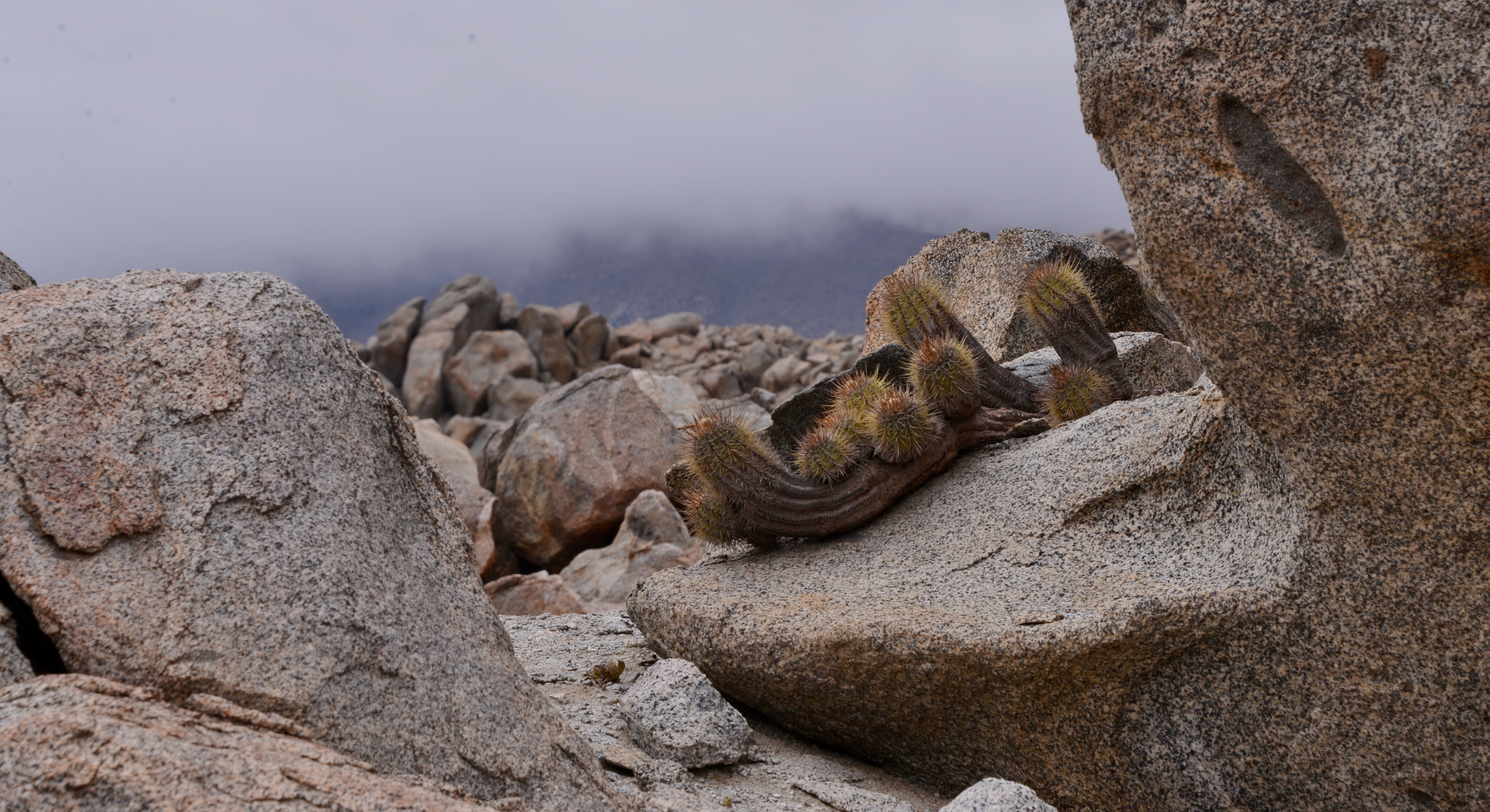
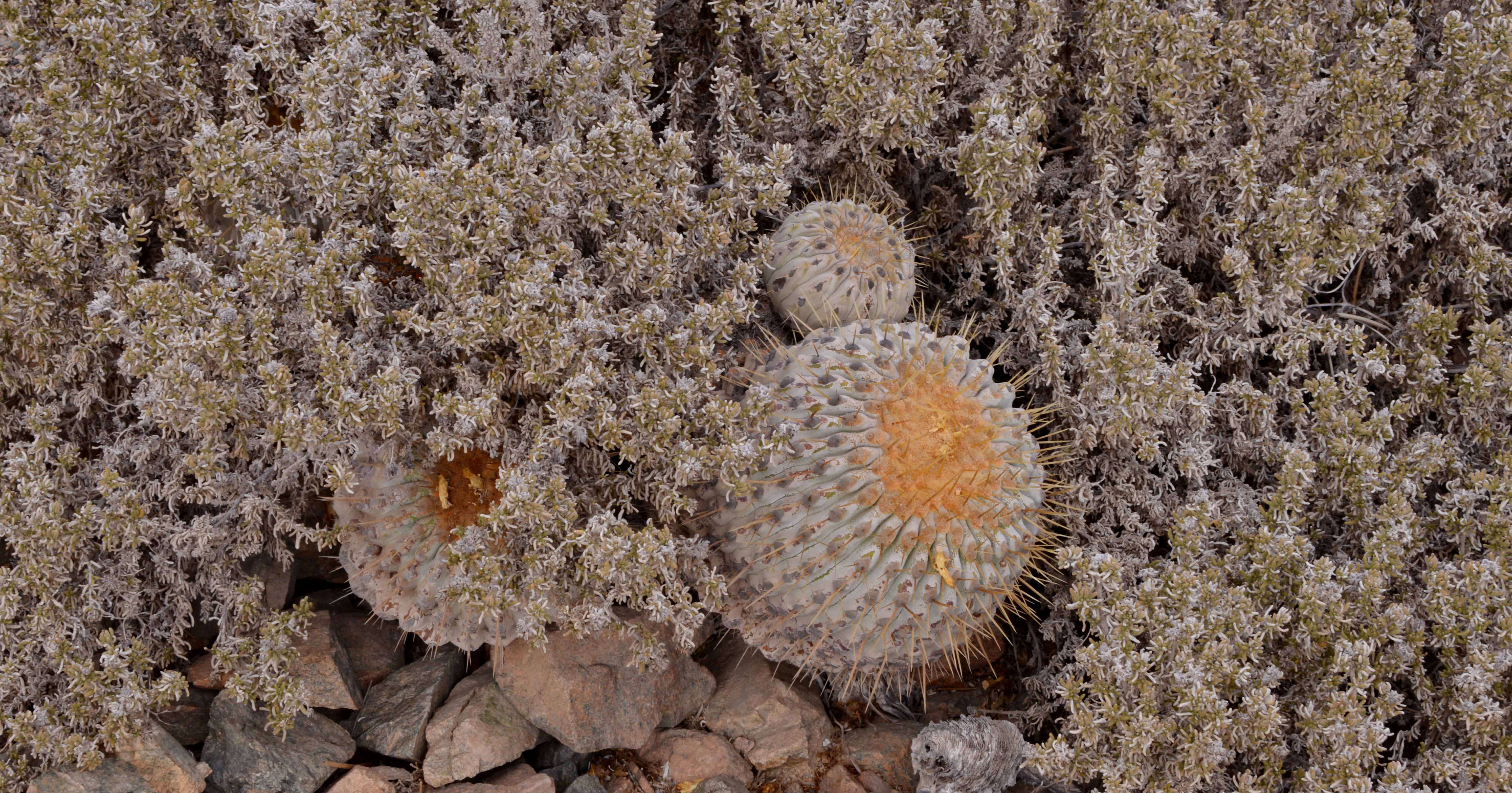
Copiapoa cinerea ssp haseltoniana

Copiapoa cinerea ssp haseltoniana

Another one of Angie’s requests was to see Copiapoa solaris at the end of the Botija Valley. Why not? During my last visits in October and December 2010 our familiar ‘campsite’ had been bulldozed and a rough track lead into the Quebrada. In December we met a car with two occupants at our old campsite – they too were surprised. One of them was the Manager of the Manta de La Luna Mine in Tocopilla and keen on cacti. No, we need not fear that Botija would be destroyed by mining – he would have heard on the grapevine, although clearly there had been some serious exploring, judging by the heavy-duty caterpillar tracks. Perhaps a small gold vein had been found and emptied, but the tracks were now ‘old’ and there had been no obvious follow-up.

So we were a little tense as we approached – for two reasons: 1) would there now be a camp with mining equipment and 2) if not, would we recognise the place? I had not brought my regular GPS along and had set off believing that I’d have no problem at all. Never mind, we could always turn round if we got to the easily recognised mining dump at El Cobre! S2841 was for images from the car – no cacti photographed.

There was no need to panic. Some of the R1 beyond Paposo had been improved, but there was still some 80% of the traditional bone shaking to endure. Angie & I both saw the first Copiapoa ahremephiana more or less at the same time – but they looked extremely dry, almost beyond hope! Fortunately nature seems to have a fantastic ability to recover, but this will take a major miracle! It was difficulty to decide which image was right to include in talks and in my blog – one of the very few plants that still looked in reasonable shape or one of the many dead or dying plants, looking very dehydrated. I settled on a small clump that shows aspects of all these stages perhaps explaining why when we were first here in 2001, Marlon & I both noted two species here. When we get back here in a month’s time Jonathan Clark noted that there are two different ‘faces’ on the same clump – one plant, one species, but two different appearances as the plant sacrifices stems to survive. (S2842).
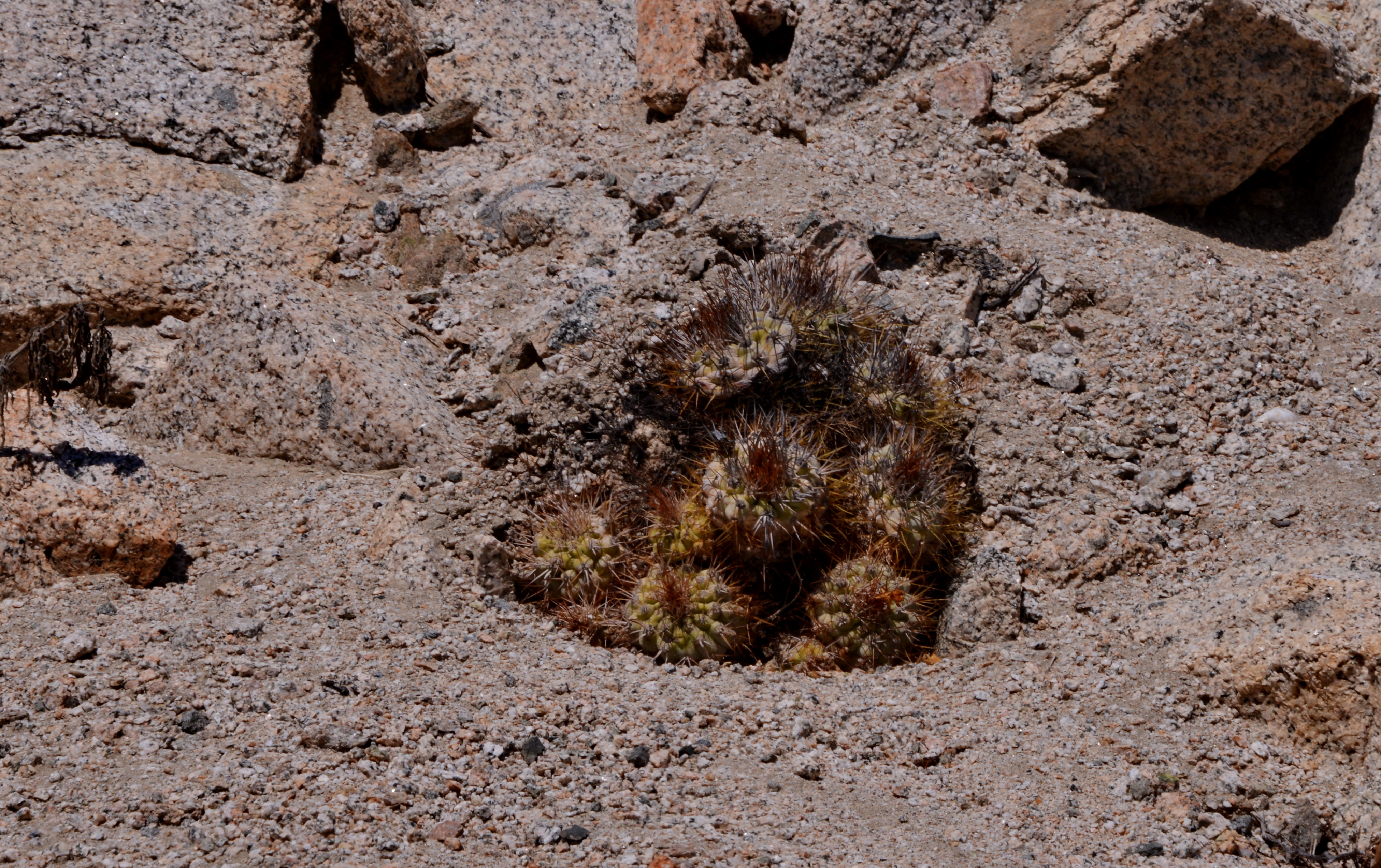
Copiapoa ahremephiana - one clump, one species, two 'faces'

Copiapoa ahremephiana – one clump, one species, two ‘faces’

We set off on our hike but soon found what seemed to be a new branch to the Quebrada off to our right. I decided to follow it for some 30 minutes while Angie marched on to the ‘T junction’ at the end of the main valley. All I found were dead C. arhemephiana, quite a depressing sight. This small canyon seemed to turn round to the coast, away from where I might expect to find the other interesting cacti of this area.

I turned back and followed Angie’s footprints along the track that we had found in 2010. It seemed that nature had done nothing to improve the quality of the track, rather made it worse. It also seemed as though not many other cars had tried to copy us and drive in. The suspension on the Dodge was rather bouncy and if we had a new set of all terrain tyres, I might have risked driving in. For now I was happy to explore, move some of the larger, sharpest stones and see if I’d like to take the risk in a few weeks time when I would be back here again.

Most of the track was passable, some parts even good enough for a 20 km.p.hr. sprint, but in some places wind and water (?) had cleared away the sand between huge boulders, leaving large gaps with protrusions that I think would not be cleared by our car. Also, if we should be able to get to such a point, there was no space to turn around, so we’d be stuck. I stopped my highway maintenance tasks and started to look for cacti – still very distressing. Soon Angie appeared, reporting that she had reached the T junction and at least found a number of healthy looking clumps of C. solaris, but here too, there was more death to be observed. We walked back along the south side of the Quebrada (the track zigzagged across the valley floor, but the main place to spot C. decorticans had always been on the south side – north facing side of hills. I have never been able to work out why Copiapoa, living in an environment where water, and how to avoid losing it, is of critical concern, always seem to select the north facing side of a hill – the side that at midday gets the full sun, rather than look for shaded positions. This preference could be fatal here.

C. decorticans (the name C. moribund had been considered when naming the two ‘sp. Botija’ plants was discussed) was in serious distress – I did not find any live plants, plenty of clumps that had died a while back. I know from more detailed explorations high on the surrounding hills by mountain goats such as Rudolf Schultz, Leo van der Hoeven and Juan Acosta and Florencia Senoret that many healthy plants grow much higher on the hill, much too high for my physical ability and for today’s time budget, even if I had been mad enough to try. Fingers crossed that things are better higher up.

And so, after our after our brief sojourn to our farthest point north, we set off back to Taltal, muscles aching after years of too little exercise.

The story of cacti looking stressed through lack of water has now been observed everywhere that we’ve been. That despite us seeing the Desert in Flower in October/November 2010.  Clearly there had been plenty of water than to encourage the annuals to put up a magnificent show, but not enough to allow the cacti to build themselves up for the next great drought.

We saw some lizards that seemed in no hurry to run away from us, but no insects, even though there were some annuals in flower. Angie reported being followed by a hummingbird everywhere she went – must have been her shirt with lots of red in the pattern that was the attraction. So even if there should be a good wet year for the plants, will there be enough pollinators left to ensure sex for the cacti?

On the way back to Taltal we made another leg stretch stop (S2843) among the ever so photogenic C. haseltoniana.
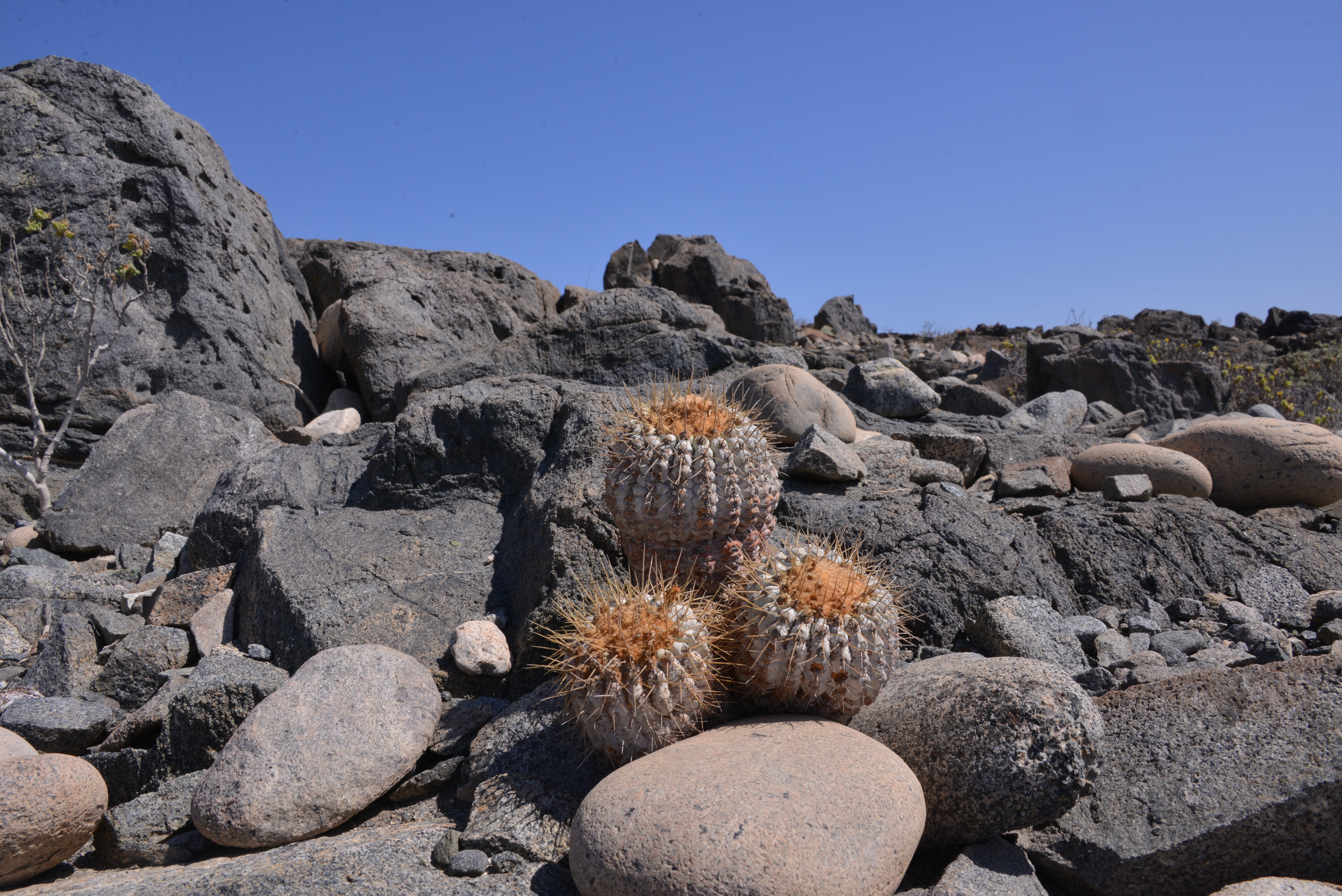
Copiapoa cinerea ssp haseltoniana along R1

Copiapoa cinerea ssp haseltoniana along R1

Off to Club Taltal soon, where yesterday we had been greeted as long-lost friends. It’ll take a few Pisco Sours to forget the dead plants seen today.
Monday, 14 October 2013 – Vallenar to Taltal

Today was the longest day’s driving on what poses as a ‘plan’. We left at about 10 in the morning and arrived at Hotel Plaza, Taltal at 17:00 – we’re booked in for three days at about half the price of the Hosteria in Vallenar. Club Taltal is just around the corner and opens at 8 – hope they have a Pisco Sour ready for me!

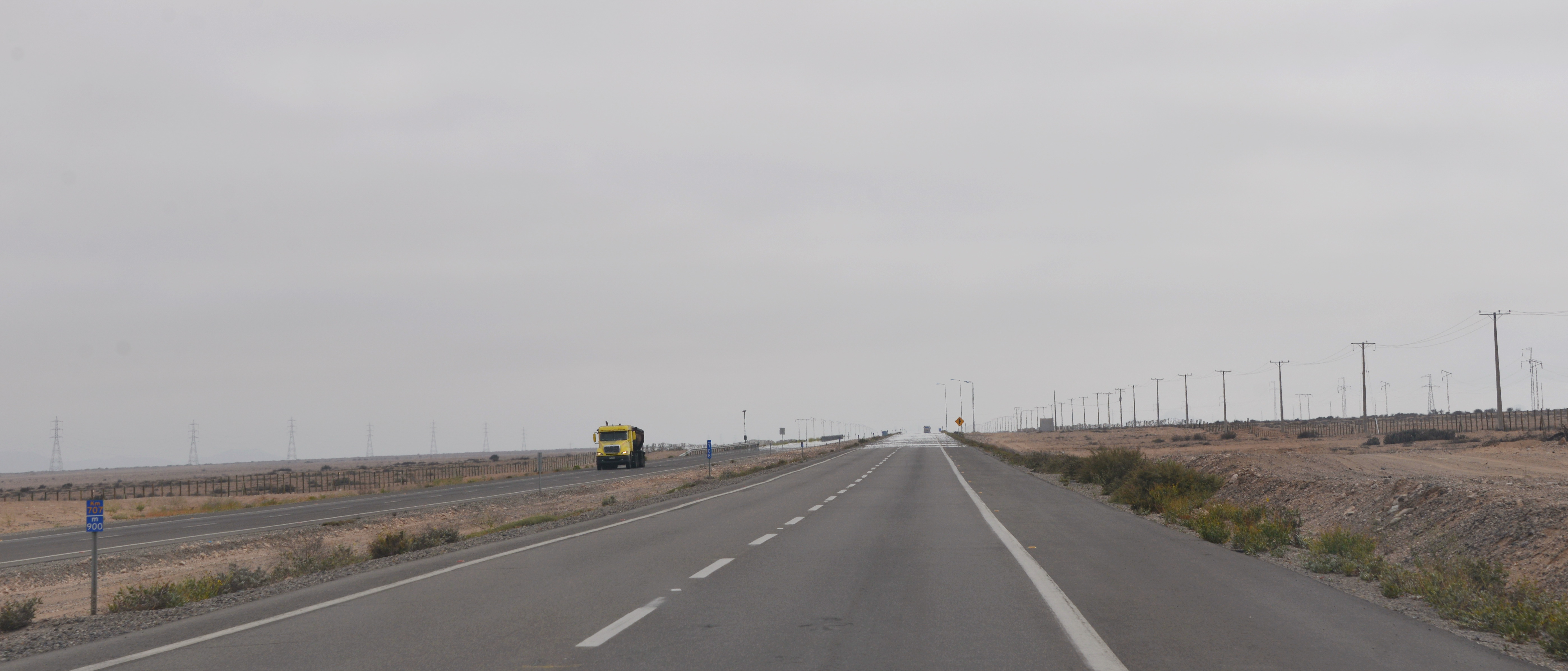
So today’s impressions: Ruta five has become a lot faster now that sections of it are dual carriage way. Just stick in the fast lane and pass all those trucks that used to cause us to risks our lives in the past. At least with the power of the Dodge I could have taken a convoy of 5-6 trucks at the time – wow, is it powerful! But you can see the fuel gage go down when you put the hammer down, so as befits my age, I have set cruise control to 100 km.p.hr. (S2835 for images taken from the car as we drove on).

I have already mentioned that R5 is now a ‘corridor’ fenced off either side to make sure that future toll collectors know what they are responsible for. As a result, many familiar signs to turnings that we used to take in the past seem to have been lost. Or perhaps they are still there but the sign posts are not yet up, or instead of pointing to names, such as El Donkey and Totoral, they point to C- road numbers that I am not yet familiar with. We’ll find them in weeks to come I’m sure.

I intended to take the ‘new’ Copiapó by-pass that had only just been opened in 2010. I could not find the turning, until I realised that I was actually on it. It is now the default Ruta 5, with another road number allocated to the old road. So much for the folks who used to identify plant locations as ‘off R5, 20 km south of Copiapó – which Ruta 5?

So with the luxury of dual carriage ways, the tolls were introduced. I have made a note but from memory it adds another 10,000 pesos to the toll bill. Things go back to two lane hard top past Caldera, but the fence posts are up in places, so I think the river of asphalt is coming! We stopped as usual(S2836) at the monument of a Virgin overlooking the Ocean, south of Barquito. A sign invites motorists to honk their horn for good luck as they pass. As a result, we christened this spot ‘Hoot the Virgin’ – said with a strong Scottish accent. The statue of the Virgin seems to have fallen victim to vandals or a storm, and her shattered remains were scattered at the foot of the monument steps. The cactus at this stop was Copiapoa calderana, Ritter’s variety spinosior, ‘the spiny one’

At Chañaral they were working on the road right where the Guanaco statue indicates the turn to the Pan de Azucar NP. We had made good time so decided to take the scenic route through the park and put a tick next to Angie’s goals: a 2013 picture with Smiler, a Copiapoa column-alba that she has now photographed on four separate occasions. The clump of Thelocephala was still in place, near-by, as well (S2837).

The chain across the track to El Mirador had moved a lot closer to the view-point, but was too far to walk to this time. Signs suggest that Los Lomitas is accessible again – we’ll try in weeks to come.

Everything looked still very dry. The felted discs at the apex of the column-alba were very small, as though the plants were still at rest – perhaps in between El Niño years.

Not sure what is going on along the stretch of R1 from R5 into Taltal – major works on what looks like building some huge water reservoirs along the road. Are they expecting a dramatic increase in rainfall? Perhaps pump the town’s sewerage to the top of Mt Perales and then generate electricity as it runs through the concrete structures? A good part of the track to the top of Cerro Perales seems to be asphalt these days – again to be explored later.

Angie is waiting impatiently to go for a stroll and catch the new Taltal Church before sunset (S2838). More tomorrow, when a drive to Botija is on the schedule.

PS: The new church turned out to be a very attractive brick building: light, airy and modern on the inside, yet with some traditional statues to retain its history.

We were greeted like old friends by the brothers who run Club Taltal on an annual basis. It’s been a long time! one of them observed. Three years to be precise. Angie & I raised our glasses in a toast to absent friends, this time specifically for those whose voices from previous visits still echoed around the room. It was fun to remember every one and the year(s) of their attendance – quite a list of who is who!

Today’s photo stops: S2835 – R5, Vallenar to Caldera; S2836 – ‘Hoot the Virgin’ (Copiapoa calderana var. spinosior); S2837 – Pan de Azucar National Park: Smiler(Copiapoa cinerea ssp columna-alba); S2838 – Taltal Church

Pan American highway (R5) north of Vallenar

Pan American highway (R5) north of Vallenar

Copiapoa calderana - Ritter's var. spinosior

Copiapoa calderana – Ritter’s var. spinosior

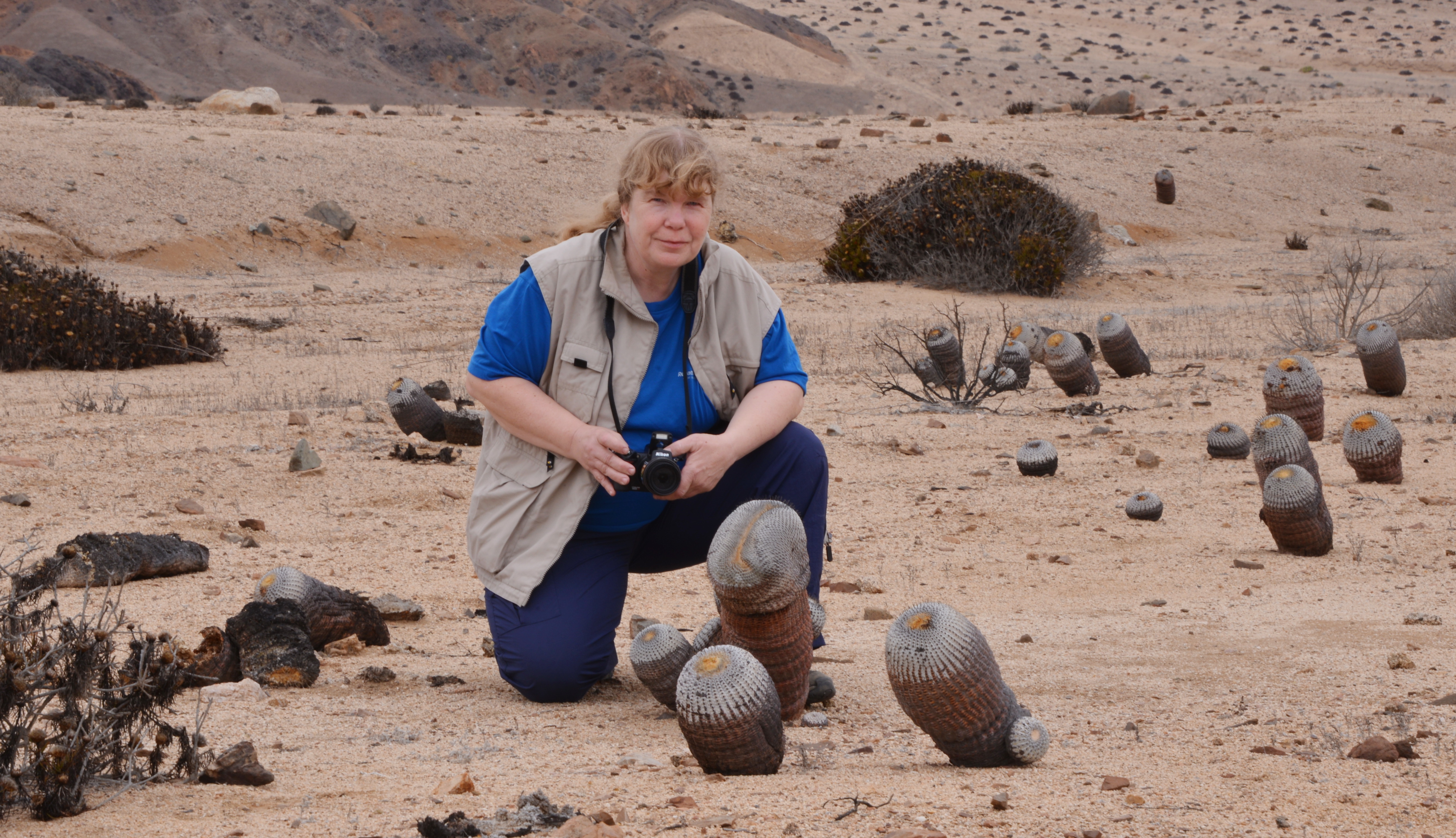
Pan de Azucar: Copiapoa cinerea ssp. columna-alba: Angie with an old friend - 'Smiler'.

Pan de Azucar: Copiapoa cinerea ssp. columna-alba: Angie with an old friend – ‘Smiler’.

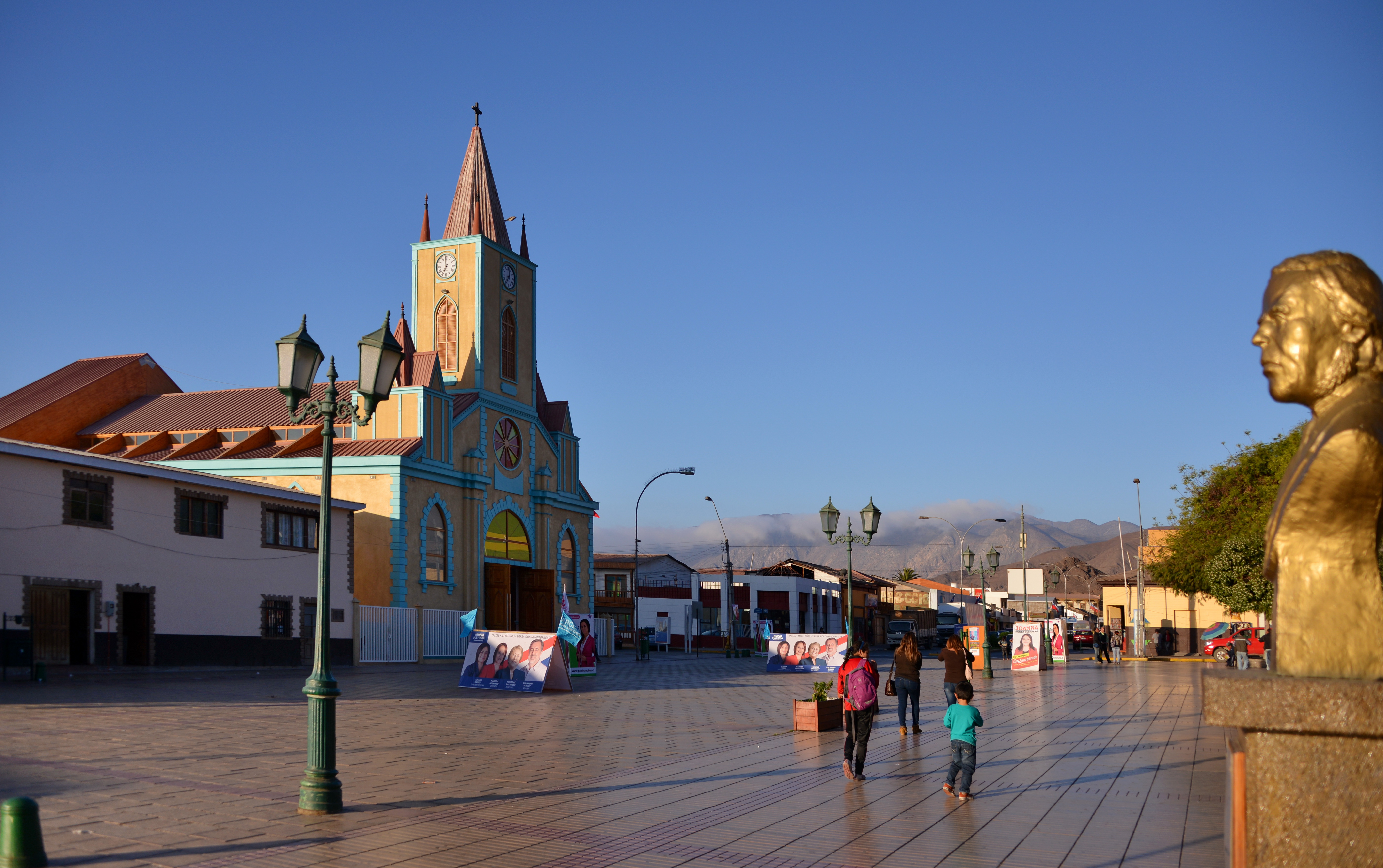
The new church in Taltal

The new church in Taltal

Sunday, 13 October 2013 – Guanaqueros to Vallenar

Greetings from the Hosteria Vallenar where room 118 will be familiar to some of you from previous trips. Wifi at last!!!

I should have mentioned yesterday that as we passed through the tunnel at El Melon, the camanchaca was out on the other side – with a temperature drop of some 10 C. My fears of reaching melting point before leaving Chile were eased. Here, everything alongside Ruta 5 was much lusher than I remember with thousands of yellow flowered Puya and white flowered Echinopsis (Trichocereus) chiloensis doing their thing.

The other notable change was that the cost of tolls seemed to have increased significantly (doubled?). When I get home I’ll compare the cost this year against previous years, although it still feels like good value, especially if you see the task of what is / was involved in building & maintaining this road in a land that regularly experiences earth quakes.

Yesterday’s camanchaca had persisted and the Dodge’s wiper delay of once every 5 or so minutes was just right. Unfortunately everything looked dull so that the cameras stayed in the car for much of the time. We overshot Lider in Coquimbo for a bit of shopping, but found the Jumbo a bit farther along just as good – except that their ATM’s did not accept any of our cards – has there been a financial collapse in the UK? Paying with the credit cards is fine. [It turned out that we just needed a bit more time to read and understand the text on the screen.]

It’s only 234 km from Guanaqueros to Vallenar. Work is in progress to widen Ruta 5 beyond La Serena and presumably turn that too into a toll road. The major change so far is that the area that will be taken up by the dual carriage way with generous central reservation has been marked out AND FENCED OFF!! So no more stops along Ruta 5. Our regular stop at Los Hornos (that in 2010 was beginning to resemble a rubbish tip for the expanding village) is now off-limits.

Worse was to come as the only spot that I know of for Eriosyce napina ssp. riparia at El Trapiche had trucks and bulldozers parked on it!! I hope that the plants were rescued and saved to a safe area. Juan?  Florencia? Any news? Angie’s camera played up as we drove past, but we’ll do better on the way back.

Things on R5 had changed even more dramatically at Vallenar where the familiar cross-roads with Copec filling stations and ATM were now side-lined and R5 carried on uninterrupted towards Copiapó. As we were much too early to check into the hotel, we carried on until the first Carrizal Bajo turning – now a good hard top (oil / salt) road. There was also a new turning to Maitencillo. A new mine has opened and a continuous stream of yellow trucks was going back and fro.  I think the mine is too far in land to affect known habitats but may make it easier to explore for new habitats. Updates later, once Angie has gone home.

We carried on to Carrizal Bajo and took a right turn over the bridge. I had not yet loaded up the GPS data for the crested dealbatas to my SatNav, so although we both feel that we were near, we failed to see them. Weather still heavily overcast so only a few pictures taken, of Eulychnia breviflora in full bud, but with only a few flowers opening. No sign of the desert in flower yet. All images filed as S2834.

awaiting ID

awaiting ID

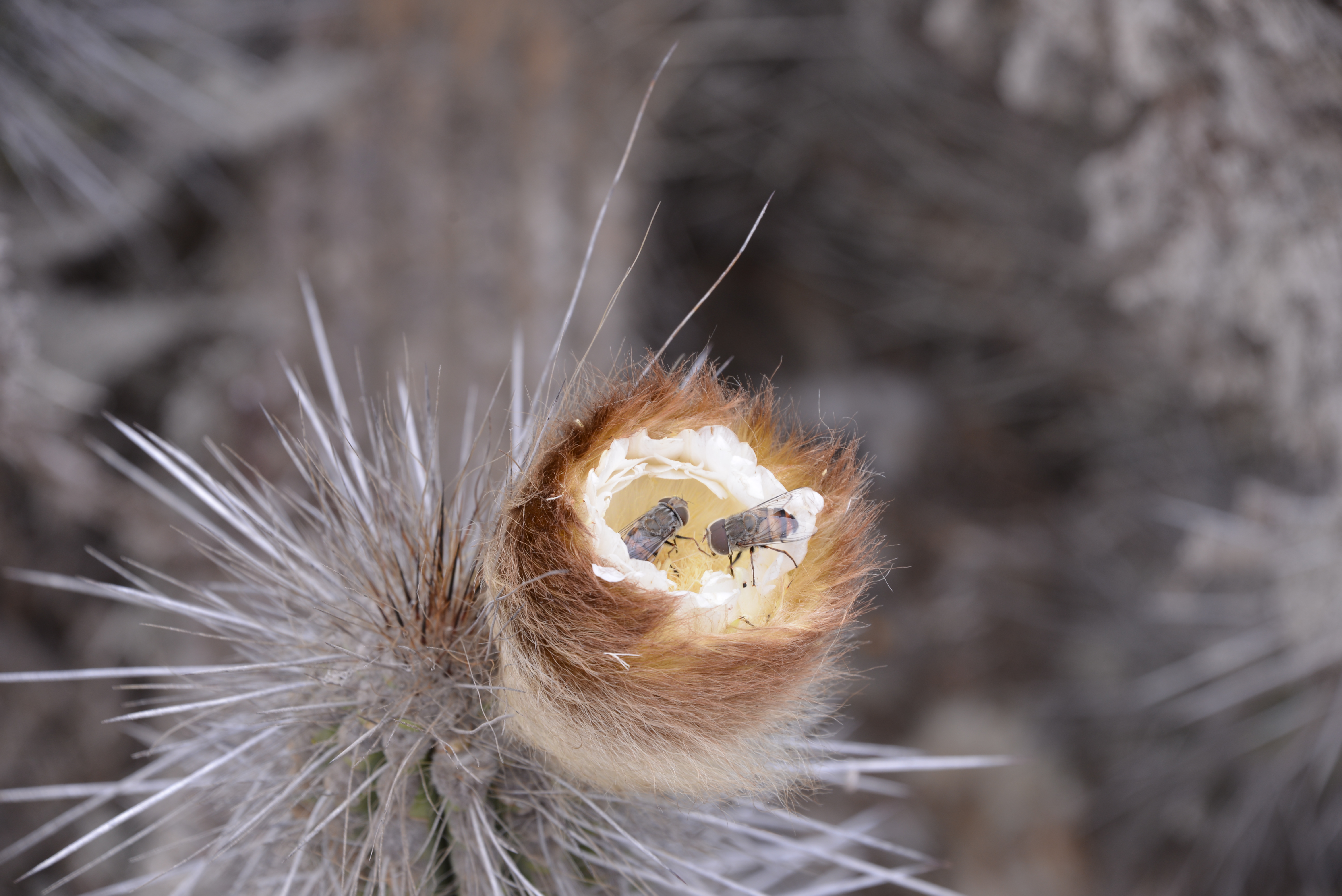
Eulychnia breviflora with pollinators

Eulychnia breviflora with pollinators

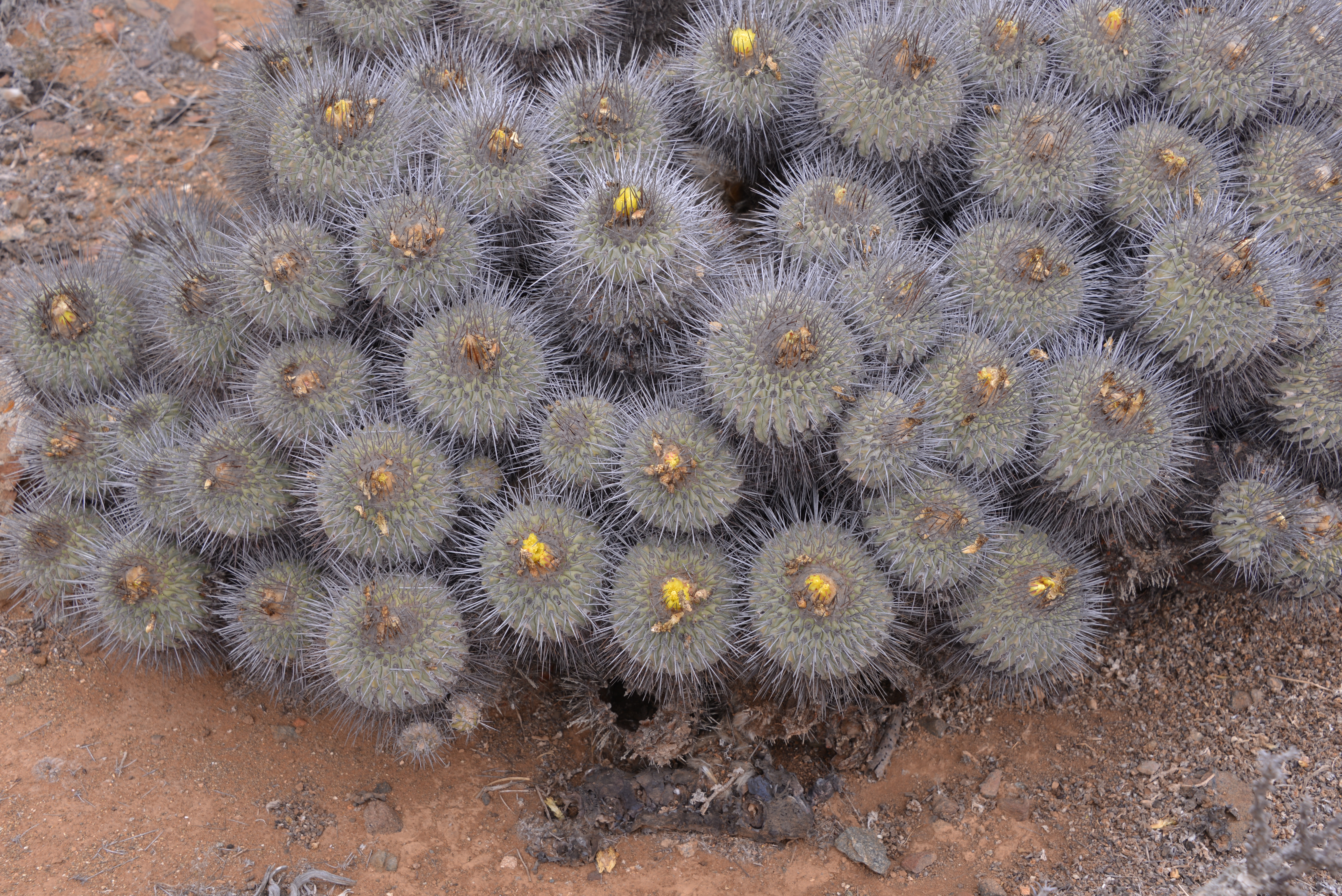
Copiapoa dealbata

Copiapoa dealbata

Time for dinner and my first Pisco Sour of the trip – nowhere to drive to until tomorrow morning!

Saturday 12 October 2013 – Santiago to Guanaqueros

We touched down 5 minutes late – not bad after a 14 hour flight. We had only been able to book our seats from LHR to MAD, so while Angie was allocated a seat with plenty of leg room at the front of economy – where usually there is a row of mums with screaming babies hanging from the opposite wall, where this time there was just a row of adults. I was 15 rows further back, in a window seat (hooray, for the last bit over the Andes) but right over the wing (boo) – so no point in having the camera on my lap. Still spoiled after last years flight with Emirates, the leg room today, with BA / Iberia, was the smallest I can remember. As I tend to sleep anyway it was just a matter of wrapping my legs a few times around my neck and off to sleep!

Santiago immigration had the usual 46 people queueing at the Chilean nationals side and the usual three long haul flights worth on non-Chileans  at the foreigners section. I pointed Angie at the last Chilean passing through, heaved a sigh, pulled a long face at the official in charge of queueing and to my surprise he obliged  by inviting me and those behind me to the now empty area – fastest pass through immigration I have ever experienced! Santiago get 10/10 and a gold star!! Why does Trip Advisor not include airport reviews!?!

Next we were off to the car rental booths, much too small for the number of customers and not adequately staffed. At least when it was our turn, the chap from Alamo spoke & understood English. Our intended Nissan XTrail, manual 2WD that had served us well last year in South Africa was not available so we had booked a ‘Nissan Pathfinder or similar’ instead.There had been some paperwork problems as we needed permits to take the car into Argentina later, necesitating a change to Plan C – first head north and pick up the paper work as we drove past on our way south. We had been allocated a Dodge Durango, automatic 4WD! If it behaves and meets expectations over the next 49 days, I’ll be as pleased as punch! It seems to be a bit thirsty, but at gasoline at c. £1 per litre I can’t complain!

First impressions of Chile: not much had changed. It was 23C in Santiago when we arrived and the forecast was for temperatures to rise by 1 C per day for the rest of the week. As said before, I’m staying 49 days. What is the melting point for a human? I bet it’s less than 72!

We allowed ourselves a quick lunch at the Copec/Pronto at Pichidangui, but as getting the car had taken a bit longer than planned, we resisted the temptation to check out the Eriosyce at Pichidangui. Arrived at Guanaqueros around 16:00 hrs and tried the cabañas at Club Bahia first (this is where we stayed on my first Chile trip in 2001 and several times since). Our German friend, Walter Mueller, recognised us, smiled and said :’I see you have a new car’!

The cabañas had been upgraded in recent years, but still fairly basic, but at a price to match. We managed dinner at El Pequenio, but were too tired for Pisco sours and Cabernet Sauvignon – just a small Crystal. Fell into bed dog tired, having scribbled down some key words from which I now write this missive.

Altos de Talinay

Camanchaca coming over the hills along the PanAm Highway at Altos de Talinay.

Today’s pictures are very limited – one taken as the camanchaca fog came pouring over the hills between the Ocean and the PanAm, aka Ruta 5 and the rest are filed as a ‘no cacti’ as S2833 – the Bahia Club Cabañas.

We’ll be back at Bahia Club in 2013!

Friday, 11 October 2013: Amesbury – Madrid and off to Santiago

Peter dropped us off at Terminal 5, London Heathrow, 5 minutes before the bag drop for our flight opened. It had been the usual journey from home: pouring rain, temperature 11 C and 40 mph speed limit on the M25, which means it’s stop – start and no risk of breaking speed limits. So the sky was crying, very fitting for the end of a very reasonable summer, with autumn crashing in during the course of just a few days.

Hold luggage weighed in at just 11.4 kg! A record, even for me. At security I was invited to let my hand luggage bag join my main bag, as I had forgotten to switch my new ‘tool for everything’ (including knife) to my hold bag – stupid boy! But I now join an elite group of previous companions who have made similar slip ups.

We arrived safely and in plenty of time at Madrid where our departure gate was at the other end of the terminal, a few km walk away, it seemed.

Monday, 30 April 2012 – Durango to Mexican Hat

So we tried to do the right thing and presented ourselves just after 9 a.m. at the Southern Ute Indian Tribe Department of Natural Resources Lands Division – Crossing Permits, only to find that they had already been open from 8 a.m.  We made our case to the two ladies who regretted that they had to disappoint us as the place where we wanted to go was not designated a leisure area. After a very pleasant chat they suggested that we’d have a chat with their colleagues in the Wildlife section. Again a very nice chat with the guy who was present who was unaware of the plant and its location but echoed what his colleagues in Crossing Permits had told him. However, he did note that the name of the road along the place where we wanted to go – to see Pediocactus knowltonii – was Road 4000 and this would indicate that it was just across the border in New Mexico, outside Ute or Colorado juristriction and that it was therefore on BLM (Bureau of Land Management) land, which was public right of way, unless local signs or fences indicated otherwise – Have a nice day!!

We did. The next challenge, near our location, still in Colorado was a sign to warn us that the bridge ahead was unsafe and that people would cross at their own risk. It did not look too safe. We noticed a ford to cross the river, but on entering the water, soon changed our minds. A bit farther along, a man was busy at one of the oil well heads.We asked aboutthe bridge. Although it did not look too safe he had been across it quite often. As we approached it for our second attempt, two Dodge Rams pick ups, about twice the size of our car, came across the bridge. It was still standing afterwards, so we gave it a go – no problem. Next we passed a turning to La Boca Cemetery and a sign confirming that we were on Road 4000. SatNav confirmed that at the sign, our front wheels were in New Mexico while our back wheels were still in Colorado. Some 50 meters on and we felt safe to park and take a look. The terrain looked right, very similar to so many other Pedio locations. And soon we found the first cacti. (S2544).  But these Pedios looked very similar to P. simpsonii, not like the P. knowltonii that I had seen in cultivation. No flowers – things looked very dry here. Again Coryphantha vivipira was here, making it necessary to check the tubercles for grooves to distinguish it from Pediocactus. Opuntia sp was also noted.

Friends have since confirmed that the ‘true’ knowltonii grows on the otherside of the road in the fenced off area that we had considered too risky as cars passed regularly. I had ‘walked the wire’ but had not found any stragglers that had ‘dropped out’ of the conservation area. So near and yet so far. Still, perhaps our observation that P. simpsonii grows so near by (less then 20 meters?) throws some doubt in my mind as to whether the distinct looking P. knowltonii, growing on slopes under a reasonably dense stand of pine trees deserves a botanical rank or is merely a ‘sport’. [Note to self: What is a biological ‘sport’? – Answer : Any organism that shows a marked change from the normal type or parent stock, typically as a result of mutation.]

We considered today’s mission as completeand headed back into Utah and told SatNav to find us the way to Mexican Hat. (177 miles) Fortunately, it selected the route via Four Corners (S2545). I had suggested that Angie leave most of her souvenir purchases for this monument (not a National Monument, as we still had to pay $3 each to get in, despite our Annual Parks pass). I wonder how it will fit in my luggage. Cliff says that if I take pictures first, then make the pots smaller with a hammer, I can fit it all in and have hours of fun back home, gluing them back together. Fortunately we had bought extra luggage earlier to accommodate the pottery items that are due to come home, so I hope to avoid the ‘restore-from-kit’ stage.  We managed to avoid any ‘Made in China’ items and selected some nice pieces signed by the artists with their Navajo names. The nicest pieces was priced at $765 (plus tax?) but representing 60-70 hours of work with a tool-steel needle and a scalpel. We were allowed to take its picture for free. The artist was working on a much larger piece that would eventually sell for around $6,000! And worth every cent considering the skills, time and effort that goes into such piece. Our budget was a bit more restricted – I’m sure that my sons will heave a sigh of relief!

S2546 was for a stop as we approached Mexican Hat, more for the rock formations lit up by the sun as its reddish tinge in the late afternoon accentuated the shadows. They did have rain here, judging by field flowers attempting a Desert-in-flower’ scene.

Sunday, 20 February, 2011 – Rest day in Bellflower

Today was a rest day, so we rested. Went out to lunch in Pasadena where we met with Tim Harvey, a Brit who moved to California some 15 years ago and has recently become the Editor for the CSSJournal.

The car was washed and all my clothes from the Baja trip visited Eunice’s washing machine and dryer.

Pictures

Alain posted a comment regarding pictures. You don’t have to be clever to find the pictures – they are not there, no matter what your IQ might be.

It’s difficult enough to keep up to date with the texts, sorting pictures just adds another dimension of complexity for which I do not have the time.

During my 3 week break in the UK I barely completed the sorting of the 3 months of pics from Chile & Argentina, I want to add four galleries: one of the Austrocacti that we saw in 19 Stops, another for the Pterocactus (similar number) one for the Gymnocalycium – alledgedly one species: G. subgibbosum and another for the Andean alpine plants that need to be identified.

The facility to do this does exist in WordPress, its just lack of time for now. Watch this space and I’ll post siome pics when I can.

Back home

A faithful reader, Ian, reminded me today that the Diaries currently end abruptly on 3 January 2011 in Vallenar. Were we OK, did we arrve home safely?

Sorry folks. Yes, we are all safe and well and arrived back in the UK after a completely unremarkable journey from Vallenar. In brief:

4 January: Drive from Vallenar to Lonquen. We were still a bit concerned as we were on 3 dodgy tyres plas a risky spare, unable to find replacement tyres of the correct size. We were a bt more confident after the rubber had behaved itself yesterday, so Cliff pushed the self exposed max speed up to 100-120 km.

I took pictures from the car window of the Eulychnia mainly from between Vallenar to La Higuera, just before the Cuesta Buenos Aires. Were these E. acida or E. breviflora? Particularly as we got stuck behind small convoys of trucks and busses, which brought our speed down to c 80 km.p.hr. it was possible to distinguish ceroids with lateral buds/flowers/fruits (i.e. E. acida) from E. breviflora with its large, woolly honey coloured hypanthia. The poor quality of the images shot on the move mean that they are extremely unlike to ever appear in a talk or publication, but they help to confirm that E. acida is the prominent Eulychnia inland, as R5 heads south from Vallenar, but that it is replaced somewhere between El Trapiche and La Higuera by E. breviflora as R5 turns towards the coast. Juan reports observations from his previous trips that E. breviflora is the common Eulychnia in Quebrada Honda. Yet, above Los Hornos at our regular leg stretch stop, E. acida is the prominent Eulychnia, with just the odd E. breviflora found. All these images are recorded as S2195 and this is the last stop number of these trips.  We started at S1894 on 9 October 2010, so I make that 301 photostops.

We arrive back at Lonquen around 6 pm and by 8 sit down for a meal at the local Chinese restaurant.

5 January: a rest and packing day when I start logging all the Stops into my access database. When the day starts to cool down a bit (Lonquen in January is a hot place) Juan and I go and get the car washed. Unbelievable that this gleaming white car that drives away from the car wash is the same as the filthy dust covered car (inside and out) that has been our home for the last 89 days.

The punctures are more a natural consequence of driving 23,180 km then a defect of our vehicle. Although we had mainly used national highways, such as Ruta 5 in Chile and Ruta Nacional 3 and RN 40 in Argentina, the Argentinian roads can be very variable in quality, changing from smooth asphalt to long stretches (100s of km) of gravel roads with some poorly maintained stretches catching out the driver.

We went out to eat at a local Chilean Steak House and then dropped John off at Santiago Airport, around midnight. John’s flight was due to leave at 7:00 a.m. the next morning, which meant a 4 a.m. check in or a 3:15 departure from Lonquen if we were to drop him off. We were very happy when John suggested that we’d drop him off around midnight so that the rest of us could enjoy a good night’s sleep. He reports that he slept well on the airport benches.

6 January: Cliff and I are due to leave around 8 p.m. Cliff is on a flight departing some 20 minutes earlier than mine. In Madrid we will join the same flight to Heathrow IF flights depart and arrive on time. After some haggling with airport officials I manage to get myself transferred to Cliff’s flight.  We leave Santiago exactly on time and arrive at Madrid ten minutes earlier than scheduled, easily making the connection to our flight to Heathrow.

We had joked about all the snow and ice that Europe experienced while we were sunning ourselves in South America but could this weather prevent Angie and Cliff’s daugthers from picking us up for the ride home?  Fortunately the temperature rose a few days earlier and there is no trace left of the snow and ice.

Let’s hope that these roads are still clear on 3 February, when I leave from Heathrow for some two and a half months in California and Mexico. The Cactus Trip Diaries will continue again on 3 February.

Monday, 3 January, 2011 – Taltal to Vallenar

Not much to report; we made it safely through (roughly) the first half of our journey home. The road builders had performed miracles on the work to turn R5 into a dual carriage way from Caldera to Copiapó. The extra width was not yet available, but looked to be ready any day soon.

Some 5 km out of Copiapó we were directed onto the new Copiapó  by-pass that went through a virgin piece of desert to meet up again with R5 some 20 km south of R5. The road was as smooth as a baby’s bottom, but John still kept the speed down to be on the safe side.

Tomorrow is the last stretch to Lonquen.