Just another WordPress.com site

Archive for the ‘Chile’ Category

Thursday, 24 October 2013 – Around Villa Pehuenia (2)

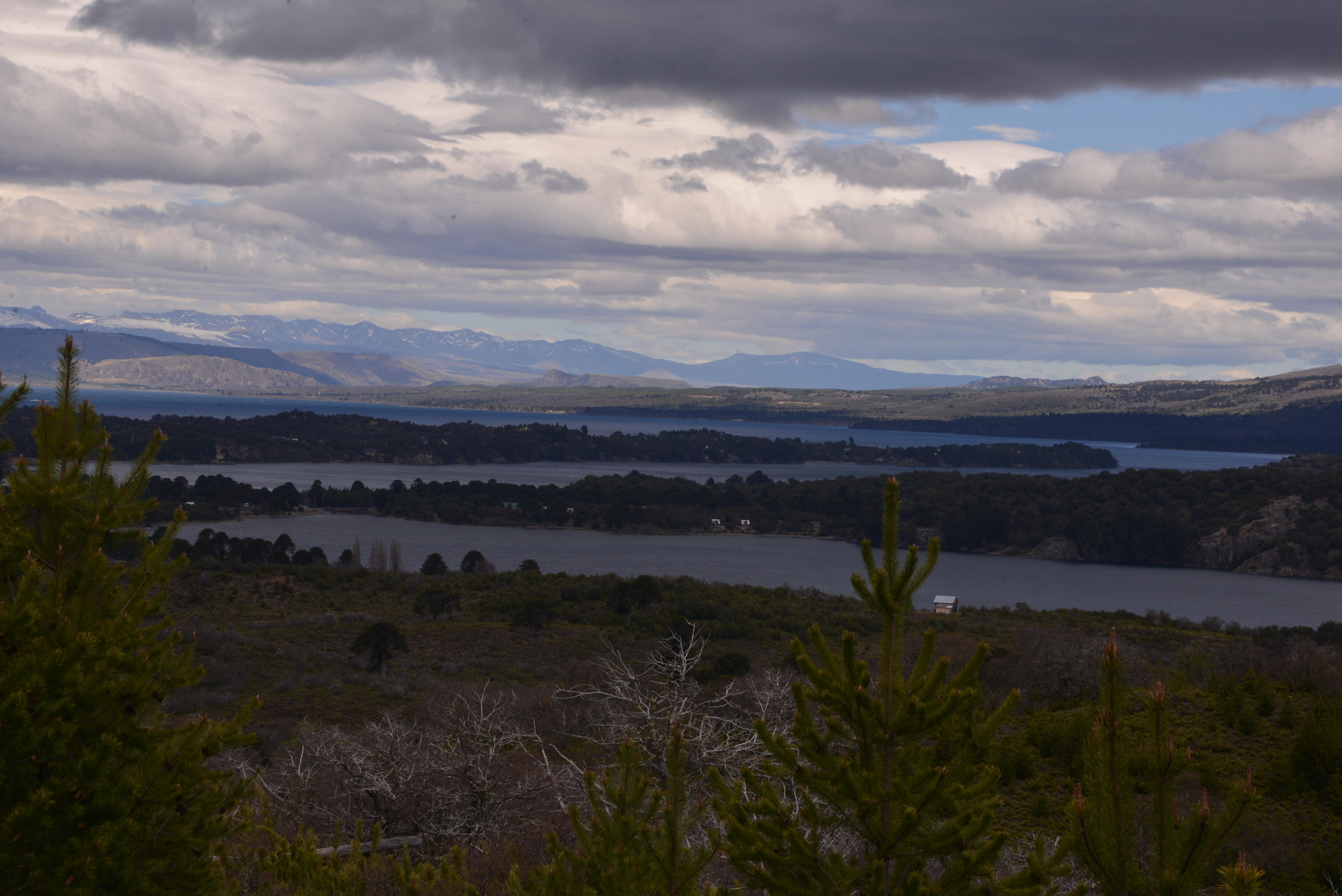
The view from our bedroom window keeps changing. This morning the same bedroom window that offered us a glorious view over the Araucania covered mountains across the lake when we arrived, snow covered Christmas scenes yesterday morning and back to normal when we returned in the afternoon, this morning gave us ….. pea soup! But very spectacular as over breakfast (with camera in hand) we watched it clear up. Should have used my tripod to do some time-lapse shots. We’re not complaining!

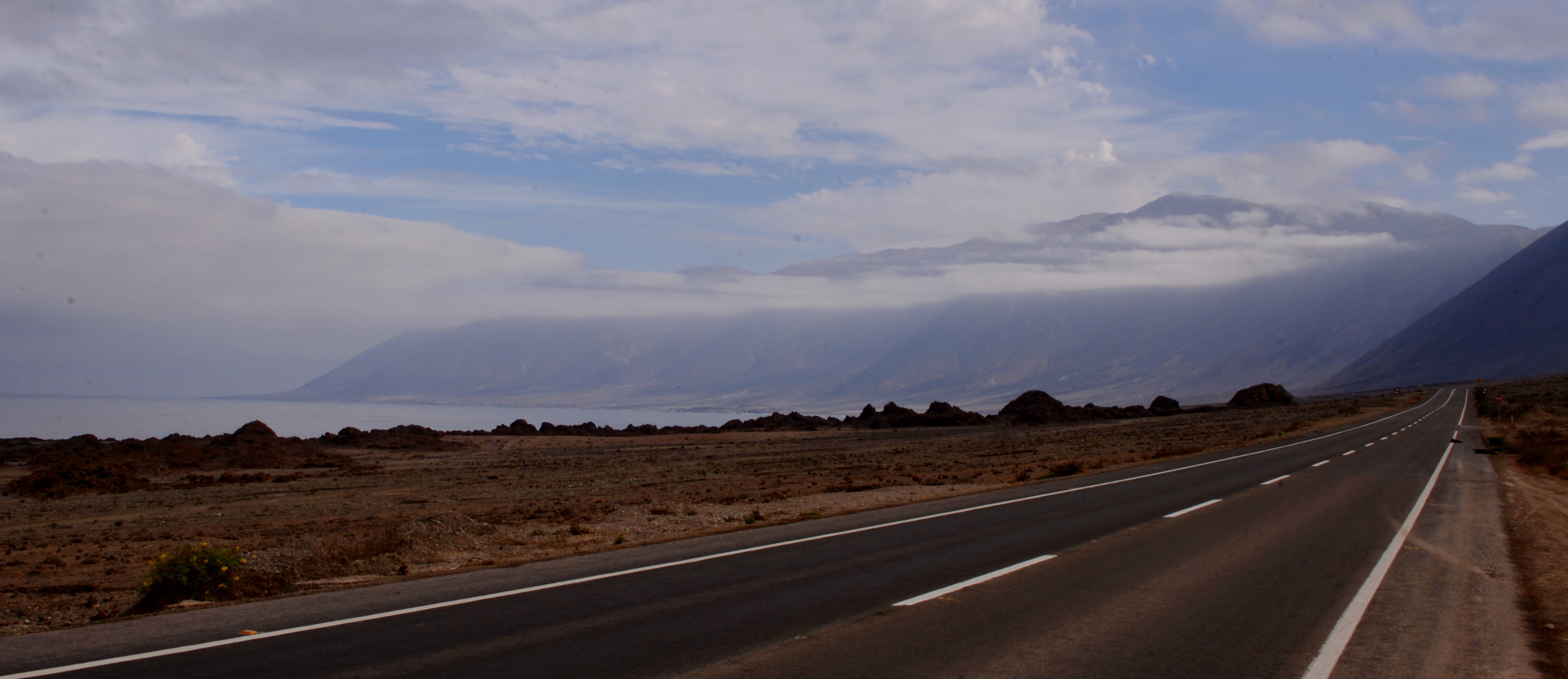
Our guide, Martin, is a teacher at the secondary school in Lonco Luan and had to be at work until 15:00 hrs. So we spent the early part of the day on the road to Zapala. In 2010, Guillermo Rivera’s party were travelling 2 days ahead of us and reported to have passed a spot along the Zapala road, where some 200 Tephrocacti had been in flower – 56 km from where we were. Now I wasn’t so silly to expect that they’d still be in flower, but certainly hoped that a drive to the area might suggest the spot and that one or two of the plants might reveal themselves. They did not, but we have some more shots of the spectacular scenery. We’ll drive through here again tomorrow as we move north.

Road to Zapalla

Road to Zapala

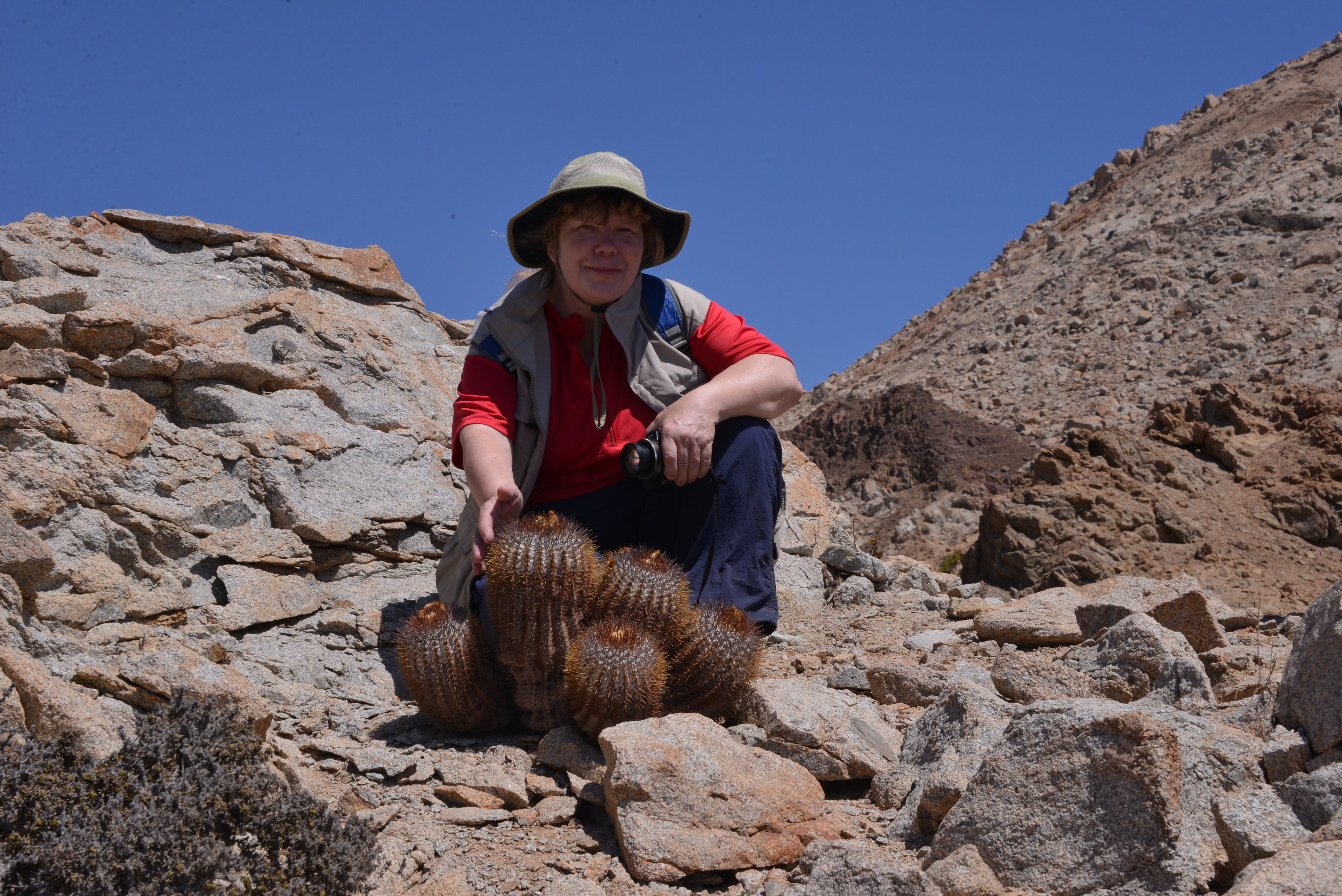
Martin was ready and waiting as we arrived at the school. What did we want to see? Cacti or Viola? Again, both was the reply. We had been warned that it was probably too early in the season for the Viola and also, with Pterocactus not in flower yet, these would be difficult to spot. So, cactus first – a location away from Villa Pehuenia and one that we had visited also in 2010 – at the base of a huge rock on private land.After the long break since last seeing cacti in habitat, I practically raced up the hillside to where I knew the plants were. They looked in excellent shape but again – too early for flowers. Angie found her first Austrocactus ever, a bit lower down on the hillside – one that I must have gone straight past on the way to my patch.

Austrocactus bertinii (S2870)

Austrocactus bertinii (S2870)

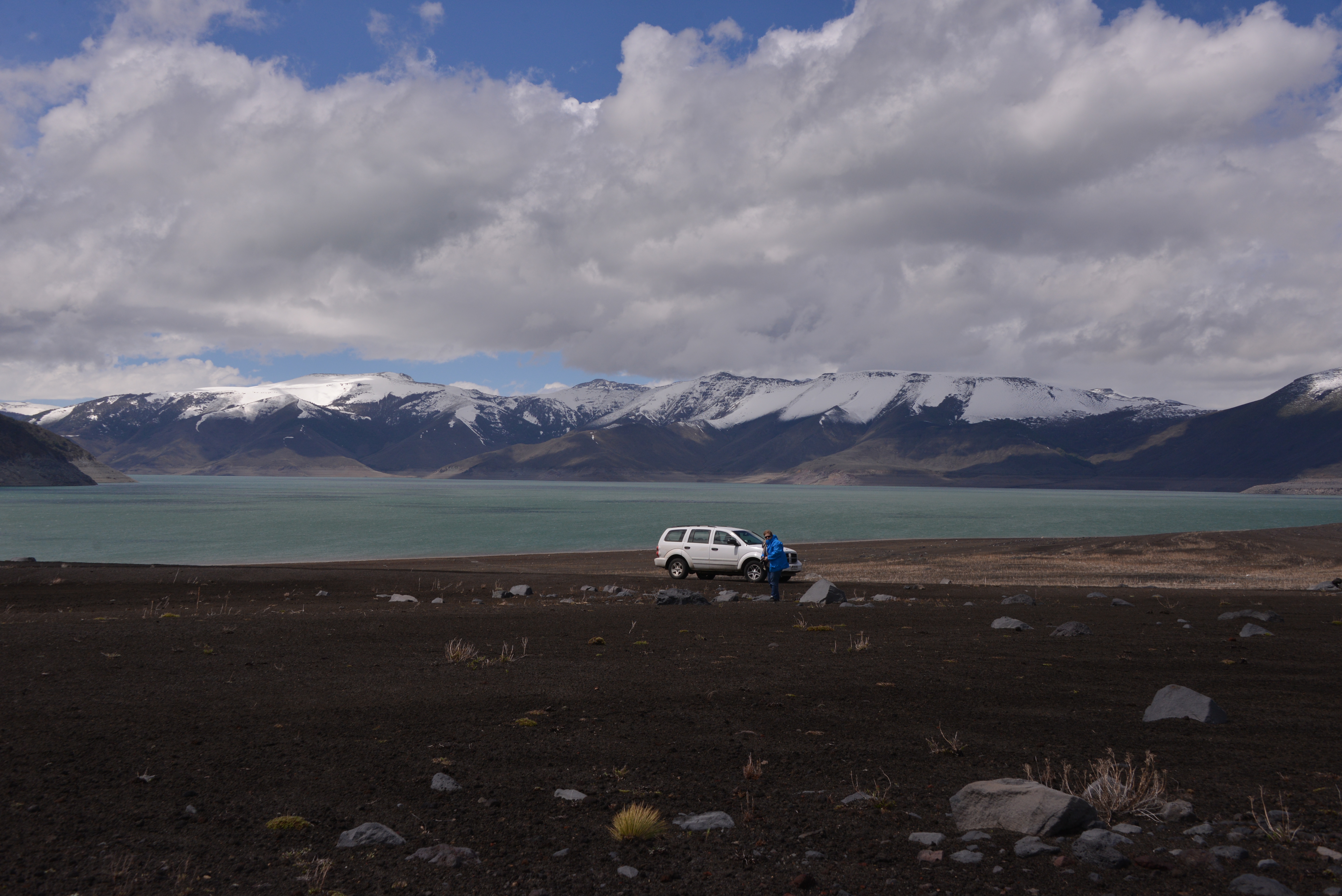
We photographed about a dozen groups of plants but then it was time to move on again. By now it was 17:00 hrs and Martin estimated arrival at the Viola spot around 18:30. I was amazed to learn that the track that we were on now – and had been in 2010 – was in fact the road to Paso Il Arco, another border crossing with Chile. Quite hairy! Particularly as the tyres provided little grip. Again, a snow field blocked our way and again we had to cross it on foot. Martin walked ahead as we changed foot wear for a short hike. At the place where he had expected to find some plants there were none. On to another spot, but again no joy. The problem was that the snow & ice was lower this time so we were still short of the 2,000 m mark that Viola seem to prefer here. We explained that the Viola at Laguna Laja in Chile had been up and flowering, but that was a day’s drive farther north (i.e. closer to the Equator) and on black rock that acts as a heat sink.

Also worth reporting that the Patagonian wind that had plagued us during 2010 had only appeared once or twice. This morning’s drive had taken us past the spot where in 2010 I had already returned to the car when Juan was caught in a mini hurricane that battered him with sand and pumice particles. John and Cliff had been observing the event from the hillside, above the turmoil. Today it had been very calm, a great photo opportunity.

It was dark when we arrived at Villa Pehuenia, around 20:30 and said good bye to Martin. He did not want to accept any money for his time – as Alejandro had already suggested yesterday – just a warm handshake of friendship. This we did plus I gave him a very rare book indeed! The only copy in existence of the Cactus Trip Diaries – Patagonia 2010! I can always print off another copy when I get back to the UK. He was over the moon!
Gallery

Wednesday, 23 October 2013 – Around Villa Pehuenia

One disadvantage of being right up to date with these reports is that often they are written and sent before the end of the day. I know that some of you receive a copy by email as soon as I press ‘Publish’, so would not be aware of any post scripts. So I’ll add a bit that ‘belongs’ to the end of yesterday, here.

Cliff, John & Juan will know that when we were here in 2010, Monica & Walter, the owners of Hosteria Al Paraiso, arranged for a taxi to take us along the warren of tracks to a restaurant overlooking the lake and back after the meal, so that none of us needed to abstain from enjoying a glass or two of the local wine and run the risk of a drink driving conviction. The food, the restaurant setting and of course the wine helped to leave a lasting impression – the night ranks in my top 10 of favourite meals as I know it does for the others.

Unfortunately, the restaurant was not yet open – here it is the quiet period between the winter sport season (just gone) and the summer season – January and February, so a lot of places are shut. Walter & Monica showed us menus for a couple of places that were open and although the food was more than adequate, it failed to live up to the 2010 experience. As we picked up coats from the car it started to rain. As the taxi arrived to take us to the restaurant, huge snow flakes fell. My worry of not being able to reach Villa Pehuenia due to weather conditions now turned into a worry that we might be snowed in here for a few days! The drive to the restaurant felt a bit like a rally cross, but the driver clearly knew his way and how to avoid the pot-holes that I managed to get every time.

Two hours later he was back to pick us up. It was still snowing and some had settled along the sides of the road. I’m dreaming, of a white Christmas ….

As we woke up this morning, the view out of the bedroom window was one of those Christmas scenes that features on cards during the festive season. All I have to do is Photoshop in a few reindeer and a sleigh.

We had a nice relaxed breakfast and studied the Circuito del Lago – the Lake Loop, that would take us west, close to the Chilean border into the Andean foothills, then south, along the edge of the Lago Moquehue, before turning east towards Alumine, from where we headed back mort & west back to Villa Pehuenia, a 120 km long loop. It had stopped snowing but there was plenty of snow still on the surrounding mountain sides. The roads were clear though and steam was coming of the sides. We reached the Argentine Customs post where the officer recognised us and after a note of our passport number and a note of our intended goal, we were on our way again. We followed the lake route instead of taking the turn off to Chile, but at Moquehue were confronted with another Argentine border post. The officers here clearly were bored as they took a long time reading all the documents over and over again and commenting to each other on all the exotic places that had been stamped in our passport pages. They also checked the back of the car and my suitcase, but of course found everything in order. Finally we were off again.

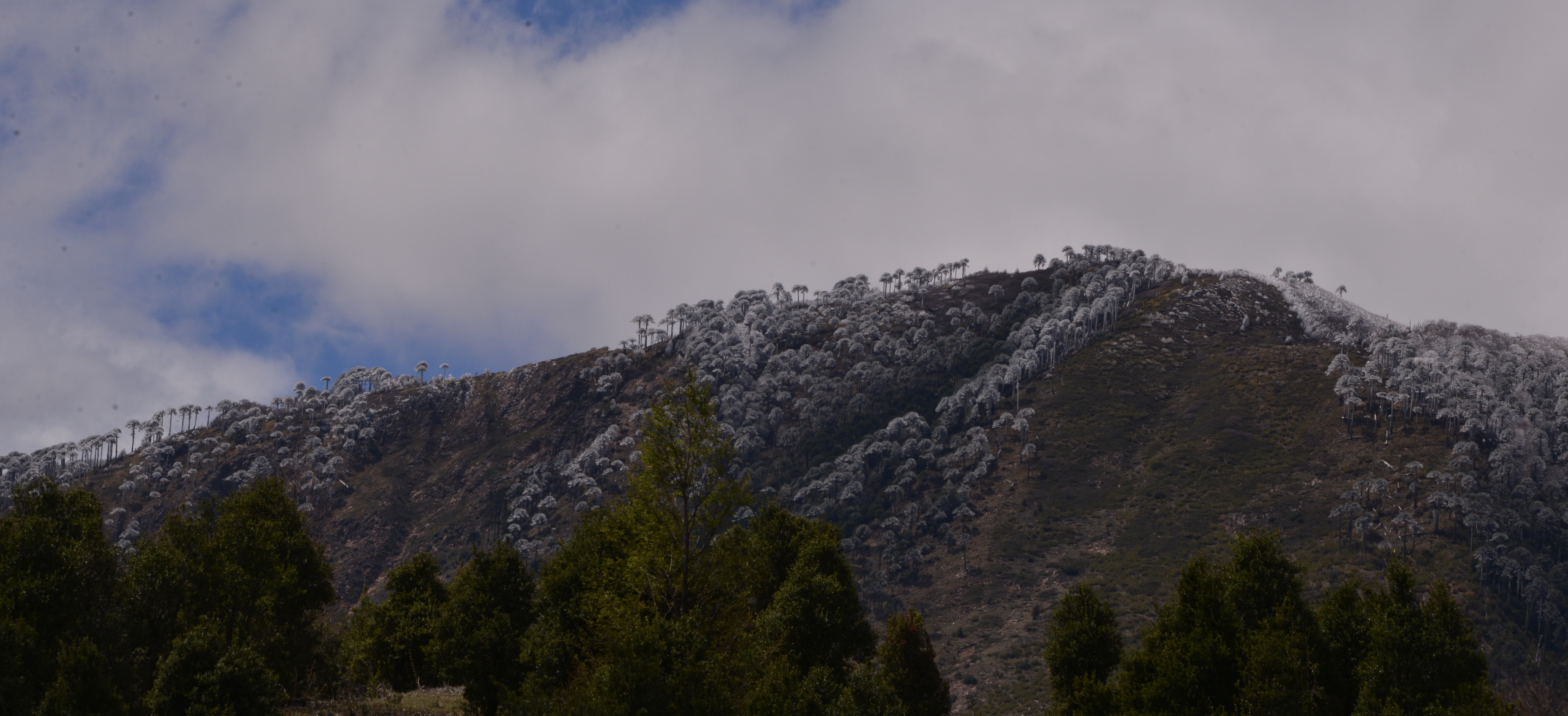
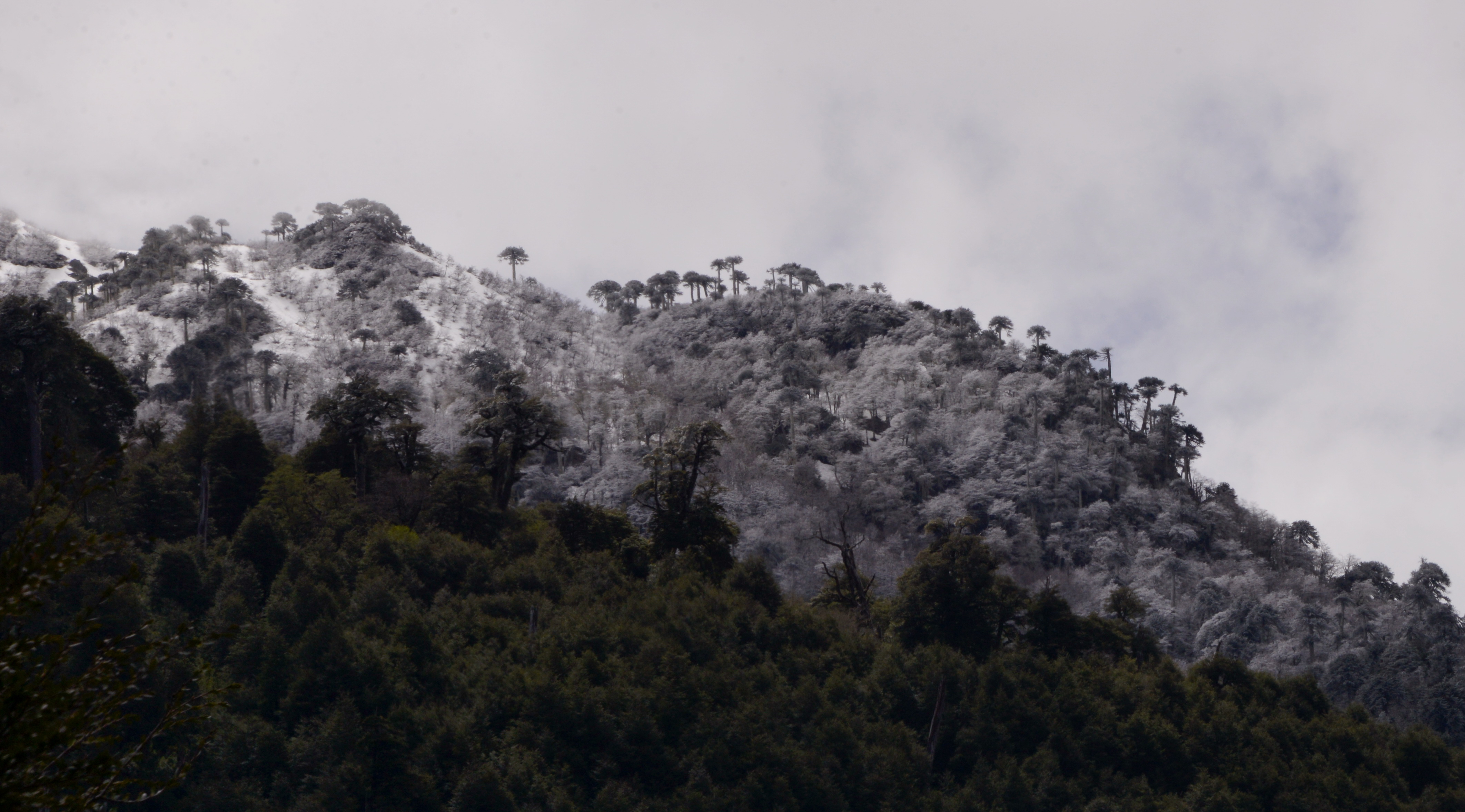
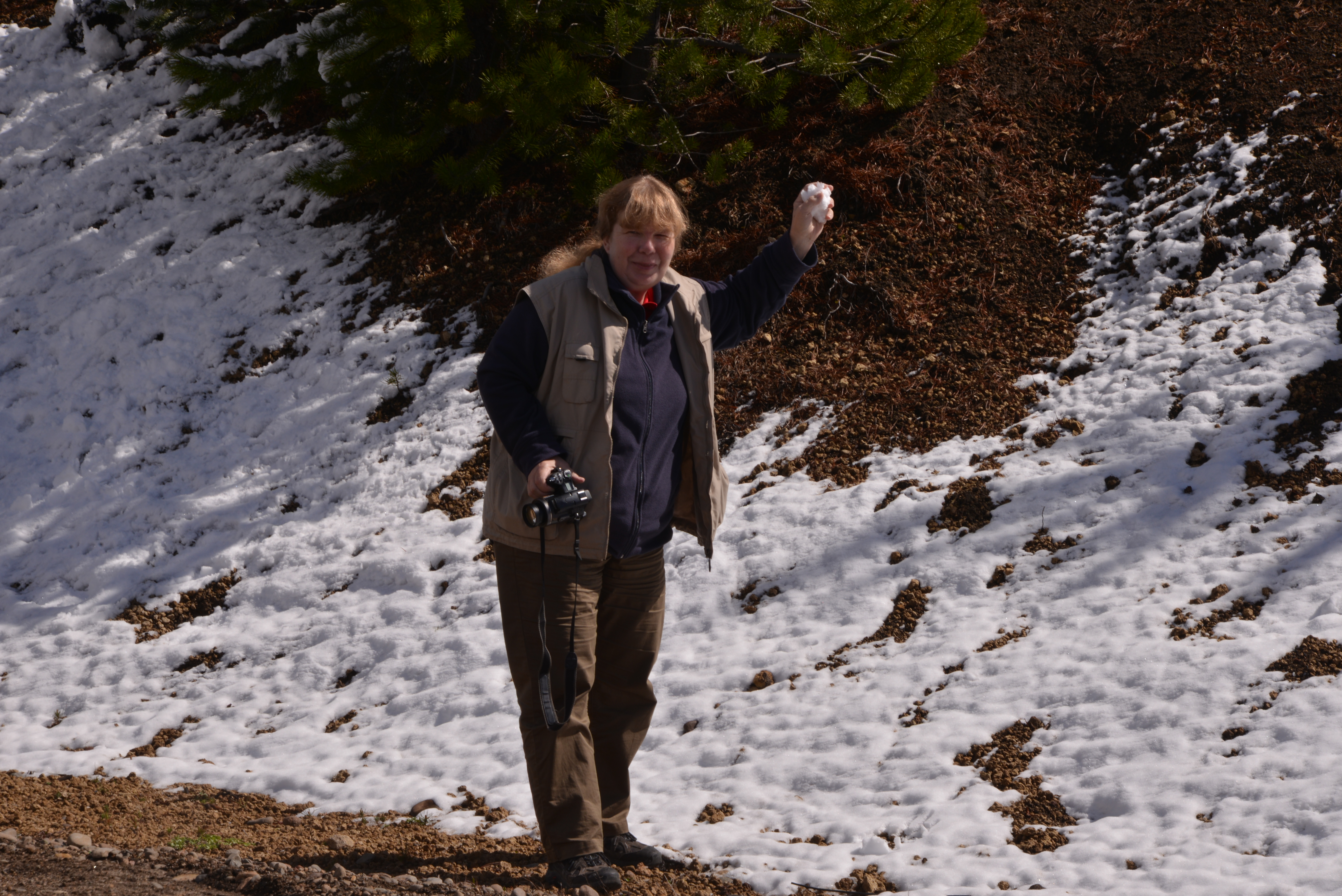
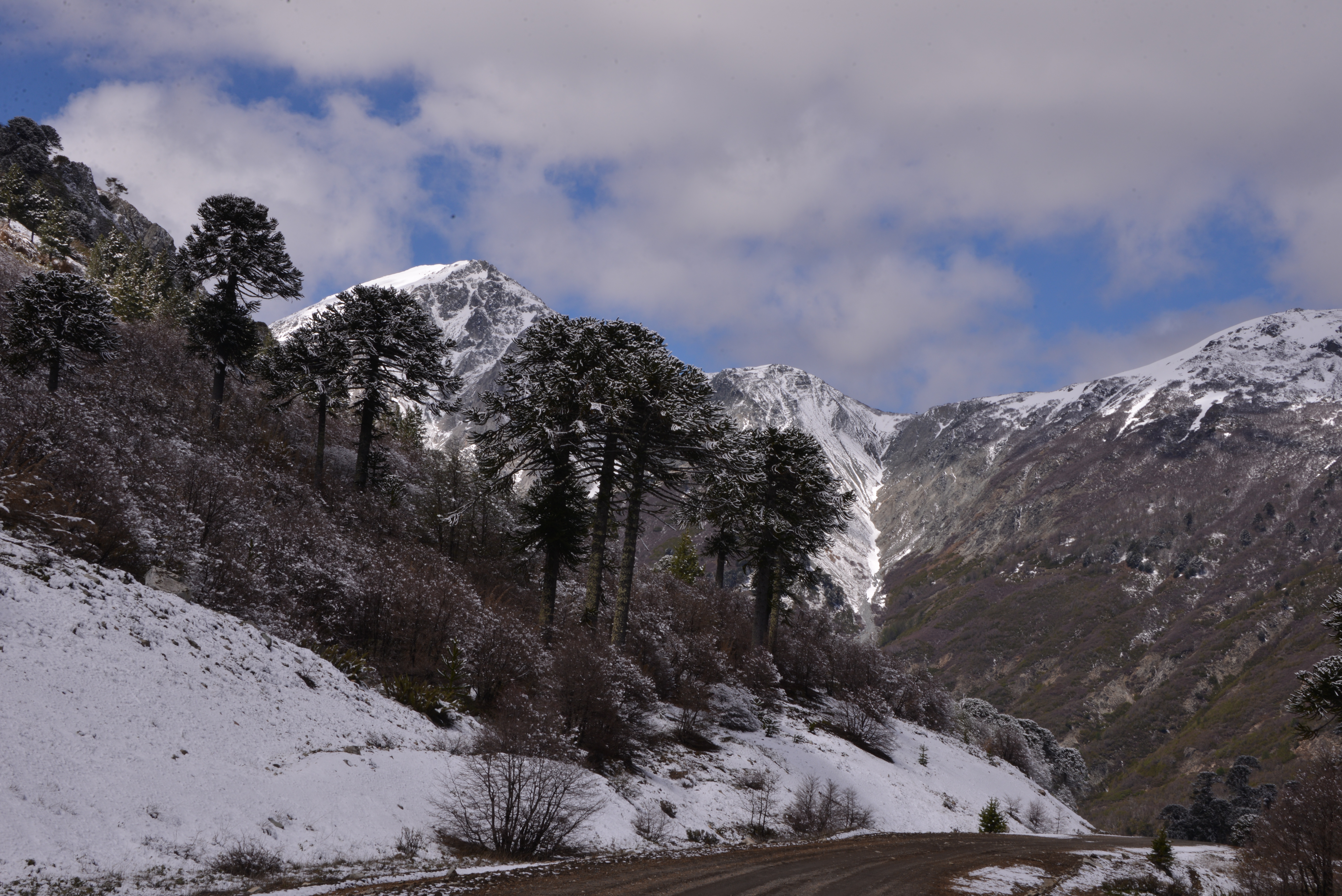
It was very much a stop-start drive, with every bend in the road revealing yet more dramatic scenery. Araucaria trees look very photogenic after a dusting of snow! Angie picked up a handful of snow and posed as though it would end up in my face, but I hid behind the camera.

There was a threat of more snow ...

There was a threat of more snow …

At the southside of the lake the scenery changed and I remember taking this road in 2010 as well, finding Austrocactus and Pterocactus along the roadside. We stopped at a few rocky outcrops and slowly crawled past many others but failed to spot any cacti – yet I knew they had to be there.

More Araucaria and snow, but no cacti!

More Araucaria and snow, but no cacti!

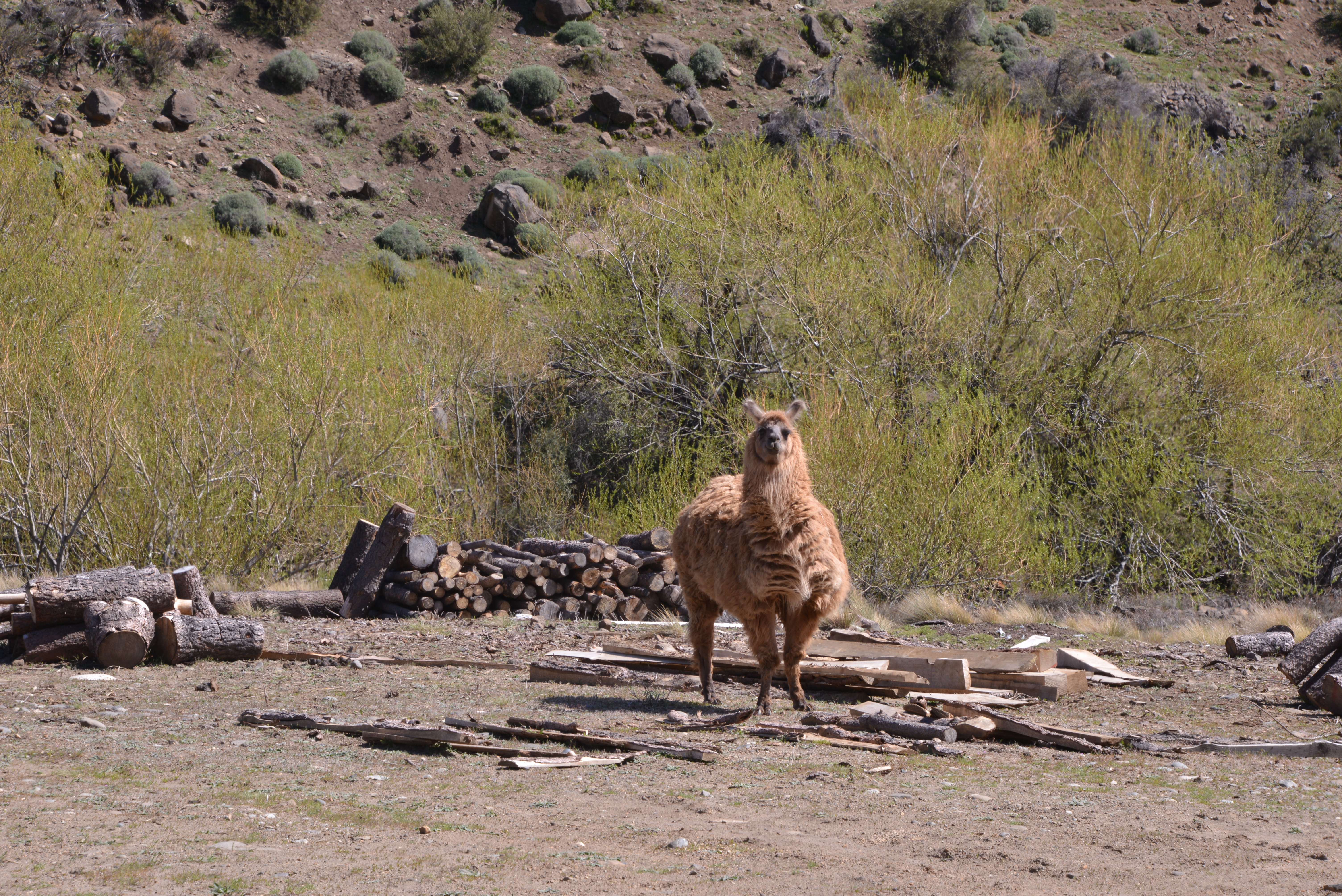
Another reminder of our altitude - llama.

Another reminder of our altitude – llama.

At Alumine I decided to tackle another looming crisis – money, or rather lack of it. The local ATM suggested a maximum withdrawal equivalent to £30. Not a lot, as the fuel tank was approaching Empty. Unlike in Chile, Credit cards (or in fact ANY plastic) are not commonly accepted here, so ‘milking ATM machines became a new pastime. Yesterday we learned that a) you could enter an alternative amount, but that 1,000 pesos was invalid and 2) that I was allowed a maximum of 3 attempts that day and 3) I could withdraw 600 pesos. So in Alumine I tried 900 peso (c £90) and succeeded, twice, as did Angie, so we now had enough pesos to feed the car, ourselves, pay the hotel bill and our guide, Martin.

We got back in good time to meet Martin, our guide from 2010 and his friend, Alejandro, who spoke excellent English. The main purpose of the meeting was to agree the extend of any trip with Martin as our guide and the cost. Did we want to see Viola or cacti? Both! The bad news was that the flowers that we had seen in 2010 were open in December. Now, October, it was still too cold, so there were no Andean Violas to be seen in flower. Martin had found some more cacti, some 14 km south from the school where he was a teacher, but the other bad news was that he had to work for the next few days. We settled on meeting him at 15:00 hrs at the school for a look at the cacti and, if day light permitted, a look at the hillside where in 2010 we had seen the violas.

Alejandro also told us of an exciting discovery of Denmoza rhodacantha, the first time that it was found in the Province of Neuquen, south of the Colorado River and therefore in Patagonia. Wow, that was worthy of a visit – but alas, too far for tomorrow. I asked where it was and after a few phone calls to his boss and colleagues we had very clear instructions on where to find it. It is not far from RN 40, one of Argentina’s longest roads (I bought the T-shirt in 2010) and we would pass it in a few days time!

Altogether another great day with some nice surprises and a list of experiences that add to the diversity of what we are seeing. But no cacti photographed at today’s stops S2866 – images from the Lake Loop, and S2867 – views in and around Hosteria Al Paraiso in Villa Pehuenia.

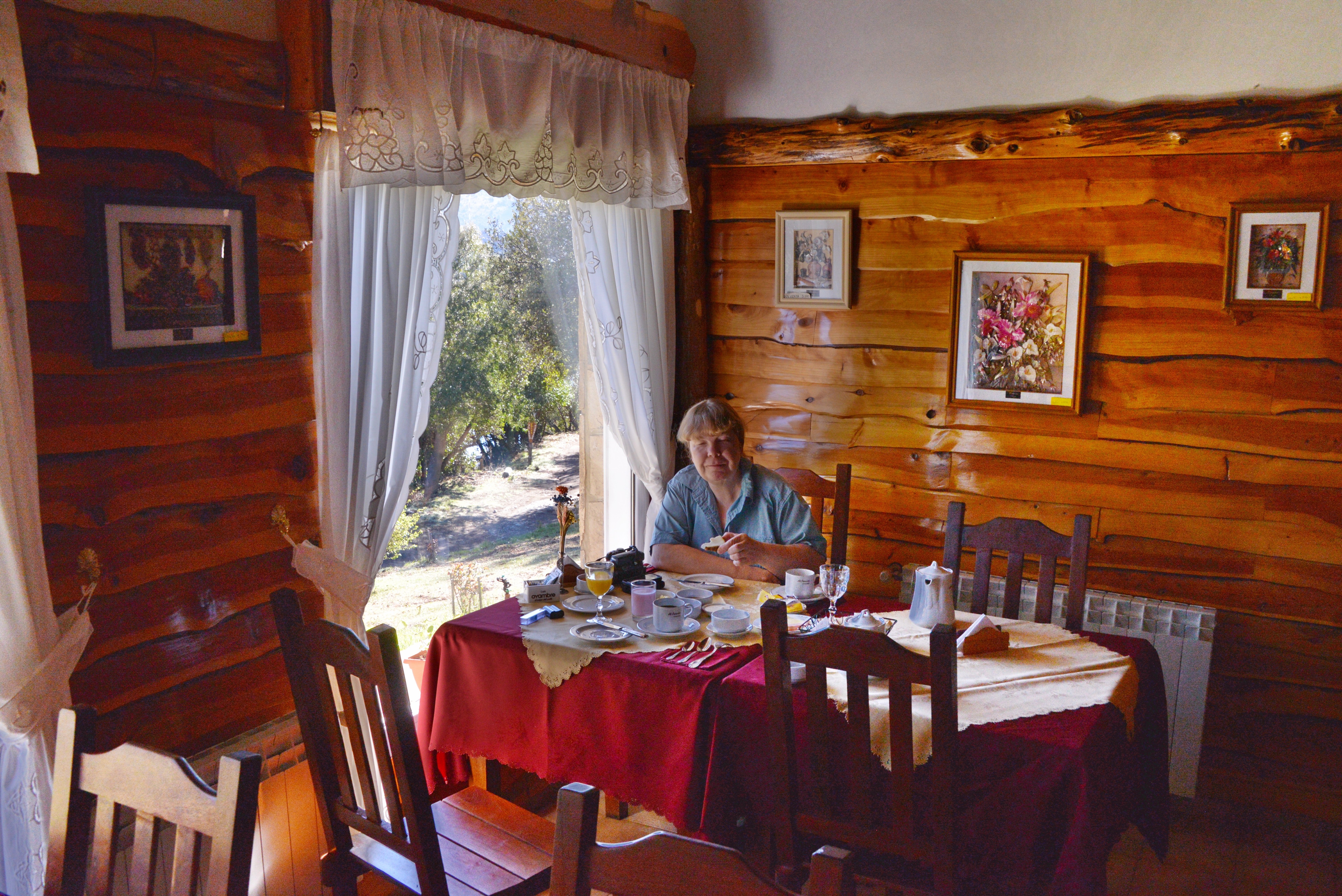
Breakfast at Hosteria Al Paraiso, Villa Pehuenia

Breakfast at Hosteria Al Paraiso, Villa Pehuenia


Tuesday, 22 October 2013 – Temuco to Villa Pehuenia (Argentina)

Last night at the Holiday Inn Express was one of well earned luxury after a week and a bit on the road. Our bed was larger than some of the rooms we had stayed in! But, a price to match, so it’s good that there are more affordable options around.

At the end of September I had started looking at some suitable passes to get from Chile into Argentina. Just before we were due to leave, the car rental provider advised that we would not be able to pick up the necessary papers for taking the car into Argentina until the week after our arrival in Chile. A quick bit of rescheduling left me with one main concern: would the passes in the south be open? Some stated that they would only be open from 1 November – too late for us. I explained our problem to the owner of Hosteria Al Paraiso in Villa Pehuenia and he suggested the near by Paso Icalma, so small that Google Maps had not appeared to have heard of it, instead trying to send me on a 134 km detour! A weather check at the time reported 150 cm of snow and freezing temperatures.

There had not been much information about this pass on the internet and there was a significant stretch of track that was only ripio quality on the map. I remembered some of the tracks in 2010 which were turned into mudslides by an overnight thunderstorm and remembered the rain that we had experienced just a couple of days ago. Like a good IT Project Manager, I had ‘invoke reverse processing’ as an option.

I need not have worried. But let’s start at the beginning:
We enjoyed a nice Holiday Inn breakfast and a little later than usual set off. The hotel had been ideal for access from R5, but SatNav seemed unfamiliar with the town of Tembuco. After some scary experiences where it tried to send us the wrong way up one-way streets, we learned that this was in fact a feature – it consistently got it wrong each time! Back to first principles: we needed to head into the Andes that we could see some 50 km out of town in the east. Driving in a straight line, sooner or later we had to reach the outskirts of town where skylines were more easily seen and rush hour traffic would not try to push us off the road.

Angie was familiarising herself with strange sounding names of villages on the map and soon found one that we had driven through, that proved that we were headed in the right direction. It was nice and sunny despite the TV forecast of clouds and rain and the scenery was of a typical sunny UK Spring day, with fresh green leaves breaking on the Alamo (poplar) trees. Quite a fast road too, with average speeds of 80 km.p.hr. So far so good. But I remembered the drive to Antuco a couple of days ago where it got cold and bleak fast as we increased in altitude, and the Andes loomed up fast, their peaks covered in snow.

Then the asphalt stopped and we found ourselves on good gravel, but the sort of stuff that our car, christened Dodgy, had difficulties in keeping a straight line on. I suspect tyre wear and pressures might be to blame – something to check out at a next fuel stop. With the scenery improving, the slower speed was no hardship. Araucaria trees appeared on the hills, covered in mosses and lichen, producing an eery feel to the place.

Scenery on the way to the border with Argentina

Scenery on the way to the border with Argentina

Auracaria in the snow

Auracaria in the snow

As was the case in 2010, there were also a lot of dead trees around – stripped by nature of bark, standing like skeletons on the lower hills. Workers were busy in places to clear up the dead wood. Had these trees (Notofagus – southern beech?) been hit by a disease? Taking pictures nicely distracted us and so it came almost as a surprise as we saw the name Icalma appear by the side of the road. We were there at the pass, not at all the way that I had imagined an Andean mountain pass (1,300 m)

Four Chilean immigration officers competed for the challenge of best English speaker, all very relaxed and no other customers in sight. I told him about our experiences in 2008 at the Cristo Redentor pass on the day before New Year when we had been in a 12 km long queue to get from Argentina to Chile – a night mare. They laughed. ‘Send them this way’! they said. I promised to award them best ‘Exit from Chile’ officials. 12 km later, having taken some nice shots in no-man’s land’ of the Argentinian Lakes before us, we were met by an unsmiling Argentinian custom’s official, who directed us to park the car and enter the small wooden building. Here we were met by four girls in uniform who giggled as they tried to make sense of our passports. They called on a grey haired senior colleague for help. All in all we must have been more interesting than the cyclist who seemed to have been the other crossing that day – or more likely the warm(ish) empanada delivery man.

One more call to make, to a small hut across the road, where two more officials were glad to see somebody different from the locals and with mucho gusto stamped their way through the documents that imported our car temporarily into Argentina. Was I german? they asked, looking at my passport. ‘No, Holanda’ I replied. Ah, they said, better at football than Germany! No argument there, although the number of world cup wins suggest a different story. (S2865 – Lago Aluminé)2013-10-22 S2865

And so we turned up a day early at Hosteria Al Paraiso where it took a while for me to recognise our hostess Monica. No problem, they had rooms, so we could relax and catch up with Diaries and a bit of relaxing new age music that sets the tone for the hotel.

Gallery

Monday, 21 October 2013 – Chillán to Temuco

We started the day a bit anxious. Angie had picked up an eye infection at the airports / flights circus that just would not clear up. In Huasco we had popped into a Farmacia where she had been given some cream and tablets but things were not improving. This morning, she felt as though she was seeing the world through a plastic bag through her left eye and so we consulted the hotel owner’s son who spoke excellent English and pointed us to a 24 hour clinic. Easily found using SatNav, where a nurse explained that they had no eye specialists here, but referred us to an eye clininc across town, again, easily found. The rather strict receptionists pointed out that there would be a charge of 30,000 Chilean Pesos to see the specialist. He seemed rather irritated that we were in Chile with an inadequate amount of Spanish, but gave her a full set of tests, told her to stop the previous creams and pills and prescribed eye drops and more cream and tablets – including anti bionics judging by their names – we’ll check out the internet later. Much happier, we went off to a Farmacia where another 44,000 pesos later we had the medication and a 1,400 pesos parking charge. It’s good that help is at hand when needed – it’s better when it comes for free such as for old timers in the UK.

Because we had gotten ahead of ourselves by staying in Chillán rather than in Talca, the time spent this morning had not been a great loss. An hour or so farther south on R5 and we were in Los Angeles, BioBio Region and headed east for the Andes. I explained to Angie that during my last visit here we had found a cabana in Antuco, had spent the next day at the Laguna and another night in the cabana. That had been in the middle of summer, but although yesterday’s heavy showers had cleared up and there were even sunny spells, the jumper and coat remained essential. (S2862 – images along the road from Chillán to Temuco – no cacti photographed)

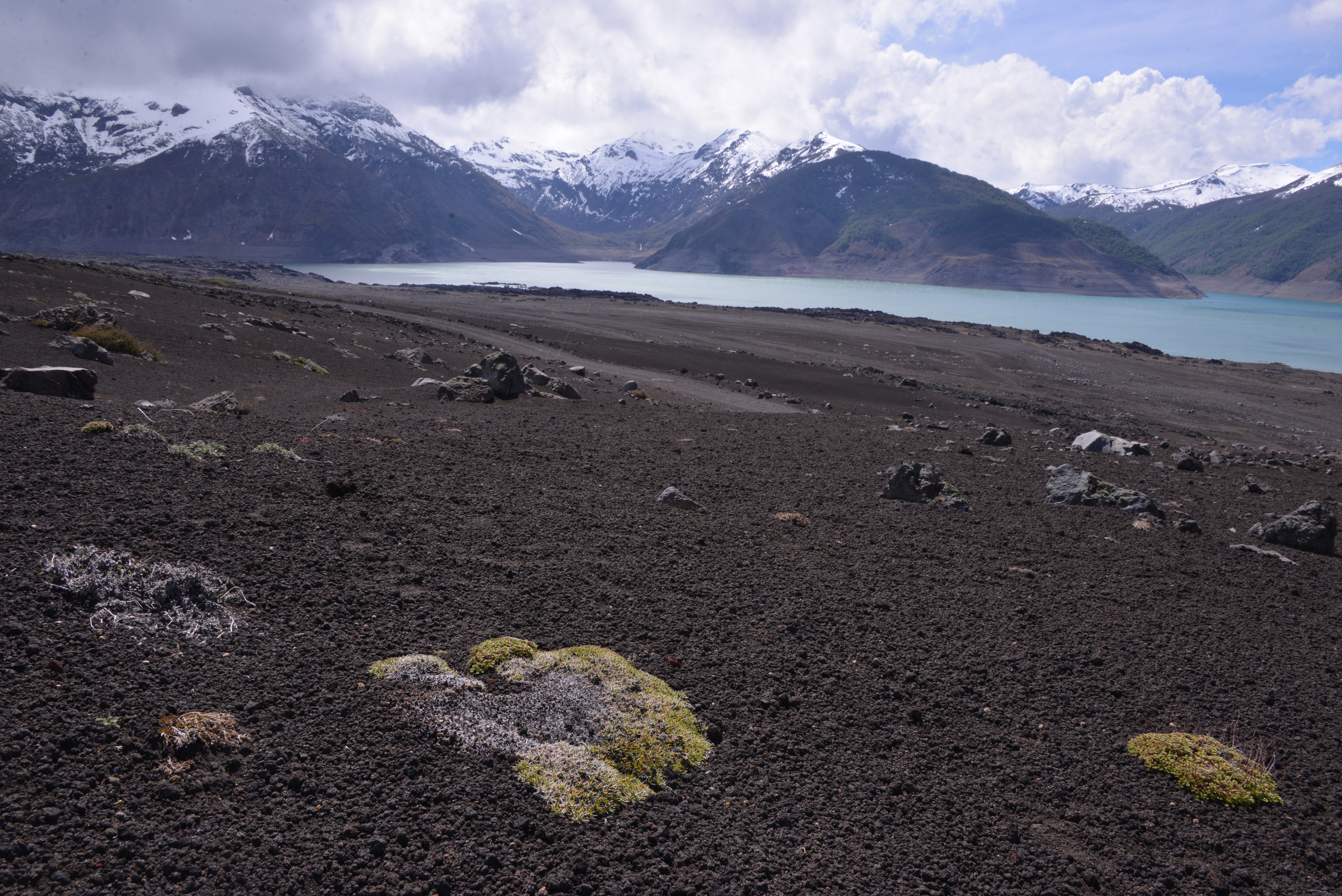
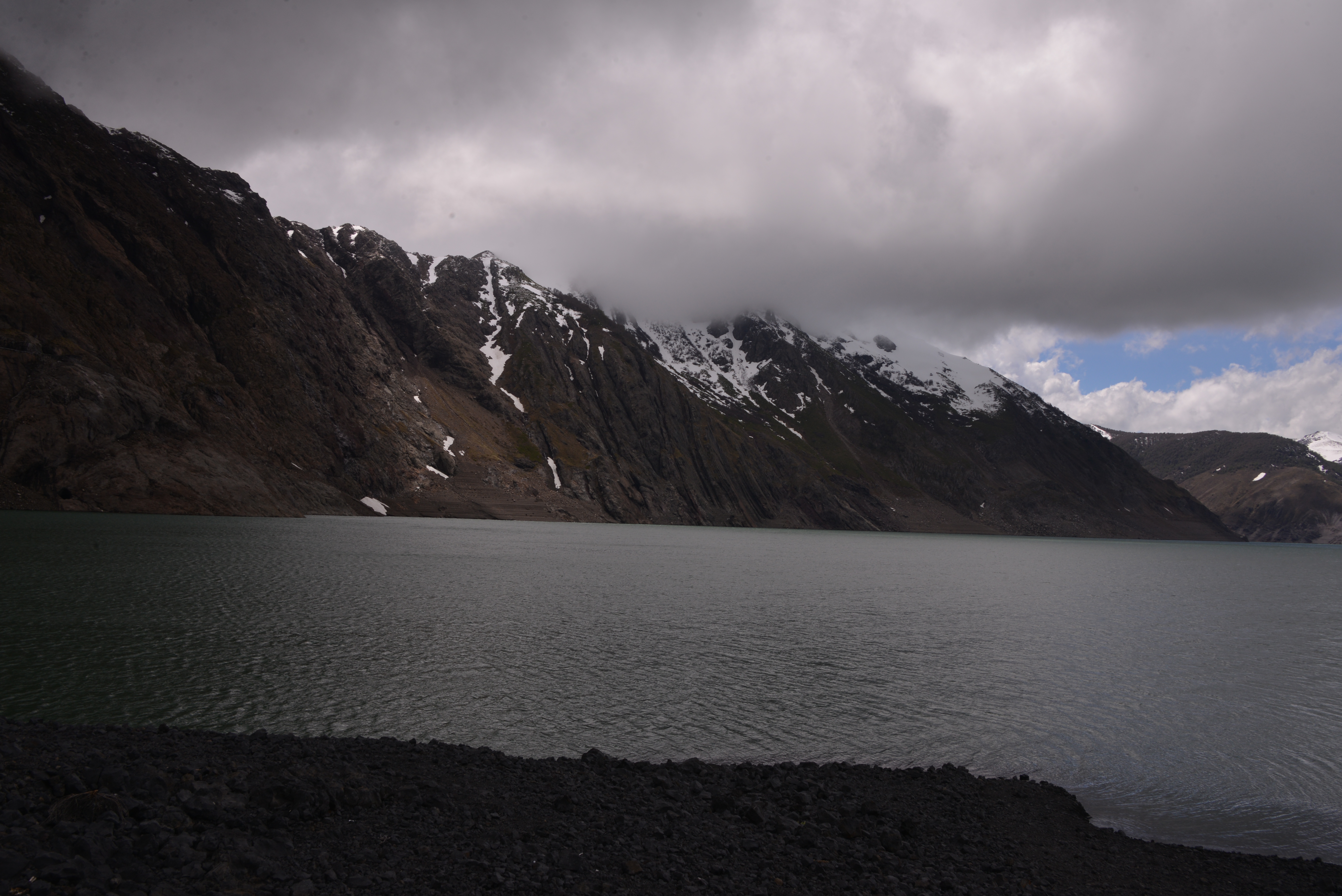
Driving through Antuco we saw a hotel / cabana in town, but everything looked dirty and closed. We carried on to the Laguna del Laja Nacional Parque (S2863) where on the previous visit we had photographed wonderful Andean / Alpine Viola and Maihuenia poepigii in flower and fruit. But that was in early summer, not early Spring. It was all very bare and cold this time round, with some green leaves poking out through the black lava gravel. The biting wind did not help, but al least this time I was prepared for Patagonia and its weather.

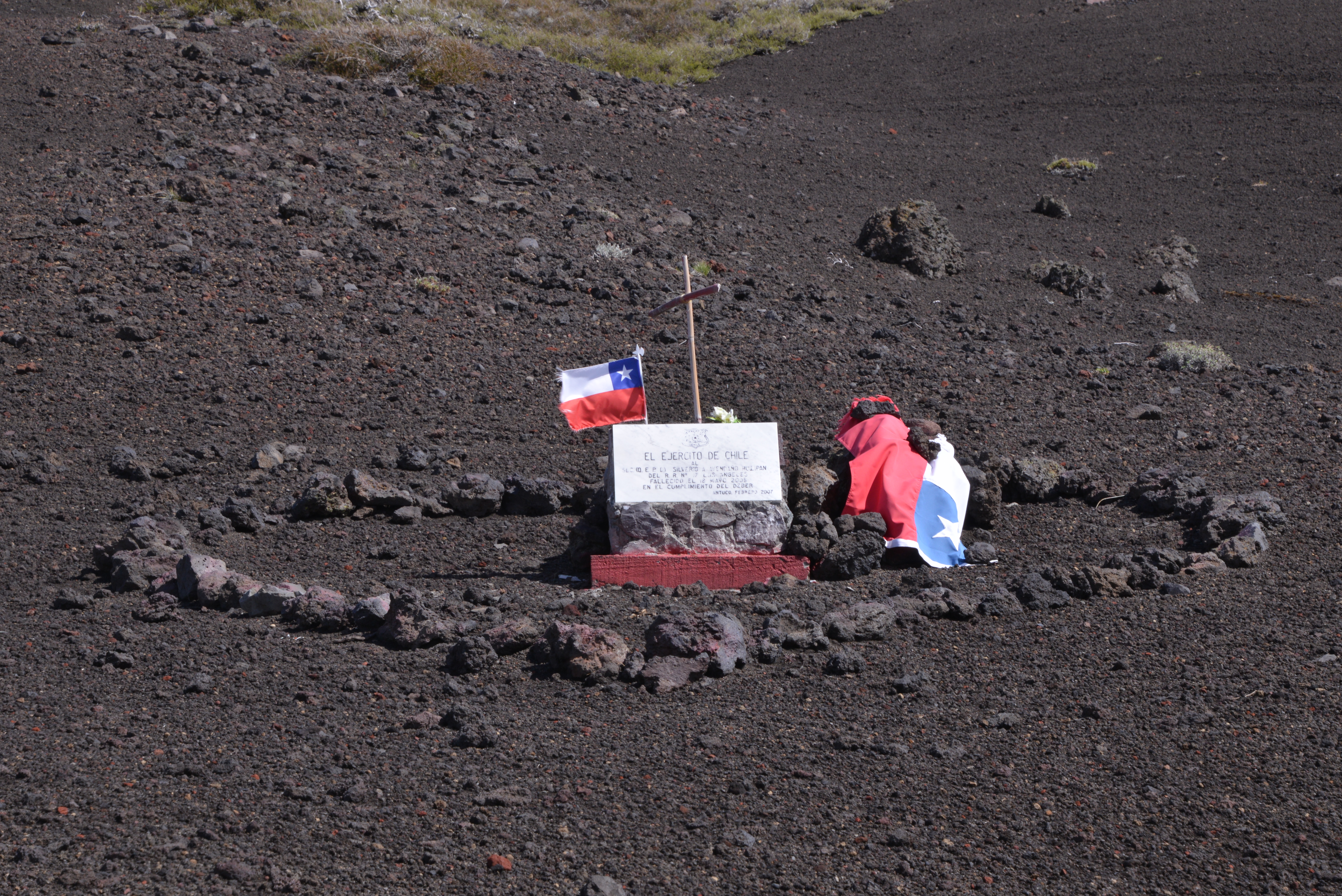
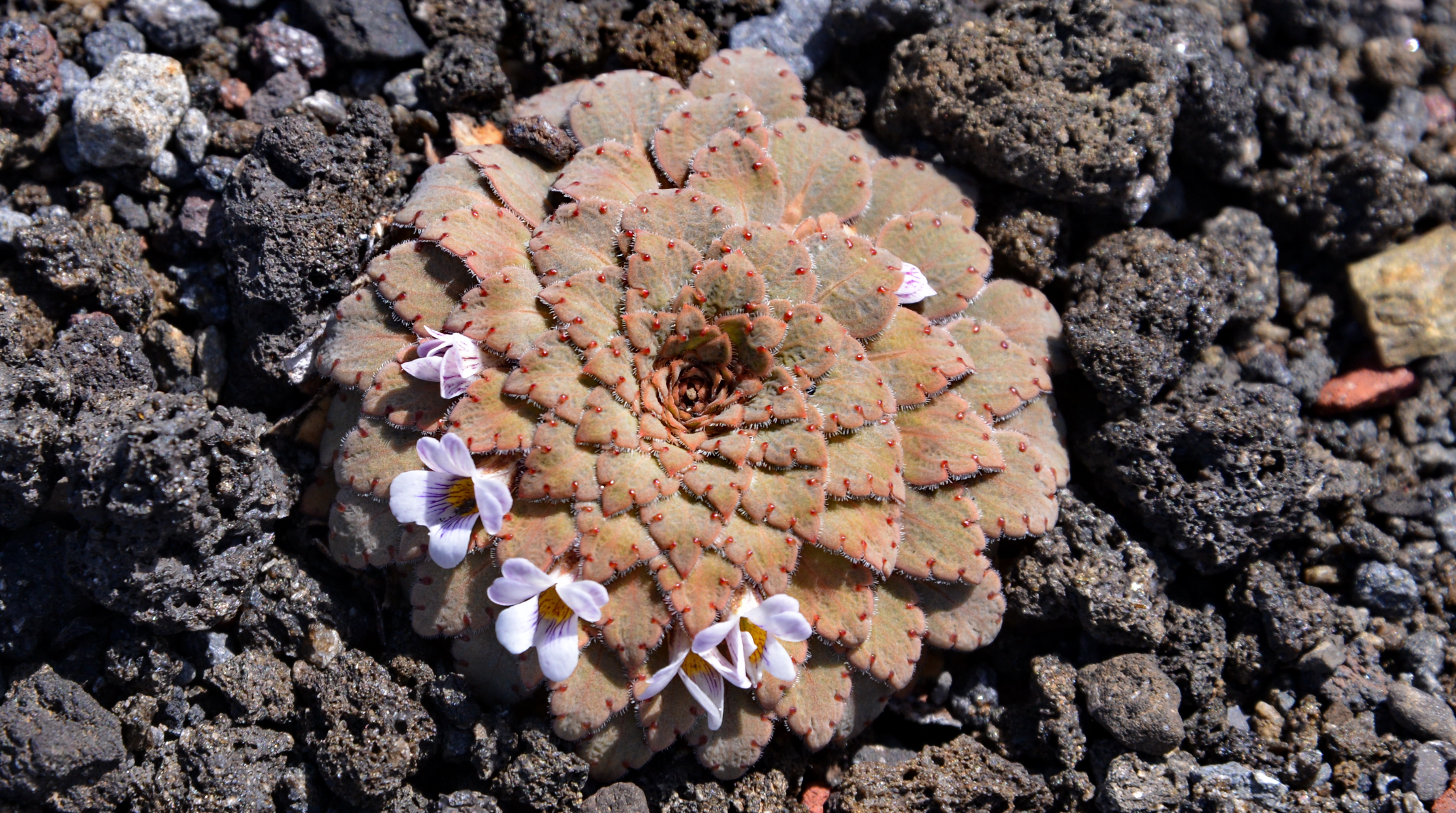
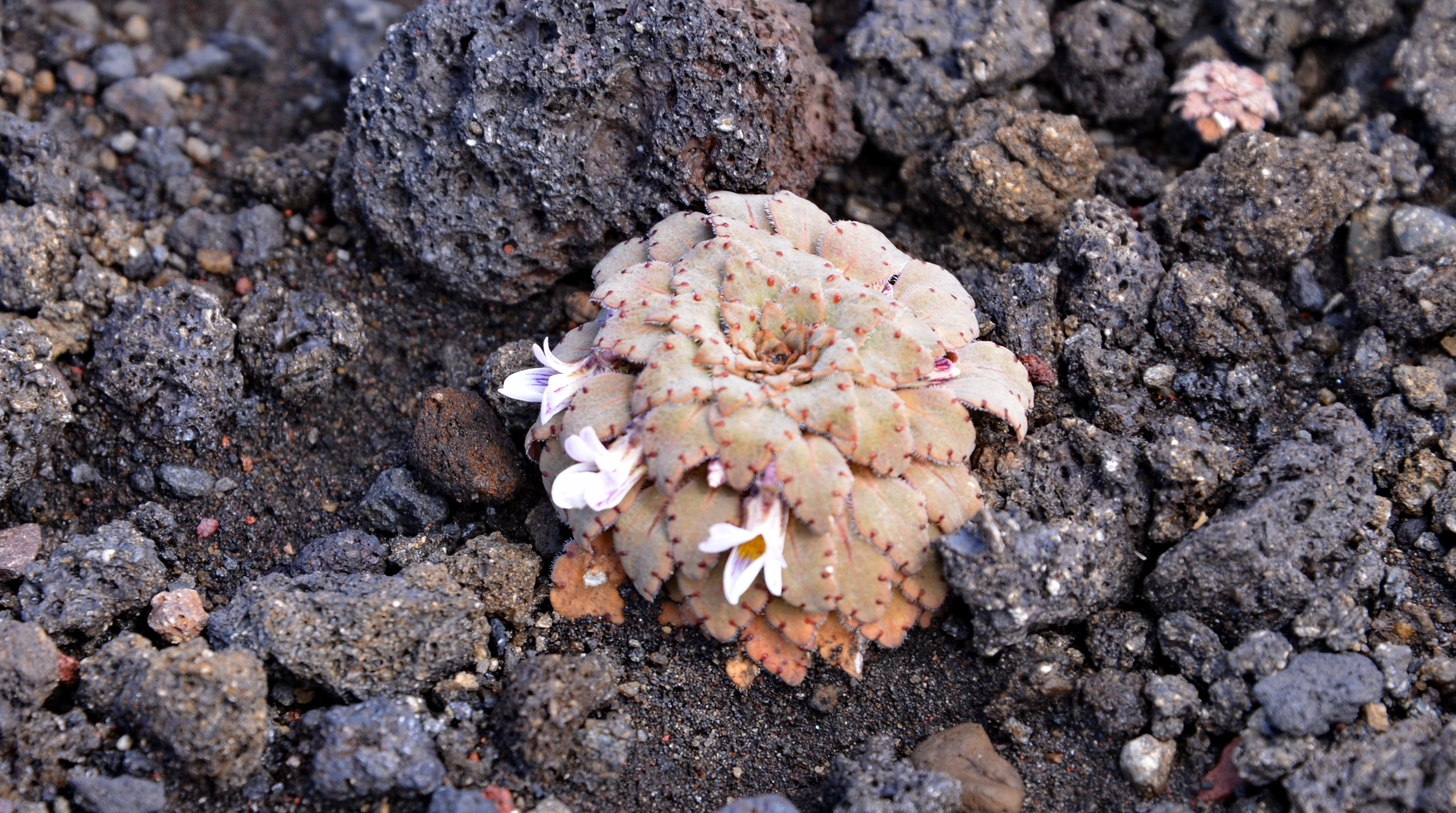
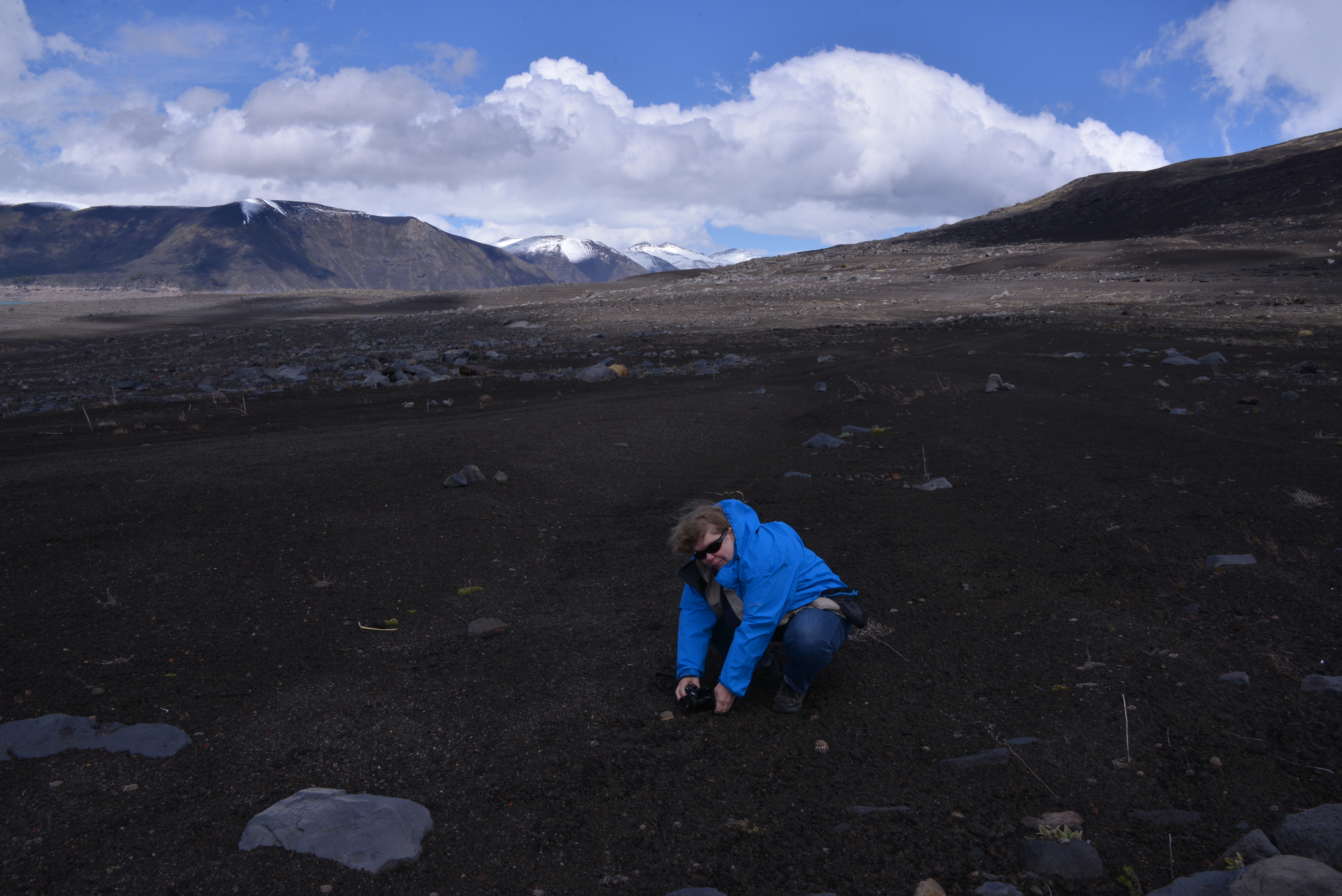
After some driving round, we found a spot that looked like the place where we had been before. We zipped up our coats and ventured out of the car. Angie was the first to find the violas. Very small, smaller that I remembered and she had expected, but in flower, with ants crawling around as possible pollinators. I looked for fruits, but none were found yet – last time, in December, there had been plenty of open capsules on show, with their small content shot out amongst the gravel. I was getting frustrated at the lack of Maihuenia on show but realised that these too would be smaller. I soon found a clump – helped by a small group that had been uprooted and clearly showed its features. Nearby, another clump was shrunken into the gravel, tiny heads, some with leaves, all with spines and no flowers or fruits to attract our attention. The bonus this time was that the volcanoes and mountains around the volcano were covered in snow, although the top of the volcano was in the clouds, so could have been ‘any old mountain’. I managed some 100 images, including more of the national service soldiers, newly conscripted and sent into the mountains on an exercise without proper training and equipment. They were taken by surprise by a blizzard which left the mountains freezing in 2 m of snow. The sergeant and 44 conscripts died from the frost and exhaustion, in the arms of the few survivors. Their grave stones marked the places where they were found. All were born during 1986 and died on 18 May 2008 – very sad.

One of the graves scattered amongst the plants.

One of the graves scattered amongst the plants.

One of the southern-most Chilean cacti: Maihuenia poeppigii

One of the southern-most Chilean cacti: Maihuenia poeppigii

Viola congesta Gillies ex Hook. & Arn. (ex-volcanica)

Viola congesta Gillies ex Hook. & Arn. (ex-volcanica)

Luguna del Laja scenery

Luguna del Laja scenery

Viola congesta Gillies ex Hook. & Arn. (ex-volcanica)

Viola congesta Gillies ex Hook. & Arn. (ex-volcanica)

Angie taking pictures of the Viola

Angie taking pictures of the Viola

Laguna del Laja

Laguna del Laja

We had now acomplished our goal for our visit here, well ahead of schedule, so decided to try and find a cozy warm hotel in Los Angeles rather than a cold cabana and snack bar food, so headed back to Los Angeles, where road works managed to get SatNav lost. After crossing the town twice, we were back on R5, headed south. SatNav told us that another 90 minutes later, we’d be in Temuco and on tomorrow’s route to the Argentinian border. It also showed a Holiday Inn Express, near R5, so no need to wrestle with rush hour traffic!

And so we are nicely tucked in with wifi faster than elsewhere in Chile (although Angie is struggling to get in – one connection per room I guess).

She has patiently waited while I typed up today’s missive. Only fair that I send this one out and reach for a cold Cristal. Tomorrow we’ll see if the pass to Argentina is open.

Sunday, 20 October 2013 – Pichidangui to Chillán

We enjoyed a nice meal last night at Restaurant Pichidangui, which seemed to have had a face lift, or did they just put in brighter lights and clean table cloths?

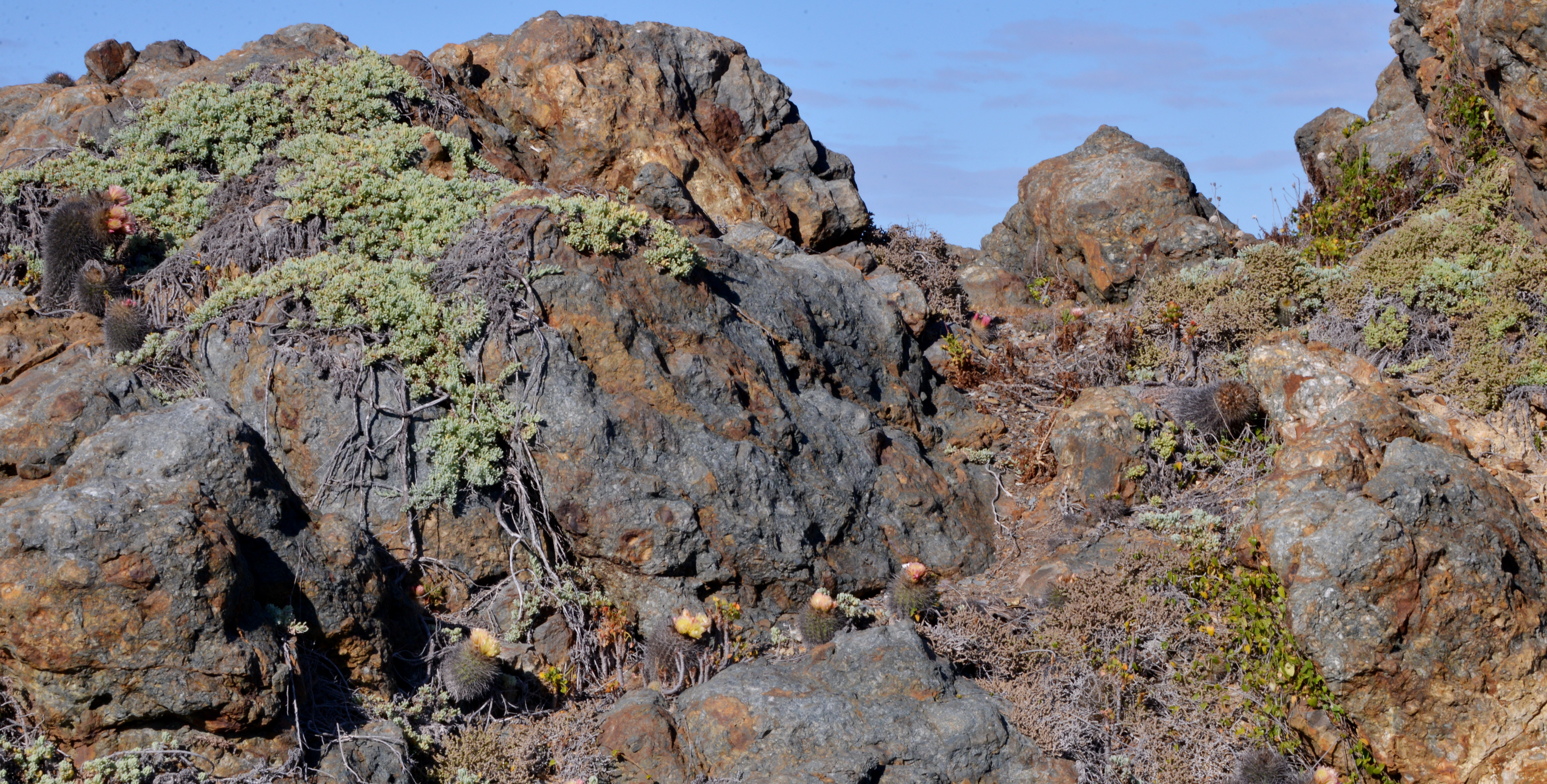
Breakfast was a little later today, to allow the lady who was scrambling the eggs to attend to church duties. There was still time left for a quick look at the rocks – Angie had only visited the area north of the church, so we headed to our usual spot south of the church.(S286). As in previous years the Carpobrotus chilensis was taking over and smothering the Eriosyce and even crowding out the Eulychnia. Attempts had been made at some landscaping and weed clearing, but it looked as though the label ‘weed’ had been applied to the wrong plants. Never mind, there were enough still in tact and flowering closer to the water’s edge, where conditions were a little harsher.

Eriosyce chilensis on the rocks at Pichidangui

Eriosyce chilensis on the rocks at Pichidangui

Next we were off to the Airport. When we had picked the car up on Saturday 12th, we had been told that the papers to take the car into Argentina would be ready on Monday 14th or later in the week. As we were passing by the Airport today, now was a good time to pick them up. It took all of 3 minutes. As we needed to stretch our legs, Angie decided that now was a good time to buy some souvenirs, as the traditional Chile cups and T-shirts back home were in need of updating. First, for those who have been to the International Departures area of the Airport – pre check-in, they have moved the souvenirs stall to a larger area opposite the old one, which now provides extra space for the security bottle-neck. Second, all the old favourites were gone and I was not that impressed with their replacements. There was a little stall selling mobile phones, mp3 players and associated paraphernalia, where a gentleman with excellent command of the English language confirmed that he had the cable that I needed to end my musical starvation. Did I want the 30 cm, 1 m or 3 m long cable? 1m would be fine! And so, after an anxious moment when I worried that the car’s Hi-Fi might have been faulty, the dulcet tones of Carlos Santana filled the car. Great!!

I had pencilled in Talca as a place where we could spend the night, but with heavy rains preventing any local sight-seeing, we pushed on until around Chillán where it seemed a good idea to ask SatNav for a place to spend the night. It sent us down a road in the middle of town with lots of seedy looking hostals, but the flag pointed at a nice modernised building where we were pleasantly surprised by the high standard of fixtures & fittings.

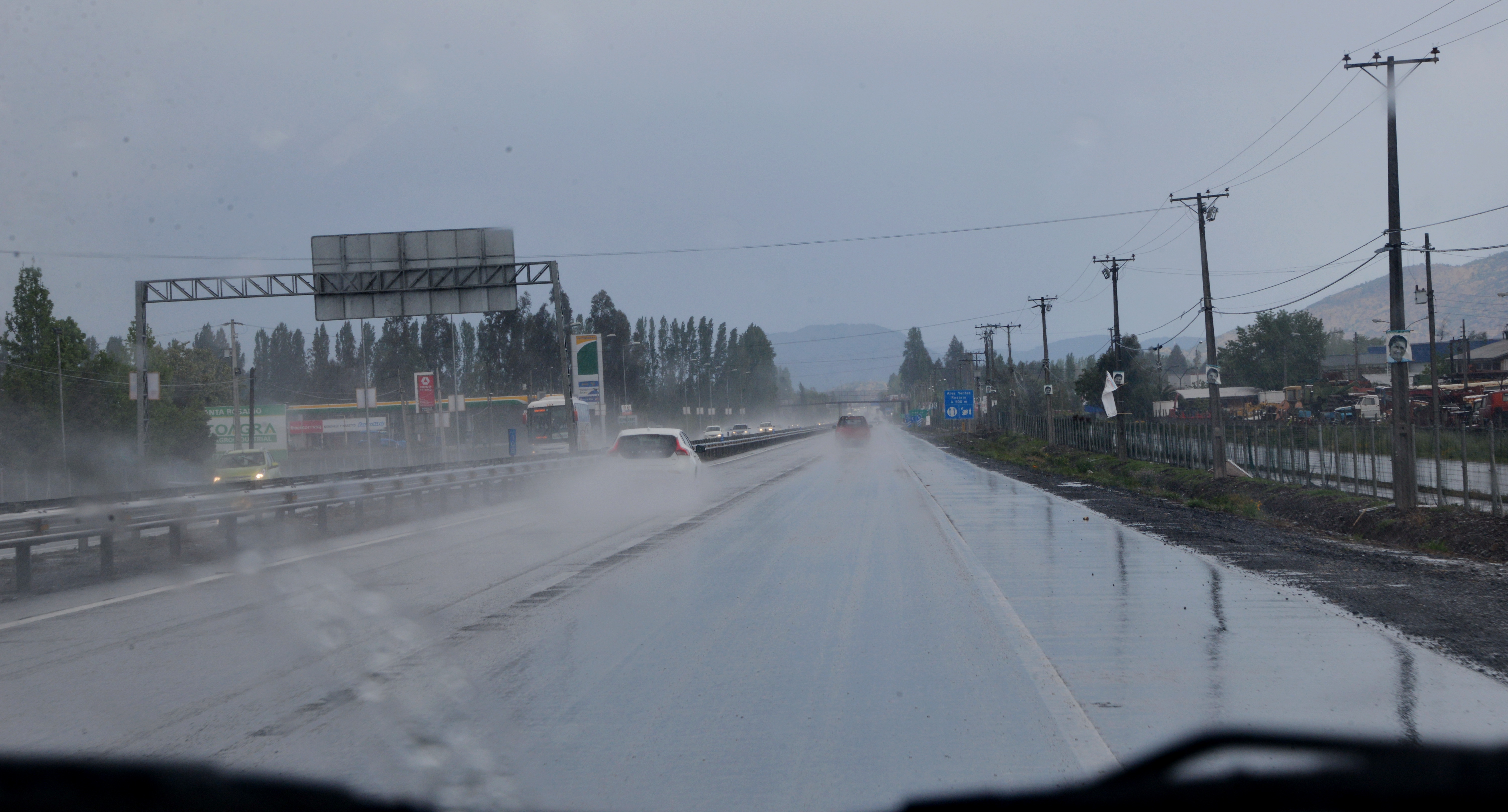
Ruta 5 in pouring rain - never seen north of Santiago, perhaps much more common to the south (S2862)

Ruta 5 in pouring rain – never seen north of Santiago, perhaps much more common to the south (S2862)

I thought of taking pictures to show the Hosteria in Vallenar for some ideas of what others provided for a good deal less money! I guess they would have pointed out that they were some 1,000 km apart, therefore no competition.

Sunday night seems to be when restaurants here close for the evening, so we were fortunate to find a Baverian / German styled eatery that was open and served pizza’s (Jawohl!) and beer (Cristal) which we finished off with a large slice of kueche. There goes the diet again!

Tomorrow we head into the mountains and hope for brighter weather.

Saturday, 19 October 2013 – Huasco to Pichidangui

Today was always going to be a driving day – 524 km. What goes up (north) must come down (south), so with ticks in just about every box on Angie’s wish list she was a happy bunny. There was just one empty box left – the rocks at Pichidangui, which Ritter called Neoporteria heaven – I guess Eriosyce heaven these days, with E. (Horridocactus) curvispina, E. (Horridocactus) chilensis ssp albidiflora and E. (Neoporteria) subgibbosa all growing on the rocks where the Ocean waves break, alongside Eulychnia castanea. And that is where Angie and her camera are right now, while I’m writing up today’s Diaries, adding to her thousands of images from here since 2003, when it was the first cactus stop on her first trip to Chile.

Bart & Marijke should note that the main access road to town is getting a new coat of asphalt, so that today a Devisio was in operation, sending all traffic along the back way, where those living along the main road park their cars and have large gardens.

We’re staying in Hotel Rosa Nautica where Cliff, Leo & Juan & I stayed in 2007 after our trip to Lake Torca in the south.

So much for where we are. The drive today was all Ruta 5, in fog or through a tunnel with the clouds touching the hills around us. Even if there had been cacti to photograph, they would have looked miserable, as would we, because with the fog, the temperature was down too.

2013-10-19 S2860

We did stop at the Lider hypermarket in La Serena, to top up on provisions and for me to see if I could get a lead to connect my iPod’s headphone socket to the auxiliary input socket of the formidable (but silent) car Hi-Fi system. Jonathan, if you read this, could you buy such a lead? (CANCEL THAT – SOLVED ON SUNDAY). The Hi-Fi also takes CDs, in case you want to bring some of those. I’ve been starved of my music for a week now! I can see a smile appear on Cliff’s face as he has suffered my personal jukebox with some 28,000 tracks more than others. There is always a groan when yet another Frank Zappa track comes on, but I also have fair selection of his Pink Floyd favourites and the whole car has in the past shaken as we spent several hours on a Beatles greatest hits session (not to forget the Electric Light Orchestra for Alain & Eunice).

Anyway, after much hand gesturing and dragging the salesman to the car radio display to show him an axillary input socket and then to an iPod to show him the socket there plus a walk past the headphones to show him the kind of plug that was needed (Lider sells everything, except the lead I need). Ironically I came across it during packing, but decided against bringing it and leaving with the other items often dragged half way round the world and never used. Typical!

Friday, 18 October 2013 – Caldera to Huasco

Today we would follow the Ruta del Desierto, the Circuito del Costera or ‘Coast Road’. SatNav seemed to know of its existence, in patches, but seemed to assume that it was still in the state in which I had found it in 2001, a warren of often poorly maintained ripio tracks, especially, at the time, the Carrizal Bajo to Totoral stretch. These days this endurance track had been replaced by a good oil/salt road, smoother than many UK roads. Although a maximum speed of 40 km.p.hr. was recommended, and assumed by SatNav, cruising at 100 km.p.hr. we were regularly overtaken by cars and trucks in a greater hurry.

In 2004 we were treated to the northern stretch of this track in full flower. Today’s images clearly show the quite different and ‘normal’ state of the desert: barren, with minimal signs of life. Despite the maximum highs forecast for Santiago of 28 C, here it was quite chilly and again over-cast, so that fleeces and jumpers stayed on.

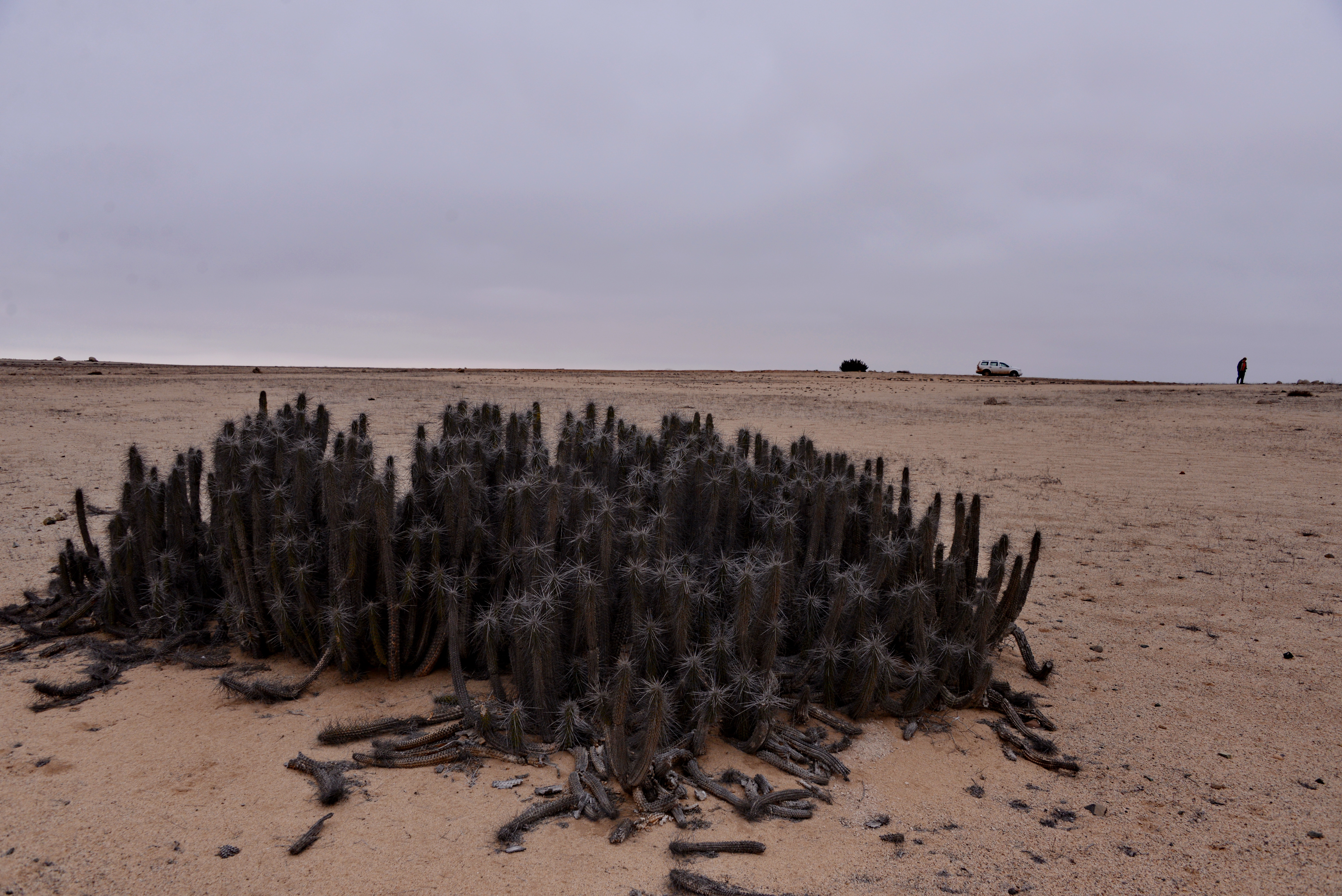
It took a while before we spotted our first cacti – some large clumps of Eulychnia that turned out to be E. breviflora, confirmed by some honey coloured hairy flower buds, away from the roadside (S2854).

Eulychnia breviflora

Eulychnia breviflora

A bird of prey watched as we took pictures of road signs warning us of cacti and guanaco along the road and of ‘no overtaking’ signs that were followed a 100 m farther along by all clear signs, with absolutely no reason for the short stretch. It seemed as though the road builders had a certain quota of signs to place alongside the road and used their judgement to make it an even spread. To overtake, you need at least two cars, and such occurrences were very few and far between!

We made a detour to Baranquilla, as Angie had never been there and had heard me talk about cacti that we had found there on an earlier trip. I miss my little MS Access data base for which I have so far failed to find an Apple McIntosh replacement. I might have to consider putting a Window’s partition on it before the Spring Trip to Mexico.

Nearer to Totoral and a bit more inland, we came across some tall, to 20 ft tall, Eulychnia. One bud suggested that this had to be E. acida. These plants were taking a long rest. They were building a large industrial construction, and grafity along the road warned against the Castilliano del Muerto – castles of death. The ever growing economy demands more energy, but no one wants to host the power stations that are a necessary consequence. At least here there was a stretch of desert that seemed to have few people around to complain.

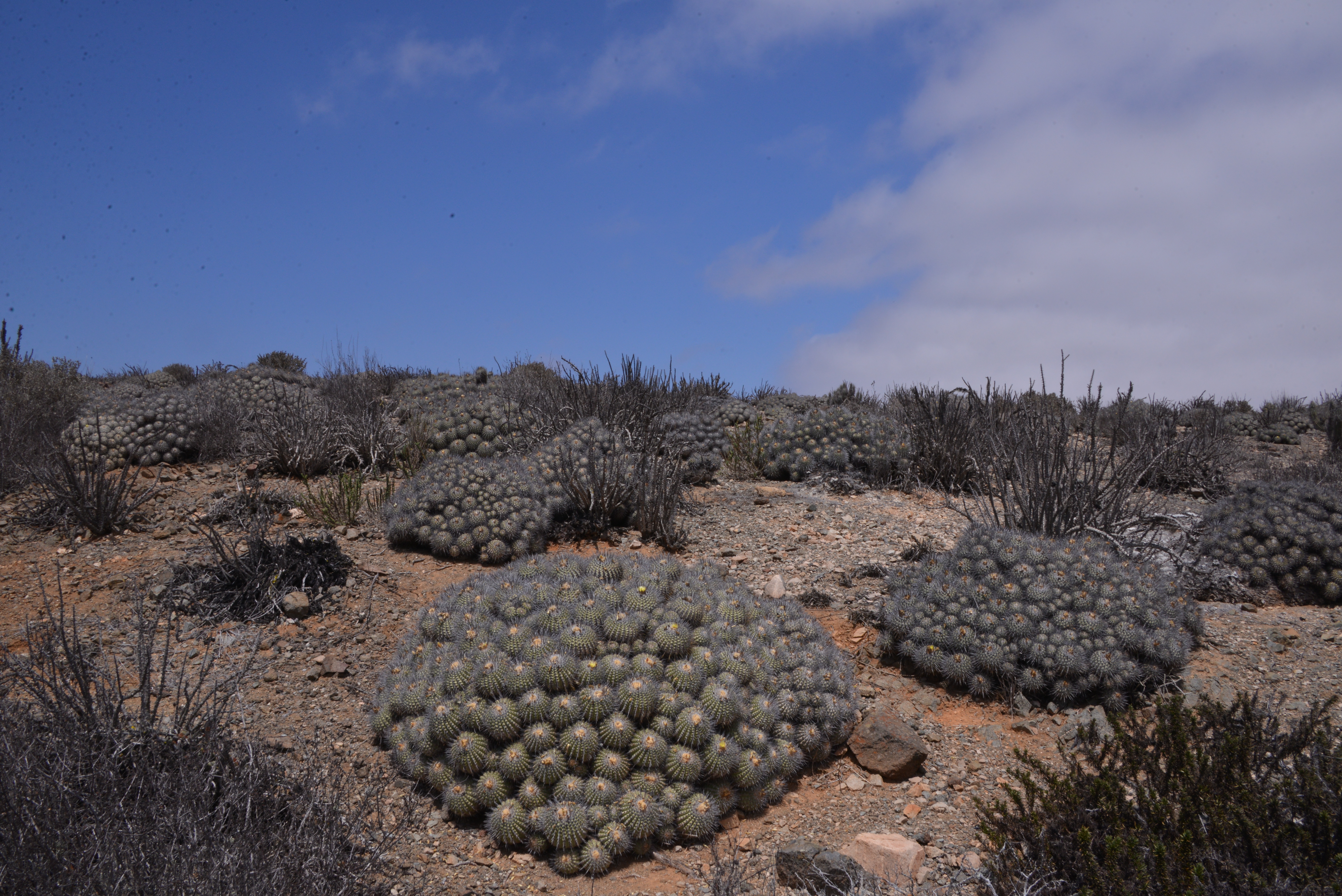
We started to see Copiapoa dealbata, many large clumps, and stopped for a much needed leg stretch (S2858).

Copiapoa dealbata

Copiapoa dealbata

The sun came out and burned back the cloud cover, although it remained chilly. Most of the clumps were in flower, quite a change from the southern population just a few days ago! Eulychnia breviflora was also in bud, with some flowers just opening. Although we have still not found the 2010 stand of C. dealbata where most of the plants were cristate, we did find some impressive crested heads, with one plant with a near 100% of cristate growth gaining our unanimous ‘best in show’ award.

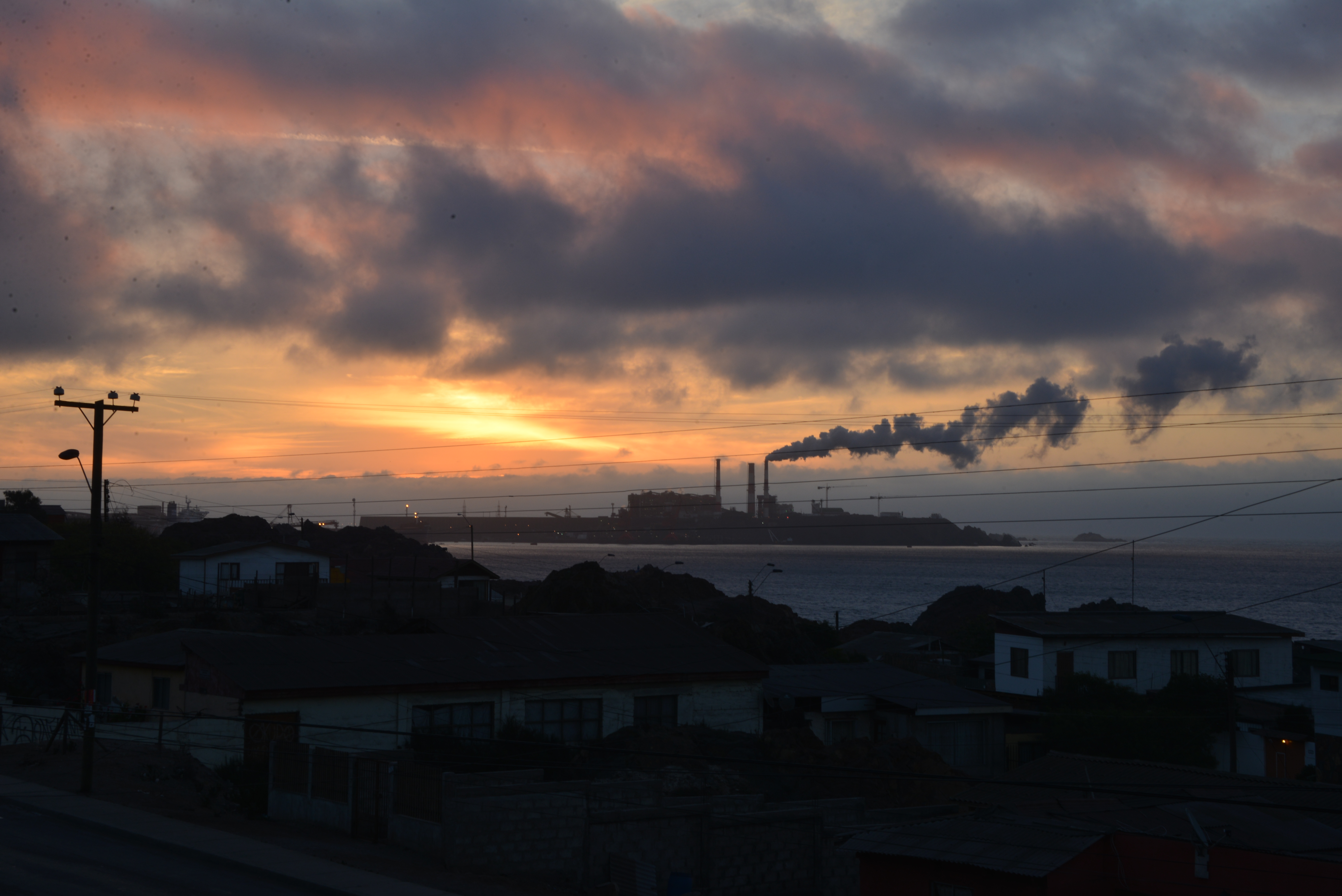
We passed the point where a few days ago we had turned round for our return to Vallenar. This time we stayed in Huaso, in Hostal San Fernando, with its depressing view over the oil-pellet fired power station belching its smoke, this time over the Ocean rather than over the town of Huasco (S2859), where the population has a much higher incidence of cancer than elsewhere in the country. We’re just staying the one night.

Huasco

Huasco

Thursday, 17 October 2013 – Taltal to Caldera

For Angie, the northern point of her trip was reached a few days ago, at Botija. Taltal was the most northern accommodation. Today we headed back south, always a sad occasion, as the km numbers along R5 decrease to zero at Santiago. But this time, we’ll carry on, south of Santiago, down into northern Patagonia! But not today!

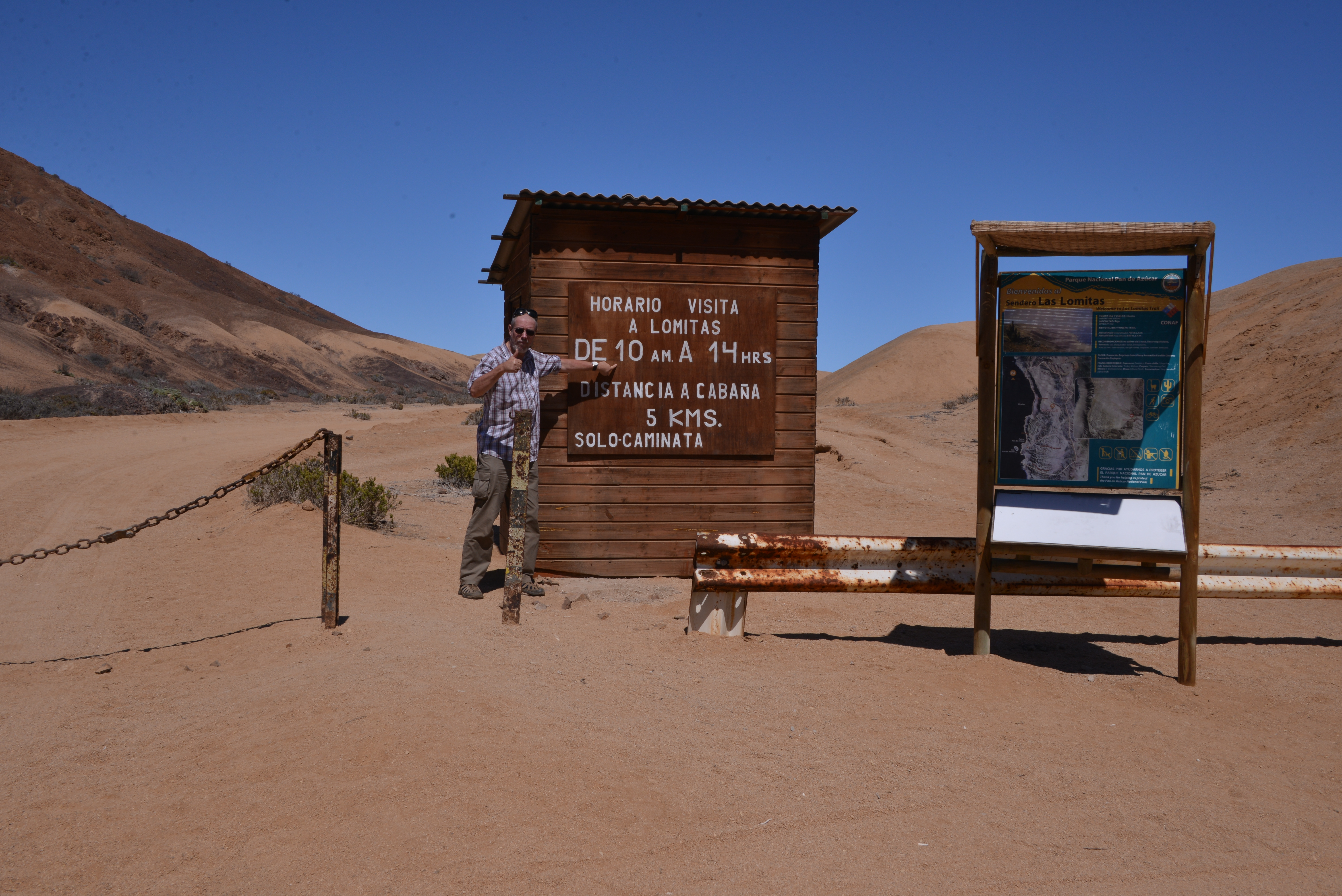
I was sure that we passed a turning on R5 to Pan de Azùcar, Minas El Luces and Cifuncho, but decided that we had probably gone too far when we saw a sign for Pan de Azucar & Las Lomitas. That would do. We were hoping that this was the track that would lead to the Ritter TL for C. columna-alba, around the point where you head north for Secret Valley and the Guanillos and Tigrillo Valleys. However, I had my doubts, as SatNav (which was unfamiliar with all these names – but I’m teaching it!) showed that we were too far into the Atacama Region. Many of the tracks in Pan de Azùcar look the same, so it was not until we reached a junction, with a sign pointing North to Las Lomitas, that I got my bearings – too far south was confirmed. After a km or two another sign warned us that in 7 km the track was closed and sure enough there were formidable crash barriers across various potential side tracks and a truck-proof chain across the main track (S2849). Open between 10:00 and 14:00 hrs, the sign proclaimed. It was 11:00 – they had lied!

Closed track to Las Lomitas

S2849 – Closed track to Las Lomitas


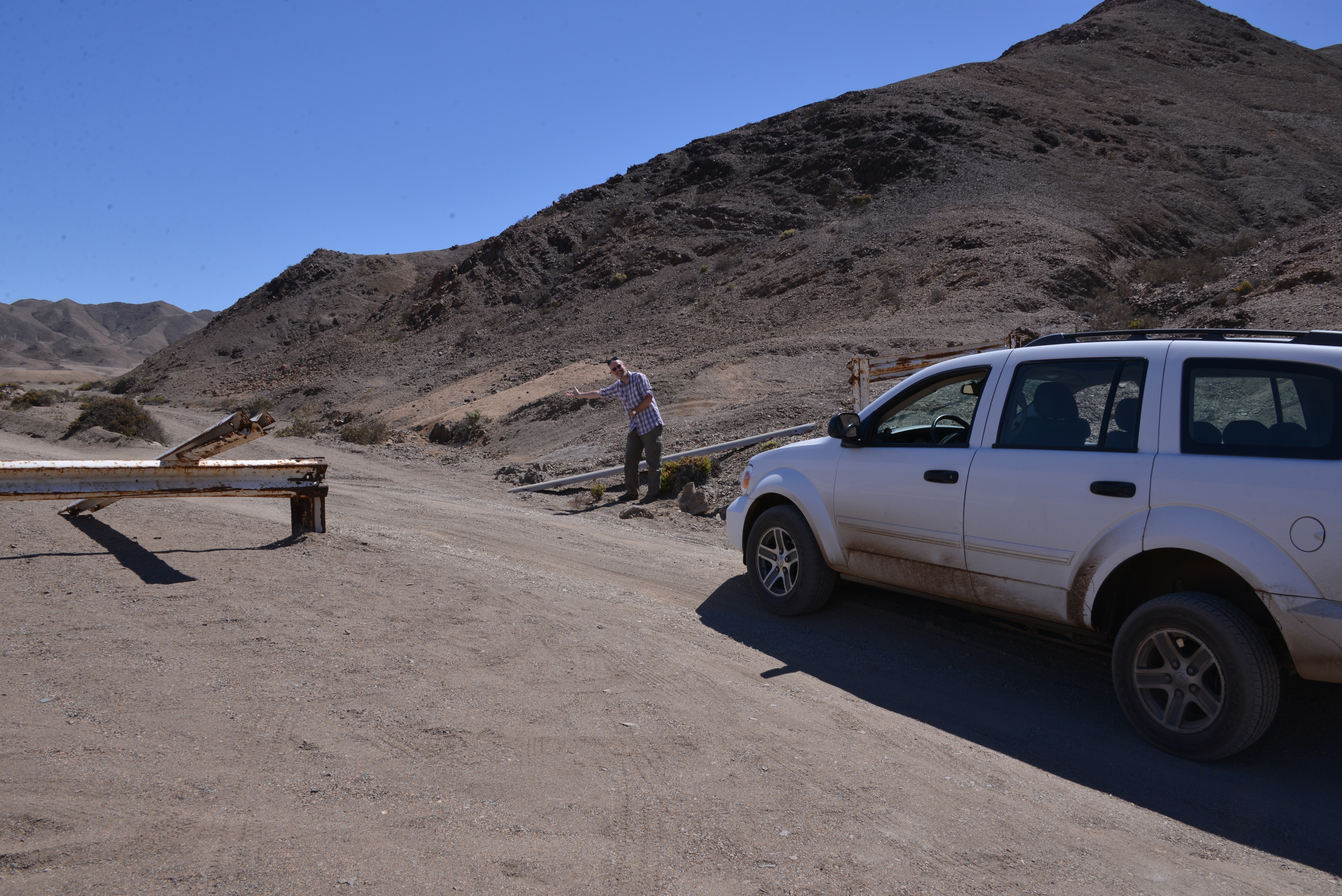
I remembered that in 2010, Juan Acosta had been able to contact a friend who had been a ranger in Pan de Azucar and still had some influence there. After some negotiation, he was told that before this main gate to Las Lomitas, there was a side track – apparently also blocked by a crash bar, but with a gap where a car could pass through (S2850).

By-pass to Las Lomitas

By-pass to Las Lomitas

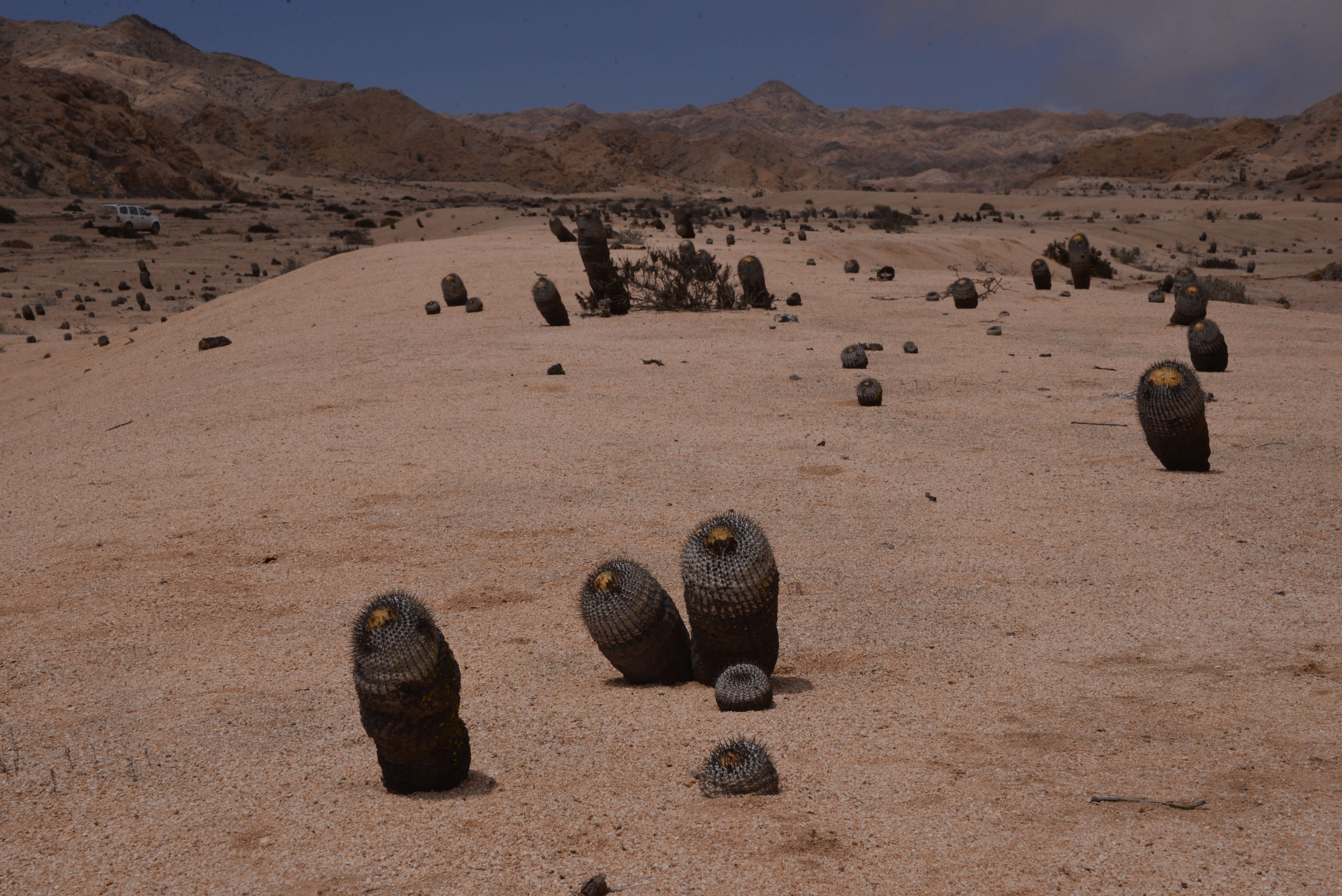
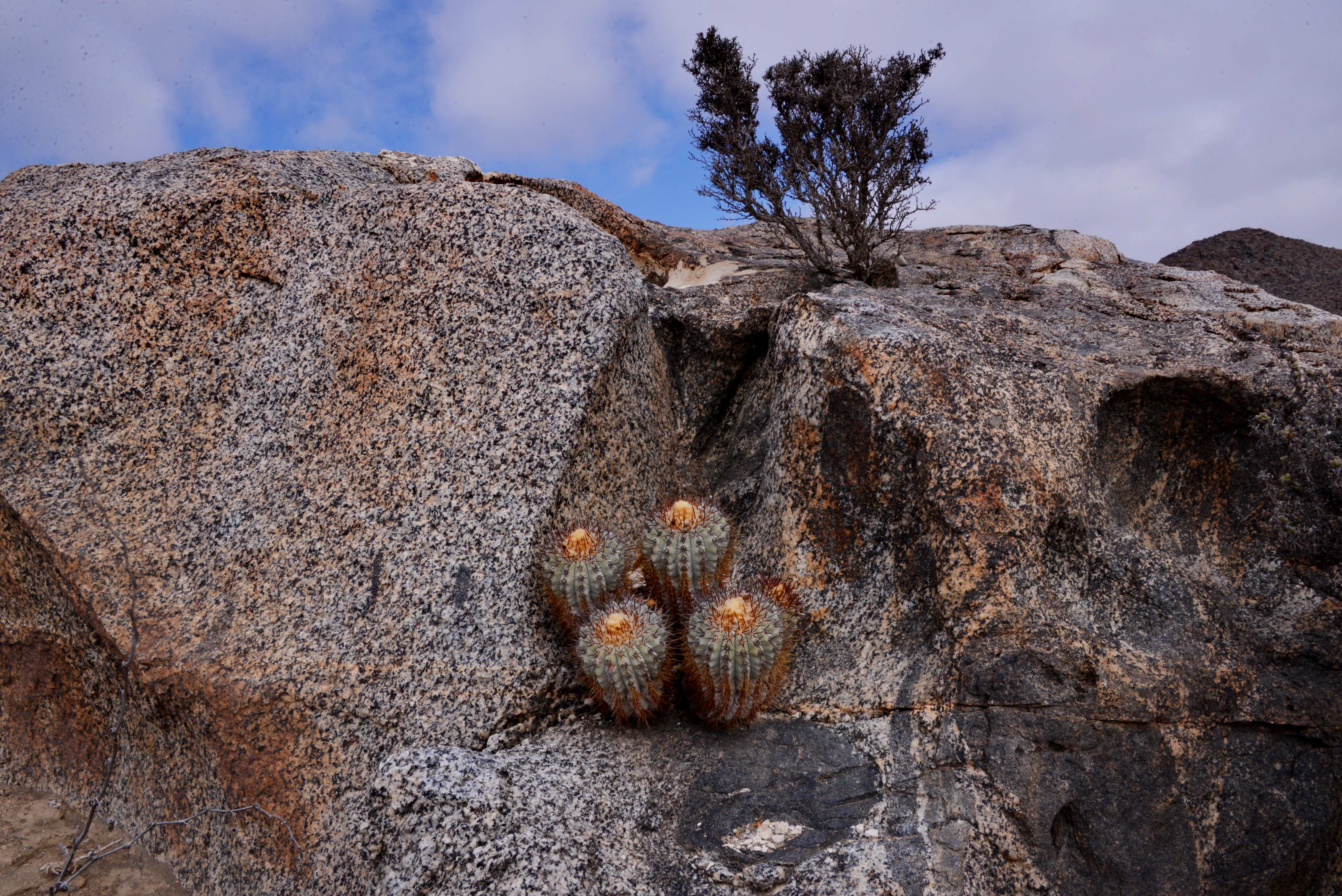
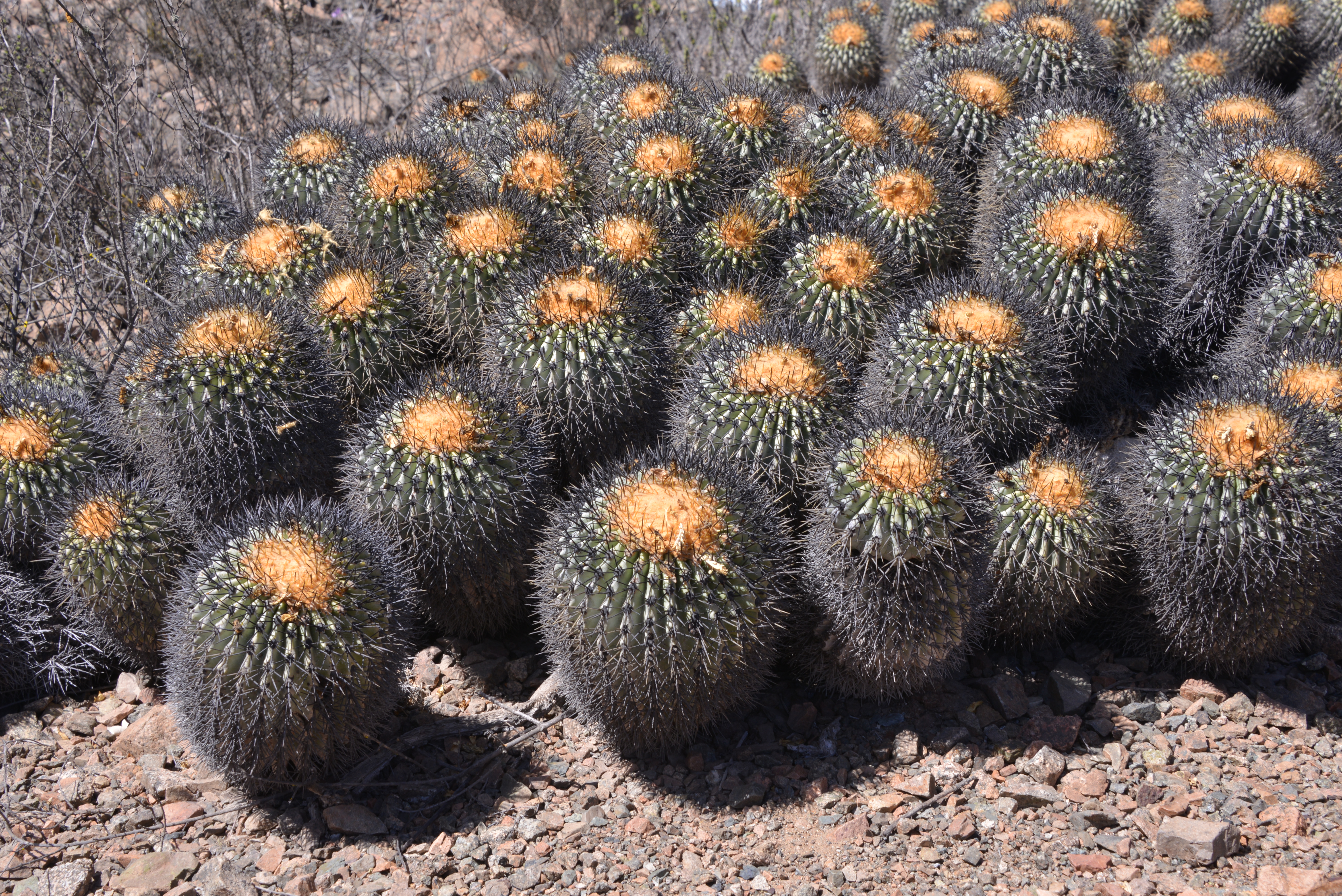
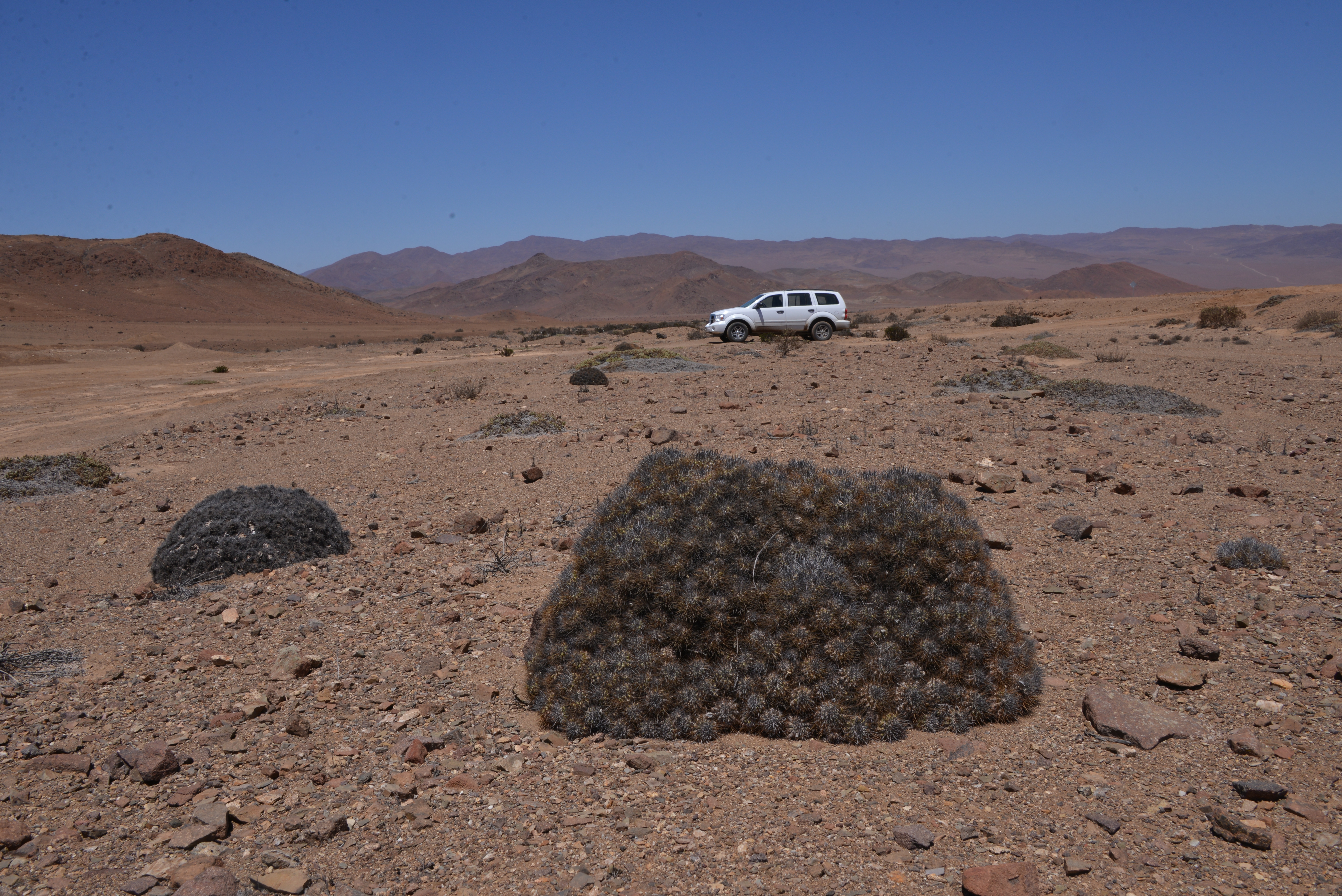
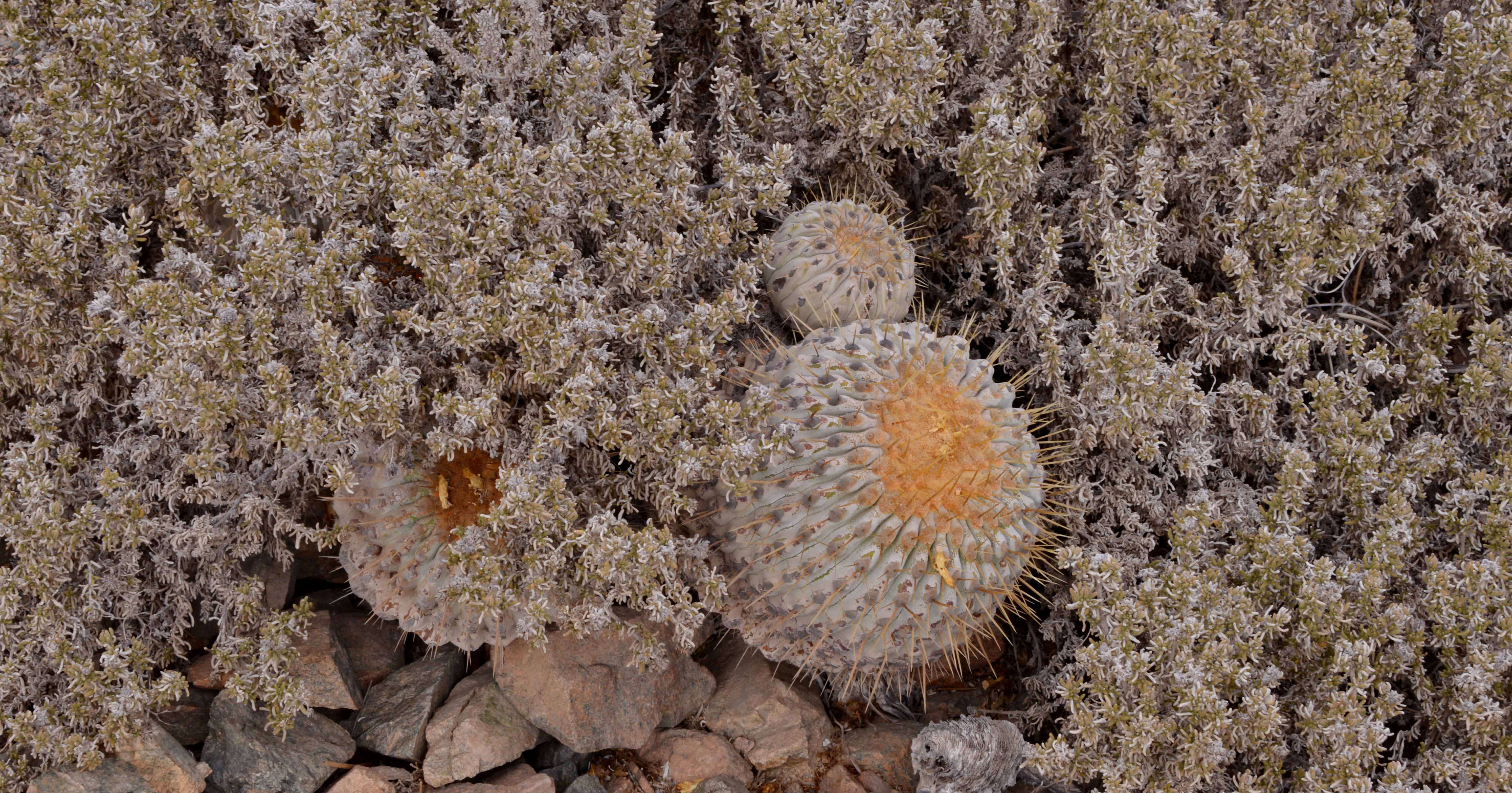
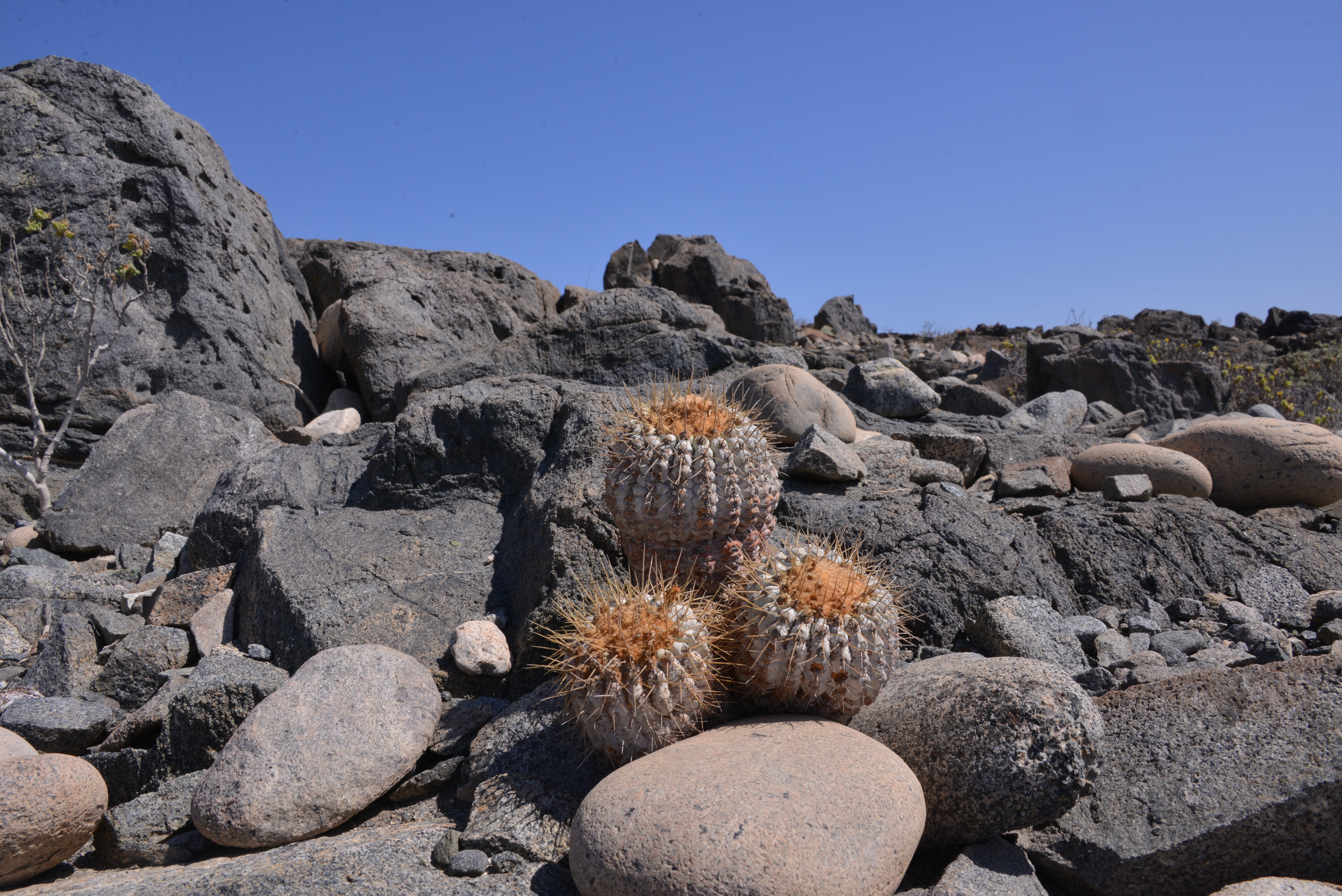
Before too long we had found this track and off we went. This was in fact a pretty well maintained ripio track, putting me in fear of losing the remainder of my fillings as we shook, rattled and rolled along the track. The one downside of the Dodge is that on ripio tracks, it bounces along to such an extend that it is difficult to steer it at more than 30 km. p. hr. so that became our top speed here. We kept an eye on the clock as what ever time and distance we travelled, we needed to travel back as well. SatNav was completely lost, but did at least show me that we were far too far inland and descending at quite a rate which was wrong for Las Lomitas which is high above Planta Esmeralda. Should we go back to look for another track to the west? By now I was curious where this track would end up, so decided to follow it for another 20 minutes. This brought us to a nice patch of C. columna-alba and Angie asked for a photo stop (S2851).  This became our turn-around point to be added to the Chain and other key locations to date in SatNavs Favourites Folder. The plants  here looked a lot happier here than at the Smiler location a few days ago – much larger apical discs and evidence of recent flowering. Also a number of ‘seedlings’, small plants that at the local rate of growth might easily be 10 years or more of age. Eulychnia iquiquensis (‘saint-pieanna’) was still at rest – or were they dead? It was hard to tell!

Copiapoa cinerea ssp columna-alba

Copiapoa cinerea ssp columna-alba

Our time-budget spent, we wondered if we could find the gate back, over the numerous tracks that criss-crossed here. No problem.

We took the usual pictures as we left the Pan de Azucar NP – across the sands with the town of Chañaral in the background. It’s always too hazy to get a good image and this time was no exception. The petrol stations around Chañaral were the usual mess with trucks fighting for a spot at the pumps – next fuel north is at Antofagasta, some 250 km to go, as big trucks don’t want to squeeze through the streets of Taltal!

On the way to Caldera we stopped at some old familiar spots of C. calderana, (S2852) again, small discs, but quite a number in flower – was Spring on its way or were these the last attempts at sex before death took over? In 2003, I photographed a single Opuntia pad, leaning against a leaking pipeline, presumably carrying fresh water. This had now grown to quite a shrub and a small oasis of local flora had formed around it.

Copiapoa calderana

Copiapoa calderana

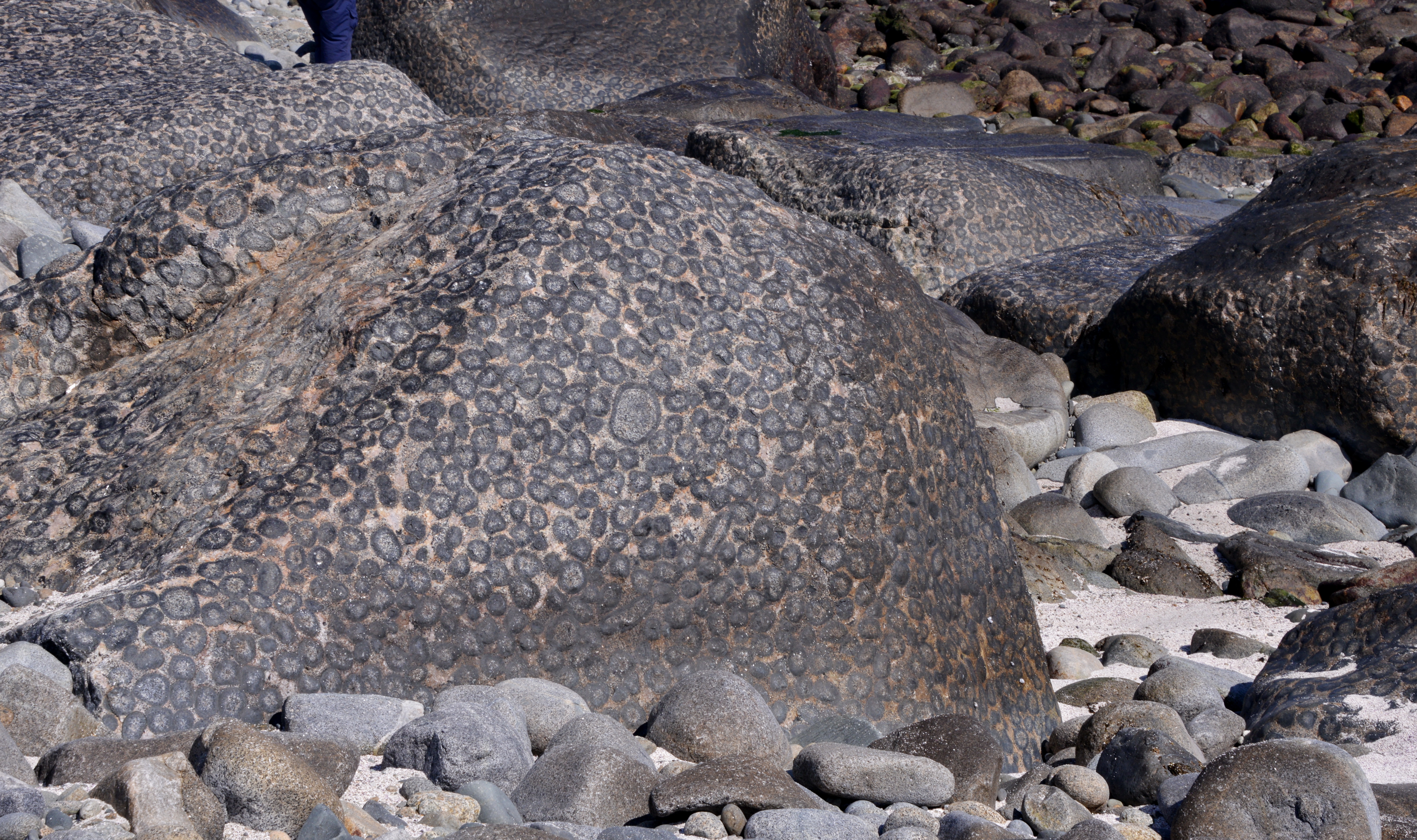
Another stop was at a pull-off towards the Ocean that was a tourist attraction for large rocks of Orbicular Granite, apparently a rare phenomenon. Jonathan, please note, we’ll pass it again in November.

Granito Orbicular

Granito Orbicular

We made it to the Hosteria Puerto del Sol in Caldera and again are staying in the ‘Cabañas’ that look like deformed wigwams. As always, there was a smell of disinfectant, polish and pesticides around the place – a bit like an English Cactophile’s collection before the plants are put to rest for winter.

Tomorrow we’ll follow the new coast road south to Huasco.

BTW: We are having fun & games trying to get the internet to work here in Caldera. In the fight to try to get things to work it seems that any email I have tried to send is firmly stuck in my out box – refusing to budge. Sorry, Brian, Florencia, Jonathan, Anne Hill, Rudolf and Tony B. respectively. None of the messages were critical. As for tonight’s missive, it’s been typed up in OpenOffice Text and will be cut & pasted to my WordPress Blog as soon as I can.

Wednesday, 16 October 2013 – Around Taltal: Paposo & Chifuncho

The 2013 whirlwind tour of Chile continued with another visit to two classic Copiapoa locations above Papaoso. The first was at the Virgen del Carmen monument along the Cuesta del Paposo (S2844), where everything was fine, but again very dry. Some Eulychnia taltalensis had given up the fight to live. In other years we had often been disappointed when C. humilis plants had gone, with just holes left behind where once we had taken their picture. Since 2010, this seemed no longer to be a problem. May be the illegal collector had filled his greenhouse or had saturated the market. More likely, since the Paposo to R5 road had been significantly improved, guanaco had been too frightened to come and help themselves. Just as in 2010 it was now possible to find both mature and juvenile plants in good numbers. Eriosyce (Horridocactus)paucicostata was also looking good and the Copiapoa cinerea ssp haseltoniana at the end of the ridge were at rest, but otherwise OK.

Angie at the monument for the Virgen del Carmen on the Cuesta del Paposo

Angie at the monument for the Virgen del Carmen on the Cuesta del Paposo

[Later, in Taltal, we learned that in July there had been so much snow on the hills above Paposo, that the Antofagasta to Taltal bus had been unable to negotiate its way downhill. This was the first such event in 60 years (1953).]

We moved on to, for us, a relative relatively new (2010) location (S2845) for Copiapoa cinerea ssp haseltoniana, described by Ritter as C. eremophila, off the B-710, the Paposo to Ruta 5 road. For the first time this trip the plants looked happy, with large orange felted discs and the remains of recent (last year’s?) flowering. Again, I could not resist taking even more images of these fantastic plants.

Copiapoa cinerea ssp haseltoniana (= C. eremophila) on the edge of the Desert, east of Paposo at 850 m altitude.

Copiapoa cinerea ssp haseltoniana (= C. eremophila) on the edge of the Desert, east of Paposo at 850 m altitude.

We briefly popped back to Taltal to fill up with gasoline – queues in the morning are horrendous – why do they only have half the pumps working? At least they still accept credit cards, a fairly recent development.

And on to Cifuncho. On the way, we stopped to check on the C. taltalensis ssp desertorum location (S2846) to see if any of them were in flower. I have only seen red flowers here, but flowering plants are fairly rare and it could be that ‘normal’ yellow flowering plants flower at a different time of year – that’s the problem with being here only to take snapshots in time.

Copiapoa taltalensis ssp desertorum

Copiapoa taltalensis ssp desertorum

For the final goal of today we went to check on ‘Benjy’s plant’ at Cifuncho. Angie has a fantastic photographic memory and more or less walked straight to the spot. I’m perhaps better at pointing at maps to show where things grow. I used to find the plant by parking close to a large sign board, but this had gone, so I was lost. The plant looked as good as I have seen it, with abundant evidence of last season’s flowering, although no seed was found. There is just one other, solitairy plant left, a bit lower down the hill so pollinating flowers must be a bit hit and miss with so few pollen donors around (S2847).

Angie posing with the plant we first saw here in 2003 and christened 'Benjy's plant' - Copiapoa longistaminea fa

Angie posing with the plant we first saw here in 2003 and christened ‘Benjy’s plant’ – Copiapoa longistaminea fa

We drove back to Taltal along one of my favourite stretches of roads, the coastal road between Cifuncho & Taltal (S2848).

Tomorrow we start heading south. Angie is glad to have seen all the goals on her northern wish list, but sad that it’s over so soon. But there are lots of new things to look forward to, as I introduce her to northern Patagonia. We’ll be back! Me, in a few weeks time.

Tuesday, 15 October 2013 – Around Taltal: Botija

These days the 50 km drive to Paposo is quick on the well maintained asphalt coast road, Ruta 1 (S2839 – no cacti photographed). S2840 was for a leg stretch among the Copiapoa cinerea ssp haseltoniana.

Ruta 1 - the coast road between Taltal and Paposo

Ruta 1 – the coast road between Taltal and Paposo

Copiapoa cinerea ssp haseltoniana

Copiapoa cinerea ssp haseltoniana

Another one of Angie’s requests was to see Copiapoa solaris at the end of the Botija Valley. Why not? During my last visits in October and December 2010 our familiar ‘campsite’ had been bulldozed and a rough track lead into the Quebrada. In December we met a car with two occupants at our old campsite – they too were surprised. One of them was the Manager of the Manta de La Luna Mine in Tocopilla and keen on cacti. No, we need not fear that Botija would be destroyed by mining – he would have heard on the grapevine, although clearly there had been some serious exploring, judging by the heavy-duty caterpillar tracks. Perhaps a small gold vein had been found and emptied, but the tracks were now ‘old’ and there had been no obvious follow-up.

So we were a little tense as we approached – for two reasons: 1) would there now be a camp with mining equipment and 2) if not, would we recognise the place? I had not brought my regular GPS along and had set off believing that I’d have no problem at all. Never mind, we could always turn round if we got to the easily recognised mining dump at El Cobre! S2841 was for images from the car – no cacti photographed.

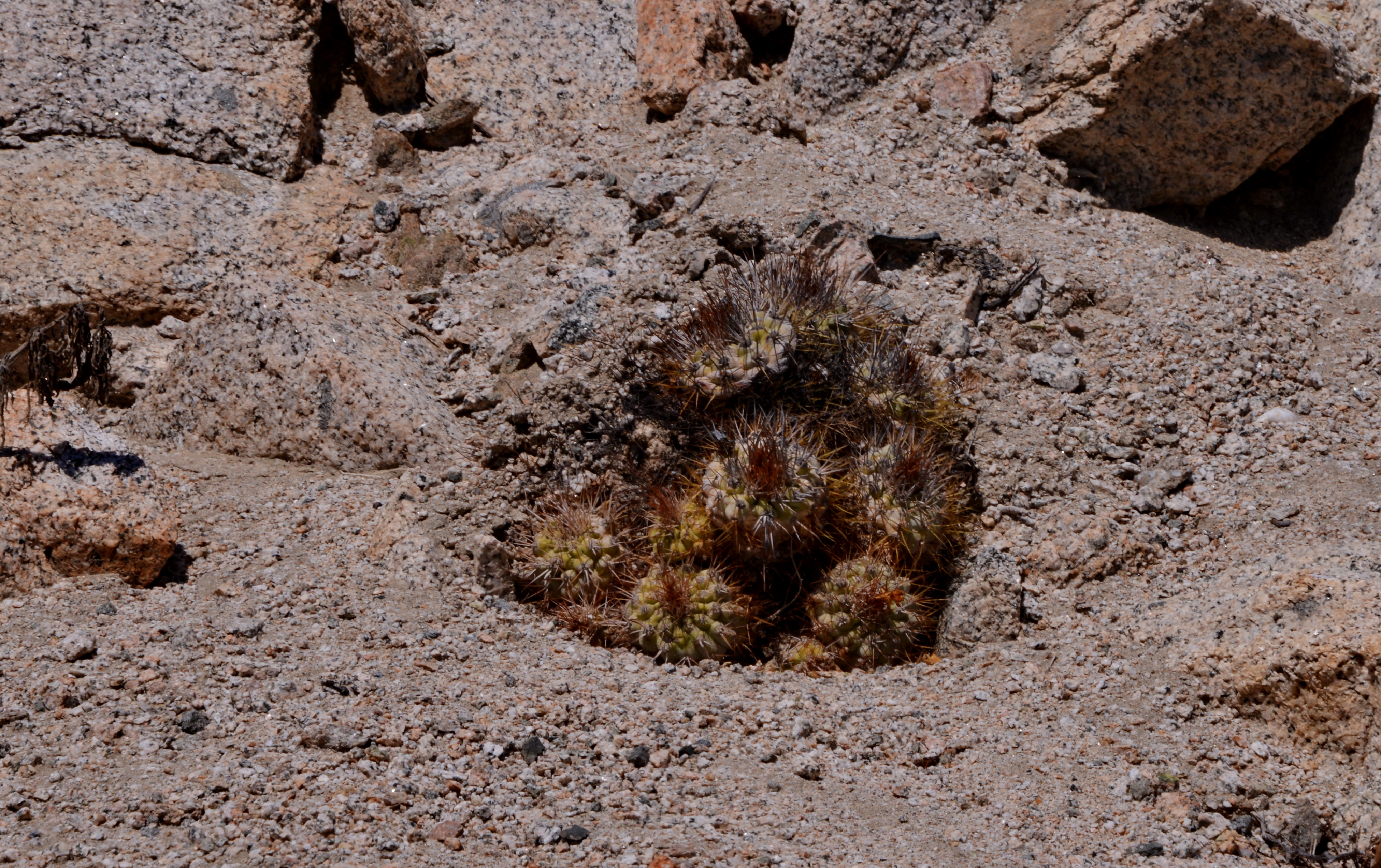
There was no need to panic. Some of the R1 beyond Paposo had been improved, but there was still some 80% of the traditional bone shaking to endure. Angie & I both saw the first Copiapoa ahremephiana more or less at the same time – but they looked extremely dry, almost beyond hope! Fortunately nature seems to have a fantastic ability to recover, but this will take a major miracle! It was difficulty to decide which image was right to include in talks and in my blog – one of the very few plants that still looked in reasonable shape or one of the many dead or dying plants, looking very dehydrated. I settled on a small clump that shows aspects of all these stages perhaps explaining why when we were first here in 2001, Marlon & I both noted two species here. When we get back here in a month’s time Jonathan Clark noted that there are two different ‘faces’ on the same clump – one plant, one species, but two different appearances as the plant sacrifices stems to survive. (S2842).

Copiapoa ahremephiana - one clump, one species, two 'faces'

Copiapoa ahremephiana – one clump, one species, two ‘faces’

We set off on our hike but soon found what seemed to be a new branch to the Quebrada off to our right. I decided to follow it for some 30 minutes while Angie marched on to the ‘T junction’ at the end of the main valley. All I found were dead C. arhemephiana, quite a depressing sight. This small canyon seemed to turn round to the coast, away from where I might expect to find the other interesting cacti of this area.

I turned back and followed Angie’s footprints along the track that we had found in 2010. It seemed that nature had done nothing to improve the quality of the track, rather made it worse. It also seemed as though not many other cars had tried to copy us and drive in. The suspension on the Dodge was rather bouncy and if we had a new set of all terrain tyres, I might have risked driving in. For now I was happy to explore, move some of the larger, sharpest stones and see if I’d like to take the risk in a few weeks time when I would be back here again.

Most of the track was passable, some parts even good enough for a 20 km.p.hr. sprint, but in some places wind and water (?) had cleared away the sand between huge boulders, leaving large gaps with protrusions that I think would not be cleared by our car. Also, if we should be able to get to such a point, there was no space to turn around, so we’d be stuck. I stopped my highway maintenance tasks and started to look for cacti – still very distressing. Soon Angie appeared, reporting that she had reached the T junction and at least found a number of healthy looking clumps of C. solaris, but here too, there was more death to be observed. We walked back along the south side of the Quebrada (the track zigzagged across the valley floor, but the main place to spot C. decorticans had always been on the south side – north facing side of hills. I have never been able to work out why Copiapoa, living in an environment where water, and how to avoid losing it, is of critical concern, always seem to select the north facing side of a hill – the side that at midday gets the full sun, rather than look for shaded positions. This preference could be fatal here.

C. decorticans (the name C. moribund had been considered when naming the two ‘sp. Botija’ plants was discussed) was in serious distress – I did not find any live plants, plenty of clumps that had died a while back. I know from more detailed explorations high on the surrounding hills by mountain goats such as Rudolf Schultz, Leo van der Hoeven and Juan Acosta and Florencia Senoret that many healthy plants grow much higher on the hill, much too high for my physical ability and for today’s time budget, even if I had been mad enough to try. Fingers crossed that things are better higher up.

And so, after our after our brief sojourn to our farthest point north, we set off back to Taltal, muscles aching after years of too little exercise.

The story of cacti looking stressed through lack of water has now been observed everywhere that we’ve been. That despite us seeing the Desert in Flower in October/November 2010.  Clearly there had been plenty of water than to encourage the annuals to put up a magnificent show, but not enough to allow the cacti to build themselves up for the next great drought.

We saw some lizards that seemed in no hurry to run away from us, but no insects, even though there were some annuals in flower. Angie reported being followed by a hummingbird everywhere she went – must have been her shirt with lots of red in the pattern that was the attraction. So even if there should be a good wet year for the plants, will there be enough pollinators left to ensure sex for the cacti?

On the way back to Taltal we made another leg stretch stop (S2843) among the ever so photogenic C. haseltoniana.

Copiapoa cinerea ssp haseltoniana along R1

Copiapoa cinerea ssp haseltoniana along R1

Off to Club Taltal soon, where yesterday we had been greeted as long-lost friends. It’ll take a few Pisco Sours to forget the dead plants seen today.