Just another WordPress.com site

It’s been very wet during the night, with others in the party complaining that they were kept awake by heavy storms. Not me! But the rain was gone by around 10 a.m.
The flooded roads (well, lots of surface water, anyway) are being expertly navigated by John & Alain with Jarred and me putting in token appearances as well.
I continue to struggle to keep up. We’re moving at a fast speed, certainly faster than most previous trips. There is lots to see, this is a huge country. Each morning, Marlon gave clear instructions of what we are doing when, but I don’t hear them and/or forget them!
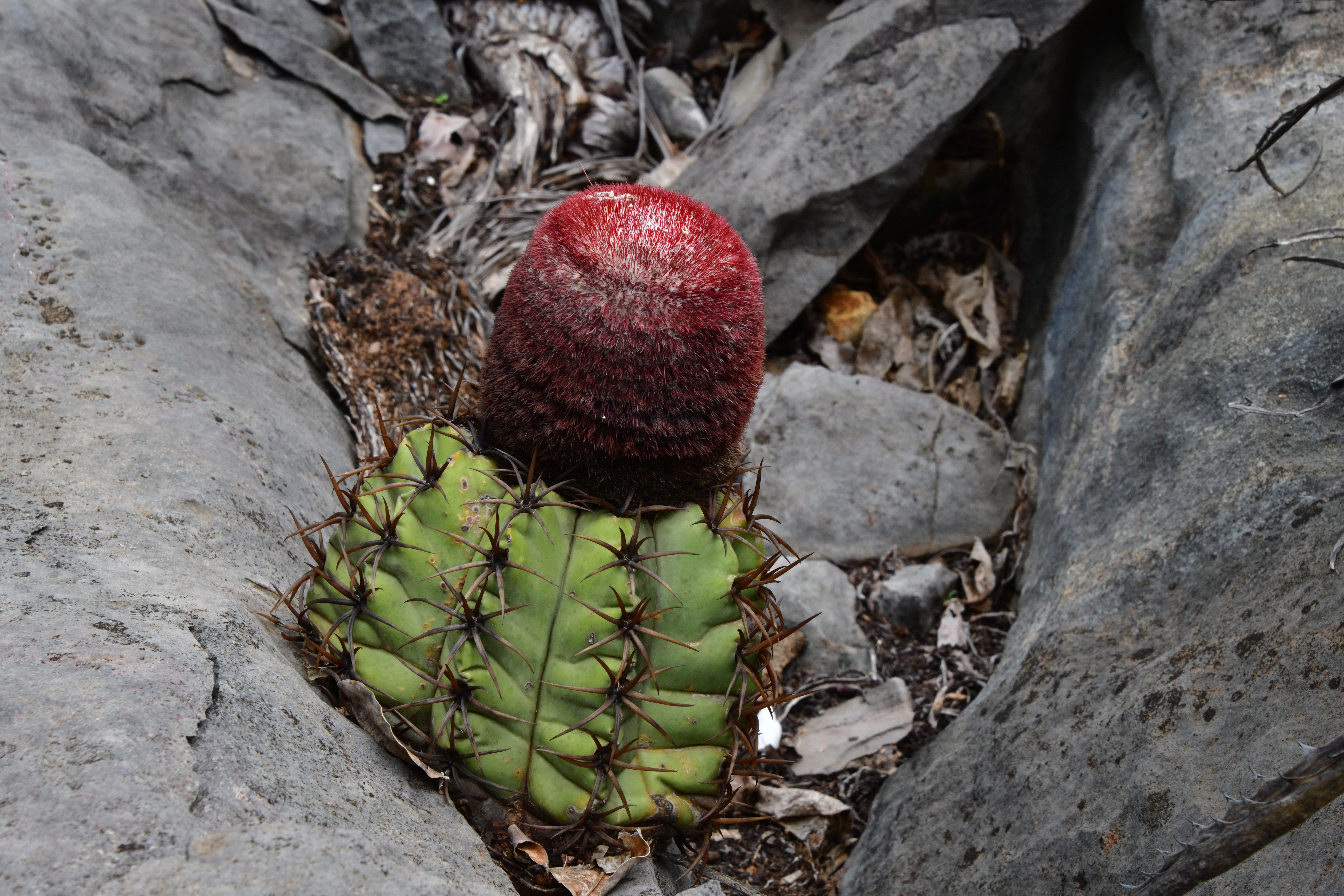
The camera preserved the excellent plants that we saw. At S3675 Micranthocereus purpureus, Melocactus levitestatus, Quiabentia zehntneri (in flower), Pilosocereus sp. to name but a few grew on heavily eroded and therefore very sharp limestone.

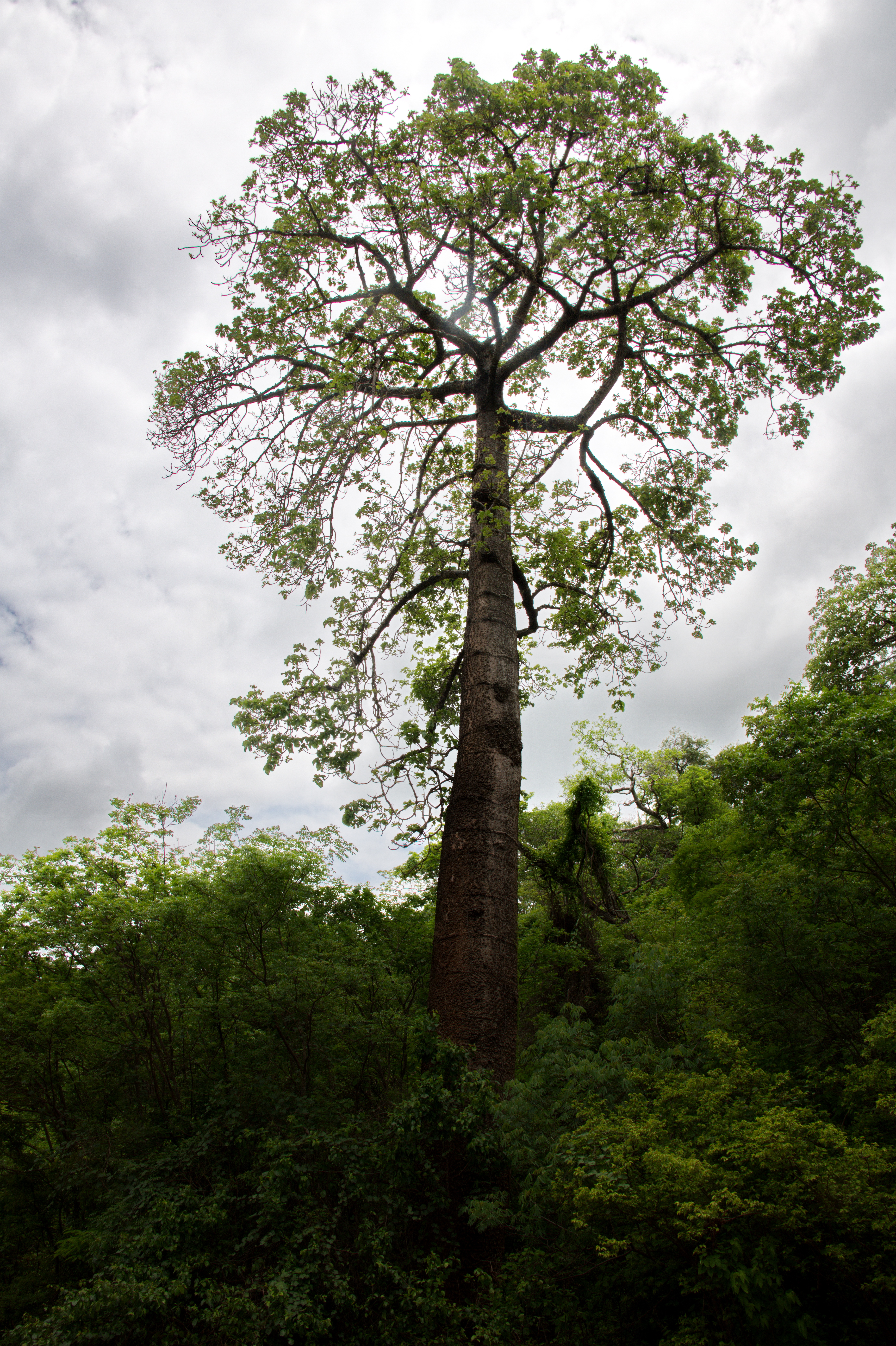
Farther along, Marlon made us stop (S3676) along the road and guided the party back to where he had seen a pachycaul tree. I decided to stay with the car, but slowly made my way along the roadside until the 300 mm end of my zoom lens caught a decent view of the tree:
Still farther along, there was a large tarantula spider crossing the track, providing a reason to stop (S3677). It challenged John’s shoed foot to a fight. John only wanted to provide an object for scale. In the end, it was a draw and the spider went its own way, into the shrub.

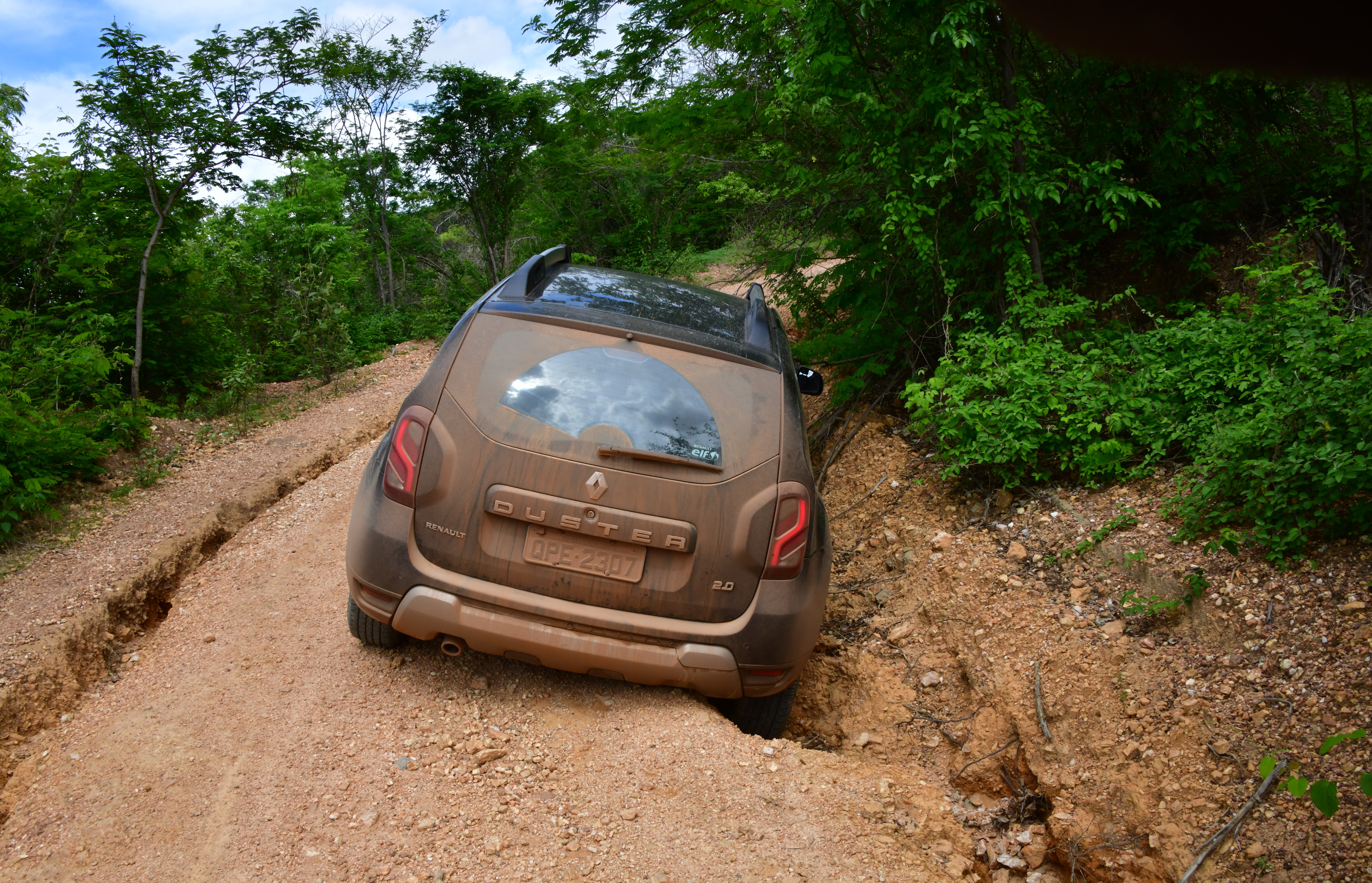
We had a bit of an accident today, driving on dirt roads (S3678). Suddenly the recent rains had created a deep gully and John, driving, found not enough room to the left or right of the gully, tried to straddle it but both front & back nearside wheels disappeared into it, turning the car halfway over. I was sitting in the back seat of the side that went in. I could not open the door and suitcases had come down from the back seats, fortunately without causing any damage or injury. That morning we had bought a tow rope as ‘you never know…’  The others lifted the car so that I could get out, then Alain pulled our car out with his, using our new tow rope. Amazingly, no damage, other than a scratch or two on the plastic bodywork.
The last stop of the day (S3679) was for Micranthocereus polyanthus at one of only three known locations of this plant in nature.
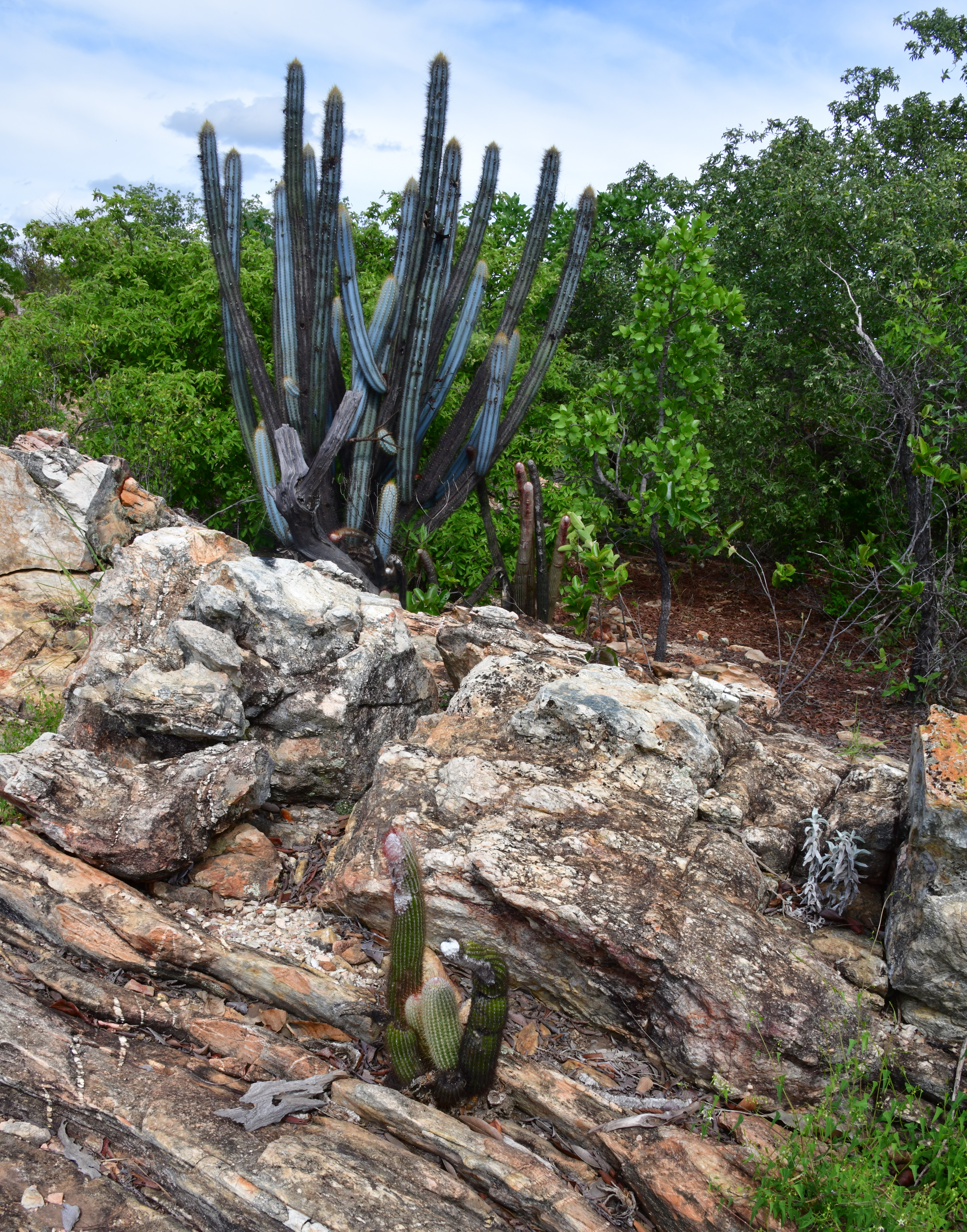
There is no obvious threat to the plants at this location, unless it is decided to widen the road or use the rocks that they grow on as aggregate for road building. They are rarely seen offered for sale in Europe as they require heating to 15 C and mature plants require quite a bit of pot room.
Before our two days away to Itamarandiba, we had asked the staff in our Diamantina hotel to do some washing for us and to have it ready for our departure this morning, after breakfast. I’m not quite sure what went wrong, but when we came to check out, the washing had not yet arrived back from the laundry. A couple of hours later and the problem was resolved, with some tuning to the still damp items needed as various items got mixed up.

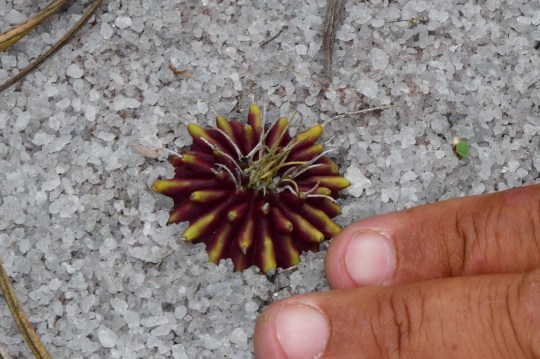
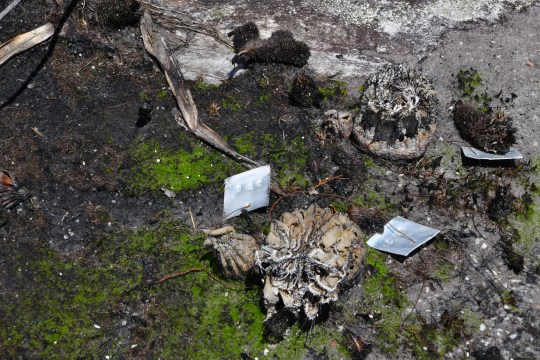
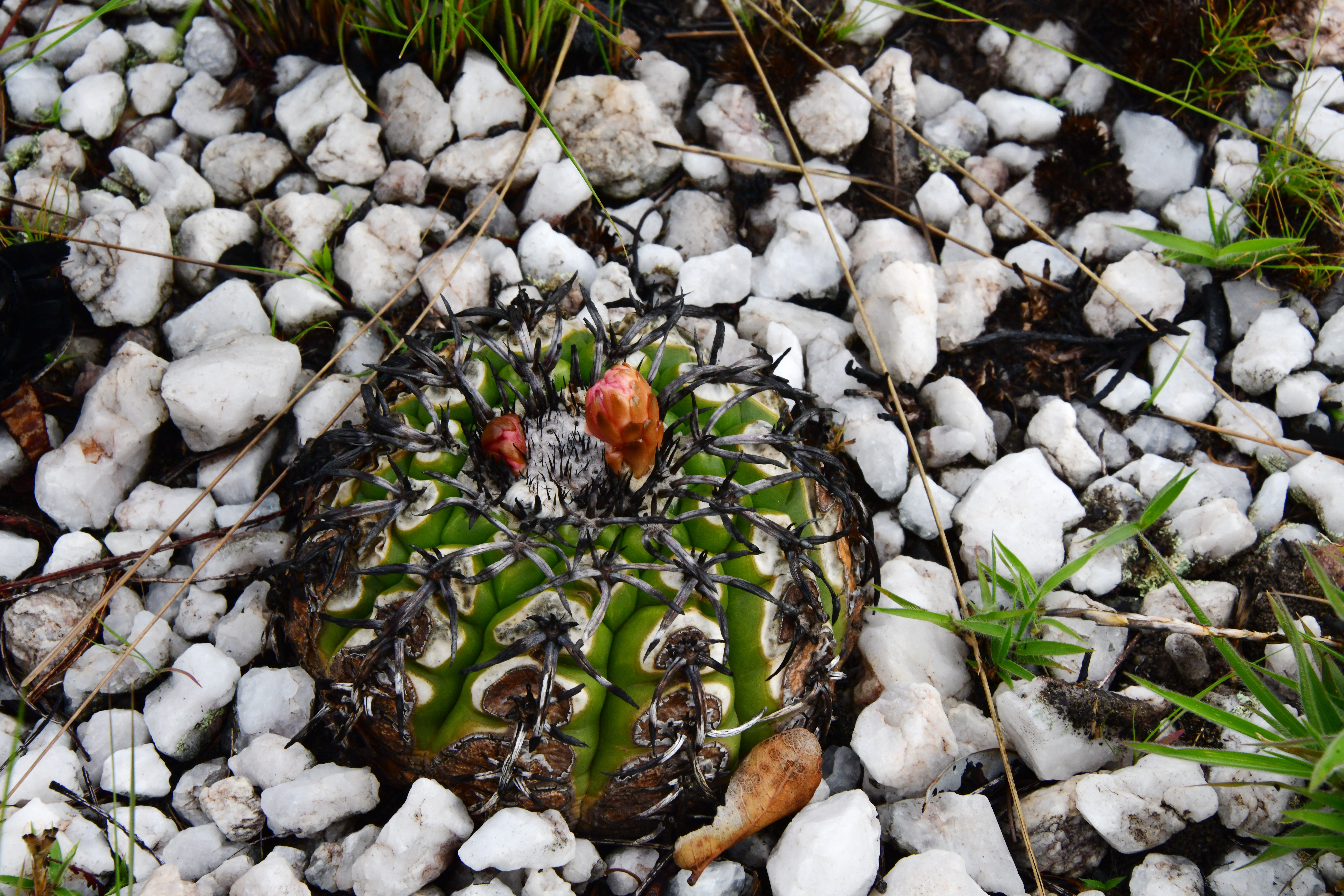
Our first stop (S3670) was for a Discocactus population that had survived a flash fire that had damaged the epidermis but had not killed the plants. In fact, the plant was in bud, ready to flower tonight. 
Next, we stopped to photograph Cipocereus bradei (S3671) that Graham Charles includes in his category ‘best left in habitat’ as the plants that he includes in his Brazil talks are quite marked, not worthy of including in a show back home. But the plants here were unmarked and would certainly look great on any show bench!

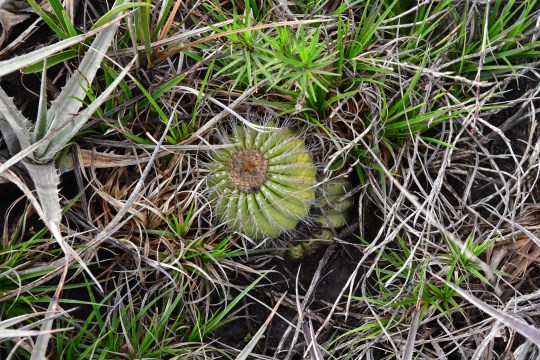
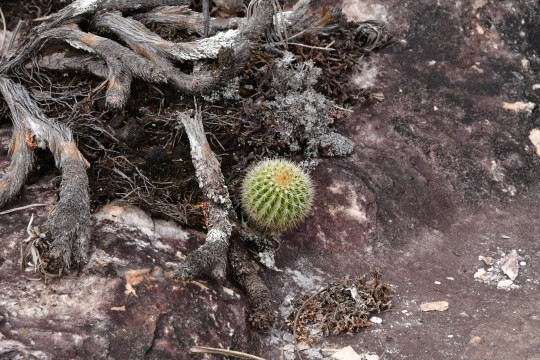
S3672 was for another Discocactus population (D. placentiformis?)

At S3673 we saw a moss-like plant that still has me confused:
At various presentations back in the UK and in Denmark wanted to help me out and suggested Llareta – Azorella compacta. And that is what I would have said if I was standing at over 3,000 m. altitude somewhere in the Andes. But we were in Minas Gerais, Brazil at around 700 m. So what is the plant? A moss?
S3674 was another Discocactus population. Still D. placentiformis? Marlon, help!!

Today I have a fair idea of where we went, as I switched on the DashCam and recorded our travels today as seen through the front windscreen of our Duster. When we started in Belo Horizonte, the car was a nice dark brown (? – I’m colour blind!) colour, but by now it had taken on a nice ‘splashed in chocolate milk’ appearance. The result was 105 three minute movie clips i.e. 5 hours  and 15  minutes of bumping along country roads. The footage includes the time, speed and GPS coordinates of where we were. The majority of the time the movies are quite boring, only of interest if we should have an accident, to help determine who was to blame. I have included just two minutes in my current presentation, to give the audience an appreciation of what it is like to drive in Minas Gerais. The cacti certainly don’t stand to attention by the side of the road, but it is possible to pick out quartz patches on distant hills that look promising for exploration for cacti.

We managed to visit Uebelmannia gummifera subsp. meninensis in 1999, after a brief reception by the mayor and a second member of the city council, dressed in suits on a day that was much too hot for looking smart. In 2009, without Marlon, but working from his very detailed notes, Cliff and I managed to make our way to the ‘drive through’ site of U. gummifera.

This time, S3668 was a different location to the 1999 stop but is it the same spot as in 2009?

Marlon and Jared noted that there were several small plants, just some 5 cm across, that looked unwell. Marlon cut the plant in two and revealed that it was no more than a hollow shell. A borer beetle, or rather its larvae, had done their evil work. A similar phenomenon occurs in Sclerocactus in the USA and has been well studied and documented. It would be interesting if a Brazilian student could look into the details of what we observed here.

2018-11-15 12-01-06a

All the affected plants were of a similar size. Fortunately there were still a good number of fully grown plants around.

2018-11-15 12-23-35a

However, U. buiningii had always eluded me. It is the most remote location, from Diamantina, if you want to see the other members of the group as well. But here it is!! Found by Jared, found by looking over my shoulder (I was sitting on a rock!) and asking:’Is that one?’ You bet!

2018-11-15 15-04-08a

I understand that three more plants were found at the other end of the site. We just need to find Uebelmannia horrida to complete the set, planned for the end of the trip. Make no mistake! Although we were very pleased to have seen just a few plants, this is a critically endangered species, unless there are more locations, less accessible, yet to be found.

We headed back to Itamarandiba as our Dusters were low on fuel. As we approached the town Marlon received a message that one of us had left a bag behind. I had not noticed it yet, but the bag was mine. That is the trouble, with luggage split over two cars; my luggage includes a soft IKEA bag, mainly containing cables and chargers that I can either squeeze into my main luggage suitcase or use as ‘filler’ in the boot of whatever of our cars is handy. On this occasion my Nikon D750 was also in the bag, so that the honesty of the staff in the hotel prevented quite a financial loss.


We had entrusted our dirty washing to hotel reception for collection the following morning.

  • S3663 – Le Do Anjo

2018-11-14 12-35-10
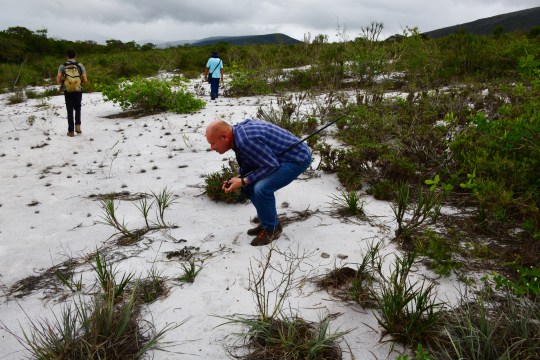
Chris Hayes showing off his skiing skills. But it’s quartz, not snow, Chris!

  • S3664 – Eucalyptus Charcoal Ovens
    2018-11-14 14-09-45
  • S3665 – Uebelmannia gummifera var. rubra

2018-11-14 14-58-14a

  • S3666 – Uebelmannia meninensis
    2018-11-14 17-17-13a
  • S3667 – Eriocaulaceae sp.

2018-11-14 19-24-01a


Yesterday’s fall at the first stop of the trip had left me questioning if I was becoming too old for these sort of trips. But these thoughts blended with trying to work out why I was feeling unusually tired. Marlon had suggested that November was not the best time of year to travel in Minas Gerais – it was the hottest time of year and the start of the rainy season, creating high humidity. Marlon suggested that I was dehydrated and needed to drink more bottled water. That was easy, with plenty of bottles bought at the local supermarket before setting out. I had insisted on the dates because in 2009 we had travelled here at exactly the same time without any problems. But then, the weather can be notoriously unpredictable.

Today I took images at:

  •  S3658 – Uebelmannia pectinifera subsp. flavispina

2018-11-13 11-37-44 - 0009S3658: Uebelmannia pectinifera subsp. flavispina
and Cipocereus minensis, Dyckia sp. Orchidaceae sp. Tillandsia sp and Velloziaceae sp.

  •  S3659Uebelmannia pectinifera subsp. flavispina, Bromeliad sp. C. minensis, Eriocaulaceae sp (Everlasting flower), Lichen, Orchidaceaa sp and Velloziaceae.
    2018-11-13 12-36-33 - 0042

There is often a distinct difference between the juvenile and adult spination of Uebelmannia to the point that they look like ‘different’ species. When grafted, the juvenile spination persists longer than in nature. This is the case for the plant described as Uebelmannia pectinifera var. eriocactoides but its discoverer has admitted to me that in habitat, larger plants look like ‘normal’ adult U. pectinifera. Plants offered for sale are always grafted.

  • S3660 – Datas
    Images taken are of the typical colonial architecture. No plants photographed.
  • S3661 – Uebelmannia pectinifera subsp. flavispina
    2018-11-13 17-15-04 - 0116
    This population contained tagged plants as part of a population study. Metal tags were tied to the plants by a metal wire. All tagged plants had died. A few plants were missed by the taggers and were healthy. I suspect that heavy rains can turn the puddles into electrical batteries rather like experiments I remember from school. I hope that the students recorded and reported their results, so that others can learn from this and avoid a repeat. I have seen other population studies (e.g. Pediocactus bradei near Navajo Bridge, AZ), where the tag is secured into the soil by a nail, but neither metal objects touch the plants. On a recent visit to that location some of the discs were made of black plastic. There was no evidence of plants being affected by the tagging.
  • S3661 – night out in Diamantina, no plants photographed
    2018-11-13 21-30-18
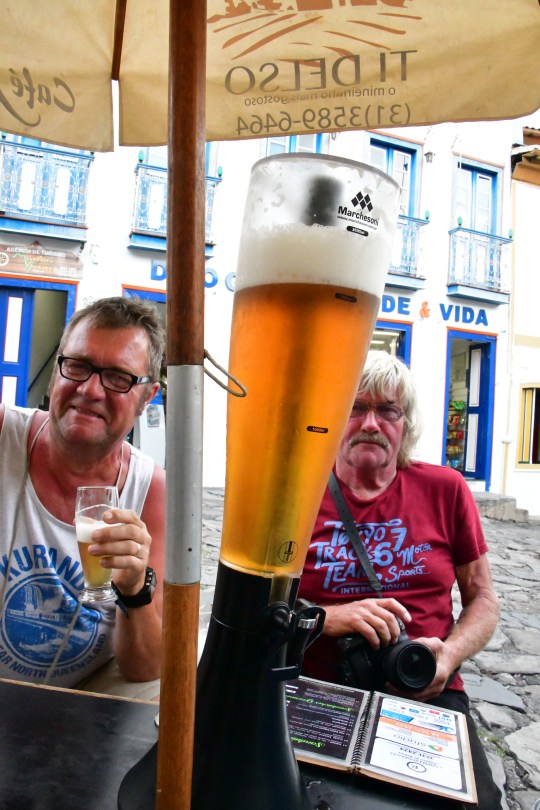
    Alain Buffel and John Child used as scale for the 3.5 litre beer glass. I should say that the six of us shared two such glasses! There was no space on the table for one each!!

Monday, 12 November, 2018

Around Diamantina: Mendanha to Inhai

Memories of today’s Diary pages – or for most of them – are a little bit hazy so I am relying on Marlon’s notes – in Portuguese and Google Translate – and Alain’s Stop list, received on 11 June 2020! Marlon took a month off from his regular business of providing garden plants and services to local customers. He was taking numerous mobile phone messages from client’s chasing orders, so he needs to catch up.

We’re based in Diamantina for few days, ideally situated in the middle of Uebelmannia country, specifically for members of the U. pectinifera complex. I was first here in 1999, with the late Keith Grantham, Brian Bates to meet up with Rudolf Schulz and join Rudolf and Marlon in explorations for their 2000 book ‘Uebelmannia and their Environment’, our first Uebelmanniathon.

Today’s program was similar to the one for Monday, 16 November 2009 when I travelled with Cliff Thompson from Waterlooville, UK. That time, Marlon was unable to join us for the Minas Gerais stretch of our trip, so  that we relied on Google Translate for our communications in Portuguese. Today’s stop list records eight stops:

  • S3653 near Mendanha where we saw and photographed Cipocereus minensis and Velloziaceae sp., This is the TL for U. pectinifera that I missed seeing, due to a fall.

    It had rained overnight. The rocks were covered in a cyanobacterium that gave the rocks a black appearance. This cover was in turn covered in Algae and Lichen making the surface rather slippery. Also, many of them were loose and so, within minutes I made my first tumble, grazing my head, unprotected following Angie’s dramatically short haircut, a #0, both arms and a cut over by kneecap. The bleeding was not too bad, although it did seem to attract a large number of mosquitoes. But worst of all, the tumble seemed to have damaged my self confidence, so that although I had already started the day as the slowest thing on two legs, I was now being overtaken by snails. Hummingbirds flew by my face, but I was too slow to get their picture.S3654 near Mendanha, provided Epiphyllum phyllanthus, Opuntia sp and Tillandsia sp
  • S3655 – Along the Rio Jequitinhonha, around the bridge at HU 850 we saw Cipocereus minensis, Dyckia sp. and Velloziaceae sp.
  • S3656 along the track to Inhai we saw wild pineapple (Ananas sp), Brasilicereus markgrafii, C. minensis, Discocactus placentiformis and a small mushroomS3657 refreshments at Inhai.


It’s not just cacti & other succulent plants that we enjoy on our trips, but also a bit of adventure. Well, we have had enough of the latter as I sit on an airport bench in Sao Paola Airport in Brazil where we missed our connecting flight to Belo Horizonte by a whisker due to the extra crowds trying to get into the country for tomorrow’s F1 Grand Prix which is held at… Sao Paolo! They seem to be the Max Verstappen fan club, with some 4 Jumbos of Dutch and Belgian fans, arriving at the same time that we did.

Our arrival also coincided with Brazil turning its clocks to summer time so it seems that we lost an hour …. off the 1:35 hrs that we had for our transfer.

This is the largest airport in Latin America but not the most clearly laid out one.

We, (Alain, John Child, Chris Hayes and I) were all very tired, having got up at the excellent Premier Inn at T4 – so new that my SatNav did not know about it and took us to the one at T5. We could have taken a courtesy bus that was some walk away, but in the end, looking at the pile of luggage, it seemed easier to call a taxi, who, for £16 was very happy to take us ’round the corner’.

But I guess it all started a bit earlier when Chris arrived and we packed my car with the cases etc. When we were ready to go, I could not find my car key. Searched my place, #12, – Nothing. Then did the same at Angie’s (#10) where some of the packing was done. Nothing! Went through my many pockets, twice, nothing! Started going through my luggage and yes, there was the key! 3 layers down in the rucksack! I’m getting old!

As a result, we missed getting Marlon his requested jar of marmite.

Angie had a rotten journey back home with a pile-up on the M3/A303 on a dark and wet night.

So, up at 03:00, walk to T4, farther than expected with our luggage! Smooth flight to Paris -CdG and quickly to the departure gate at the other side of the airport, but everything went well. Then 12 hours in the air on seats that we failed to pre-select so we had the middle seat in the middle block of seats, needing to climb over fellow passengers to visit the toilet. I’m getting too old for this.

Then I fell behind the others as, already late from the struggle through immigration, I was sent the wrong way through security, who wanted to Xray everything again, yes, even the luggage destined for the hold, so yes, they confiscated the nice Swiss Army knife that Angie & I bought at the Waterfalls at Schaffhausen during our March holiday. It was the nice du-lux version with wooden handle and 100 Euro price tag! Looks like we have to visit the shop again!

We’re unsure when Air France open their office so that we can sort our tickets out.

Now let’s see if I am still in credit with the wifi!

It’s been a frustrating year, healthwise. Around this time last year, we were all set to travel to Chile. Angie had asked if we could include a short break for her to go horseriding high up in the Andes, at a farm near the town of Hurtado. After a year of visits to Salisbury hospital and initially placed under a ‘long-haul flying ban’, she will have some stents inserted in some two weeks time. Fingers crossed.

You can’t keep good folks down so in March 2018 Angie and I drove down to Frijas and Monaco on the French Riviera to visit the oldest cactus nursery of Kuentz and the Jardin Exotique respectively. We even bought some cacti to see how things might work after the UK leave the EU (Brexit), as we headed home via Switzerland, also outside the EU. No problem. The border officer was only keen that we bought a carnet, a sticker to allow us to drive on Swiss motorways. Brexit negotiators, please take note!

We also visited the Sukkulenten-Sammlung Zürich before crossing into Germany to visit the nursery of Uhlig’s.

We were back in Germany again in July to visit the Dahlem Botanical Garden in Berlin, the oldest cactus nursery in the world of Haage in Erfuhrt and to visit Angie’s mother in Cologne.

Today marks the day when in one month’s time I fly out, without Angie this time, but with friends Alain Buffel, Chris Hayes and John Child to Belo Horizonte, Minas Gerais, Brazil to meet up with Jared Marguiles from Mayland, USA and Marlon Machado for a month of cactus inspired travel in the states of Minas Gerais and Bahia.

As usual, I’ll try to find an internet connection to keep family and friends up to date with our progress and to tell cactophiles of the plants that we saw and photographed.

I hope that you can join us on the Blog and enjoy with us what we’ll see.

I regret that we’ve decided to postpone our forthcoming trip to Chile.

Angie has been feeling unusually tired of late, enough to visit her doctor, which led to a series of tests. She is now waiting for a date to have a Cardiac CT scan but it is unlikely that this will happen before our departure in 9 days time.

In the mean time, her specialist has recommended against long haul flights until after the investigation has been completed. Most of the time she feels fine and continues to go to work every day, so no cause for serious concern.

We’re considering to slot the Chile plan in for Spring 2018, so look out for the future message to update you.

Cheers

PK

Yes, just one month and Angie and I will briefly visit London Heathrow Airport to fly to Madrid, where we change for our flight to Santiago de Chile. During a three week period we plan to re-visit our favourite spots from the last sixteen years and meet up with old friends:- cacti, people and hotels and restaurants, between Pichidangui, some 240 km from Santiago Airport and up to Tocopilla.

The internet has been awash with stories and images of one of the best flowering deserts for years – they seem to become more frequent in recent years! Coincidence or a by-product of global warming? Let’s hope that the flowering continues on for another month or two!

Fingers crossed that unlike the rain that caused the desert to be in flower in 2015, there is not as much damage as there was on that occasion. The Chilean coastal hills have little, often no vegetation or soil to support it. So any water that falls here immediately finds the fastest way down, carrying any dust and gravel down with it as a thick sludge. In 2015 there were reports of Copiapoa megarhiza floating down the Rio Copiapoa. In Chanaral we saw the damage done to houses where the mud filled the ground floor up to their ceilings.

I have ordered the new Nikon D850 DSLR camera, so, at least equipment wise, I should come back with the best images ever.  Its release was oversubscribed, so although I am next on the local camera’s shop waiting list, the next box that they receive is mine. Hopefully with some time to spare to get used to its new features.

As usual, I’ll aim to send daily blogs to keep the folks back home informed, up to date and entertained.