Just another WordPress.com site

Archive for March, 2014

Friday 21 March 2014 – Cuatro Cienegas to Ramos Arizpe

Yes, we’re back at Ramos Arizpe,with the noise of Mex 40 making this the worst accommodation of the trip. But it’s on the way to tomorrow’s planned stops, so what.

Apologies to those who also read Ian’s email reports, from which they will have learned that my companions are behaving like a special needs group outing; leaving things at the hotel, joking with heavily armed soldiers at check points, talking to Yuccas (never talk to strangers Cliff, wait until they introduce themselves) and people who open gates and then lock themselves out as they close it.

Our hotel in Ramos Arizpe is the same as previously reported as being in Saltillo. The two towns have grown together with industrial development along MEX40. A good place to leave soon after breakfast!

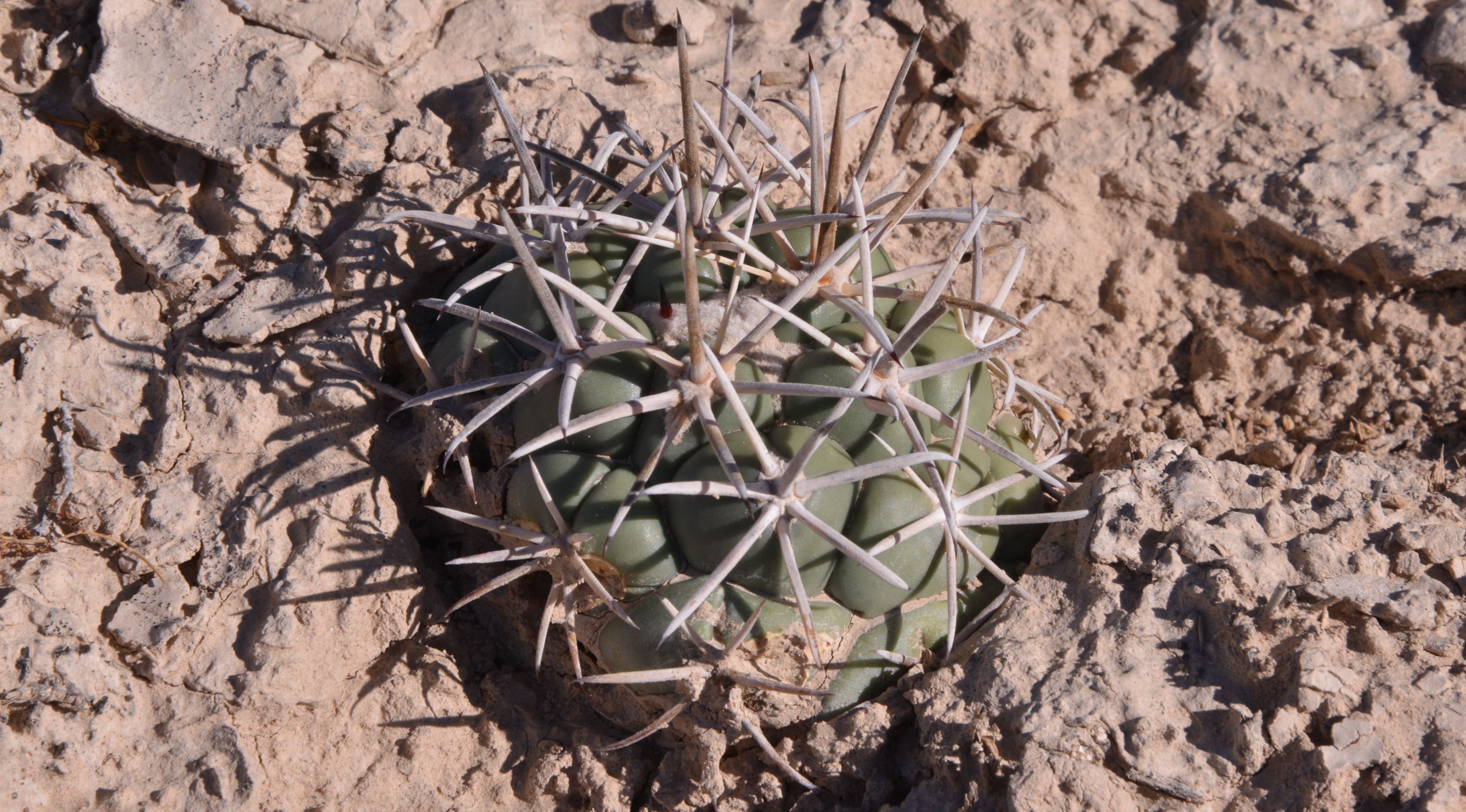
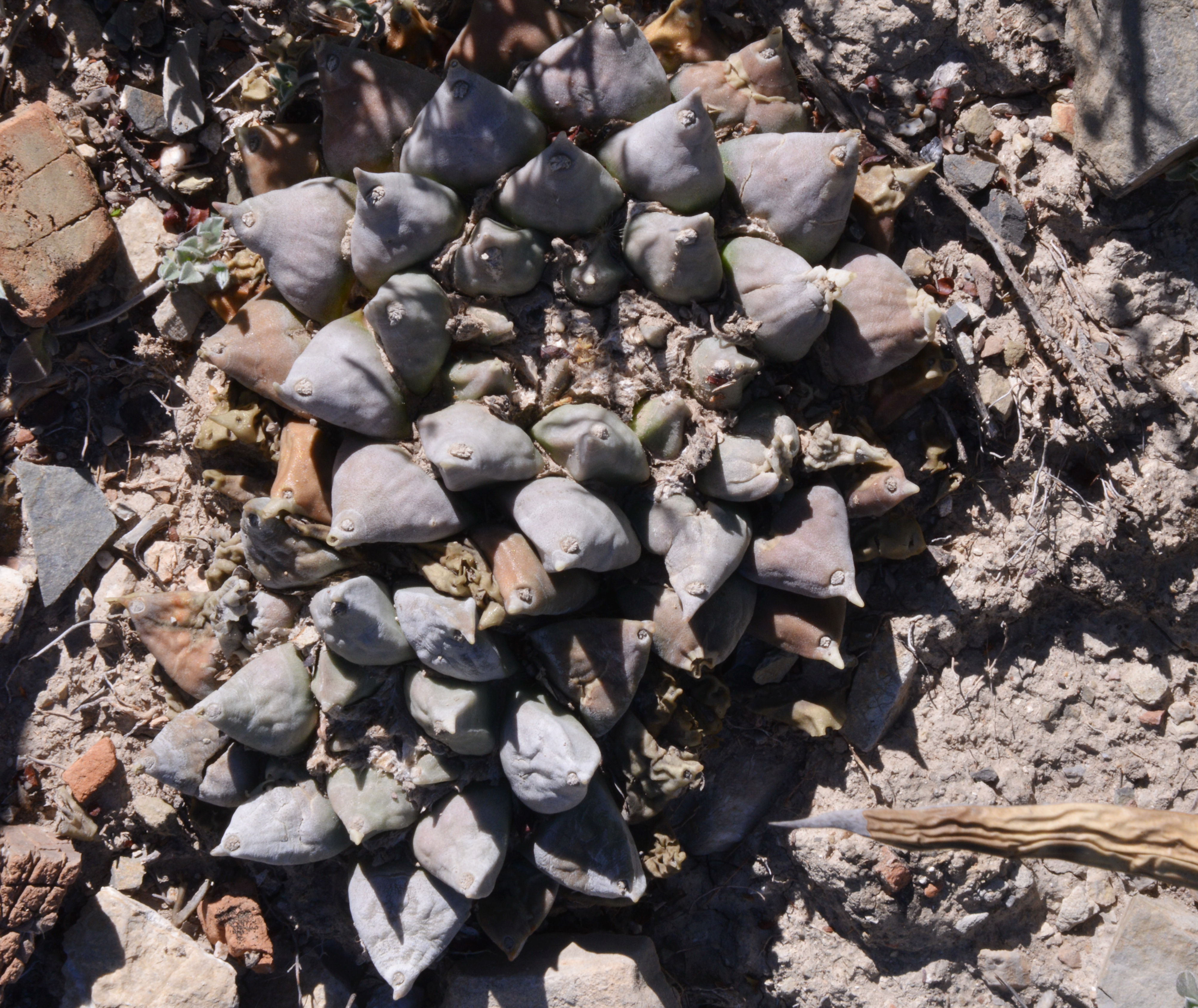
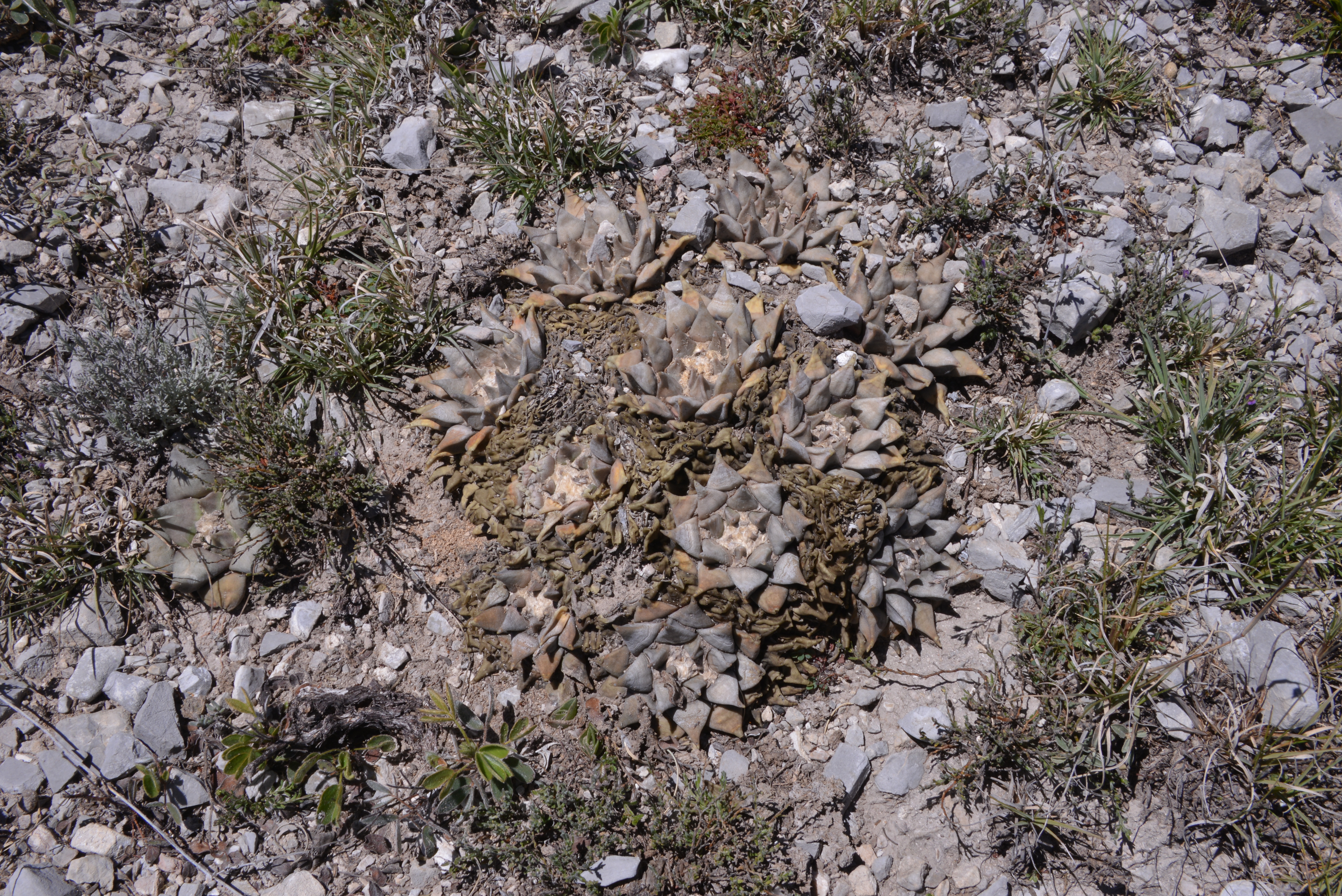
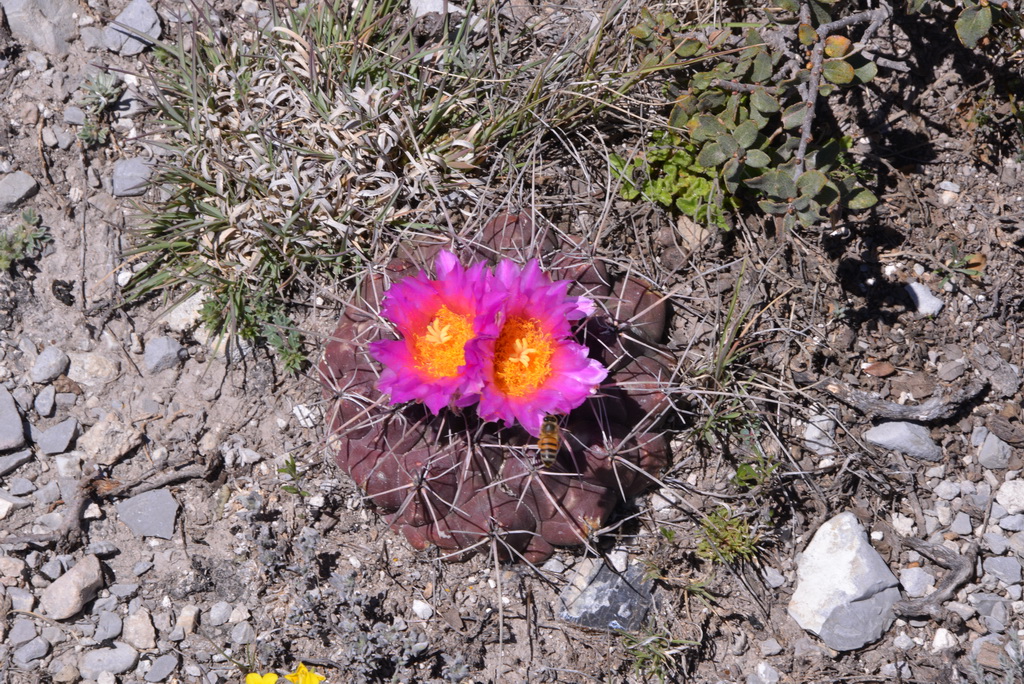
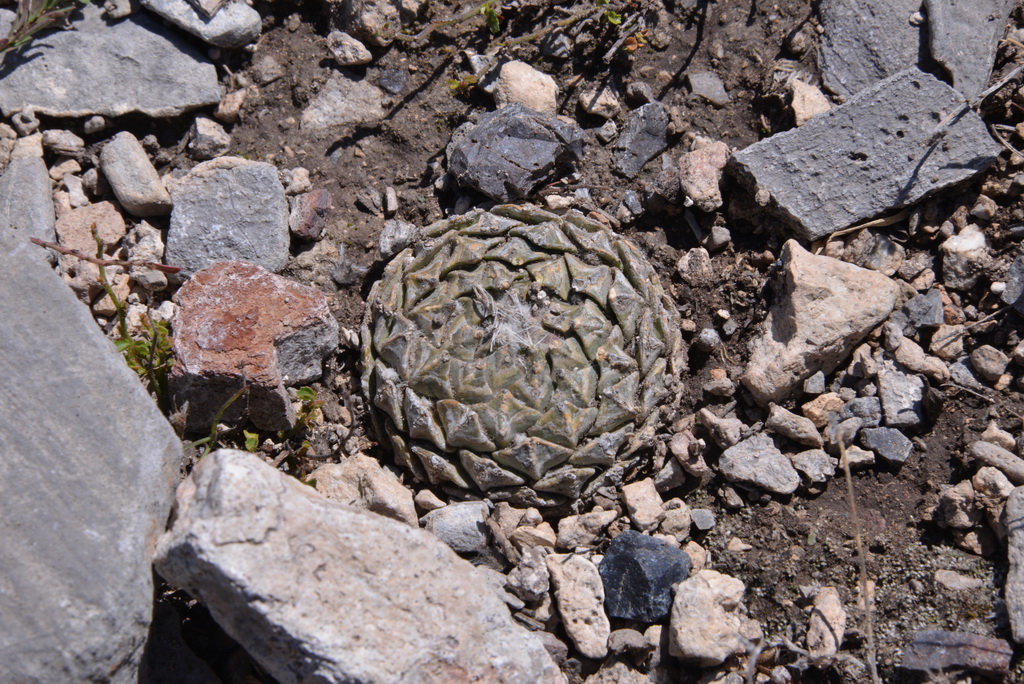
I had made a request to revisit a stop where in 2010 I had seen the most magnificent crested Ariocarpus retusus. That time we had just driven to the location where Eunice and I had climbed the hill to one  side of the track while John Bleck had ventured to the other side where he found the plant. This time (S3094) we approached the site through a series of gates, the last one of which was bolted, we approached the site on foot and so I missed my friend from 2010. Still found lots of interesting plants which had their picture taken, including another, not quite so spectacular crest.

Ariocarpus retusus - S3094

Ariocarpus retusus – S3094

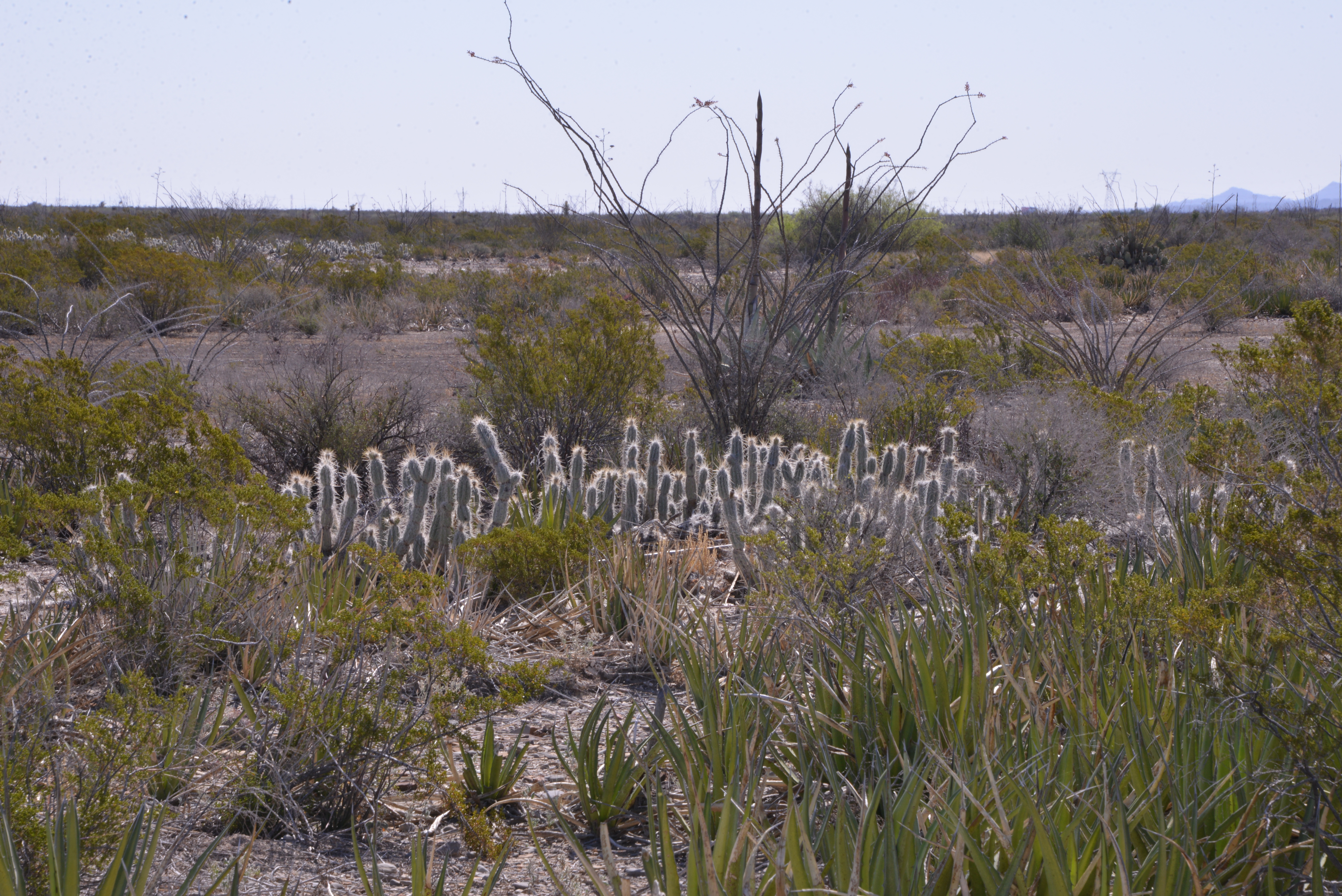
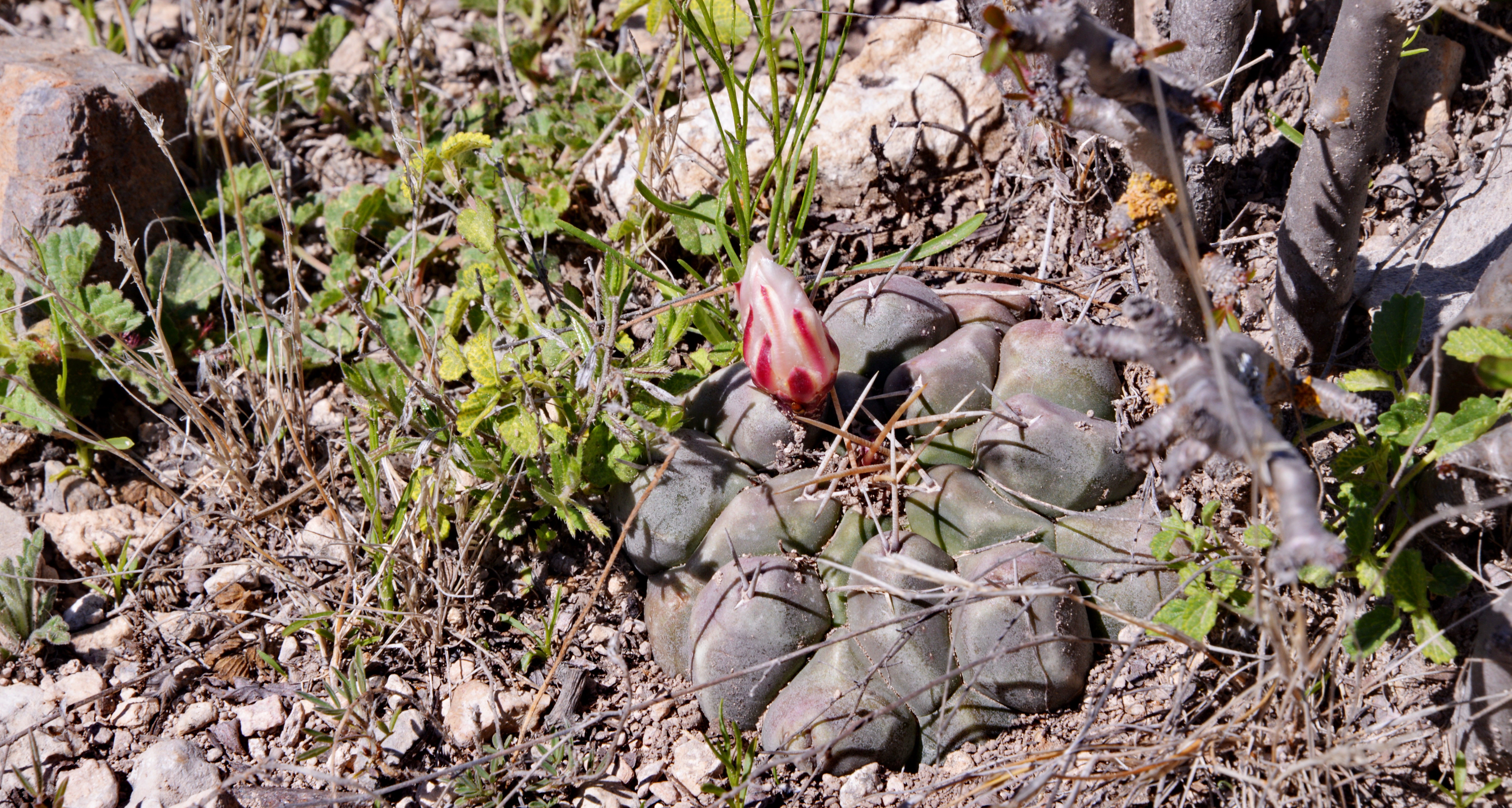
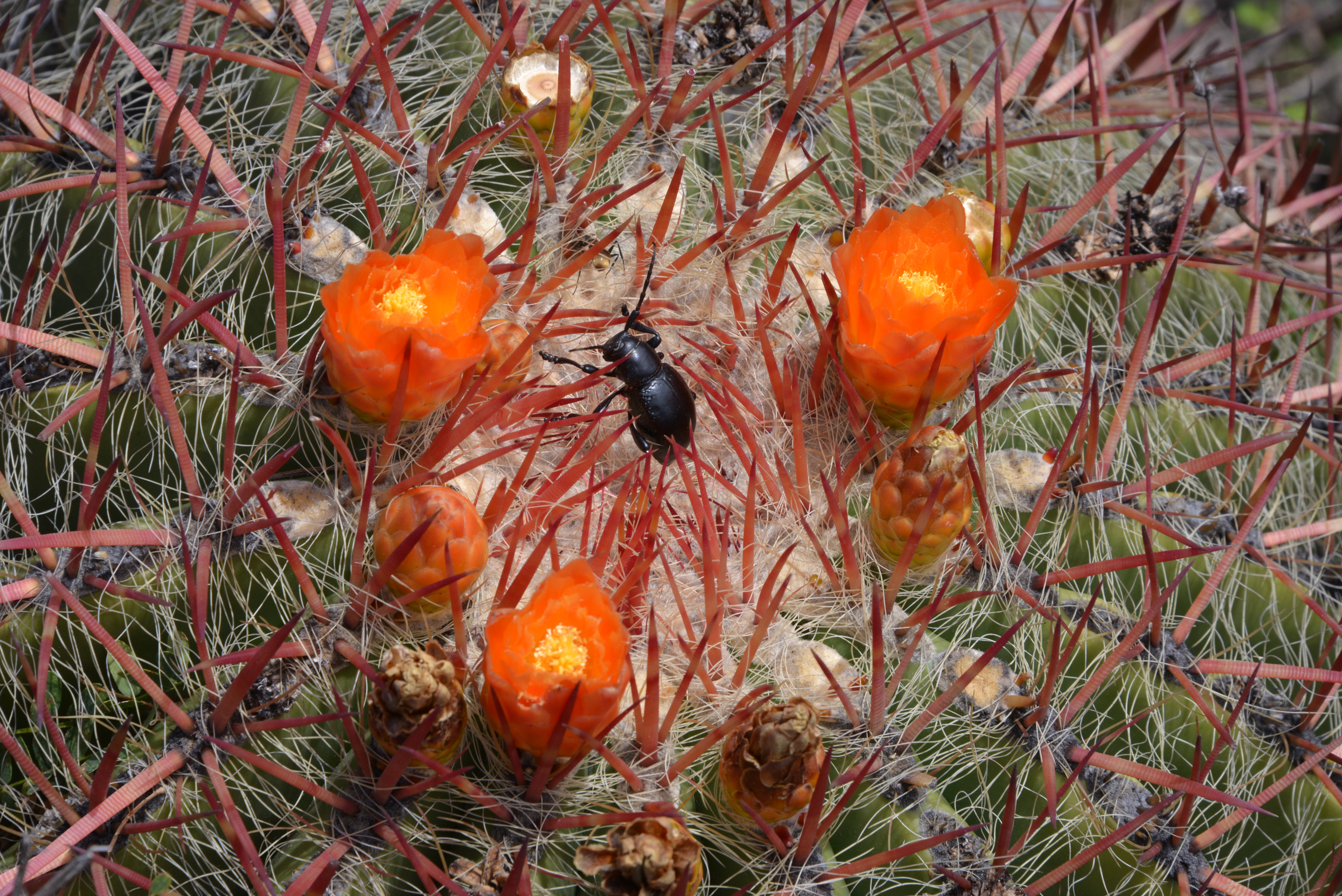
Again, there was an interesting mix of cacti_etc that crossed our camera lenses: Agave lechuguilla, A. sp. Ario resusus, Coryphantha sp x2m Echinocereus enneacanthus, E.  longisetus, E. pectinatus, Epithelantha micromeris, Ferocactus hamatacanthus, Fouquieria splendens, Mammillaria sp, Sclerocactus scheeri, Selaginella pedidophylla (resurection fern) and Yucca sp.

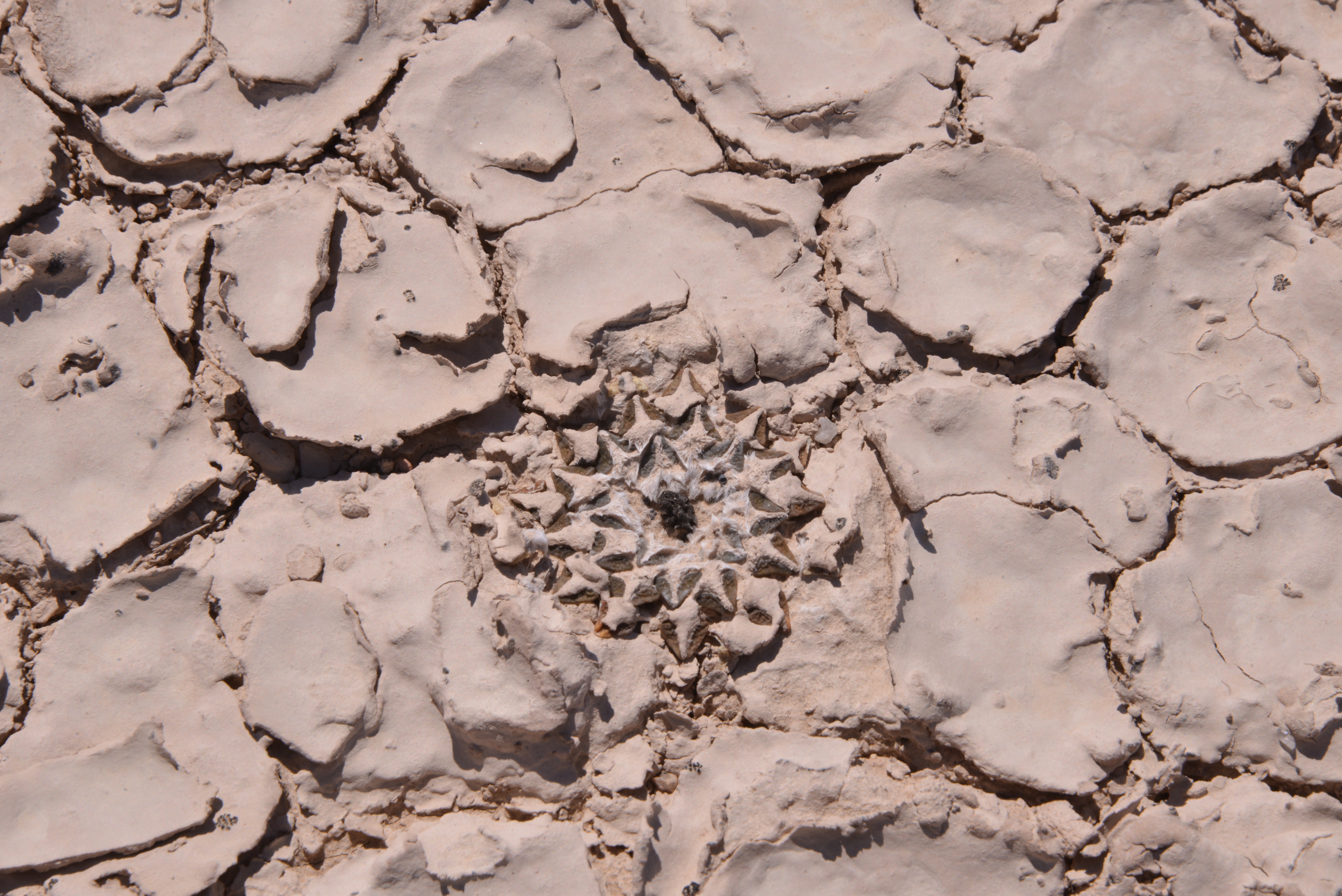
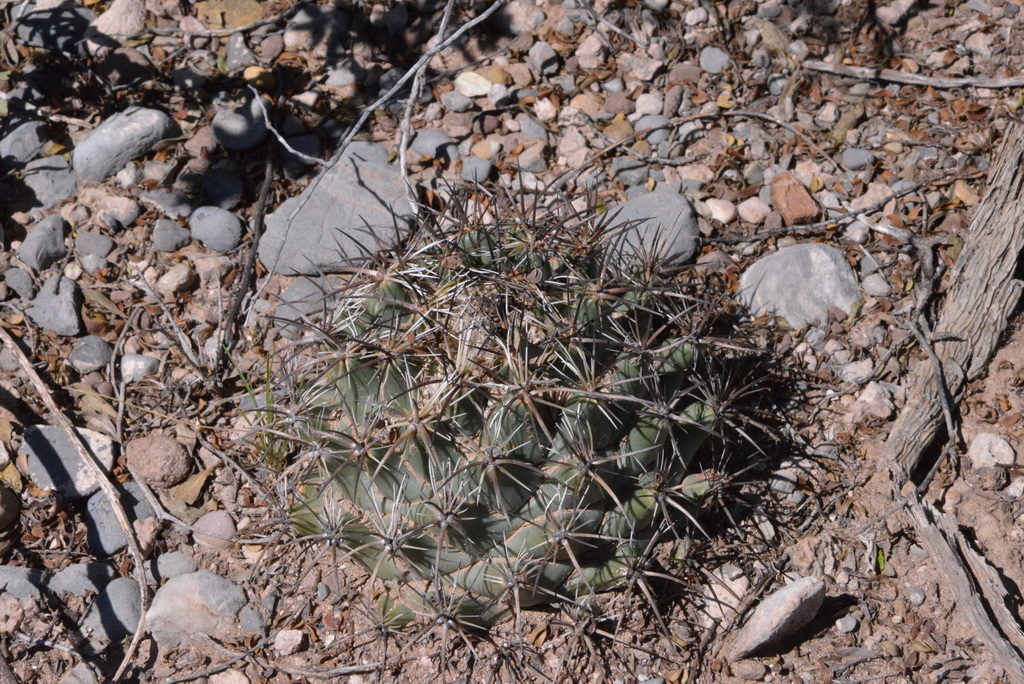
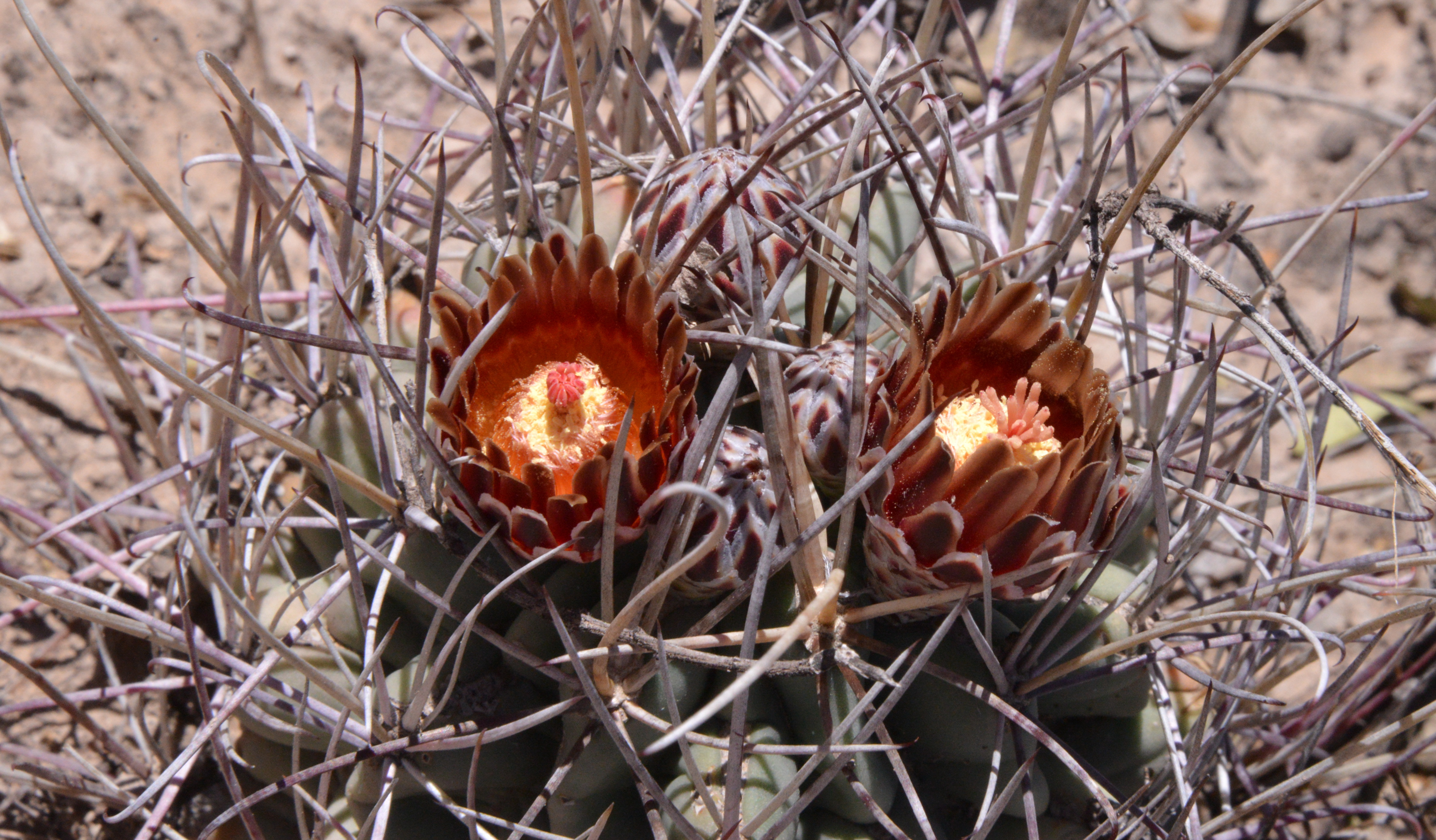
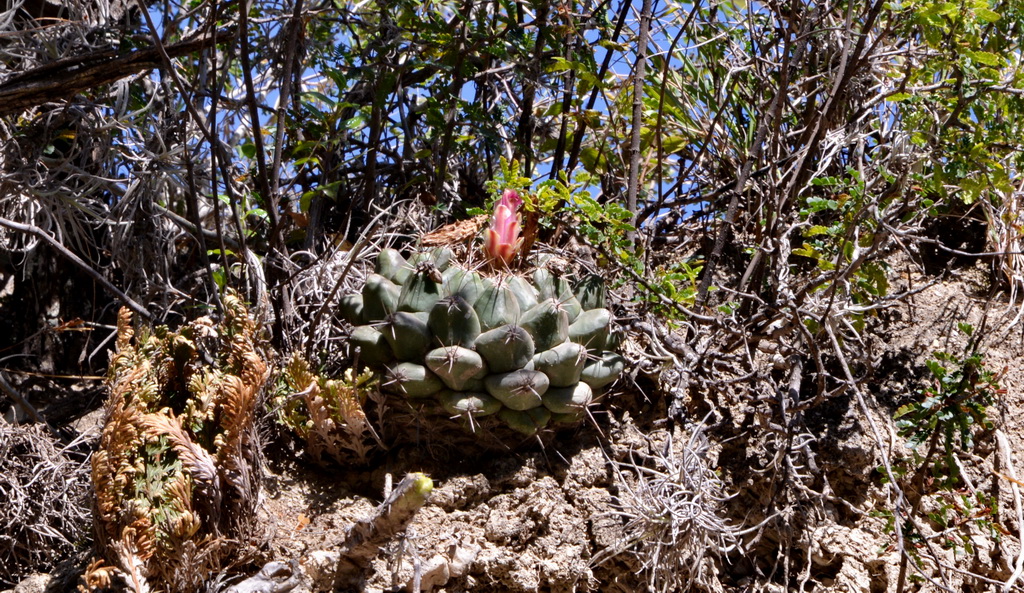
The second and last stop of the day (S3095) was again at a place I had visited in 2010, as it had Leuchtenbergia principis growing there. This is a plant that we had probably walked by a dozen or more times on our trip, but which is so well camouflaged, by looking dead, that unless you look for it specifically, you miss it. Ian found a young seedling, looking as though it had just arrived from a Dutch nursery, but had walked straight past the parent, an undamaged specimen that would have caught admiring glances if it had been displayed on a showbench in the UK. Of course the plant stayed where it was born, in Mexico, for others to admire it, should they pass.
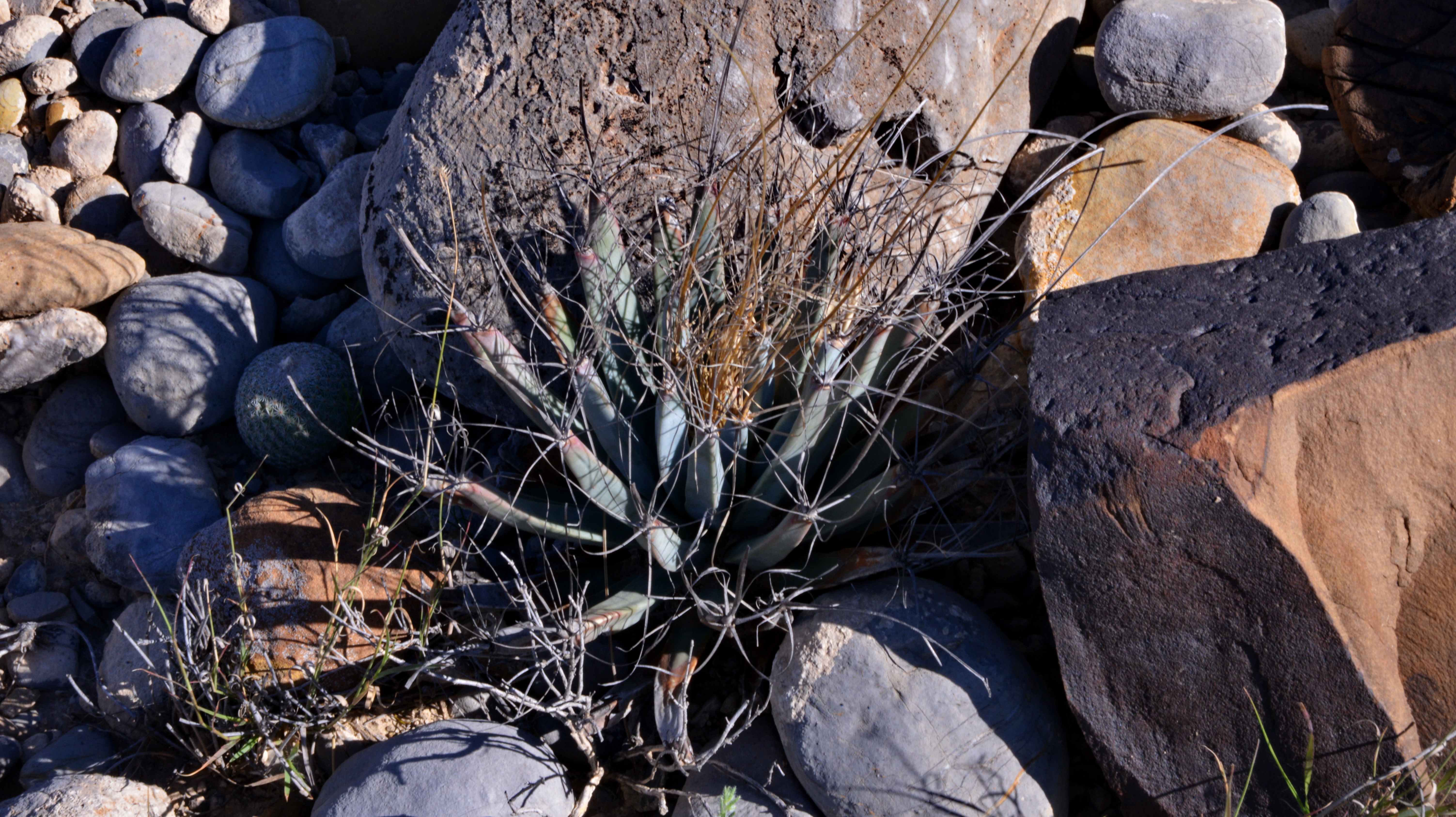
Leuchtenbergia principis - S3095

Leuchtenbergia principis – S3095

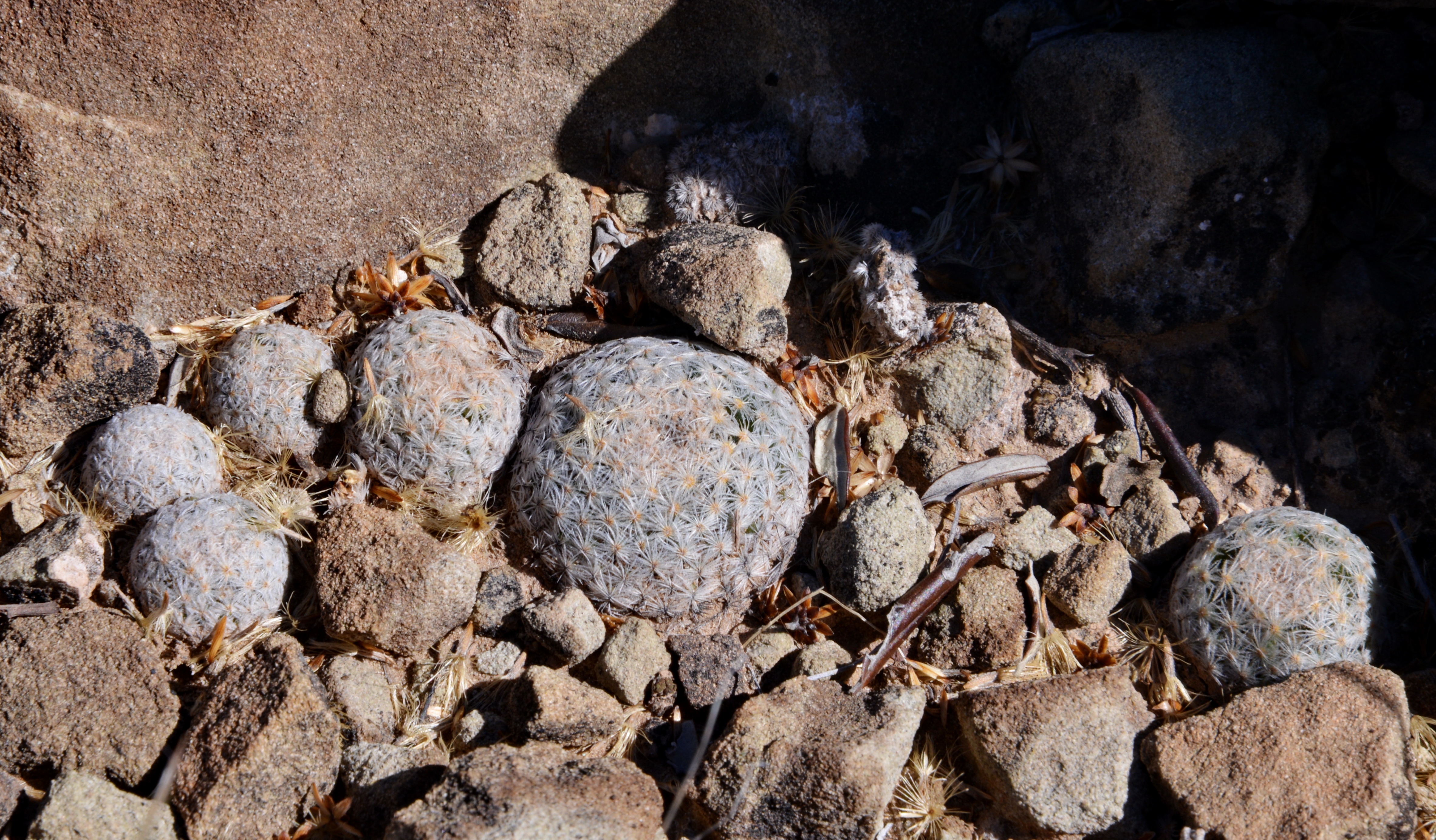
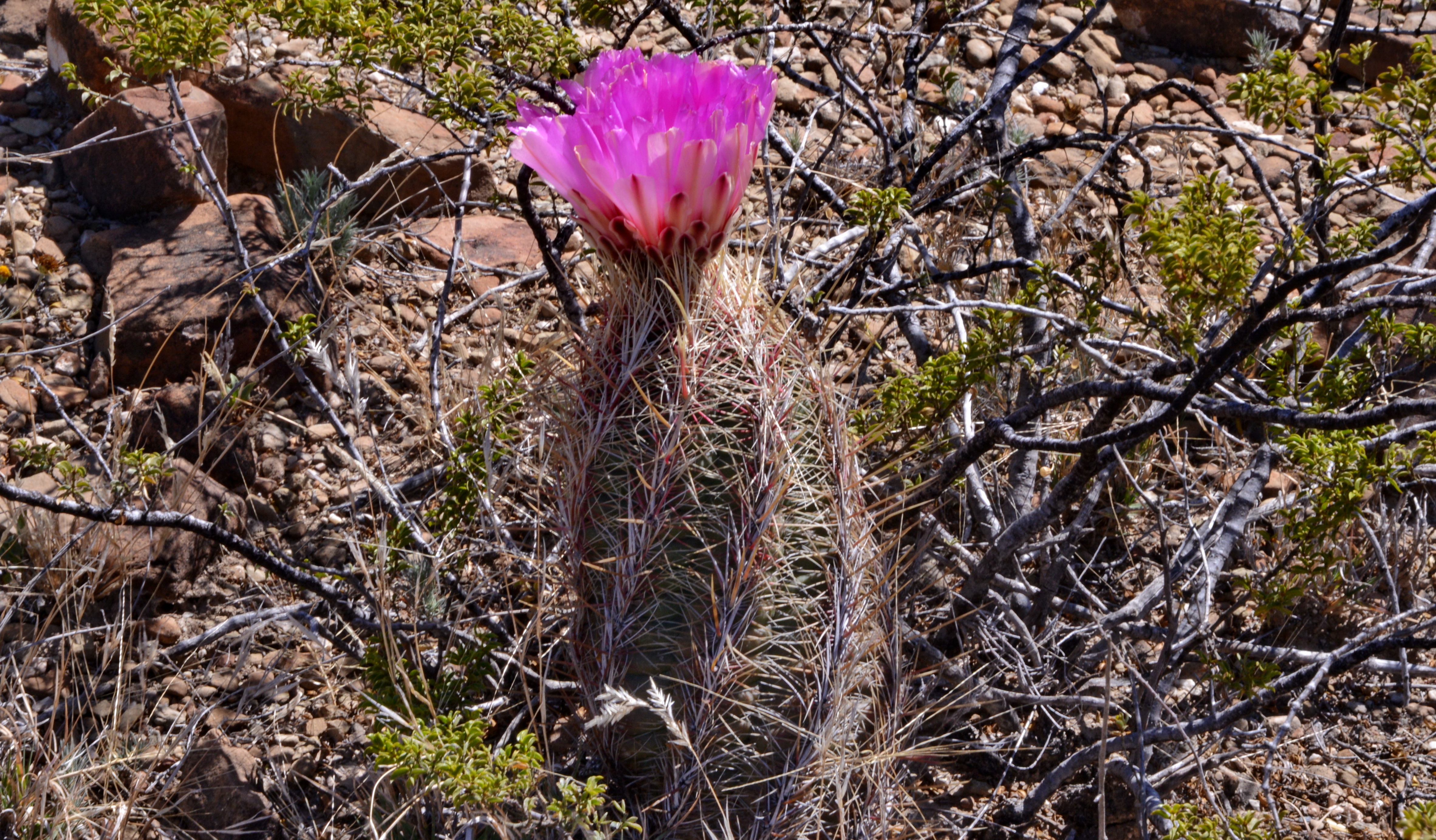
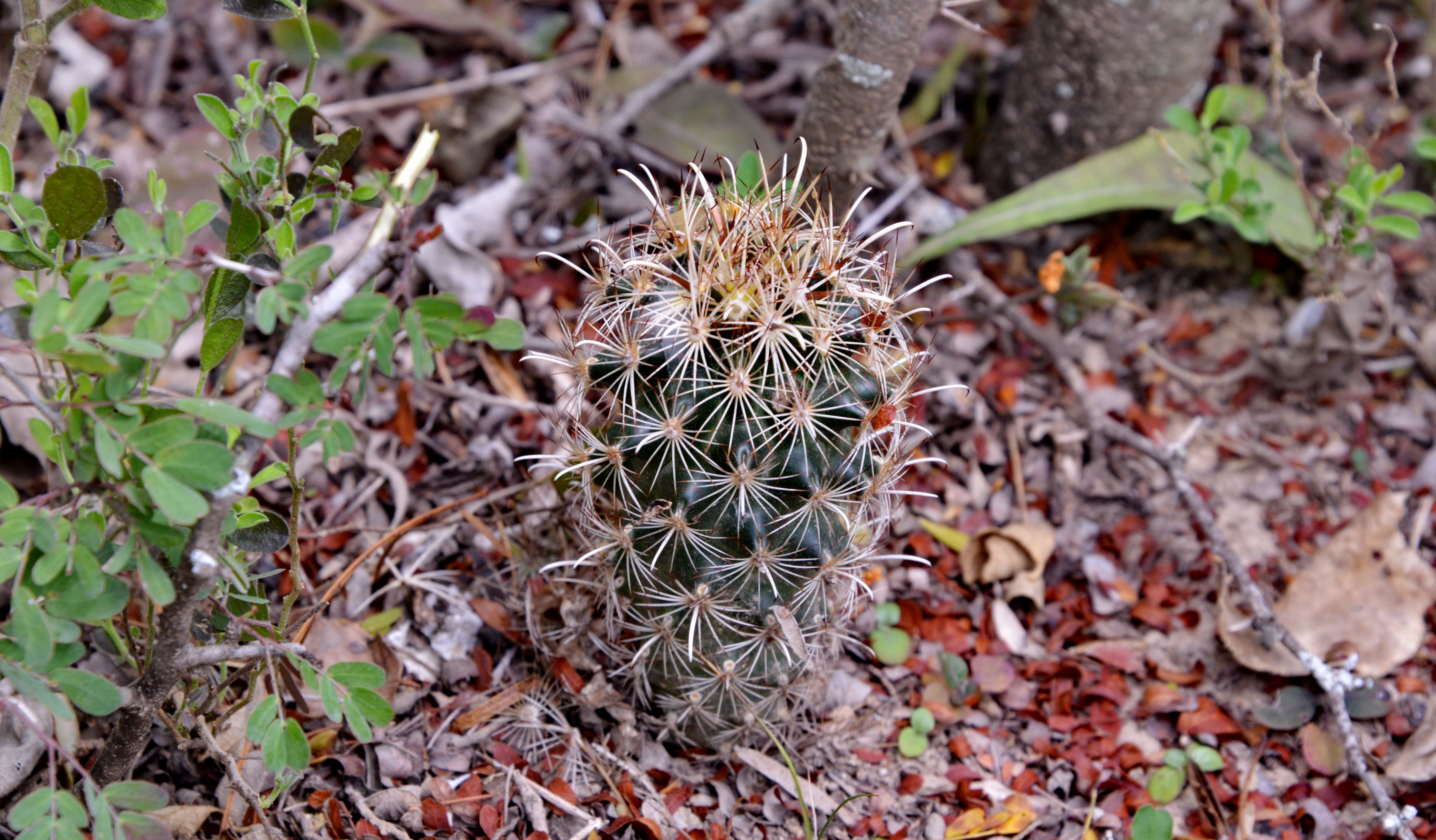
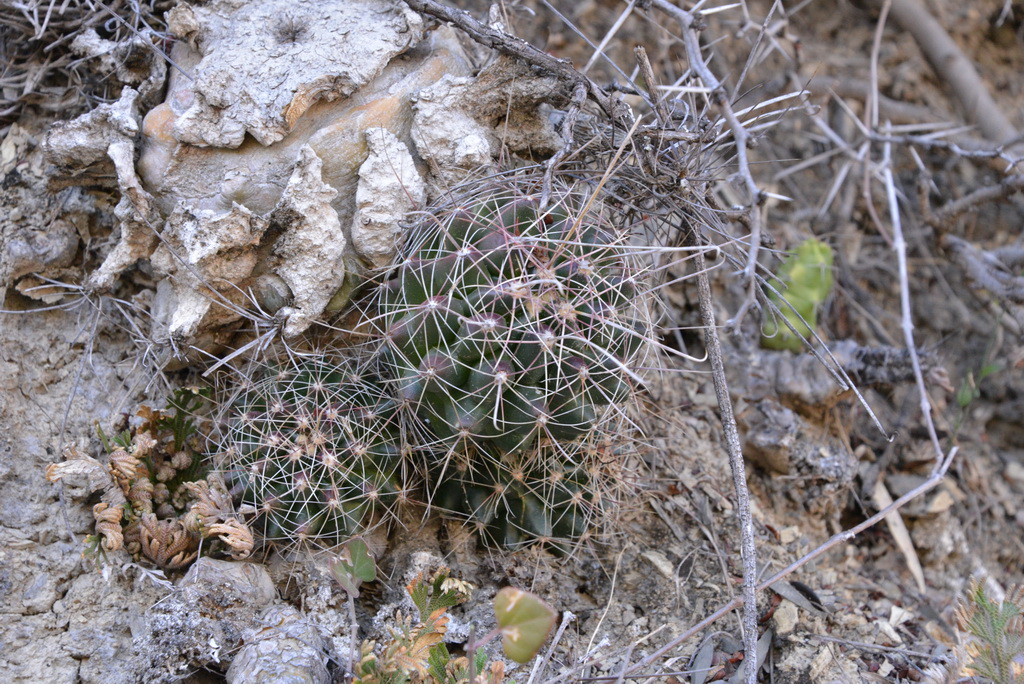
The Lophophora williamsii found here (by Ian) was not bad either, enough to make your mouth water!
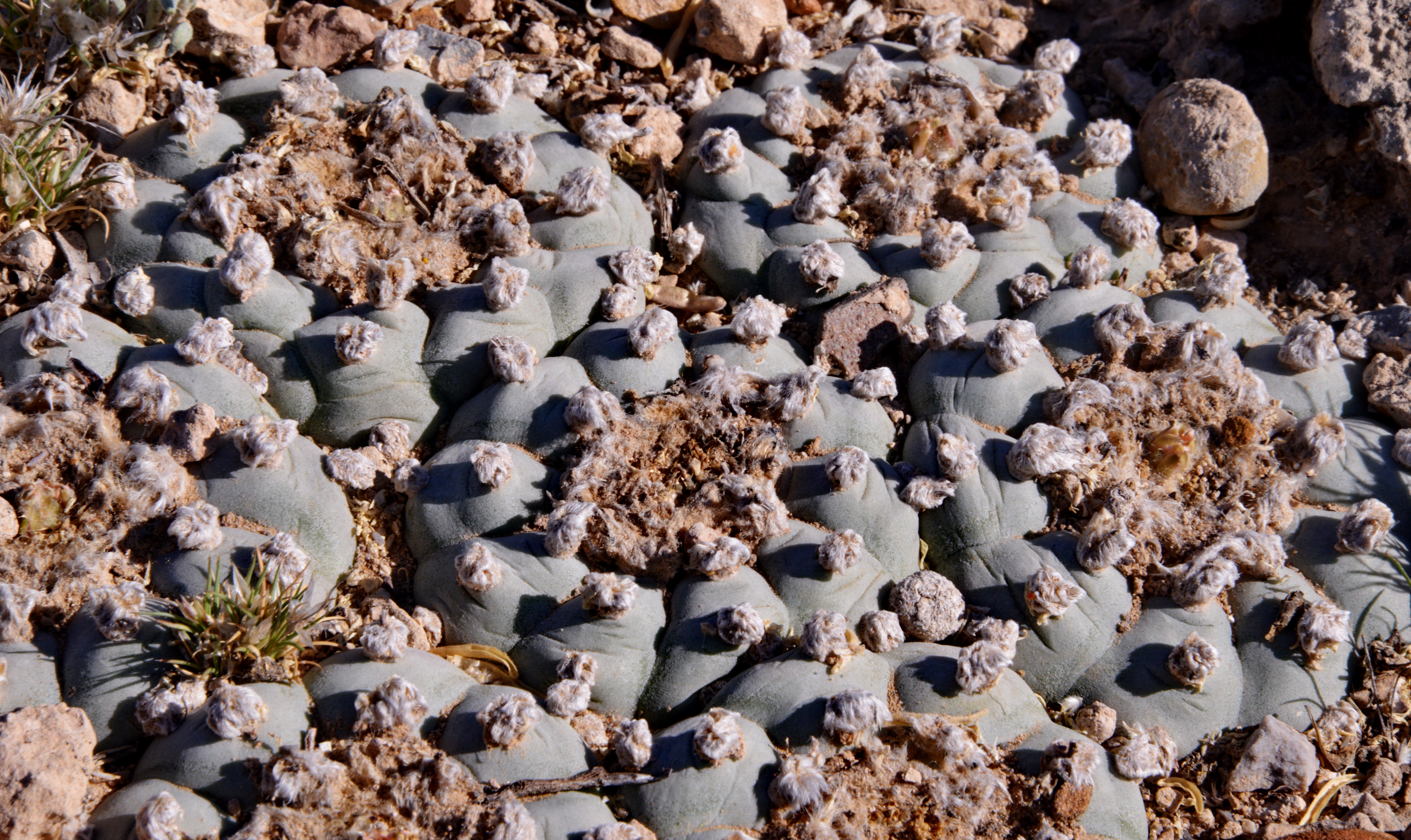
Lophophora williamsii - S3095

Lophophora williamsii – S3095
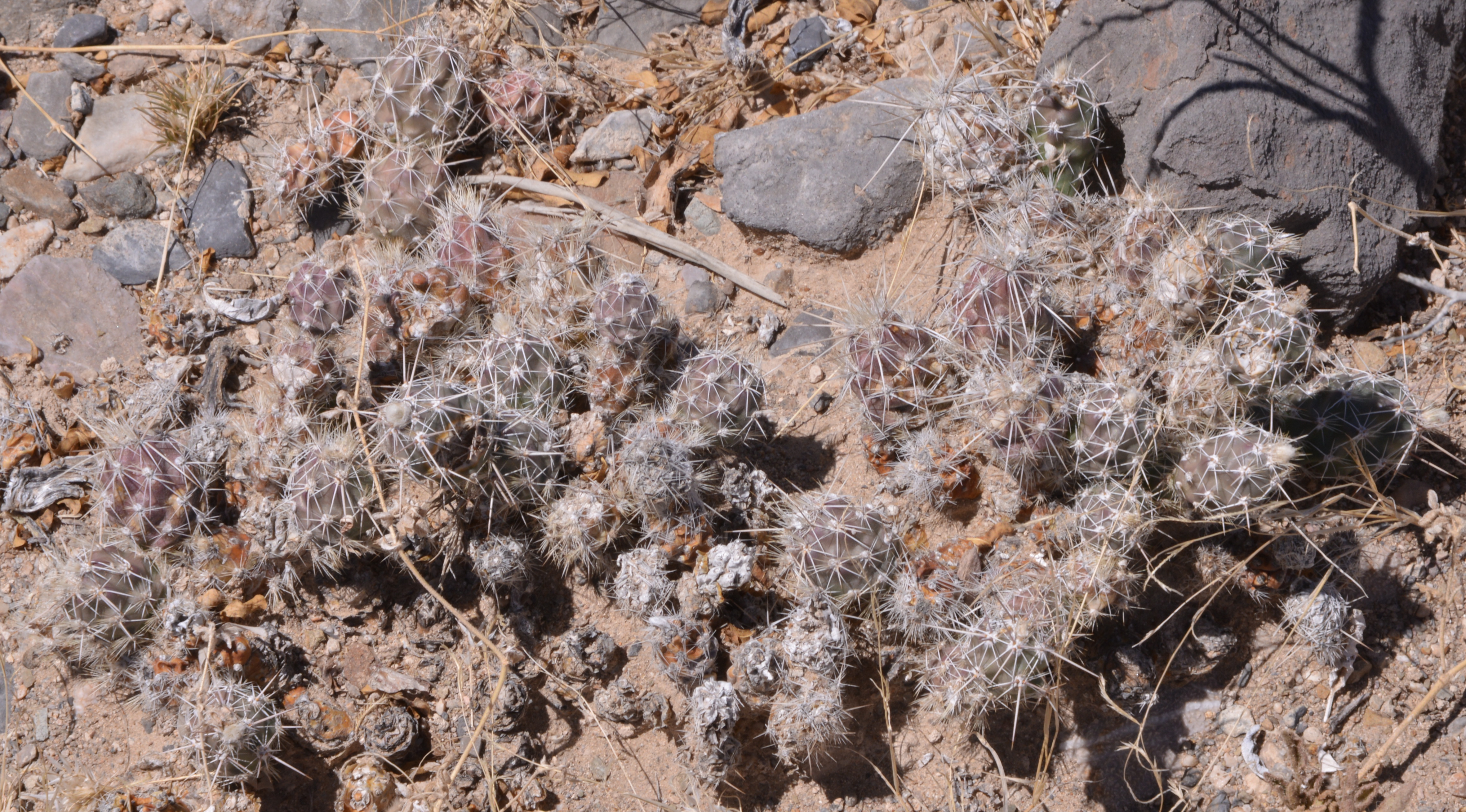
Thursday 20 March 2014 – south of Cuatro Cienegas

First thing Cliff and Ian went to search for a Vulka to sort out our tyre. They were back too soon – bad news, yesterday’s puncture had turned into a write off – our only luck had been that it lasted until we parked up at the hotel. The boys returned to break the news and planned to leave for Monclova to purchase a new one. While Cliff was breaking the bad news to me, Ian was chatting to one of the hotel staff who suggested he knew a place in town that could help us. Sure enough, the three went off and came back with a good quality but slightly wider second. Job done.

In the mean time I had enquired about the  availability of breakfast and was given a firm, ‘Yes, of course!’ This was followed by various members of staff being dispersed on shopping trips and the cook was called in. Eventually we sat down to a Full Mexican and then we set off.

Our target plant had been in doubt even during our planning stages in the UK. Thelocactus lausseri is only known from a private property (probably the size of Wiltshire) north of Cuatro Cienegas. We had coordinates for the gate, but it was known that the owner did not entertain cactophile callers. Well the news is that there are now gates 8.5 km from the gates for which we had the coordinates and that they were double padlocked.  So that was as far as it went for T. lausseri this time.

Expecting this outcome I had lined up some visits to local stops that had impressed me on previous visits. The first was one for Ariocarpus kotschoubeyanus where in the past we had followed the SatNav to reach the coordinates, open the car door and found that we had a few of the plants right below us. The same happened again this time. Unbelievable how many plants there were here for a plant that is CITES I status is Appendix I – Extremely endangered. But then it only takes one developer to see the potential of using the land to cover the area with solar panels to destroy all the Arios.

We moved (for the first time) closer to the mountains surrounding this area. It is easy to assume when you see the dried up marsh area (Cuatro Cinegas = 4 marshes) covered in Arios to assume that they cover the whole of the area, but walking from the foothills back into the dried up marsh revealed no Arios for up to a thousands meters. Just some Coryphantha poselgeriana and Echinocereus enneacanthus.

Next stop was the Fouquieria shreveii stop from 2010, with plants in full flower. Interesting, unusual plants but nothing else.

Finally, Ian had mentioned as we drove off road to the kotschoubeyanus site (unpaved track this time) unto MEX 30 that he had spotted what he thought were Astrophytum capricorne. We indulged his fantasies with a stop and found a large number of large Astros – well done Ian, fantastic eyesight for a youngster!

Then it was back to our hotel, where we nervously check the state of the tyres, just in case. All good so far…..

Thursday 20 March 2014 – around Cuatro Cienegas

This is another day where, back home, months later, I find that I never produced a Diary page for this day, so I’m making this up from memory (yeah, right!) with maps and 193 images from six stops to help me.

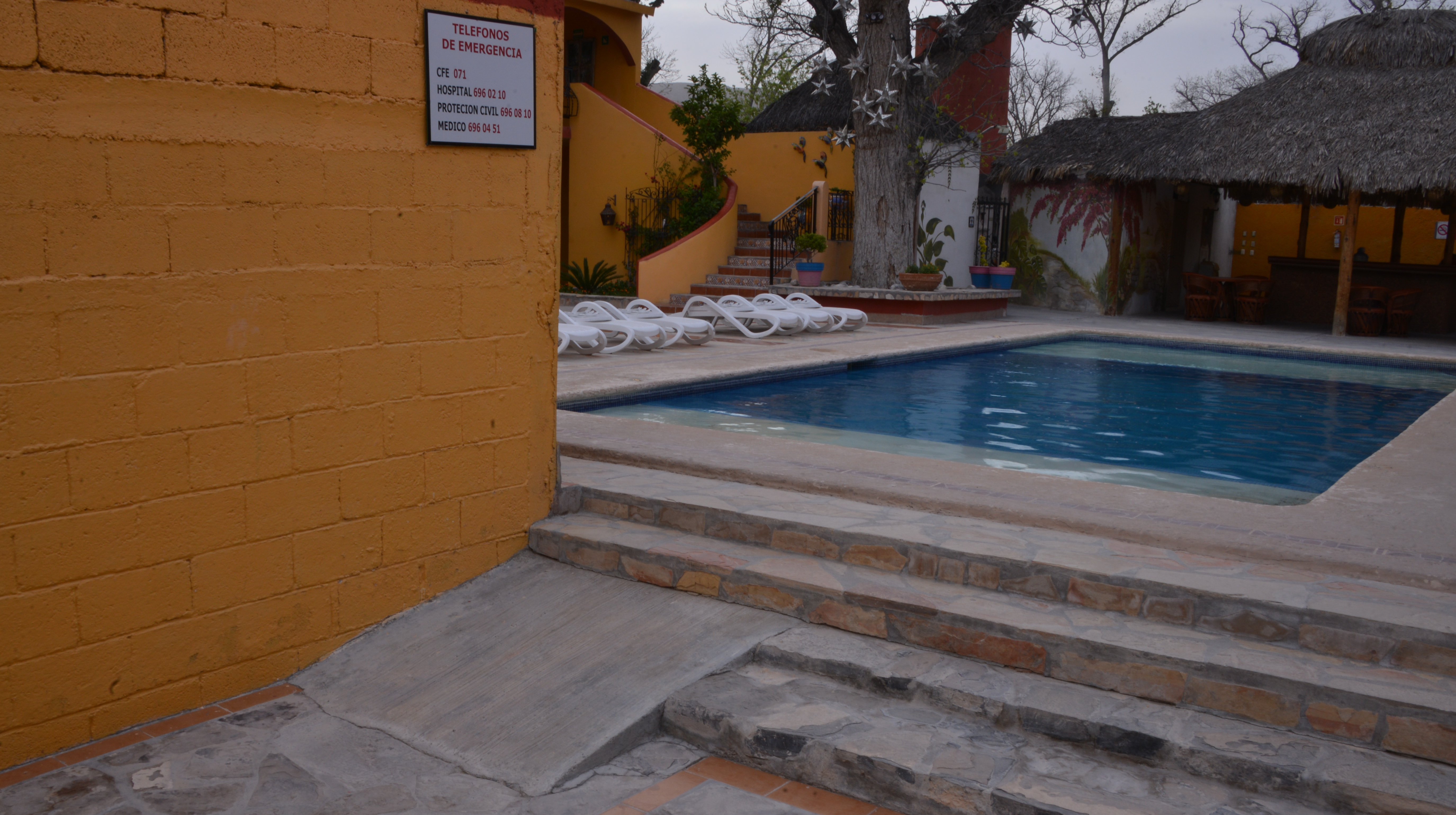
S3088 was simply for images around our hotel and around town. I love taking shots of quirky signs etc, so loved the ‘No smoking’ sign above the BBQ. Health & Safety is alive and well and has reached Mexico. Angie’s son Adrian is a wheelchair user and will love the picture of the wheelchair ramp up to the swimming pool area. It seems that later they decided to add another two steps to reach the pool, but forgot to extend the ramp:

Ramp In the Dutch language, the word 'ramp' means 'disaster'. Here too, if you are a wheelchair user coming down from the pool!

Ramp
In the Dutch language, the word ‘ramp’ means ‘disaster’. Here too, if you are a wheelchair user coming down from the pool!

Our northern-most Thelocactus on this trip was to be Thelocactus lausseri. We had been warned that this plant is only found on a private property north of Cuatro Cienagas and that the owners were not friendly when it came to allowing cactus tourists on their land to photograph the plants. We had coordinated for our SatNav for the gate to the property – you never know if there were people to have a chat with to ask what was possible. Things had changed: there was another gate, some 8 km before the gate that we knew about with a number of formidable padlocks. Sometimes fences are built to stop animals from escaping into the road, sometimes they are aimed at keeping people out, as was clearly the case here. We did not feel like pushing our luck. ( S3089)

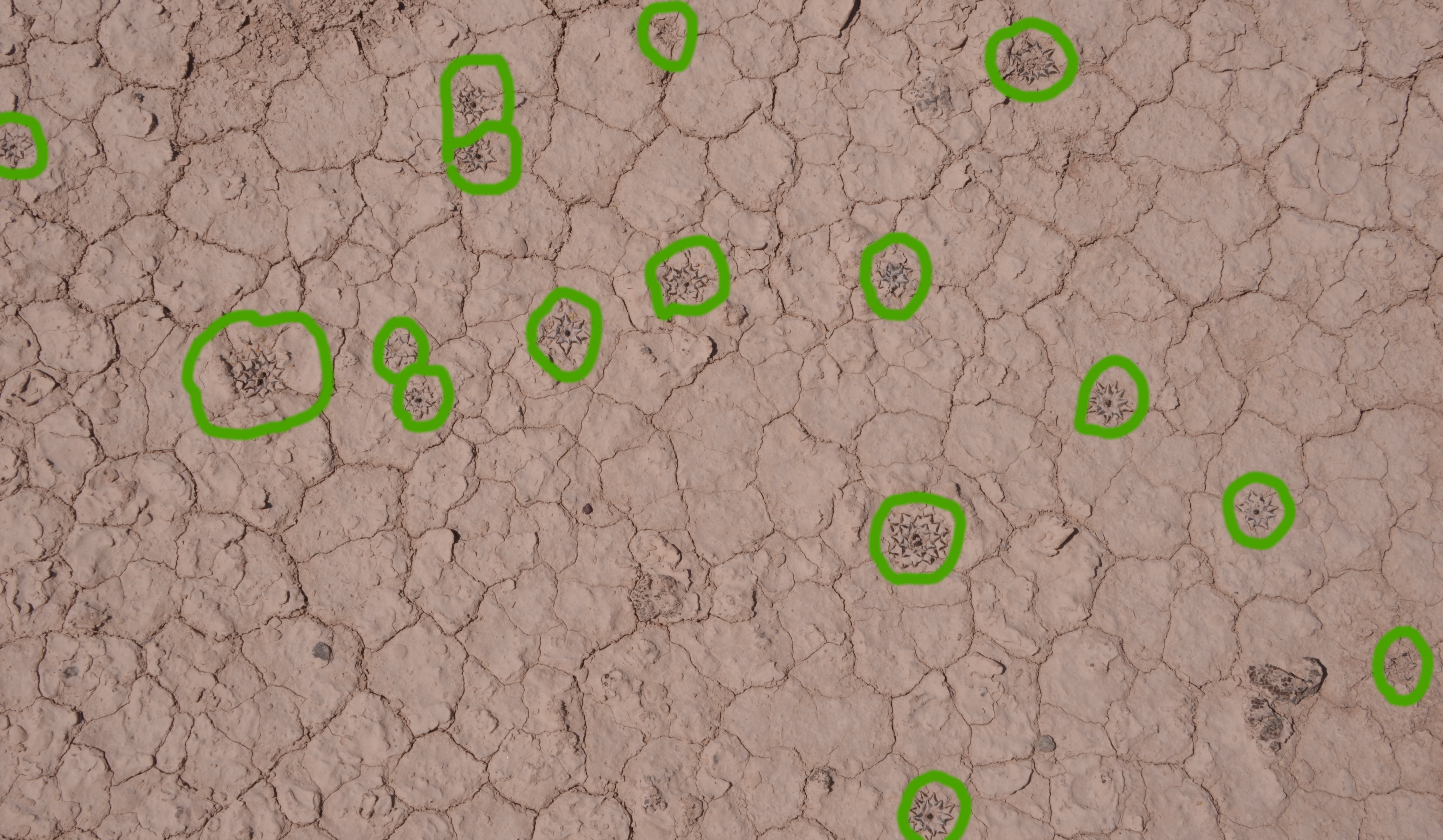
Instead we headed back south along Mex 30 to S3090 where on previous visits we discovered the ultimate ‘cactus tourism spot using modern technology’. We had coordinates for a population of Ariocarpus kotschoubeyanus and entered these into SatNav. It warned us that there was a turn coming up that we should take. It turned out to be a dirt track back into the desert. After a short while, it told us to turn again, this time to follow a straight line on the screen to a flag marking the spot to go to. We stopped ‘on the flag’, in a large flat, featureless area. Not a plant in sight. Until we opened the doors of the car and each found one or two Arios growing right below us, where we were going to put our feet. There were hundreds or was it thousands of plants all around us. Purist Cactus Explorers will frown at this. ‘Proper Explorers’ like to strap on a ruck sack, load up with water bottles and camera gear and start walking into the desert heat. They have to suffer for their pictures. I don’t mind doing that, if absolutely necessary, but getting there in the comfort of an air conditioned car has its benefits too. You should try it!

Ariocarpus kotschoubeyanus - S3090 The density of this population continued for kilometers

Ariocarpus kotschoubeyanus – S3090
The density of this population continued for kilometers

We drove across the dried up silt of what in wetter days would be a lake, to the foot of the hills (S3091) to establish the extend of the Ario populations. They reached to a few hundred meters of the foot of low hills. They were then replaced by some very desiccated Coryphantha poselgeriana,  Echinocereus enneacantus and Agave sp.

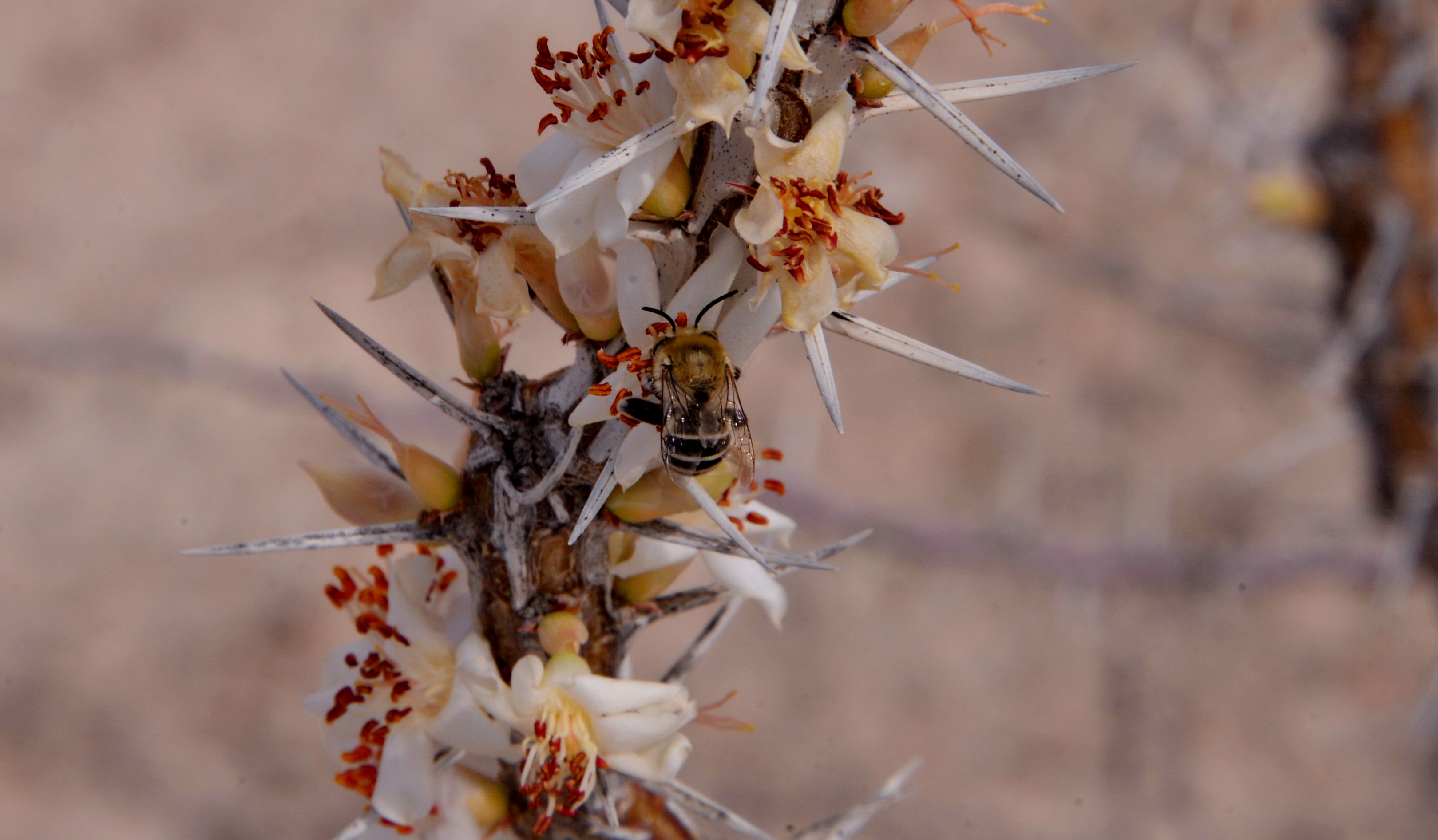
Back on Mex 30 and right along the side of the road we stopped at another area from 2010 and 2011 visits (S3092) for a Fouquieria. Plants in this genus are very familiar in the North American deserts; F. splendens with its tall (3-4 meters!) thin stems, known as the ‘coachman’s whip’, has long spikes of red flowers that are pollinated by hummingbirds. After flowering, the stems briefly become covered in leaves. We have come across areas where white or pink flowered forms dominate. In Baja F. columnaris, the Boojum tree dominates the scenery for many hundreds of kilometers. Here, a small patch seems to be the only place to see F. shrevei, a low shrub with white flowers on individual stalks appearing close to the stem, pollinated by bees. Quite rare I understand. Apparently not the stuff that cactus collectors go for. We were lucky: the plants were in flower and the bees were visiting.

Fouqueria shrieveii - S3092

Fouqueria shrievei – S3092

Wikipedia reports:

‘Fouquieria shrevei is a plant species native to the States of Coahuila and Durango, Mexico. It can be found in the Cuatro Ciénegas basin in Coahuila, approximately 50 km west of Monclova, at an elevation of about 740 m (2467 feet). There are several natural springs in the region, allowing an estimated 150 species of endemic plants and animals to survive in this desert oasis. The species has also been reported from other sites in the same state plus one locale in the neighboring State of Durango.

Fouquieria shrevei is a shrub up to 3 m (10 feet) tall, branching repeatedly near the base but hardly at all above. Leaves are ovate to oblanceolate, up to 3 cm (1.2 inches) long and 2.5 cm (1.0 inches) wide, with scarious (thin, dry and brown) margins. Flowers white, born in short racemes in the axils of the leaves. The board leaves plus the axillary racemes of white flowers make this a distinctive and unusual member of the genus.’

As we had entered MEX 30 from the previous Ario stop, Ian thought that he had spotted a bright coloured cactus flower. It was still early as we headed back towards the hotel; plenty of time for us to take a look (S3093). We photographed Agave lechuquilla, Astrophytum capricorne, Coryphantha sp, Echinocactus horizonthalonius, Echinocereus longisetus, Epithelantha micromeris, Euphorbia antisyphalitica, Grusonia bradtiana, Mammillaria pottsii, Mammillaria sp. Opuntia sp., Sclerocactus (Ancistrocactus) uncinatus and Thelocactus bicolor.

Wednesday 19 March 2014 – Parras to Cuatro Cienegas

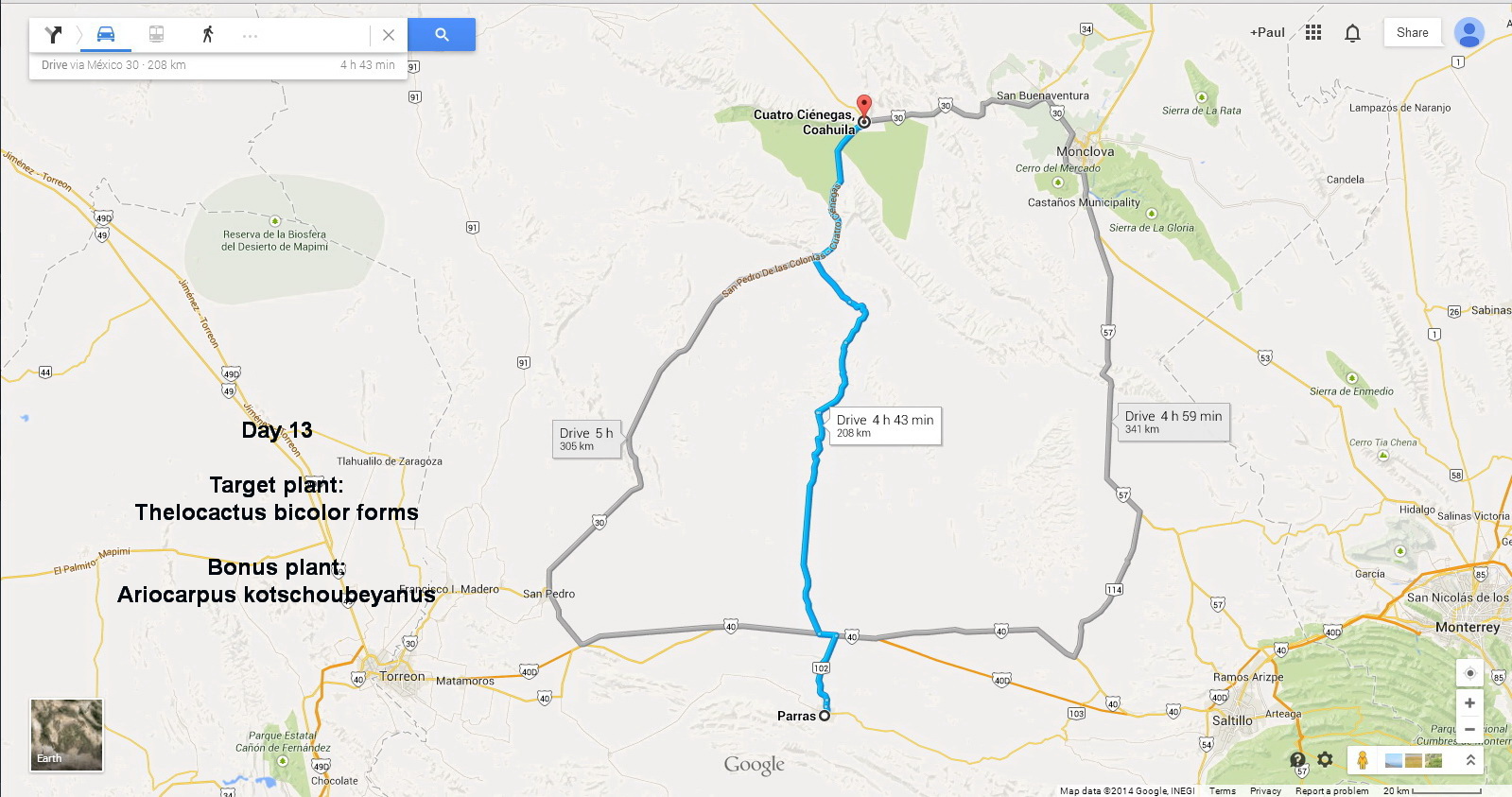
If you look at a road map of Coahuila, you’ll see that there are three ways of getting from Parras to Cuatro Cienegas: One is by taking Mex 40 west, to Torreon, followed by the Mex 30 north, towards Monclova, while the obvious alternative is taking Mex 40 east towards Saltillo and then head north on Mex 57. But there is a third option, to head straight north, thus saving some 150 km – DON’T!

Day 13 Route options

Day 13
Route options

Although road maps will show the road as a reasonable gravel road near where it meets the highways, there is a ‘white’ line that suggests the lowest quality of road on the map. SatNav knew about it, or rather, knew about stretches of it. Yesterday we would drive on nice new asphalt when SatNav was completely unaware of its existence and we hoped that this would be the case again today – it wasn’t.

At times this stretch, to cross the hills, just disappeared while at other times what was a line on SatNav was a warren of tracks created by local miners. When we came to a sign post pointing to Australia it seemed that we were really lost, but fortunately there is a settlement by that name here as well.

As usual, all’s well that ends well, so after an interesting journey – compliments again to our driver Cliff – we arrived safely at Hotel Quinta Santa Cecilia, just two blocks from the Plaza.

Although we may venture a little farther north on a day trip, this is our turn around point before we head back to Mexico City. We’re also half way through our time budget.

Plant-wise, today’s trip added little to the range of cacti we had seen, with the exception of a few Ariocarpus kotschoubeyanus hiding in the dried up mud of what SatNav thought was a laguna. The local Thelocactus bicolor were duly photographed for comparison with those at other stops.

S3083: Agave lechuguilla – by the way, ‘lechuguilla’ means ‘little lettuce’, Echinocactus horizonthalonius, Echinocereus enneacanthus, Ferocactus hamatacanthus, Fouqueria splendens, Grusonia bradtiana, Opuntia rufida, O. sp., Thelocactus bicolor, Yucca sp.

Agave lechuguilla (foreground) Grusonia bradtiana (middle) Fouquieria splendens (Background)

S3083 – Agave lechuguilla (foreground)
Grusonia bradtiana (middle)
Fouquieria splendens (Background)

S3084: Carretera a La Pelota, Parras, a failed Opuntia plantation

S3085: Farther along the same track: Ariocarpus kotschoubeyanus and Echinocereus sp.

Ariocarpus kotschoubeyanus - S3085

Ariocarpus kotschoubeyanus – S3085

S3086

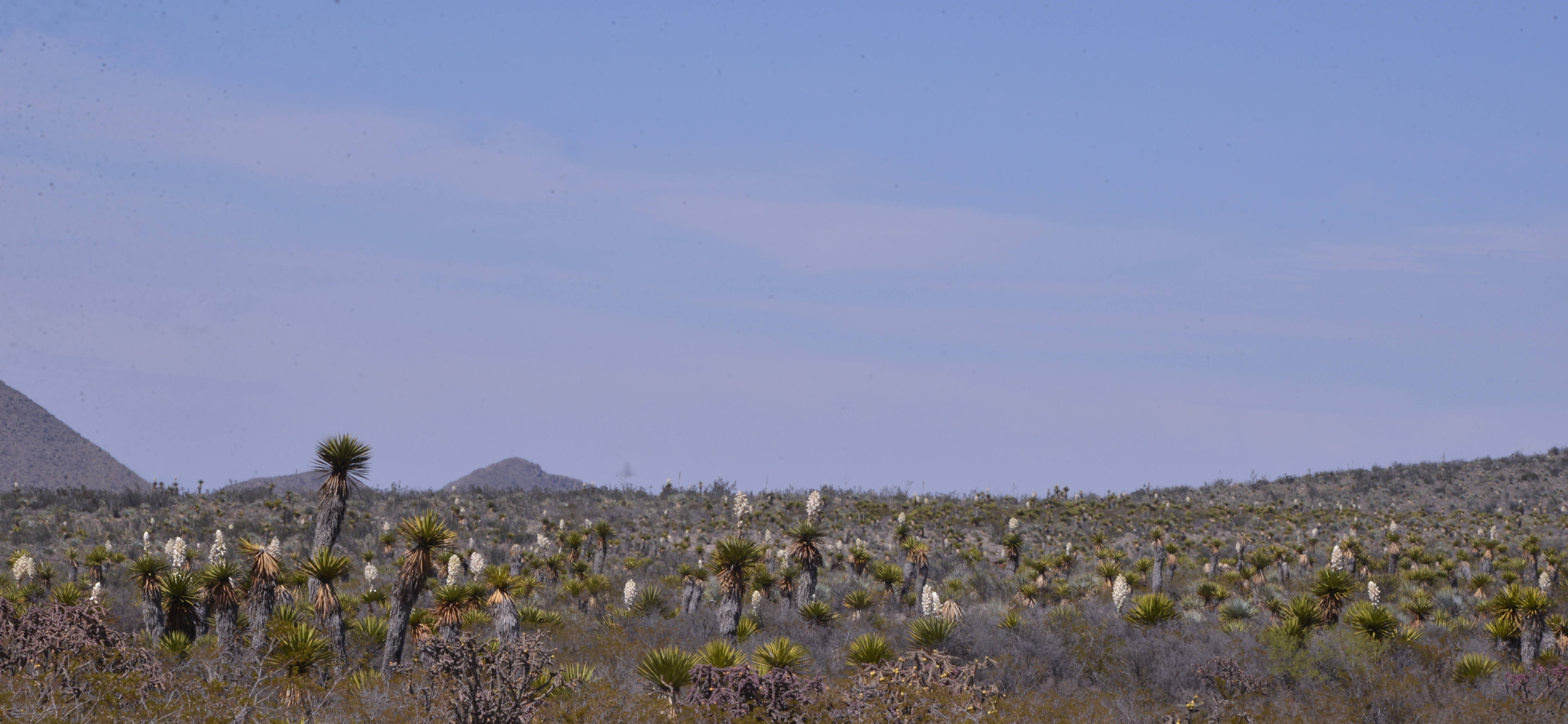
Yucca forest - S3087

Yucca forest – S3086

S3087: assuming that the caption on the ‘Earth Gallery’ on Google Earth is correct we were near Santa Teresa de Sofia in la Sierra de Australia. Australia?! Had we taken a wrong turn? The plant list had not changed much all day: Agave sp., Euphorbia antisyphalitica, Fouquieria splendens, Grusonia bradtiana, Mammillaria pottsii, Thelocactus bicolor – the form T. wagnerianus is reported from near this location – and Yucca sp.

Thelocactus bicolor - S3087 syn. T. wagnerianus?

Thelocactus bicolor ‘wagnerianus’ – S3087

Seeing the name Thelocactus wagnerianus reported from here in my database made me look up some more resources. The excellent Thelocactus website produced by Alessandro Mosco reports: ‘Wagnerianus was described by Berger and should be differentiated from the type by its columnar stem, the reddish spines and the lack of flattened spines. Plants with these characters have been found west of Saltillo, Coahuila, where they intergrade eastwards with typical bicolor, while westwards their range extends as far as the area where the bolaensisform can be found. From a taxonomic point of view, actually there are not sufficient reasons to accept these forms at a formal rank.’

Great point: because this plant has some differences from the typical bicolor means it’s useful that it has a name. But it need not mean that it is a different taxon! The decision of where the line is drawn between ‘variability within a species’ and ‘different enough to warrant a different botanic taxon’ is an individual and ‘fashion’ influenced one. It also leads to a great deal of confusion and ultimately no longer helps us to communicate about our plants effectively, which after all was the original purpose of nomenclature. I think it important to use names in presentations and articles that reflect current usage, but it seems that some members in the audience still use Backeberg names.

As we hit Mex 30 there was a thick haze hiding the mountains. Near the hotel, the palm trees were swaying in a strong wind and clouds were looming. As I write this, the following morning, we’re back to brilliant sunshine and just a light breeze. When we arrived at the hotel, by the time that Ian had checked out rooms, the off side rear tyre was flat again. It, and the other three had taken another fair battering today! So first task tomorrow – find a vulca!

Tuesday 18 March 2014 – around Parras

Actually it was more like Parras to Viesca and back. This is from memory as I’m safely back home in the UK. The 238 images taken at 6 stops and the locations marked on Google Earth provide a wonderful aide memoire.

S3077: Viesca – Menchaca road, or perhaps track was a better description. Fortunately we had a white car. On a previous occasion our red car looked white when we got back to the hotel. Use of the windscreen washers turned the white dust into cement. We saw Agave lechuguilla, at least I assume that it was that plant that repeatedly attacked my ankles and shins – we were not formally introduced. The yellow flowered Coryphantha durangensis was here, looking great from above but all plants badly marked around the base – these would not score well ina BCSS show, unless the points are given based on maturity rather then looks.  There was another Coryphantha sp alongside a Cylindropuntia sp, Echinocactus horizonthalonius, Echinocereus longisetus (I assume, I must check exactly how it differs from E. stramineus apart from the latter forming larger clumps with larger flowers), Ferocactus hamatacanthus, Mammillaria pottsii, Opuntia rufida, Opuntia sp. and Thelocactus bicolor

S3078: I’ll avoid mentioning the usual suspects but note photographing a Corynopuntia sp. mainly because it attached itself to my trouser leg. I explained that giving it a lift was against my ‘no-collecting’ policy and flicked it back into the desert. It’s picture rarely makes into my general cactus talks so I’ll include one here

Corynopuntia sp - S3078

Corynopuntia sp – S3078

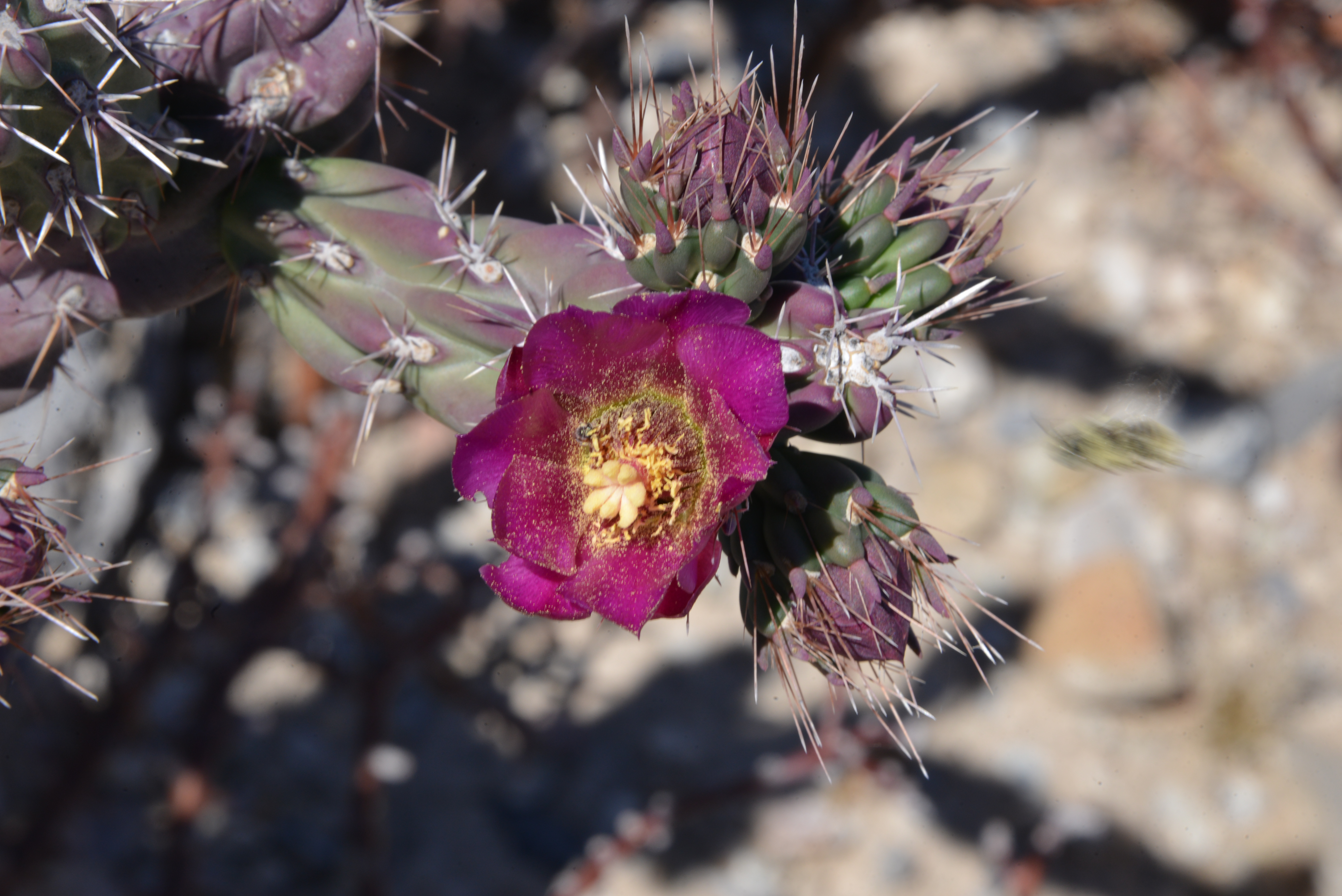
Any suggestions for a name are welcome. Coryphantha poselgeriana, a lovely plant as a seedling back home, is more impressive but perhaps less cute as a large habitat plant. How could I forget Cylindropuntia leptocaulis at the last stop? Probably because I was too busy cursing it. There were at least two more Cylindropuntia sp., one of which was in flower and is probably C. imbricata

Cylindropuntia imbricata - S3078

Cylindropuntia imbricata – S3078

Echinocereus horizonthalonius, Echinocereus engelmannii, E. enneacanthus, E. longisetus, Epithelantha micromeris, Euphorbia antisyphalitica, a.k.a. as ‘Candililla’, which here is harvested and appears to be heated / burned in a process to extract oils and wax. It is also sold in the southern USA as a landscape plant. Fouquieria splendens is another desert plant that is so common that I often forget to mention it on my lists. Here it appeared in my pictures because of a white spined form of Ferocactus hamatacanthus at its base. Sclerocactus uncinatus was spotted again and Thelocactus bicolor deserves a mention as this is a Thelothon.

S3079: we stopped on a track that was (not for the first time) unknown our SatNav systems. So much for the Hertz Never Lost. My Garmin Nuvii did little better. Same plants as before and again at S3080

S3081 was the Viesca Parque on the outskirts of town. This had been a rubbish dump when we visited in 2010, now everything had been tidied up with basketball courts and five aside soccer pitches as well as well maintained swings, slides etc. Unfortunately many of the ‘special’ cacti had gone as well. We had again come to look for Lophophora fricii but failed to find it at the coordinates in my database, now over ten years old.

S3082 was a last ditch attempt at km 8 on the way home to find L. fricii. We were tired, very hot and suffering from snow blindness in a pure white chalk dust landscape. I took just three images.

Coryphantha poselgeriana - S3082

Coryphantha poselgeriana – S3082

Monday 17 March 2014 – Saltillo to Parras

I could not leave Saltillo quickly enough – unbelievable how fast humans had destroyed this recently still mostly quiet and beautiful part of the world. It seems as though the authorities had decided to sacrifice this valley to create economic wealth as there was enough nature near by that was so large and unspoiled that it would serve its purpose.

Of course, cactus explorers are notoriously lazy, so that if you plot the historic type localities and recent field number listings on a map, you end up mostly with the road map of that particular area. We are no different. But as the present situation here now shows, these are also the first places to be sacrificed for human economic development.

Back to the cacti. First stop of the day was S3072, in the middle of nowhere with a small uninhabited small holding to the south, along MEX 40, the Saltillo – Torreon road, near Rinco Colorado. As this was a Thelothon, it was good to see Thelocactus bicolor with buds about to burst into flower. And again there were lots of other cacti to admire. Just an initial list to whet the appetite, with more details to follow once we had a chance to consult literature back home, in the order that they were photographed: Opuntia rufida, Cylindropunia leptocaulis, still trying to staple our trousers to our legs, or in Cliff-in-shorts’ case, to use his legs as a pin cushion, Echinocactus horizonthalonius – I don’t recall having seen them so full of water before in nature; some looked round like footballs! And with signs of budding, so may be in flower when we complete the loop and pass by here again in just over a week. I have already mentioned Thelocactus bicolor in advanced bud – just a matter of hours before fully open. Astrophytum capricorne was here too, difficult to take an attractive picture of this plant as the dense bird’s nest like spination made it difficult to appreciate the beauty of the white flecking on dark green epidermis – good sun block though! There were large clumps of what I assume to be Echinocereus stramineus, a large stemmed Echinocereus sp that on previous trips we’ve been calling E. dubius, an epithet that would fit many other taxa in other genera as well, for various reasons and a Coryphantha that will have to remain ‘sp.’ for now. Mammillaria pottsii put in an appearance or two as did Ferocactus hamatacanthus, Epithelantha micromeris and a group of Mammillaria lasiacantha with several heads in flower – good spot Ian!

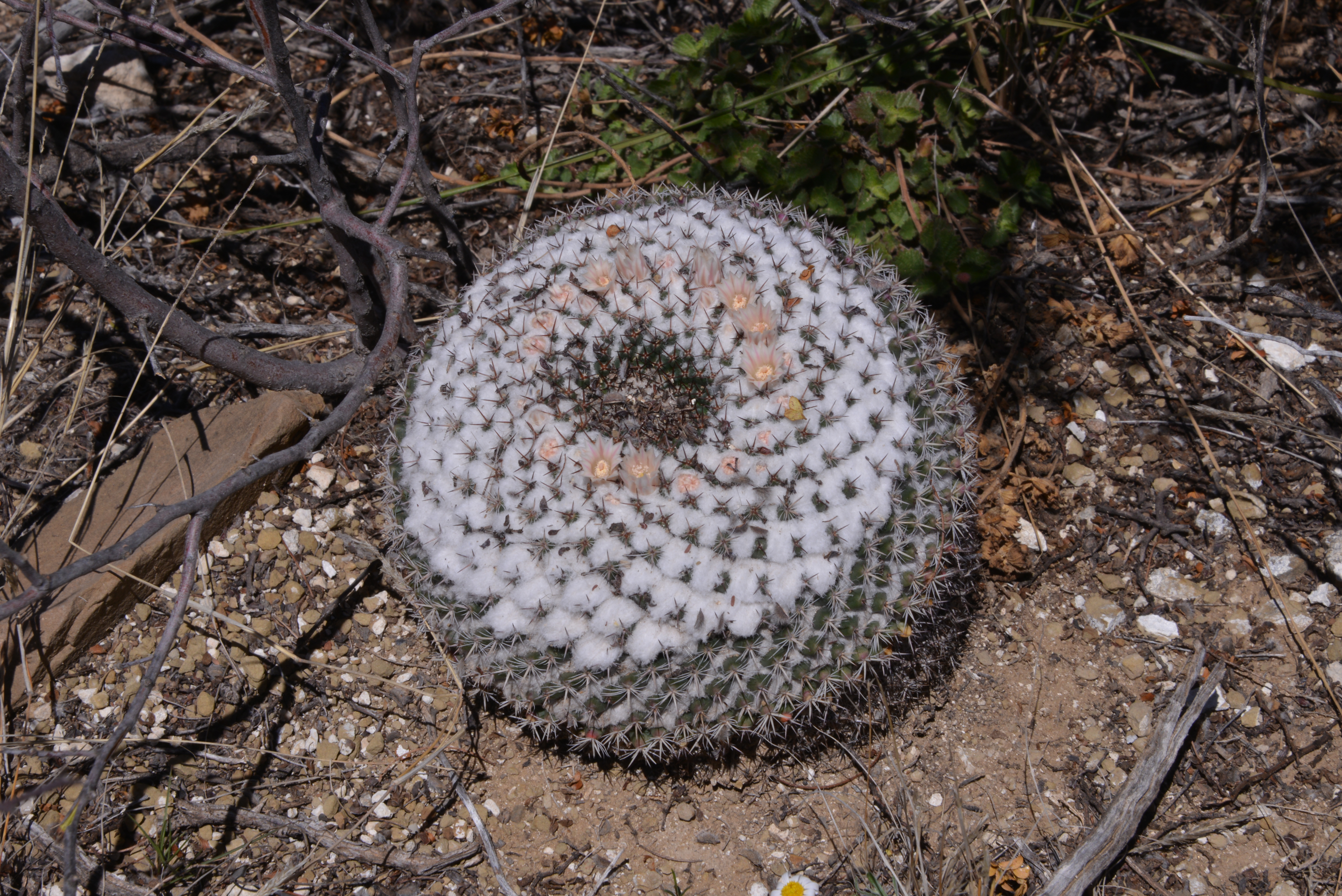
Mammillaria lasiacantha - S3072

Mammillaria lasiacantha – S3072

Coryphantha sp

Coryphantha sp

Most of these plants – though not all – were also present at today’s remaining stops: S3073, S3074, S3075 and S3076, with the latter christened as The Dead Dog stop as it appears a pet had been killed by a passing car and had been kindly put in bags to protect it from vultures etc. As we opened our car doors, the smell was horrendous!

By the time we reached S3073, for which SatNav gave the address General Cepada – La Rosa,  most of the Thelos had opened their flowers – very nice, thank you Thelos. There was also an Ariocarpus retusus here, just the one, with Cliff, farther along the hill, finding more.

Thelocactus bicolor - S3073

Thelocactus bicolor – S3073

We passed through the village of General Cepada (I took the picture of the church – no one wants to see non stop cacti in a talk) and made the remaining stops of the day.

For the record:

S3074: General Cepada – Parras: Coryphantha sp, Dasylirion sp. Echinocereus enneacanthus, Echinocereus pectinatus, Mammillaria sp, Neolloydia conoidia, Thelocactus bicolor

Mammillaria formosa ssp chionocephala - S3074

Mammillaria formosa ssp chionocephala – S3074

S3075 again on the General Cepada – Parras road: Cylindropuntia sp, Echinocereus enneacanthus, Mammillaria sp, Opuntia rufida, Opuntia sp. Sclerocactus (Ancistrocactus) uncinatus.

Sclerocactus (Ancistrocactus) uncinatus - S3075

Sclerocactus (Ancistrocactus) uncinatus – S3075

S3076: still along the General Cepada – Parras road: Astrophytum capricorne, Coryphantha clavata (?) Echinocactus horizonthalonius, Echinocereus longesetus, Ferocactus hamatacanthus, Mammillaria pottsii, Thelocactus bicolor ssp bolaensis.

Thelocactus bicolor ssp bolaensis - S3075

Thelocactus bicolor ssp bolaensis – S3076

We stayed in Hotel de Marina (who knows how many miles away from a sea) for two nights, taking a look for some Lophophora for Ian tomorrow – you’ve been warned if his Diaries make even less sense afterwards 🙂

Sunday 16 March 2014 – Montemorelos to Saltillo

We started the day quite excited as today’s target plant was Astrophytum caput-medusae, one of the more recent discoveries and quite unusual in its appearance. Sometimes finding the day’s target plant is a matter of following the coordinates entered in SatNav and stepping out ‘at the flag’ and finding them next to the car (effective, time saving, but not all that exciting) and sometimes it’s hunting through an area where you know the plant should be but not knowing where it’s hiding, leading you on a treasure hunt to show you lots of other plants that you did not even knew grew here. Today was such a day. The lesson learned was ‘better preparation’. A closer look at all images from habitat available, what time of year they were taken, when is the best time to see them? etc.

It was a nice coolish day, overcast with lots of rain falling over the Sierra Madre to the west. The area was very lush in vegetation, with seedlings of the omni present Cylindropuntia leptocaulis making you think that there was a possible astro under every shrub. The dense vegetation included Acacia in flower, tickling my hayfever sensors, but not causing a reaction beyond that. A bit of reading back home reveals that cacti are not the only group of plants where names have changed. The well known name Acacia is now reserved for the Australian members while Mexican and North American taxa are now in the genus Vachellia, with plants here identified as V. rigidula. Whatever the name, their thorns still hurt when you try to walk through the shrubbery. Lots of interesting other cacti, that might have been hard to find if they had been today’s target plant, so a day rewarding in different ways.

Sclerocactus (Ancistrocactus) scheeri - S3070

Sclerocactus (Ancistrocactus) scheeri – S3070

We stopped to stretch our legs on a track through low shrub forest. Although still in Nuevo Leon, we’re on the low lands on the border with the State of Tamaulipas, quite unlike the Mexican cactus habitats where we had been been to date. Here it was the thorny shrubbery that forced me to walk bent over, to dodge the thorns. It reminded me of the low Caatinga forest in the Brazilian State of Bahia.

Here, at S3070, we photographed Echinocereus viereckii, Escobaria emskoetteriana, Opuntia sp., Sclerocactus (Ancistrocactus) scheeri and Vachellia regidula. I wanted to know what the Acacia species might be that was everywhere and in flower. It was very popular with stinging insects such as bees and there were a good number of large flies as well with dart-like organs at the front of their bodies which they were aiming at any bare flesh. Cliff in shorts was a popular target. You could smell the pollen as it entered my nose setting off hay-fever allergies, so that looking for small cacti was a little difficult with tears streaming down my face. Back home a quick search of the internet reveals that currently the genus Acacia is limited to plants growing in Australia and New Zealand while their north American cousins are now in the genus Vachellia. I think its ironic that organisms that are so firmly routed in the ground are so mobile when it comes to their place in classification systems.

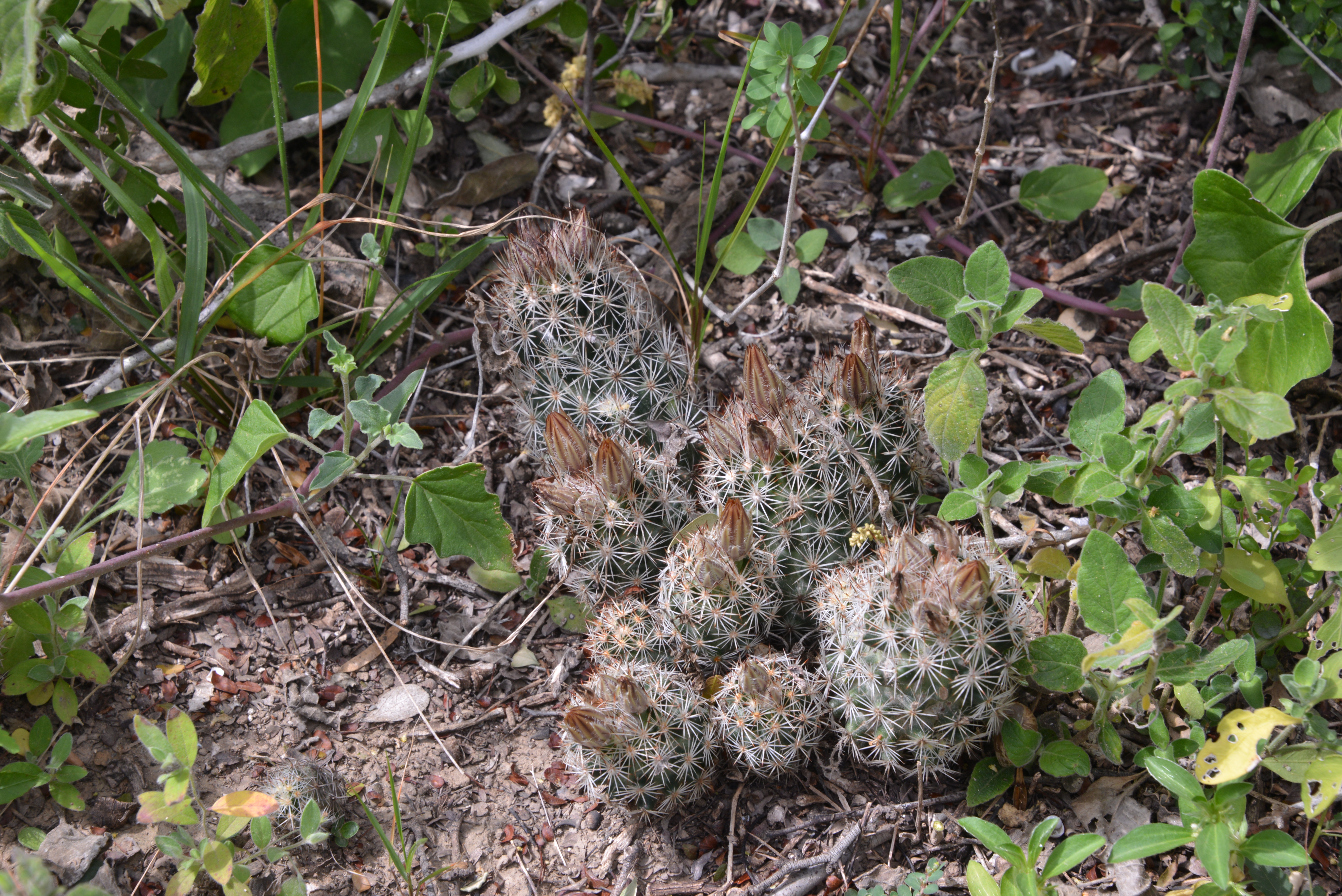
Escobaria emskoetteriana - S3070

Escobaria emskoetteriana – S3070

We moved on and drove several hours through this rather monotonous landscape. So why did our target plant grow here and not at the last stop? No idea – conditions seemed identical. It was also remote, we had seen very few cars all day. How did they discover this plant? It seems that during the construction of electricity pylons the engineers had stumbled across it and had shown it to a friend who, as a botanist, took it further. We had now reached the coordinates of the type locality and checked the spot in detail. Nothing. we spread out between this and the second set of coordinated from which plants were reported – still nothing. In cultivation, in Europe, these plants have a tendency to die during winter when traditionally cacti are kept dry for some five months. A. caput-medusae tends to drop its tubercles back to the caudex, but as plants were grafted, the caudeces are sometimes poorly developed and the tubercles never regrow. Perhaps the same happens in nature and we should be looking for the small caudeces. It’s a more positive idea than to think that all plants have been removed by illegal collectors. In the three hours or so that we searched here (S3071) we photographed Coryphantha nickelsiae, Cylindropuntia leptocaulis, Echinocereus enneacanthus, E. pentalophus, E. (Wilcoxia) poselgeri, E. viereckii, Escobaria emskoetteriana, Mammillaria melaleuca (?), various Mammillaria sp, Opuntia sp., Sclerocactus (Ancistrocactus) scheeri and Vachellia (Acacia) rigidula.

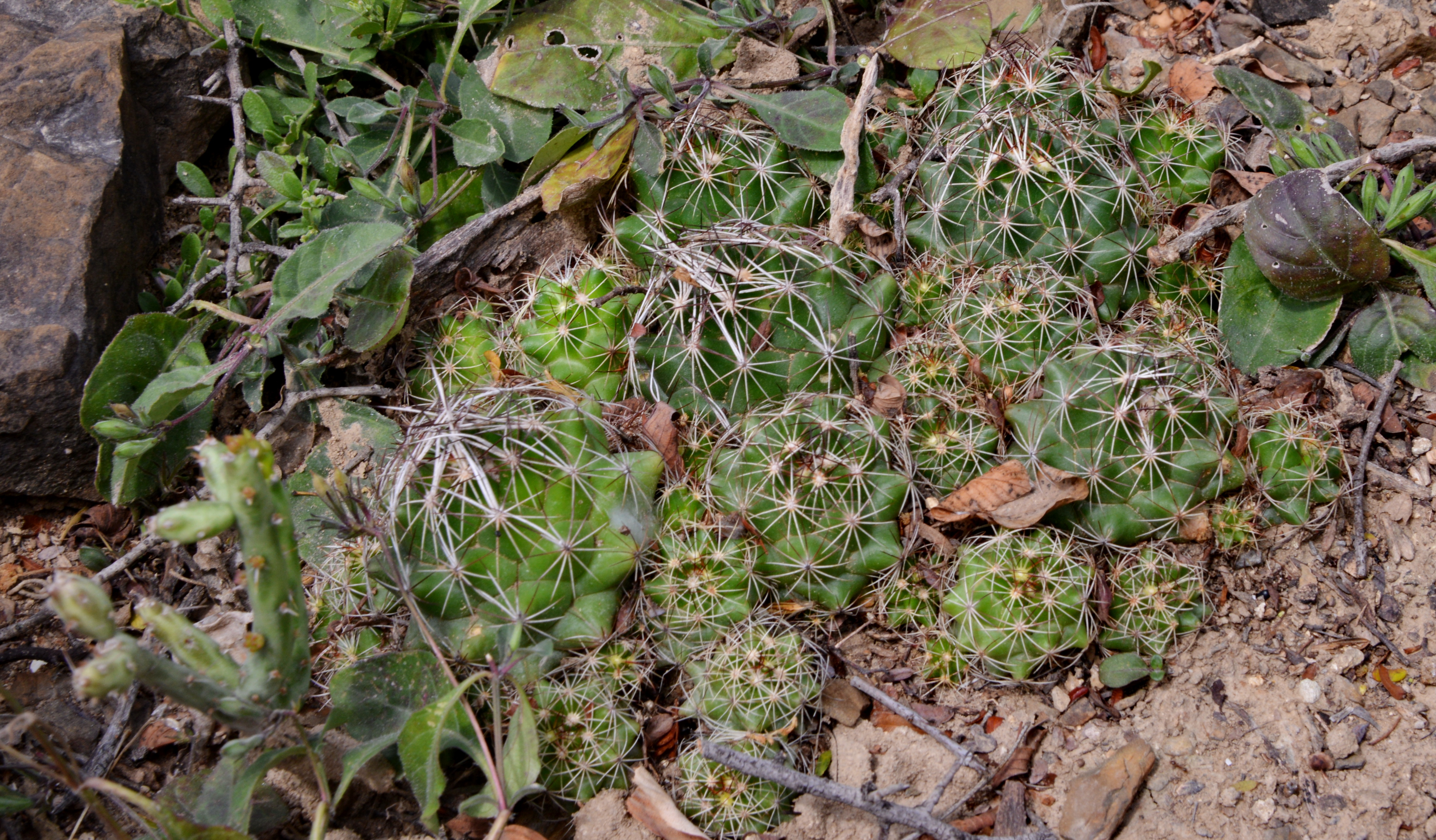
Coryphantha nickelsiae - S3071

Coryphantha nickelsiae – S3071

We’ll have to go back, better prepared, to see if we can’t find these plants second time round.

Still getting used to how one-sided deafness affects me – the strong winds in habitat caused confusion and disorientation and a feeling a bit like sea sickness. All part of re-training the brain.We pushed on to Saltillo, a town holding fond memories from 2010 and 2011 but now part of the Monterrey overpopulation and industrialisation. it was late when we arrive to find that the hotel we used to stay in had a smelly fertilizer plant built right next door. The prices stank too, so we found something near by, at the other extreme of the scale – but a bit too noisy for me, even with my deaf ear.

Saturday 15 March 2014 – Iturbide to Montemorelos

Yesterday afternoon’s adventure had somehow shaken my confidence in cactus exploring by SatNav. ‘Good job too!’ I hear some of you say. But the positive was that we had seen another valley in quite some detail and knew that the one we were looking for lay between yesterday’s valley and the one that had NL 61 running through it. This morning I was going to tackle it a different way. I had the coordinates for the spot where we should leave the 61 and turn left for La Poza.

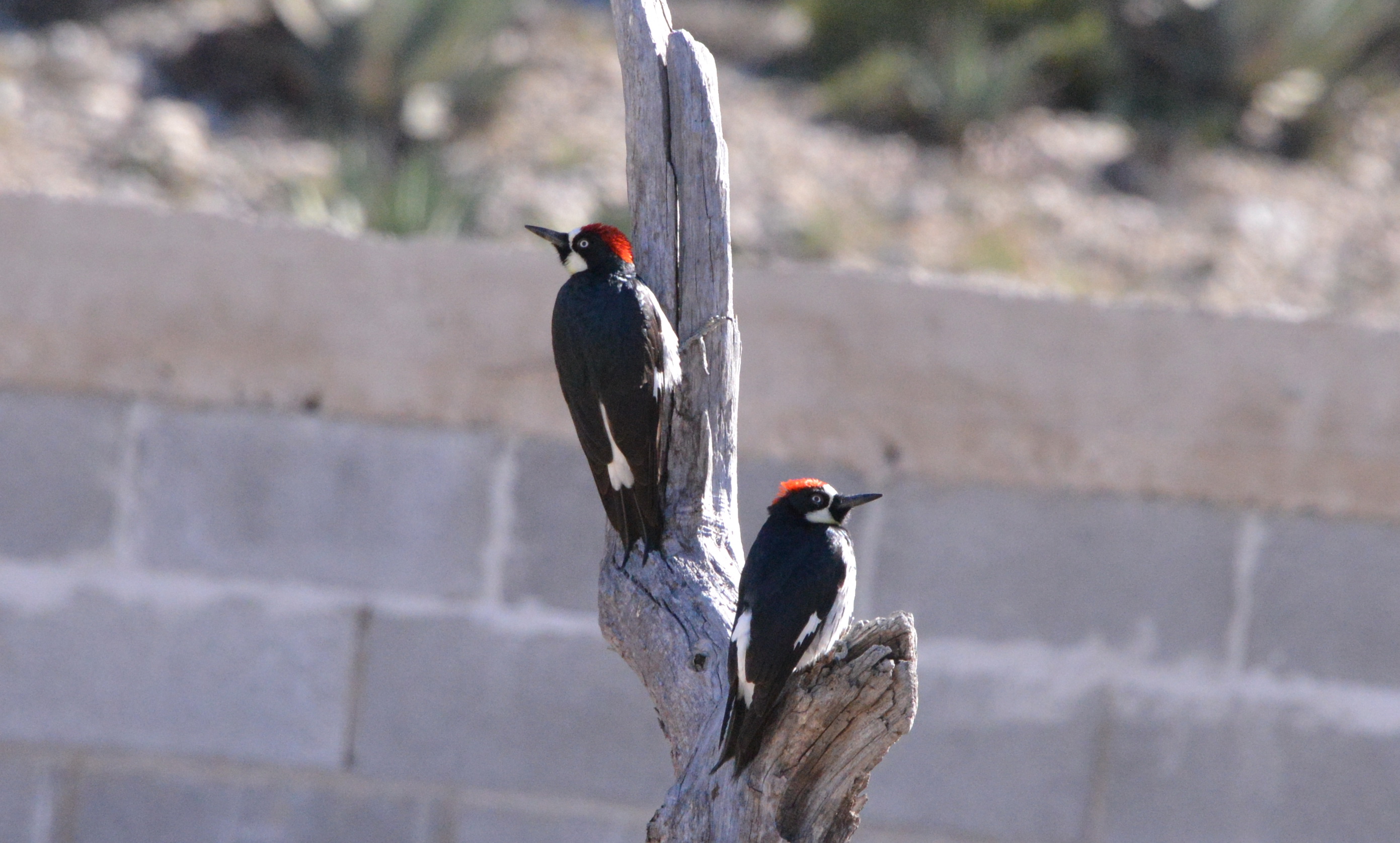
When we left Iturbe and put these coordinates into SatNav, it again tried to send us through the Sierras. This time I thought of the Frank Sinatra song, and did it my way. The exit on the 61 was found exactly as I remembered it. S3066 was for a pair of (young?) woodpeckers along the road.

Woodpeckers - S3066

Woodpeckers – S3066

The track through Ejido La Poza ticked all the boxes, although SatNav made another attempt to confuse us. We ignored it until almost at the 2011 stop, when all of a sudden it knew where it was and where we should go.

If only it were that simple. There were half a dozen canyons that were candidates to be the home for today’s target plants: Aztekium hintonii and Geohintonia mexicana. Cliff disappeared up one valley and Ian up another while I struggled. After a sedatory winter sitting at home in England to avoid the continuous rain, the recent activity was causing problems with sore feet, especially with the nail of my big toe that will probably fall off in the next few days. As any diabetic will know, it’s important to look after the body’s extremities and having seen my late father in law lose both his legs due to poor blood circulation / diabetes, I’m being very cautious. Initially I slowly followed Cliff, meeting him on the way back from his first canyon (S3067). Nothing found. While this location ticked a lot of boxes in my memory of my 2011 visit, I was looking for a large group of cacti, that at the time I thought might have been Thelocactus conothelos, but that this time the three of us decided that it  had to be a Coryphantha – but which one. To confuse matters, a solitary look-alike, Neoloydia conoidea was here with flower colour matching what I had seen before. And then there were the Thelocactus buekii as seen yesterday and still in flower. All these plants were present but not how I remembered.

I half formed a plan to walk back to the road and into another canyon when I remembered it was silly to try to do so without a drink (water!)  – again it was a warm day. So, back to the car. Fortunately I had the one key. Ian walked up to the car just as I was about to get there. He had been up and down several canyons while following the contours of the hills alongside the track. He had come across a number of our target plants, more Geohintonia than Aztekium, some set back, almost along the track,. We decided to wait for Cliff to return and started to get worried as over an hour passed before we could see his yellow T shirt appear. We had been quite silly really, stomping off in various directions in our excitement of the cactus hunt, out of audio and visual contact while two of us had some past medical conditions that are fortunately under control, while the third is the age where we were struck by a heart attack, although he is probably a good deal fitter than we were at the time. Still – all’s well that ends well – we promise to do better in future.

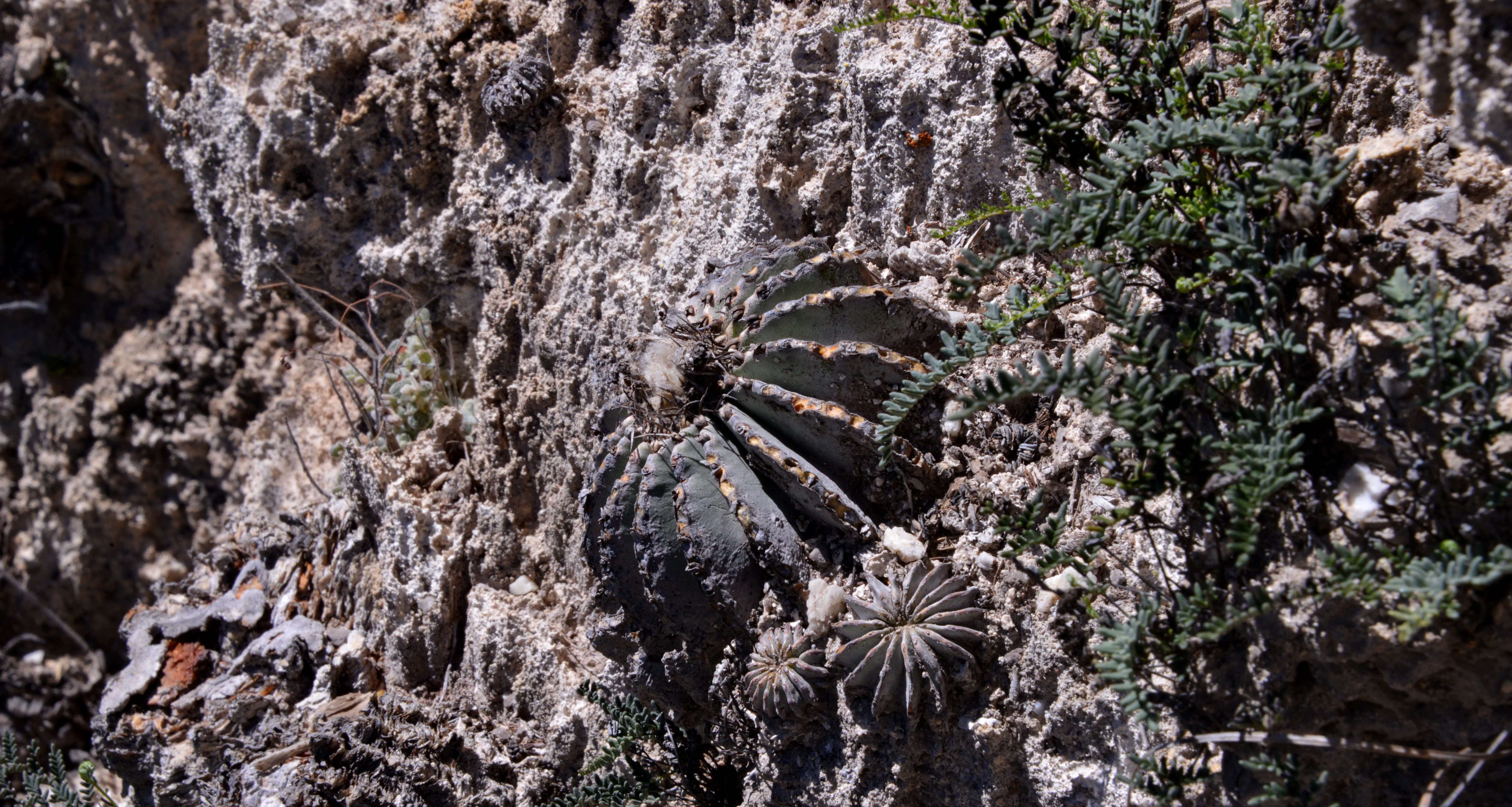
Cliff had found some Geohintoia as well and although I still had a clean score card, had seen them both in 2011, so could in fact leave now. Ian offered to show us his nearest spot where Cliff went a bit deeper into the canyon to see Aztekium hintonii while I concentrated on photographing the Geohintonia – larger and cleaner plants than I remember seeing in 2011. I took Angie’s camera long as well for some nice wide-angled shots. Unlike yesterday’s valleys, this one was rich in gypsum – some beautifully sculpted by nature. (S3068)

Aztekium hinoni and Geohintonia mexicana - S306

Aztekium hintonii and Geohintonia mexicana – S3068

I photographed the following plants at these stops: Coryphantha sp. Mammillaria sp. Neolloydia conoidia, Selaginella sp, Thelocactus buekii, Tillandsia recurvata, Yucca sp. and of course Aztekium hintonii and Geohintonia neomexicana.

We took a look another km. or so along the track, but remembering the news items of car jams on the roads leaving Monterrey for ‘vacanciones’ (which one?) and remembering that as we left Iturbide after breakfast, that they were setting up staging for a concert / party on the plaza outside Posada El Carmen, it might be wiser to secure a room for the night first.

Galeana was our first port of call where in 2011 I had stayed in one of three or was it four hotels around the Plaza. As we approached the Plaza, we could hear loud music – people warming up for tonight’s party here as well. So on to Rayones, where the Posada was locked up and the old boy at the only hotel in town said that tonight there were no rooms, but to come back tomorrow. Yes, sure!

A quick look at maps and we decided on a safe bet – Montemorelos, on the main highway south of Monterrey. Another dramatic ride through the eastern end of the Sierra Madre Oriental, with views over the plains below towards the Gulf of Mexico.

As Cliff steered the car down the narrow twisty roads, avoiding the stone fall that suggested a recent storm, Ian was still able to spot an Ariocarpus retusus between the shrubs on the side of the road (S3069). Good spot! A quick leg-stretch to take its picture and Ian found another Ario, a double header this time.

Ariocarpus retusus - S3068

Ariocarpus retusus – S3068

It was still light when we found lodgings in the Alfa Inn hotel in Montemorelos, a clean and modern hotel for business folks on the road, rather than the local, Mexican style hotels that we had enjoyed in recent days.

Friday 14 March 2014 – Dr. Arroyo to Iturbide

The style of Hotel Plaza aimed at retaining as many of the original features as possible. The family had owned it for some 120 years and there were plenty of photographs on the walls to illustrate the point. This included the doors to our triple room which had however a very modern lock. Last night Ian struggled a bit to lock the door and this morning neither Ian nor Cliff was able to unlock the door.

And so it was that this morning, a small Mexican, sombrero and pointy boots and all, climbed in through our bedroom window, greeted me and after some fiddling with the lock succeeded in opening the door. Who said it was easy to get breakfast!

We headed north on Ruta 61 and decided after a while on a leg stretch stop (S3062) that provided us with Thelocactus rinconensis or was it T. buekii? Opinion remains devided with T. rinconensis a possible candidate? As usual any name labels had been removed from habitat, possibly taken back to the shop to have the latest ID opinion written on them. There were also some sizeable clumps – or rather, multi-stemmed groups of Ferocactus pilosus with crowns of flowers – quite small for the size of the plant.

Thelocactus sp - S3062

Thelocactus sp – S3062

Another leg stretch stop along R61 was prompted by T. buekii in flower – gorgeous plants!

Ferocactus pilosus - S3063 near La Escondida

Ferocactus pilosus – S3063 near La Escondida

Our target stop of the day (S3064) was a small hill, just north of  La Ascención (Aramberri, Nuevo León), that I visited first with Eunice Thompson on 3 March 2011, when conditions were much more arid than today and the plants (T. buekii and Ariocarpus retusus, plus others – see plant list for 3 March 2011) were very dehydrated. Today the low hill was awash with field flowers and pumped up cacti, after recent rains. Most of the Thelos were in flower or in bud. I made myself a promise to come back one year in late September / early October to catch the Arios in flower.

Ariocarpus retusus - S3064

Ariocarpus retusus – S3064

I entered the coordinates of the location for our 2011 stop for Geohintonia mexicana and Aztekium hintonii in and was about to enter the coordinates for the exit from the 61 when SatNav seemed to have this already. We were ahead of schedule, so we allowed ourselves to be (mis)guided. SatNav took us to the village of Iturbide which had some hotels. We booked ourselves into the Pousada and hit the road again, being guided up a very narrow but very steep track. This looked completely unfamiliar to me, yet at the same time there were familiar features suggesting that we were in the right area, if not the right place. Around the hamlet of La Providencia, SatNav lost the plot. ‘Now walk for 5.2 km to the south west’ Yes, right, over a massive ridge of hills into another valley. We decided to drive on a km or so, then parked the car where some narrow canyons met the road. Cliff and I took one, Ian another and soon found large unfamiliar Thelocacti hanging from the steep cliff walls. The make up of the cliff walls was similar to what I remembered from the Geohintonia and Aztekium locations in 2011. But what was the Thelo? Back in the Hotel in Iturbide, I looked at the excellent website http://www.thelocactus.cactus-mall.com/ by Alessandro Mosco and it seems that the Thelos we had seen today could all fit within the concept of T. buekii. Or could they? there was a smaller Thelo growing on the opposite canyon wall that was a much darker green. More reading I think.

We’re spending the night at the charming Posada El Carmen in Iturbide – clean, safe and quiet except that this morning (Saturday) they are setting the market square up for a party.

Thelocactus buekii, La Ascension

Thelocactus buekii, La Ascension

Thelocactus buekii, La Providensia

Thelocactus buekii, La Providensia

Thelocactus sp, La Providensia

Thelocactus sp, La Providensia

Todays full plant list:

S3062 – Ruta 61: Doctor Arroyo to La Poza
Agave lechuguilla, Echinocactus platyacanthus, Ferocactus pilosus, Mammillaria sp., Mammilloydia candida, Neolloydia conoidia, Opuntia sp, Thelocactus sp. Yucca sp.

S3063 – Ruta 61: near La Escondida
Agave sp., Echinocactus platyacanthus, Echinocereus pentalophus, Ferocactus pilosus, Thelocactus buekii, Tillandsia recurvata

S3064 – Ruta 61: near La Ascension
Ariocarpus retusus, Cylindropuntia sp., Echinocactus platyacanthus, Opuntia sp., Thelocactus buekii

S3065 – track near Iturbide
Agave sp (x 2) Echinocereus pentalophus, Ferocactus hamatacanthus, Mammillaria sp., Selaginella sp., Thelocactus buekii, Tillandsia recurvata, Yucca sp

Thursday 13 March 2014 – Matehuela to Dr. Arroyo

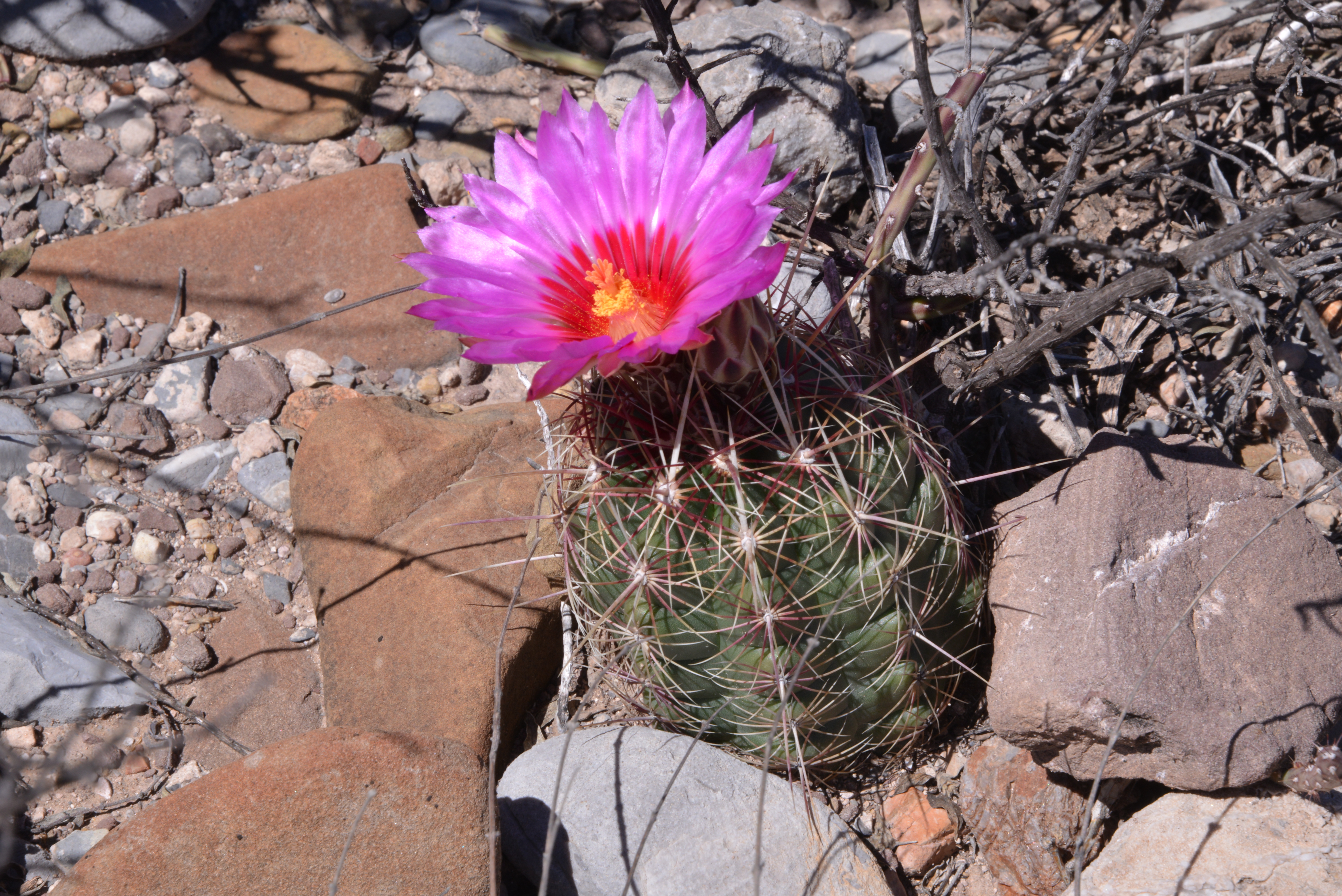
It is easy to forget, when you are surrounded by some of the most desirable cacti offered for sale in Europe, that this is a Thelothon, so I’m pleased to report that we found Thelocactus hexaedrophorus and T. conothelos today. Most Thelocactus taxa are quite found over a wide area, so the trick is to select plants from populations where other cacti may steal the limelight, to add interest to the exercise.

Here is today’s plant of the day:

Pelecyphora strobiliformis

Pelecyphora strobiliformis – S3060

But the day began less promising with the failure of ATM machines to give us our money and a sudden bout of Montezuma’s revenge, fortunately in the car park of the Matehuala Walmark where the disabled toilet made a very welcome changing room.

I had selected two targets for today’s ‘organised search’ with plenty of scope for more spots to look if time permitted. The first was a spot for Turbinicarpus macrochele, which we had failed to find here in 2011, but with two fresh pair of eyes, seemed worth another try, but to no avail. I had hoped that may be one or two plants might be in flower to allow us to get our eye in. I’m sure that the plants were there, but without flowers, won the game of hide & seek.

The second stop was along the track to El Refugo and this is where we found the Pelecyphora. I’ll have to check when I get home but I believe that this was a different location to where we found them in 2011 but on that occasion had failed to find any of that taxon.  They were much more abundant this time, including a large number of small seedlings that could easily be mistaken for Turbinicarpus seedlings, but Cliff and Ian easily recognised them as Pelecyphora seedlings. Other cacti found here (S3060) were: Agave sp., Ariocarpus retusus, Dasylirio sp, Echinocactus horizonthalonius, Echinocactus platyacanthus, Echinocereus pentalophus, Lophophora williamsii, Mammillaria sp., Neolloydia conoidia, Pelecyphora strobiliformis, Portulaca sp, Stenocactus sp., Thelocactus conothelos and T. hexaedrophorus. You can see why we can spend a few hours walking around these fields and hillsides!

The third stop was for pictures taken around the scenic town of Dr Arroyo, where Cliff broke the golden rule among cactus explorers: don’t go with an unknown local to get money from the bank. In this case the local was the cousin of the owner of the hotel and the ATM was across the square of the Plaza Hotel, a responsible calculated risk, with the police station across the road from the hotel. Tomorrow we head to Galeana.