Just another WordPress.com site

Archive for October, 2014

Image

Sunday 5 October 2014 – Day 3 : more bus trips

As you can tell from the previous few day’s reports, I had a great time and probably spent a little longer on them than I should, considering that in about 24 hours time I’m off for four weeks in Mexico. There is still last minute packing to do and a final attempt to track down some habitat locations along the route that are worth a stop to stretch our legs.

So, my attempt to be brief on the remaining pages is by no means a reflection of my lesser enjoyment of the events.

Starting at 8 a.m. we were again on a Magical Mystery Tour, with Bus #1 visiting the collections of Greg & Alice Daniels, Bob & Judi Proctor finishing with afternoon tea at Paul Forster’s. I must have been on Bus #2, as we made the trip in reverse order, meeting up with Bus #1 at Bob & Judi Proctor’s for a BBQ lunch.

Rather than waffle on again, I’ll make this an illustrated report:

Paul Forster’s

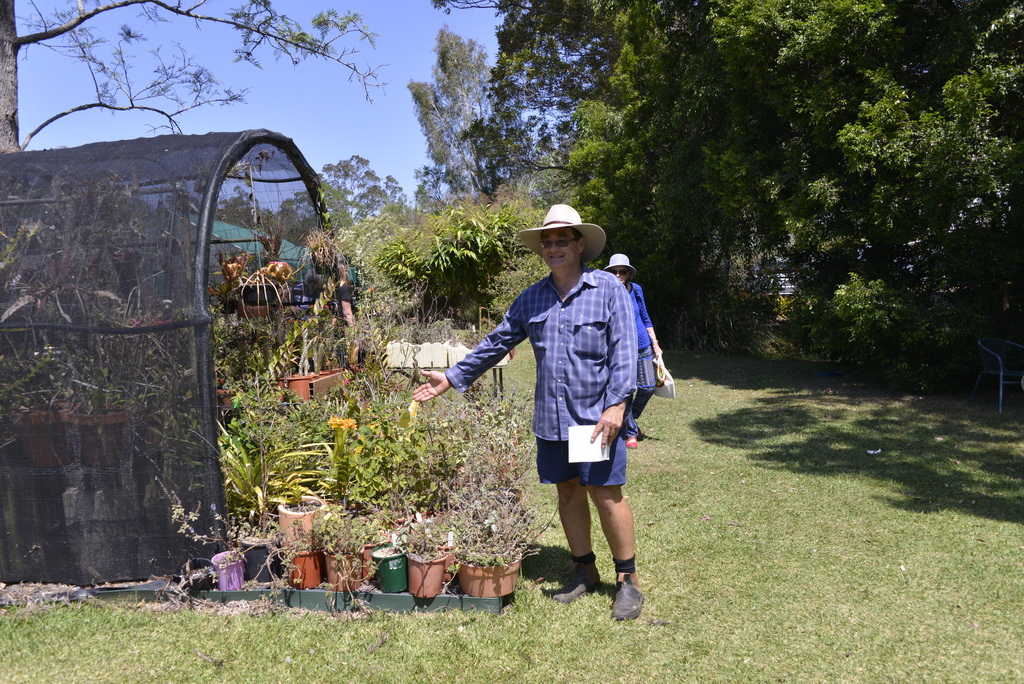
Paul Forster showing us his plants growing in green houses spread over his property.

Paul Forster showing us his plants growing in green houses spread over his property – here mainly Bromeliads in a poly-tunnel structure covered in shade cloth.

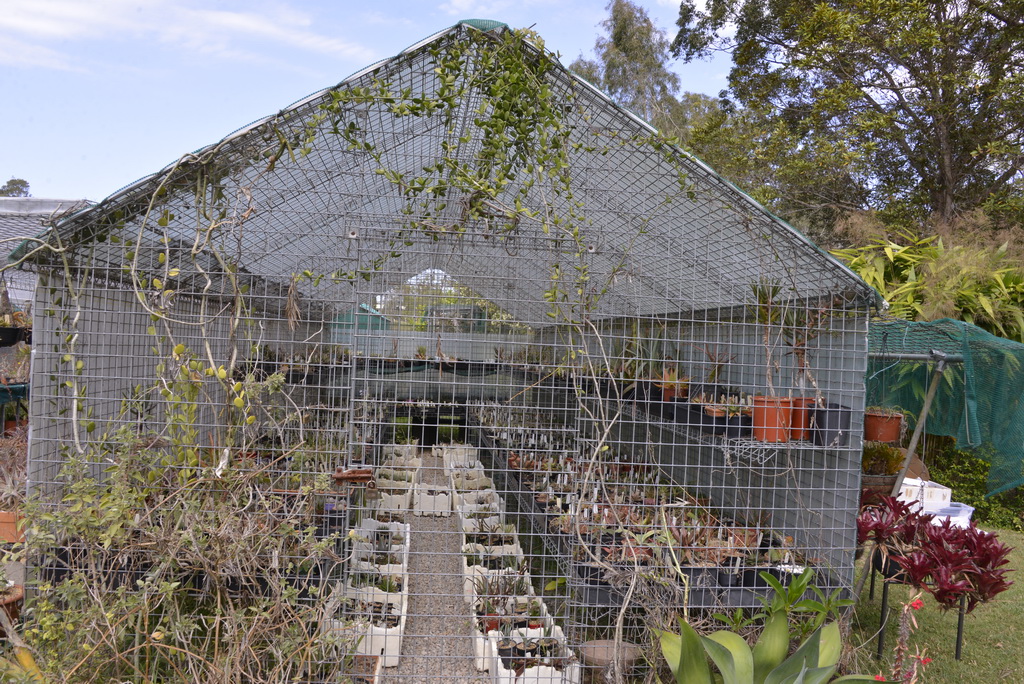
Protection: from what for who?

Protection: from what for who?

Horticulture often involves growing exotic plants in a controlled environment. Even endemic plants might need some help to look their best. Unlike in England, where we need structures to keep our plants warm and dry, while here the aim is to protect plants from too intense light and heat while ensuring good air circulation. The cage above would also assist in keeping young children and pets at bay or are kangaroos and wallabies a real threat?

Unfortunately, in waiting for the crowds to pass on to give my camera a free run at the plants, it turns out that I missed seeing Paul’s excellent Haworthia collection that every one was talking about once we were back on the coach.

Bob & Judi Proctor

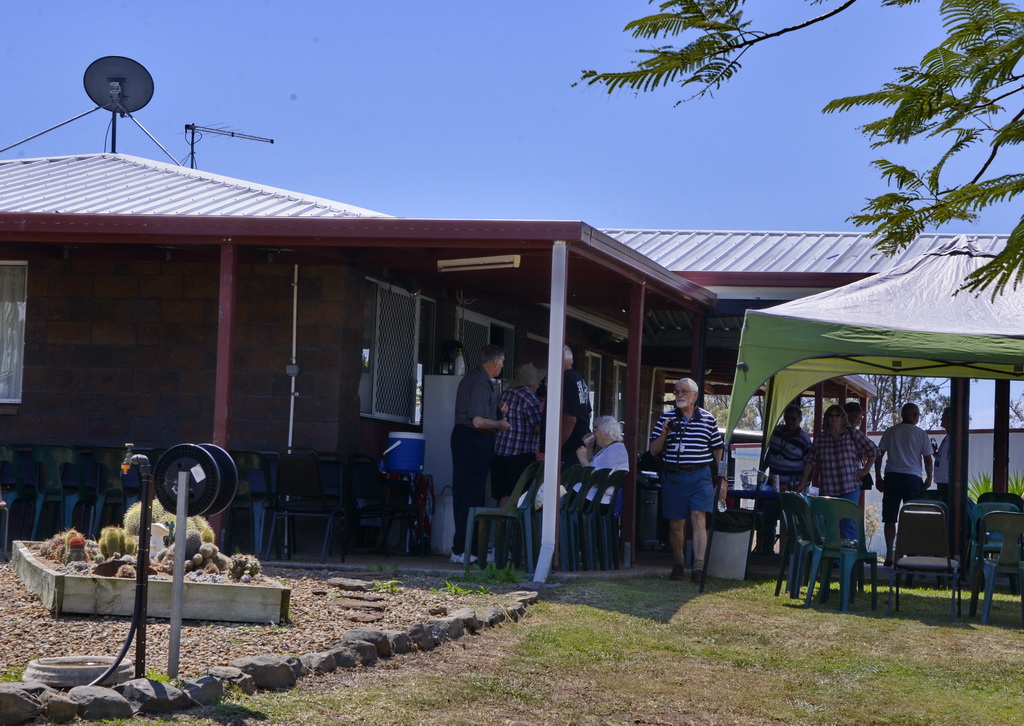
Bob & Judi Proctor's BBQ lunch

Bob & Judi Proctor’s BBQ lunch

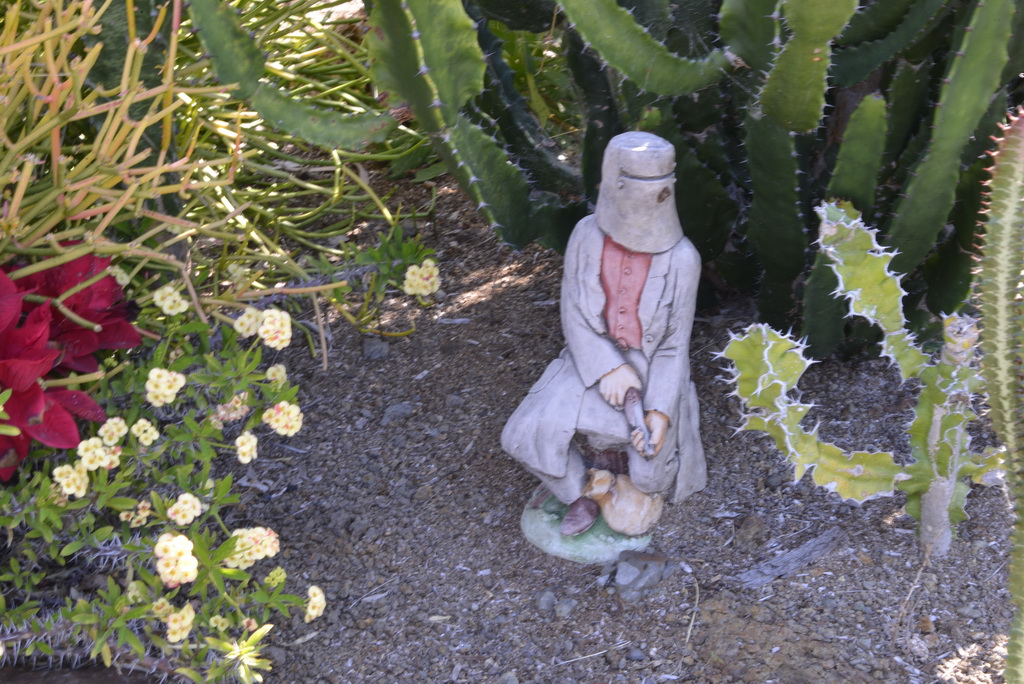
Australian folklore: Ned Kelly

Australian folklore: Ned Kelly

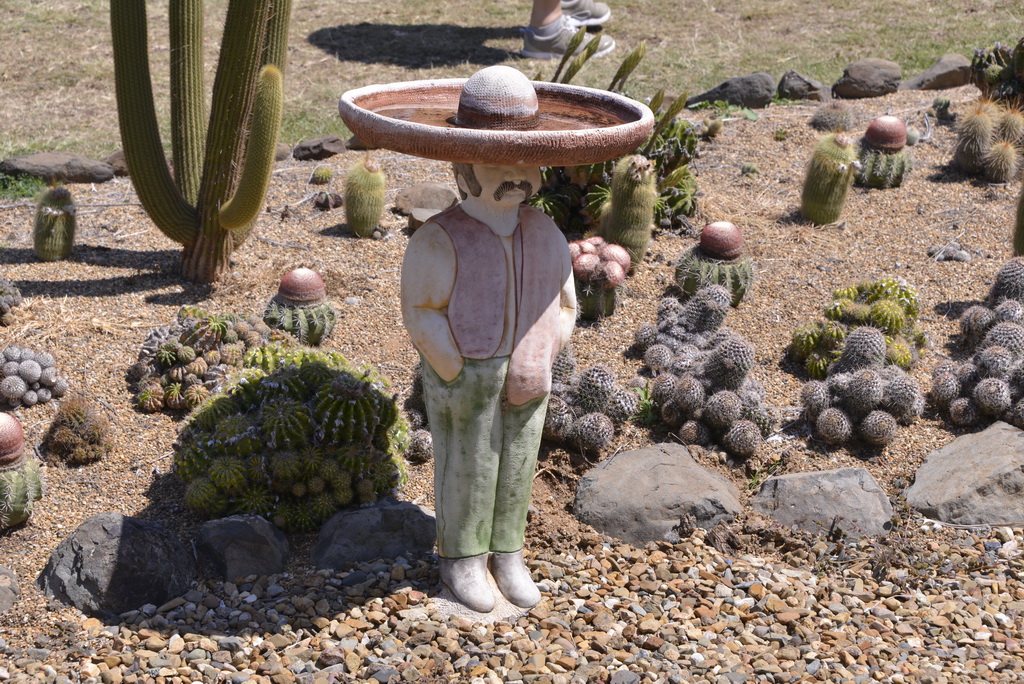
Getting me in a Mexican mood

Getting me in a Mexican mood

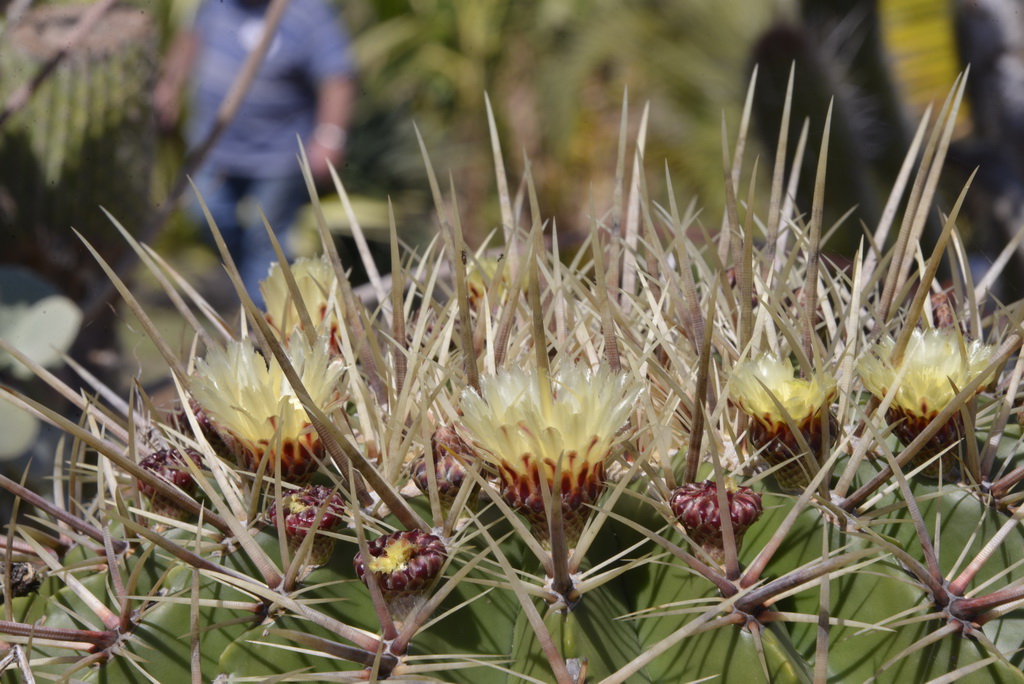
... and another reminder of where I'll be in 2 weeks time: Ferocactus histrix

… and another reminder of where I’ll be in 2 weeks time: Ferocactus histrix

Greg & Alice Daniels

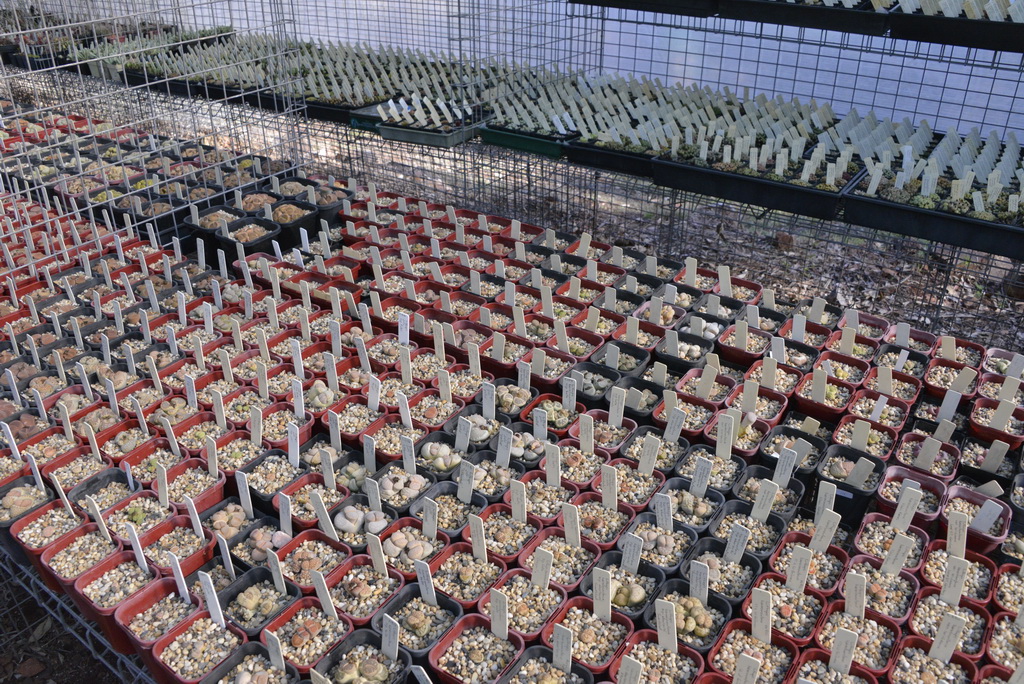
Detailed, well labelled collection, with plants for sale - here are the Lithops

Detailed, well labelled collection, with plants for sale – here are the Lithops

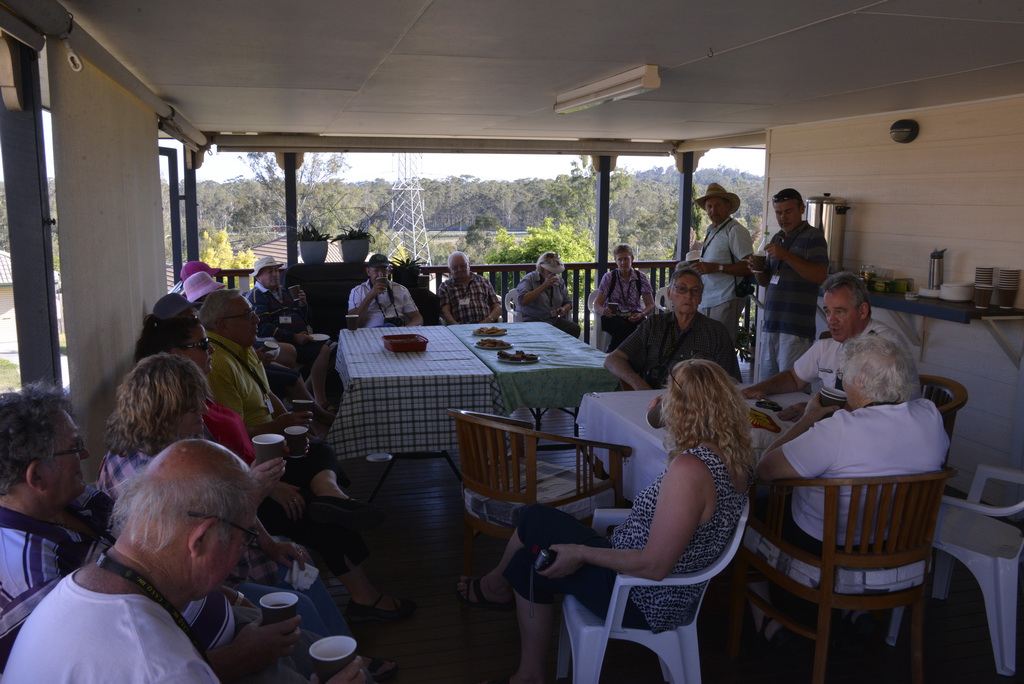
If an army marches on its stomach, so does a C&S convention, more great Ozzie hospitality

If an army marches on its stomach, so does a C&S convention, more great Ozzie hospitality!


Saturday 4 October 2014 – Day 2: presentations

Today was jam packed with talks, presentations, programs, lectures, which ever term you prefer.

After the official welcome, Ernst van Jaarsveld kicked off with ‘Succulent Plant Exploration in Southern Africa – Cape Agulhas to Southern Angola’ and showed us the huge range of succulent plants that this area has to offer.  Many of the delegates had traveled in the area and could readily identify with most of the plants that we were shown but still learned some interesting facts about others. I spent 9 weeks travelling in South Africa and Namibia in 2012 and am making plans for another, shorter visit in 2016. Great speaker, great presentation, great plants!

Next was Queensland member Greg Daniels who spoke on ‘Granite and the unexpected’

Kim Holbrook followed with ‘In search of the Devil’. The devil in question was Stenocereus eruca, the Creeping Devil of Baja California and again, seeing images from an area that I have visited quite regularly during the last 6 years was wonderful.

Doug Binns took us into his collection and shared his interest for Discocactus with us. Again, I have been fortunate to see many of these plants in Nature and enjoyed an interesting chat with Doug over lunch.

David Bromwich told us that The Limit is the Sky where we were encouraged to try to see the world from the plant’s point of view. All plants need light to survive and grow, but there is more to light than we can see. David moved through a fellow member’s garden with various tools to measure the amounts of visible and invisible (to humans) light and how this affected plant growth. Any presentation that triggers further reading later on is great by me and I moved a few things around in my conservatory since I have been home, where plants are stacked 4 high protected from moisture and the cold to see them through winter .

Time for lunch and plant sales and 75 minutes later, back to the hall for Attila Kapitany who enthused about Two Other Stars of California – Dudleya and Agave. In May 2014 he had a similar journey of discovery for both these genera that I have enjoyed on visits to California, guided by Eunice Thompson’s enthusiasm for these plants. Kelly Griifin seems to be at the root of generating interest in these and we saw some great images of the taxonomic mystery that Dudleyas can present, where plants in habitat readily hybridise creating a challenge for those who need names for the plants that they photograph. The Agaves that Attila showed us were in the variable Agave utahensis group. Again, it triggered memories of a trip in the Californian and Nevada deserts, ‘stalking’ the Agaves. The flower stalks of these plants not only announce the death of the plants, but guide Agave tourists to their habitats high on the hills. To make this a greater challenge, many stalks are knocked over as collectors hunt for the seed, so that knowing where to start your hunt can be very useful.

I had traveled with Attila and his wife in Chile and 2001 and meeting them again made the 13 years that had passed melt away. We’ll meet again, who knows where!

Next was Karen Zimmerman who showed us that she had Aloes on her Mind. Karen and Kelly Griffin are at the forefront of the current interest in Aloe hybrids. When these first came out I was rather skeptical – my love is for plants in nature and not for those created in almost laboratory conditions. But visiting them ‘at home’ in California I was impressed by the beautiful works of art that they had created, just as valid as any statue or painting that we admire as works of art. Karen explained how she selects plants with the best features such as colour, texture and teeth along the leaves’ edge and comes up with breathtaking plants that then presents them with the challenge to create an interesting and relevant name. Sadly, once the master pieces have been created, there seems to be nothing to stop anyone who has bought them to take cuttings and pass them on without paying copy right acknowledgements to the originator. I’ll have to make a list of the small number of Aloe hybrids on my windowsill, all acquired in Europe, and discover the name of the artist who created it. Karen also showed us examples where crosses that seemed to have great potential turned out to be disappointing and made their way to the compost heap. The interest in these plants was confirmed later in the plant auction where some of the ‘test tube babies’ reached fantastic bids.

After a quick break for tea, Merv Whitehouse climbed on his stage, built up from plant crates and gave us a practical presentation of various potting mixes, pot sizes and how different sized sponges – representing potting mixes – would ‘soak up’ water to the same height, irrespective of their size. Obvious once you think about it, but illustrating that often we don’t think too hard when selecting a new pot for your plants.

Finally it was my turn to take the floor, with ‘Mexico 2014 – a Thelothon’. This talk had already been on a tour in England as part of my annual ‘What I Saw Last Winter’ offering, and focused on many members of the genus Thelocactus that we saw in habitat growing alongside many slow growing cacti, which John Pilbeam refers to as ‘cacti for the Connoisseur’. These cacti are relatively slow and can demand special cultivation treatment and so are not too popular with mass production nurseries where the aim is to move plants from seed to sales bench in under 18 months. So the small number of plants offered for sale often come from hobby growers when they sell surplus seedlings from home raised batches of 20 seeds. In my plants this ‘rarity’was also expected in habitat, yet in many places we found cacti such as Ariocarpus growing in such large numbers and over such a wide area that was a great eye opener. While the Thelocactus and many of their other cousins were in the peak of glowering, the Ariocarpus delay flowering to late September / early October, so it comes as no surprise that in some 2 weeks time, I’m off to Mexico I’m off to Mexico again this time to photograph Ariocarpus in flower.

What impressed us all, judging by the chat at the official dinner, every one was very pleased with the varied range of presentations, all well presented, with full credit to Greg Daniels and Katherine Kok (?) who ensured that the technical side of digital projectors, computers and PA systems worked perfectly.

I enjoyed my introduction to Australian wine at the Official Dinner, admired the paintings that were entered as raffle prizes, but that were unfortunately to take home or to hang on my wall at home. The Society is fortunate to have a master auctioneer in Ian Hay who entertained us while encouraging us to raise our bids to new heights. I gather that it is not the first convention that he performed this role and his experience showed.

Once again I fell into bed, exhausted after a very full day.

Friday 3 October 2014 – Day 1: bus trips

It soon became clear that like many conventions, the social aspect of old friends meeting up again was an important part of the event. The Ozzies and Kiwis are a friendly bunch, despite the impressions to outsiders that could be created by the ‘friendly’ banter related to rugby. I’m used to it after years of living in the UK. I soon found myself chatting with more people than I can remember. I blame my age for not remembering every person who made me feel welcome. Fortunately the delegate’s registration pack included a full list of those who had made reservations, very useful when you get Facebook requests to remain in contact. I’m not a great user of Facebook, so don ‘t expect a daily updates and lots of activity.

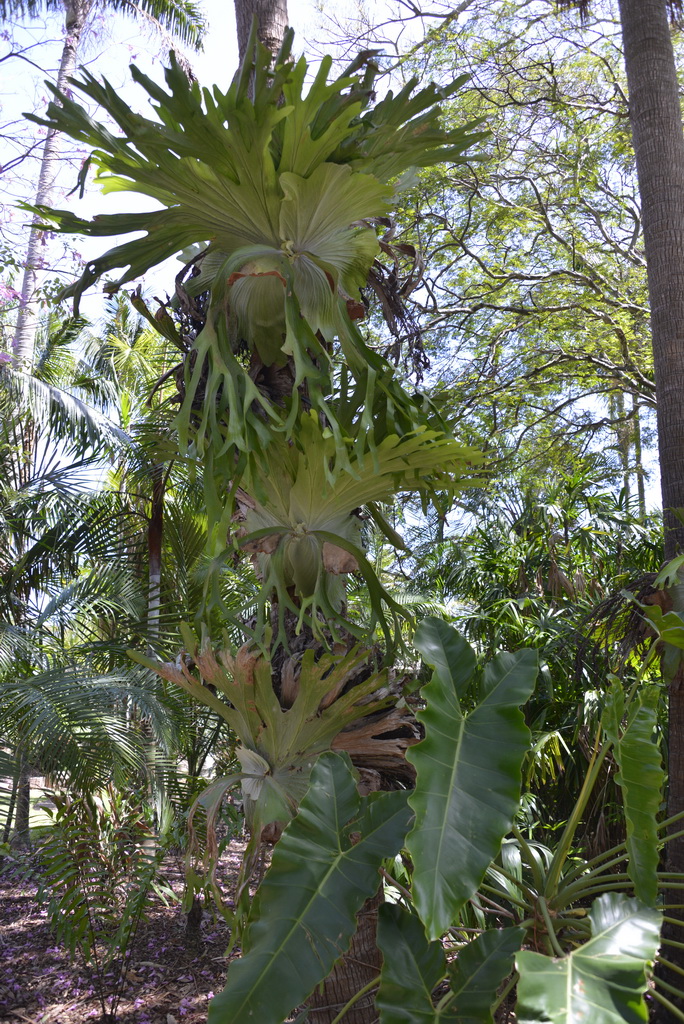
By noon we were all invited to get on 2 buses for a Magical Mystery Tour (well, it was for me!) to collections, first to Stan & Jane Walkley at Plantation 2000, offering wholesale palms and cycads. But there was so much more to see, this time captured on digital images. Clearly the climatic conditions in Queensland are quite different to those in the UK. Along the entrance path there were endemic orchids and staghorn ferns (Platycerium). I first saw a Staghorn fern in the living room of an auntie in Den Haag. It was an old venerable plant and uncle and auntie impressed on me that these required a lot more care and attention than the cacti that I was showing a keen interest in. Centrally heated houses are not the best location for these magnificent plants. Using Google, I learned that there are some 18 species that are found in nature in South America, Africa, Southeast Asia, Australia and New Guinea. This was the first time I had seen them growing (cultivated) outside, mounted on trees. Just as well that I took up growing cacti – these plants can grow to a significant size, several meters in diameter!

Platycerium at Plantation 2000

Platycerium at Plantation 2000

At the nursery there were ‘cages’ made of a large mesh panels, such as used for fencing, positioned in the shade of trees, bedecked with Tillandsia. I had already noted that Bromeliads were to be found in large numbers in the collections of C&S hobbyists. In fact, the local C&S at first covered Bromeliads as well until a growing membership was able to support two separate organisations.

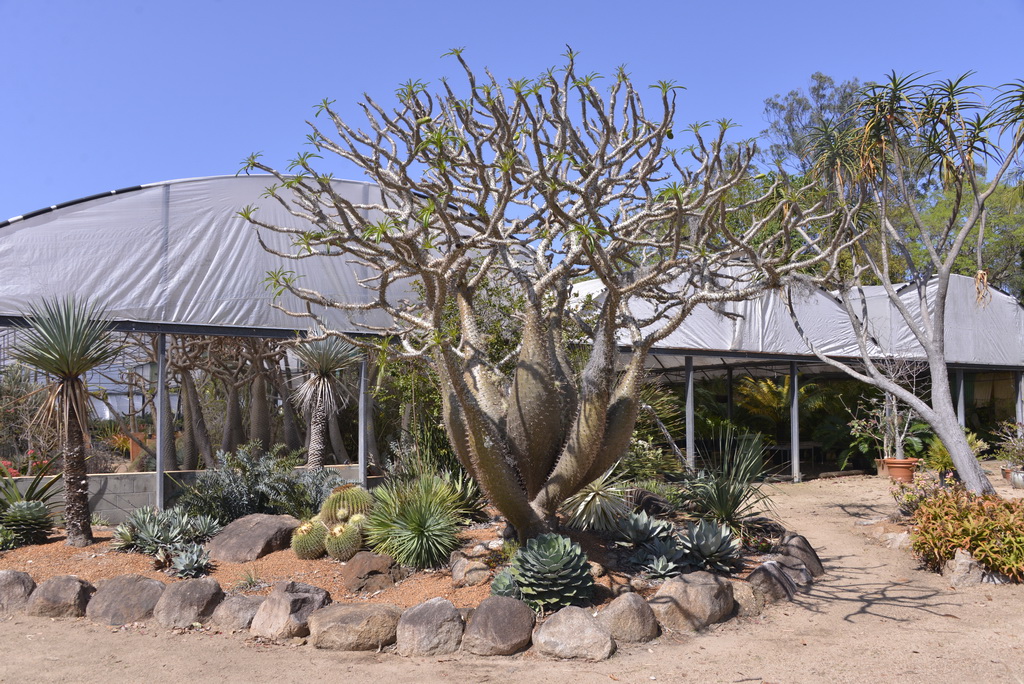
The other plants that impressed were the huge pachycaul trees – plants that in the UK are hard to obtain – I bought my few plants from Exotica, the nursery in Germany run by Ernst and Martina Specks. I had only seen plants of the sizes seen here from images taken by friends in the field.

Pachypodium sp

Talking of large plants, when I took several steps back I found that I had been standing in the shade of a Bunya Pine (Araucaria bidwillii). Its size made it tricky to take its picture, but I have at least one that I could use along Araucaria araucana (the Monkey Puzzle Tree) seen in Patagonia on both the Chilean and Argentinean side of the border and of Araucaria angustifolia, seen in Rio Grande do Sul in southern Brasil. There are 19 species all from the southern hemisphere, that originally date back to the days that the Southern continent were joined together.

Large Cycads and mature Melocacti were among the other impressive range of plants offered for sale. Several boxes of plants found their way back on the coach. But first we enjoyed a welcome buffet lunch and an opportunity to take on water – boy, it had grown warm!

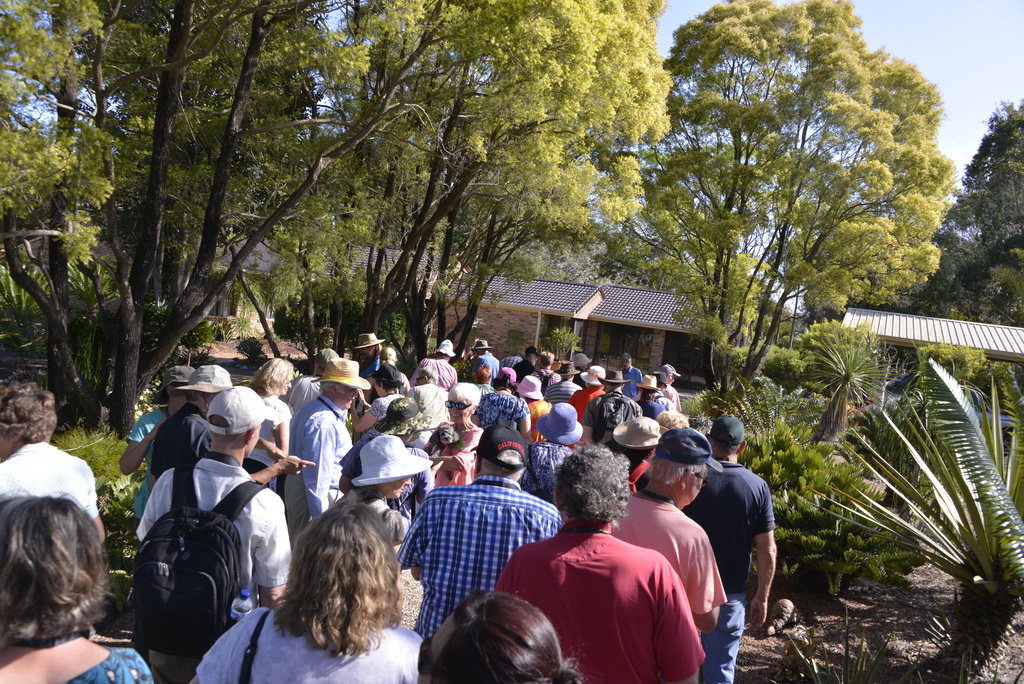
And so the Magical Mystery Tour moved on to the collection of Lou & Tish Randall for afternoon tea.

Arriving at Lou & Tish Randall's collection for afternoon tea

Arriving at Lou & Tish Randall’s collection for afternoon tea

Here, most of the plants already seen at Plantation 2000 were seen planted out in a large landscaped garden. Clearly the amount of time, energy and resources that people put into the hobby knows no limits. Clearly the Queensland climate around Brisbane is not dissimilar to that of Madagascar as huge specimen of the  Didiereaceae and Madagascan Pachypodium showed. A generous afternoon tree made sure that we did not get hungry.

Tensions were building after seeing so many plants and there was a bit of a feeding frenzy when back at the Convention Center the plant sales opened. How frustrating that I was not able to take any plants back to the UK, without probably a huge amount of paper work and administrative costs. Good job there was a book sale as well, with offers from Attila Kapitany and Kim (Holbrook?). I bought a book on the cacti of Texas and chatting with Ernst van Jaarsveld , ensured that one of the four Welwitschia books that he brought to Australia would come home with me to the UK.

The biggest surprise was meeting Pablo Weisser, now living in Australia. Pablo is a Chilean who would make expeditions with Hans Lembcke in the Atacama Desert to collect seed for Friedrich Ritter that would be sold in Europe through his sister’s, Hilda Winter, seedlists during the late 1950s and early 60s. Cactophiles who specialise in South American cacti hold Ritter and the plants he  described in high regard. There is a Thelocephala weisseri that I have photographed in nature, but that these days seems to be ‘lost’ as a synonym in the Eriosyce odieri complex. Pablo provides an interesting insight to the history of Chilean cacti from the ‘Ritter days’ and it would be great to travel with him in the country of his birth and to learn of past adventures – we have it so easy these days in 4×4 cars on tarmac roads.

Thursday 2 October 2014 – arriving at the Succulenticon

No images taken to jog the memory cells, so a brief report today. After a leisurely breakfast it took little time for me to pack and taking time to stroll around John & Ruth’s garden and chatting with Karen and Debra Zimmerman.

Then a shortish drive to Boondal,near Brisbane where the Brisbane International Virginia was the Convention Centre that we would call home for the next days. It reminded me of Friday, set up day, for ELK, with plant sales arriving and waiting before the sales area was laid out, while the first punters arrived to have a nose around. The official plant sales were not due to start until 17:00 hrs the next day.

Wednesday 1 October 2014 – Sightseeing Brisbane

First, meet my hosts, Ruth and John Higgins (left) and Karen and Debra Zimmerman. Karen is a fellow speaker from the Huntington Botanic Gardens in California, USA who will amaze us with her creations of Aloe hybrids. They are posing in front of a new bed that John is planting up this Spring – yes, it is Spring down under!

Left to right: ||Ruth and John Higgins, Karen and Debra Zimmerman

Left to right: ||Ruth and John Higgins, Karen and Debra Zimmerman

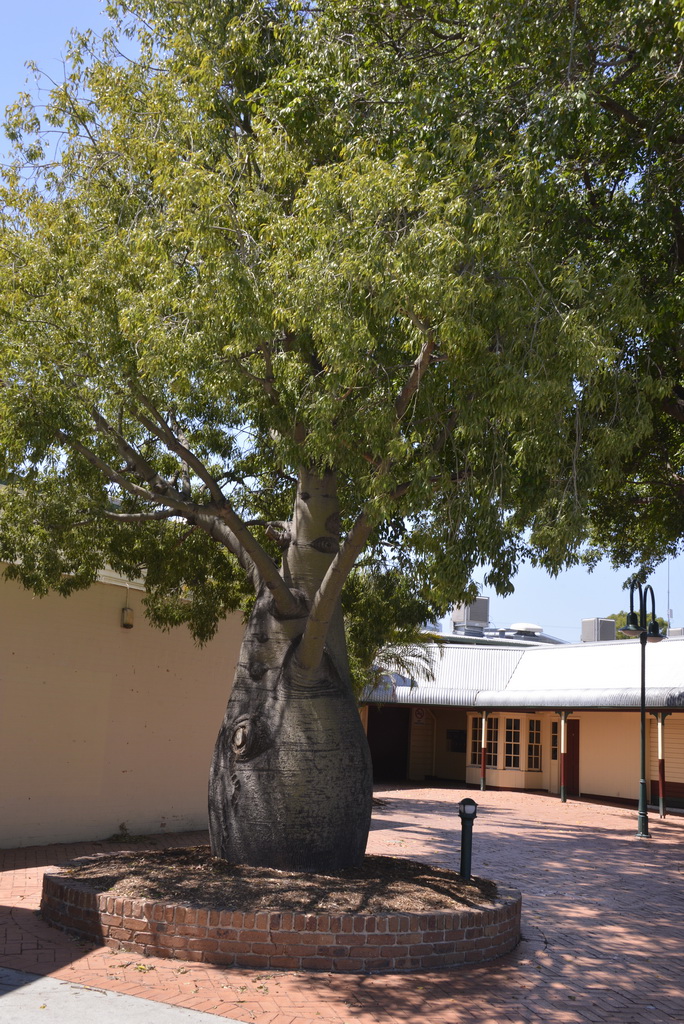
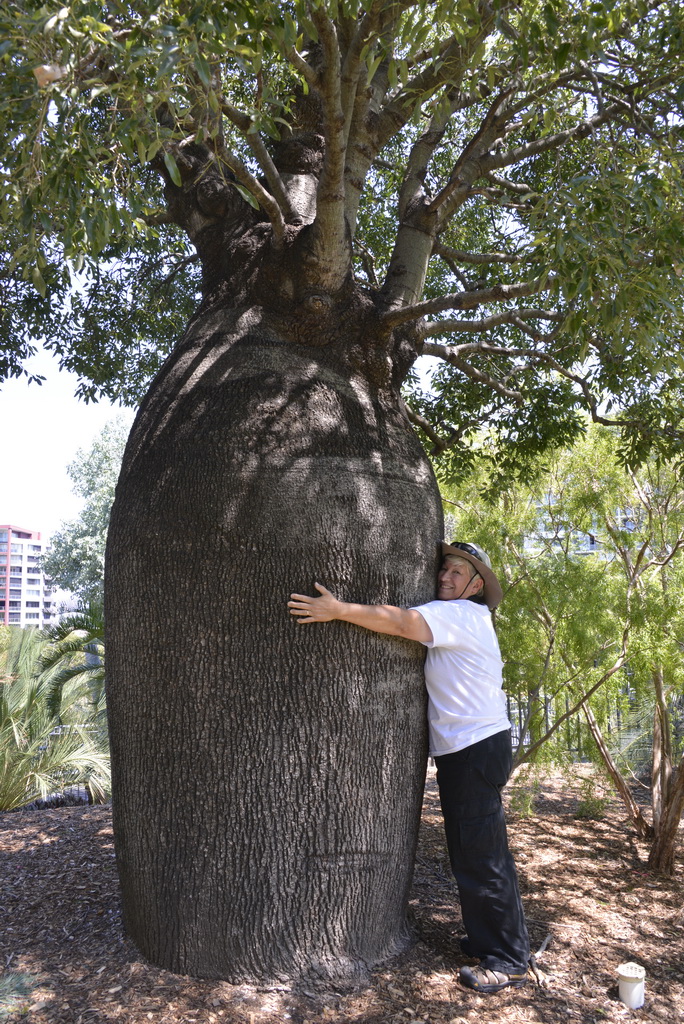
What would we like to do? I had bought Attila Kapitany’s excellent book on Australian Succulents and learned that Queensland boasted it’s own bottle tree – Brachychiton rupestris, the Queensland Bottle Tree. I had already seen and photographed caudiciforms in Brasil, Cuba, South Africa and Namibia so this would add nicely to my portfolio of fat trees. I can see that I’ll have to find time to take a look around Madagascar to add significantly to that portfolio!

Brachychiton rupestris

Brachychiton rupestris

Karen Zimmerman

Karen showing that her arms are too short to hug the whole tree

John showed us a number of trees that he had known for many years as the town evolved around them, including ‘Bottle Tree Ridge’ in the Roma Street Parkland, a green oasis right in the middle of downtown Brisbane’s glass and concrete mountains towering over ancient churches. From memory, they were all B. rupestris. There were also numerous large cycads dotted around the park.

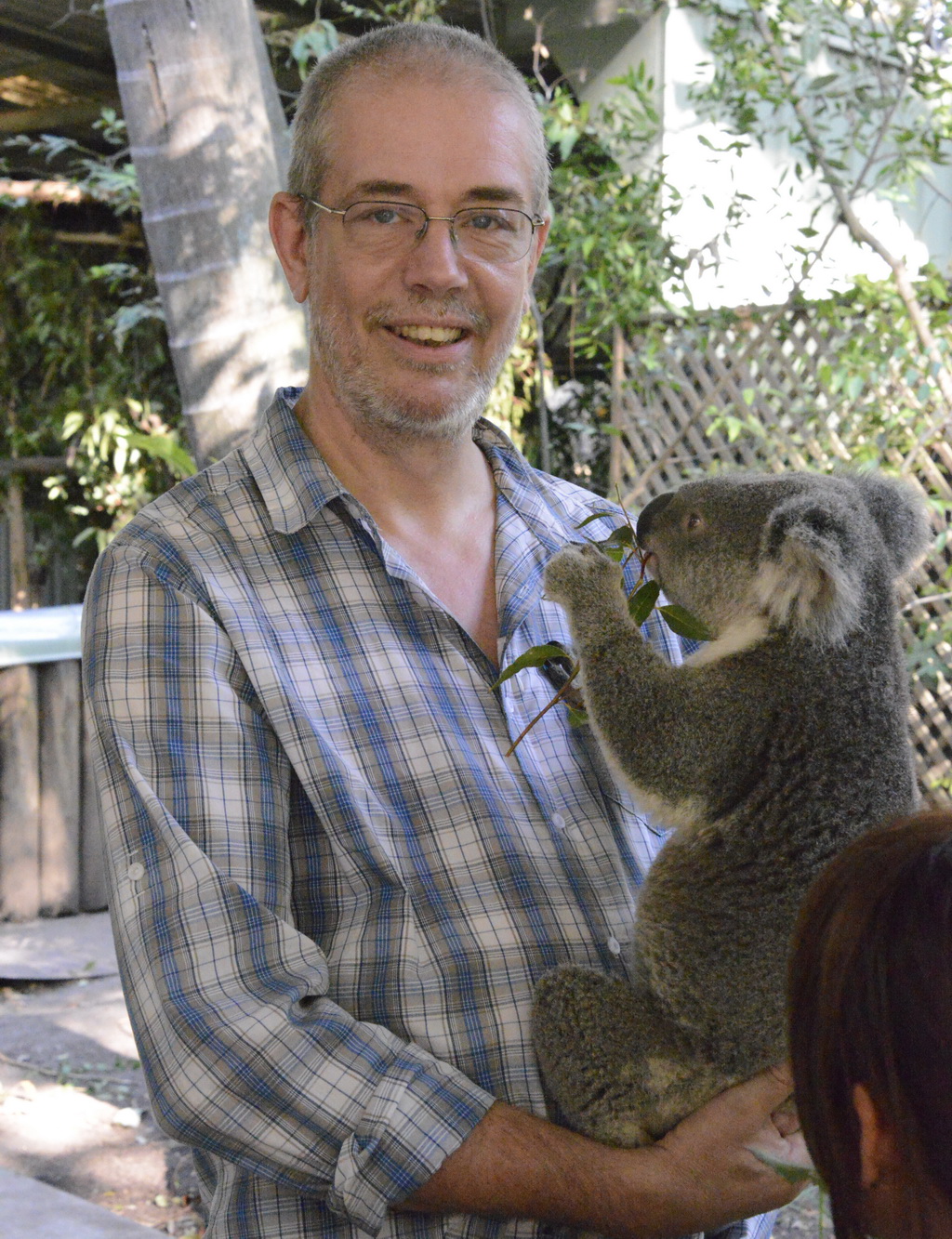
But Australia is probably better known for its unique fauna, and so we moved on to the Lone Pine Koala Sanctuary, to switch from hugging trees to hugging at least one of the 130 koalas that are safely living here

In case of confusion - I'm the cuddly one holding the koala!

In case of confusion – I’m the cuddly one holding the koala!

All the other stars were here too: duck-billed platypus, kangaroos, wallabies, wombats, Tasmanian devil and a range of flightless birds. Cameras snapped too often to include all pictures here.

A great day and only cacti in cultivation photographed.