Just another WordPress.com site

Archive for November, 2018

Tuesday, 20 November 2018 – Rio de Contas to Morro do Chapeu

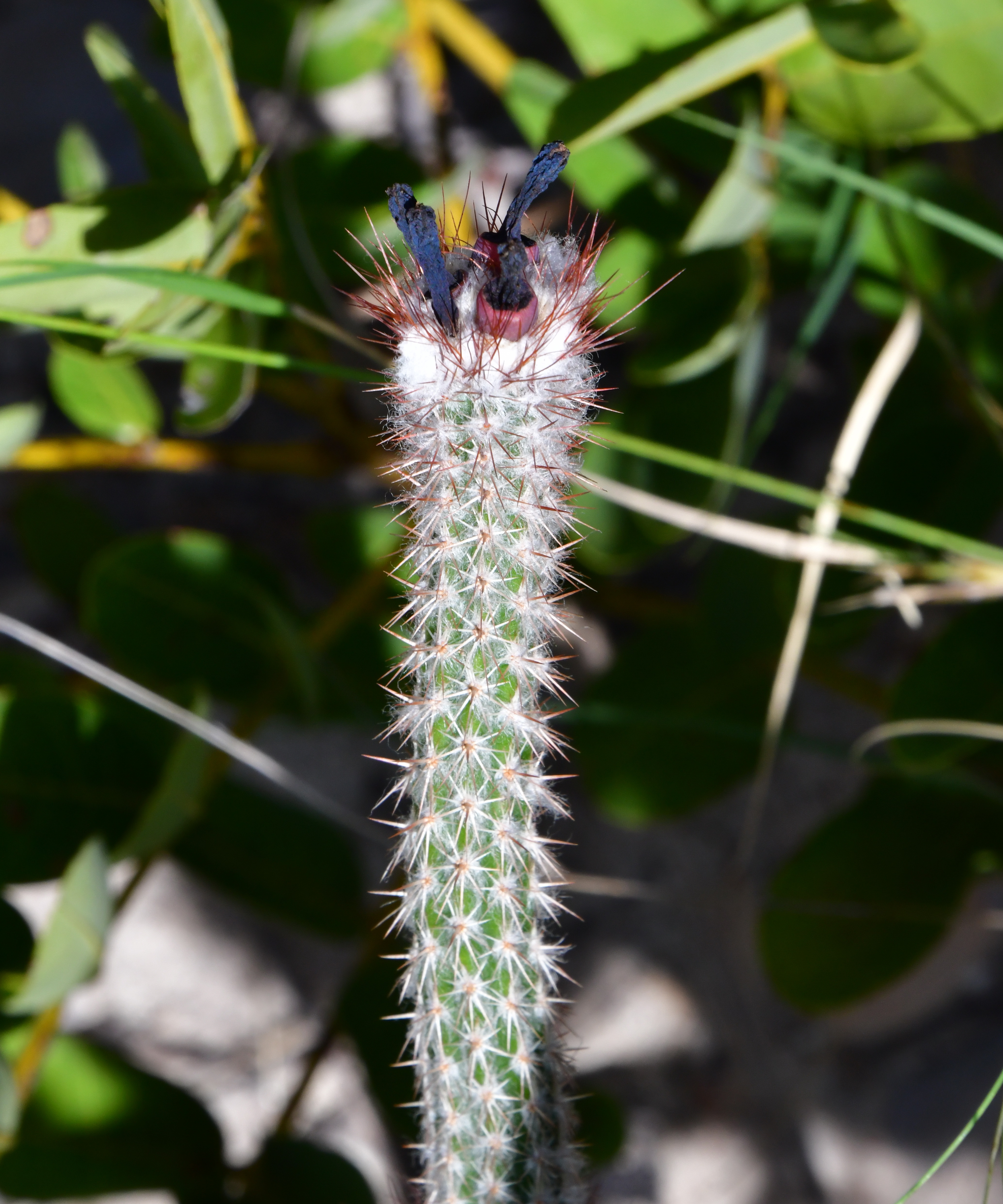
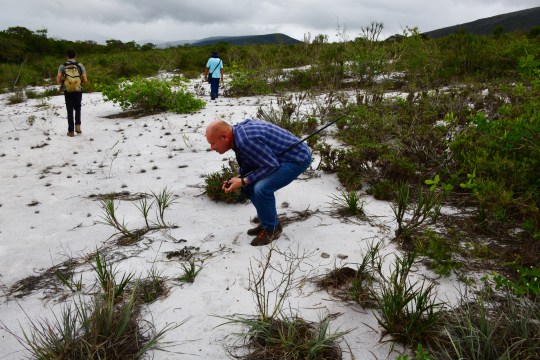
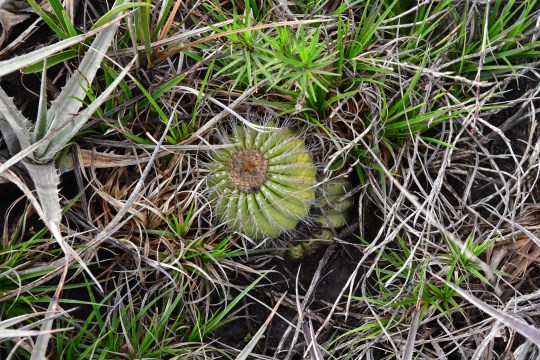
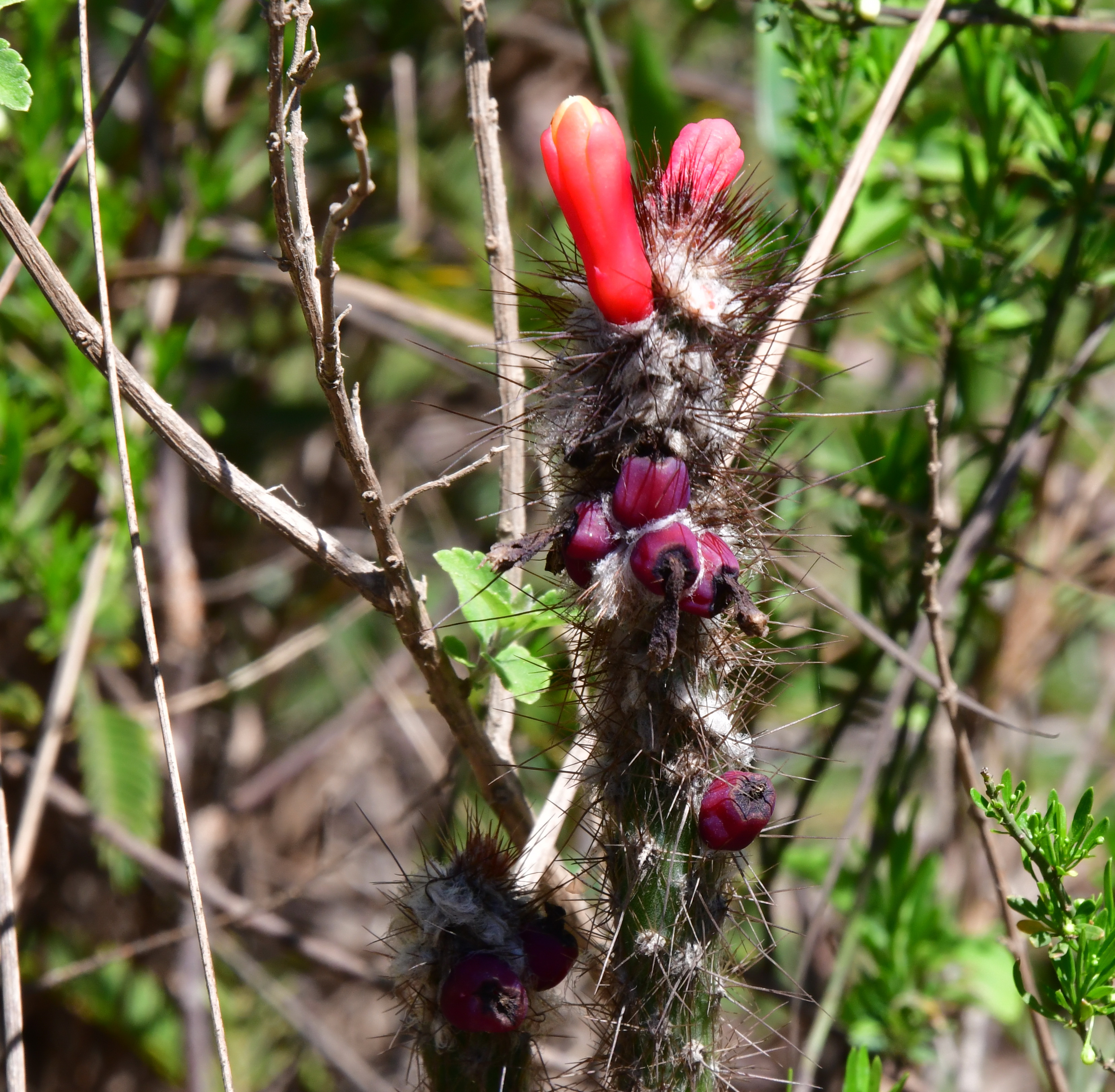
From memory, our first stop of the day was just north of Piatã,(S3694) to play in a huge sandpit (quarry, doubling up as a waste disposal site) to look for Marlon’s Micranthocereus hofackerianus. The plant was originally described by Pierre Braun as Arrojadoa multiflora subsp. hofackerianus. Marlon noticed that the plants had a lateral cephalium rather than the ring cephalium found in Arrojadoa. (\ (http://forum.bcss.org.uk/viewtopic.php?t=75226).
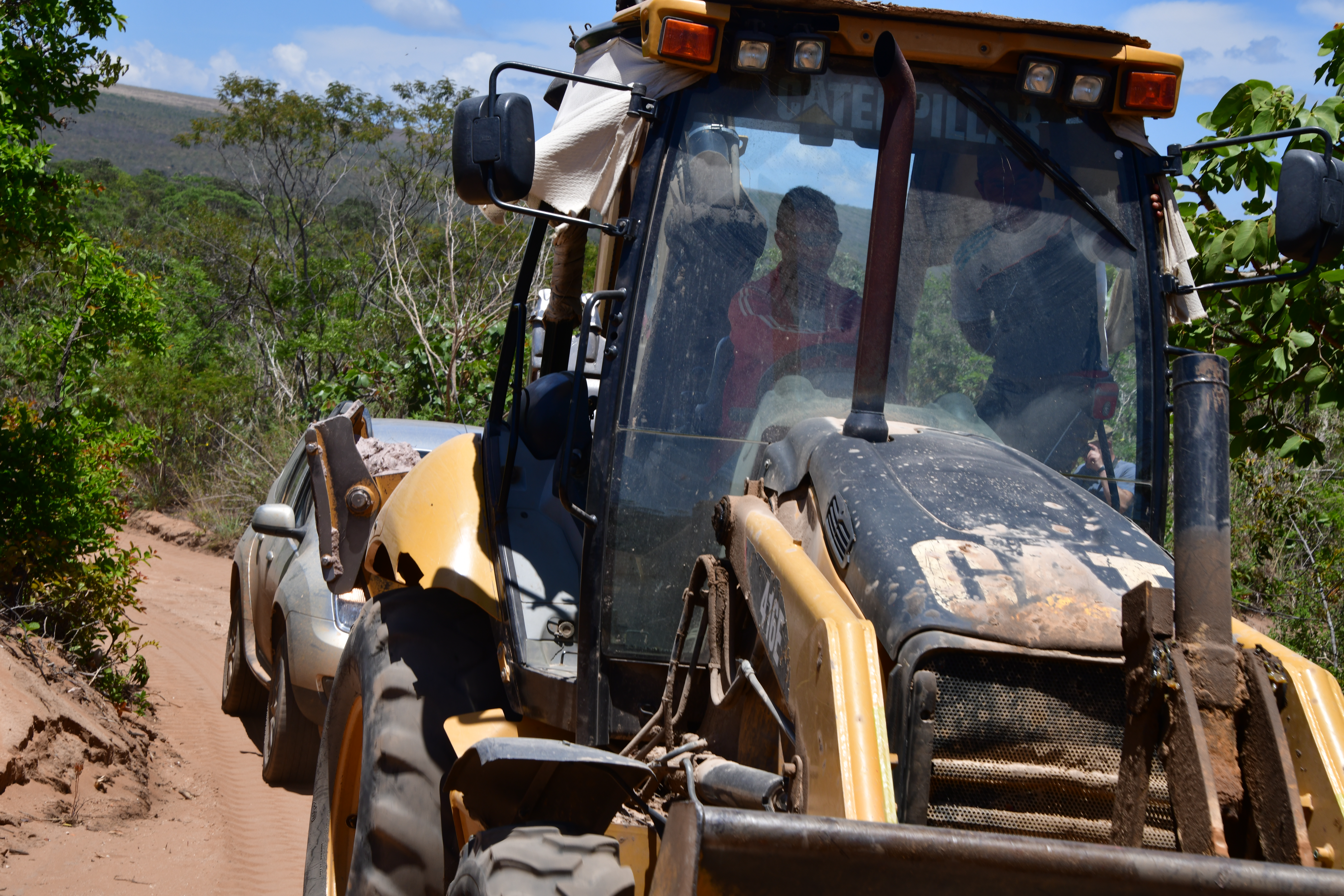
As I was searching for the plants between the tall grasses and low shrubs I heard shouts from the track that ran parallel to the one I had selected.  As I walked over, I saw the Dusters stuck in the soft sand. Marlon had already walked back to where we had seen workmen and equipment that might resolve our problem.  They had pulled out the Dusters in no time at all!
The heat was now my main issue. It was 37 C when we reached the stop near Seabra (S3695) where we were going to climb to the cross at the top of the hill to see Mircanthocereus streckeri, the one with a nice Mohican punk rocker cephalium. Alain and I said ‘no thanks’ and just strolled around the base of the hill. Marlon then shouted that he had found a nice spot where both M. purpureus, M. streckeri and a hybrid grew together, about 1/3 up the hill. I had already made it to the top in 2009 – how many medals do you need? One more!
I made my way back to the car and on the way found a very nice fence of Pereskia stems and in full flower!
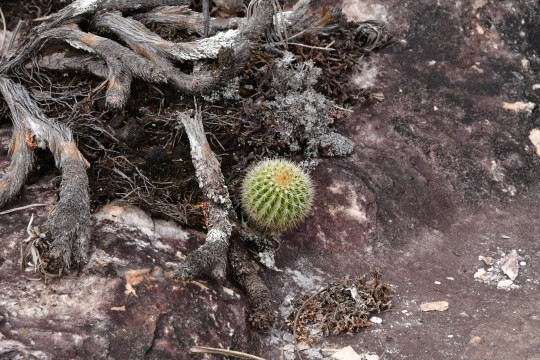
During our previous two visits to northeastern Brazil, Morro do Chapéu had become a firm favourite of mine. We stopped some 20 km west of town (S3696) along BA-052, at the same stop that we visited several times in 1999 and 2009. Originally, we christened this ‘the boomianus site’, because of the presence of a dense population of Discocactus zehntneri subsp. boomianus.
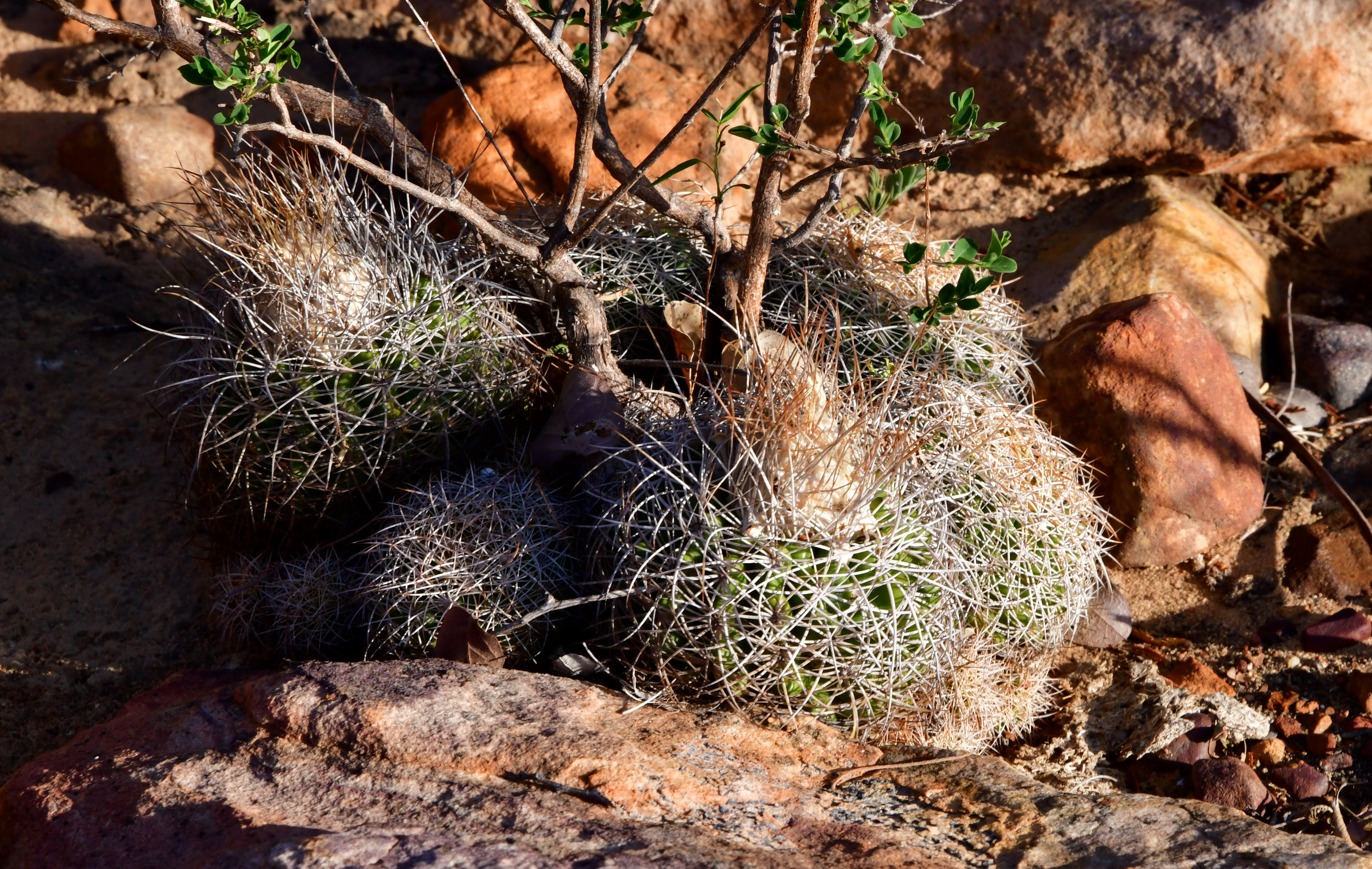
Since then, it has also been referred to as ‘Succulentum Maximus’ as I’ve photographed 17 different taxa of cacti and other succulent plants here. I’ll have to compare this to a spot along MEX1 in Baja California Norte where we found a similar number. On this occasion, the sun had passed its ‘best by’ moment for photography so we did not stay as long as on past occasions, but for the record, here are the taxa recorded from here over the past twenty years:
  • Arrojadoa rhodantha
  • Cereus albicaulis
  • Cereus jamacaru
  • Discocactus zehntneri subsp, boomianus
  • Dyckia sp.
  • Euphorbia phosphorea
  • Euphorbia sarcodes
  • Leocereus bahiensis
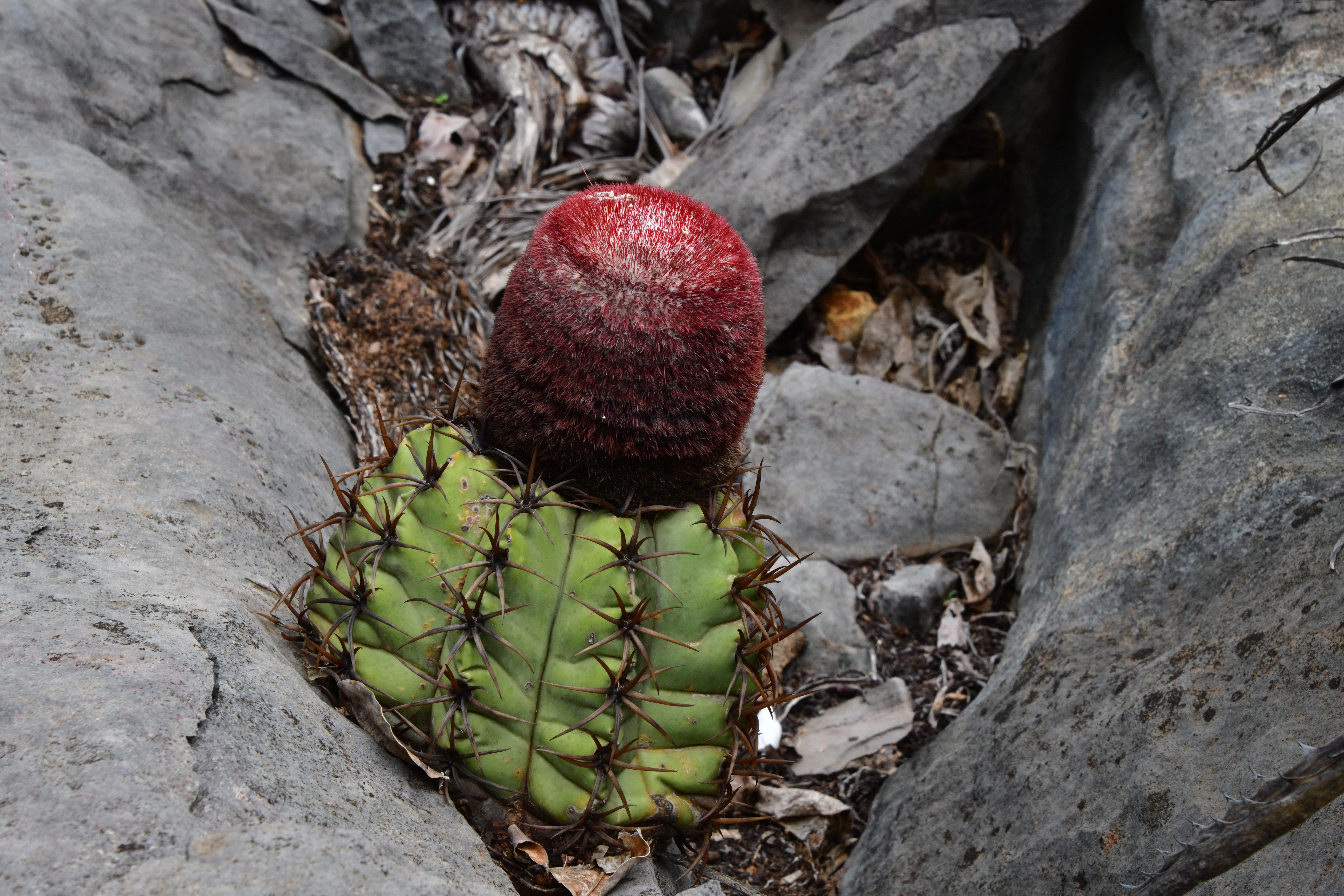
  • Melocactus albicephalus (= M. erythracanthus x M. glaucescens)
  • Melocactus concinnus
  • Melocactus ernestii f. erythracanthus
  • Melocactus glaucescens
  • Micranthocereus flaviflorus subsp. densiflorus
  • Pereskia bahiensis
  • Pilosocereus gounellei subsp. zehntneri
  • Pilosocereus pachycladus
  • Tacinga inamoena

In addition, another 20 taxa can be found around the town:

  • Arrojadoa penicillata
  • Discocactus bahiensis subsp. gracilis
  • Harrisia adsendens
  • Melocactus ferreophilus
  • M. pachyacanthus + subsp. viridis
  • M. paucispinus
  • M. zehntneri ‘douradoensis’
  • Micranthocereus polyanthus subsp. alvinii
  • M. purpureus
  • Pilosocereus caatingicola
  • P. glaucochrous
  • P. pachycladus
  • P. pentaedrophorus
  • P. tuberculatus
  • Pseudoacanthocereus brasiliensis
  • Stephanocereus leucostele
  • S. leutzelburgii
  • Tacinga funalis,
  • T. palmadora and T. werneri
It is no surprise that many of these plants are now protected. The Parque Estadual do Morro do Chapéu (Morro do Chapéu State Park) covers an area of 46,000 hectares and was established in
1973, but no action was taken to implement the park.
A team from the State University of Feira de Santana concluded a study for a new polygon to define the area of the park. As of 2011 problems had been caused by opening a road inside the park, hunting, deforestation, logging and complete lack of surveillance, particularly in the west of the park. Landowners had still not been compensated. In addition to the cacti, there is a wealth of orchids and bromeliads and big cats (cougars) that also benefit from the protection offered in the park.
In 2009 we stayed in the comfortable ecohotel Pousada  Ecologica das Bromelias and hoped to stay there again this time but they had increased their prices greatly. We had seen much more basic accommodation along the BA-052 so that, once again, we enjoyed a room each.
Marlon contacted Father Delmar and invited him to join us at the excellent Italian restaurant in town.  Delmar is a senior citizen who for many years had run an orphanage in town. He has a keen interest in nature with orchids in particular. In  1999, we first met him with a group of students staying in the same hotel. We were given a frosty welcome over breakfast. Marlon asked him if we had upset him or his students. ‘I don’t like Americans’ he said. Wrong! We are British and Dutch.  ‘You’ve come to steal our Orchids!’  Wrong! We’ve come to ‘steal’ your cacti, but only their pictures, we support conversation! He began to warm to us and told his students to be nice to us.

Monday, 19 November 2018 – Jacaraci to Rio de Contas

I’ve already mentioned how green and lush the NE of Brazil looked compared to previous visits. However, there was another change in the landscape: the appearance of wind turbines to create clean renewable energy. As you would expect in the fifth largest country in the world, the wind farms are some of the largest in number that I have seen on land – the seas around the English coast are rapidly approaching similar numbers. Fingers crossed that this positive development does not turn out to have some long term negative effects on nature.  For now, I have to admit that they can be quite photogenic.
Our last stop was for a new Arrojadoa that Marlon is in the process of describing and will call A. paradoxa. My personal disappointment again was that I didn’t make it. The rains had damaged the track, so we had to abandon the cars and walk the last bit, on a very uneven track,  continually ducking & diving to avoid overhanging tree branches, most with thorns. In no time at all, I was on my own as the others raced ahead at, for them, a slow walking pace. Then we reached the spot where I could hear them in the thick growth, but there was also a steep rockface. I shrugged my shoulders and started the long walk back to the car and 15 minutes later, they arrived back, worn out.
I wouldn’t have missed this trip for anything, but it is a learning experience! I think that I can still do them, but at my own pace. The heat is also a factor that saps my energy.
Tonight we stay in Rio de Contas where, in 1999, we helped Brian Bates celebrate his 53th birthday.
Some nice stops as usual, with some nice Pilosocereus
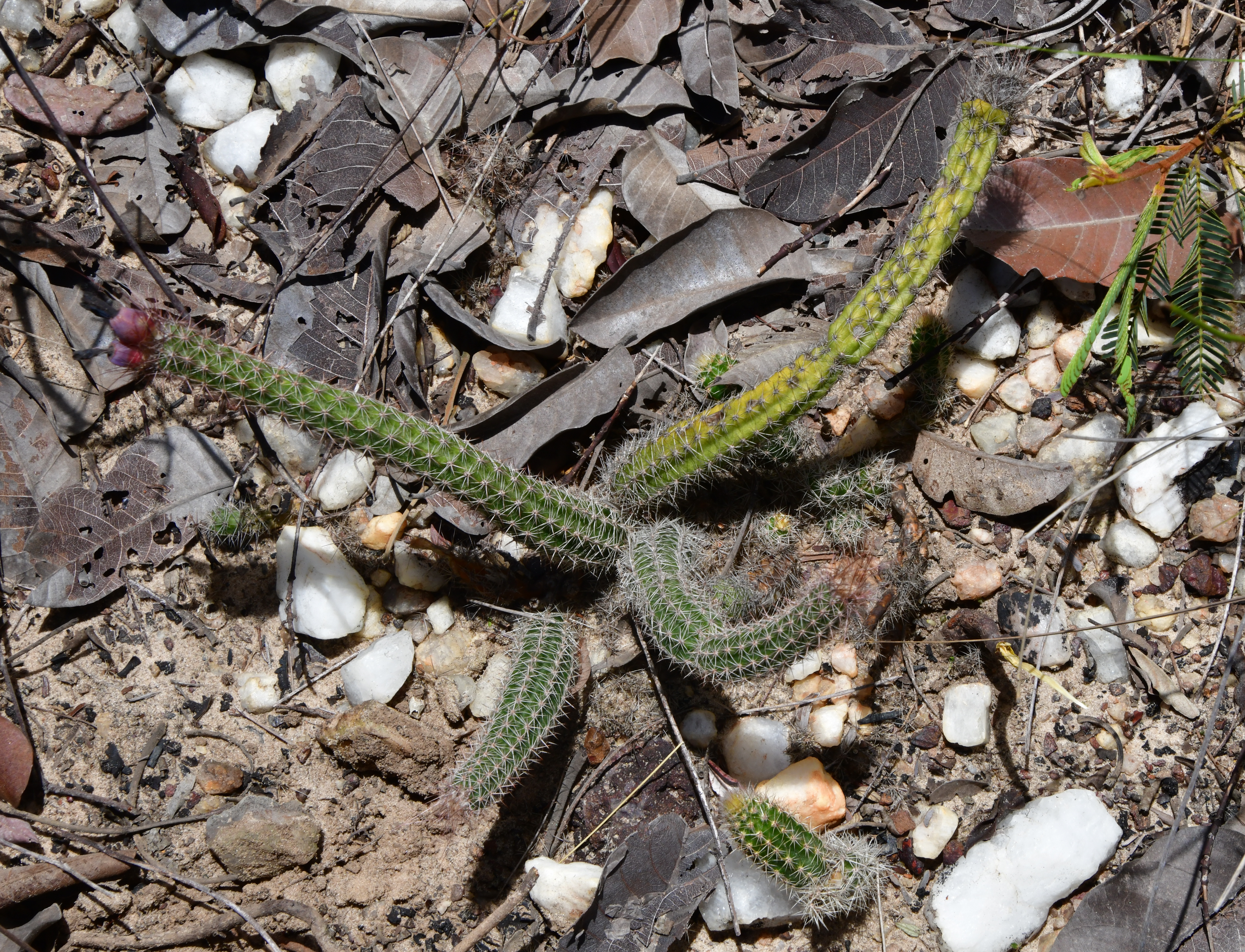
and with many different species of Arrojadoa, this time, A. multiflorum, obliging with flowers! Only one stop (S3686) where I decided that I’m not a mountain goat, but everyone has promised me copies of their best pics – non received yet!
We crossed a railway line several times, a reminder that Ritter was here half a century ago.(S3687)
It seems that the Caipirinhas here are stronger than usual as I needed help from Marlon and others to get back to my room safely. Good job that mine was one of the ground floor rooms! Thank you, whoever they were and see you at breakfast tomorrow morning – it will be interesting to see who shows up! I believe that we all did.

Sunday 18 November 2018 – Mato Verde to Jacaraci

Today was a day of shortstops centred on various Arrojadoa species as we crossed from the State of Minas Gerais into Bahia, Marlon’s birth State. Sadly, no flowers, so A. rhodantha and A. albiflora, at different locations, looked identical! And loads of Melocacti, but I had seen them all in 2009 when it had been drier, so less vegetation for them to hide behind.
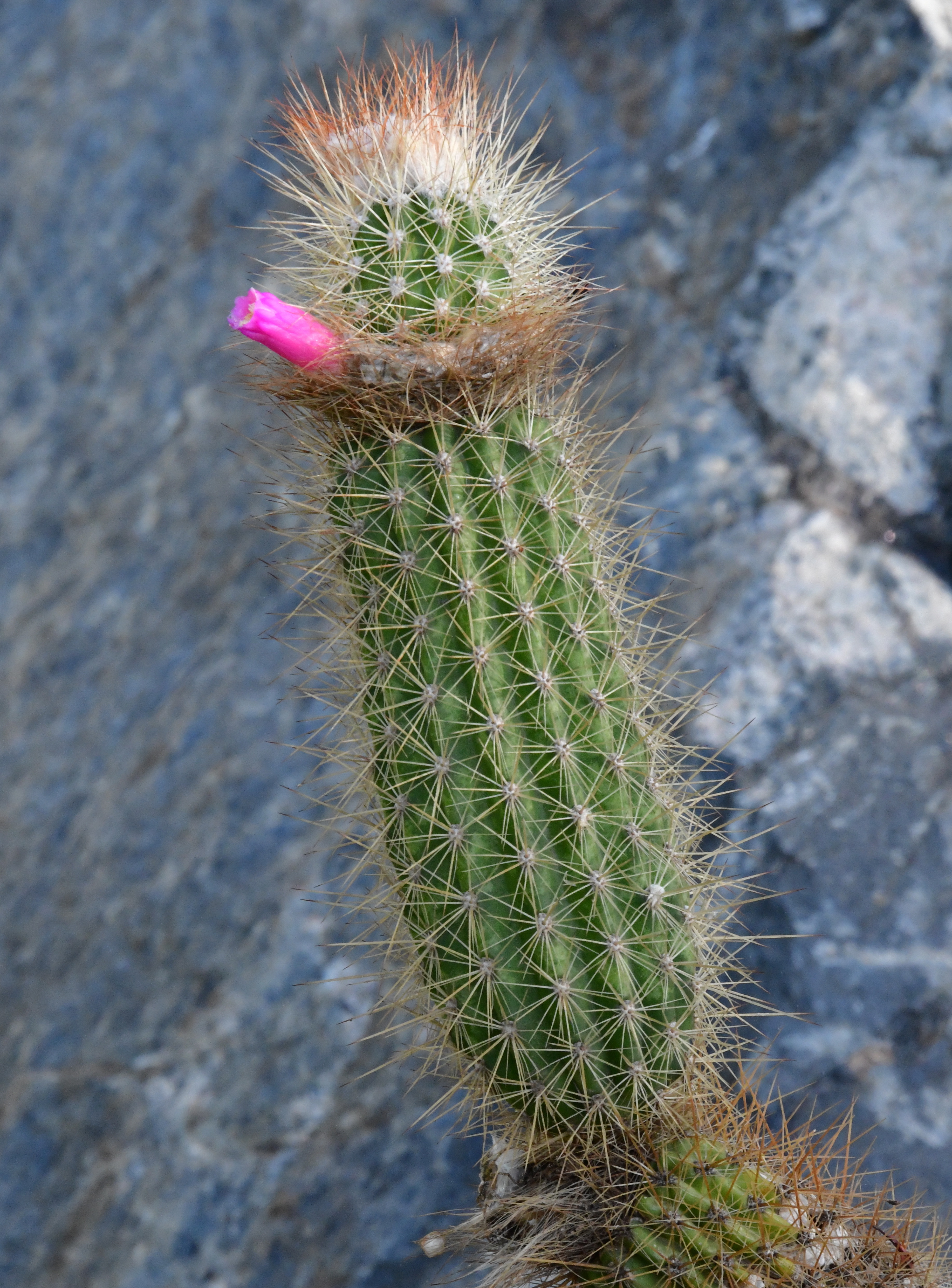
At S3680 we saw Arrojadoa rhodantha.  As regular readers of these Diaries will know, I am colourblind and I struggle with naming the flower colour of Arrojadoa flowers such as A. penicilata, A. rhodantha, A. marylaniae and the new species that we’ll see in days to come. To my eyes, these taxa have flower colours that to my eyes look the same, yet the literature uses different names for the (same?) colour. Here is Arrojadoa rhodantha in flower:
The New Cactus Lexicon call this flower colour for this taxon pinkish magenta or reddish-pink.
S3681 gave us Arrojadoa eriocaulis or A. dinae subsp. eriocaulis if you prefer but no flowers.
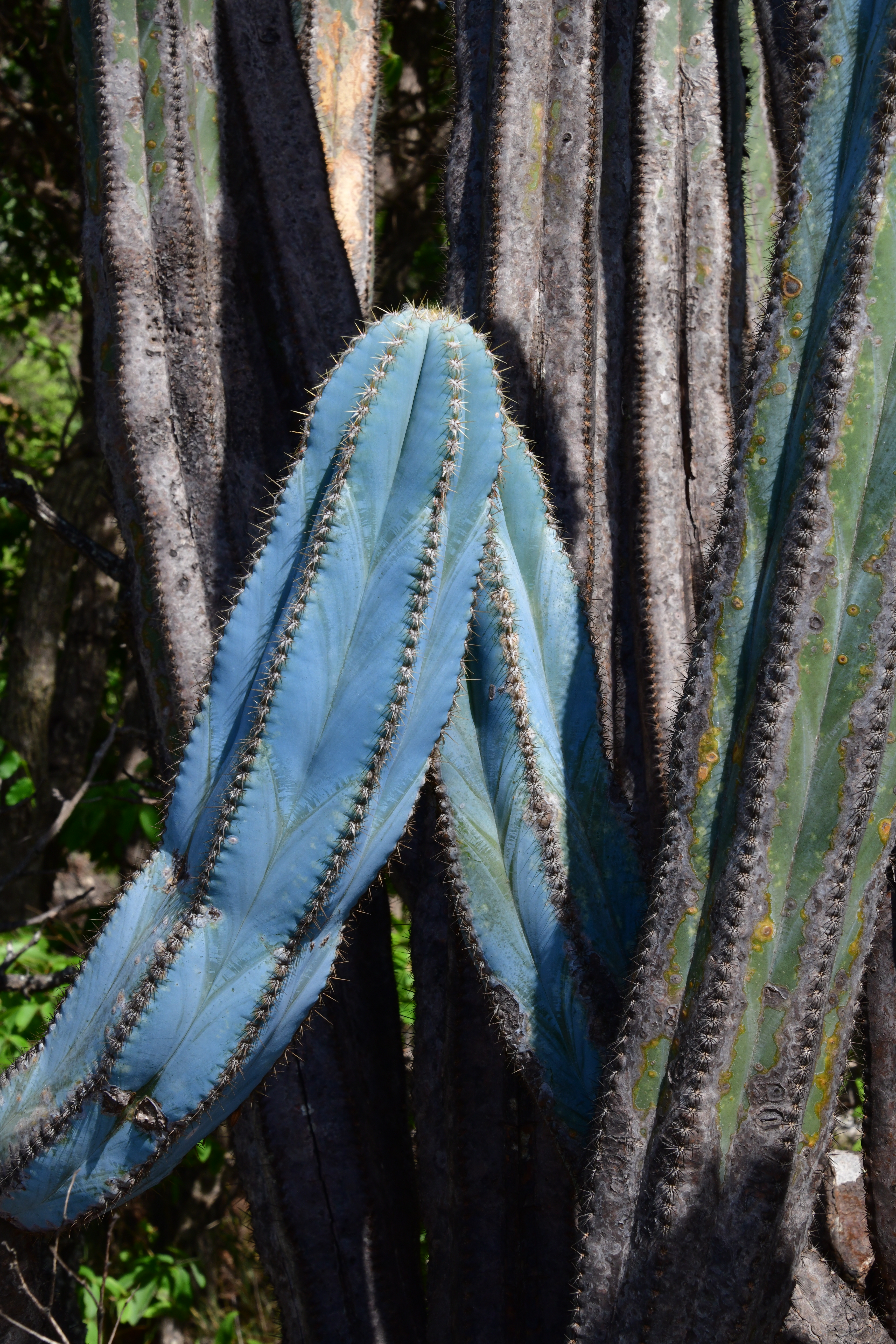
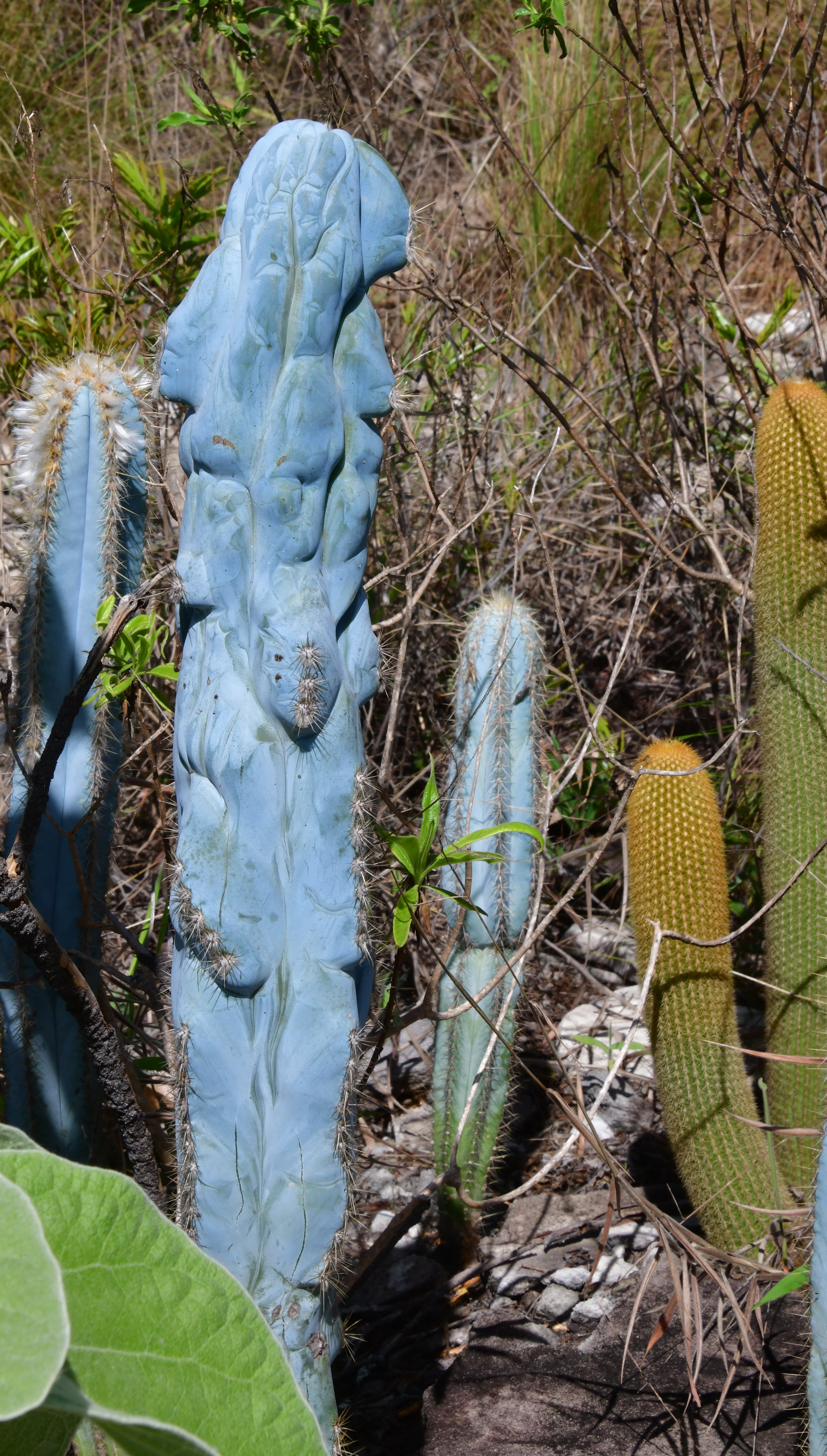
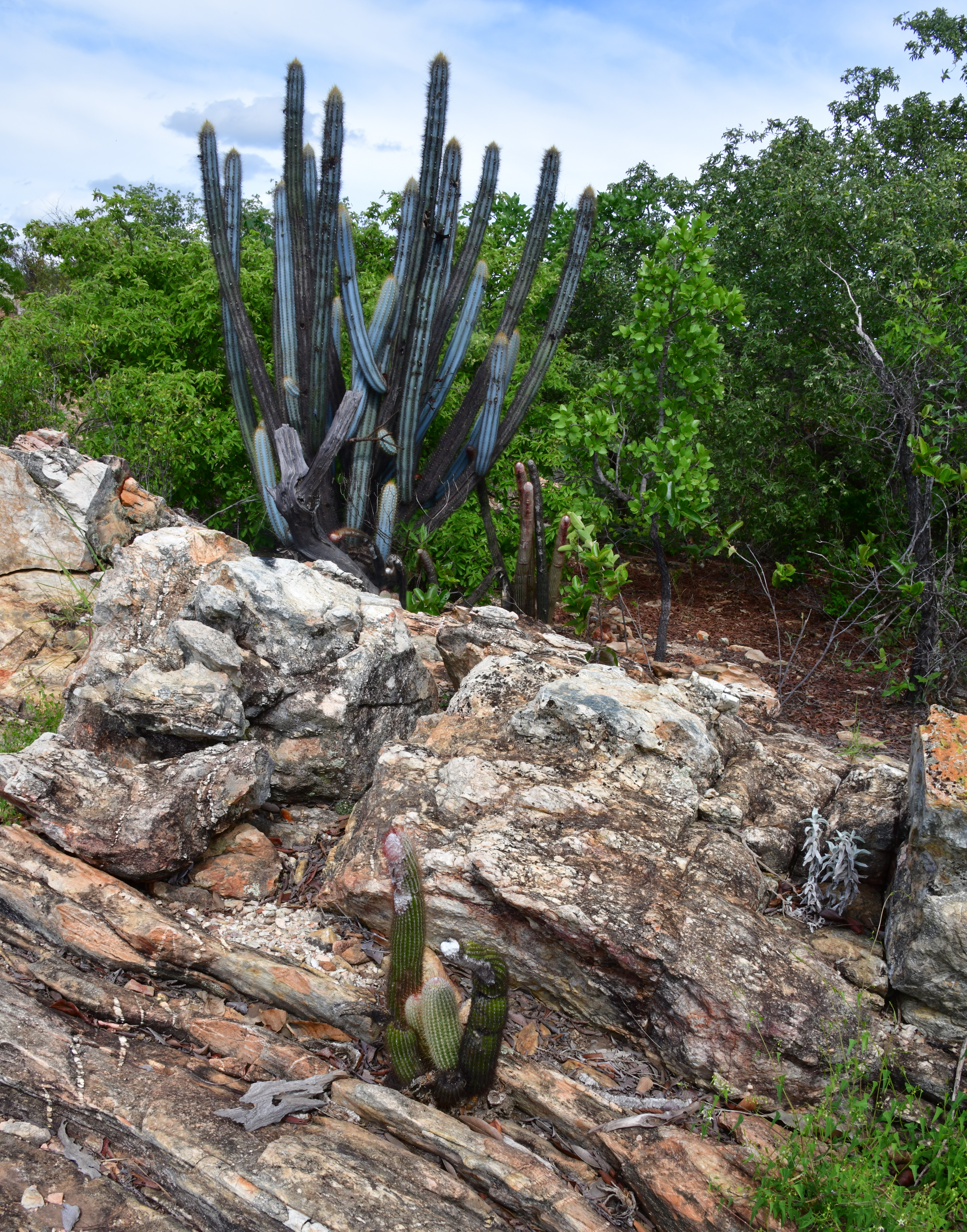
And the Pilosocereus are soooooo blue, it makes your eyes hurt!
S3682 again suggests Arrojadoa rhodantha, but again, no flowers.
Above: S3683 a good example of what causes the confusion between A. eriocaulis and A dinae.
.
 And to cap it all, we saw a monstrous Pilosocereus! Just the one!
In Jacaraci, every restaurant was closed due to it being Sunday. But there was a kiosk on the square opposite the hotel, that was open and where they sold a range of foods, so I had a number of sticks with barbequed meats and, a Chocolate pizza! Willing to give anything a try, it turned out to be a pizza base covered thickly in chocoladehagelslag! The chocolate was slowly melting into the base. It was actually very nice and, as it was much larger than the size indicated by the young lad serving, a bit too much, so the others helped me out. It has been added to my wishlist for pancake day!

Saturday 17 November 2018 – Jequitai to Mato Verde

It’s been very wet during the night, with others in the party complaining that they were kept awake by heavy storms. Not me! But the rain was gone by around 10 a.m.
The flooded roads (well, lots of surface water, anyway) are being expertly navigated by John & Alain with Jarred and me putting in token appearances as well.
I continue to struggle to keep up. We’re moving at a fast speed, certainly faster than most previous trips. There is lots to see, this is a huge country. Each morning, Marlon gave clear instructions of what we are doing when, but I don’t hear them and/or forget them!
The camera preserved the excellent plants that we saw. At S3675 Micranthocereus purpureus, Melocactus levitestatus, Quiabentia zehntneri (in flower), Pilosocereus sp. to name but a few grew on heavily eroded and therefore very sharp limestone.

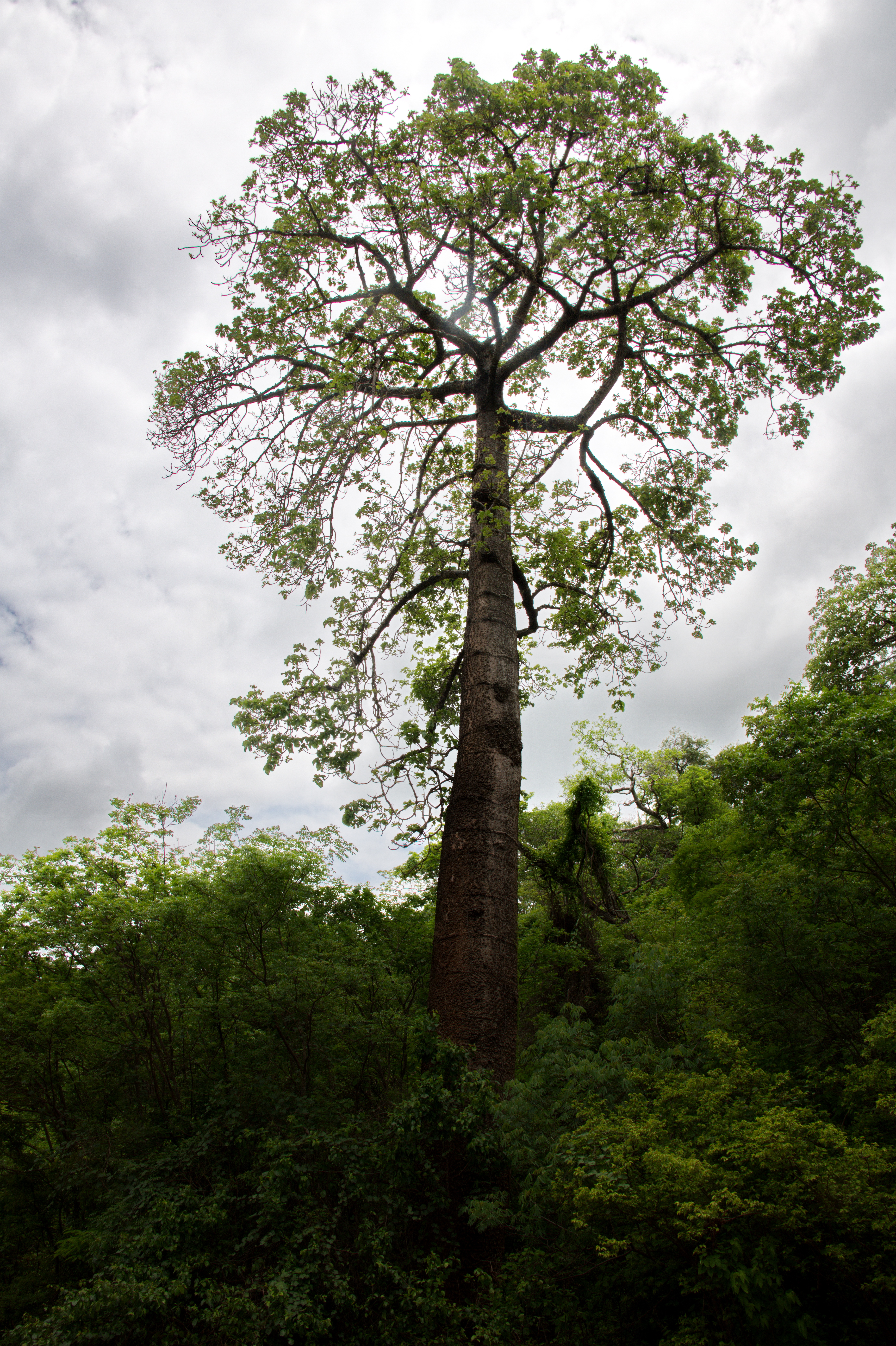
Farther along, Marlon made us stop (S3676) along the road and guided the party back to where he had seen a pachycaul tree. I decided to stay with the car, but slowly made my way along the roadside until the 300 mm end of my zoom lens caught a decent view of the tree:

Still farther along, there was a large tarantula spider crossing the track, providing a reason to stop (S3677). It challenged John’s shoed foot to a fight. John only wanted to provide an object for scale. In the end, it was a draw and the spider went its own way, into the shrub.

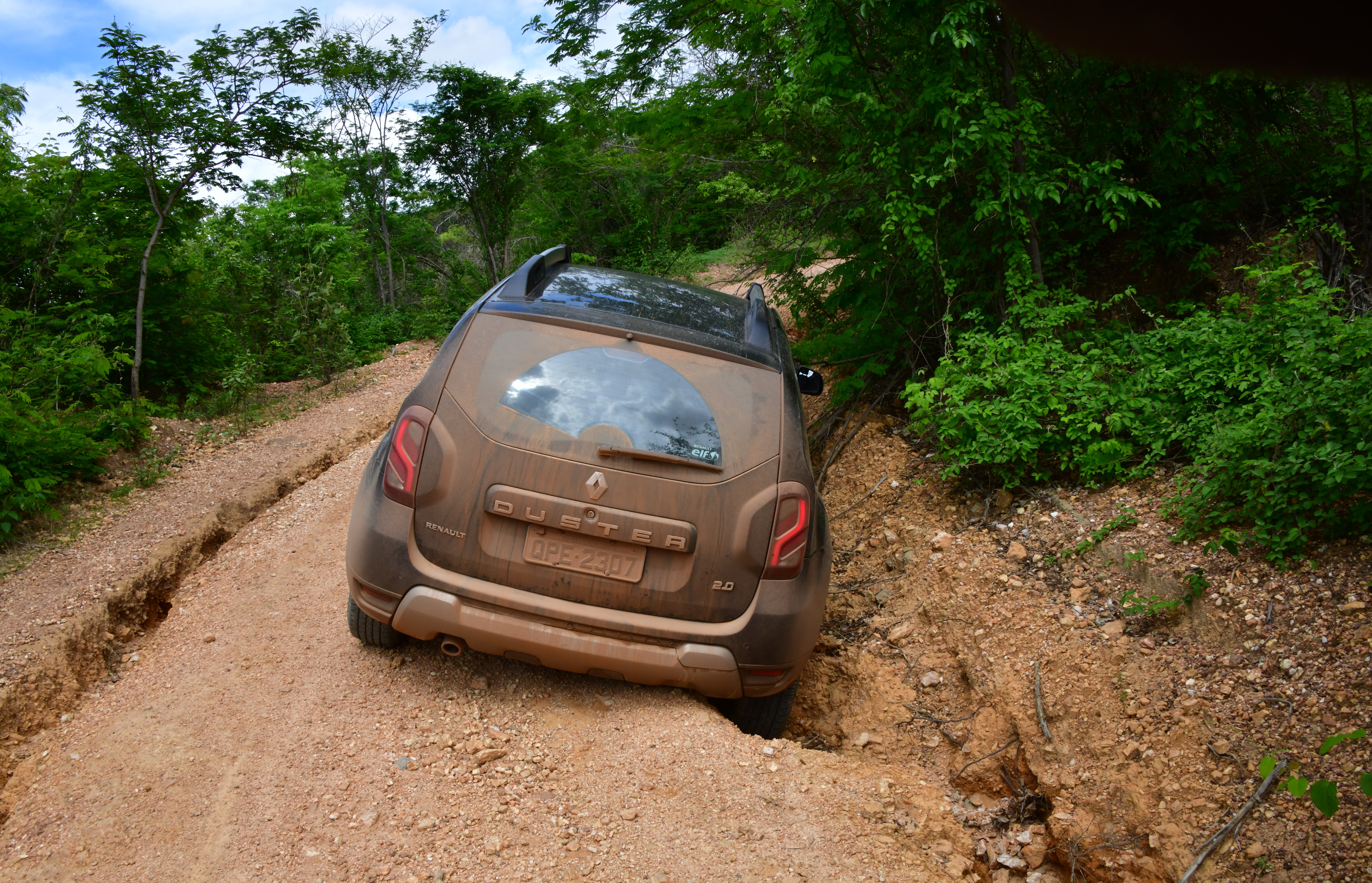
We had a bit of an accident today, driving on dirt roads (S3678). Suddenly the recent rains had created a deep gully and John, driving, found not enough room to the left or right of the gully, tried to straddle it but both front & back nearside wheels disappeared into it, turning the car halfway over. I was sitting in the back seat of the side that went in. I could not open the door and suitcases had come down from the back seats, fortunately without causing any damage or injury. That morning we had bought a tow rope as ‘you never know…’  The others lifted the car so that I could get out, then Alain pulled our car out with his, using our new tow rope. Amazingly, no damage, other than a scratch or two on the plastic bodywork.

The last stop of the day (S3679) was for Micranthocereus polyanthus at one of only three known locations of this plant in nature.
There is no obvious threat to the plants at this location, unless it is decided to widen the road or use the rocks that they grow on as aggregate for road building. They are rarely seen offered for sale in Europe as they require heating to 15 C and mature plants require quite a bit of pot room.

Friday 16 November 2018 – Diamantina to Jequitai

Before our two days away to Itamarandiba, we had asked the staff in our Diamantina hotel to do some washing for us and to have it ready for our departure this morning, after breakfast. I’m not quite sure what went wrong, but when we came to check out, the washing had not yet arrived back from the laundry. A couple of hours later and the problem was resolved, with some tuning to the still damp items needed as various items got mixed up.

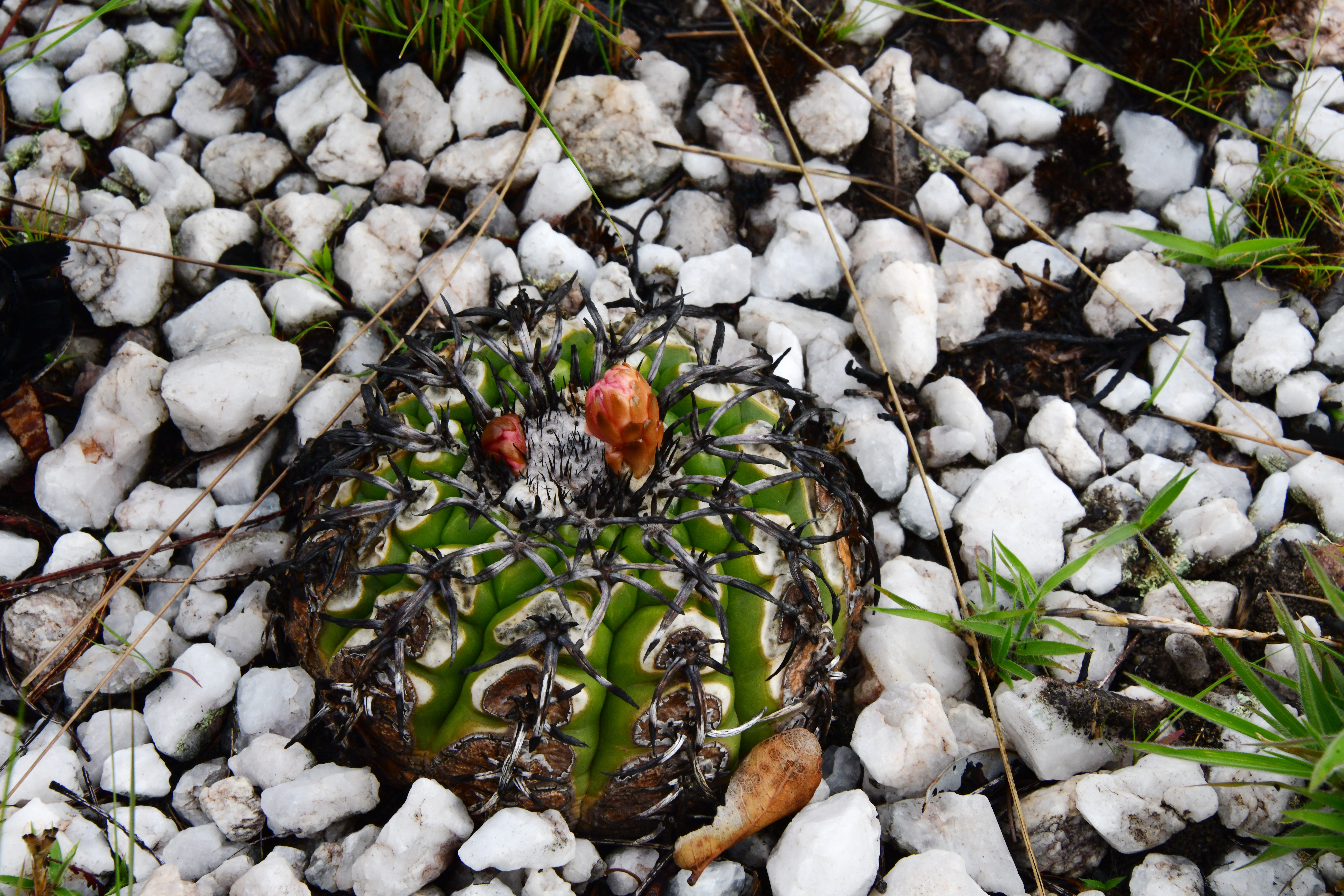
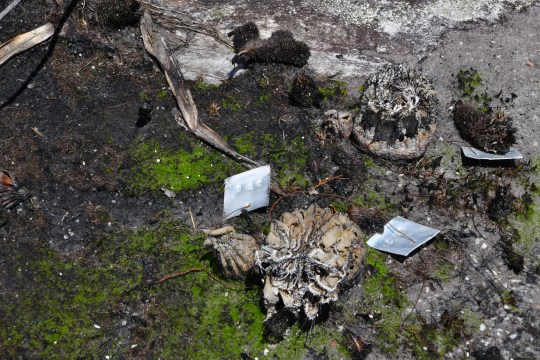
Our first stop (S3670) was for a Discocactus population that had survived a flash fire that had damaged the epidermis but had not killed the plants. In fact, the plant was in bud, ready to flower tonight. 
Next, we stopped to photograph Cipocereus bradei (S3671) that Graham Charles includes in his category ‘best left in habitat’ as the plants that he includes in his Brazil talks are quite marked, not worthy of including in a show back home. But the plants here were unmarked and would certainly look great on any show bench!

S3672 was for another Discocactus population (D. placentiformis?)

At S3673 we saw a moss-like plant that still has me confused:
At various presentations back in the UK and in Denmark wanted to help me out and suggested Llareta – Azorella compacta. And that is what I would have said if I was standing at over 3,000 m. altitude somewhere in the Andes. But we were in Minas Gerais, Brazil at around 700 m. So what is the plant? A moss?
S3674 was another Discocactus population. Still D. placentiformis? Marlon, help!!

Thursday 15 November – Itamarandiba to Diamantina

Today I have a fair idea of where we went, as I switched on the DashCam and recorded our travels today as seen through the front windscreen of our Duster. When we started in Belo Horizonte, the car was a nice dark brown (? – I’m colour blind!) colour, but by now it had taken on a nice ‘splashed in chocolate milk’ appearance. The result was 105 three minute movie clips i.e. 5 hours  and 15  minutes of bumping along country roads. The footage includes the time, speed and GPS coordinates of where we were. The majority of the time the movies are quite boring, only of interest if we should have an accident, to help determine who was to blame. I have included just two minutes in my current presentation, to give the audience an appreciation of what it is like to drive in Minas Gerais. The cacti certainly don’t stand to attention by the side of the road, but it is possible to pick out quartz patches on distant hills that look promising for exploration for cacti.

We managed to visit Uebelmannia gummifera subsp. meninensis in 1999, after a brief reception by the mayor and a second member of the city council, dressed in suits on a day that was much too hot for looking smart. In 2009, without Marlon, but working from his very detailed notes, Cliff and I managed to make our way to the ‘drive through’ site of U. gummifera.

This time, S3668 was a different location to the 1999 stop but is it the same spot as in 2009?

Marlon and Jared noted that there were several small plants, just some 5 cm across, that looked unwell. Marlon cut the plant in two and revealed that it was no more than a hollow shell. A borer beetle, or rather its larvae, had done their evil work. A similar phenomenon occurs in Sclerocactus in the USA and has been well studied and documented. It would be interesting if a Brazilian student could look into the details of what we observed here.

2018-11-15 12-01-06a

All the affected plants were of a similar size. Fortunately there were still a good number of fully grown plants around.

2018-11-15 12-23-35a

However, U. buiningii had always eluded me. It is the most remote location, from Diamantina, if you want to see the other members of the group as well. But here it is!! Found by Jared, found by looking over my shoulder (I was sitting on a rock!) and asking:’Is that one?’ You bet!

2018-11-15 15-04-08a

I understand that three more plants were found at the other end of the site. We just need to find Uebelmannia horrida to complete the set, planned for the end of the trip. Make no mistake! Although we were very pleased to have seen just a few plants, this is a critically endangered species, unless there are more locations, less accessible, yet to be found.

We headed back to Itamarandiba as our Dusters were low on fuel. As we approached the town Marlon received a message that one of us had left a bag behind. I had not noticed it yet, but the bag was mine. That is the trouble, with luggage split over two cars; my luggage includes a soft IKEA bag, mainly containing cables and chargers that I can either squeeze into my main luggage suitcase or use as ‘filler’ in the boot of whatever of our cars is handy. On this occasion my Nikon D750 was also in the bag, so that the honesty of the staff in the hotel prevented quite a financial loss.


Wednesday 14 November – Diamantina to Itamarandiba and back

We had entrusted our dirty washing to hotel reception for collection the following morning.

  • S3663 – Le Do Anjo

2018-11-14 12-35-10
Chris Hayes showing off his skiing skills. But it’s quartz, not snow, Chris!

  • S3664 – Eucalyptus Charcoal Ovens
    2018-11-14 14-09-45
  • S3665 – Uebelmannia gummifera var. rubra

2018-11-14 14-58-14a

  • S3666 – Uebelmannia meninensis
    2018-11-14 17-17-13a
  • S3667 – Eriocaulaceae sp.

2018-11-14 19-24-01a


Tuesday, 13 November 2018 – Around Diamantina, to Datas

Yesterday’s fall at the first stop of the trip had left me questioning if I was becoming too old for these sort of trips. But these thoughts blended with trying to work out why I was feeling unusually tired. Marlon had suggested that November was not the best time of year to travel in Minas Gerais – it was the hottest time of year and the start of the rainy season, creating high humidity. Marlon suggested that I was dehydrated and needed to drink more bottled water. That was easy, with plenty of bottles bought at the local supermarket before setting out. I had insisted on the dates because in 2009 we had travelled here at exactly the same time without any problems. But then, the weather can be notoriously unpredictable.

Today I took images at:

  •  S3658 – Uebelmannia pectinifera subsp. flavispina

2018-11-13 11-37-44 - 0009S3658: Uebelmannia pectinifera subsp. flavispina
and Cipocereus minensis, Dyckia sp. Orchidaceae sp. Tillandsia sp and Velloziaceae sp.

  •  S3659Uebelmannia pectinifera subsp. flavispina, Bromeliad sp. C. minensis, Eriocaulaceae sp (Everlasting flower), Lichen, Orchidaceaa sp and Velloziaceae.
    2018-11-13 12-36-33 - 0042

There is often a distinct difference between the juvenile and adult spination of Uebelmannia to the point that they look like ‘different’ species. When grafted, the juvenile spination persists longer than in nature. This is the case for the plant described as Uebelmannia pectinifera var. eriocactoides but its discoverer has admitted to me that in habitat, larger plants look like ‘normal’ adult U. pectinifera. Plants offered for sale are always grafted.

  • S3660 – Datas
    Images taken are of the typical colonial architecture. No plants photographed.
  • S3661 – Uebelmannia pectinifera subsp. flavispina
    2018-11-13 17-15-04 - 0116
    This population contained tagged plants as part of a population study. Metal tags were tied to the plants by a metal wire. All tagged plants had died. A few plants were missed by the taggers and were healthy. I suspect that heavy rains can turn the puddles into electrical batteries rather like experiments I remember from school. I hope that the students recorded and reported their results, so that others can learn from this and avoid a repeat. I have seen other population studies (e.g. Pediocactus bradei near Navajo Bridge, AZ), where the tag is secured into the soil by a nail, but neither metal objects touch the plants. On a recent visit to that location some of the discs were made of black plastic. There was no evidence of plants being affected by the tagging.
  • S3661 – night out in Diamantina, no plants photographed
    2018-11-13 21-30-18
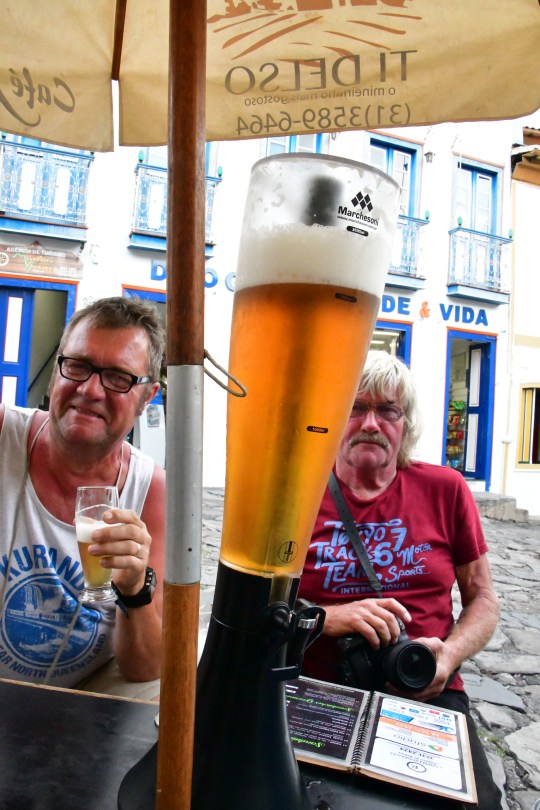
    Alain Buffel and John Child used as scale for the 3.5 litre beer glass. I should say that the six of us shared two such glasses! There was no space on the table for one each!!

Monday, 12 November, 2018

Around Diamantina: Mendanha to Inhai

Memories of today’s Diary pages – or for most of them – are a little bit hazy so I am relying on Marlon’s notes – in Portuguese and Google Translate – and Alain’s Stop list, received on 11 June 2020! Marlon took a month off from his regular business of providing garden plants and services to local customers. He was taking numerous mobile phone messages from client’s chasing orders, so he needs to catch up.

We’re based in Diamantina for few days, ideally situated in the middle of Uebelmannia country, specifically for members of the U. pectinifera complex. I was first here in 1999, with the late Keith Grantham, Brian Bates to meet up with Rudolf Schulz and join Rudolf and Marlon in explorations for their 2000 book ‘Uebelmannia and their Environment’, our first Uebelmanniathon.

Today’s program was similar to the one for Monday, 16 November 2009 when I travelled with Cliff Thompson from Waterlooville, UK. That time, Marlon was unable to join us for the Minas Gerais stretch of our trip, so  that we relied on Google Translate for our communications in Portuguese. Today’s stop list records eight stops:

  • S3653 near Mendanha where we saw and photographed Cipocereus minensis and Velloziaceae sp., This is the TL for U. pectinifera that I missed seeing, due to a fall.

    It had rained overnight. The rocks were covered in a cyanobacterium that gave the rocks a black appearance. This cover was in turn covered in Algae and Lichen making the surface rather slippery. Also, many of them were loose and so, within minutes I made my first tumble, grazing my head, unprotected following Angie’s dramatically short haircut, a #0, both arms and a cut over by kneecap. The bleeding was not too bad, although it did seem to attract a large number of mosquitoes. But worst of all, the tumble seemed to have damaged my self confidence, so that although I had already started the day as the slowest thing on two legs, I was now being overtaken by snails. Hummingbirds flew by my face, but I was too slow to get their picture.S3654 near Mendanha, provided Epiphyllum phyllanthus, Opuntia sp and Tillandsia sp
  • S3655 – Along the Rio Jequitinhonha, around the bridge at HU 850 we saw Cipocereus minensis, Dyckia sp. and Velloziaceae sp.
  • S3656 along the track to Inhai we saw wild pineapple (Ananas sp), Brasilicereus markgrafii, C. minensis, Discocactus placentiformis and a small mushroomS3657 refreshments at Inhai.


Sunday, 11 November, 2018 – Day 1

It’s not just cacti & other succulent plants that we enjoy on our trips, but also a bit of adventure. Well, we have had enough of the latter as I sit on an airport bench in Sao Paola Airport in Brazil where we missed our connecting flight to Belo Horizonte by a whisker due to the extra crowds trying to get into the country for tomorrow’s F1 Grand Prix which is held at… Sao Paolo! They seem to be the Max Verstappen fan club, with some 4 Jumbos of Dutch and Belgian fans, arriving at the same time that we did.

Our arrival also coincided with Brazil turning its clocks to summer time so it seems that we lost an hour …. off the 1:35 hrs that we had for our transfer.

This is the largest airport in Latin America but not the most clearly laid out one.

We, (Alain, John Child, Chris Hayes and I) were all very tired, having got up at the excellent Premier Inn at T4 – so new that my SatNav did not know about it and took us to the one at T5. We could have taken a courtesy bus that was some walk away, but in the end, looking at the pile of luggage, it seemed easier to call a taxi, who, for £16 was very happy to take us ’round the corner’.

But I guess it all started a bit earlier when Chris arrived and we packed my car with the cases etc. When we were ready to go, I could not find my car key. Searched my place, #12, – Nothing. Then did the same at Angie’s (#10) where some of the packing was done. Nothing! Went through my many pockets, twice, nothing! Started going through my luggage and yes, there was the key! 3 layers down in the rucksack! I’m getting old!

As a result, we missed getting Marlon his requested jar of marmite.

Angie had a rotten journey back home with a pile-up on the M3/A303 on a dark and wet night.

So, up at 03:00, walk to T4, farther than expected with our luggage! Smooth flight to Paris -CdG and quickly to the departure gate at the other side of the airport, but everything went well. Then 12 hours in the air on seats that we failed to pre-select so we had the middle seat in the middle block of seats, needing to climb over fellow passengers to visit the toilet. I’m getting too old for this.

Then I fell behind the others as, already late from the struggle through immigration, I was sent the wrong way through security, who wanted to Xray everything again, yes, even the luggage destined for the hold, so yes, they confiscated the nice Swiss Army knife that Angie & I bought at the Waterfalls at Schaffhausen during our March holiday. It was the nice du-lux version with wooden handle and 100 Euro price tag! Looks like we have to visit the shop again!

We’re unsure when Air France open their office so that we can sort our tickets out.

Now let’s see if I am still in credit with the wifi!