Just another WordPress.com site

Archive for the ‘Chile 2010’ Category

Monday 17 March 2014 – Saltillo to Parras

I could not leave Saltillo quickly enough – unbelievable how fast humans had destroyed this recently still mostly quiet and beautiful part of the world. It seems as though the authorities had decided to sacrifice this valley to create economic wealth as there was enough nature near by that was so large and unspoiled that it would serve its purpose.

Of course, cactus explorers are notoriously lazy, so that if you plot the historic type localities and recent field number listings on a map, you end up mostly with the road map of that particular area. We are no different. But as the present situation here now shows, these are also the first places to be sacrificed for human economic development.

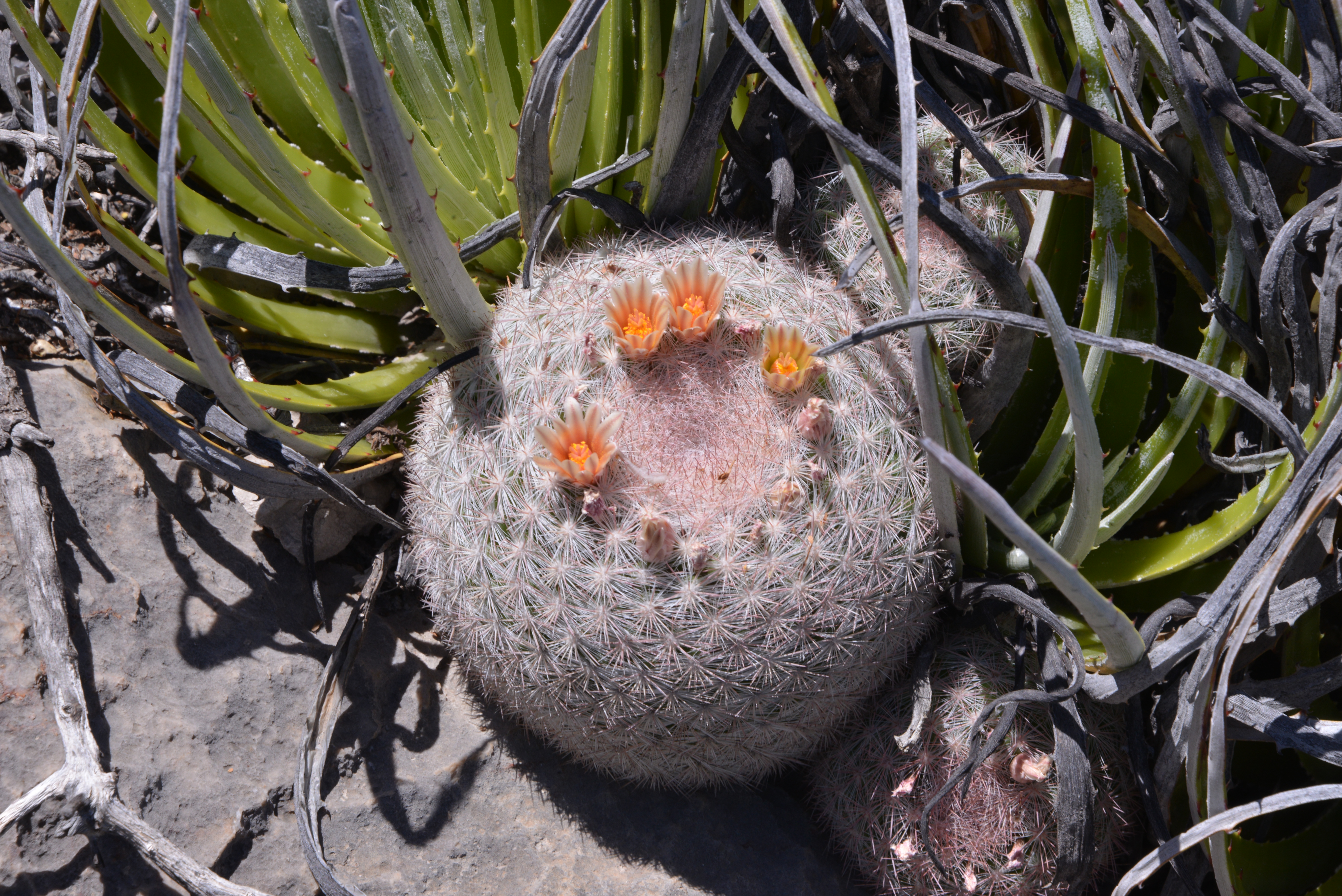
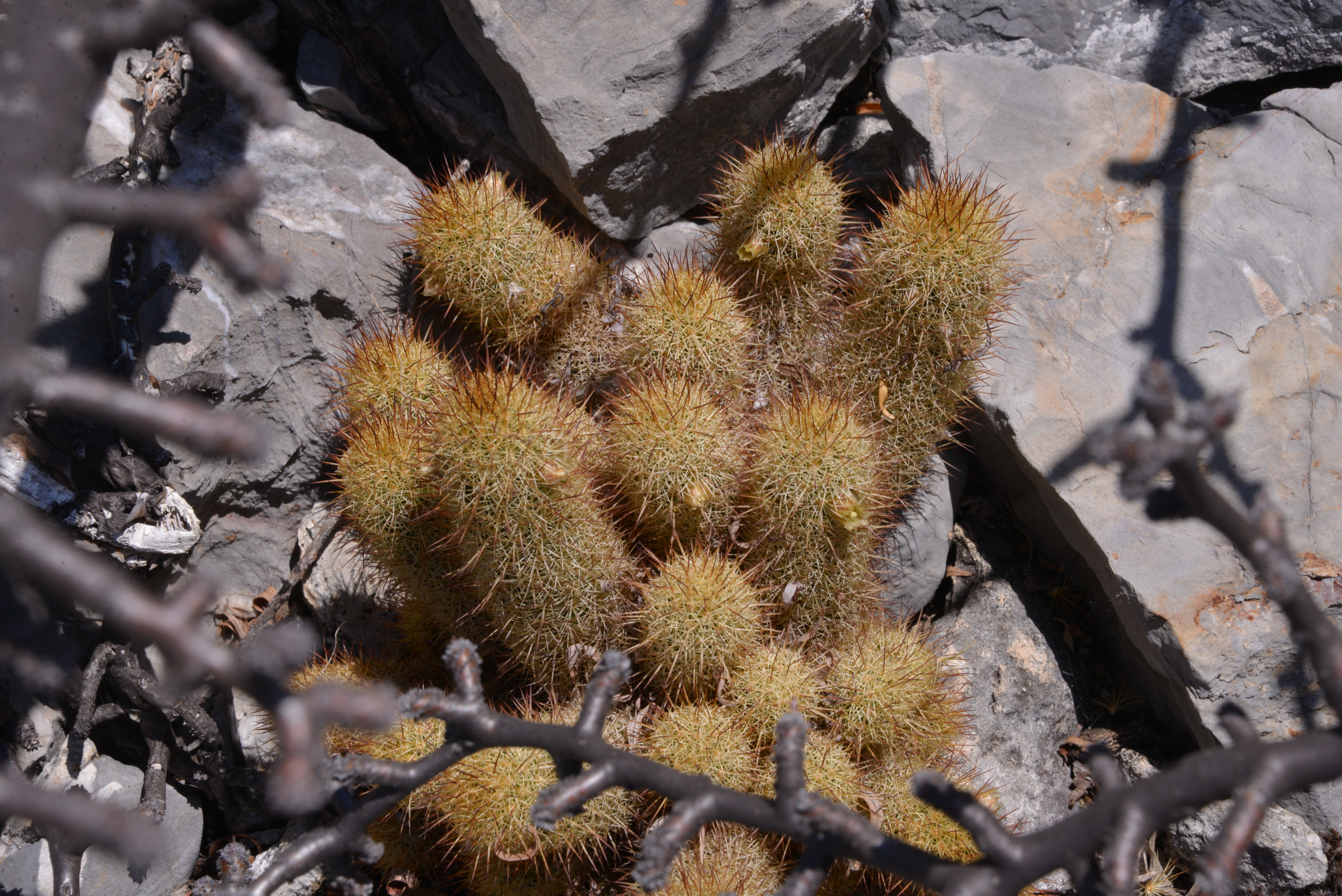
Back to the cacti. First stop of the day was S3072, in the middle of nowhere with a small uninhabited small holding to the south, along MEX 40, the Saltillo – Torreon road, near Rinco Colorado. As this was a Thelothon, it was good to see Thelocactus bicolor with buds about to burst into flower. And again there were lots of other cacti to admire. Just an initial list to whet the appetite, with more details to follow once we had a chance to consult literature back home, in the order that they were photographed: Opuntia rufida, Cylindropunia leptocaulis, still trying to staple our trousers to our legs, or in Cliff-in-shorts’ case, to use his legs as a pin cushion, Echinocactus horizonthalonius – I don’t recall having seen them so full of water before in nature; some looked round like footballs! And with signs of budding, so may be in flower when we complete the loop and pass by here again in just over a week. I have already mentioned Thelocactus bicolor in advanced bud – just a matter of hours before fully open. Astrophytum capricorne was here too, difficult to take an attractive picture of this plant as the dense bird’s nest like spination made it difficult to appreciate the beauty of the white flecking on dark green epidermis – good sun block though! There were large clumps of what I assume to be Echinocereus stramineus, a large stemmed Echinocereus sp that on previous trips we’ve been calling E. dubius, an epithet that would fit many other taxa in other genera as well, for various reasons and a Coryphantha that will have to remain ‘sp.’ for now. Mammillaria pottsii put in an appearance or two as did Ferocactus hamatacanthus, Epithelantha micromeris and a group of Mammillaria lasiacantha with several heads in flower – good spot Ian!
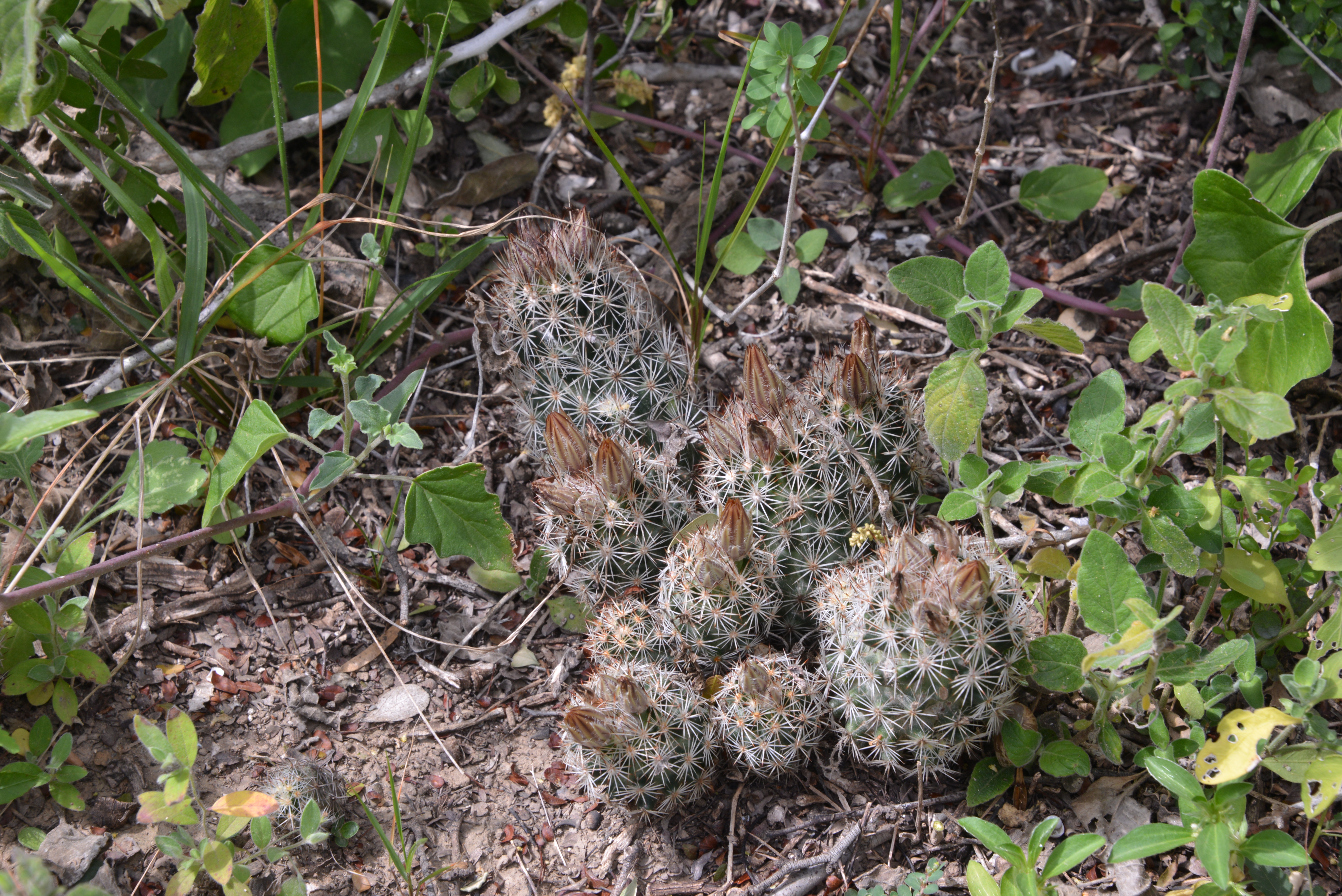
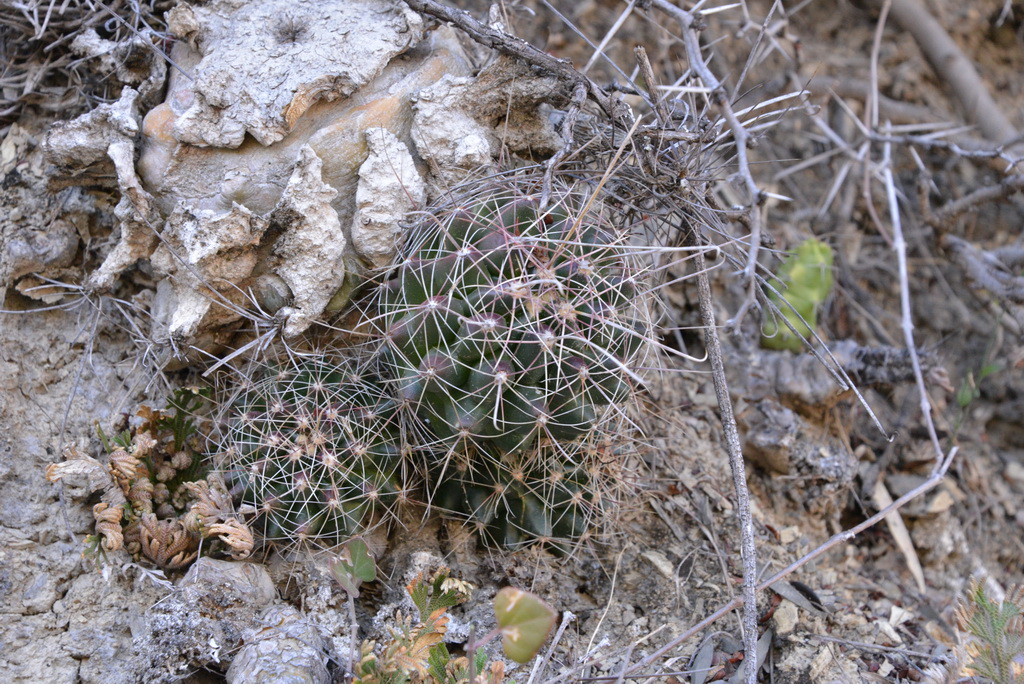
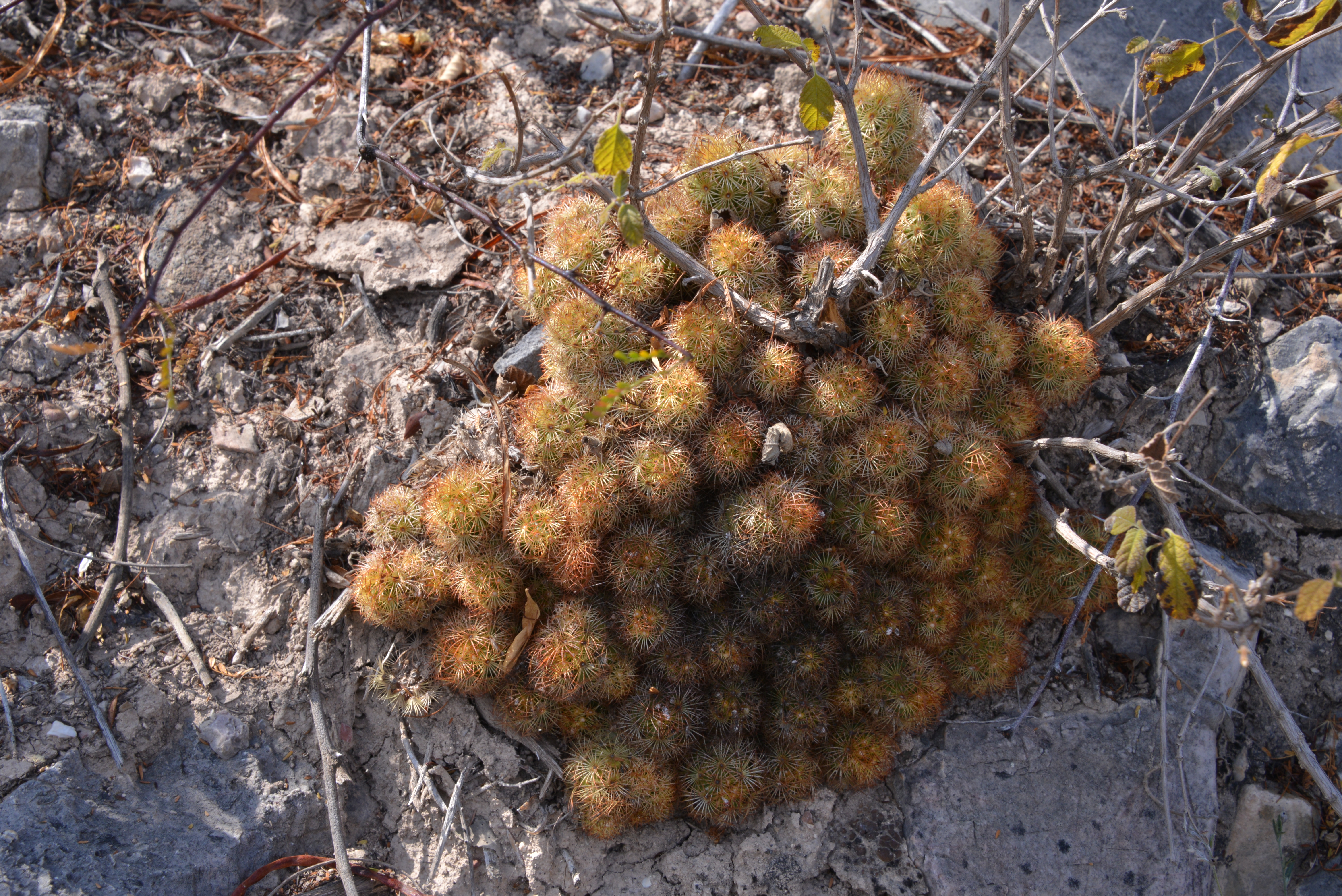
Mammillaria lasiacantha - S3072

Mammillaria lasiacantha – S3072

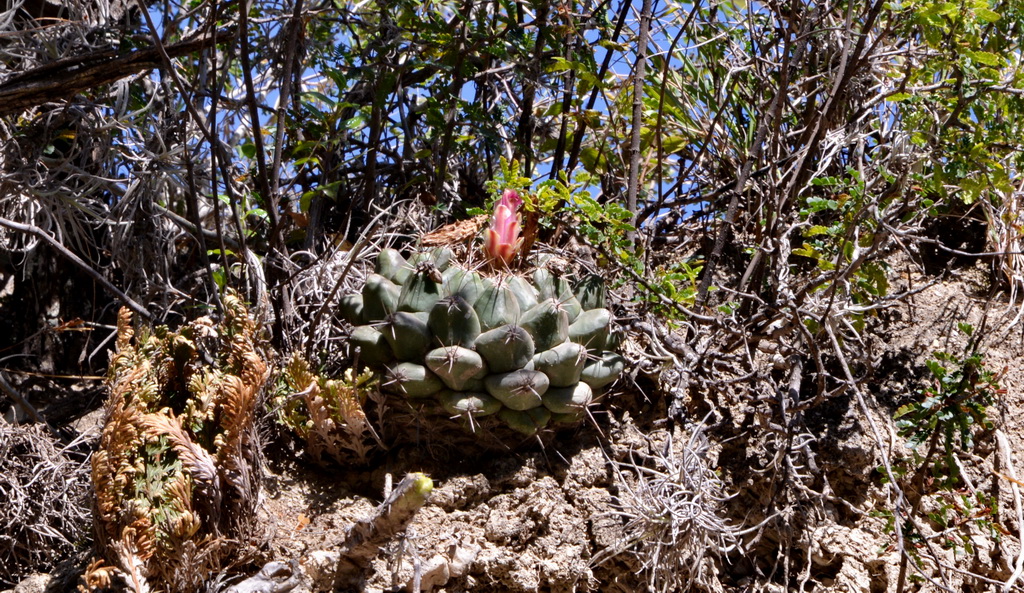
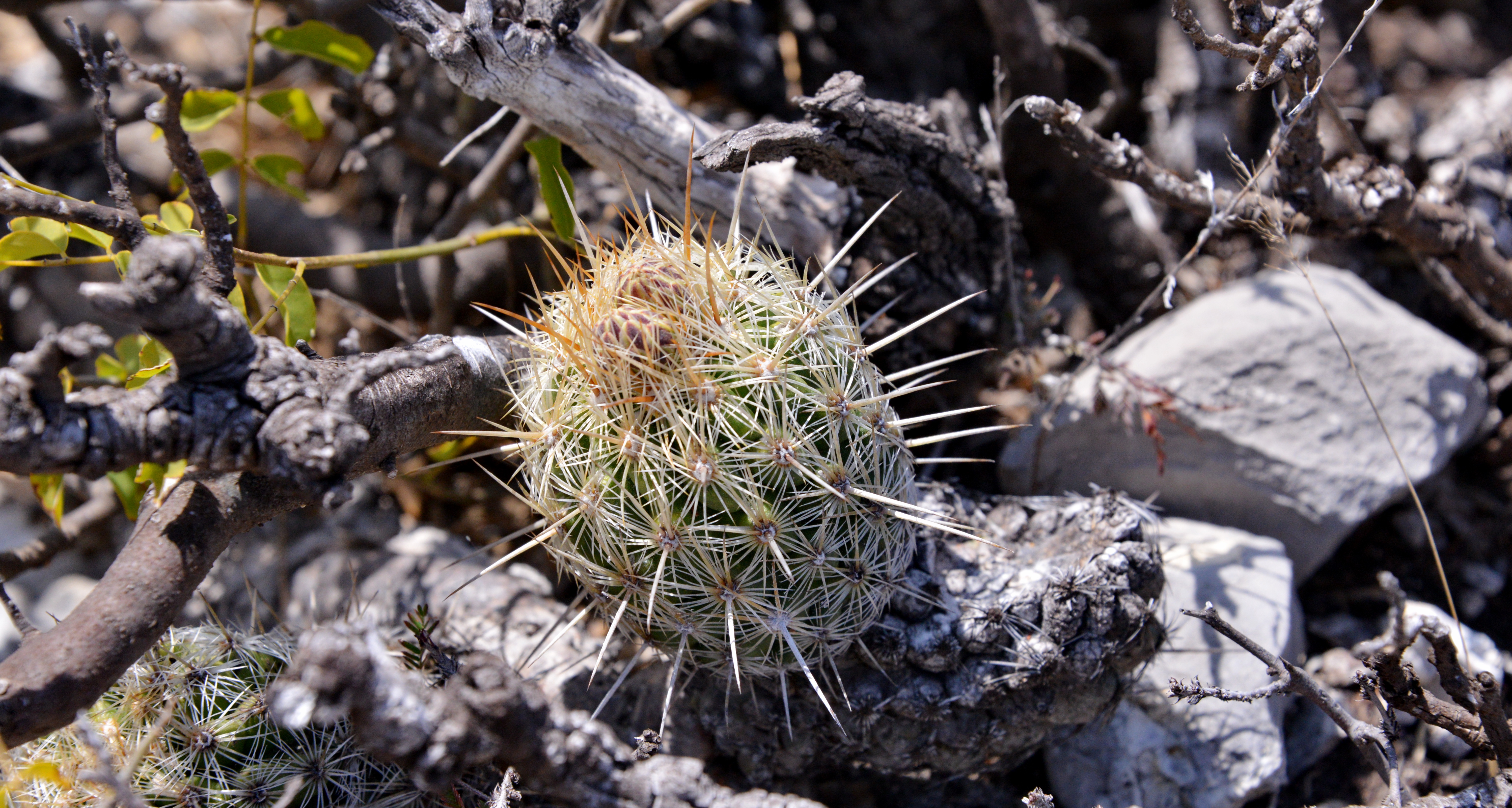
Coryphantha sp

Coryphantha sp

Most of these plants – though not all – were also present at today’s remaining stops: S3073, S3074, S3075 and S3076, with the latter christened as The Dead Dog stop as it appears a pet had been killed by a passing car and had been kindly put in bags to protect it from vultures etc. As we opened our car doors, the smell was horrendous!

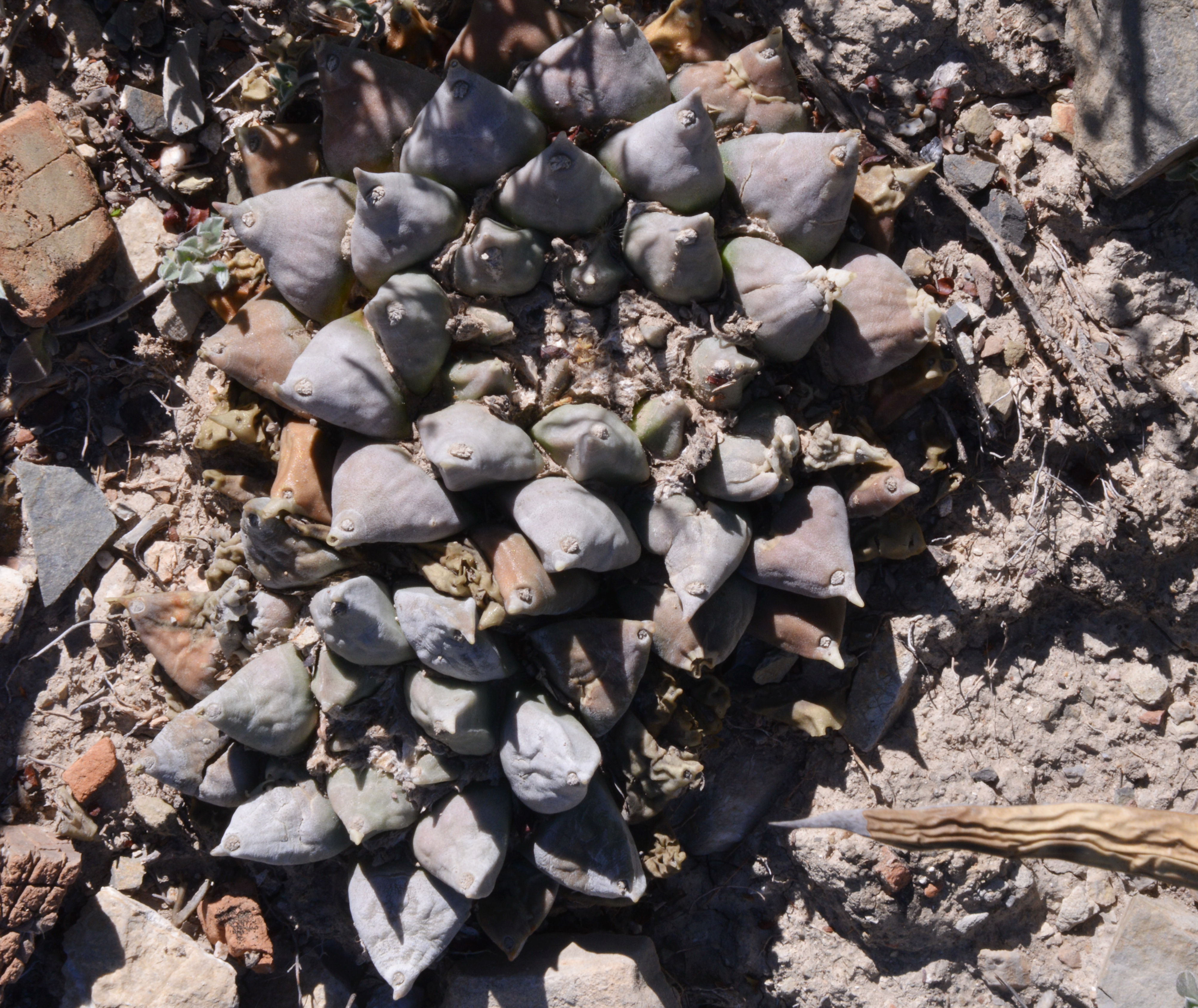
By the time we reached S3073, for which SatNav gave the address General Cepada – La Rosa,  most of the Thelos had opened their flowers – very nice, thank you Thelos. There was also an Ariocarpus retusus here, just the one, with Cliff, farther along the hill, finding more.
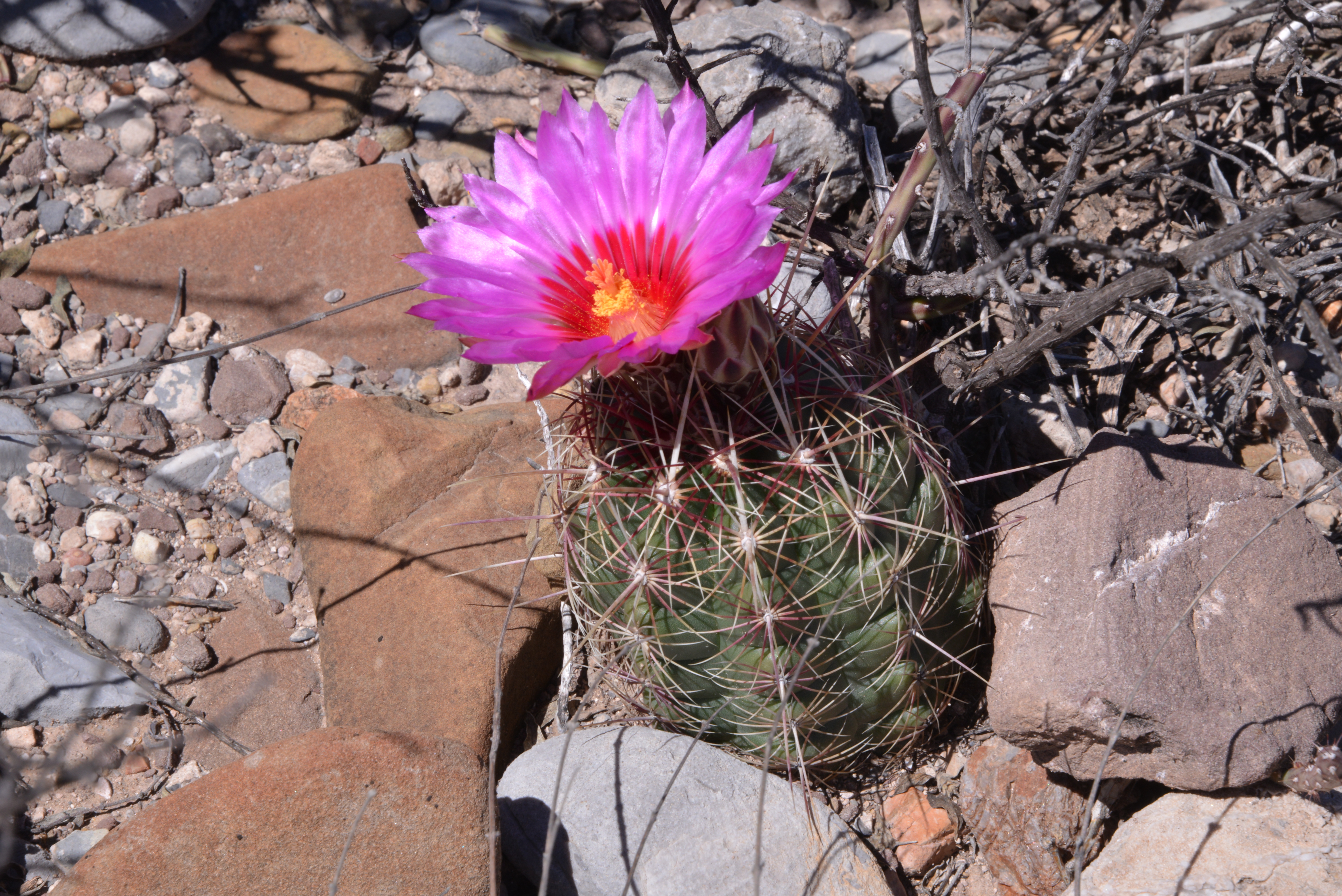
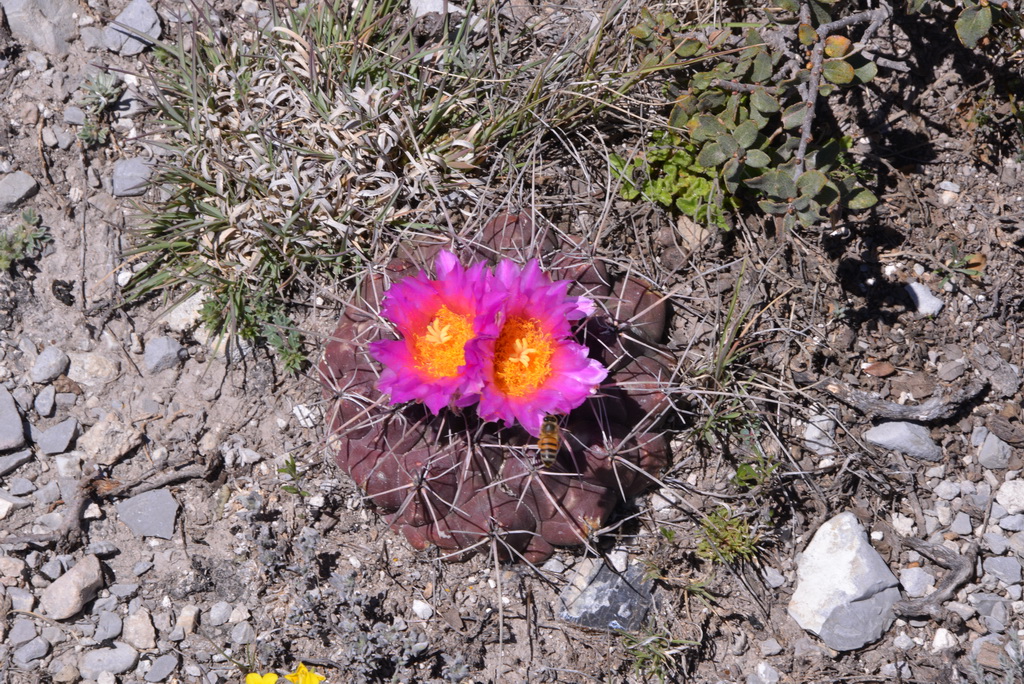
Thelocactus bicolor - S3073

Thelocactus bicolor – S3073

We passed through the village of General Cepada (I took the picture of the church – no one wants to see non stop cacti in a talk) and made the remaining stops of the day.

For the record:

S3074: General Cepada – Parras: Coryphantha sp, Dasylirion sp. Echinocereus enneacanthus, Echinocereus pectinatus, Mammillaria sp, Neolloydia conoidia, Thelocactus bicolor
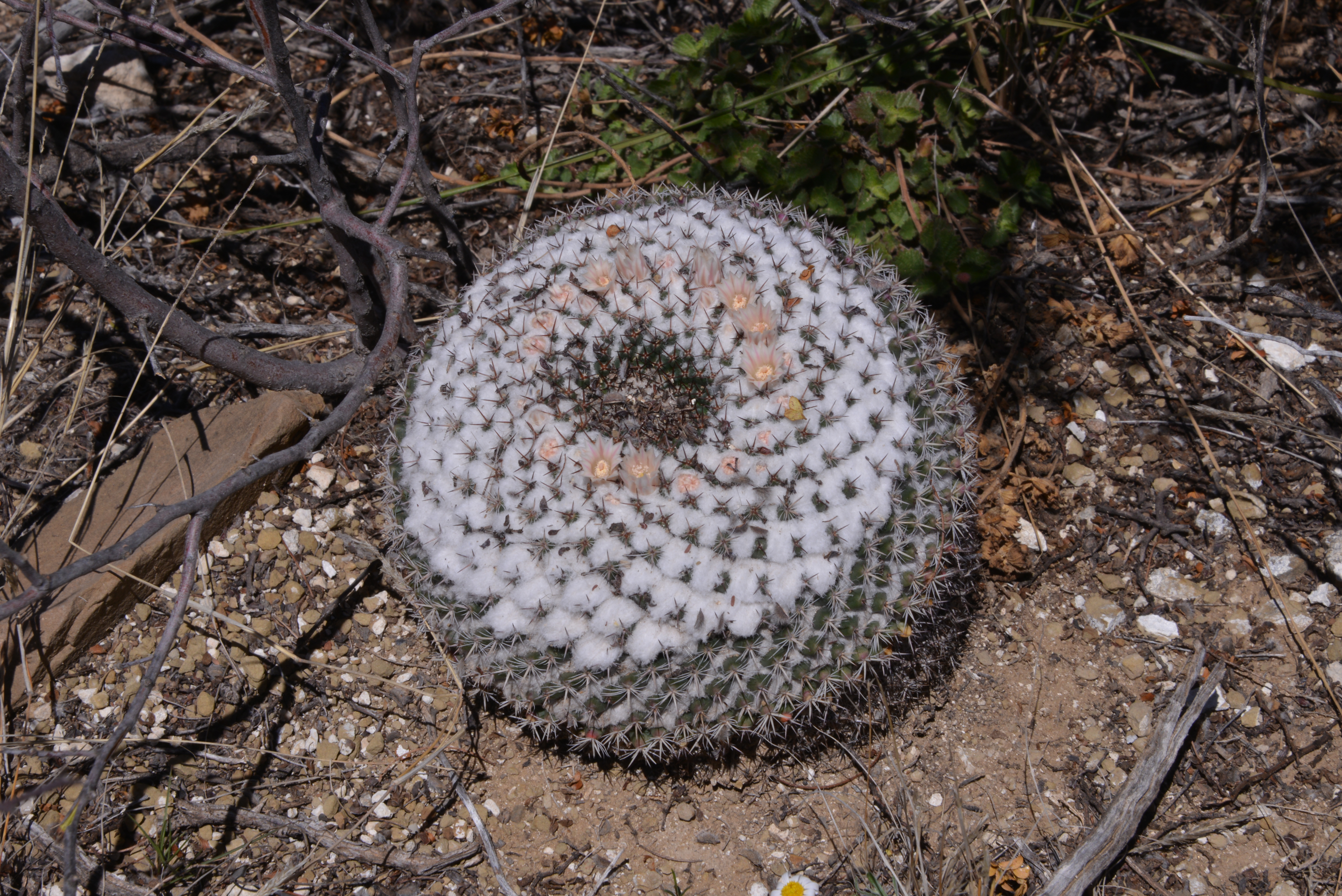
Mammillaria formosa ssp chionocephala - S3074

Mammillaria formosa ssp chionocephala – S3074

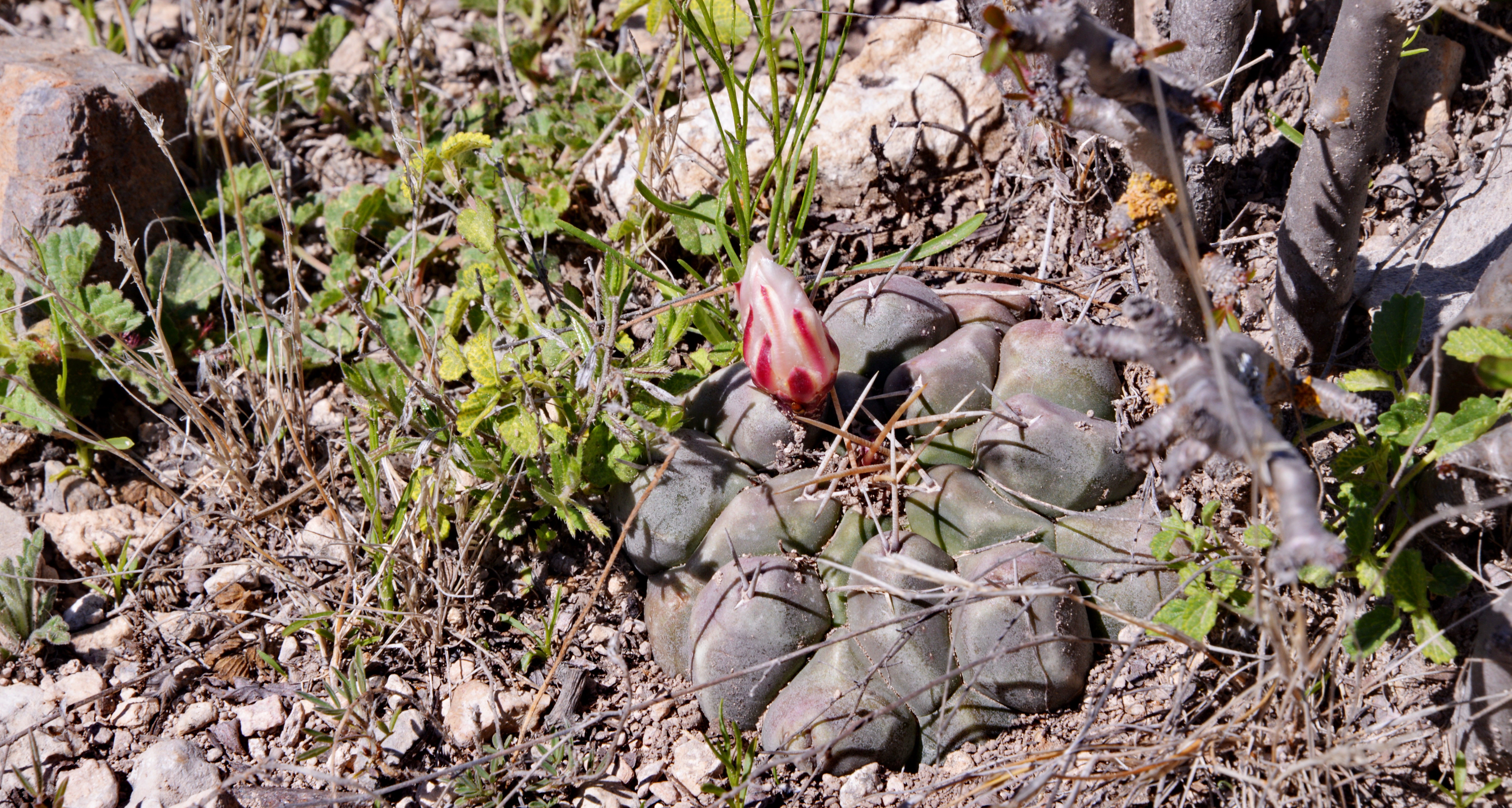
S3075 again on the General Cepada – Parras road: Cylindropuntia sp, Echinocereus enneacanthus, Mammillaria sp, Opuntia rufida, Opuntia sp. Sclerocactus (Ancistrocactus) uncinatus.
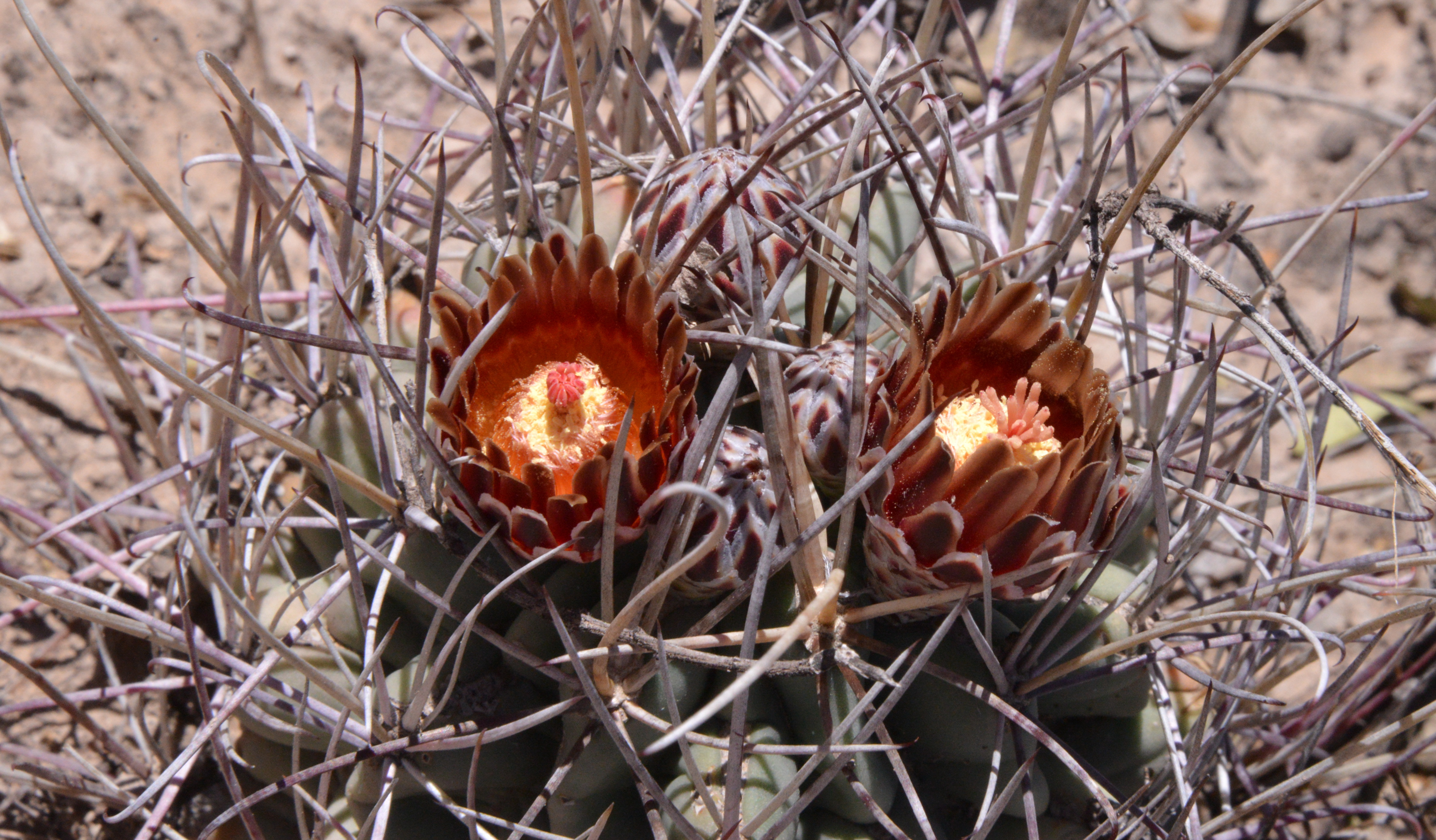
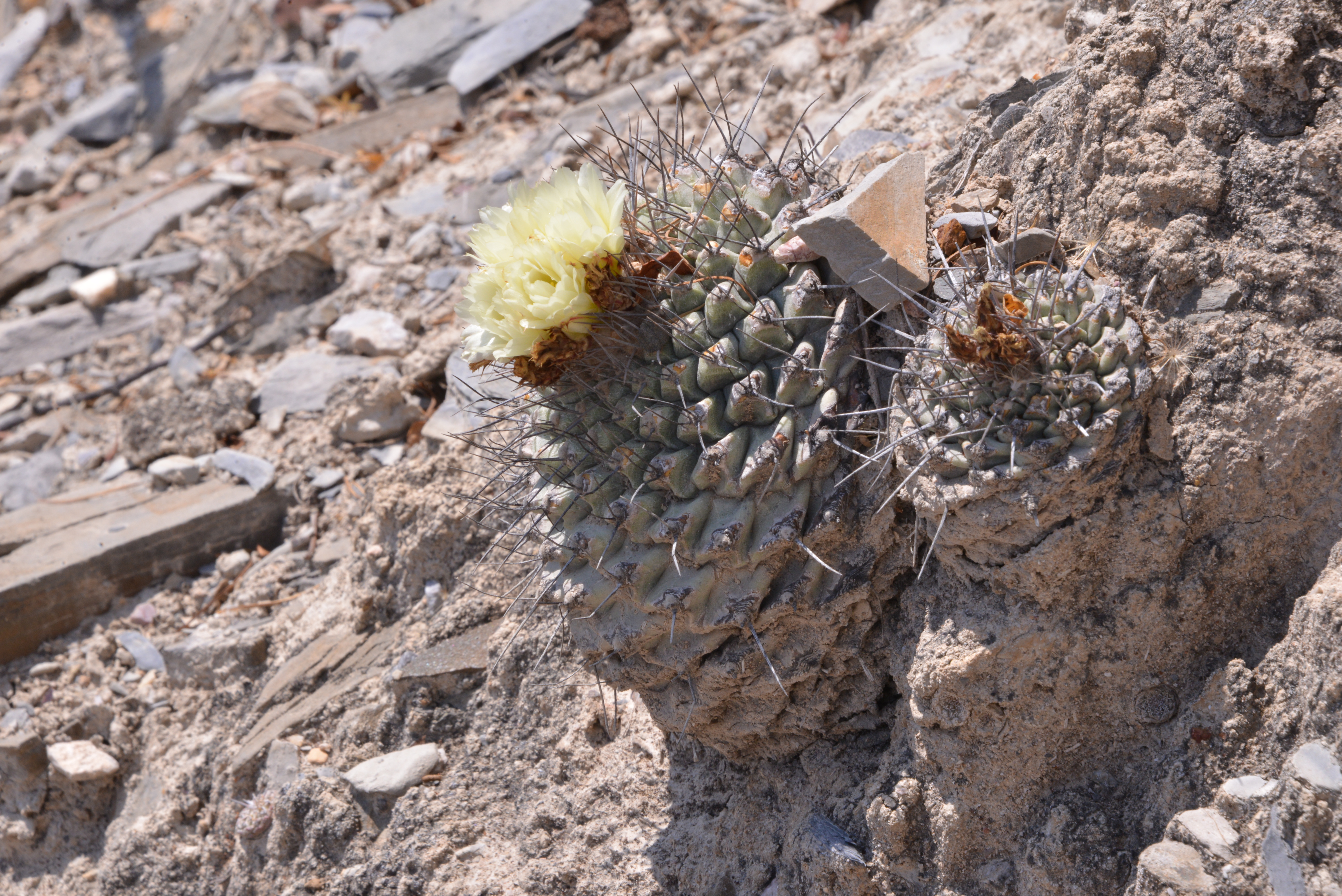
Sclerocactus (Ancistrocactus) uncinatus - S3075

Sclerocactus (Ancistrocactus) uncinatus – S3075

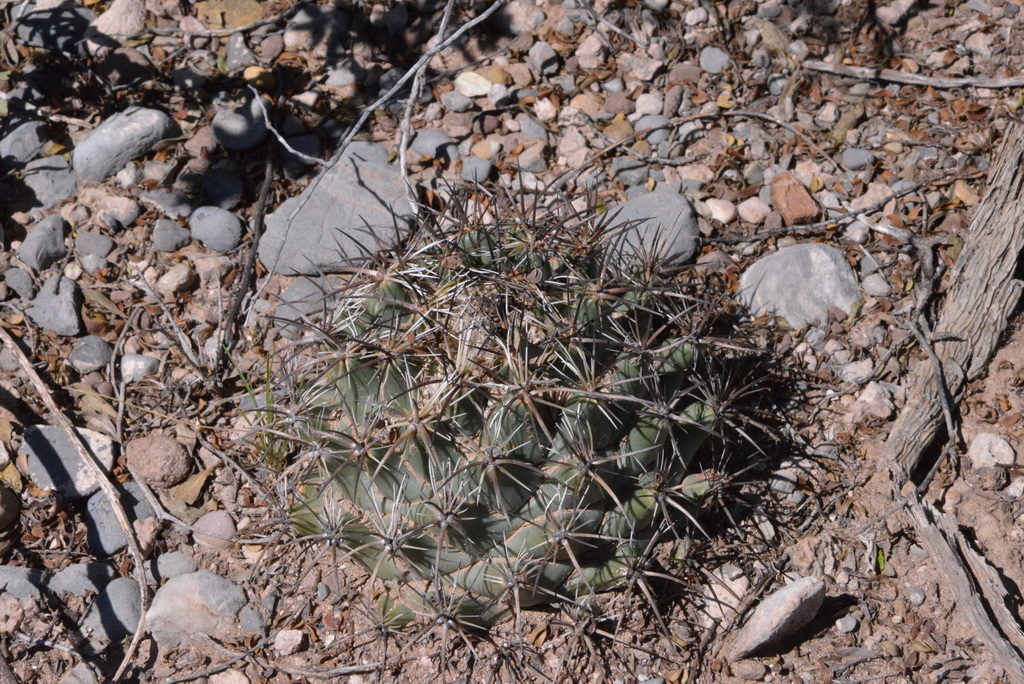
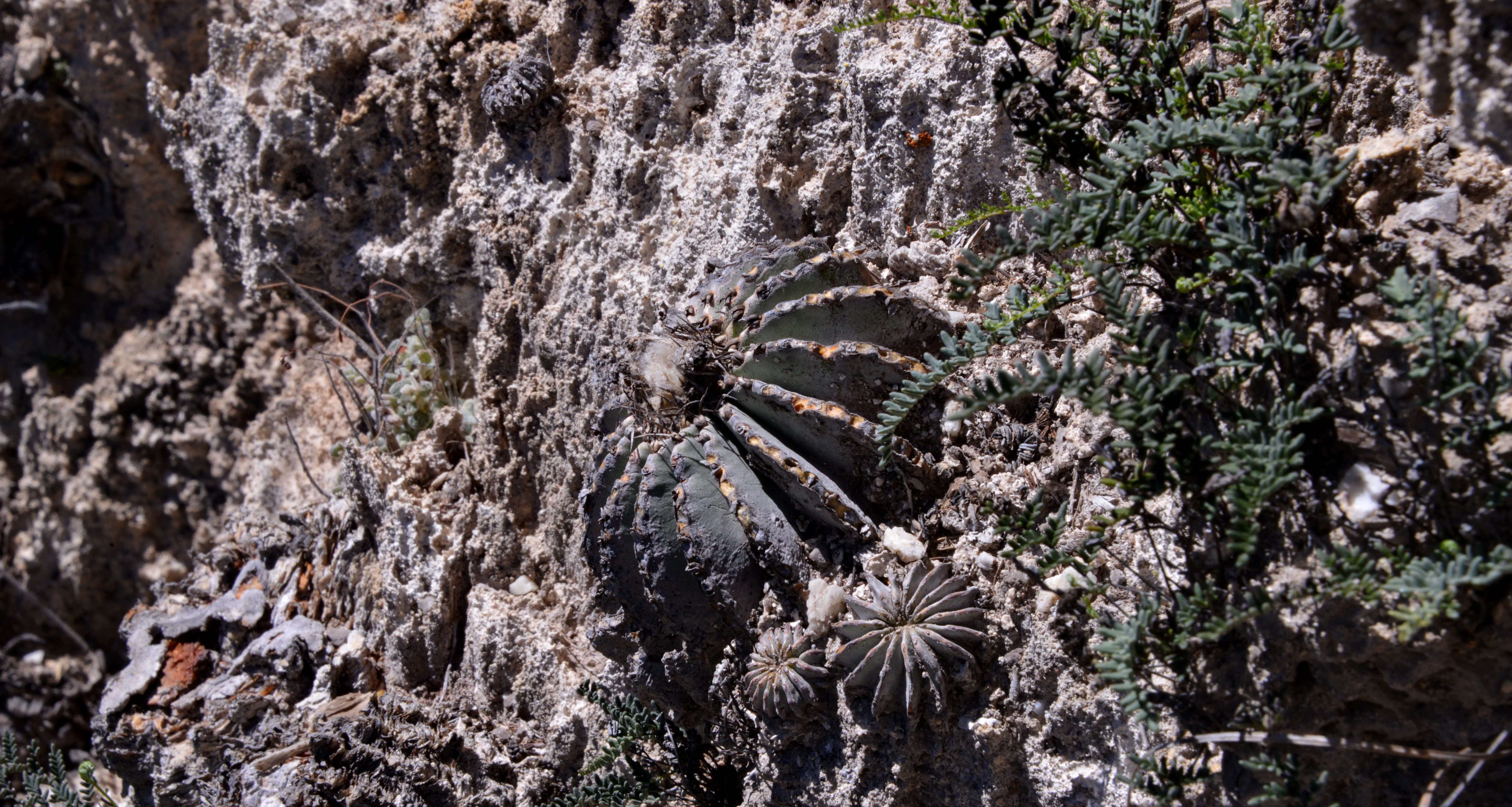
S3076: still along the General Cepada – Parras road: Astrophytum capricorne, Coryphantha clavata (?) Echinocactus horizonthalonius, Echinocereus longesetus, Ferocactus hamatacanthus, Mammillaria pottsii, Thelocactus bicolor ssp bolaensis.
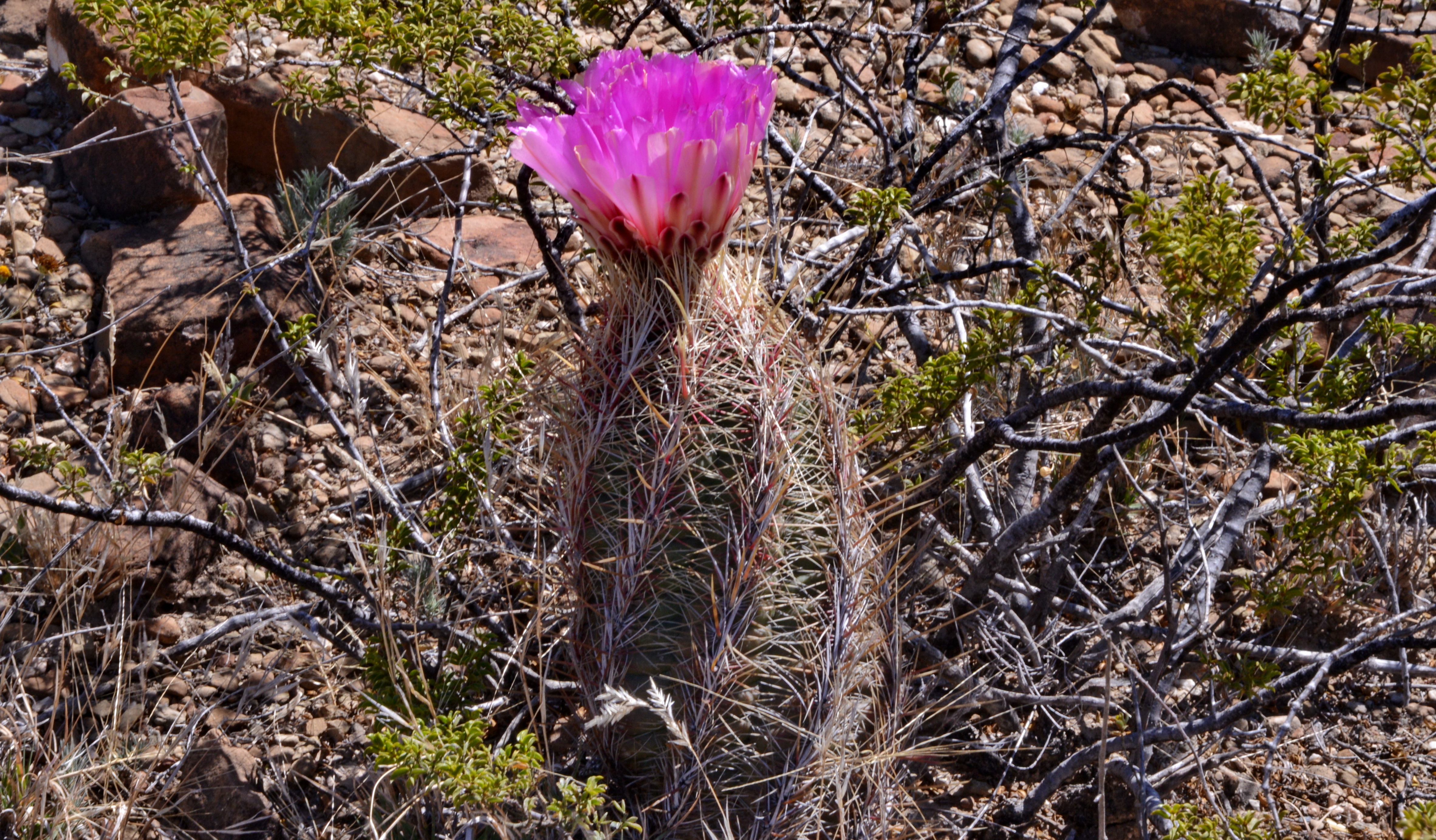
Thelocactus bicolor ssp bolaensis - S3075

Thelocactus bicolor ssp bolaensis – S3076

We stayed in Hotel de Marina (who knows how many miles away from a sea) for two nights, taking a look for some Lophophora for Ian tomorrow – you’ve been warned if his Diaries make even less sense afterwards 🙂
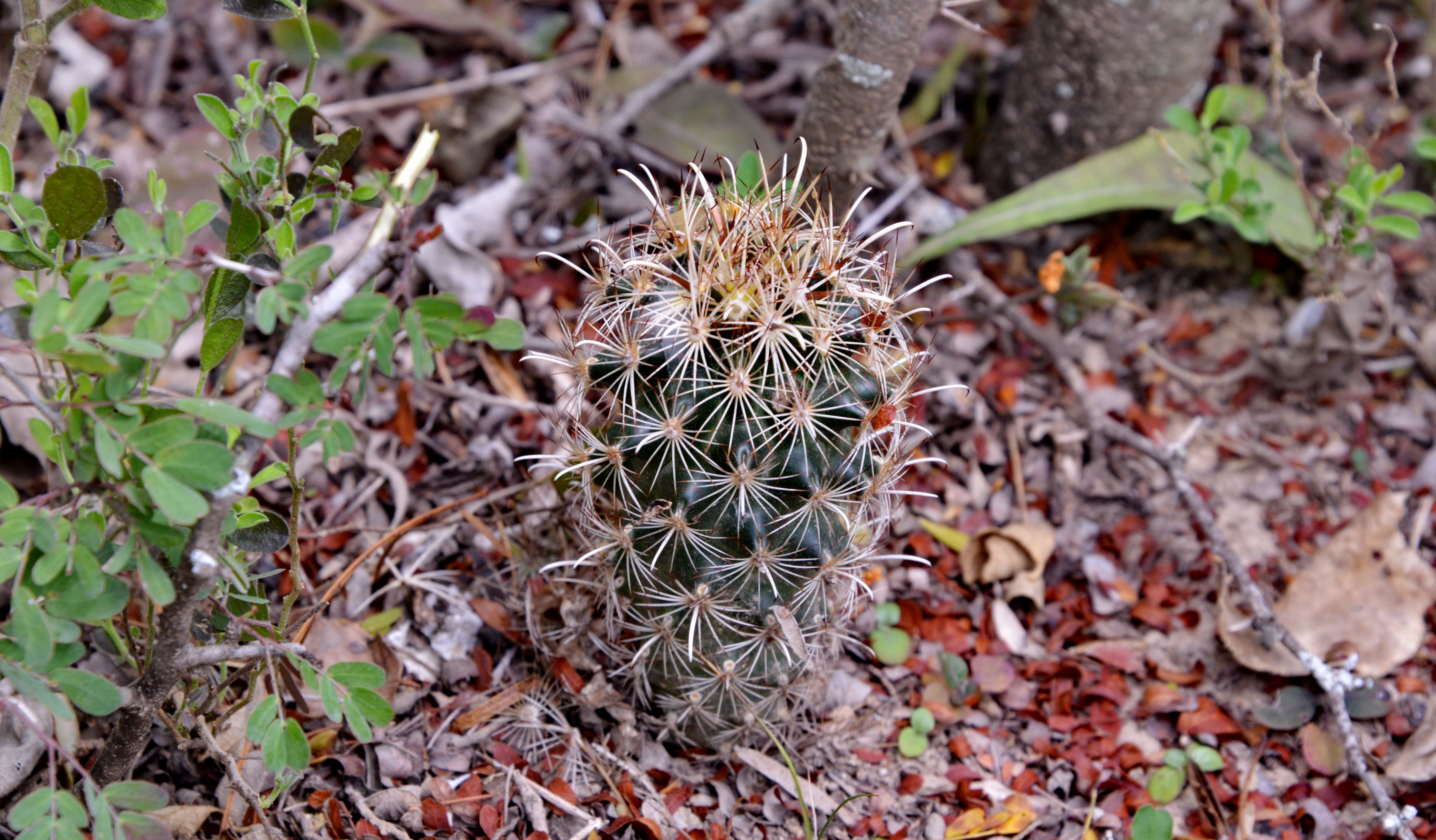
Sunday 16 March 2014 – Montemorelos to Saltillo

We started the day quite excited as today’s target plant was Astrophytum caput-medusae, one of the more recent discoveries and quite unusual in its appearance. Sometimes finding the day’s target plant is a matter of following the coordinates entered in SatNav and stepping out ‘at the flag’ and finding them next to the car (effective, time saving, but not all that exciting) and sometimes it’s hunting through an area where you know the plant should be but not knowing where it’s hiding, leading you on a treasure hunt to show you lots of other plants that you did not even knew grew here. Today was such a day. The lesson learned was ‘better preparation’. A closer look at all images from habitat available, what time of year they were taken, when is the best time to see them? etc.

It was a nice coolish day, overcast with lots of rain falling over the Sierra Madre to the west. The area was very lush in vegetation, with seedlings of the omni present Cylindropuntia leptocaulis making you think that there was a possible astro under every shrub. The dense vegetation included Acacia in flower, tickling my hayfever sensors, but not causing a reaction beyond that. A bit of reading back home reveals that cacti are not the only group of plants where names have changed. The well known name Acacia is now reserved for the Australian members while Mexican and North American taxa are now in the genus Vachellia, with plants here identified as V. rigidula. Whatever the name, their thorns still hurt when you try to walk through the shrubbery. Lots of interesting other cacti, that might have been hard to find if they had been today’s target plant, so a day rewarding in different ways.

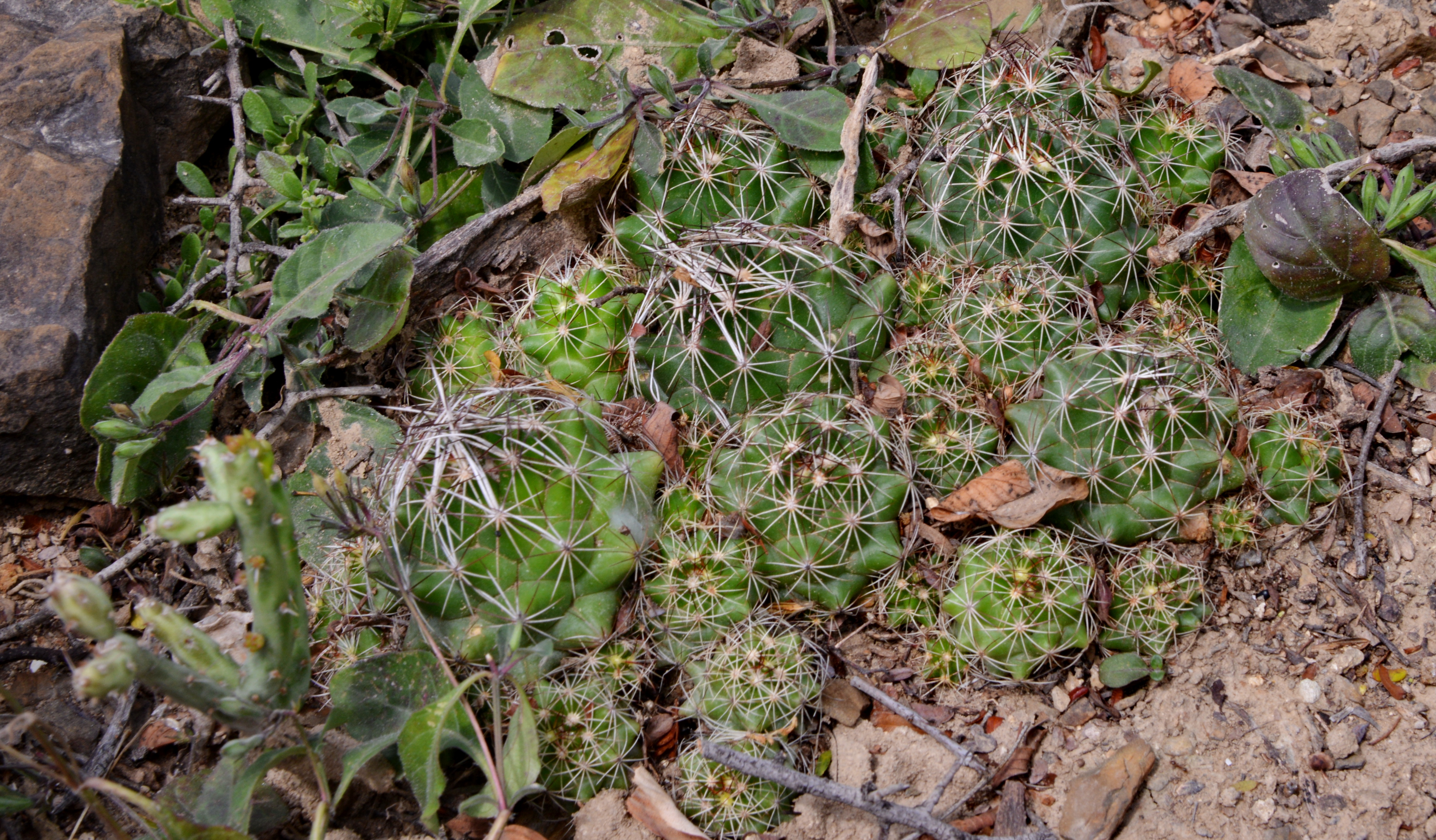
Sclerocactus (Ancistrocactus) scheeri - S3070

Sclerocactus (Ancistrocactus) scheeri – S3070

We stopped to stretch our legs on a track through low shrub forest. Although still in Nuevo Leon, we’re on the low lands on the border with the State of Tamaulipas, quite unlike the Mexican cactus habitats where we had been been to date. Here it was the thorny shrubbery that forced me to walk bent over, to dodge the thorns. It reminded me of the low Caatinga forest in the Brazilian State of Bahia.

Here, at S3070, we photographed Echinocereus viereckii, Escobaria emskoetteriana, Opuntia sp., Sclerocactus (Ancistrocactus) scheeri and Vachellia regidula. I wanted to know what the Acacia species might be that was everywhere and in flower. It was very popular with stinging insects such as bees and there were a good number of large flies as well with dart-like organs at the front of their bodies which they were aiming at any bare flesh. Cliff in shorts was a popular target. You could smell the pollen as it entered my nose setting off hay-fever allergies, so that looking for small cacti was a little difficult with tears streaming down my face. Back home a quick search of the internet reveals that currently the genus Acacia is limited to plants growing in Australia and New Zealand while their north American cousins are now in the genus Vachellia. I think its ironic that organisms that are so firmly routed in the ground are so mobile when it comes to their place in classification systems.

Escobaria emskoetteriana - S3070

Escobaria emskoetteriana – S3070

We moved on and drove several hours through this rather monotonous landscape. So why did our target plant grow here and not at the last stop? No idea – conditions seemed identical. It was also remote, we had seen very few cars all day. How did they discover this plant? It seems that during the construction of electricity pylons the engineers had stumbled across it and had shown it to a friend who, as a botanist, took it further. We had now reached the coordinates of the type locality and checked the spot in detail. Nothing. we spread out between this and the second set of coordinated from which plants were reported – still nothing. In cultivation, in Europe, these plants have a tendency to die during winter when traditionally cacti are kept dry for some five months. A. caput-medusae tends to drop its tubercles back to the caudex, but as plants were grafted, the caudeces are sometimes poorly developed and the tubercles never regrow. Perhaps the same happens in nature and we should be looking for the small caudeces. It’s a more positive idea than to think that all plants have been removed by illegal collectors. In the three hours or so that we searched here (S3071) we photographed Coryphantha nickelsiae, Cylindropuntia leptocaulis, Echinocereus enneacanthus, E. pentalophus, E. (Wilcoxia) poselgeri, E. viereckii, Escobaria emskoetteriana, Mammillaria melaleuca (?), various Mammillaria sp, Opuntia sp., Sclerocactus (Ancistrocactus) scheeri and Vachellia (Acacia) rigidula.

Coryphantha nickelsiae - S3071

Coryphantha nickelsiae – S3071

We’ll have to go back, better prepared, to see if we can’t find these plants second time round.

Still getting used to how one-sided deafness affects me – the strong winds in habitat caused confusion and disorientation and a feeling a bit like sea sickness. All part of re-training the brain.We pushed on to Saltillo, a town holding fond memories from 2010 and 2011 but now part of the Monterrey overpopulation and industrialisation. it was late when we arrive to find that the hotel we used to stay in had a smelly fertilizer plant built right next door. The prices stank too, so we found something near by, at the other extreme of the scale – but a bit too noisy for me, even with my deaf ear.

Saturday 15 March 2014 – Iturbide to Montemorelos

Yesterday afternoon’s adventure had somehow shaken my confidence in cactus exploring by SatNav. ‘Good job too!’ I hear some of you say. But the positive was that we had seen another valley in quite some detail and knew that the one we were looking for lay between yesterday’s valley and the one that had NL 61 running through it. This morning I was going to tackle it a different way. I had the coordinates for the spot where we should leave the 61 and turn left for La Poza.

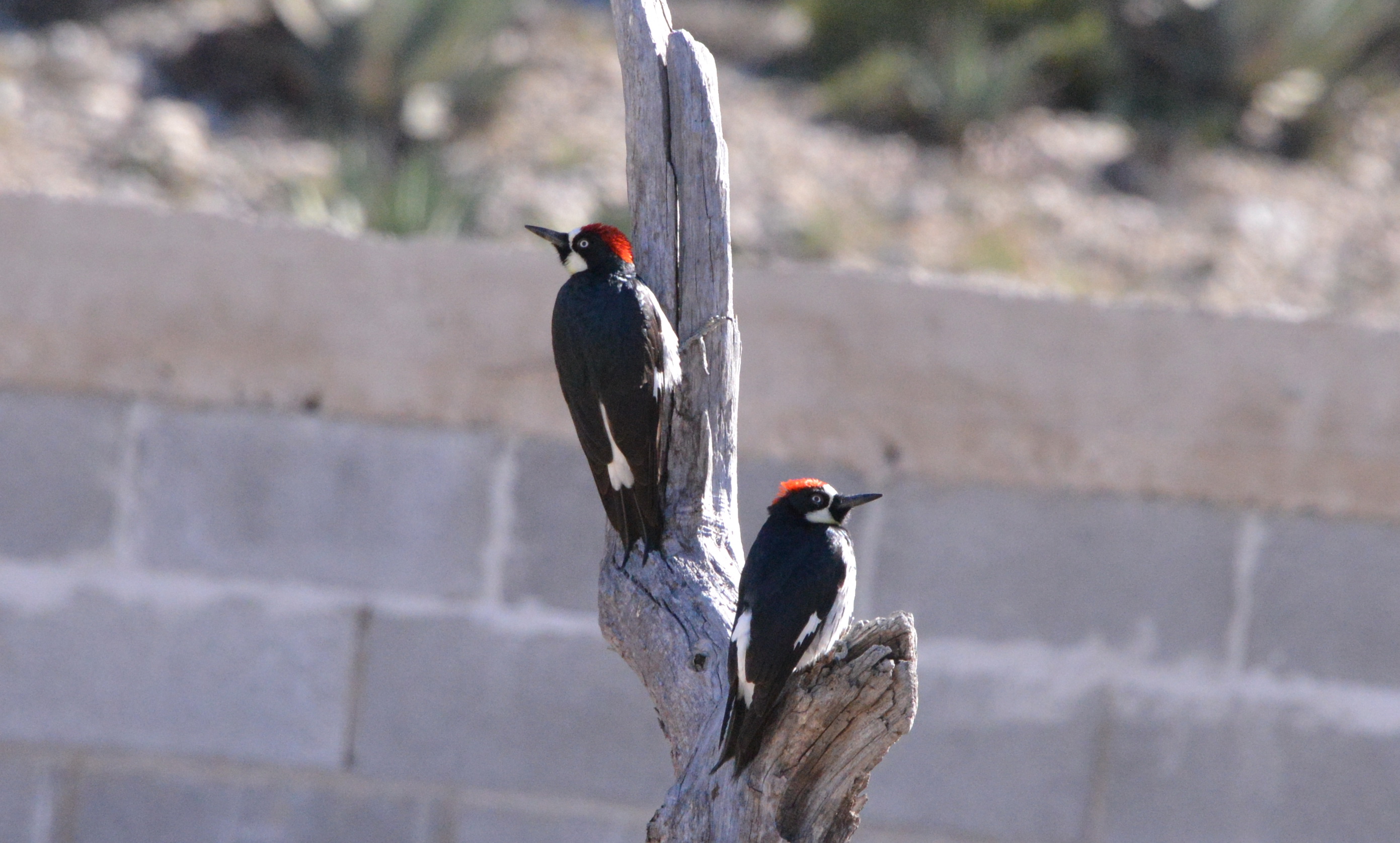
When we left Iturbe and put these coordinates into SatNav, it again tried to send us through the Sierras. This time I thought of the Frank Sinatra song, and did it my way. The exit on the 61 was found exactly as I remembered it. S3066 was for a pair of (young?) woodpeckers along the road.

Woodpeckers - S3066

Woodpeckers – S3066

The track through Ejido La Poza ticked all the boxes, although SatNav made another attempt to confuse us. We ignored it until almost at the 2011 stop, when all of a sudden it knew where it was and where we should go.

If only it were that simple. There were half a dozen canyons that were candidates to be the home for today’s target plants: Aztekium hintonii and Geohintonia mexicana. Cliff disappeared up one valley and Ian up another while I struggled. After a sedatory winter sitting at home in England to avoid the continuous rain, the recent activity was causing problems with sore feet, especially with the nail of my big toe that will probably fall off in the next few days. As any diabetic will know, it’s important to look after the body’s extremities and having seen my late father in law lose both his legs due to poor blood circulation / diabetes, I’m being very cautious. Initially I slowly followed Cliff, meeting him on the way back from his first canyon (S3067). Nothing found. While this location ticked a lot of boxes in my memory of my 2011 visit, I was looking for a large group of cacti, that at the time I thought might have been Thelocactus conothelos, but that this time the three of us decided that it  had to be a Coryphantha – but which one. To confuse matters, a solitary look-alike, Neoloydia conoidea was here with flower colour matching what I had seen before. And then there were the Thelocactus buekii as seen yesterday and still in flower. All these plants were present but not how I remembered.

I half formed a plan to walk back to the road and into another canyon when I remembered it was silly to try to do so without a drink (water!)  – again it was a warm day. So, back to the car. Fortunately I had the one key. Ian walked up to the car just as I was about to get there. He had been up and down several canyons while following the contours of the hills alongside the track. He had come across a number of our target plants, more Geohintonia than Aztekium, some set back, almost along the track,. We decided to wait for Cliff to return and started to get worried as over an hour passed before we could see his yellow T shirt appear. We had been quite silly really, stomping off in various directions in our excitement of the cactus hunt, out of audio and visual contact while two of us had some past medical conditions that are fortunately under control, while the third is the age where we were struck by a heart attack, although he is probably a good deal fitter than we were at the time. Still – all’s well that ends well – we promise to do better in future.

Cliff had found some Geohintoia as well and although I still had a clean score card, had seen them both in 2011, so could in fact leave now. Ian offered to show us his nearest spot where Cliff went a bit deeper into the canyon to see Aztekium hintonii while I concentrated on photographing the Geohintonia – larger and cleaner plants than I remember seeing in 2011. I took Angie’s camera long as well for some nice wide-angled shots. Unlike yesterday’s valleys, this one was rich in gypsum – some beautifully sculpted by nature. (S3068)

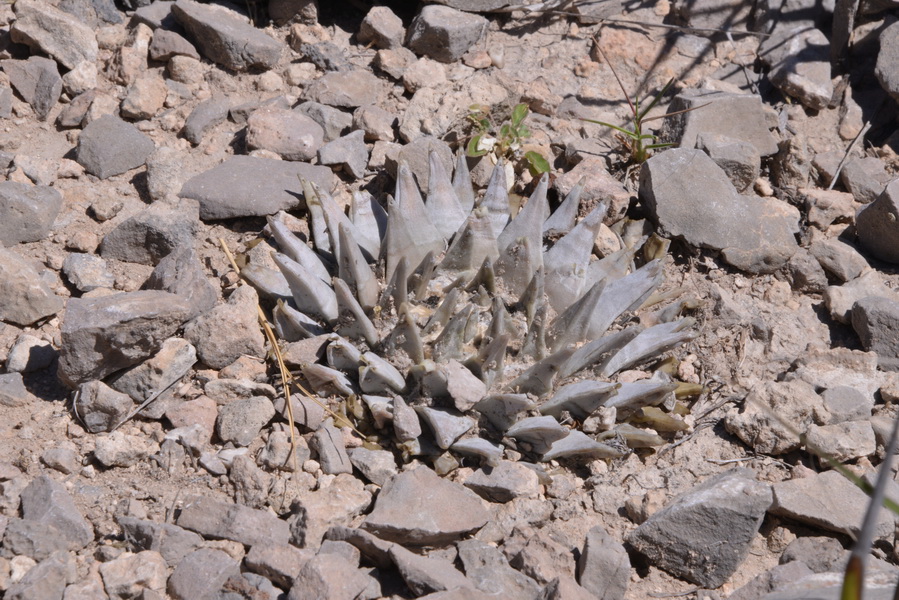
Aztekium hinoni and Geohintonia mexicana - S306

Aztekium hintonii and Geohintonia mexicana – S3068

I photographed the following plants at these stops: Coryphantha sp. Mammillaria sp. Neolloydia conoidia, Selaginella sp, Thelocactus buekii, Tillandsia recurvata, Yucca sp. and of course Aztekium hintonii and Geohintonia neomexicana.

We took a look another km. or so along the track, but remembering the news items of car jams on the roads leaving Monterrey for ‘vacanciones’ (which one?) and remembering that as we left Iturbide after breakfast, that they were setting up staging for a concert / party on the plaza outside Posada El Carmen, it might be wiser to secure a room for the night first.

Galeana was our first port of call where in 2011 I had stayed in one of three or was it four hotels around the Plaza. As we approached the Plaza, we could hear loud music – people warming up for tonight’s party here as well. So on to Rayones, where the Posada was locked up and the old boy at the only hotel in town said that tonight there were no rooms, but to come back tomorrow. Yes, sure!

A quick look at maps and we decided on a safe bet – Montemorelos, on the main highway south of Monterrey. Another dramatic ride through the eastern end of the Sierra Madre Oriental, with views over the plains below towards the Gulf of Mexico.

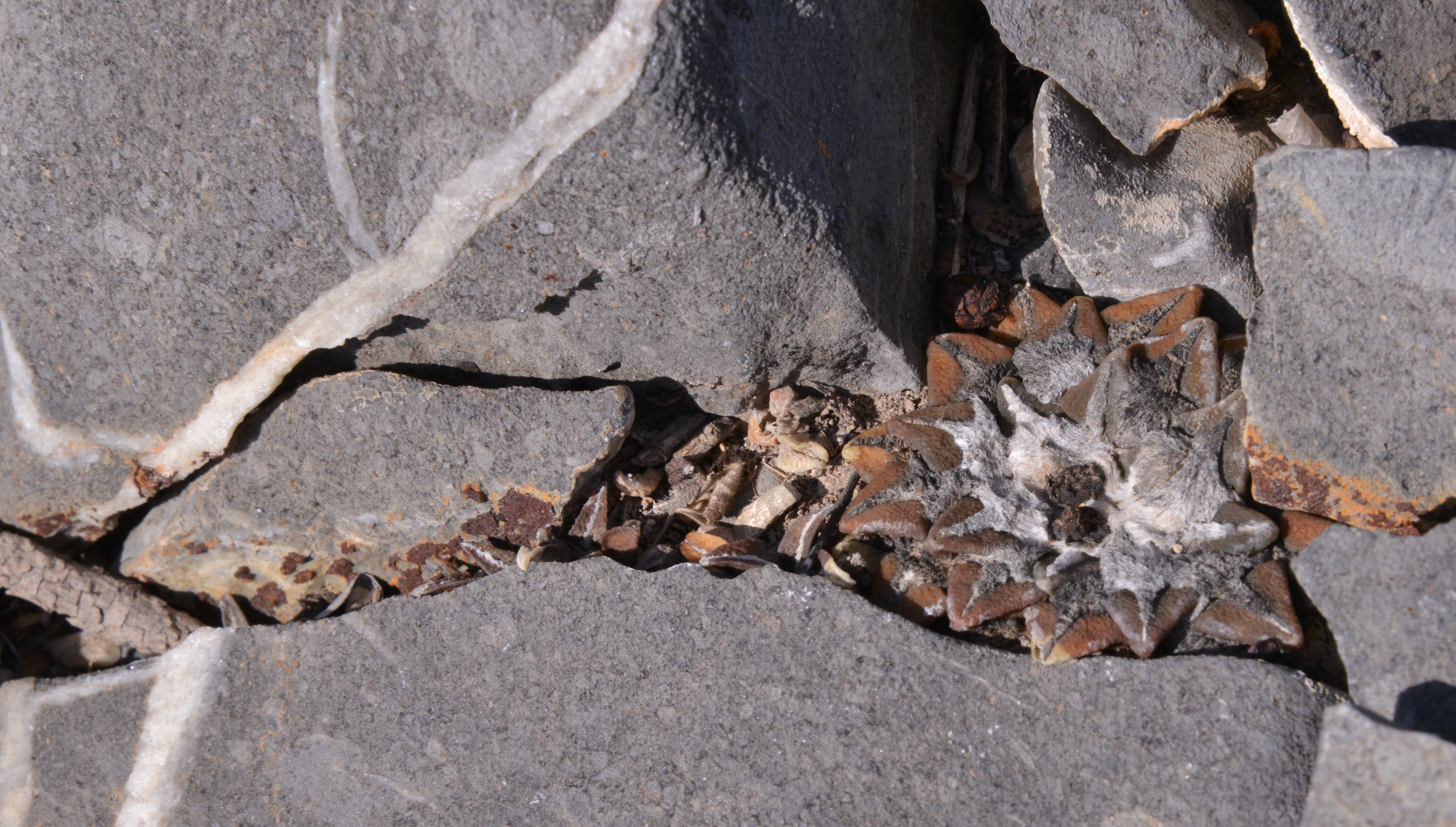
As Cliff steered the car down the narrow twisty roads, avoiding the stone fall that suggested a recent storm, Ian was still able to spot an Ariocarpus retusus between the shrubs on the side of the road (S3069). Good spot! A quick leg-stretch to take its picture and Ian found another Ario, a double header this time.

Ariocarpus retusus - S3068

Ariocarpus retusus – S3068

It was still light when we found lodgings in the Alfa Inn hotel in Montemorelos, a clean and modern hotel for business folks on the road, rather than the local, Mexican style hotels that we had enjoyed in recent days.

Friday 14 March 2014 – Dr. Arroyo to Iturbide

The style of Hotel Plaza aimed at retaining as many of the original features as possible. The family had owned it for some 120 years and there were plenty of photographs on the walls to illustrate the point. This included the doors to our triple room which had however a very modern lock. Last night Ian struggled a bit to lock the door and this morning neither Ian nor Cliff was able to unlock the door.

And so it was that this morning, a small Mexican, sombrero and pointy boots and all, climbed in through our bedroom window, greeted me and after some fiddling with the lock succeeded in opening the door. Who said it was easy to get breakfast!

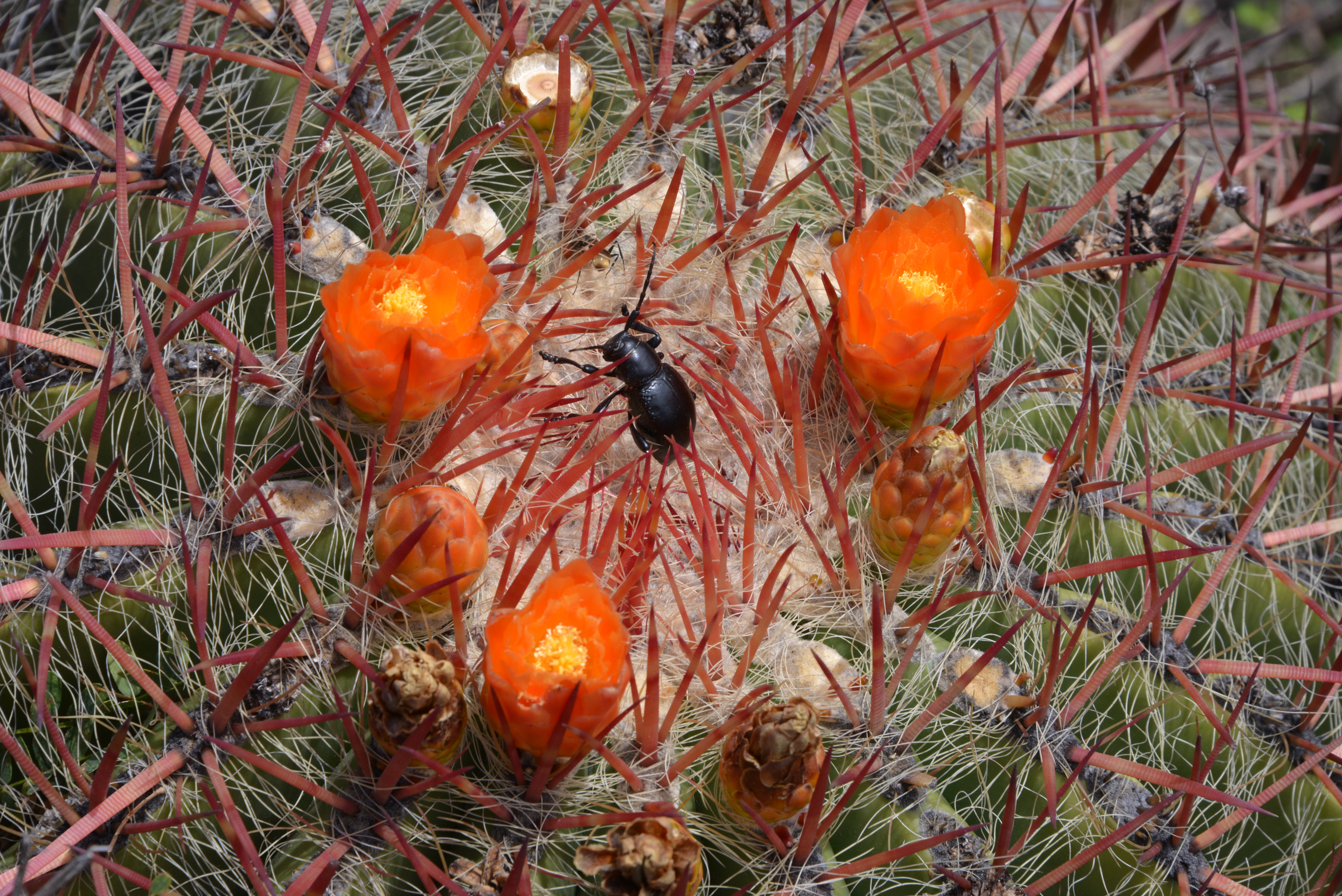
We headed north on Ruta 61 and decided after a while on a leg stretch stop (S3062) that provided us with Thelocactus rinconensis or was it T. buekii? Opinion remains devided with T. rinconensis a possible candidate? As usual any name labels had been removed from habitat, possibly taken back to the shop to have the latest ID opinion written on them. There were also some sizeable clumps – or rather, multi-stemmed groups of Ferocactus pilosus with crowns of flowers – quite small for the size of the plant.

Thelocactus sp - S3062

Thelocactus sp – S3062

Another leg stretch stop along R61 was prompted by T. buekii in flower – gorgeous plants!

Ferocactus pilosus - S3063 near La Escondida

Ferocactus pilosus – S3063 near La Escondida

Our target stop of the day (S3064) was a small hill, just north of  La Ascención (Aramberri, Nuevo León), that I visited first with Eunice Thompson on 3 March 2011, when conditions were much more arid than today and the plants (T. buekii and Ariocarpus retusus, plus others – see plant list for 3 March 2011) were very dehydrated. Today the low hill was awash with field flowers and pumped up cacti, after recent rains. Most of the Thelos were in flower or in bud. I made myself a promise to come back one year in late September / early October to catch the Arios in flower.

Ariocarpus retusus - S3064

Ariocarpus retusus – S3064

I entered the coordinates of the location for our 2011 stop for Geohintonia mexicana and Aztekium hintonii in and was about to enter the coordinates for the exit from the 61 when SatNav seemed to have this already. We were ahead of schedule, so we allowed ourselves to be (mis)guided. SatNav took us to the village of Iturbide which had some hotels. We booked ourselves into the Pousada and hit the road again, being guided up a very narrow but very steep track. This looked completely unfamiliar to me, yet at the same time there were familiar features suggesting that we were in the right area, if not the right place. Around the hamlet of La Providencia, SatNav lost the plot. ‘Now walk for 5.2 km to the south west’ Yes, right, over a massive ridge of hills into another valley. We decided to drive on a km or so, then parked the car where some narrow canyons met the road. Cliff and I took one, Ian another and soon found large unfamiliar Thelocacti hanging from the steep cliff walls. The make up of the cliff walls was similar to what I remembered from the Geohintonia and Aztekium locations in 2011. But what was the Thelo? Back in the Hotel in Iturbide, I looked at the excellent website http://www.thelocactus.cactus-mall.com/ by Alessandro Mosco and it seems that the Thelos we had seen today could all fit within the concept of T. buekii. Or could they? there was a smaller Thelo growing on the opposite canyon wall that was a much darker green. More reading I think.

We’re spending the night at the charming Posada El Carmen in Iturbide – clean, safe and quiet except that this morning (Saturday) they are setting the market square up for a party.

Thelocactus buekii, La Ascension

Thelocactus buekii, La Ascension

Thelocactus buekii, La Providensia

Thelocactus buekii, La Providensia

Thelocactus sp, La Providensia

Thelocactus sp, La Providensia

Todays full plant list:

S3062 – Ruta 61: Doctor Arroyo to La Poza
Agave lechuguilla, Echinocactus platyacanthus, Ferocactus pilosus, Mammillaria sp., Mammilloydia candida, Neolloydia conoidia, Opuntia sp, Thelocactus sp. Yucca sp.

S3063 – Ruta 61: near La Escondida
Agave sp., Echinocactus platyacanthus, Echinocereus pentalophus, Ferocactus pilosus, Thelocactus buekii, Tillandsia recurvata

S3064 – Ruta 61: near La Ascension
Ariocarpus retusus, Cylindropuntia sp., Echinocactus platyacanthus, Opuntia sp., Thelocactus buekii

S3065 – track near Iturbide
Agave sp (x 2) Echinocereus pentalophus, Ferocactus hamatacanthus, Mammillaria sp., Selaginella sp., Thelocactus buekii, Tillandsia recurvata, Yucca sp

Thursday 13 March 2014 – Matehuela to Dr. Arroyo

It is easy to forget, when you are surrounded by some of the most desirable cacti offered for sale in Europe, that this is a Thelothon, so I’m pleased to report that we found Thelocactus hexaedrophorus and T. conothelos today. Most Thelocactus taxa are quite found over a wide area, so the trick is to select plants from populations where other cacti may steal the limelight, to add interest to the exercise.

Here is today’s plant of the day:

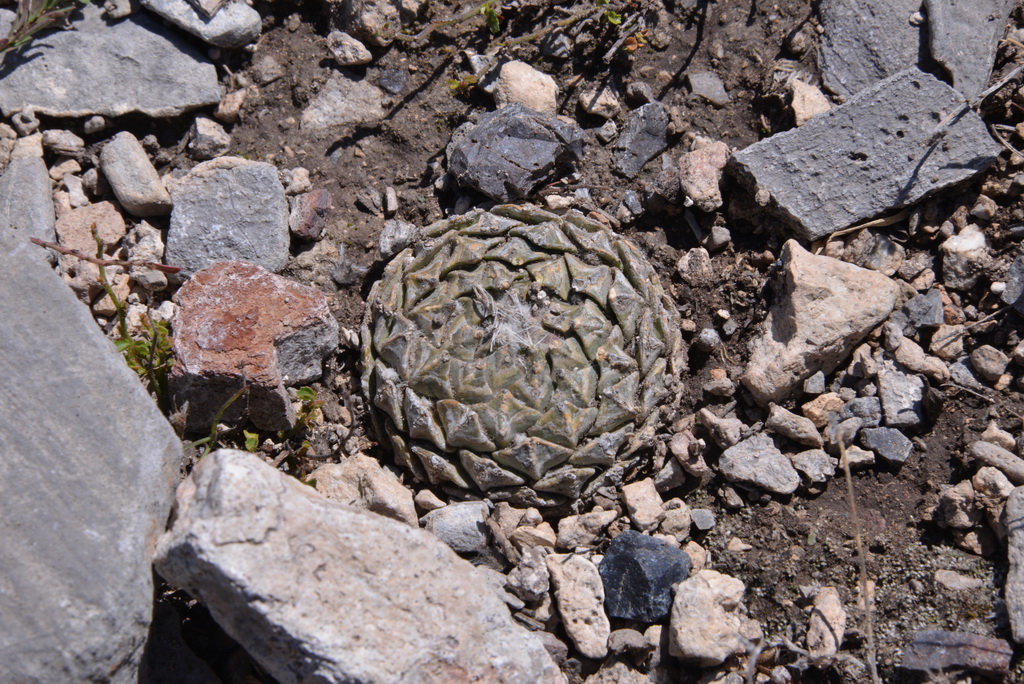
Pelecyphora strobiliformis

Pelecyphora strobiliformis – S3060

But the day began less promising with the failure of ATM machines to give us our money and a sudden bout of Montezuma’s revenge, fortunately in the car park of the Matehuala Walmark where the disabled toilet made a very welcome changing room.

I had selected two targets for today’s ‘organised search’ with plenty of scope for more spots to look if time permitted. The first was a spot for Turbinicarpus macrochele, which we had failed to find here in 2011, but with two fresh pair of eyes, seemed worth another try, but to no avail. I had hoped that may be one or two plants might be in flower to allow us to get our eye in. I’m sure that the plants were there, but without flowers, won the game of hide & seek.

The second stop was along the track to El Refugo and this is where we found the Pelecyphora. I’ll have to check when I get home but I believe that this was a different location to where we found them in 2011 but on that occasion had failed to find any of that taxon.  They were much more abundant this time, including a large number of small seedlings that could easily be mistaken for Turbinicarpus seedlings, but Cliff and Ian easily recognised them as Pelecyphora seedlings. Other cacti found here (S3060) were: Agave sp., Ariocarpus retusus, Dasylirio sp, Echinocactus horizonthalonius, Echinocactus platyacanthus, Echinocereus pentalophus, Lophophora williamsii, Mammillaria sp., Neolloydia conoidia, Pelecyphora strobiliformis, Portulaca sp, Stenocactus sp., Thelocactus conothelos and T. hexaedrophorus. You can see why we can spend a few hours walking around these fields and hillsides!

The third stop was for pictures taken around the scenic town of Dr Arroyo, where Cliff broke the golden rule among cactus explorers: don’t go with an unknown local to get money from the bank. In this case the local was the cousin of the owner of the hotel and the ATM was across the square of the Plaza Hotel, a responsible calculated risk, with the police station across the road from the hotel. Tomorrow we head to Galeana.

Wednesday 12 March 2014 – San Luis de la Paz to Matehuala

And so I’m back at Hotel Las Palmas in Matehuela, and it seems that nothing has changed in two years. Today was supposed to have been a driving day to cover the 300 + km with random stops along the way. The 57, D (toll road) in places is a fast road, averaging 100 km p.hr ‘Random’ means that I had selected three stops close-ish to Matehuela, where cacti that were new to Cliff and Ian had been reported from.

Driving along, we passed the Microondas (Microwave towers) at Nunez, – where Ariocarpus bravoanus ssp hintonii grows, but this is on the grounds of a cement factory and perhaps unsafe in the middle of day. But it also meant that Huizache Junction was near by – always good for a stomp around, both at the top of the hill (S3055) where this microwave station stands, with a second stop at the bottom (S3056), just as in 2011. When ever I have talked to people in the UK who have been here the question comes : ‘Did you see. X?’ Often the answer was no and even now, I photographed plants that I did not see in 2011 while some that I had hoped would be seen in better light, were not there. Spooky! Space ships rotating the plants at night?

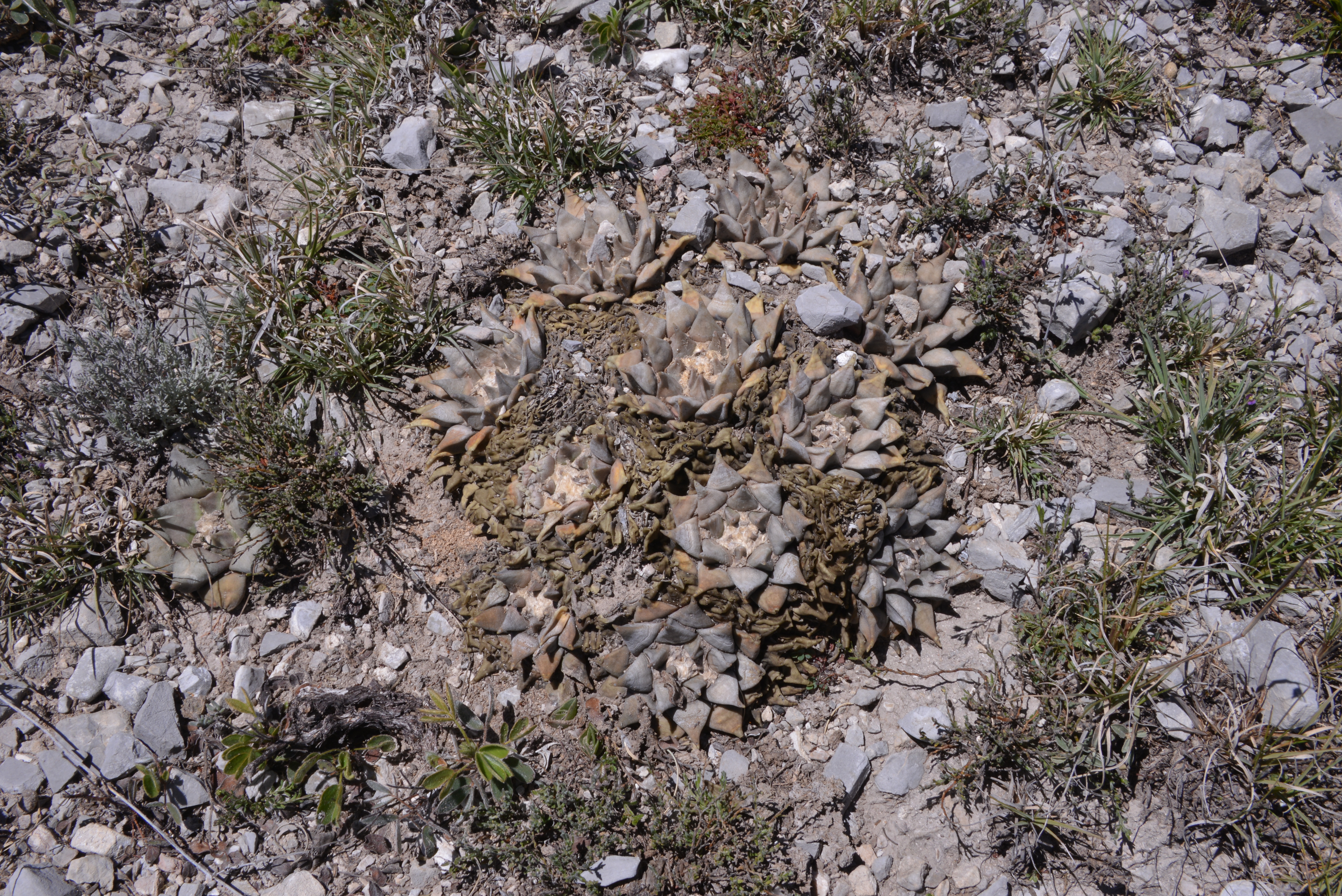
Anyway, the Ariocarpus retusus looked magnificent and healthy as though specially watered for our inspection but the Lophophora williamsii seemed to have been visited by a Shaman who had collected roughly half of the big clumps that we had seen here for his religious ceremonies, leaving the other half to recover for another year. Full plant lists added 5th May 2014.

Ariocarpus retusus - El Huizache Junction, San Luis Potosi

Ariocarpus retusus – El Huizache Junction, San Luis Potosi

S3055 at the top, gave us: Agave lechuguilla, A. stricta and A. sp. Ariocarpus retusus, Coryphantha sp, Cylindropuntia leptocaulis, Echinocactus horizonthalonius, E. platyacanthus, Echinocereus pectinatus, Ferocactus pilosus, Lophophora williamsii, Mammillaria sp. Mammilloydia candida, Neolloydia matehualensis, Opuntia microdasys, Opuntia sp, Sclerocactus (Ancistrocactus) uncinatus, Thelocactus bicolor and a Yucca sp. Not a bad crop for one stop, particularly when at the foot you can add Astrophytum myriostigma and Thelocactus hexaedrophorus (?) to the list.

[PS when I got home, I found Turbinicarpus sp El Huizache, a T. polaskii look-alike, at John Pilbeam’s nursery. If we did not see it at the top nor at the bottow, where did it grow? In the middle? I guess that we had just missed it in flower and therefore had walked straight by it.]

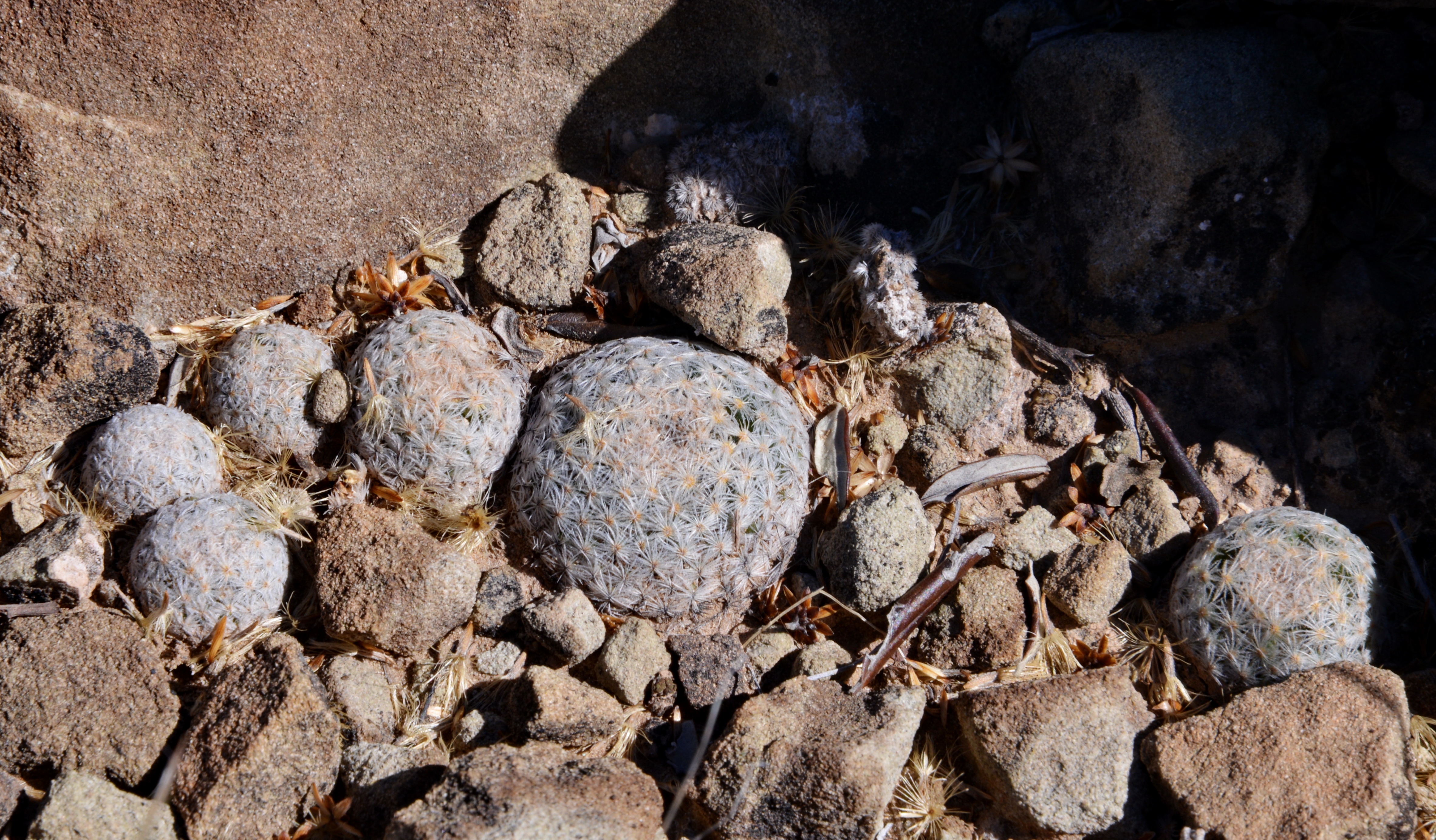
Mammilloydia candida

Mammilloydia candida – S3056

So we arrived safely at the hotel, with good wifi to get tonight’s message out and an excellent meal with Margaritas as a starter.On to our ‘randomly selected stops’. The information in the database is beginning to show its age. The exit off MEX57 for the turn to the first stop no longer existed, just green cultivated land. We turned up the next official road and found some interesting plants, but not those promised. The same thing happened for the next stop and we ended up on a road to El Mezquite where again we saw interesting plants but not the Turbinicarpus polaskii we had hoped to find.

Today the temperature was only 32 C, instead of yesterday’s 37 C and I’m about to join the boys for a beer on the patio – time 20:34.

Life is good.

Tuesday 11 March 2014 – San Luis de la Paz to Xichu

For those who can not wait for the full plant / stop list for today, I suggest that you cheat and look at https://pkcactus.wordpress.com/2011/03/09/ to read what we saw here 2 years and 2 days ago.

There were some differences though. Knowing that there would be no breakfast, we had planned to drive to the Pemex where the OXXO did prepared sandwiches that took care of breakfast, so that we were much earlier on the road and reached the T. alonsoi site earlier, providing time for a more detailed look around. As a result we saw at least half a dozen Mammillaria schiedeana, compared to just one plant in 2011. This time at least three were in flower!

Echinocereus pentalophus was in flower but high on the hillside, tricky to photograph but revealing numerous Turbinicarpus alonsoi around them. Clearly out of reach of past collector visits. Long may that last!

The other difference was that this time we found two plants in flower, the prettiest one is shown below.

Turbinicarpus alonsoi in flower

Turbinicarpus alonsoi in flower – 

The details of today’s stops and plants will have to wait until I get home – sorry.

You’ll have to make do with today’s bonus picture:

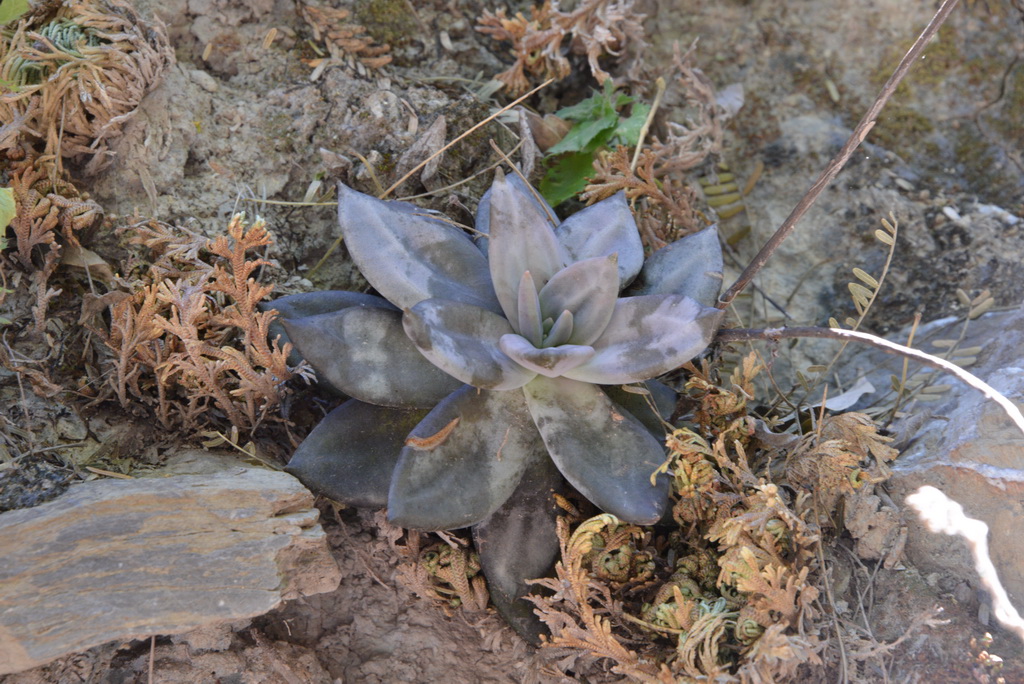
Echeveria xichuensis

Echeveria xichuensis

Now, safely back home, avoiding sneezing in the pollen of  English Spring, I can reveal that we saw:
At S3049, along the San Luis de La Paz to Victoria, Guanajuato road:  Agave gentryi, Coryphantha erecta, Cylindropuntia sp and Opuntia sp.

S3050, farther along the road, for a tree covered with Tillandsia usenoides, a.k.a. Spanish Moss.

S3051 along the Xichu to San Anton road: Agave sp, Coryphantha sp., Echeveria xichuensis, Echinocereus pentalophus, Ferocactus histrix, Mammillaria perbella, Mammillaria schiedeana, Opuntia sp., Stenocereus sp. and Yucca sp.

S3052 & S3053, the Turbinicarpus alonsoi canyons, with Agave sp, Echinocereus pentalophus, Lichen, Mammillaria perbella, Mammilloydia candida and Selaginella sp.

S3054, on the way home had lichen, Mammillaria muehlenfordtii, Opuntia sp and more trees shrouded in Spanish Moss.

We were supposed to have been in the vicinity of Strombocactus disciformis ssp esperanzae but the spot seemed to be a rock wall right next to a farmhouse with people working near by and children playing in the field. Never mind, we had a number of locations for S. disciformis ssp disciformis.

Monday, 10 March 2014 – Tecozautla to San Luis de la Paz

Today’s entry will be simple, short & sweet:

For the second morning I woke up with muscle and joint aches as though I had dragged three heavy bags around Mexico City airport for hours a few day ago.

Oh, I had! No surprise then!

We presented ourselves on the lawn at 8, as before, for breakfast and were served coffee with a smile. This location has by far the best internet connection so I did not mind waiting for the rest of breakfast as it provided the opportunity to fire off partly completed reports for 7, 8 and 9th. That done, I thought it best to stretch my meager knowledge of Spanish by asking if the Senora was going to take our order for breakfast. Sorry, no breakfast today. Thanks for telling us!

We might as well leave then! Except there was a minor complication with Ian’s credit card payment – the poor lady had not heard of the PIN system and had keyed in Ian’s 3 digit security number on the back of the card instead. Then the c 250 km drive to San Luis de la Paz through industrial and agricultural land – no pictures taken.

We made it safely to San Luis de la Paz and are staying in Hotel Parras, next door to the Hotel where I stayed with Eunice in 2011 – this one has front of house car parking.

Tomorrow we go to look for Turbinicarpus alonsoi.

Sunday 9 March 2014 – around Tecozautla: in search of Strombocactus corregidora

We found it!!!

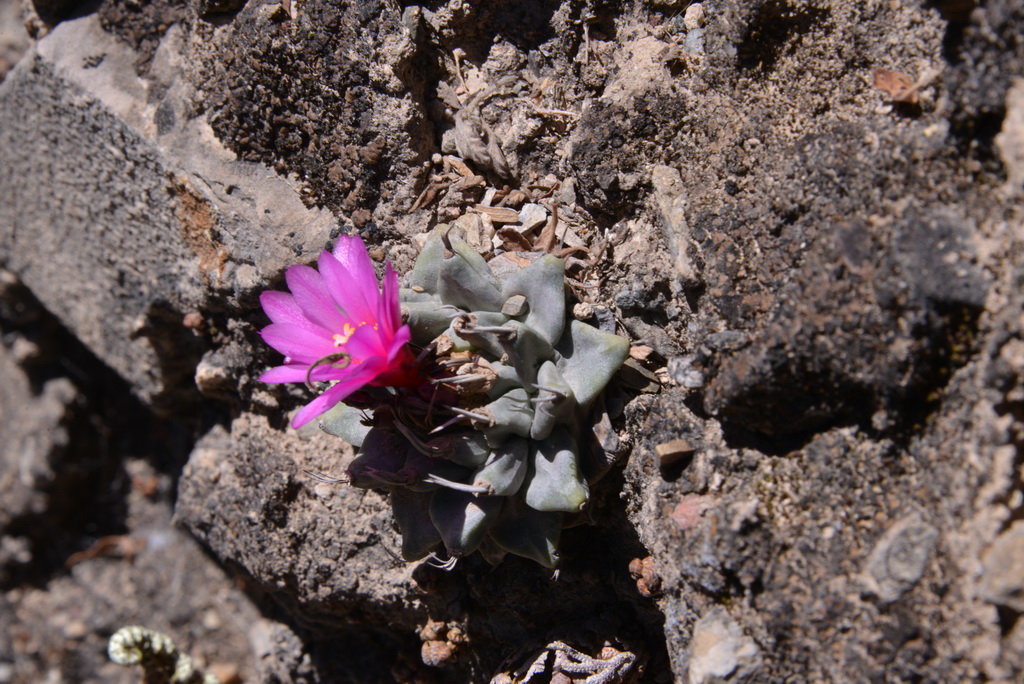
Strombocactus corregidorae

Strombocactus corregidorae – S3047

Many thanks to the global team who helped us to achieve this!

On the day of our visit I promised that there would be ‘more information about today’s exploits to follow’. This is a bit tricky, as I also promised various people who helped us to track this plant down, not to disclose its location. So for now I’ll limit myself to information that is already easily available (Google Search) on the internet. This is how we found where to look. The original description is published in Spanish at http://www.ibiologia.unam.mx/barra/publicaciones/revista81_3/pdf/02-640t.pdf on 17 March 2010. The abstract (English translation) reads:

‘ Strombocactus corregidorae S. Arias et E. Sanchez, from the Infiernillo Canyon, in the Moctezuma River, at the border between the Mexican states of Querétaro and Hidalgo, is described and illustrated. It differs from S. disciformis by its massive body, larger, strong, thick, persistent, black-gray spines, yellow flower, seeds with flat periclinal wall cells, finely reticulate micro-relief, and hilum-micropylar region not covered by a strophiole. An identification key to Strombocactus species, based on stem, flower, and seed characters is included’.

The plants were found on 7 May 2008.

To take the picture of the plant in flower I had to shuffle along a very narrow ledge on very unstable slate-like substrate. There was nothing to hold on to, except an Agave with sharp teeth along the leaf’s edges. Not much to prevent you from falling down a 400 m hillside! Cliff and Ian were shouting at me not to be stupid, ‘you’ll kill yourself’ and other kind words of support, while taking pictures of where my remains would rot if a fall had taken place – it did not!  At the time of writing I have been unable to find any other images of this taxon in flower in habitat – a small triumph, worth being declared mad over.

Other cacti spotted (in safer positions):  Agave difformis, Astrophytum ornatum including one plant some 1.5m (5 ft) tall, Bursera morelensis and B. schlechtendalii, Cylindropuntia leptocaulis, Echinocactus platyacanthus, Ferocactus histrix, fouquieria splendens, Hechtia sp, Mammillaria elongata ssp elongata (no central spines), Opuntia microdasys, Opuntia stenopetala, Sellaginella sp and Thelocactus leucacanthus.

Mammillaria elongata ssp elongata - S3047

Mammillaria elongata ssp elongata – S3047

Saturday 8 March 2014 – around Tecozautla; trip to Zimapan dam

Our target plant for the day was Thelocactus hastifer with T. leucacanthus as a bonus, as we had already seen this yesterday.

A few km from the hotel, passing our first hillside of Echinocactus platyacanthus, giant barrels, the boys, Cliff & Ian, for whom this was a first time experience, begged for a stop. It would have been cruel to refuse. But we’d see many more and there was so much more to see.

S3040 in the order their pictures were taken: Myrtillocactus geometricans, in flower, Echinocactus platyacanthus, Mammillaria sp #1 (large clump), Mammillaria sp #2 – small clump of flat plants), Thelocactus leucacanthus, Stenocereus pruinosa, Stenocereus dumortieri, Coryphantha sp. Hechtia sp, Yucca sp, Ferocactus echidne or F. histrix, with yellow flowers. It seems that during the first few days I have called these Feros ‘echidne’ but later on in the trip changed them to ‘histrix’. Both occur in a similar area, including here in Hidalgo and both can have yellow flowers, although F. echidne can also have red flowers. Here I assume that single stems rather than clustering points to F. echidne.

S3041 – overlooking the lake created by the Zimapan dam provided:

Cylindropuntia sp, Mammillaria elongata, growing on cliff walls and underneath shrubs, Mammillaria albilanata, may be M. perbella, with fruit, Opuntia sp (several) Agave sp. Fouquieria fasciculatus (supposed to have white flowers – none seen), lichen, Asclepias subulata, Bursera sp, Ferocactus glaucescens, Ferocactus hystrix (or is it F. echidne?), Hechtia sp., Mammillaria sp (albilanata?), Mammillaria elongata, mostly ssp echinaria, with central spines. Throughout this trip, whenever we’d see M. elongata, it would be ssp. echinaria. Only tomorrow, would we find the spineless form, ssp. elongata. The NCL reports that ssp. elongata is restricted to cliffs and rocks like the Barranca de Toliman, also in Hidalgo.

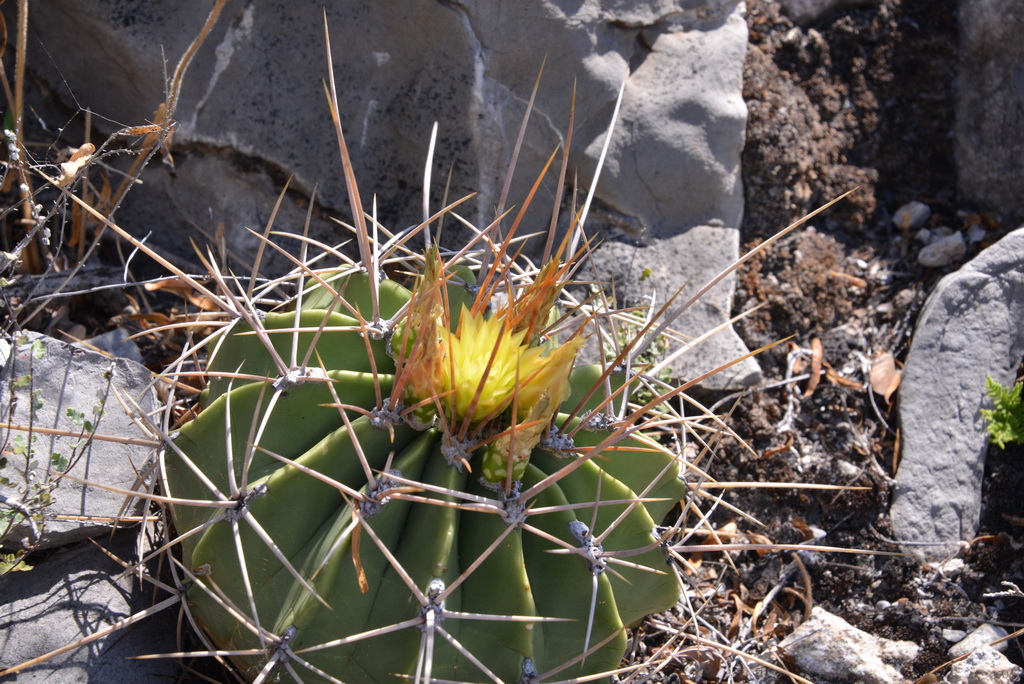
S3042 - Ferocactus echidne or histrix?

S3042 – Ferocactus echidne or histrix?

S3042 – a few hundred meters along from the previous stop – with better car park facilities:

Echinocereus pentalophus, Astrophytum ornatum, Neolloydia conoidea, Ferocactus echidne and F. glaucescens (nice glaucus seedlings in the shade, boring green in the open. Jatropha urens – the evil woman, it stings!, and of course the omni-present Echinocactus platyacanthus.

Mammillaria elongata ssp echinaria

Mammillaria elongata ssp echinaria – S3042

S3043 – as we reached the lake where the road passed through three long tunnels. As we came up for air before we disappeared into the next on, we could see more cactus vegetation. We could not hang about, as there were other cars on our backside so I just snapped away at the hillside for closer inspection later, which suggests that a few Golden Barrels have indeed survived. I believe I caught at least two large golden barrels, Echinocactus grusoni, probably the world’s most common cactus in cultivation, but here, in its type locality practically extinct, as the building of the Zimapan dam left the majority of the ‘grusoms’ several 100 ft below the water level. Before the dam was completed, volunteers, including Charlie Glass, went on rescue missions but as anyone who tried to repot just a medium sized plant might know, this is a weighty issue! 

S3044 – Thelocactus hastifer – Hooray! our target plant of the day. Relatively few plants found, including one large many headed plant growing in shrubs and therefore tricky to photograph.

Thelocactus hastifer - S3044

Thelocactus hastifer – S3044

But perhaps the star of the day was a small, grapefruit size plant of Echinocactus grusoni, golden yellow spination and looking just like the long spined form sometimes seen by the million in Dutch nurseries, raised from cultivated seed. With the local construction work now apparently complete, perhaps the time has come to sow some of the seed available from cultivated plants back, so that once again these golden barrels can be seen in their natural habitat. It’s assuring to see that there is still a natural seedbank from which this species could recover.

S3045:  Ian spotted a change in the geology along the side of the road – vertical limestone bedding and suggested a stop without knowing what we might find. I was tired enough to stay in the car, until my snooze was disturbed by Ian’s cry to come and look: Ariocarpus kotschoubeyanus ssp elephantidens – the point of interest here being that some plants had a clear papillose epidermis, a feature of ‘elephantidens’, while its neighbour had smooth tubercles. Does this variability within a species in a population justify a separate name at ssp. rank? Not for me – cultivar perhaps?

Ariocarpus kotschoubeyanus 'elephantidens'

Ariocarpus kotschoubeyanus ‘elephantidens’ – S3045

Also here, Neolloydia conoidea, Thelocactus leucacanthus, Ferocactus echidne, Coryphantha sp