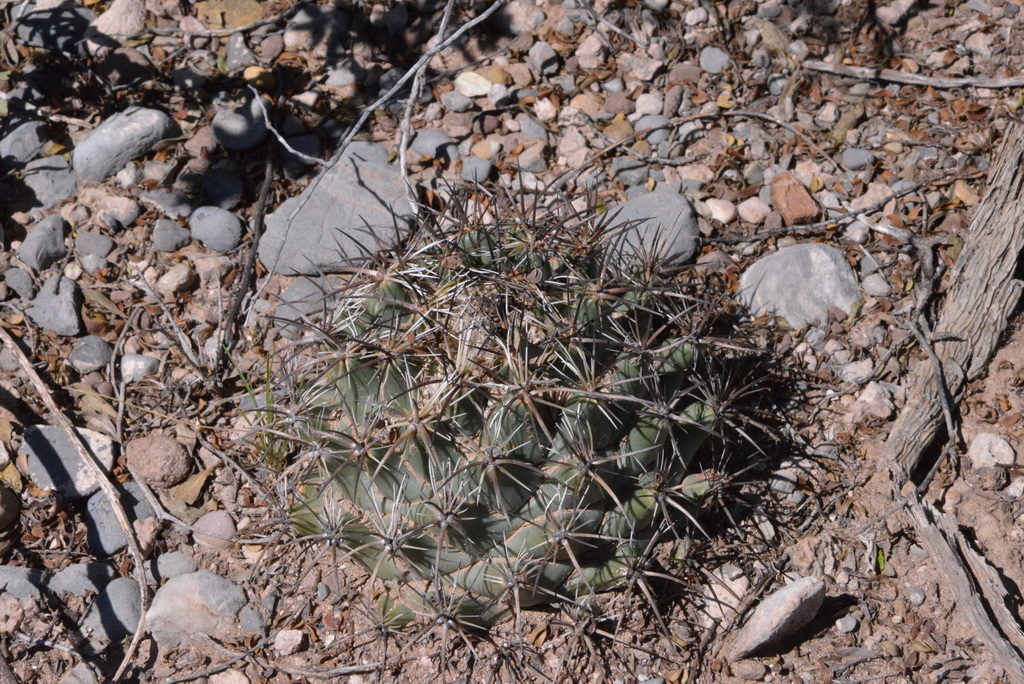
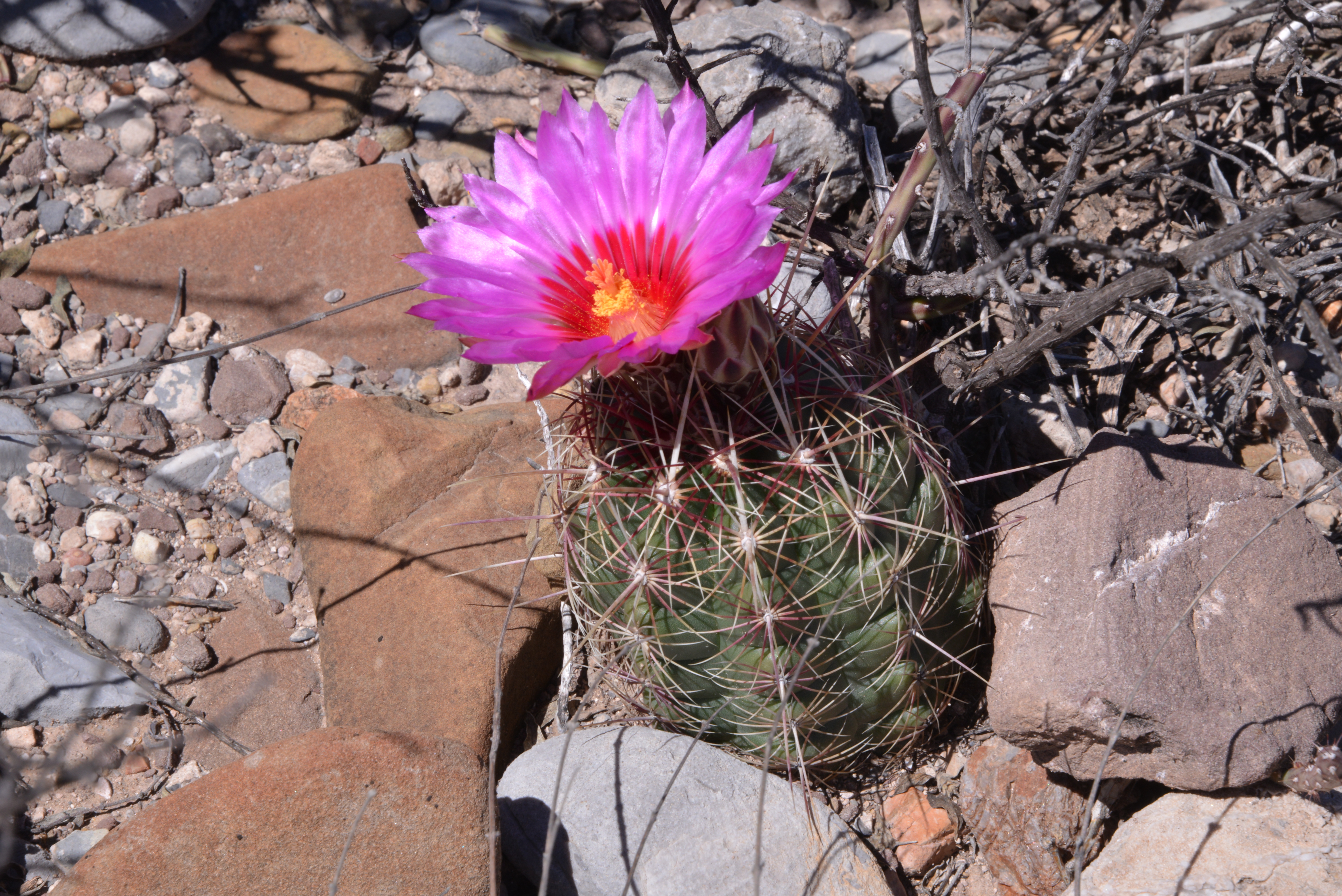
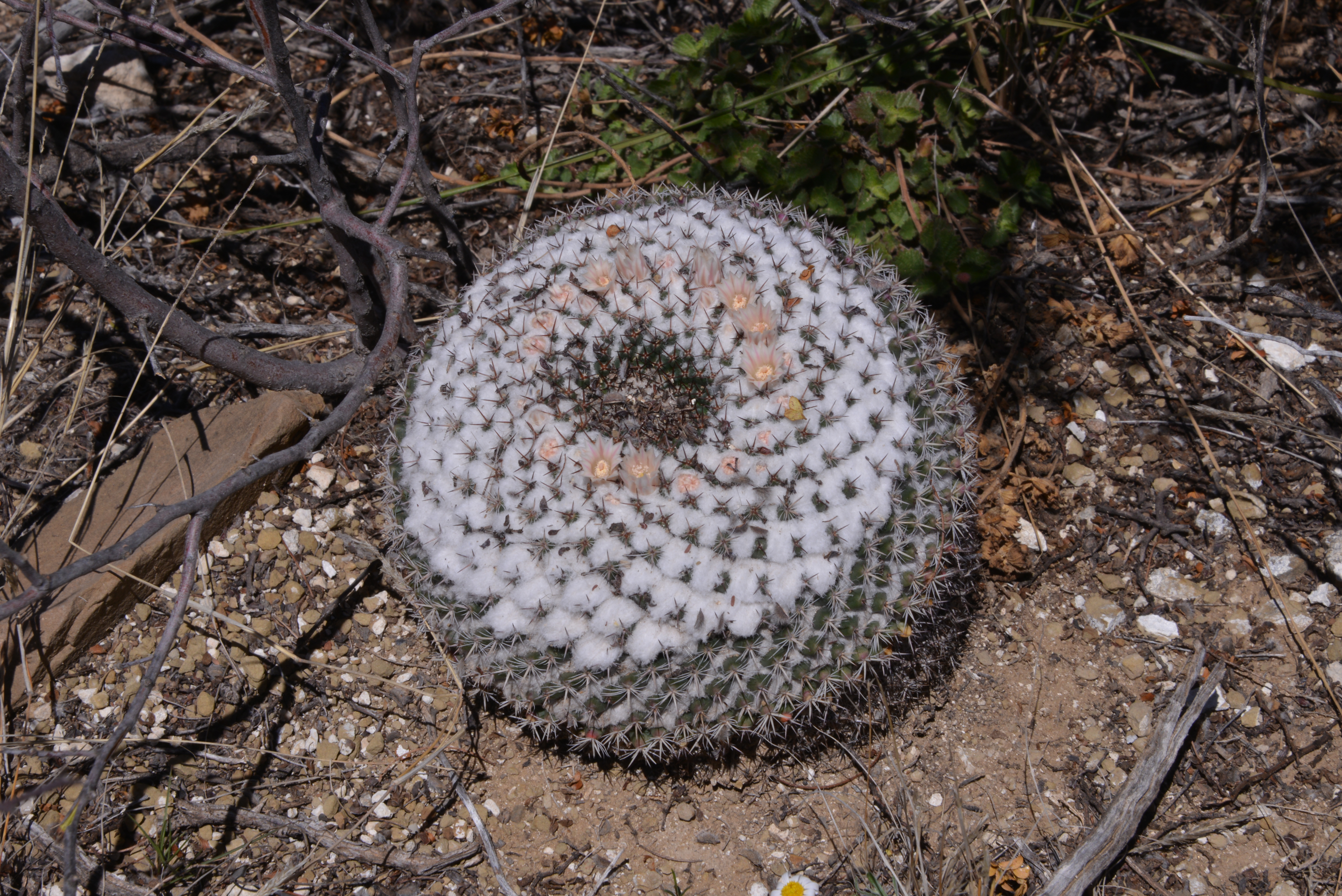
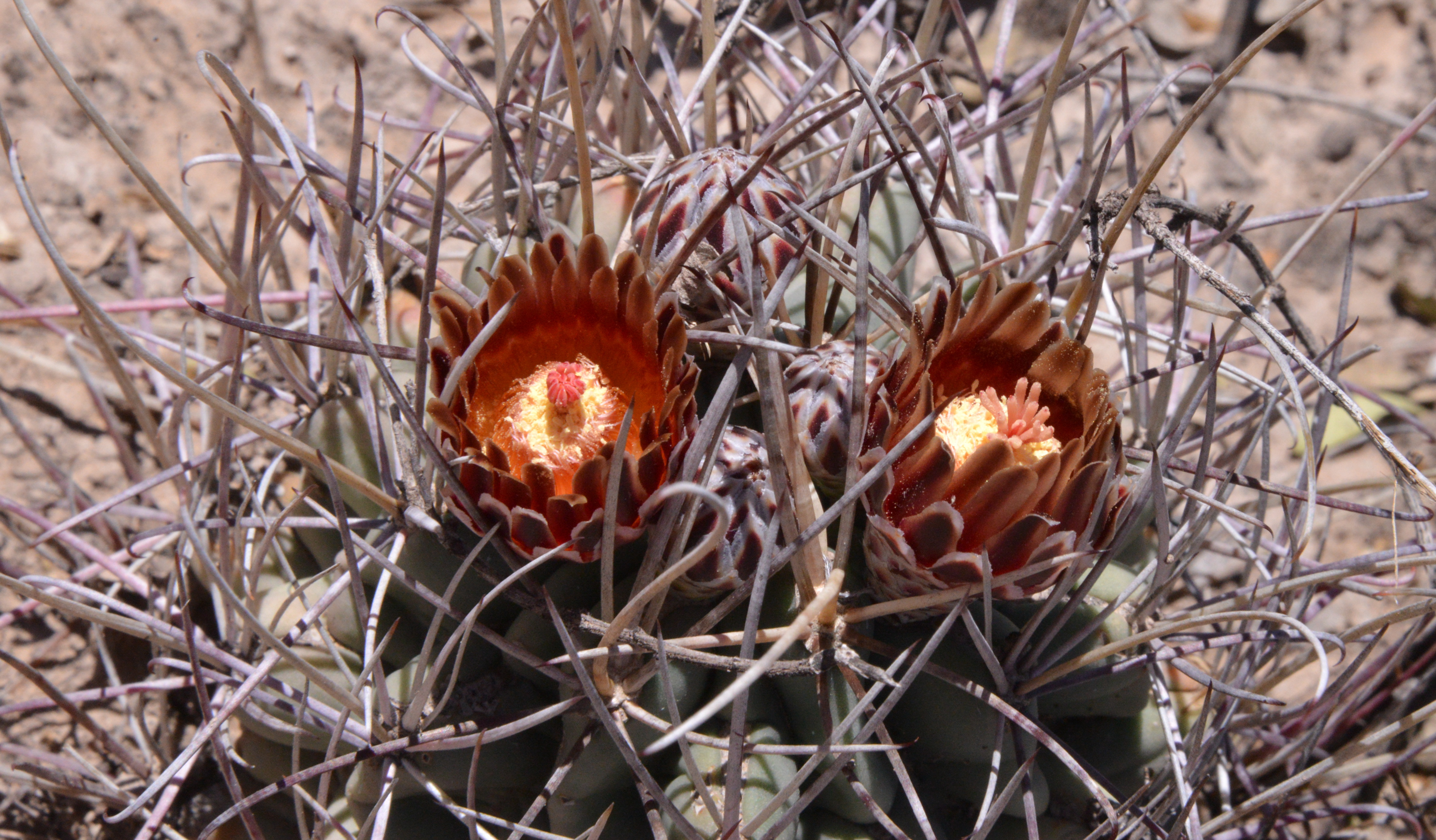
Just another WordPress.com site

Archive for the ‘Chile’ Category

Thursday 27 March 2014 – Jaumave to Rio Verde

Today was going to be a driving day, so I nestled into my ‘home’ for the last few weeks (back seat as Cliff had assumed the driver’s role, Ian the navigator role with me as director to specific locations guide) and closed my eyes – the quickest way that I know to make time pass by quickly.

When I woke up, we were bouncing along a rather rough track. What had happened? Change of mind, as we were making such fast progress, but on a road with little opportunity to stop, that Ian had found an alternative route that had turned out to be a little longer and significantly slower than had been planned, but still got us to Rio Verde in daylight, where we found a triple room at the Premier Hotel.

We made a number of stops along the track, but the images have already been backed up on my plug in HD, so the full details will have to wait until I review these Diary notes and fill in the blanks or make some corrections in weeks to come.

So here they are:

S3117: west of Ruta Federal 101, near Jaimes: Coryphantha sp, Cylindropuntia leptocaulis, C. sp., Echinocereus pentalophus, Ferocactus histrix, Mammillaria compressa, Myrtillocactus geomatrizans, Opuntia microdasys, O. sp., Tillandsia recurvata
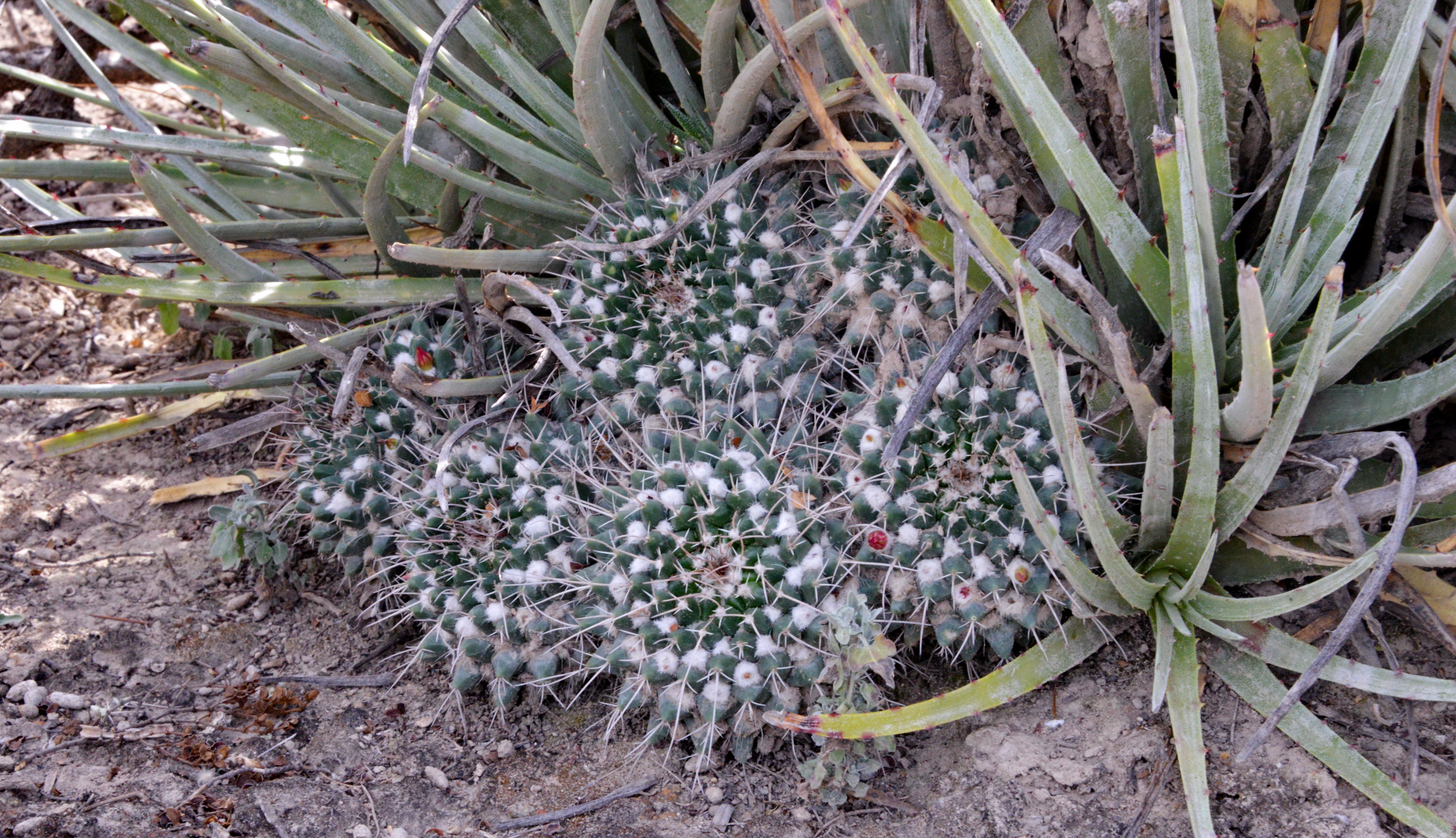
Mammillaria aff. compressa - S3117

Mammillaria aff. compressa – S3117

S3118: Along MEX 101: Agave lechuguilla, Aloe vera (cultivated) Cylindropuntia leptocaulis, C. sp. Echinocactus playacanthus, Echinocereus pentalophus, Mammillaria compressa, Myrtillocactus geometrizans, Opuntia microdasys, O. sp., Yucca sp.
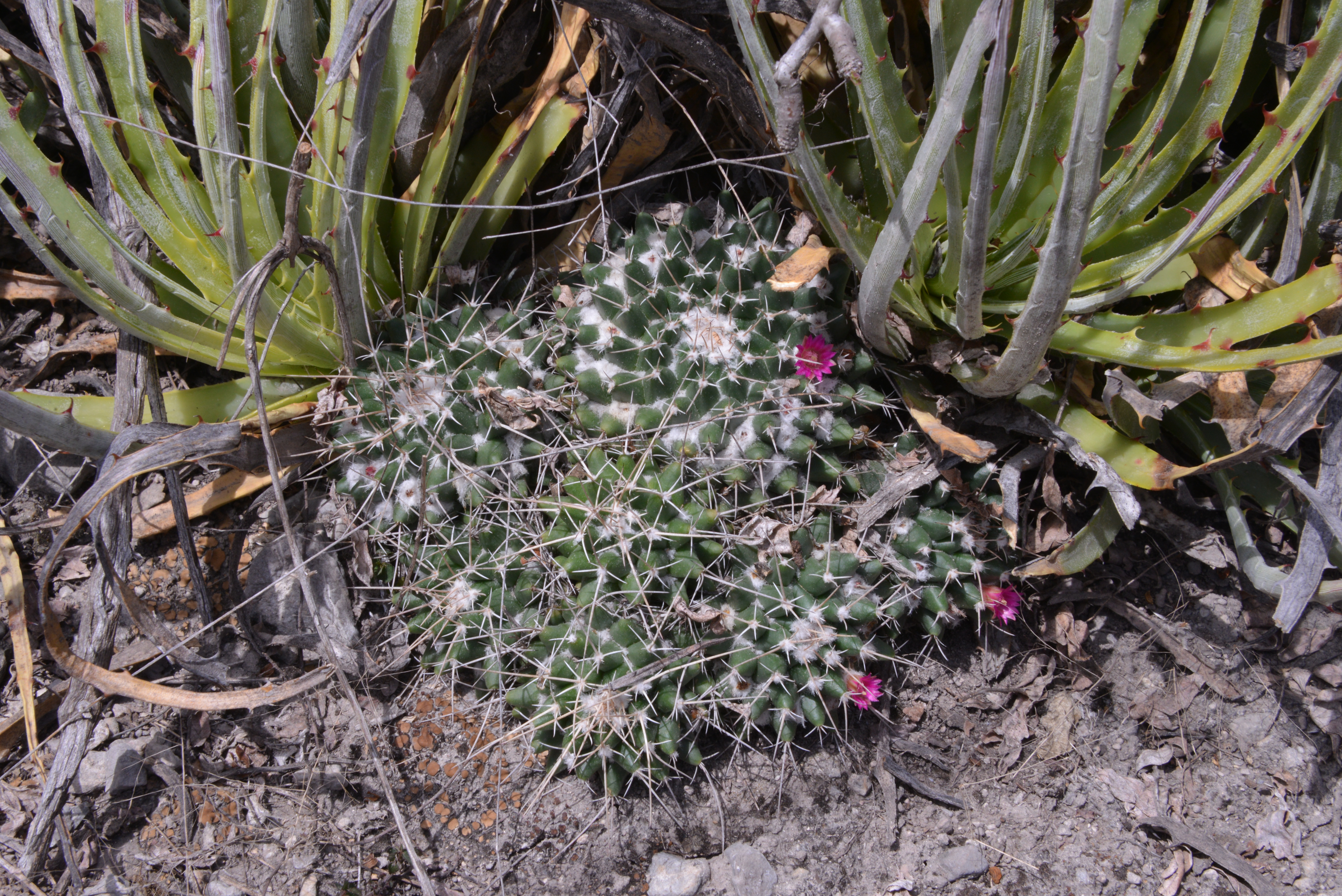
Mammillaria compressa - S3118

Mammillaria compressa – S3118

S3119: Agave lechuguilla, A. stricta, Asclepias subulata, Astrophytum myriostigma, Coryphantha sp, Cylindropuntia leptocaulis, C. sp. Echinocactus playacanthus, Echinocereus pentalophus, Ferocactus histrix, Mammillaria compressa, Mammilloydia candida, Opuntia microdasys, Thelocactus tulensis
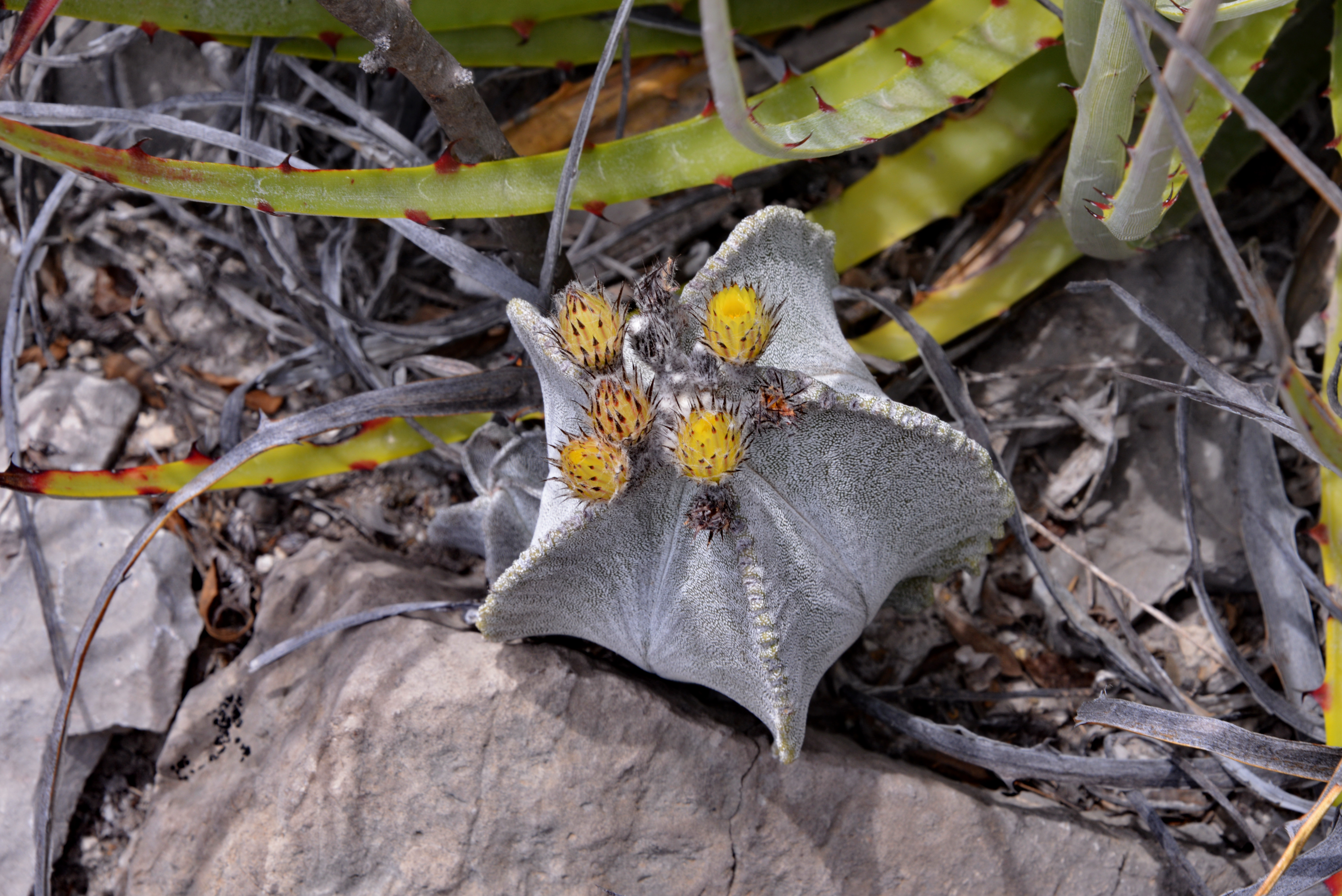
Astrophytum myriostigma - S3119

Astrophytum myriostigma – S3119

S3120: Coryophantha maiz-tablensis, Cylindropuntia sp,, Echinocactus platyacanthus, Echinocereus enneacanthus, Ferocactus histrix, Fouquieria splendens, Opuntia sp. Stenocereus (Rittercereus) pruinosus, Tillandsia recurvata.
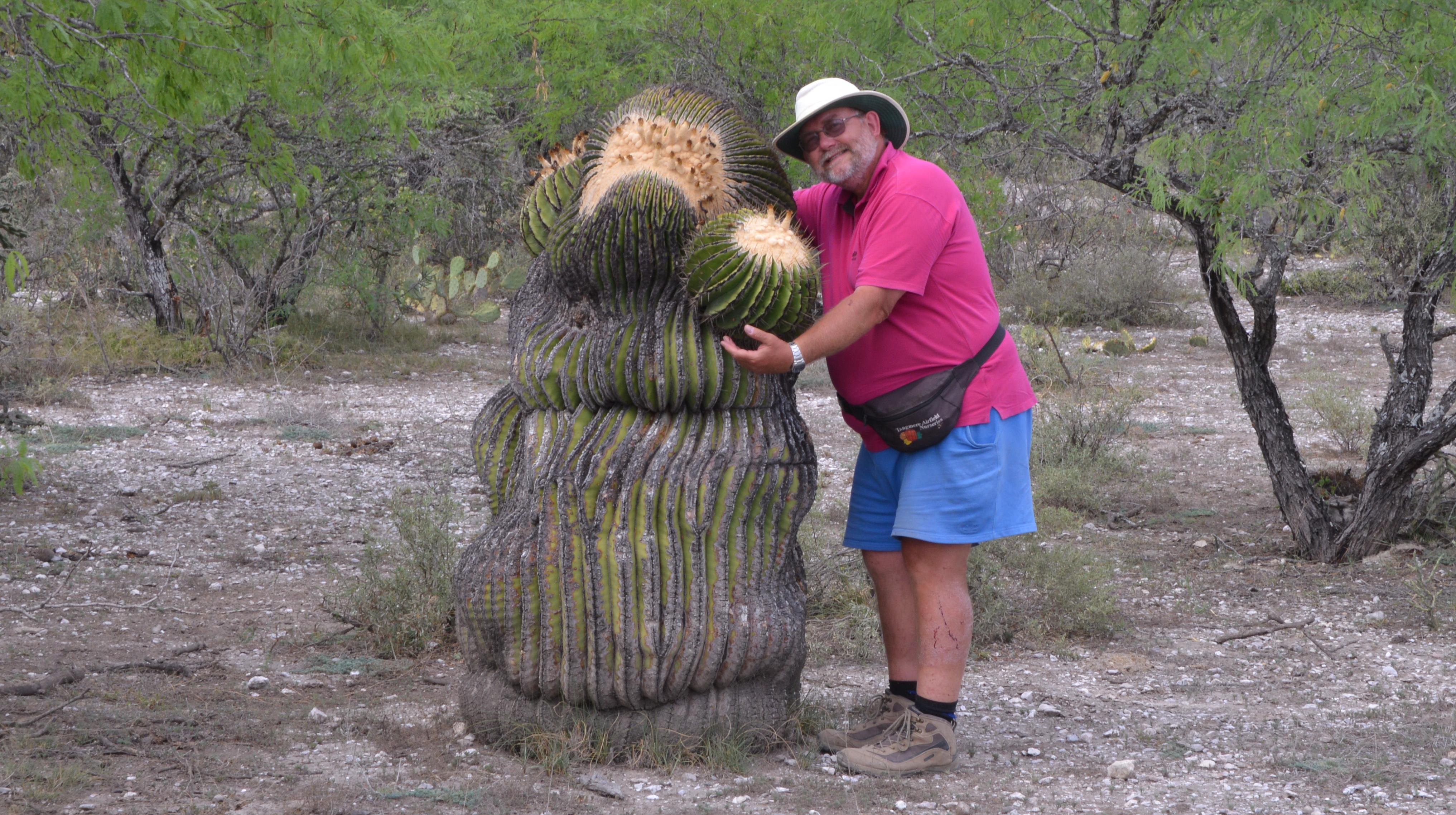
Echinocactus platyacanthus - S3120

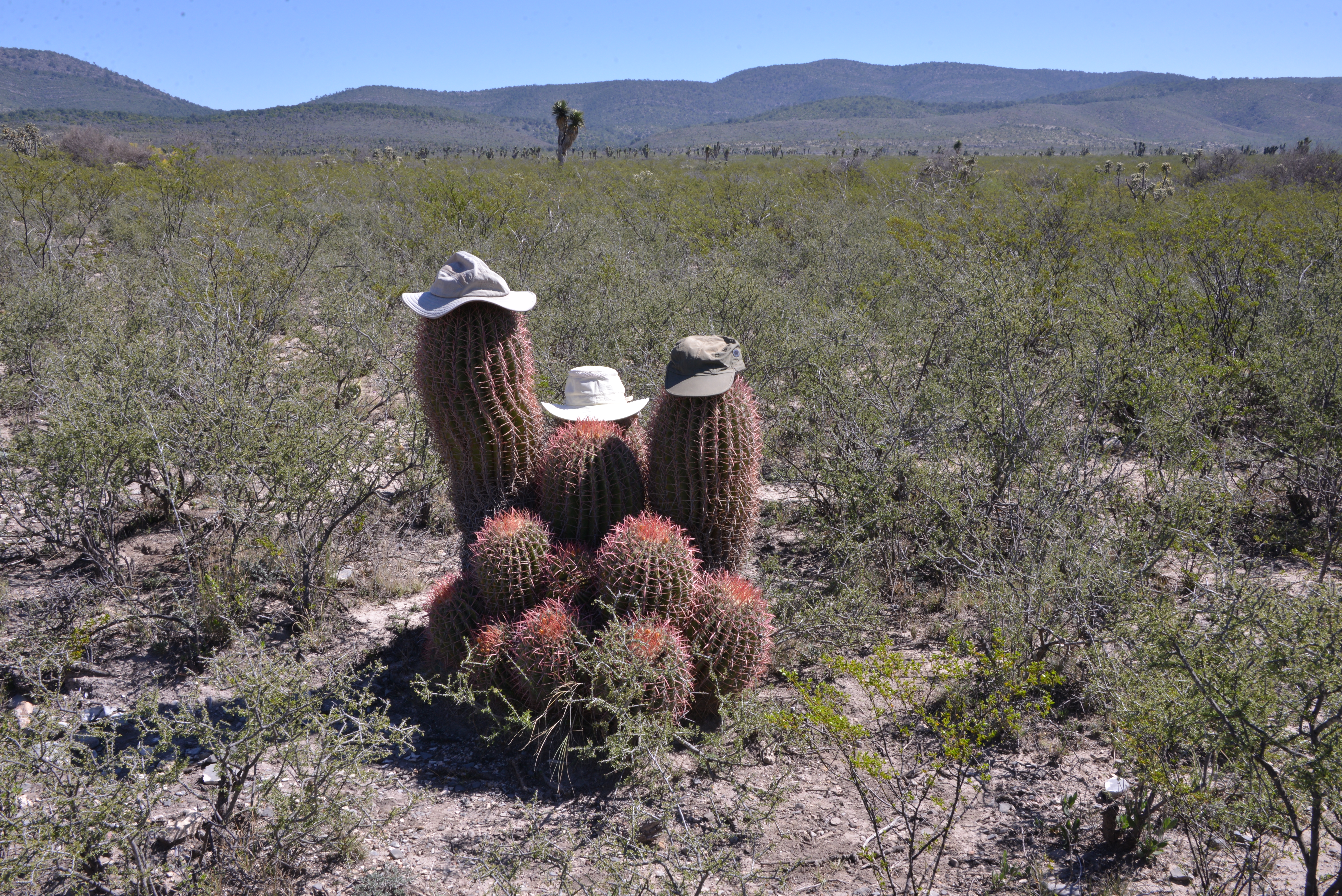
‘Fatty’ -Echinocactus platyacanthus – S3120

I have to admit to becoming really fed up with the names of my favourite plants changing continuously. I try to keep up, for the sake of good communication in the Diaries, in presentations and in articles, but names change faster than I can keep up with if Cactaceae Systematics Initiatives are to be believed.  Trouble is that at presentations I learn that most people still hang on to Backeberg names – no problem but it would be such a help if we could all stick to one, stable set of names. You may have noticed that in attempt to do this, Angie and I have started our own naming system, starting with ‘Smiler’ for a crested Copiapoa cinerea ssp columna-alba that we go and see each time that we pass through the Pan de Azucar National Park in Chile. After parking the car, Angie is able to walk straight through a field of 1,000 + columna-alba, straight up to the plant, so it certainly meets the criterion of being ‘distinct’, and yet there is no intention to suggest that botanically / taxonomically it is a different taxon.

Here is my second plant in this naming system (PK#2): meet ‘Fatty’ (a.k.a. ‘Michelinmanii’). Cliff’s pressence in the picture is purely to illustrate that there is no truth in the opinion that cactus explorers are the biggest threat to plants in habitat. We could not move most, even if we wanted to! In the ‘old system’ it is still known as Echinocactus platyacanthus. Tomorrow we’ll meet PK#3.

S3121: Disocactus sp, Fouquieria splendens
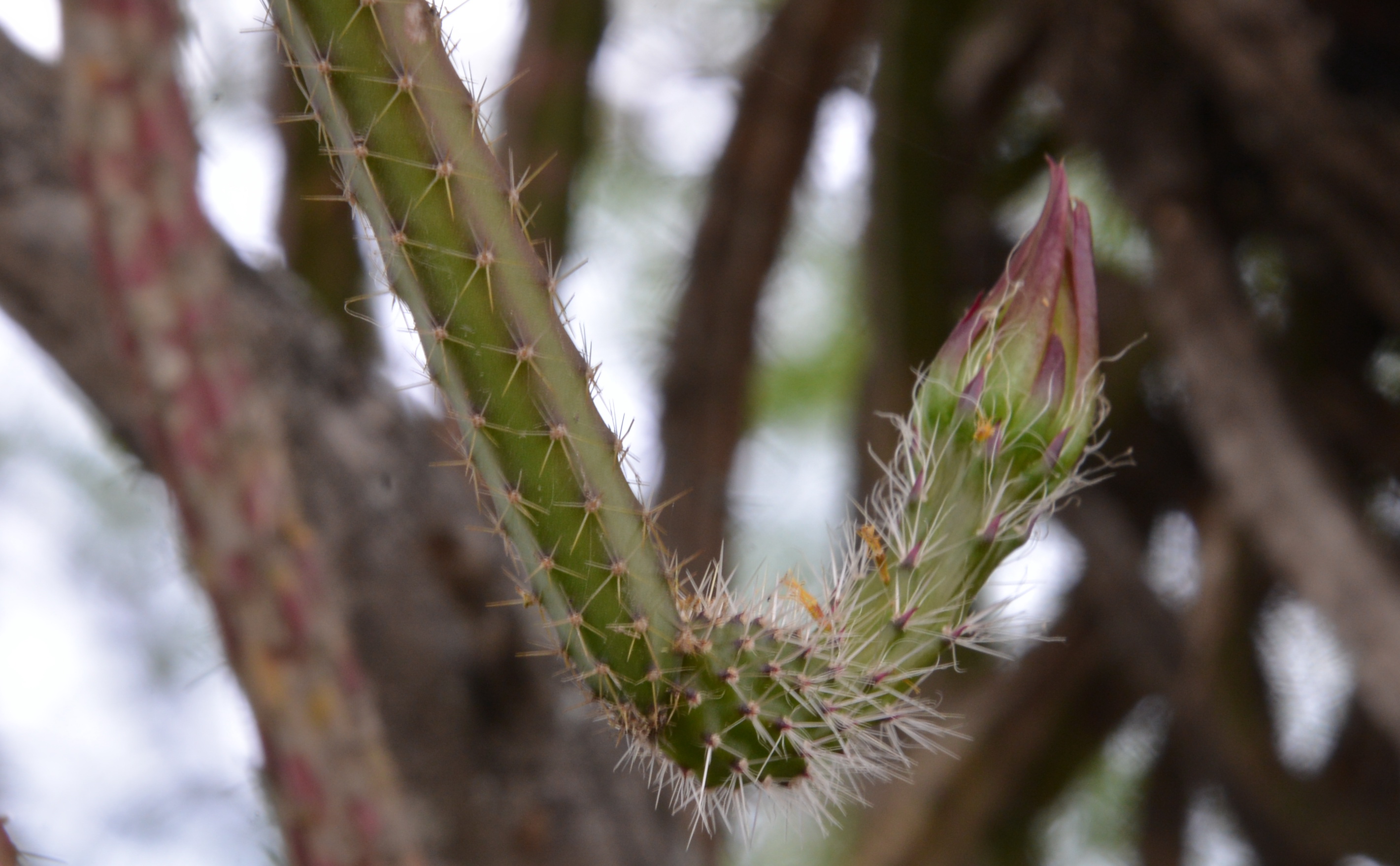
Disocactus sp - S3121

Disocactus sp – S3121

The plant above looks remarkably like ‘Aporocatus flagelliformis’ that we used to grow at the Holly Gate cactus nursery in the 1990s, except those plants tended to have their flowers nearer the base of the stem, rather than at the end like this one. Holding the branch to prevent the stem swinging in the breeze produced evidence that the plant had the same glass-wool like spines that I’d have in my fingers after repotting a few hundred plants for Terry Hewitt.

The track seemed familiar – was it the same track that Eunice Thompson and I had followed in the opposite direction in 2011? Yes, it was, but how did we miss the plants that we saw this time? That time we picked up a puncture and ended up buying a new tyre in Ciudad Victoria. This time we had no such dramas and promised to go back the next day to revisit some of the stops made in 2011.

.

Wednesday 26 March 2014 – south of Jaumave

I’m sure that I have mentioned this before, but if you plot the locations where cacti have been recorded from  on a map, you end up with the road map of the area. Mex101 comes into Jaumave from the north and leaves it to the south. There are literally hundreds of cactus locations reported along this road. The list of plants from these locations shows some confusion among the explorers that visited here – lots of names, especially for Mammillaria, but at times I think that a particular plant has been mistaken for another similar plant, which is then listed. As I mentioned before, I don’t claim to be an expert in naming Mammillaria, especially those in nature, although over the years I have grown (and killed) most of the taxa – I find it difficult to combine long spells away from home, with giving plants in my collection the care that they deserve.

For now, while my health permits me to travel to habitat, I’ll focus on taking their pictures in nature, while replacing the gaps in my collection each September at ELK.

Studying the maps last night, Cliff spotted a road to the El Cielo Biosphere Reserve that was founded in 1987. It seemed that we were the first visitors there, certainly among cactophiles. The main interest for visitors seems to be the birds, of which Ian claimed to have spotted several species – a great source of leg-pulling by Cliff and I as he claims to have seen birds such as the lesser spotted upside down red legged hawk eagle – but without images to prove it! Show us the pictures, Ian. We believe that he has been taking lessons from Mike Harvey who has entertained us on past trips with his years of bird watching experience.

There were no cactus locations reported from this area, so either there were none to be found or nobody had bothered to report their finds. The first stop, (S3110) proved the latter and I will try to make up for the lack of data by providing a full list of the cacti that we photographed  at the seven stops we made. By two o’clock we thought it wise to return to the hotel, as we had been on the road since 8:45. It only took us 45 minutes to get back, which indicated the time spent dodging plants with hooks and spines but not of the Cactus Family. And also the time we spent trying to get out of town. It is not a large town but with lots of one way systems and no signage to help until we were well and truly out of town, this can be a real challenge. Cliff and I recalled the day that we had spent the whole day driving around Arequipa, Peru without succeeding to find the way out – not one of our prouder moments!

For now, I’ll limit myself to the highlights, plant wise, at each stop. The whole day was spent on a fair to good gravel track, driving through a low forest, similar to the Catingaa forest in Bahia, Brazil.

S3110: Just a random ‘let’s stretch our legs’ stop without much hope of seeing cacti. We saw Ferocactus hamatacanthus, Coryphantha delicata, Echinocereus pentalophus, Cylindropuntia lepticaulis and a large padded Opuntia. We came back to the car, now covered in dry leaves and Acacia flower remains, probably Vachellia (Acacia) rigidula, with arms and Cliff’s legs covered in more scratches and with Cliff playing host to a small stick insect.

Coryphantha delicata - S3110

Coryphantha delicata – S3110 syn C. palmeri

S3111:  This stop will be remembered for the giant Thelocactus conothelos plants mostly in fruit (not yet ripe)  and some still in flower. We all took turns to pose next to the largest plant to provide an idea of scale. Ian also spotted a group of Ariocarpus trigonus, mostly recovering from having been chewed on by cattle or goats, but with one nice specimen plant. It was here that Ian spotted one young seedling with pectinate spination that we all agreed looked like a Turbinicarpus sp juvenile.

Thelocactus conothelos + PK (left) - S3111

Thelocactus conothelos
+ PK (left) – S3111

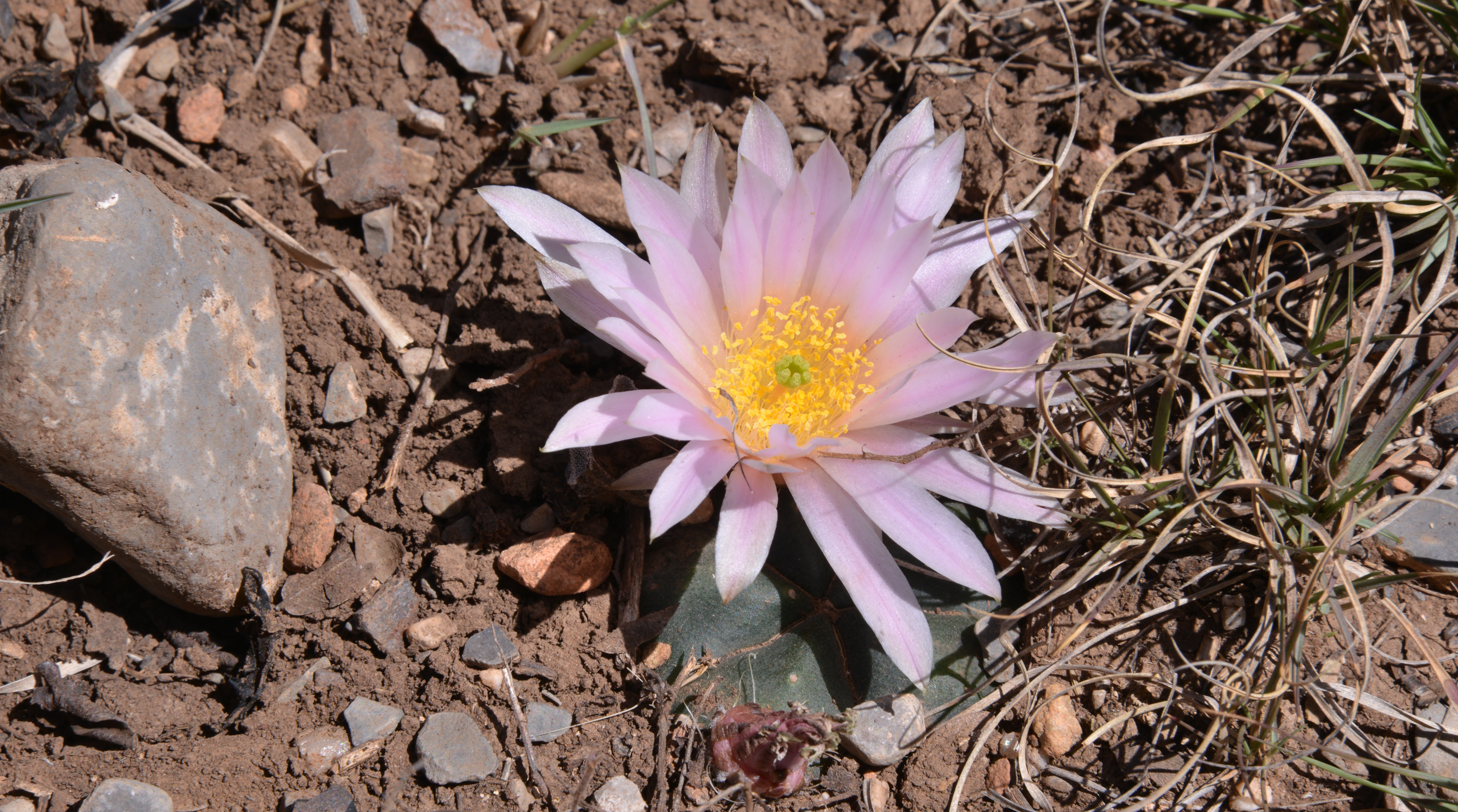
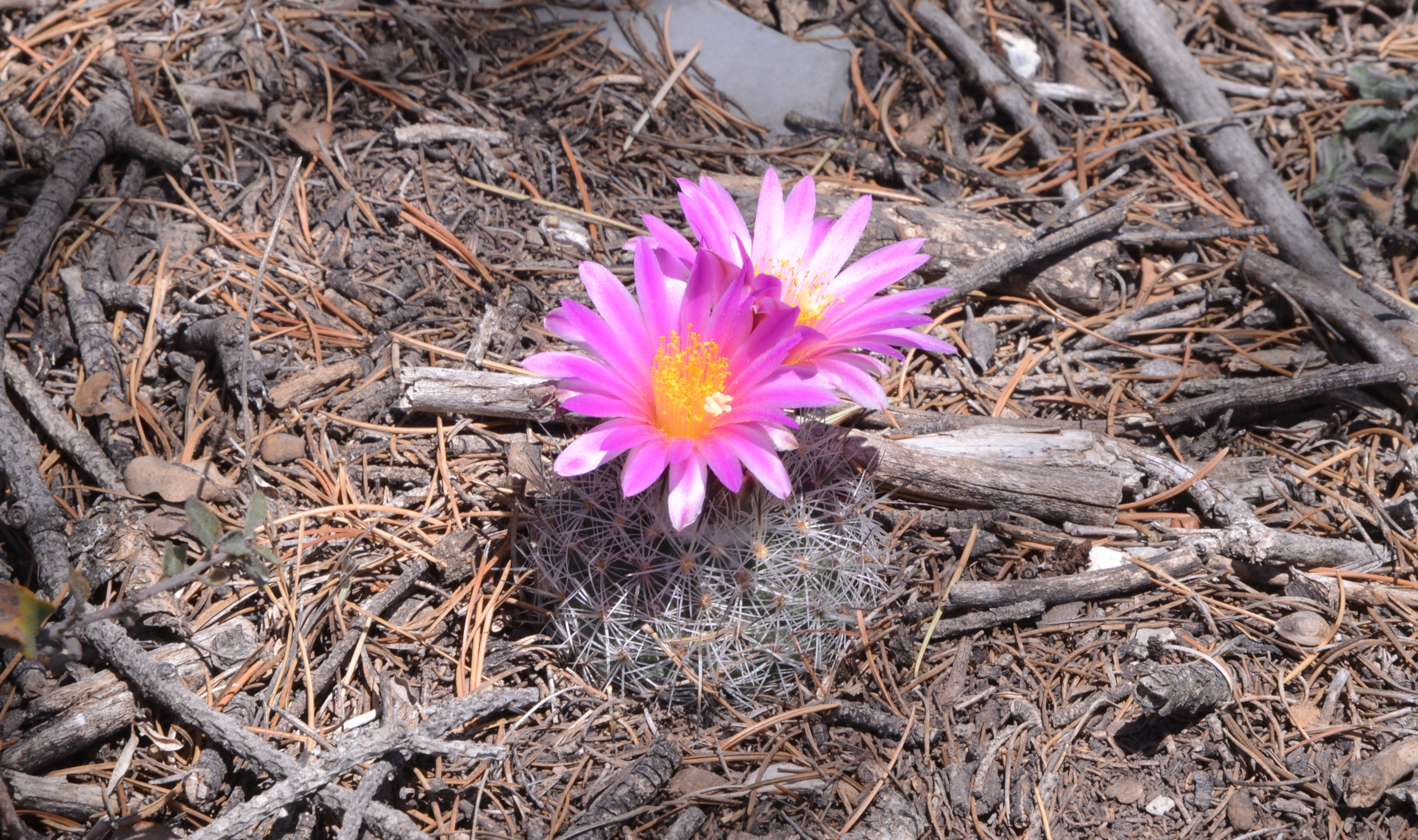
S3112:  More T. conotehelos to remind us that we were on a Thelothon, thus justifying our exploits today. Also more of the Turbinicarpus seedlings, this time larger and finally, on a clearing a dozen plants in full flower. My guess, under protest from Cliff and Ian, is that it is Turbinicarpus (Gymnocactus) viereckii, which has the benefit of being reported from  Jaumave, while their suggestions come from different states, some distance away. Here is a picture of a nice group – any suggestions to ID welcome:

Turbinicarpus (Gymnocactus) viereckii?

Turbinicarpus (Gymnocactus) viereckii?

Since our trip, Ian believes he has tracked this down to Neolloydia grandiflora, an old Fric name, now considered to be a synonym of Neolloydia conoidea. Close examination of our images back home also reveals individuals with the typical dark central spines, but not until much later in life and always on areoles high up on the stem. It is also remarkable that although we saw plenty of Neolloydia, right from the second day in the field, these were the only ones in flower. I’m surprised that the name has been sunk despite these distinguishing features, probably the plants in habitat are just not sufficiently known. For me, it is distinct enough from N. conoidea to deserve a (cultivar) name, but probably not sufficiently distinct to be considered a different botanical taxon, so Neolloydia conoideagrandiflora‘. What ever its name, they are cute floriferous plants in habitat and deserve a place in any small glasshouse or windowsill collection – raised from seed of course.

S3113: I have already mentioned similarities with the Brazilian Caatinga forest and this was enforced by the cephalia of Pilosocereus leucocephalus poking above the low trees and shrubs. Here the plants had come to the track, so the stop was to take their picture. Not sure if I even got out of the car.

Pilosocereus leucocephalus - S3114

Pilosocereus leucocephalus – S3113

S3114: At previous stops we had already seen a number of Mammilloydia candida, many of them in flower. There were some white spined clumps that were not in flower and looked different. Here we saw them with dark pink – mauve flowers. Michel Lacoste reports Mammillaria klissingiana from near Jaumave and I believe for now that this is the ‘other’ white Mam. we saw. Jatropha urens,from the Euphorbiaceae family, the one with the evil stinging leaves, stems, everything, was here – good to avoid.

Mammillaria klissingiana - S3114

Mammillaria klissingiana – S3114

S3115: Walking into a dry river bed, we spotted large Cycads and their younger siblings – no idea what species. Yesterday, Ian found two small Mams that I’m calling Mammillaria melaleuca for now. We saw more examples today, but here, Ian Eagle-yes found a small group in flower. The bright yellow flowers seemed to confirm the Dolichothele group, but the flowers seemed much smaller than what I have seen in cultivation in Europe. Special selection by nurseries for larger flowers? Or just the wrong name?

Dioon edule - a Cycad, S3115

Dioon edule – a Cycad, S3115

I hardly had the chance to open my bottle of drink when Ian called for another Stop – this time for a tree with some large Tillandsia growing on the branches. This was so near the previous stop that I’ll use the same number.

S3116: was really meant as the place to turn the car round, but why not take a look at what grows on the rocks as the dry river bed again crossed the road. Much the same as before, with a very nice M. candida in the shade, in full flower. And a strange ‘upside down’ Opuntia that had given up the will to grow upwards and was thus hanging down. A new species? Cliff and I agreed, thinking of Trichocereus bollingeriana in Chile where some stems of a plant hanging down seemed to justify a new species name; not for us.

On the way back to the car, on a ledge right below the nice M. candida, Ian pointed out yet another ‘different’ Mam. M. wildii?

Mammillaria viereckii (now considered a synonym of M picta) S3116

Mammillaria viereckii (now considered a synonym of M picta) – S3116

Oh, we’re going to have fun at the Mammillaria Society AGM with no end of ID challenges for the members!

Later, while I was writing up these notes, one of the workmen building the hotel around us explained that the weather is not always this nice. In December they experienced -7C and 30 cm (1 foot) of snow. It’s nice to know what these plants can put up with in nature? Of course there are other factors to consider – moisture, humidity, the length of the frost and the maximum temperature for that day. And are such events regular or rare exceptions?

Many of my cacti have died just after one night of a sharp frost in an unheated greenhouse, but then the day time temperatures never rose much above 2 C. while in nature it can rise again to 10 C or higher.

Tuesday 25 March 2014 – around Jaumave

Or rather, to the north of – as we headed back north along MEX101, the way we had come yesterday. Soon SatNav suggested a left turn, than through a small settlement, squeezing our way through the narrow lanes, to arrive at the coordinates (S3107) where others had found the plants some 10  years ago, but I’m sure visited by others more recently. An article by a Mexican published in 2008 blames collecting by foreigners as the main cause for its decline. Not the quarrying on the location where in 2011  we found many plants? I’d be surprised if we’d find any plants here.

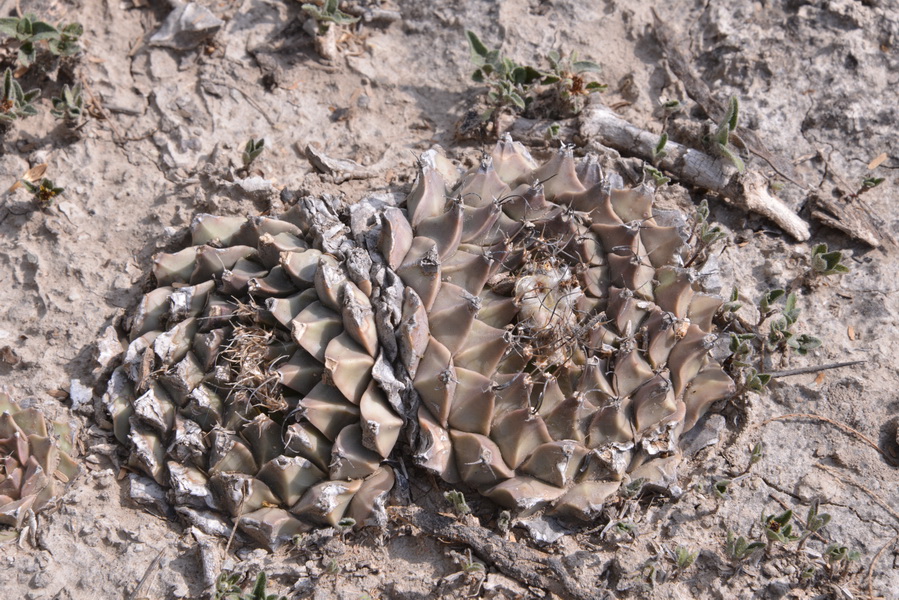
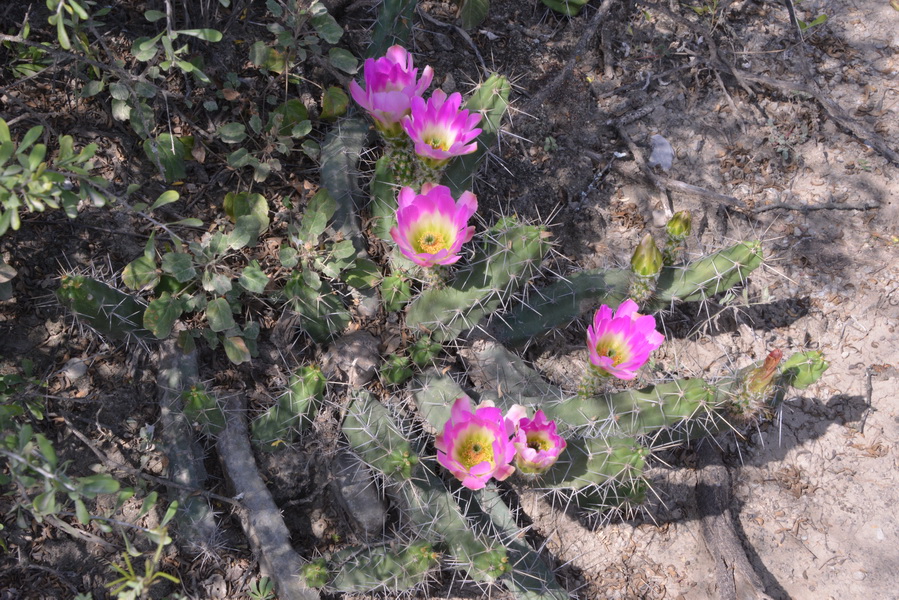
So what were we looking for? Obregonia denegrii! And at the location well-known and documented in on-line field number lists as the San Antonio location, we found them by the million. If the numbers had declined, they must have been growing in double or triple layers before! I met a Mexican on a bike who stopped for a chat. I showed him some of the images I had taken and keen to help, he parked his bike, took his axe and offered to take out a small tree and some shrubs to allow me to take a picture of Echinocereus pentalophus with seven flowers wide open. No thank you, I’ll just walk around the tree to get the shot, no problem. Have a nice day!

So what image to select? one with a carpet of plants or a close up of just one or two? or a really large, old, but slightly marked plant? or one of the few found in flower or …..  This will have to do for now:

Obregonia denegrii

Obregonia denegrii – S3107

Also here were Echinocereus pentalophus, in flower:

Echinocereus pentalophus

Echinocereus pentalophus – S3107

The images are taking an age to upload, so others like a long tubercled form of Ariocarpus trigonus and Astrophytum forms, some in flower will have to wait.

I’ll have to look up the name of the Ceroid in flower when I get home. Myrtillocactus geometrizans was also here, in flower and there were lots of ‘flat Mammillaria‘ – the type that you could grow in your lawn and mow over without damage, even on a low setting. I call them Mam heyderi, but understand that there many local names, depending on where they are. The Astrophytum myriostigma was very variable, making a nonsense of some of the form names around in cultivation.

The complete plant list for this stop (S3107) is: Aloe vera (cultivated), Ariocarpus trigonus, Astrophytum myriostigma, Coryphantha sp, Echinocereus pentalophus, Ferocactus hamatacanthus, Ferocactus histrix, Mammillaria baumii, Mammillaria sp., Myrtillocactus geomatrizans, Obregonia denegrii, Opuntia microdasys + O. sp. Stenocereus (Rittercereus) pruinosus ? and Tillandsia recurvata.

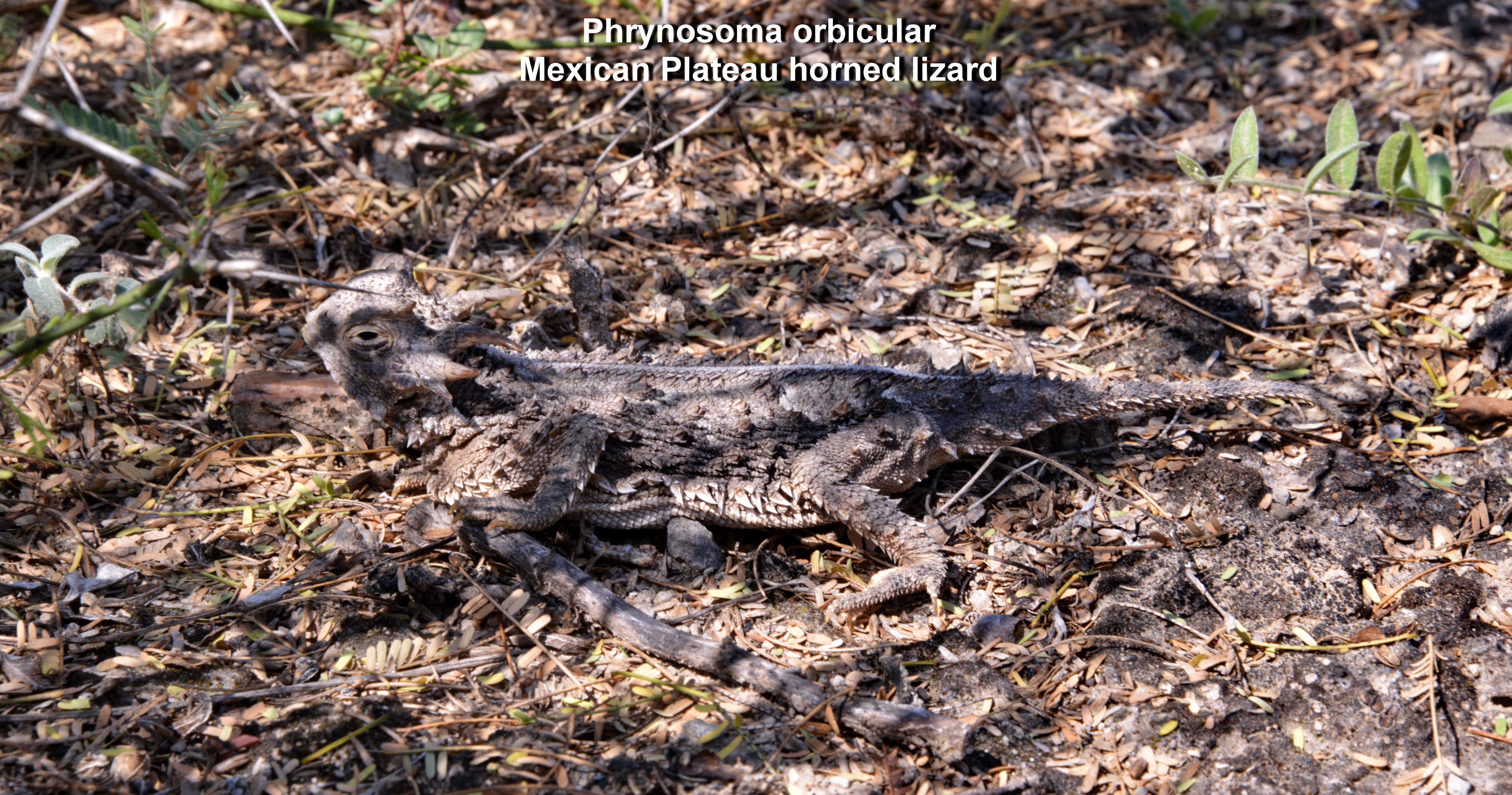
Also on the plant list is a lizard – to be fair, it’s more a photo index list than a purist plants-only list. The horned lizard, when anxious, will squirt blood from its eye for a distance of 5 ft to put off its attacker. Fortunately it was not too frightened by me.

lizard - S3107

lizard – S3107

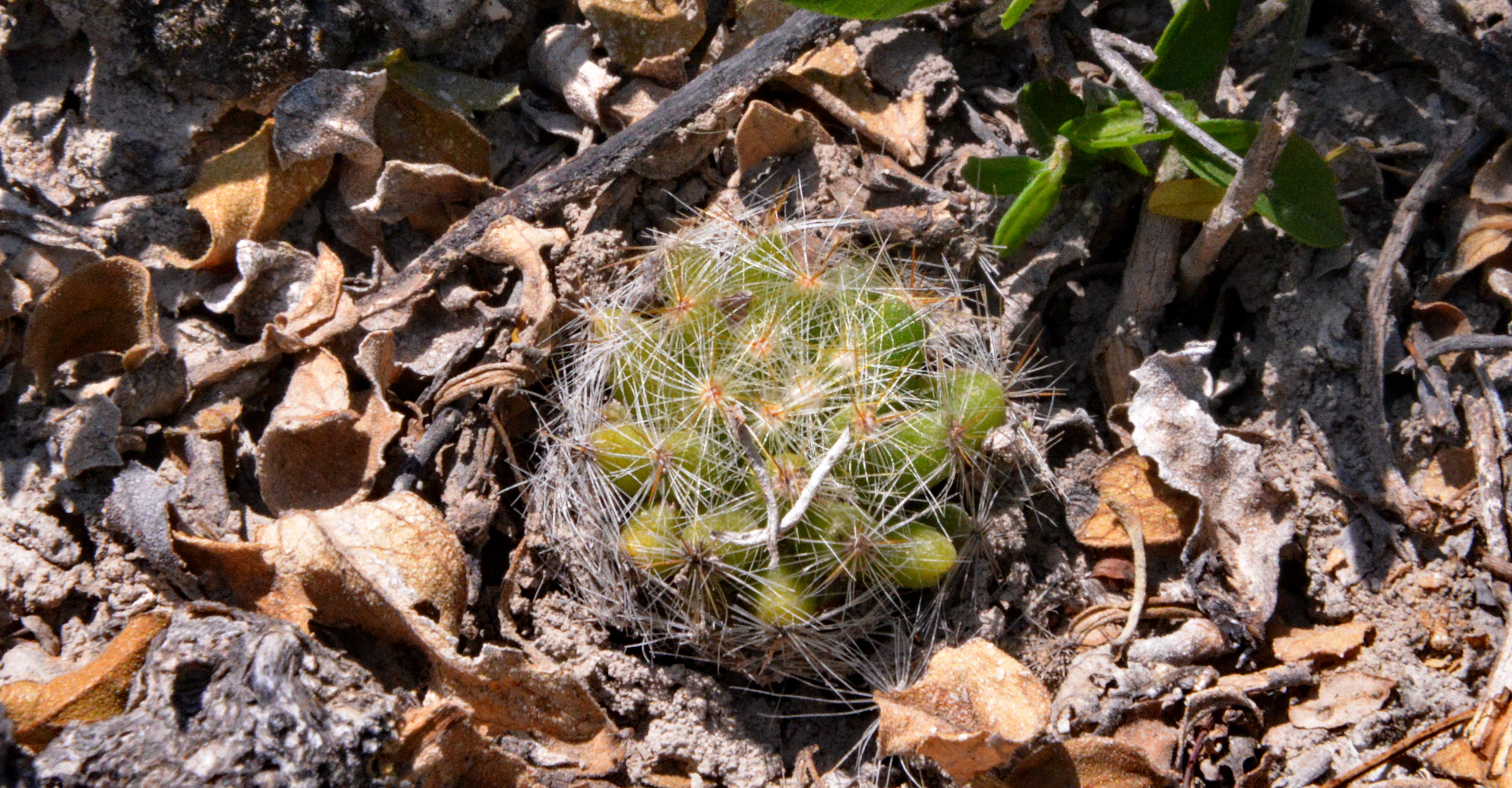
After some 90 minutes of indulging our cameras, we carried on for another 5 km along the track, to check the extend of the Obregonia population. Everything we had seen was still there, but this time Ian spotted two small Mammillaria not seen earlier. Mammillaria melaleuca is from this area and that is the name I’ll stick with for now until I show my Mammillaria and other associated genera images at this year’s Mammillaria Society’s AGM to put the learned members of the Society on the spot. Any information helps! (After a few presentations of ‘Mexico 2014 highlights’ in the UK, Mammillaria baumii seems a better fit)

Mammillaria baumii - S3108

Mammillaria baumii – S3108

We’ve extended our stay in Jaumave for another night, to take a look at another road near by to see what grows there. This is really turning into an amazing trip in terms of spectacular plants. No doubt I’ll have to make more trips, as today’s Thelocactus count was zero.

Ariocarpus trigonus with Obregonia denegrii

Ariocarpus trigonus with Obregonia denegrii

Sunday 23 March 2014 – Around Galeana

As accommodation in Rayones seemed to be a bit hit and miss, we decided to use Galeana as our base for some exploring in the Rayones region, having first replaced our punctured tyre with a second hand one at the local Vulka.

Keen to avoid more flat tyres, our journey was at a steady pace, allowing Ian to spot Thelocactus matudea in the roadside shrubbery – well, it was in flower! How could you miss it? (S3100)

Thelocactus buekii 'matudae'

Thelocactus buekii ‘matudae’ – S3100

Past Rayones, we headed to a location where in 2011 we had found Ariocarpus scaphirostris. The plants again looked very dry, with just the tips of their tubercles visible above the slatey mud stone. This time, Cliff was here with his trusted paintbrush to clear up this part of the Sierra Madre, revealing some nice mature plants, before they were covered up again. There was a very strong wind blowing, reminding me of cactus hunting in Patagonia! Fortunately the heavy digging machines spotted in 2011 had focused on repairing water management structures on the other side of the road.

Ariocarpus scaphirostris - S3101

Ariocarpus scaphirostris – S3101

We passed through Rayones again on our way back to Galeana with one more search in mind, for Aztekium ritteri. The gypsum hillside which is the favoured habitat was easily found but our first attempt failed to find a slope steep enough to satisfy their other habitat needs. Farther along, Ian disappeared into a narrow canyon and emerged triumphantly.  He pointed us down a narrow track and soon we were seeing first one, pointed out by Ian, than others, found by ourselves. We must be doing something right, judging by the impressive list of choice plants seen on this trip.

Aztekium ritteri - S3103

Aztekium ritteri – S3103

Saturday 22 March 2014 – Ramos Arizpe to Galeana

Yes, we’re back in Galeana, this time for a two night stay. We’re staying in Hotel Jardin Colonial on the Plaza, the same hotel that we stayed in in 2011. Like other places where I had stayed before, this hotel too has enjoyed a facelift and upgrades to decor and bathroom facilities. Sadly the improvements do not extend to a lift to the tird floor that we reach via the narrowest of stairways.

But I race ahead again. Using data that I had loaded to Google Earth I had selected three stops on what seemed to be a decent enough road between Ramos Arizpe and Rayones. Paper maps can be deceiving as indeed can SatNav systems. Put a cartographer (Ian) into the mix, who would claim that while SatNav suggested ‘right’, his instincts said ‘left’ and you can imagine that we saw a fair amount of the area on more than one occasion today. And yet tempers, as on the whole of the trip, stayed very pleasant, after all, we were driving around in the sun, surrounded by cacti, with some expectation to see cacti as yet not seen by us in nature, ahead of us.

Once we had left suburbian Saltillo behind us and were heading south on Mex 57, all four information sources agreed on where to go and where to turn off. Apart from some minor differences of opinion, this continued on the tracks. The car has its own SatNav bolted in to it and this could not be removed when we explained that we had brought our own. Ironically it is branded as the ‘Hertz Never Lost’. Yeah, right!  Both SatNavs, or rather the servers that provide them with satellite data seem to be aware of one way streets, taking the view that there is a 50% chance that you can enter any road in town or village. Of course 50% of the time they are wrong, so we’ve learned to carefully nose the car around a corner to see which way the parked cars are pointing or for signs of other moving traffic. So far, so good.

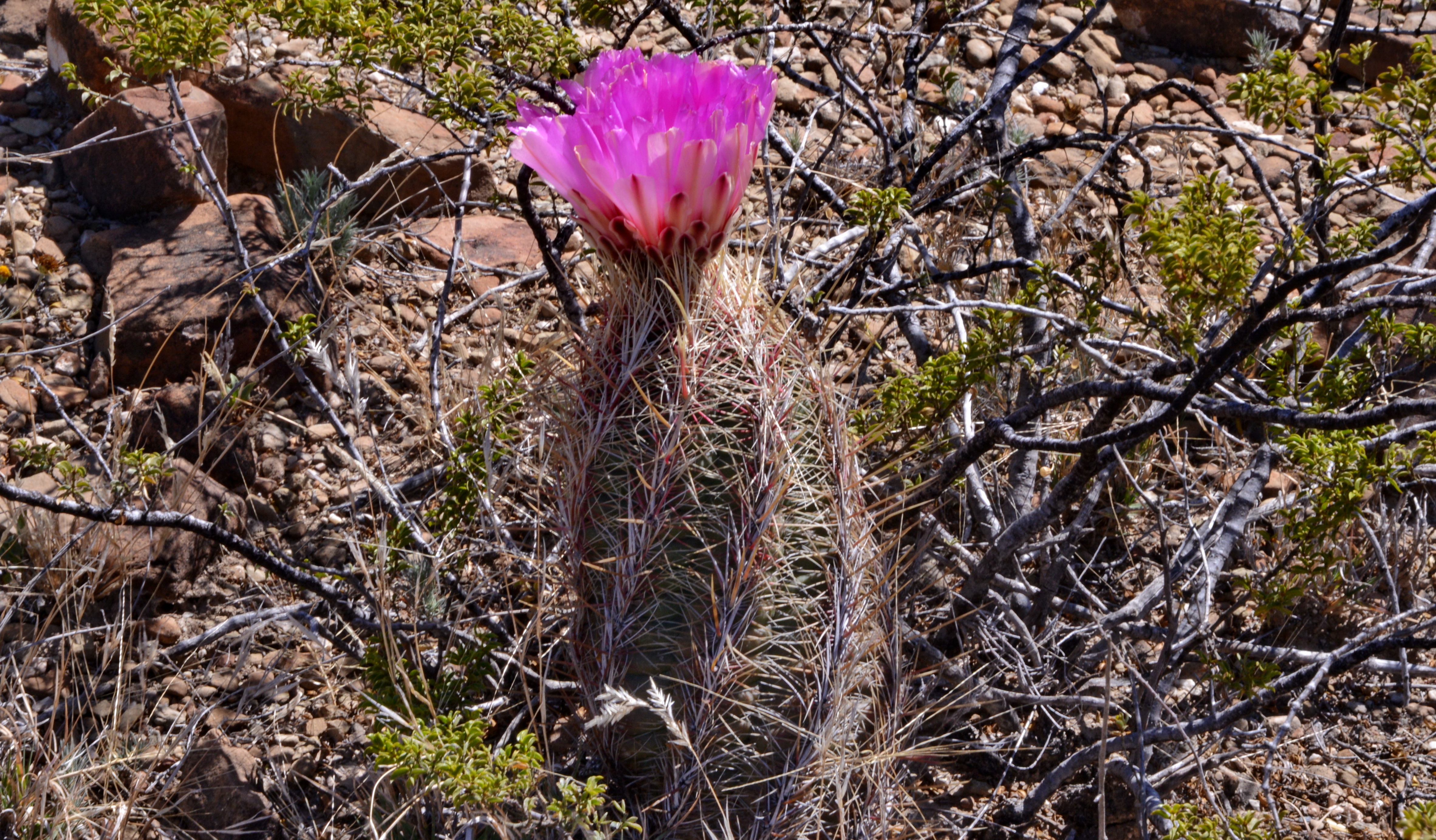
And so we eventually reached the first selected location, having earlier made a stop for a large Ferocactus pilosus, (S3096 for a sort of group photo and some flat-to-the-ground Mammillaria and Ancistrocactus scheerii (?) plants, in bud, hiding underneath shrubs and in the grass.

Ferocactus pilosus group photo - S3096

Ferocactus pilosus
group photo – S3096

Our selected spot(S3097)  did not look very promising, we had been driving through very similar vegetation for hours, so what was different here? Within seconds of leaping into the field, Ian had found Turbinicarpus (Gymnocactus) beguinii, in bud and then in flower. After the initial wave of picture taking we straightened our backs and asked:’What about Echinocereus knippelianus?’  I suggested that it would have to be in flower for us to spot it. Seconds later, Cliff reported that it was! In flower! At his feet!  As again we sank to our knees to take it’s picture, Ian spotted the only specimen that we saw that was not in flower, barely visible until we had made some horticultural adjustments to the scene by removing some grass. Not only do we not collect plants – we also leave the location well tended.

Echinocereus knippelianus - S3097

Echinocereus knippelianus – S3097

Just as pretty, and more plentiful were the Stenocactus, seeming to prefer open patches of grassland, again in full bloom, often with 3-4 flowers per plant rather than the solitary flowers on the Echinocereus. All good things come to an end and it was time to move on again.

Our next stop had been earmarked for Ariocarpus scapharostris, close to Rayones, but it seemed that we were in one valley, with the good road to the spot I had visited in 2011 running through one nearby, parallel, but divided by tall tree covered mountains with very few tracks crossing them. As a result, instincts and SatNavs clashed leading to endless ‘Make a U-turn’ instructions from the machines.

S3098 was a quick stop for another Turbinicarpus (Gymnocactus) beguinii in flower.

Turbinicarpus (Gymnocactus) beguinii - S3098)

Turbinicarpus (Gymnocactus) beguinii – S3098)

Finally the sound of air escaping under pressure from our front tyre brought us back down to earth (S3099). Luggage out, old tyre off, new tyre on, luggage back into the car – it has become a well rehearsed exercice.

Back on the road, we decided to invoke yet another form of navigation: ask people you meet along the way! This worked much better, so that we reached  Galeana well before dark.

Tomorrow’s first task is to get the tyre fixed or replaced – on a Sunday morning! Good luck is needed.

Friday 21 March 2014 – Cuatro Cienegas to Ramos Arizpe

Yes, we’re back at Ramos Arizpe,with the noise of Mex 40 making this the worst accommodation of the trip. But it’s on the way to tomorrow’s planned stops, so what.

Apologies to those who also read Ian’s email reports, from which they will have learned that my companions are behaving like a special needs group outing; leaving things at the hotel, joking with heavily armed soldiers at check points, talking to Yuccas (never talk to strangers Cliff, wait until they introduce themselves) and people who open gates and then lock themselves out as they close it.

Our hotel in Ramos Arizpe is the same as previously reported as being in Saltillo. The two towns have grown together with industrial development along MEX40. A good place to leave soon after breakfast!

I had made a request to revisit a stop where in 2010 I had seen the most magnificent crested Ariocarpus retusus. That time we had just driven to the location where Eunice and I had climbed the hill to one  side of the track while John Bleck had ventured to the other side where he found the plant. This time (S3094) we approached the site through a series of gates, the last one of which was bolted, we approached the site on foot and so I missed my friend from 2010. Still found lots of interesting plants which had their picture taken, including another, not quite so spectacular crest.

Ariocarpus retusus - S3094

Ariocarpus retusus – S3094

Again, there was an interesting mix of cacti_etc that crossed our camera lenses: Agave lechuguilla, A. sp. Ario resusus, Coryphantha sp x2m Echinocereus enneacanthus, E.  longisetus, E. pectinatus, Epithelantha micromeris, Ferocactus hamatacanthus, Fouquieria splendens, Mammillaria sp, Sclerocactus scheeri, Selaginella pedidophylla (resurection fern) and Yucca sp.

The second and last stop of the day (S3095) was again at a place I had visited in 2010, as it had Leuchtenbergia principis growing there. This is a plant that we had probably walked by a dozen or more times on our trip, but which is so well camouflaged, by looking dead, that unless you look for it specifically, you miss it. Ian found a young seedling, looking as though it had just arrived from a Dutch nursery, but had walked straight past the parent, an undamaged specimen that would have caught admiring glances if it had been displayed on a showbench in the UK. Of course the plant stayed where it was born, in Mexico, for others to admire it, should they pass.

Leuchtenbergia principis - S3095

Leuchtenbergia principis – S3095

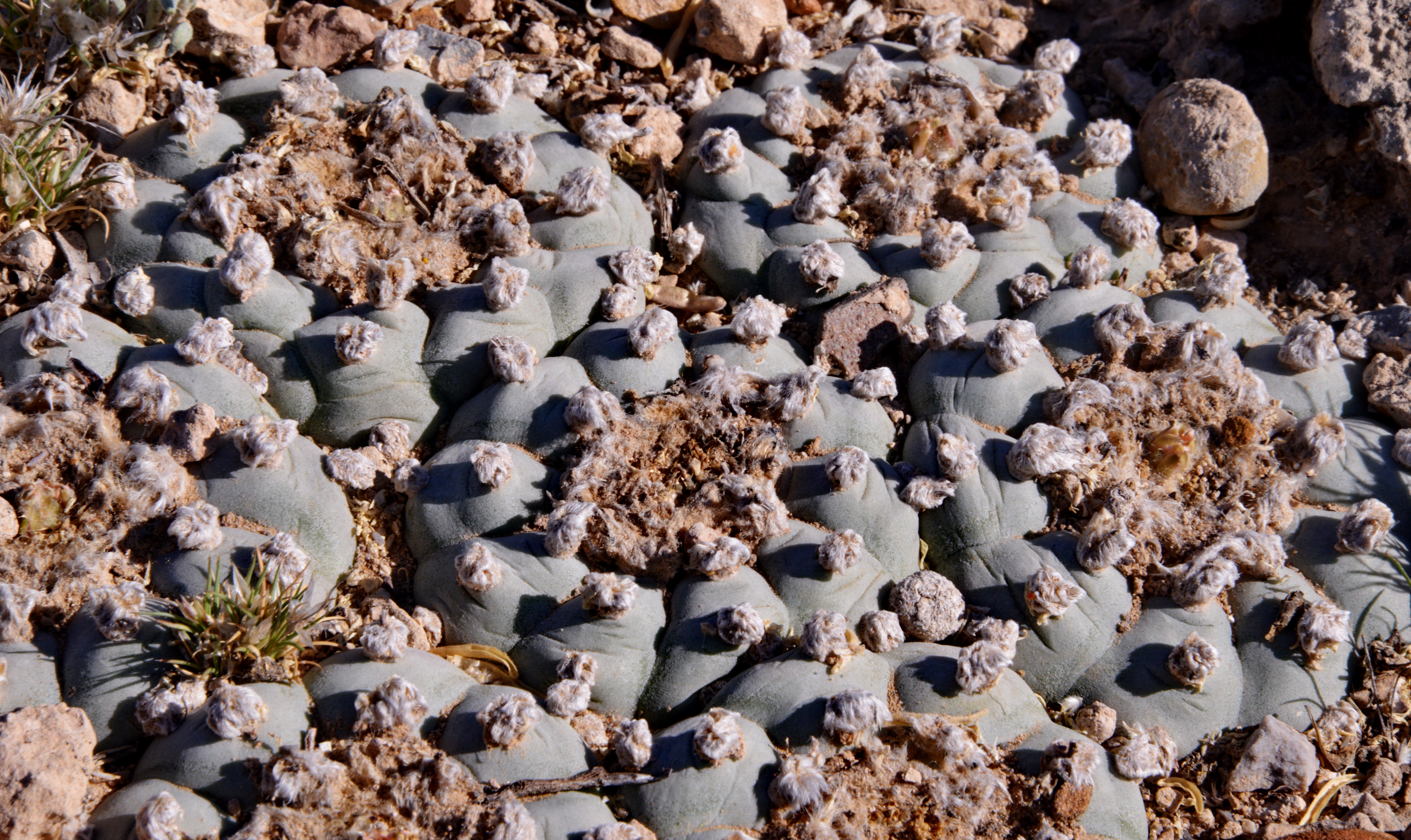
The Lophophora williamsii found here (by Ian) was not bad either, enough to make your mouth water!

Lophophora williamsii - S3095

Lophophora williamsii – S3095

Thursday 20 March 2014 – around Cuatro Cienegas

This is another day where, back home, months later, I find that I never produced a Diary page for this day, so I’m making this up from memory (yeah, right!) with maps and 193 images from six stops to help me.

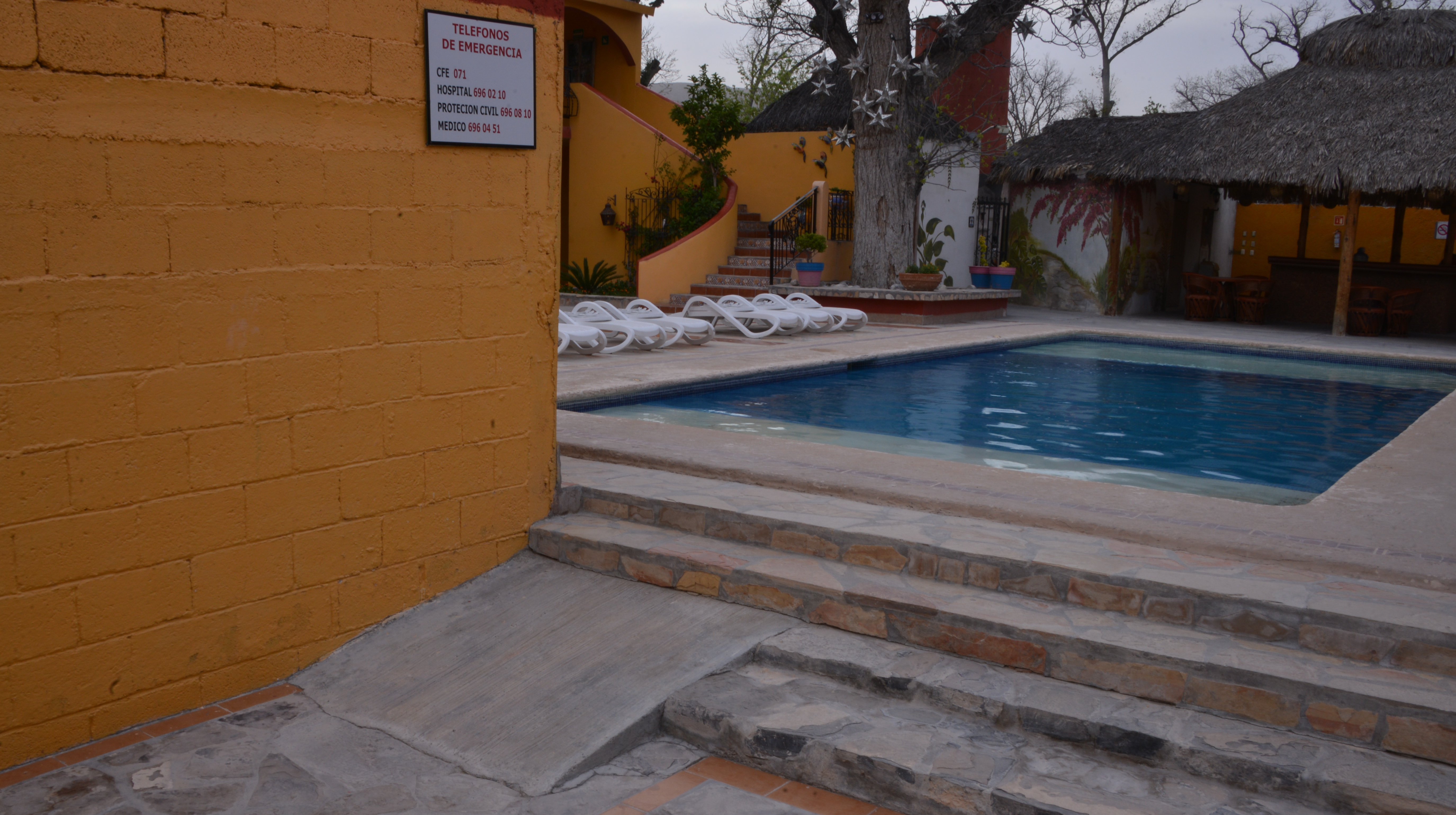
S3088 was simply for images around our hotel and around town. I love taking shots of quirky signs etc, so loved the ‘No smoking’ sign above the BBQ. Health & Safety is alive and well and has reached Mexico. Angie’s son Adrian is a wheelchair user and will love the picture of the wheelchair ramp up to the swimming pool area. It seems that later they decided to add another two steps to reach the pool, but forgot to extend the ramp:

Ramp In the Dutch language, the word 'ramp' means 'disaster'. Here too, if you are a wheelchair user coming down from the pool!

Ramp
In the Dutch language, the word ‘ramp’ means ‘disaster’. Here too, if you are a wheelchair user coming down from the pool!

Our northern-most Thelocactus on this trip was to be Thelocactus lausseri. We had been warned that this plant is only found on a private property north of Cuatro Cienagas and that the owners were not friendly when it came to allowing cactus tourists on their land to photograph the plants. We had coordinated for our SatNav for the gate to the property – you never know if there were people to have a chat with to ask what was possible. Things had changed: there was another gate, some 8 km before the gate that we knew about with a number of formidable padlocks. Sometimes fences are built to stop animals from escaping into the road, sometimes they are aimed at keeping people out, as was clearly the case here. We did not feel like pushing our luck. ( S3089)

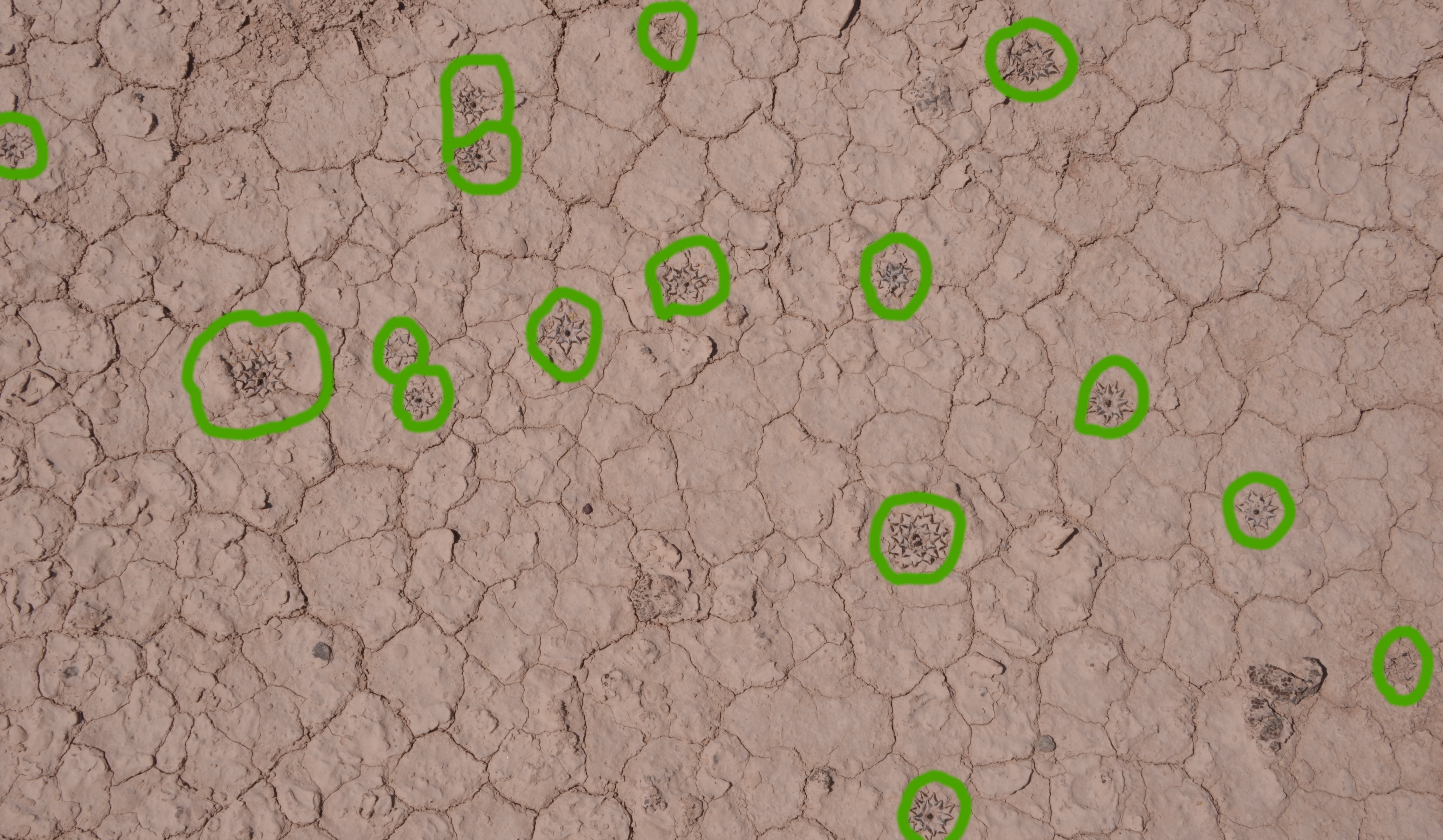
Instead we headed back south along Mex 30 to S3090 where on previous visits we discovered the ultimate ‘cactus tourism spot using modern technology’. We had coordinates for a population of Ariocarpus kotschoubeyanus and entered these into SatNav. It warned us that there was a turn coming up that we should take. It turned out to be a dirt track back into the desert. After a short while, it told us to turn again, this time to follow a straight line on the screen to a flag marking the spot to go to. We stopped ‘on the flag’, in a large flat, featureless area. Not a plant in sight. Until we opened the doors of the car and each found one or two Arios growing right below us, where we were going to put our feet. There were hundreds or was it thousands of plants all around us. Purist Cactus Explorers will frown at this. ‘Proper Explorers’ like to strap on a ruck sack, load up with water bottles and camera gear and start walking into the desert heat. They have to suffer for their pictures. I don’t mind doing that, if absolutely necessary, but getting there in the comfort of an air conditioned car has its benefits too. You should try it!

Ariocarpus kotschoubeyanus - S3090 The density of this population continued for kilometers

Ariocarpus kotschoubeyanus – S3090
The density of this population continued for kilometers

We drove across the dried up silt of what in wetter days would be a lake, to the foot of the hills (S3091) to establish the extend of the Ario populations. They reached to a few hundred meters of the foot of low hills. They were then replaced by some very desiccated Coryphantha poselgeriana,  Echinocereus enneacantus and Agave sp.

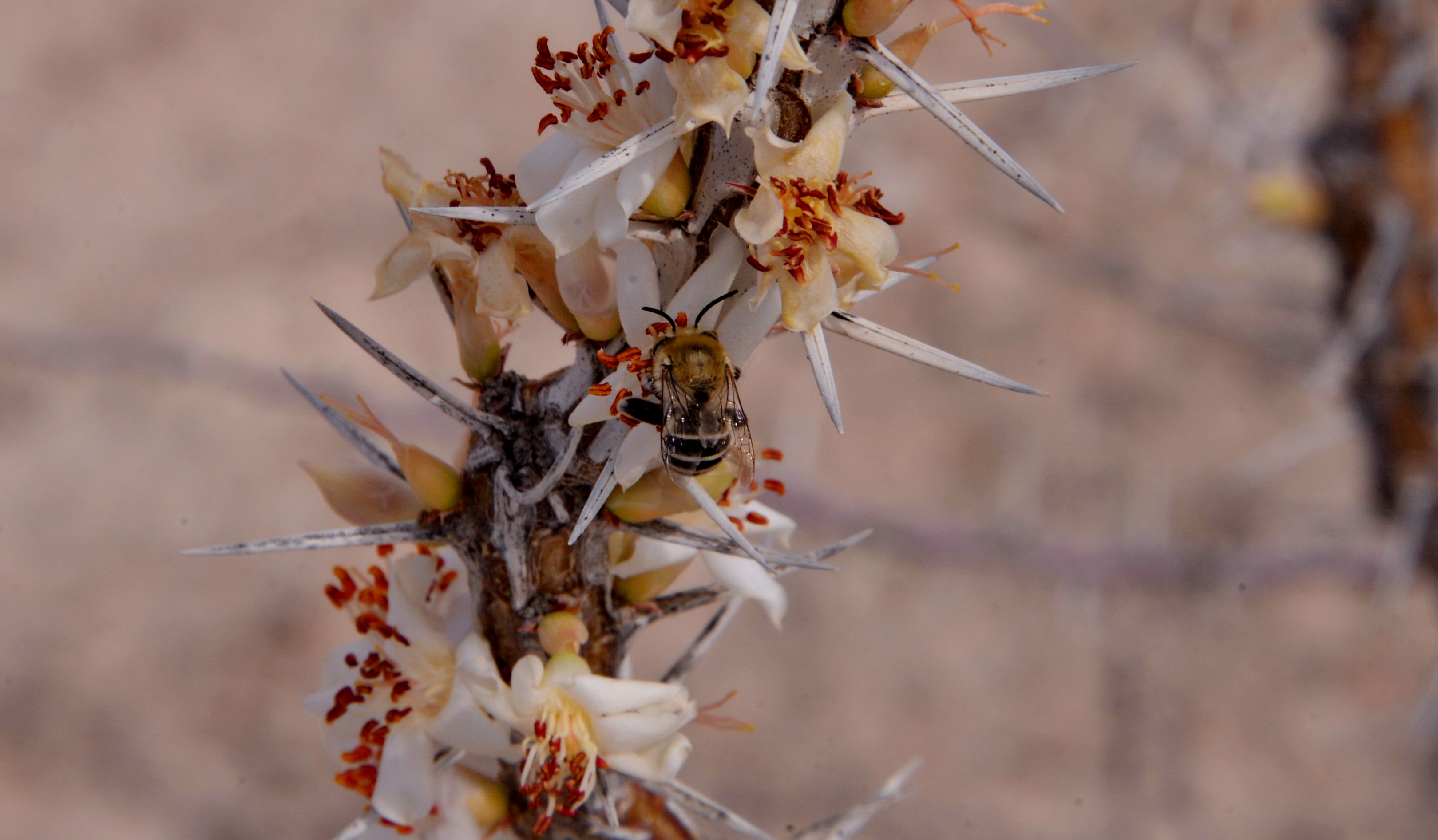
Back on Mex 30 and right along the side of the road we stopped at another area from 2010 and 2011 visits (S3092) for a Fouquieria. Plants in this genus are very familiar in the North American deserts; F. splendens with its tall (3-4 meters!) thin stems, known as the ‘coachman’s whip’, has long spikes of red flowers that are pollinated by hummingbirds. After flowering, the stems briefly become covered in leaves. We have come across areas where white or pink flowered forms dominate. In Baja F. columnaris, the Boojum tree dominates the scenery for many hundreds of kilometers. Here, a small patch seems to be the only place to see F. shrevei, a low shrub with white flowers on individual stalks appearing close to the stem, pollinated by bees. Quite rare I understand. Apparently not the stuff that cactus collectors go for. We were lucky: the plants were in flower and the bees were visiting.

Fouqueria shrieveii - S3092

Fouqueria shrievei – S3092

Wikipedia reports:

‘Fouquieria shrevei is a plant species native to the States of Coahuila and Durango, Mexico. It can be found in the Cuatro Ciénegas basin in Coahuila, approximately 50 km west of Monclova, at an elevation of about 740 m (2467 feet). There are several natural springs in the region, allowing an estimated 150 species of endemic plants and animals to survive in this desert oasis. The species has also been reported from other sites in the same state plus one locale in the neighboring State of Durango.

Fouquieria shrevei is a shrub up to 3 m (10 feet) tall, branching repeatedly near the base but hardly at all above. Leaves are ovate to oblanceolate, up to 3 cm (1.2 inches) long and 2.5 cm (1.0 inches) wide, with scarious (thin, dry and brown) margins. Flowers white, born in short racemes in the axils of the leaves. The board leaves plus the axillary racemes of white flowers make this a distinctive and unusual member of the genus.’

As we had entered MEX 30 from the previous Ario stop, Ian thought that he had spotted a bright coloured cactus flower. It was still early as we headed back towards the hotel; plenty of time for us to take a look (S3093). We photographed Agave lechuquilla, Astrophytum capricorne, Coryphantha sp, Echinocactus horizonthalonius, Echinocereus longisetus, Epithelantha micromeris, Euphorbia antisyphalitica, Grusonia bradtiana, Mammillaria pottsii, Mammillaria sp. Opuntia sp., Sclerocactus (Ancistrocactus) uncinatus and Thelocactus bicolor.

Wednesday 19 March 2014 – Parras to Cuatro Cienegas

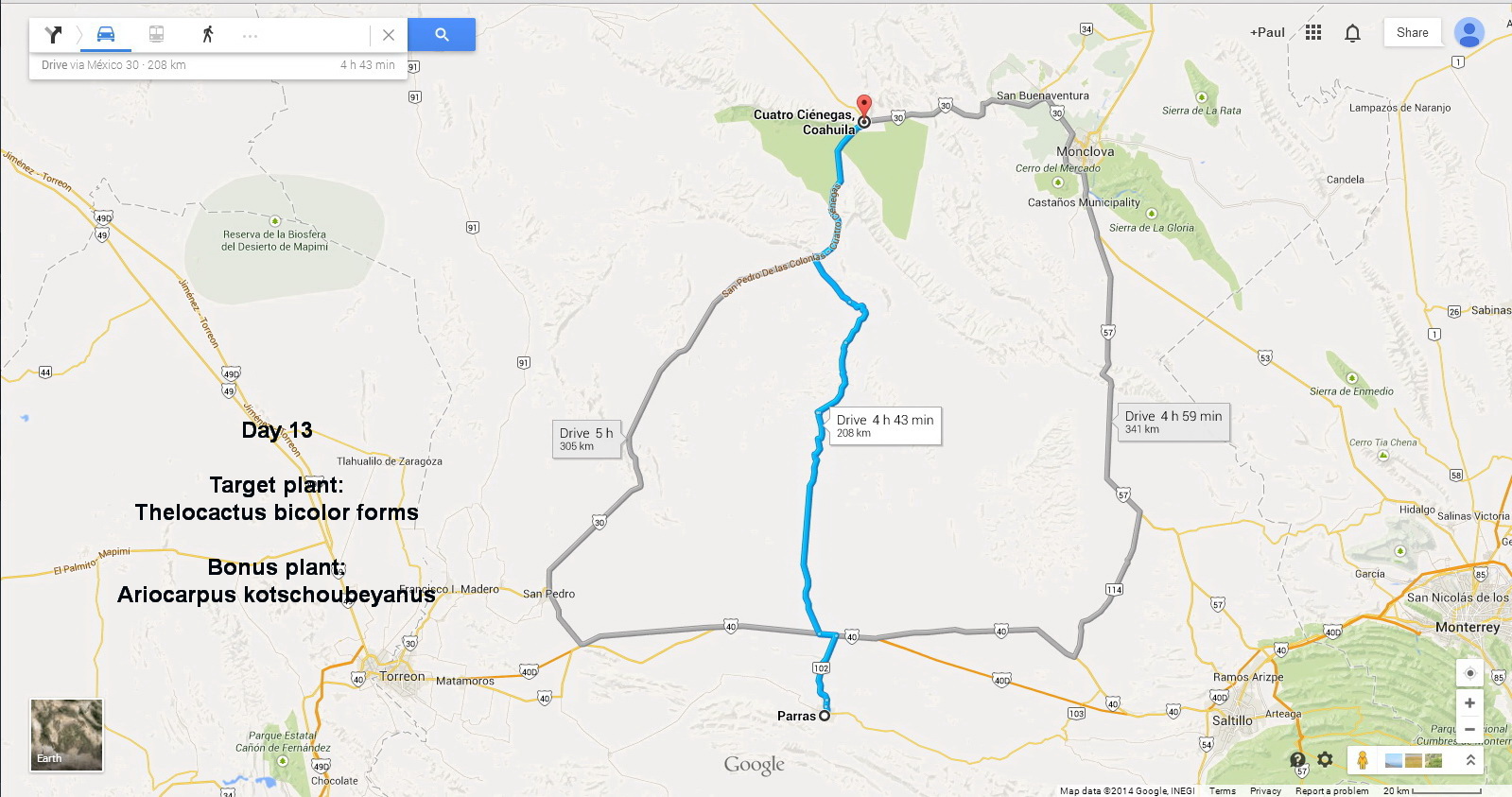
If you look at a road map of Coahuila, you’ll see that there are three ways of getting from Parras to Cuatro Cienegas: One is by taking Mex 40 west, to Torreon, followed by the Mex 30 north, towards Monclova, while the obvious alternative is taking Mex 40 east towards Saltillo and then head north on Mex 57. But there is a third option, to head straight north, thus saving some 150 km – DON’T!

Day 13 Route options

Day 13
Route options

Although road maps will show the road as a reasonable gravel road near where it meets the highways, there is a ‘white’ line that suggests the lowest quality of road on the map. SatNav knew about it, or rather, knew about stretches of it. Yesterday we would drive on nice new asphalt when SatNav was completely unaware of its existence and we hoped that this would be the case again today – it wasn’t.

At times this stretch, to cross the hills, just disappeared while at other times what was a line on SatNav was a warren of tracks created by local miners. When we came to a sign post pointing to Australia it seemed that we were really lost, but fortunately there is a settlement by that name here as well.

As usual, all’s well that ends well, so after an interesting journey – compliments again to our driver Cliff – we arrived safely at Hotel Quinta Santa Cecilia, just two blocks from the Plaza.

Although we may venture a little farther north on a day trip, this is our turn around point before we head back to Mexico City. We’re also half way through our time budget.

Plant-wise, today’s trip added little to the range of cacti we had seen, with the exception of a few Ariocarpus kotschoubeyanus hiding in the dried up mud of what SatNav thought was a laguna. The local Thelocactus bicolor were duly photographed for comparison with those at other stops.

S3083: Agave lechuguilla – by the way, ‘lechuguilla’ means ‘little lettuce’, Echinocactus horizonthalonius, Echinocereus enneacanthus, Ferocactus hamatacanthus, Fouqueria splendens, Grusonia bradtiana, Opuntia rufida, O. sp., Thelocactus bicolor, Yucca sp.

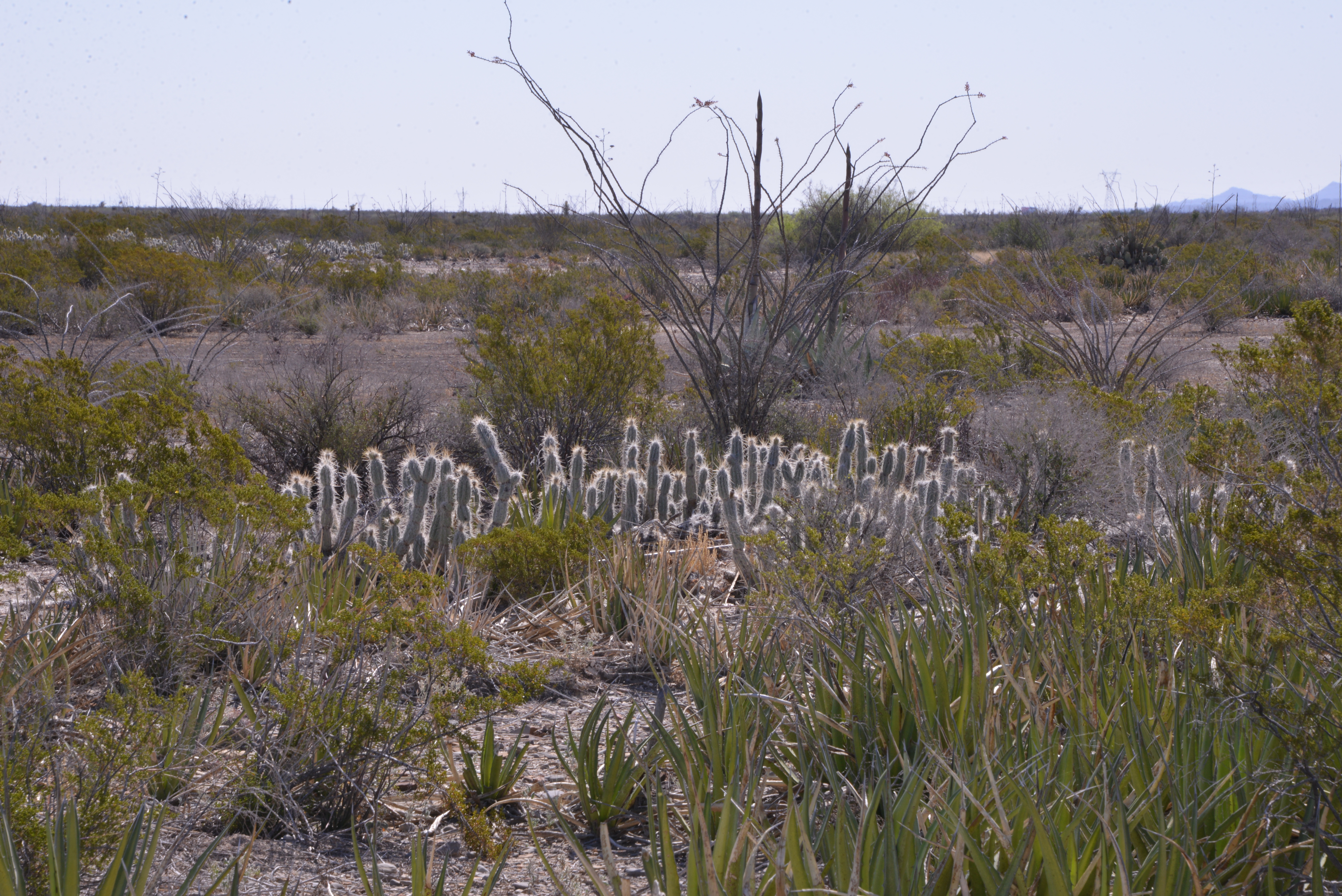
Agave lechuguilla (foreground) Grusonia bradtiana (middle) Fouquieria splendens (Background)

S3083 – Agave lechuguilla (foreground)
Grusonia bradtiana (middle)
Fouquieria splendens (Background)

S3084: Carretera a La Pelota, Parras, a failed Opuntia plantation

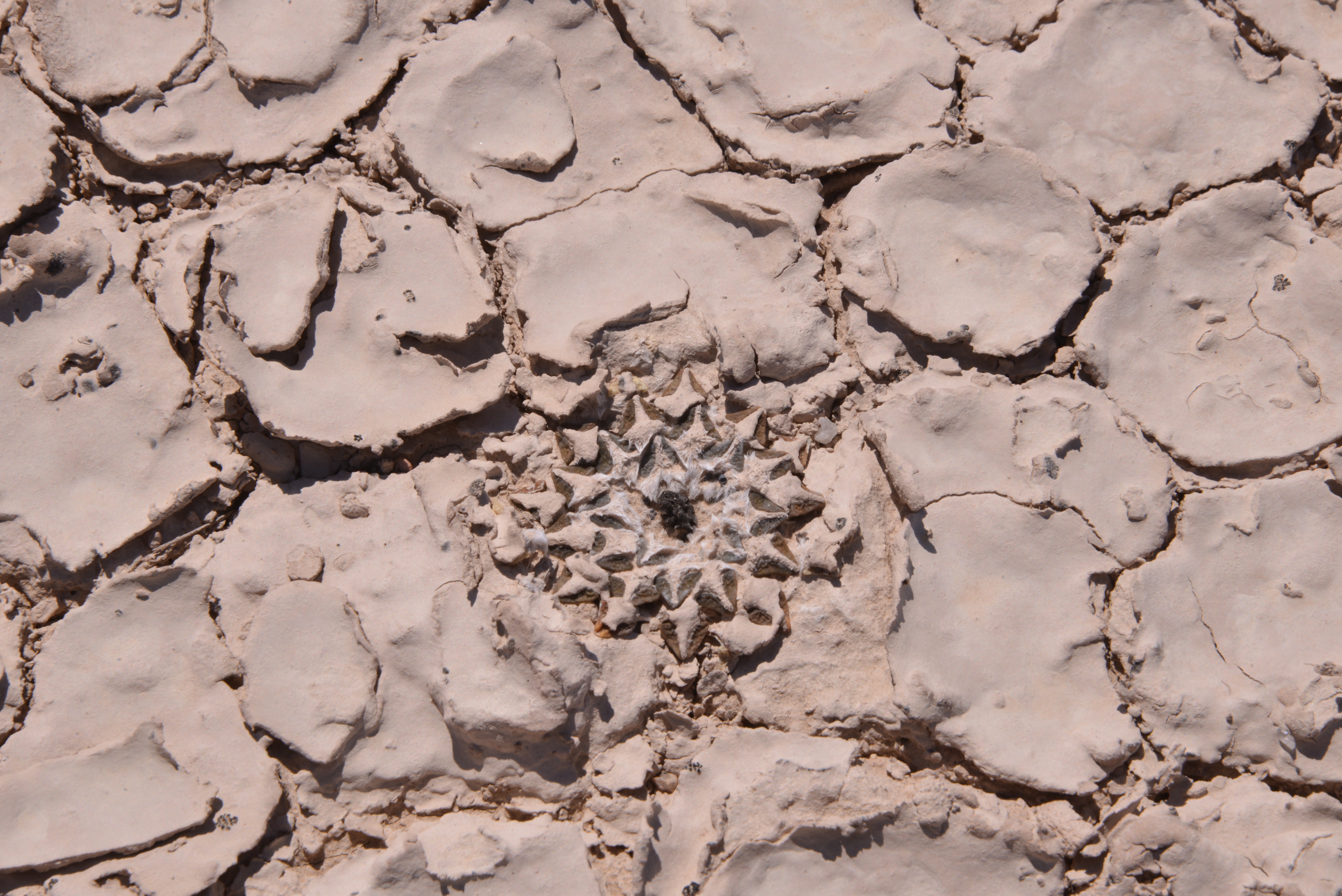
S3085: Farther along the same track: Ariocarpus kotschoubeyanus and Echinocereus sp.

Ariocarpus kotschoubeyanus - S3085

Ariocarpus kotschoubeyanus – S3085

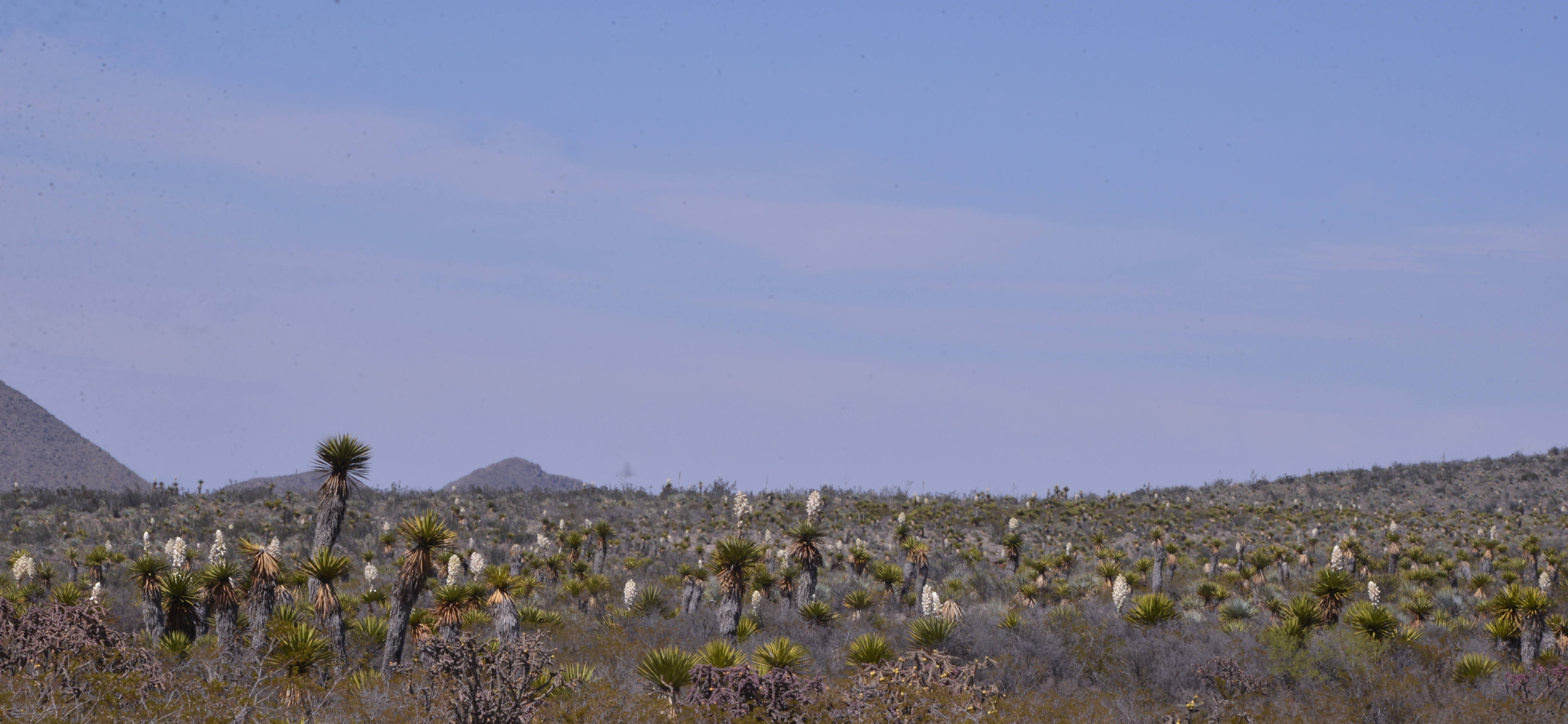
S3086

Yucca forest - S3087

Yucca forest – S3086

S3087: assuming that the caption on the ‘Earth Gallery’ on Google Earth is correct we were near Santa Teresa de Sofia in la Sierra de Australia. Australia?! Had we taken a wrong turn? The plant list had not changed much all day: Agave sp., Euphorbia antisyphalitica, Fouquieria splendens, Grusonia bradtiana, Mammillaria pottsii, Thelocactus bicolor – the form T. wagnerianus is reported from near this location – and Yucca sp.

Thelocactus bicolor - S3087 syn. T. wagnerianus?

Thelocactus bicolor ‘wagnerianus’ – S3087

Seeing the name Thelocactus wagnerianus reported from here in my database made me look up some more resources. The excellent Thelocactus website produced by Alessandro Mosco reports: ‘Wagnerianus was described by Berger and should be differentiated from the type by its columnar stem, the reddish spines and the lack of flattened spines. Plants with these characters have been found west of Saltillo, Coahuila, where they intergrade eastwards with typical bicolor, while westwards their range extends as far as the area where the bolaensisform can be found. From a taxonomic point of view, actually there are not sufficient reasons to accept these forms at a formal rank.’

Great point: because this plant has some differences from the typical bicolor means it’s useful that it has a name. But it need not mean that it is a different taxon! The decision of where the line is drawn between ‘variability within a species’ and ‘different enough to warrant a different botanic taxon’ is an individual and ‘fashion’ influenced one. It also leads to a great deal of confusion and ultimately no longer helps us to communicate about our plants effectively, which after all was the original purpose of nomenclature. I think it important to use names in presentations and articles that reflect current usage, but it seems that some members in the audience still use Backeberg names.

As we hit Mex 30 there was a thick haze hiding the mountains. Near the hotel, the palm trees were swaying in a strong wind and clouds were looming. As I write this, the following morning, we’re back to brilliant sunshine and just a light breeze. When we arrived at the hotel, by the time that Ian had checked out rooms, the off side rear tyre was flat again. It, and the other three had taken another fair battering today! So first task tomorrow – find a vulca!

Tuesday 18 March 2014 – around Parras

Actually it was more like Parras to Viesca and back. This is from memory as I’m safely back home in the UK. The 238 images taken at 6 stops and the locations marked on Google Earth provide a wonderful aide memoire.

S3077: Viesca – Menchaca road, or perhaps track was a better description. Fortunately we had a white car. On a previous occasion our red car looked white when we got back to the hotel. Use of the windscreen washers turned the white dust into cement. We saw Agave lechuguilla, at least I assume that it was that plant that repeatedly attacked my ankles and shins – we were not formally introduced. The yellow flowered Coryphantha durangensis was here, looking great from above but all plants badly marked around the base – these would not score well ina BCSS show, unless the points are given based on maturity rather then looks.  There was another Coryphantha sp alongside a Cylindropuntia sp, Echinocactus horizonthalonius, Echinocereus longisetus (I assume, I must check exactly how it differs from E. stramineus apart from the latter forming larger clumps with larger flowers), Ferocactus hamatacanthus, Mammillaria pottsii, Opuntia rufida, Opuntia sp. and Thelocactus bicolor

S3078: I’ll avoid mentioning the usual suspects but note photographing a Corynopuntia sp. mainly because it attached itself to my trouser leg. I explained that giving it a lift was against my ‘no-collecting’ policy and flicked it back into the desert. It’s picture rarely makes into my general cactus talks so I’ll include one here

Corynopuntia sp - S3078

Corynopuntia sp – S3078

Any suggestions for a name are welcome. Coryphantha poselgeriana, a lovely plant as a seedling back home, is more impressive but perhaps less cute as a large habitat plant. How could I forget Cylindropuntia leptocaulis at the last stop? Probably because I was too busy cursing it. There were at least two more Cylindropuntia sp., one of which was in flower and is probably C. imbricata

Cylindropuntia imbricata - S3078

Cylindropuntia imbricata – S3078

Echinocereus horizonthalonius, Echinocereus engelmannii, E. enneacanthus, E. longisetus, Epithelantha micromeris, Euphorbia antisyphalitica, a.k.a. as ‘Candililla’, which here is harvested and appears to be heated / burned in a process to extract oils and wax. It is also sold in the southern USA as a landscape plant. Fouquieria splendens is another desert plant that is so common that I often forget to mention it on my lists. Here it appeared in my pictures because of a white spined form of Ferocactus hamatacanthus at its base. Sclerocactus uncinatus was spotted again and Thelocactus bicolor deserves a mention as this is a Thelothon.

S3079: we stopped on a track that was (not for the first time) unknown our SatNav systems. So much for the Hertz Never Lost. My Garmin Nuvii did little better. Same plants as before and again at S3080

S3081 was the Viesca Parque on the outskirts of town. This had been a rubbish dump when we visited in 2010, now everything had been tidied up with basketball courts and five aside soccer pitches as well as well maintained swings, slides etc. Unfortunately many of the ‘special’ cacti had gone as well. We had again come to look for Lophophora fricii but failed to find it at the coordinates in my database, now over ten years old.

S3082 was a last ditch attempt at km 8 on the way home to find L. fricii. We were tired, very hot and suffering from snow blindness in a pure white chalk dust landscape. I took just three images.

Coryphantha poselgeriana - S3082

Coryphantha poselgeriana – S3082

Monday 17 March 2014 – Saltillo to Parras

I could not leave Saltillo quickly enough – unbelievable how fast humans had destroyed this recently still mostly quiet and beautiful part of the world. It seems as though the authorities had decided to sacrifice this valley to create economic wealth as there was enough nature near by that was so large and unspoiled that it would serve its purpose.

Of course, cactus explorers are notoriously lazy, so that if you plot the historic type localities and recent field number listings on a map, you end up mostly with the road map of that particular area. We are no different. But as the present situation here now shows, these are also the first places to be sacrificed for human economic development.

Back to the cacti. First stop of the day was S3072, in the middle of nowhere with a small uninhabited small holding to the south, along MEX 40, the Saltillo – Torreon road, near Rinco Colorado. As this was a Thelothon, it was good to see Thelocactus bicolor with buds about to burst into flower. And again there were lots of other cacti to admire. Just an initial list to whet the appetite, with more details to follow once we had a chance to consult literature back home, in the order that they were photographed: Opuntia rufida, Cylindropunia leptocaulis, still trying to staple our trousers to our legs, or in Cliff-in-shorts’ case, to use his legs as a pin cushion, Echinocactus horizonthalonius – I don’t recall having seen them so full of water before in nature; some looked round like footballs! And with signs of budding, so may be in flower when we complete the loop and pass by here again in just over a week. I have already mentioned Thelocactus bicolor in advanced bud – just a matter of hours before fully open. Astrophytum capricorne was here too, difficult to take an attractive picture of this plant as the dense bird’s nest like spination made it difficult to appreciate the beauty of the white flecking on dark green epidermis – good sun block though! There were large clumps of what I assume to be Echinocereus stramineus, a large stemmed Echinocereus sp that on previous trips we’ve been calling E. dubius, an epithet that would fit many other taxa in other genera as well, for various reasons and a Coryphantha that will have to remain ‘sp.’ for now. Mammillaria pottsii put in an appearance or two as did Ferocactus hamatacanthus, Epithelantha micromeris and a group of Mammillaria lasiacantha with several heads in flower – good spot Ian!

Mammillaria lasiacantha - S3072

Mammillaria lasiacantha – S3072

Coryphantha sp

Coryphantha sp

Most of these plants – though not all – were also present at today’s remaining stops: S3073, S3074, S3075 and S3076, with the latter christened as The Dead Dog stop as it appears a pet had been killed by a passing car and had been kindly put in bags to protect it from vultures etc. As we opened our car doors, the smell was horrendous!

By the time we reached S3073, for which SatNav gave the address General Cepada – La Rosa,  most of the Thelos had opened their flowers – very nice, thank you Thelos. There was also an Ariocarpus retusus here, just the one, with Cliff, farther along the hill, finding more.

Thelocactus bicolor - S3073

Thelocactus bicolor – S3073

We passed through the village of General Cepada (I took the picture of the church – no one wants to see non stop cacti in a talk) and made the remaining stops of the day.

For the record:

S3074: General Cepada – Parras: Coryphantha sp, Dasylirion sp. Echinocereus enneacanthus, Echinocereus pectinatus, Mammillaria sp, Neolloydia conoidia, Thelocactus bicolor

Mammillaria formosa ssp chionocephala - S3074

Mammillaria formosa ssp chionocephala – S3074

S3075 again on the General Cepada – Parras road: Cylindropuntia sp, Echinocereus enneacanthus, Mammillaria sp, Opuntia rufida, Opuntia sp. Sclerocactus (Ancistrocactus) uncinatus.

Sclerocactus (Ancistrocactus) uncinatus - S3075

Sclerocactus (Ancistrocactus) uncinatus – S3075

S3076: still along the General Cepada – Parras road: Astrophytum capricorne, Coryphantha clavata (?) Echinocactus horizonthalonius, Echinocereus longesetus, Ferocactus hamatacanthus, Mammillaria pottsii, Thelocactus bicolor ssp bolaensis.

Thelocactus bicolor ssp bolaensis - S3075

Thelocactus bicolor ssp bolaensis – S3076

We stayed in Hotel de Marina (who knows how many miles away from a sea) for two nights, taking a look for some Lophophora for Ian tomorrow – you’ve been warned if his Diaries make even less sense afterwards 🙂