Just another WordPress.com site

Archive for the ‘Madagascar 2016’ Category

Saturday 22 October – Morondova to Belo Sur Mer

I don’t remember too much about today, so it must have been a driving day, after a somewhat late start. Today’s images don’t help very much. So I’ll explain the car conditions. As I have mentioned earlier we are in Christophe’s Land Rover Revenger, bought in 2010. It is ideally suited as the reliable work horse in these demanding conditions although is rather limited in its comfort features. Windows are moved up and down with a manual winder, the air-conditioning consists of driving with all windows and central logging consists of Christophe walking round the car to check that we have all remembered to push down the lock button on our doors. Luxury extras are all well and good but potentially can break down and do not help our aim to get face-to-face with the plants. Today’s drive led along soft sandy tracks through the dry forest – dense shrubbery that was difficult to penetrate in person or with our cameras.

Christope spotted some large parrots in a tree, but it was difficult to get a clear (camera) shot of them, due to the camera insisting on focussing on near invisible twigs in the way.

Parrots in the tree tops

Parrots in the tree tops – the Greater Vasa Parrot – Corocopsis vasa

For a while it seemed as though there were cacti growing between the trees and shrubs, but a closer look revealed that these were the first Didierea madagascariensis.
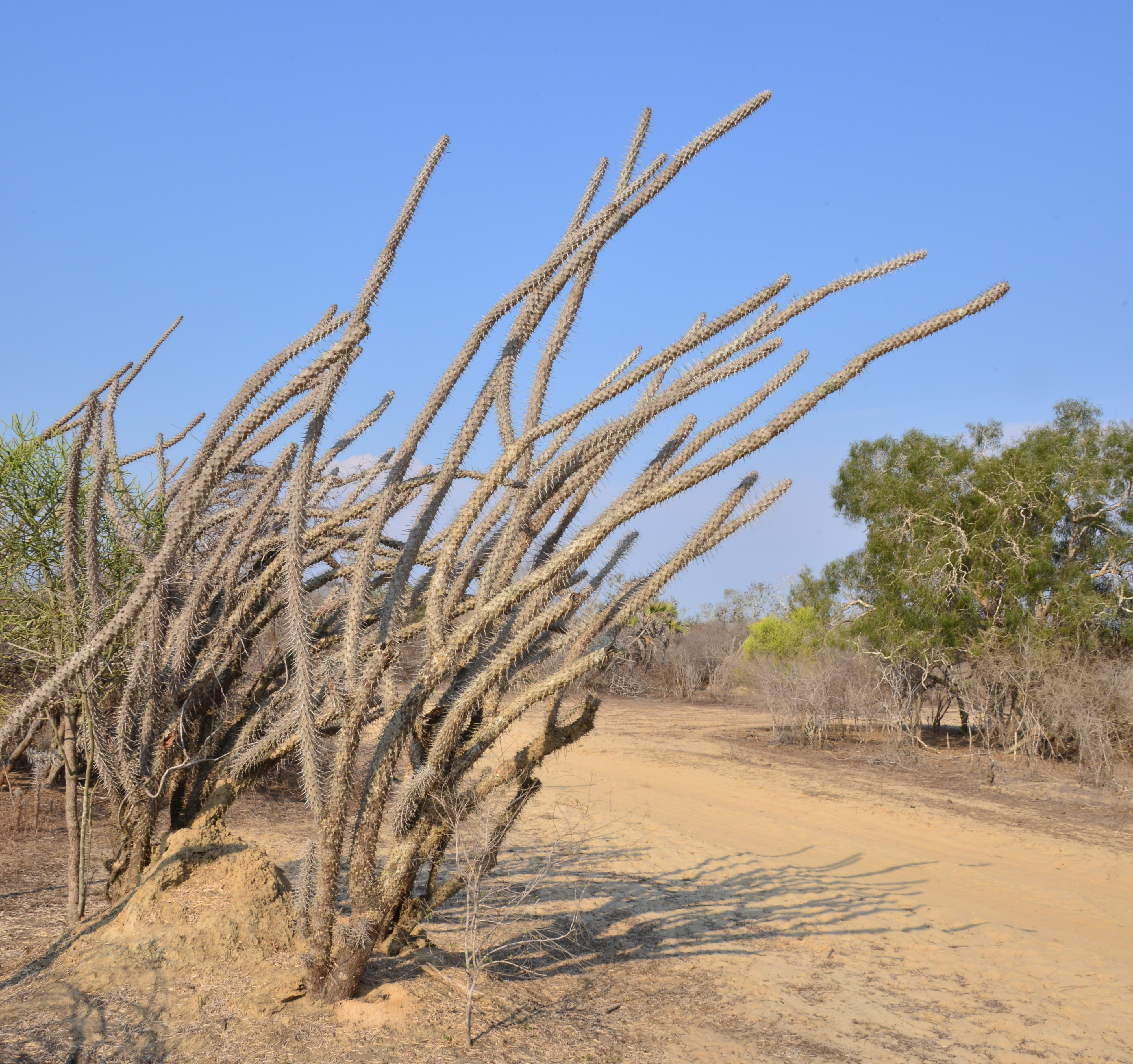
Didierea madagascariensis

Didierea madagascariensis

Christophe did all the driving during the trip, although John would be more than able to drive in an emergency as he also owns a Land Rover Revenger back in the UK. Nadia made her home behind Christophe and although John and I had agreed to take turns for the front passenger seat, I found a low shelf below the dashboard rather uncomfortable as it crashed into my shins as we speeded along the sandy track. And so I volunteered for the right hand back seat position.

We also passed and photographed numerous more baobabs, but reaslly, how many do you want to see!?

As the sun was on its way down, a signpost suggested that we were in the Kirindy Mitea Forest Reserve. We reached the edge of the forest and looked over what looked like a snow covered field. With temperatures of 30C plus?! Not likely! A salt flat? Or just white sand? Whatever the substance was, it seemed to fill Christophe with a mixture of fear and respect. He had become stuck here before and we saw a number of very capable pick ups and 4×4 SUVs including Toyota Landcruisers stuck up to their axels in the stuff. There were several tracks on to the sand. We avoided those with cars already stuck, as they were surrounded by locals offering advice and moral support. There were also number of large trucks on the track at the edge of this dry lake, hanging about like vultures, ready to pounce to charge the victims for their towing services.

Christophe and Nadine had a chat with one of the crews who advised that the track we had selected was fine. We drove on, until we reached an area where the track had been badly churned up by a previous victim. The truck with our ‘advisors’ had followed us and their leader now suggested a route that would see us through.
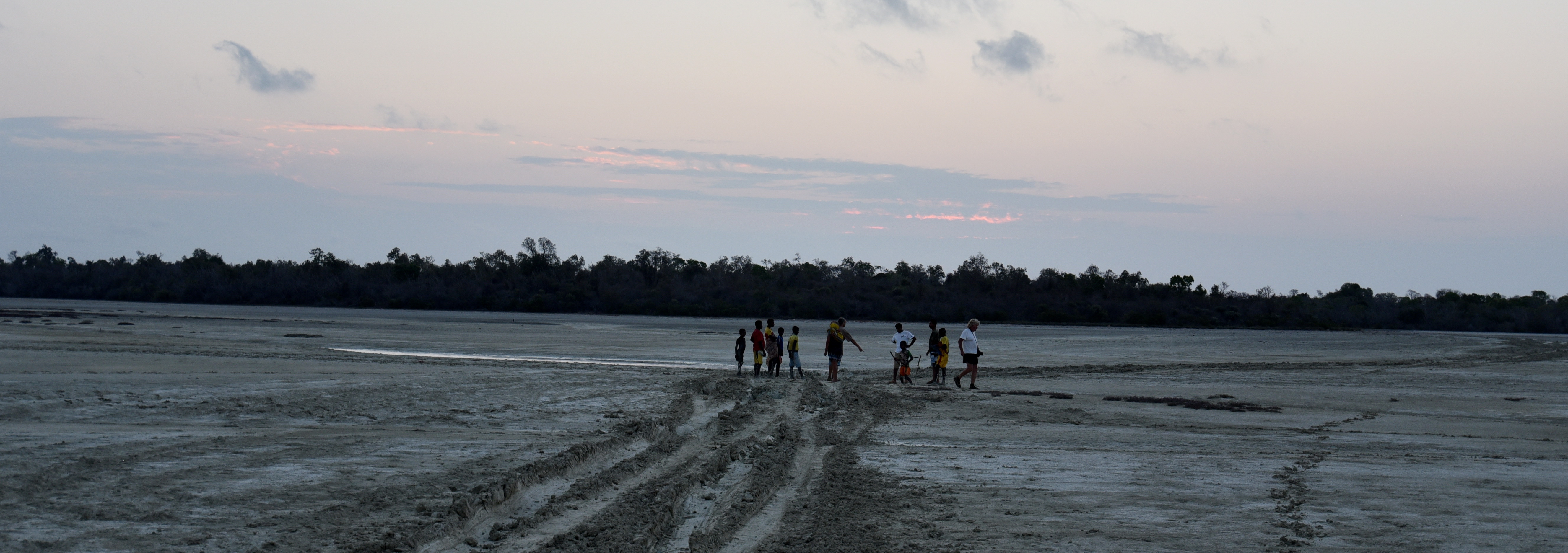
The sand flat.

The sand flat.

As the sun had all but set, the time for discussion was over – action was needed! Christophe had left the engine running, so no need to attempt a push start! Get her into 4×4 second gear and drive her through at a steady even pace. It seemed all so easy after we got through safely!


9#8
Friday, 21 October – Bekopaka to Morondava

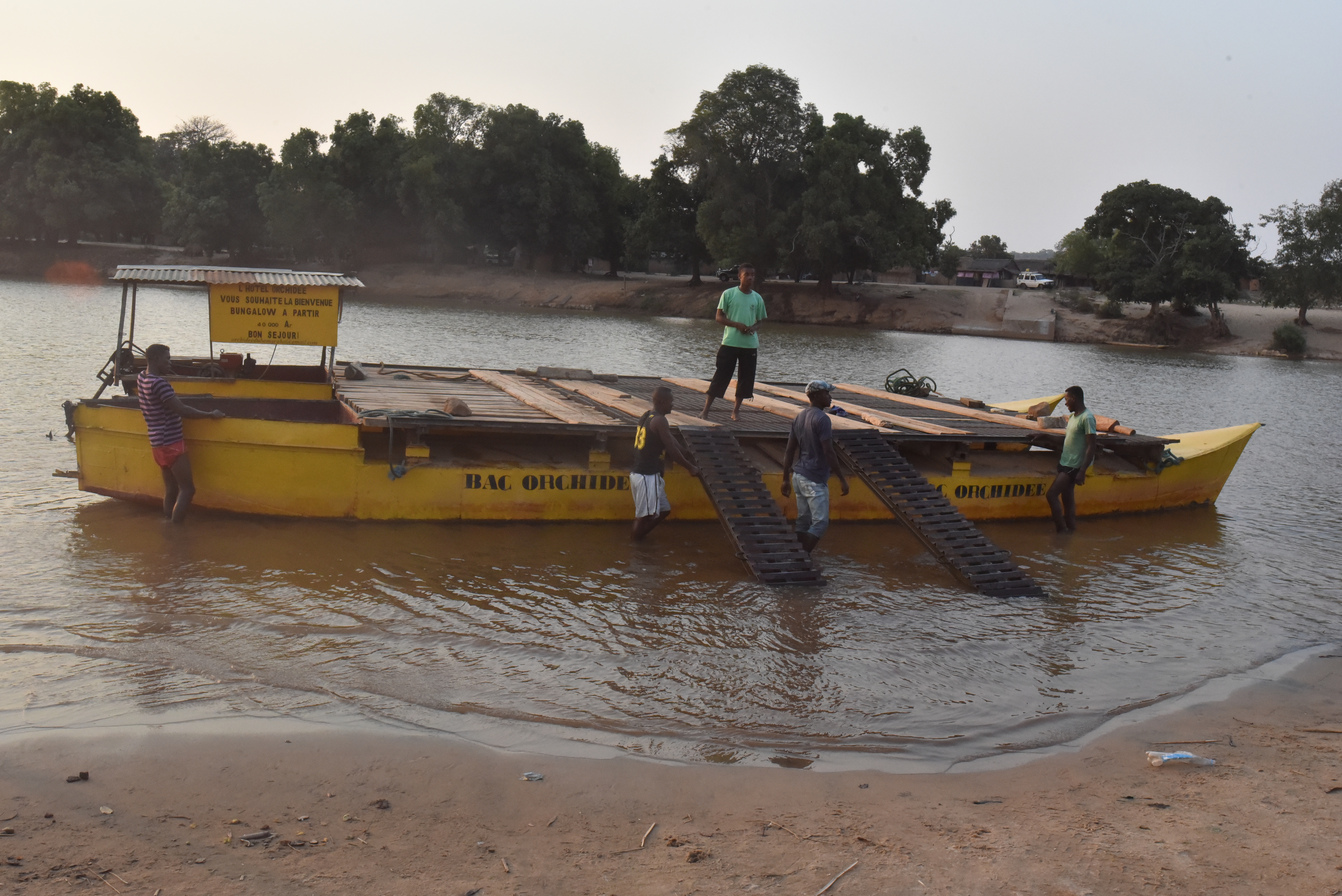
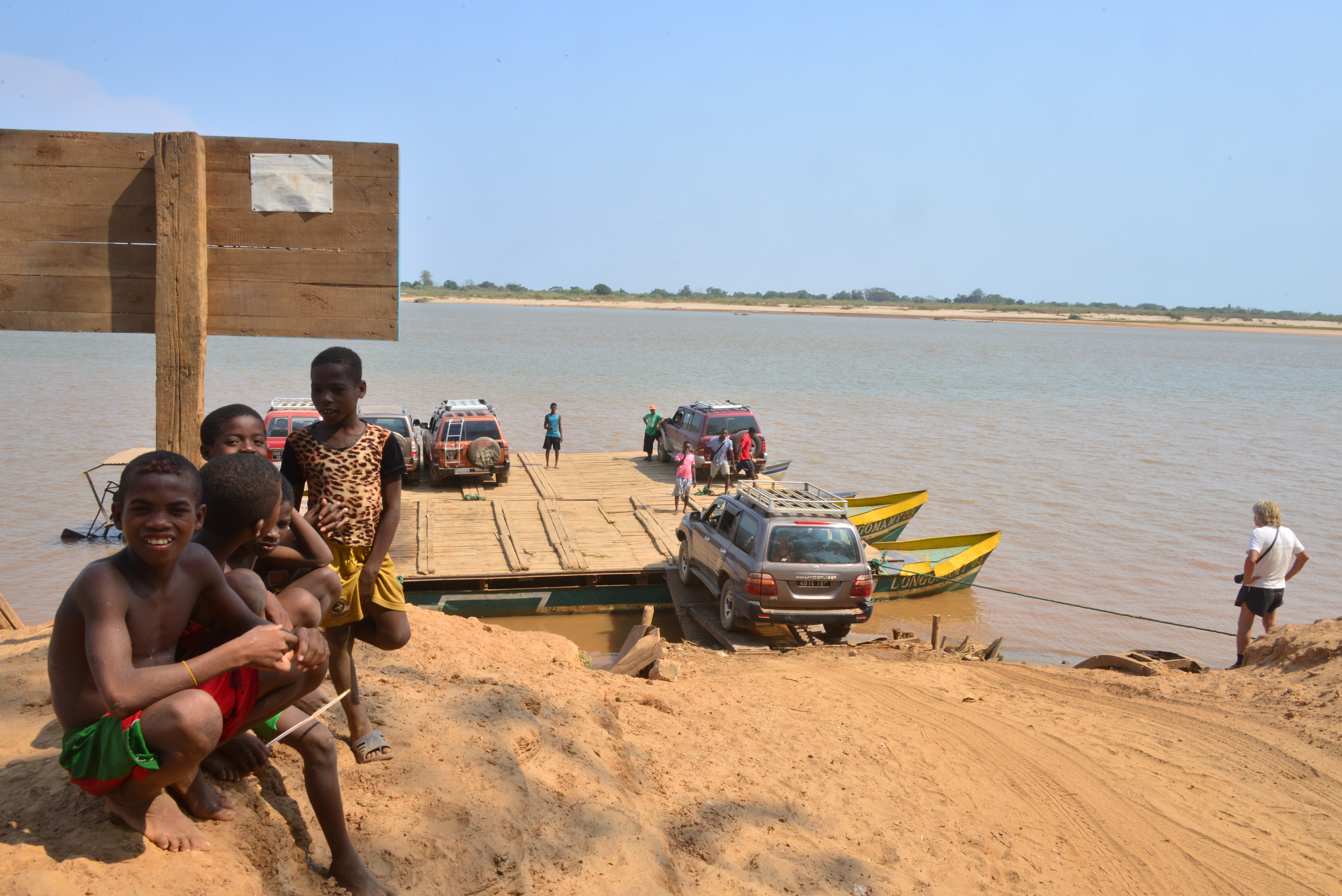
I forgot to mention that yesterday our car, a Land Rover Defender 2010, suffered a flat battery as we left the second ferry crossing on Wednesday. Not a huge problem, as we were on a down facing slope and it never takes more than a few minutes for a group of locals, mainly children, to crowd around us to request ‘bonbons’ (sweets) or a cadeau (present). As a result we had more volunteers than could find space on the rear bumper to give us a push. However, it was a little surprising that the battery had become flat, given all the miles that we had been driving. A replacement battery was obtained at Hotel Orchidee that worked fine yesterday, but required another team of pushers this morning. Clearly there was a different problem – related to the charging of the battery, rather than its ability to hold its charge.

It is remarkable how religious a group of non religion practising people are, when faced in the middle of nowhere with a car that has developed a problem. Prayers were quietly said in the car, parked down hill when possible.

We had to cross the two ferries again on the way back to Morondova and while a party of pushers had been alerted to our predicament, a loud cheer went up each time as the car responded to the turn of the ignition key.

The second ferry

The second ferry, with a potential team of pushers, just in case …

In Morondova, we arrived safely at the, again, very comfortable Hotel Chez Maggie where wifi was available if the town’s electricity was on, which happened at infrequent intervals. Even then, this was far removed from broadband, able to download a few emails, but certainly not images or Diary postings.

Thursday 20 October – Around Bekopaka

We enjoyed a nice relaxed breakfast at the very comfortable Hotel Orchidee du Bemahaha  at the entrance to the village of Bekopaka before today’s outing to the Tsingy de Bemaraha National Park.

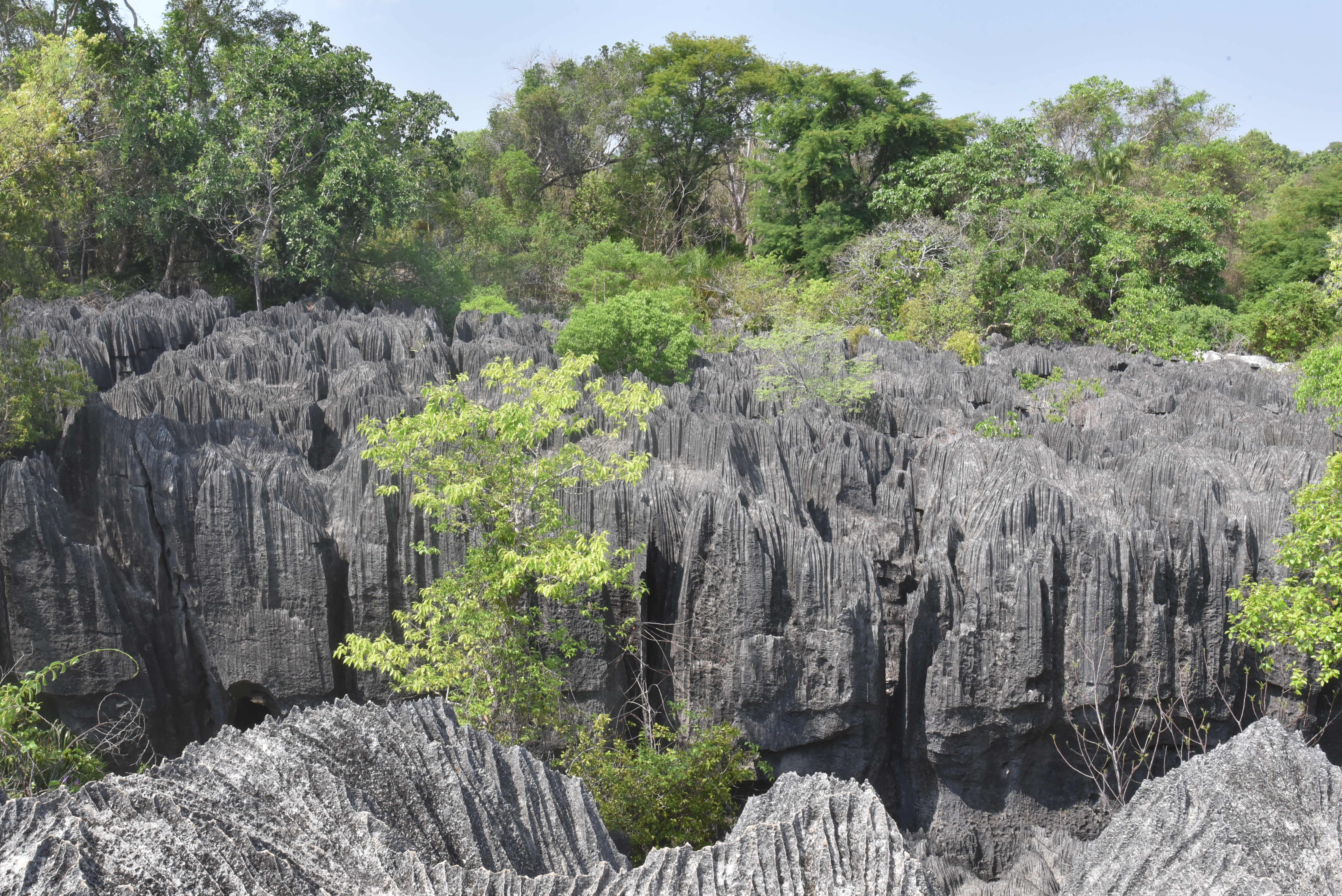
This morning, John and I were taken on a guided tour of the ‘easy’ circuit of the Park. The Tsingy is a Malagasy term, meaning ‘where one cannot walk barefoot’ while another website suggests ‘walking on tiptoes’. It refers to eroded limestone rock formations where over millions of years, water has eroded the rocks creating a desolate landscape of razor edged hills. I have seen similar landscapes in Brazil where again we navigated the rocks with great respect and still picked up a few cuts.

I’ll let the pictures do the talking:

The Tsingy National Park

Landscape in the Tsingy National Park

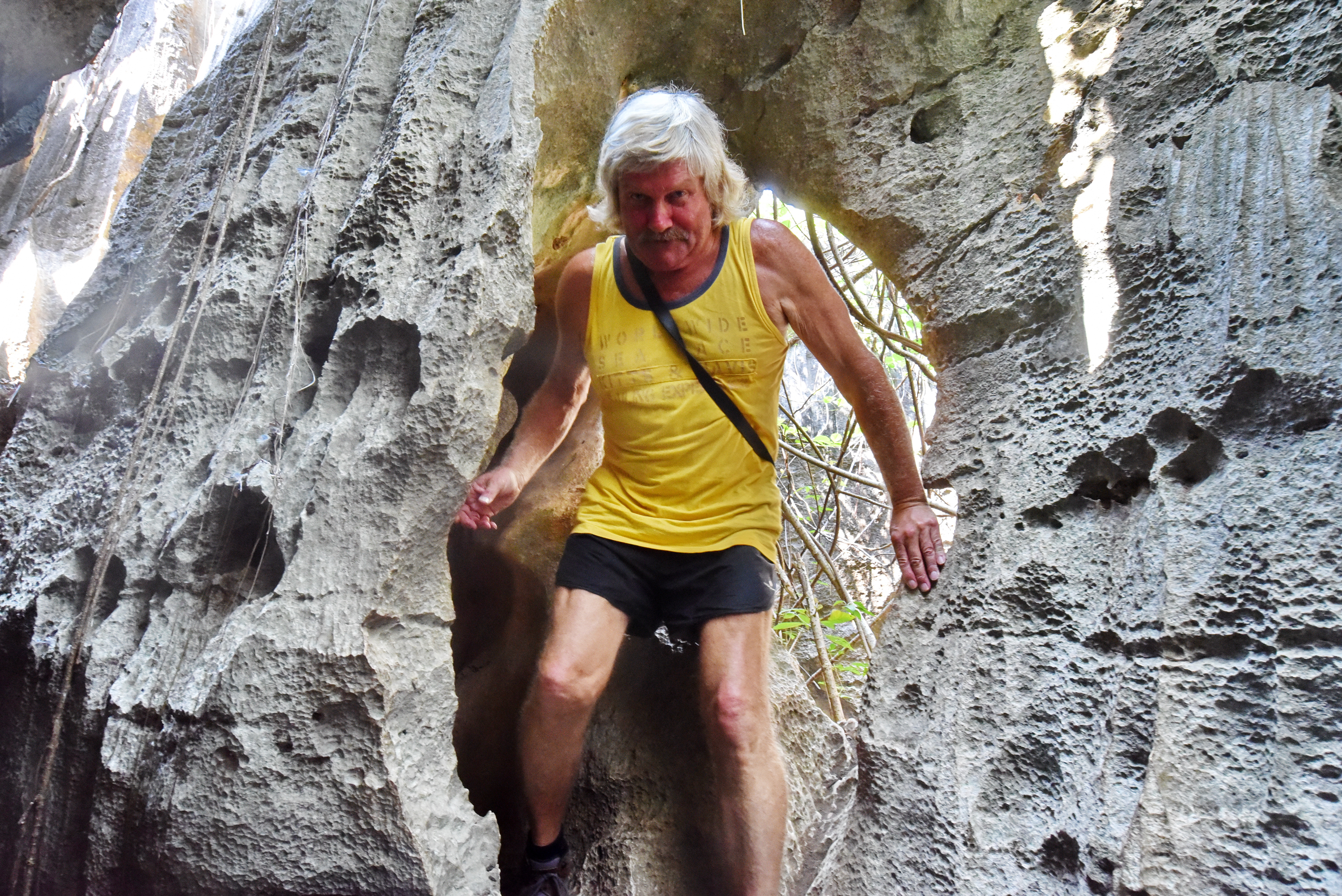
To make this terrain accessible for humans, an extensive system of wooden walk ways with hand rails has been built that zigzag through canyons where the exposed roots of the local strangler fig trees lead towards daylight and where occasionally our heads pop above to tops of the rocks.

John emerges from the rocky landscape

John emerges from the rocky landscape

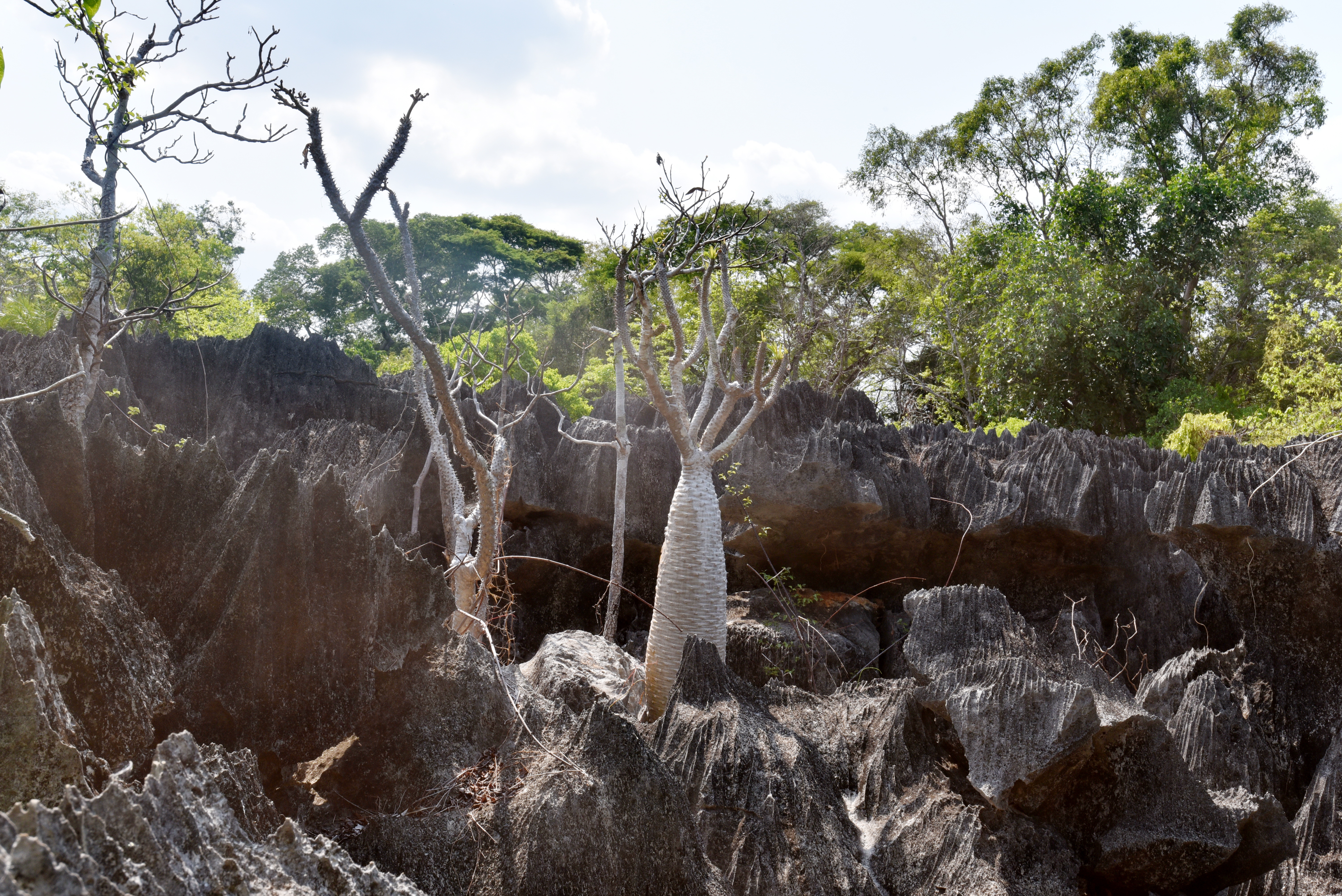
If I understood our guide correctly, the Pachypodium here is Pachypodium menabeum, not a name that I am familiar with. A search on the internet suggests that this name, dating back to 1934, was declared invalid but has recently been resurrected.

Pachypodium menabeum

Pachypodium menabeum

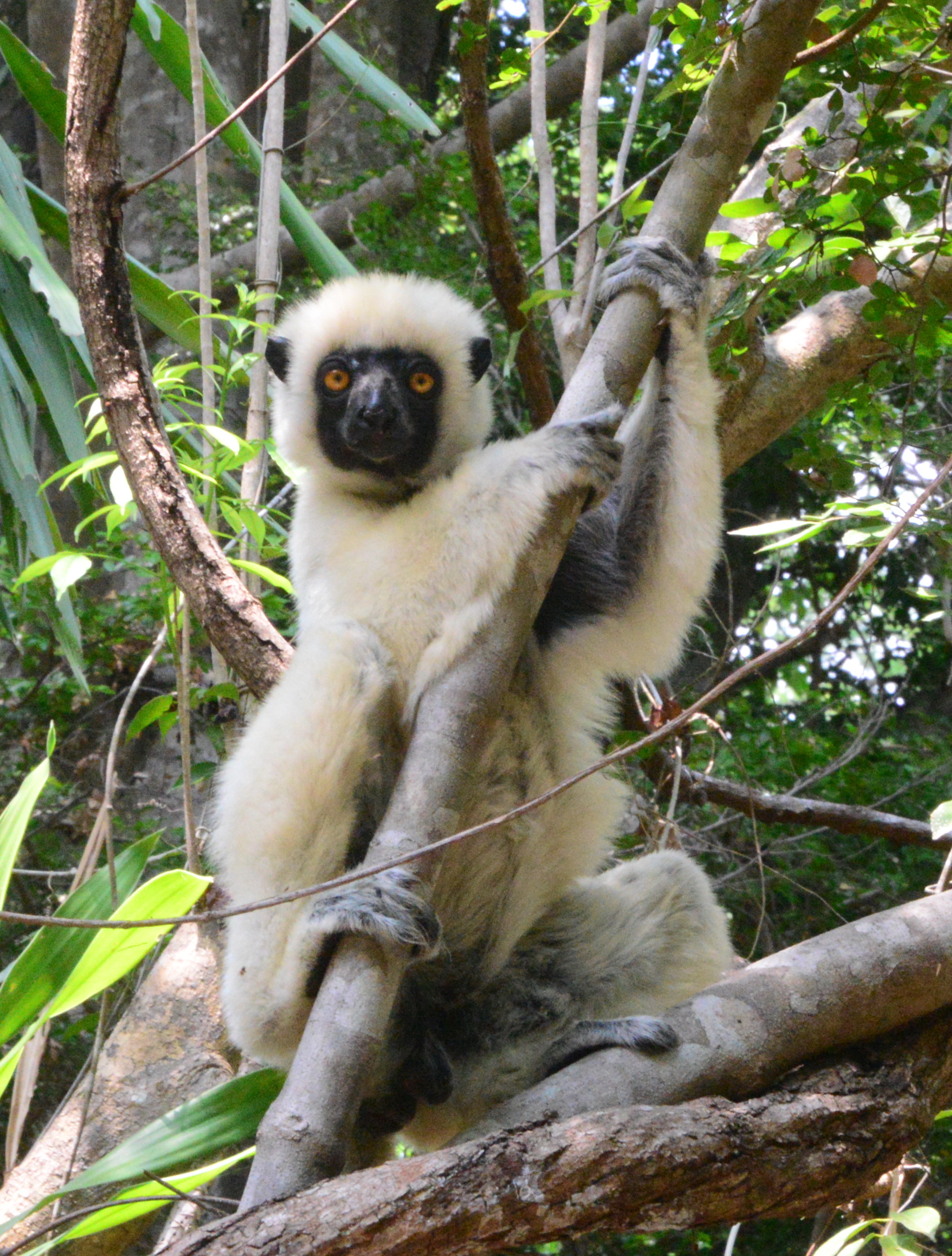
The walk was made no easier by the high temperatures (around 35 C) combined with high humidity and by lugging heavy cameras and supplies of water with us. Our guide took pitty on me and carried the bottles and the heaviest of my camera+lens. As we were nearing the end of our walk, our guide became excited as he had spotted a family group of lemurs along the track.

Lemurs!

Lemurs! Verreaux’s sifaka

I enjoyed a rest at Hotel Orchidee, catching up with emails, when the router was on and organising the images taken to date. Call it ‘Trip Admin’ 🙂

And John? He went back for another guided tour, in a canoe, up the river, to inspect a cave.


Wednesday 19 October – Morondova to Bekopaka

Still very satisfied with yesterday’s afternoon at the Avenue de Baobabs with the chameleon as a support extra, I was pleasantly surprised when I started to recognise that wer were passing places that we had seen yesterday! Sure enough, we were driving back to the Avenue de Baobabs and enjoyed the opportunity to take some more images under quite different light conditions and with fewer tourists in the pictures.(S3468)

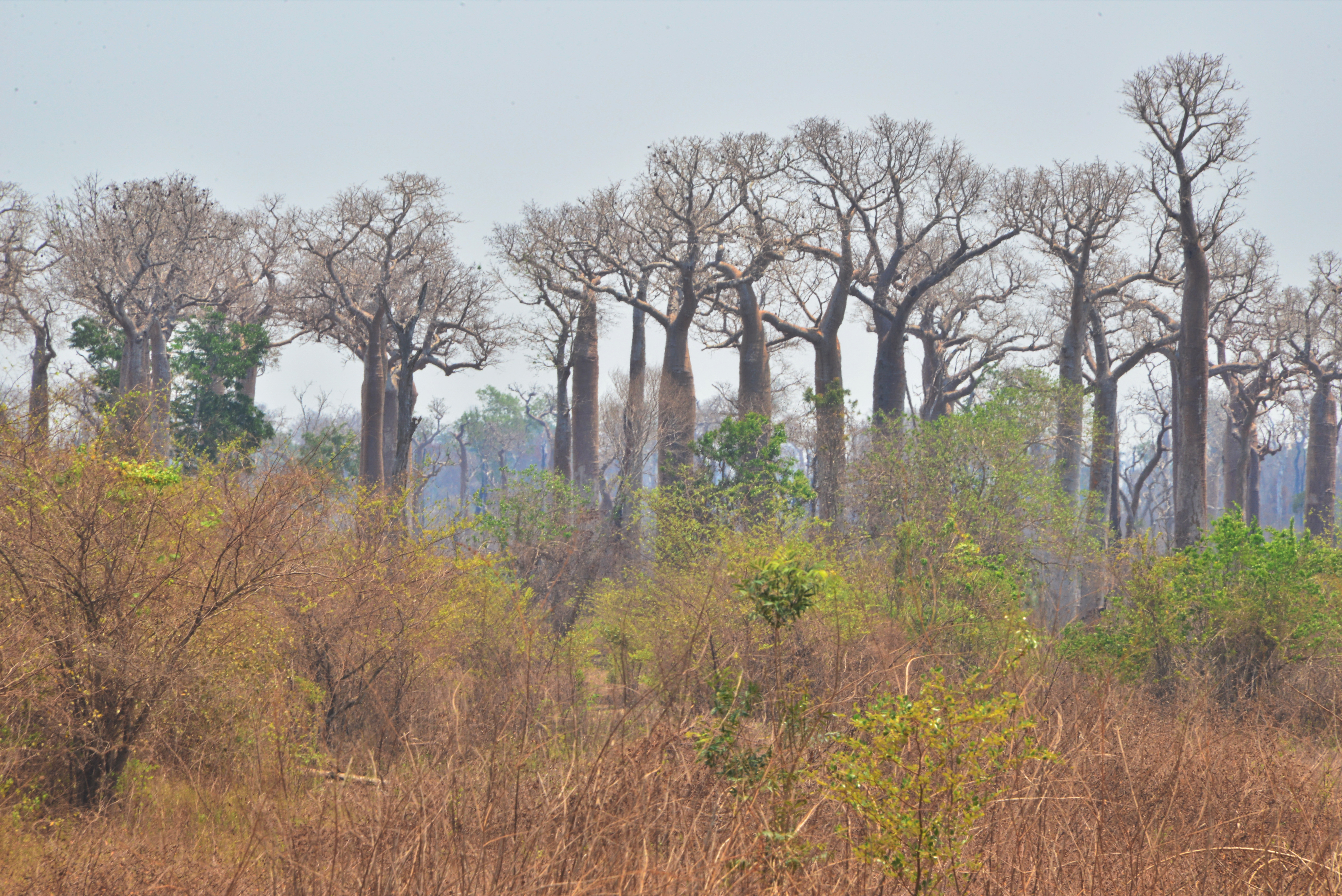
The Avenue is as much a staged tourist attraction as, for example, Stonehenge on the Salisbury Plain back home. The Malagasy instinct seems to be to burn down nature with the intention to plant crops to feed the rapidly expanding population. As a result the Baobabs (Adansonia grandidieri and Adansonia za) stand as exposed soldiers on parade with little vegetation. Lots of market stalls where the locals earn their money from tourism rather than from agriculture. As we saw as we drove through the Avenue and on through a low dry forest, similar to the Caatinga forest in North Eastern Brazil, this is the usual habitat for these ancient giants, but of course it is a lot less inviting for tourists to fight their way through ‘thorns on everything’ shrubbery to get to the Baobabs.

S3468 - Natural Baobab habitat

The Baobab forest beyond the Avenue, where plants still grow in a low forest.

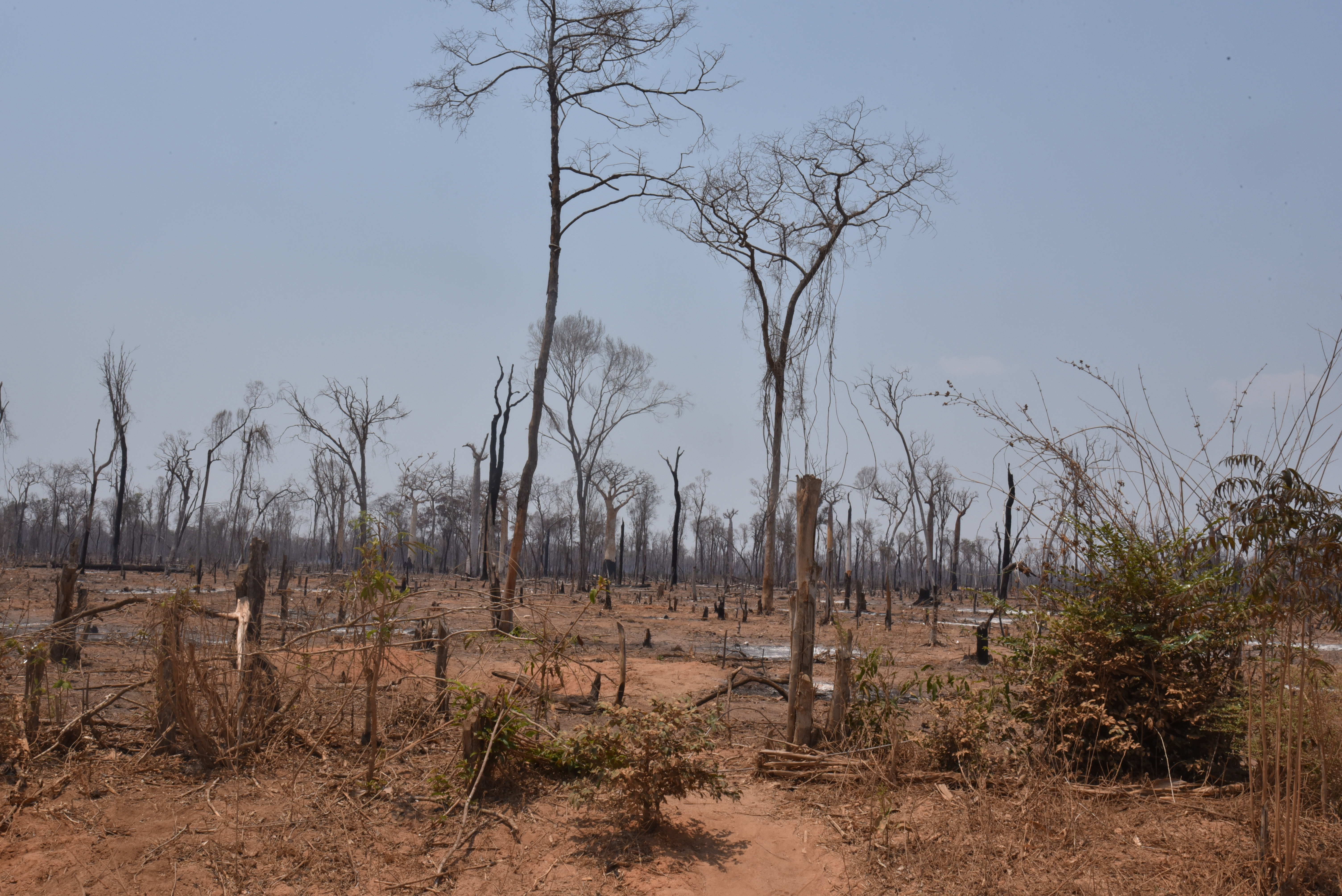
Deforestation in progress

Deforestation in progress

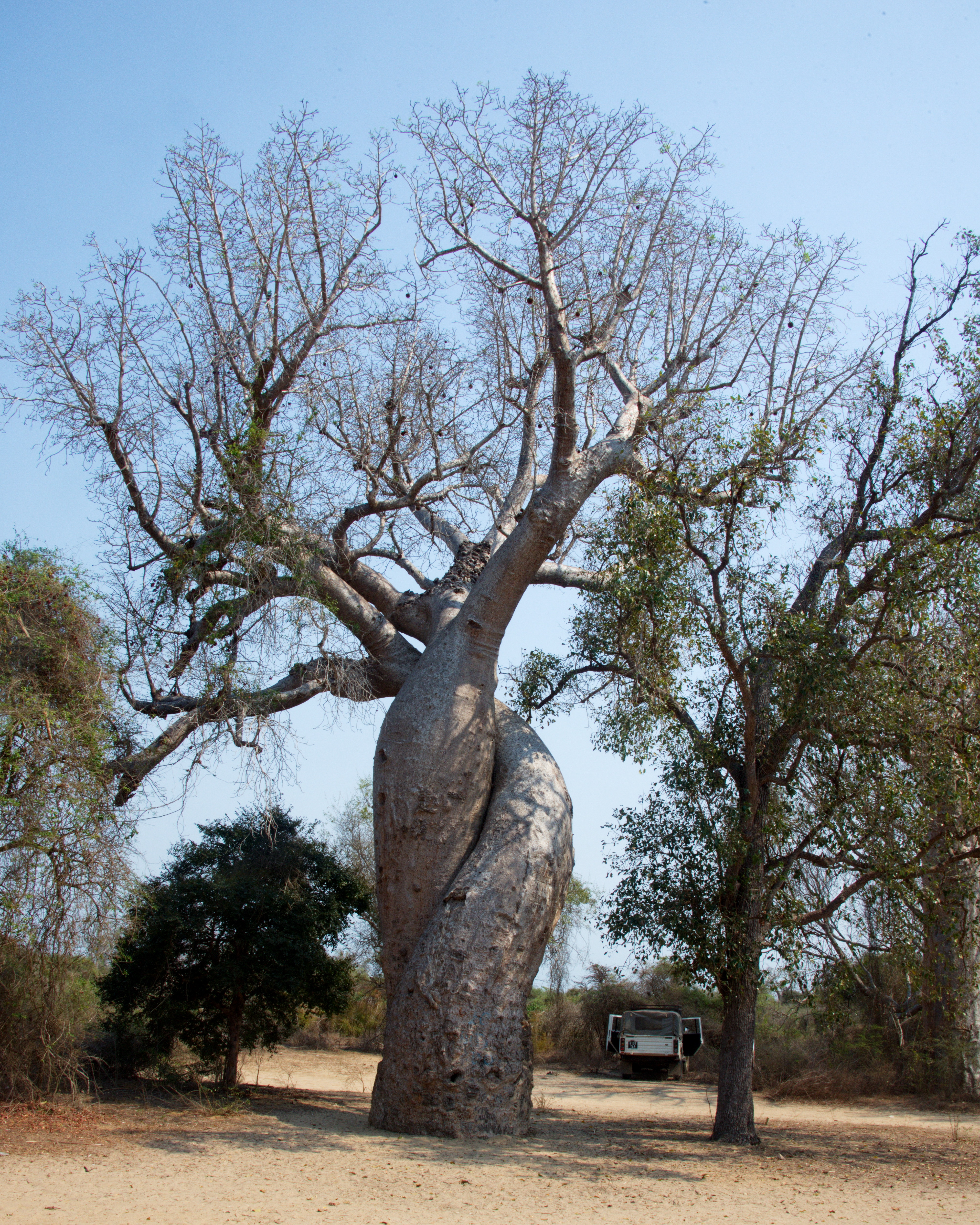
Les Amoureux

Two entwined baobabs known as Les Amoureux (Adansonia rubrostipa)


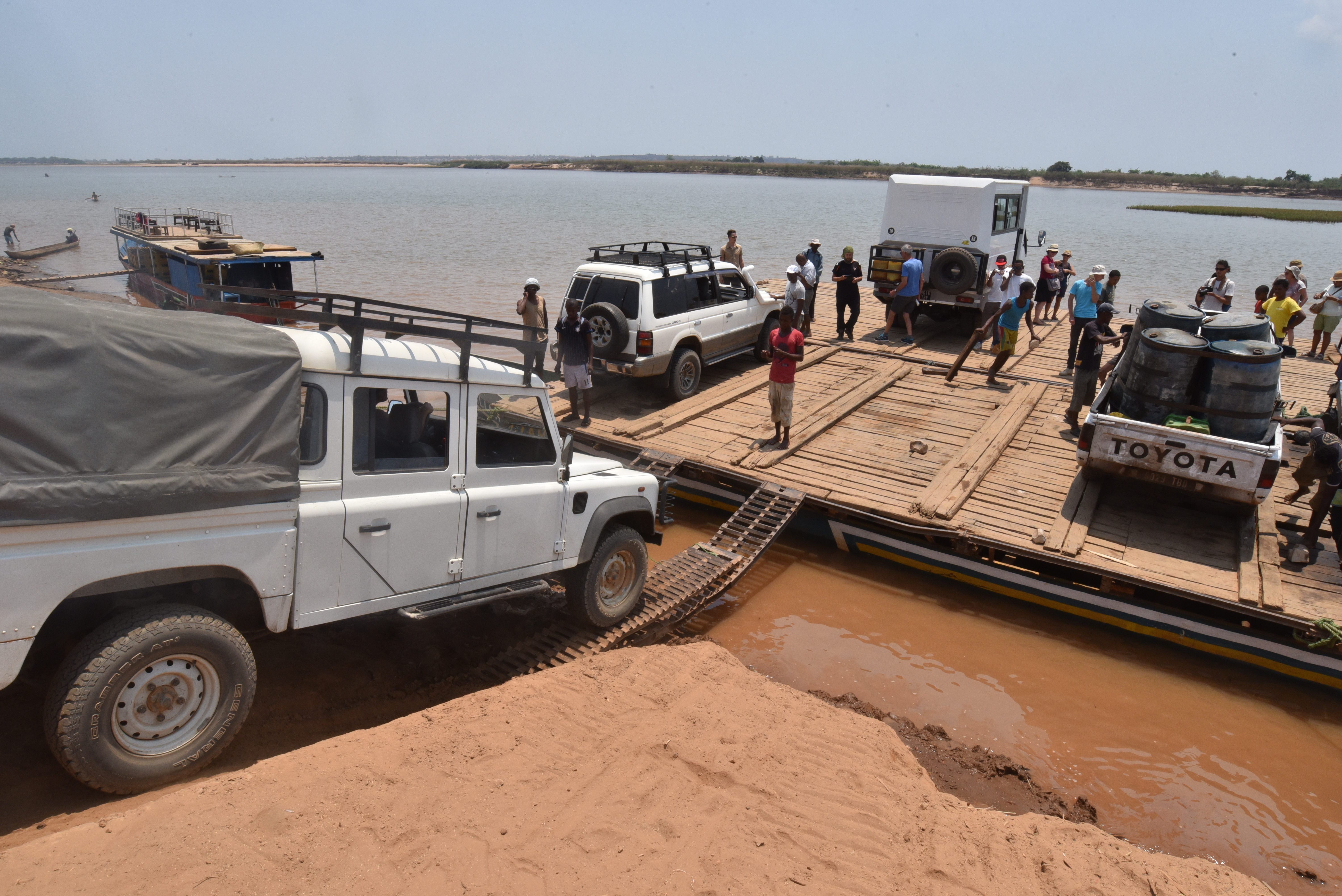
Ferry ride

First of two ferry rides to get to today’s destination, crossing the Tsiribihina river

Second ferry


Tuesday 18 October – Miandrivazo to Morondova

This posting replaces the earlier ‘filler’ message
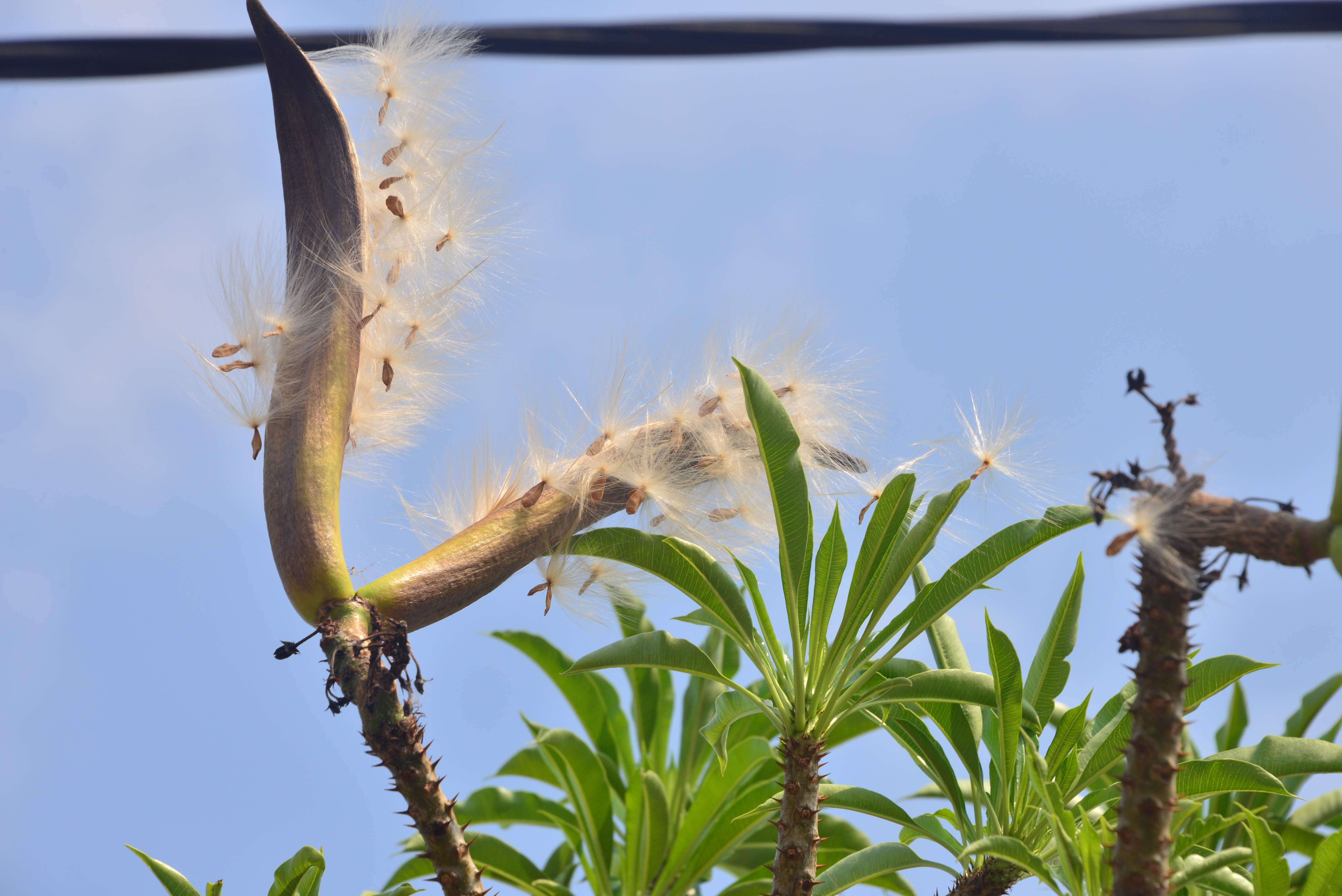
Soon after leaving the hotel, Christophe spotted a cloud of fluffy seed, not unlike a dandelion in a light breeze. The source here were the seed horns characteristic of the Family Apocynaceae. These belonged to a Pachypodium growing on the edge of a garden, P. rutenbergianum.
Pachypodium rutenbergianum

Pachypodium rutenbergianum fruit and seeds

We were not too fussy about where the plant grew, any Pachypodium image at this stage was fine by us, so cameras clicked.
Distances are great in Madagascar, with an area of 587,041 km2 (226,597 sq mi) it is the 46th largest country in the world – the UK with an area of 243,600 km² (94,060 sq miles) ranks 78th in the world. So again, the sun was low in the sky as we drove in and out of Morondovia and headed to the famous Avenue of the Baobabs.
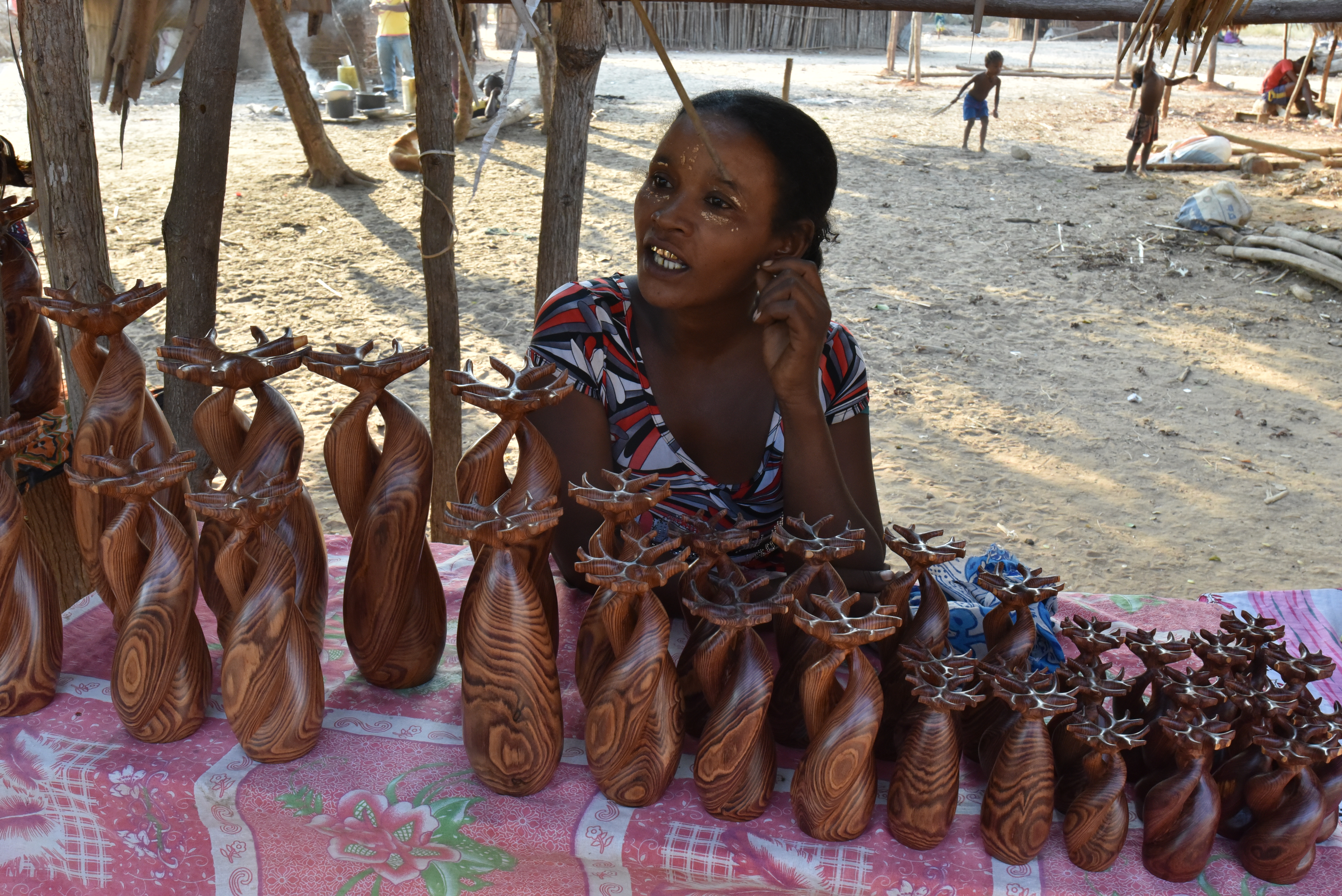
Christophe explained that although the landscape here of these giants standing in open fields may be ideal for a tourist attraction, with lots of small stalls selling a rather limited range of souvenirs, mainly woodcarvings of a famous individual tree entitled The Lovers (Les Amoureux) which actually grows some 7 km away from the Avenue that we’ll see later.
Souvenir stalls at the Avenue de Baobabs

Souvenir stalls at the Avenue de Baobabs

The natural habitat for these baobabs is the low dry forest, similar to the Caatinga of north east Brazil. The Malagasy custom, due to a rapidly increasing population that demands food, is to slash and burn the forest and use it for agricultural development. Dense clouds of smoke from often unattended burning fields and the blackened fields that are left behind are common sights in Madagascar.

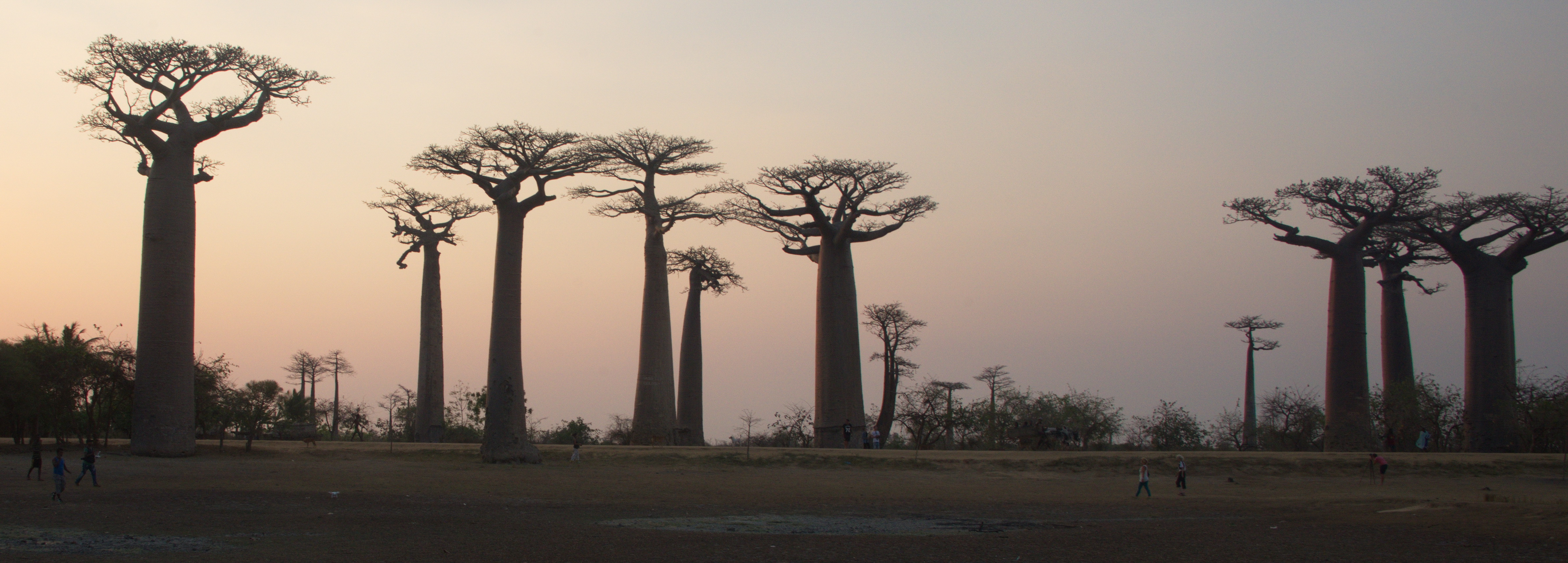
Avenue de Baobabs
Avenue de Baobabs
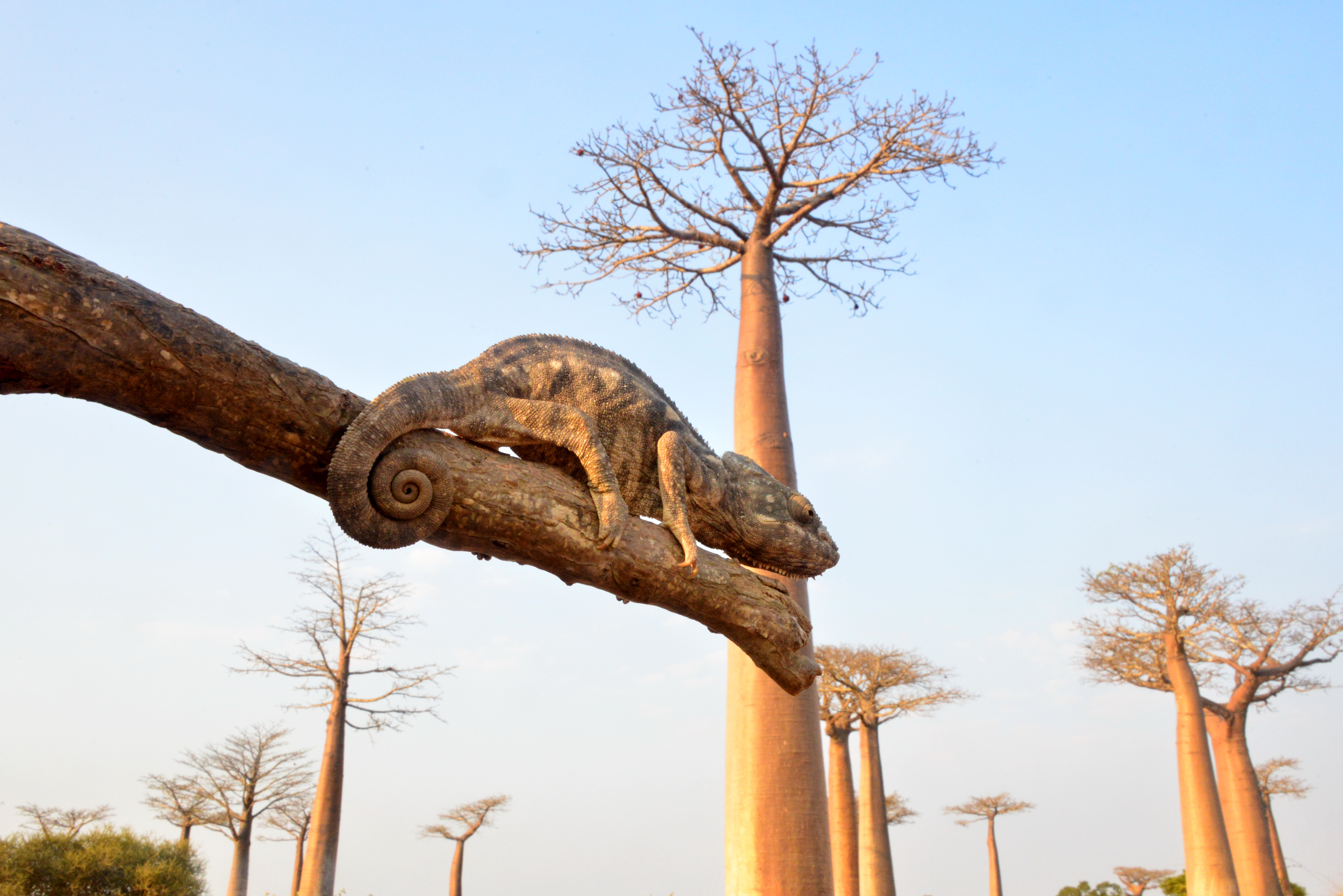
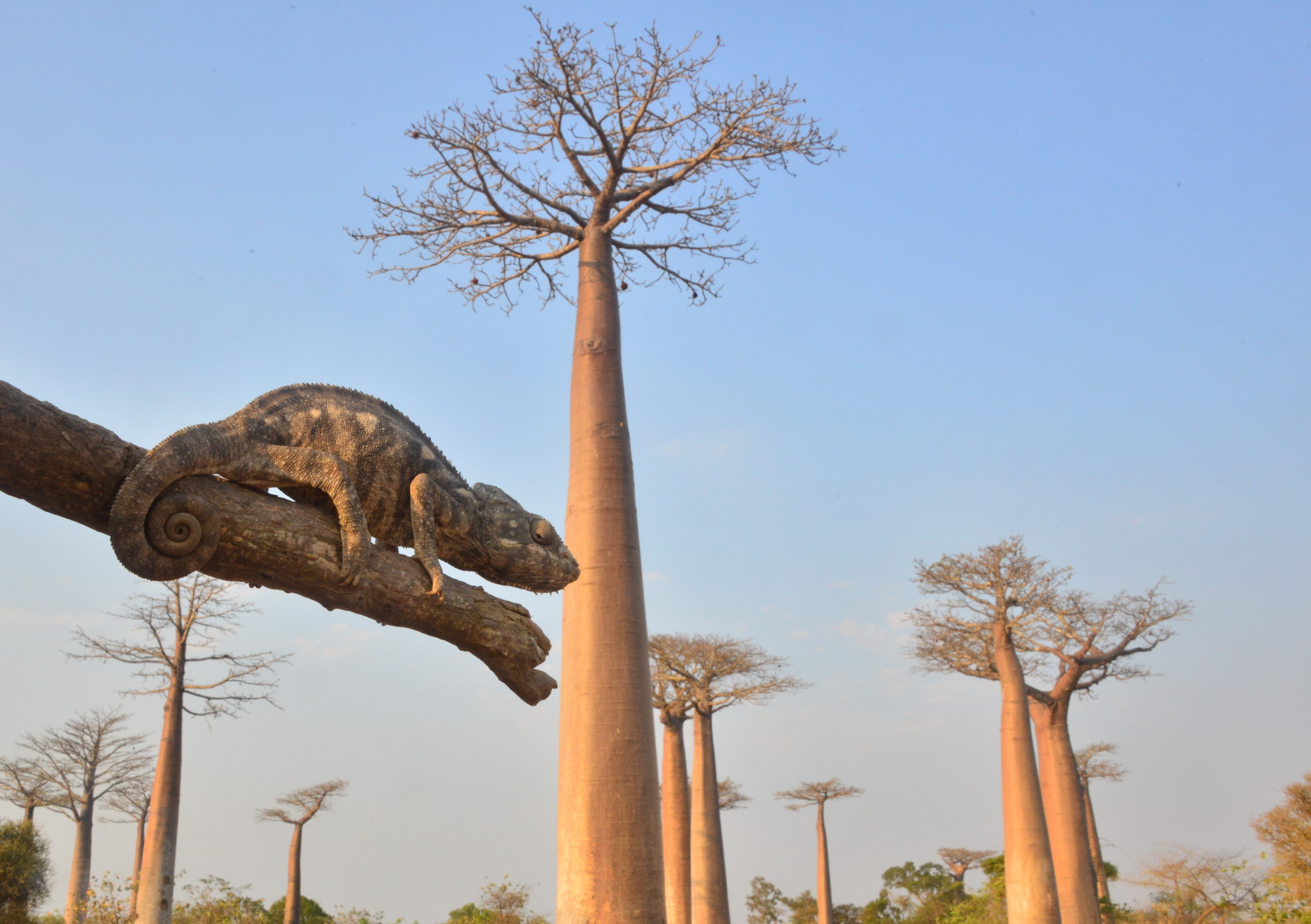
As we walked around taking way too many images of the 20 to 25 trees in the Avenue, I saw a little gathering of tourists and local kids. The children were charging the tourists 5,000 ariary to take pictures of ‘their’ Chameleon. But there were too many people cluttering the image. Other people were gathering to take the classic sunset image and a small herd of goats was let lose to create a rural scene to enhance our pictures. The kids with the chameleon were distracted and Christophe took pictures as I lifted the chameleon by its tail and moved it to a better position with the baobabs providing the back drop. The chameleon had different ideas and kept moving to a less favourable position. I took a few shots and then the kids came back, wanting money. ‘You snooze, you lose’ was my contribution to their education.
image by Christophe Quénel.

image by Christophe Quénel.

Chammy the Chameleon

Chammy the Chameleon

Tuesday 18 October 2016 – Miandrivazo to Morondova

Today we reached the famous Avenue de Baobabs at sunset.

This was one of my better shots after I found a friend to pose

Chameleon in Av. de Beobap

Chameleon in Av. de Beobab


Monday 17 October 2016 – Antsirabe to Miandrivazo

Christophe took us for a brief sightseeing tour of Antsirabe, the third largest city in Madagascar and seemingly the capital of ‘pousse pousse’, the French term for rickshaws that here come in three forms: the motorised luxury version, built around a scooter, the one-man power version, built around a bicycle and the version pulled by a young lad, often barefoot, that particularly in heavy traffic seem to be the most manoeuvrable. Our tour took us past the old station dating back to the old colonial days. It is the capital of the cooler central region and was founded by Norwegian missionaries.

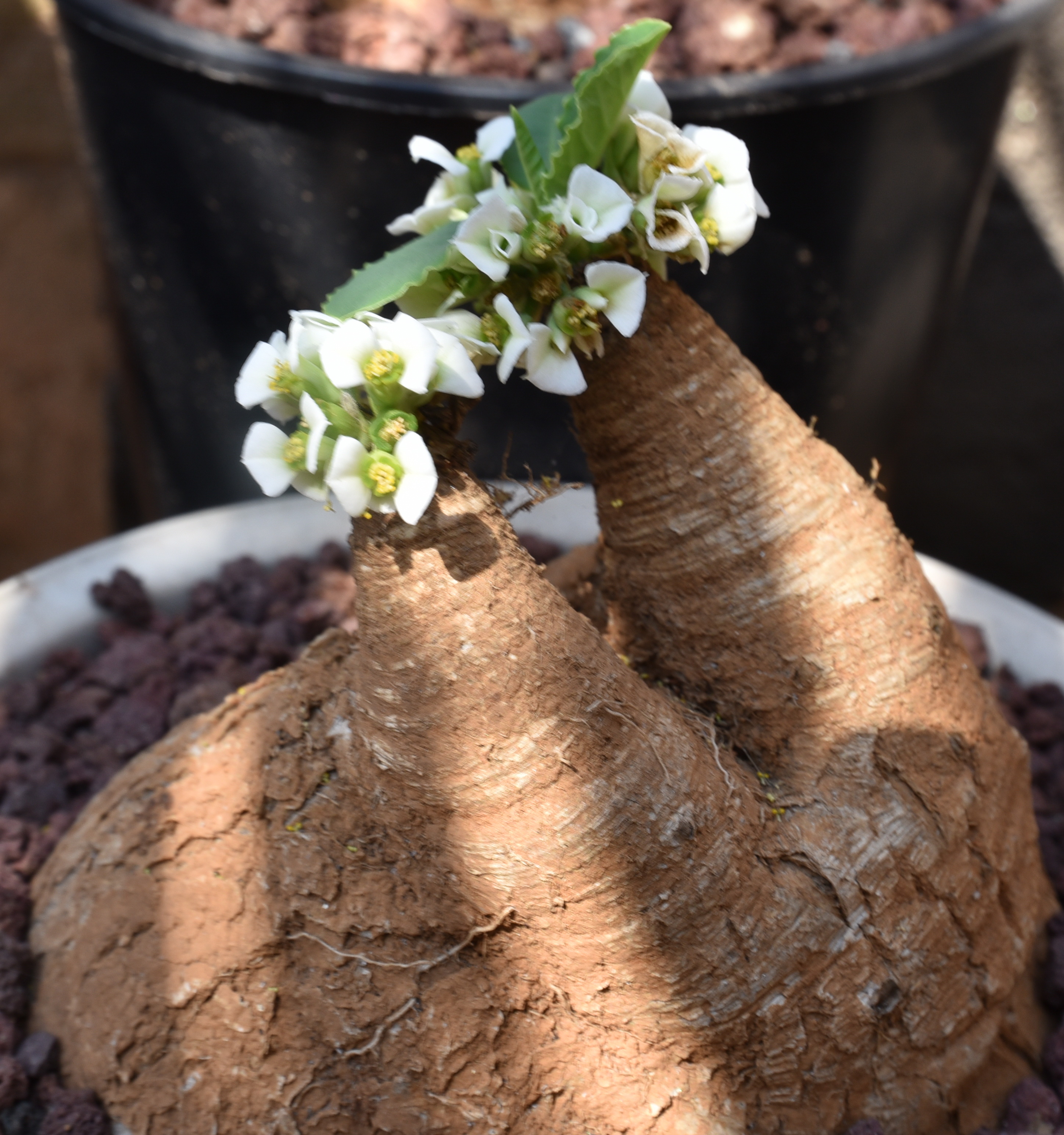
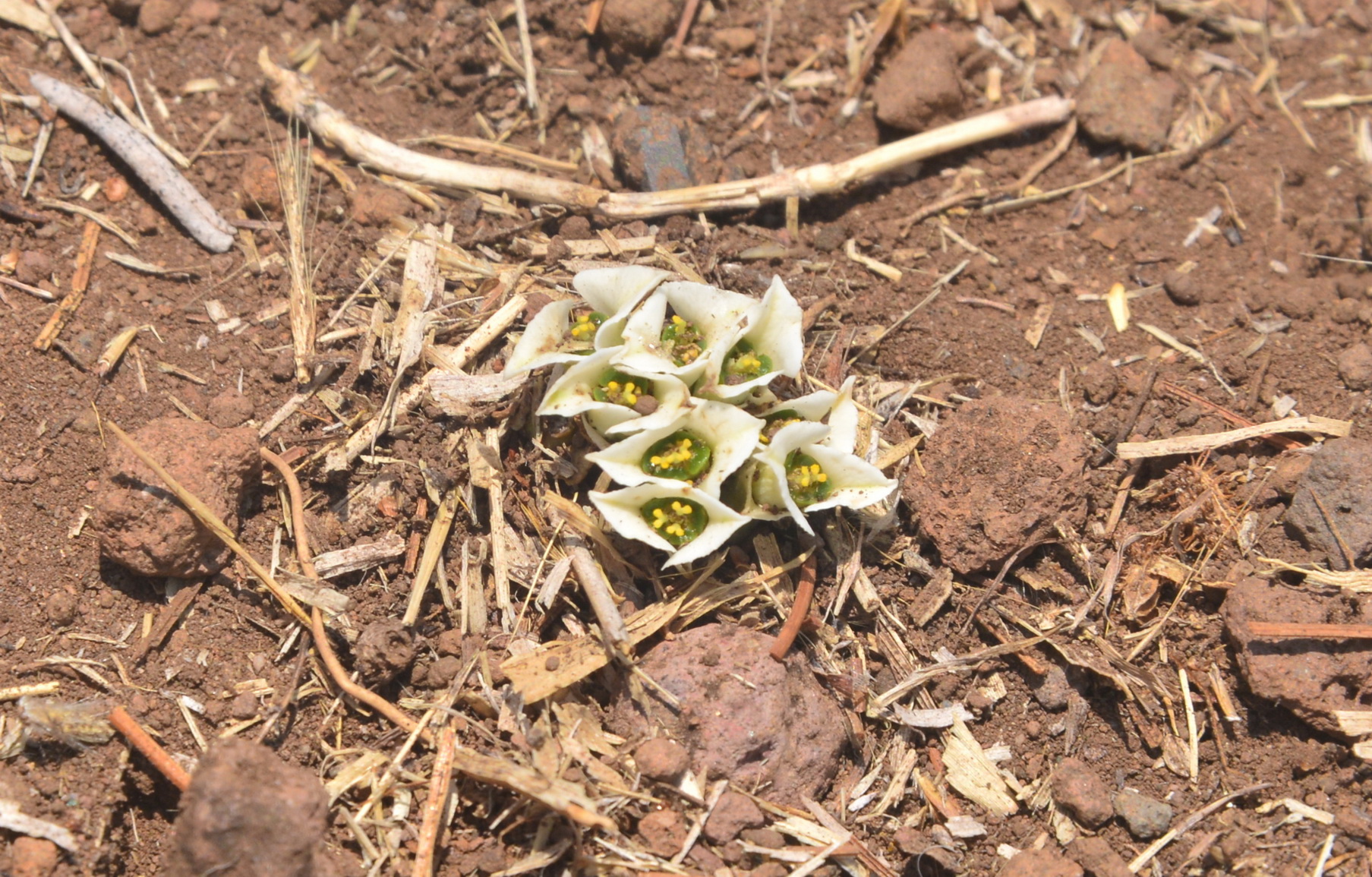
We then headed into the country, past a non-active volcanic crater where a quarry provides Christophe’s pumice for his plant collection back home. Lots of agriculture going on here with rice paddies being prepared for the coming rainy seasons. We arrived at another non-active volcanic crater and were immediately surrounded by kids offering to sell us local gem stones and fossils. The crater was filled with water (Lac Tritriva) and we had to pay a small entrance fee and pay a local guide who told us that the lake was 300 m x 100 m with a depth of 140 m. It is connected to lakes in other calderas of near-by volcanoes. The guide offered to take us on a guided walk through the (imported) pine forest around the lake, but we were interested in the geophyte plants that grow here, Euphorbia primulifolia. These plants are very difficult to find when not in leaf or flower, but our luck was in as Christophe pointed at the flowers all around us.

Euphorbia primulafolia,

Euphorbia primulifolia, in cultivation, growing with their tuberous root exposed.

Euphorbia primulifolia

Euphorbia primulifolia in habitat, with the tuber buried.

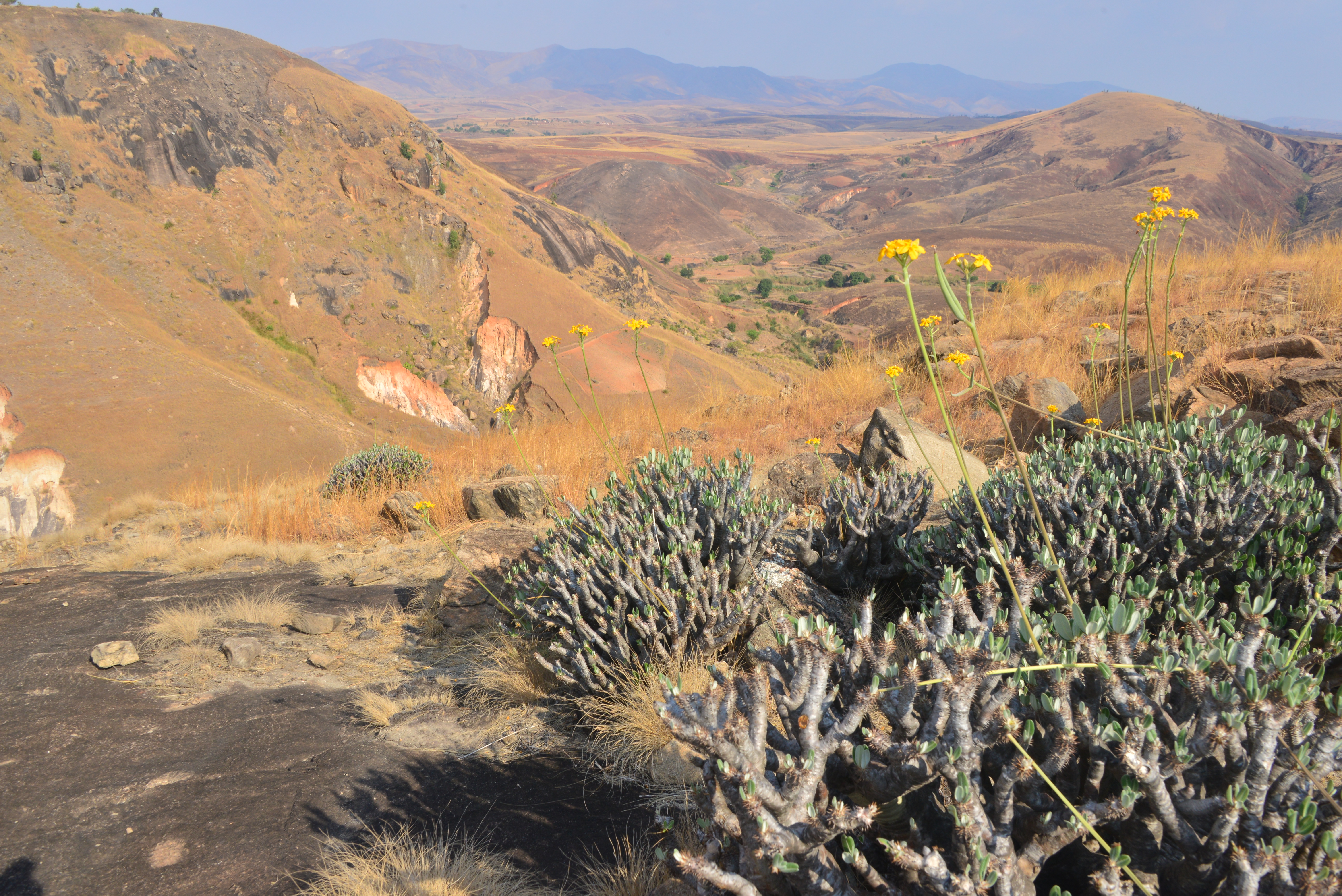
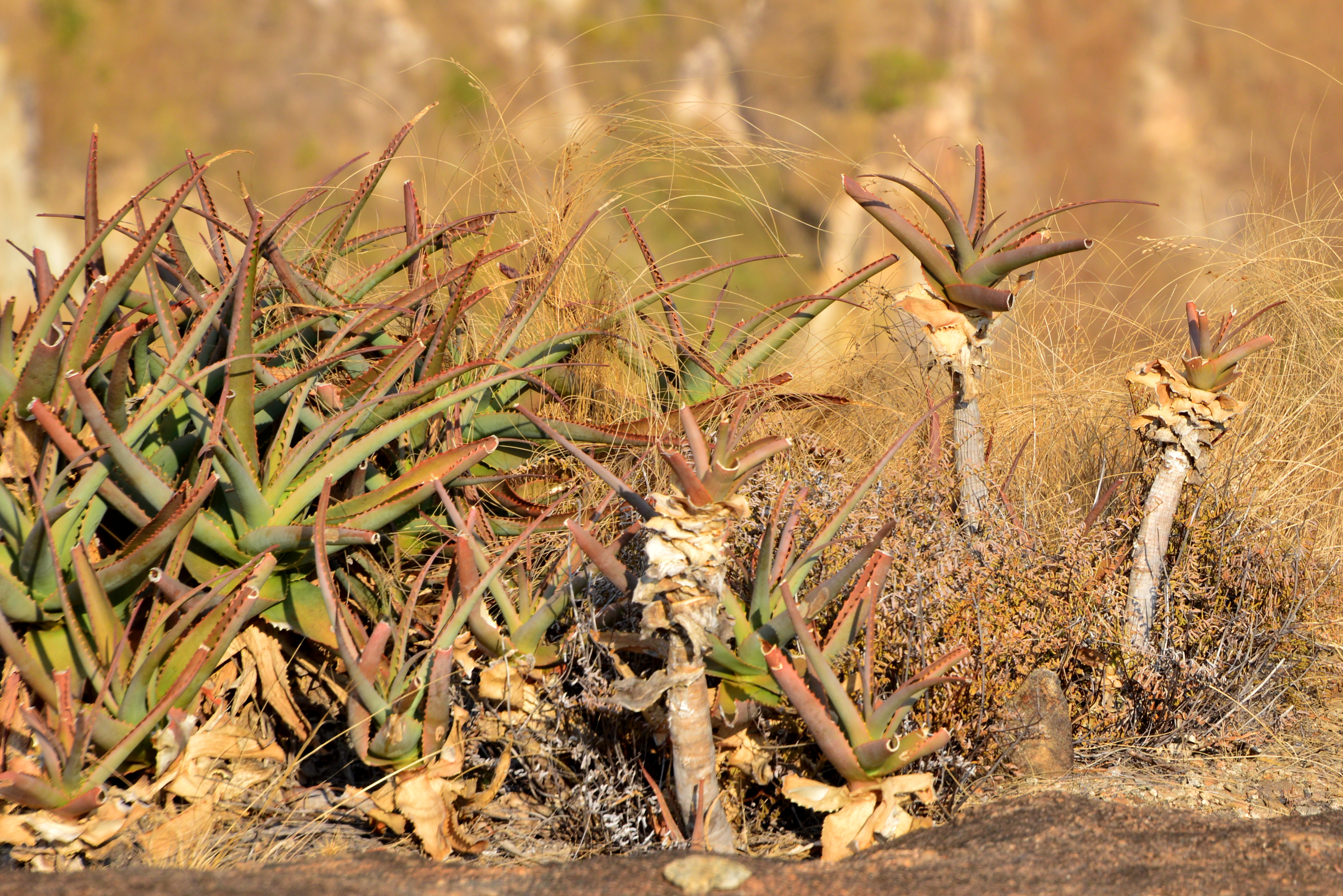
Our journey continued and as the low sun was beginning to colour the scenery a reddish colour we arrived at Mount Mandato, home of Aloe mambotoensis but also an opportunity to take a closer look at Pachypodium densiflorum that we had seen yesterday from a distance. Christophe was sad to notice a decline in the plants since his last visit.

Pachypodium densiflorum

Pachypodium densiflorum

Aloe mambotensis

Aloe mambotensis

Sunday 16 October 2016 – Around Antsirabe – Mount Itiby

After my failure yesterday to climb a reasonably low hill, today’s ‘Mountain’ Mt. Itiby looked quite intimidating as we parked the car.

Again, we’re pushed for time as I write this, so for now I’ll stick to the list of plants that I photographed and the fact that my pride is restored to some extend, although I am still the slowest thing on the road! The ‘invisible hand’ (beta blockers, to protect my heart) won’t allow me to build up to the speed of the others and the statin tablets to help the control of chloresterol have taken their toll on my muscles – dose halved at my last review shortly before take off. But I got there!

So, in alphabetical order we saw:

Aloe capitata var quartziticola
Aloe laeta
Bulbophyllum sp. – a small Orchids
Kalanchoe integrifolia – ranging from small plantlets to shrubs in size
Kalanchoe synsepala the “Walking Kalanchoe.”
Pachypodium brevicaule – bare, in leaf, in bud, in flower and in fruit – the full story!
Pachypodium densiflorum high on a rock, in flower

Pachypodium brevicaule on Mt Itiby

Pachypodium brevicaule on Mt Itiby

For me, the Pachapodium were the highlight of the day. As soon as I had photographed my first one, I was ready to go back to the car – but actually the break for photos helped me to recover a bit. The Pachypodium‘s bark is so smooth, it just demands to be stroked and there was lots of opprtunity to do so. But not for P. densiflorum that, here, only grew high on a large rock, out of stroking range, except for Willy, our local guide who was a former student of Christophe, who took off his sandals (Brian please note!) as an indication that there was some serious climbing for him to do, to bring down some of the flowers to allow us to see the one of the differences between P. brevicaule and P. densiflorum. From a distance, P. densiflorum forms short but clearly visible branches, as it had done in my collection in the UK before it rotted.

Great day!

Saturday 15 October – Antananarivo to Antsirabe

After a good night’s sleep the world looked wonderful! The sun was shining and we were torn between the breakfast that Nadia had prepared and the plants out on parade in the garden.
Breakfast won, but was followed by the garden tour – there were even cacti bought in France and legally imported into Madagascar. Copiapoa humilis and some Ferocactus that had suffered a brief spell of scorch. It only takes a few minutes to do the damage that  will stay with the plant for a very long time. Christophe pointed out our first Chameleon – much nicer to photograph than lizards as they move nice and slowly.
It did not take long to pack the car and be on our way. The first hour or so was through the sprawling suburbs of Antananarivo, rather like an ant’s nest with pedestrians visiting the local markets and food shops – very colourful. and chaotic. We then hit RN7, the main road out of the capital. It reminded me a bit of MEX 1 in Baja, but with rice paddies along the road. Lots of small settlements. Then we arrived at our first plant location at Site Ecoturistique  Iharanandriana.  We needed to pay a small fee to the local community, strapped on the cameras and off we went. The height of the hill was not too intimidating but the steepness of the eroded track was. Not used to such a burst of exercise, I was soon out of breath and my thighs ached in protest.
John and Christophe waited patiently for me but it soon became clear that the best solution was for me to sit this one out.
I missed out on  an  Aloe and two Kalanchoe, but the site is well documented on the internet, so I did not miss too much.
The next stop was for lunch at  Restaurant Au Coin de Foeie Gras where we had portions of the pate after which the restaurant was named, washed down with a very sweet white wine.
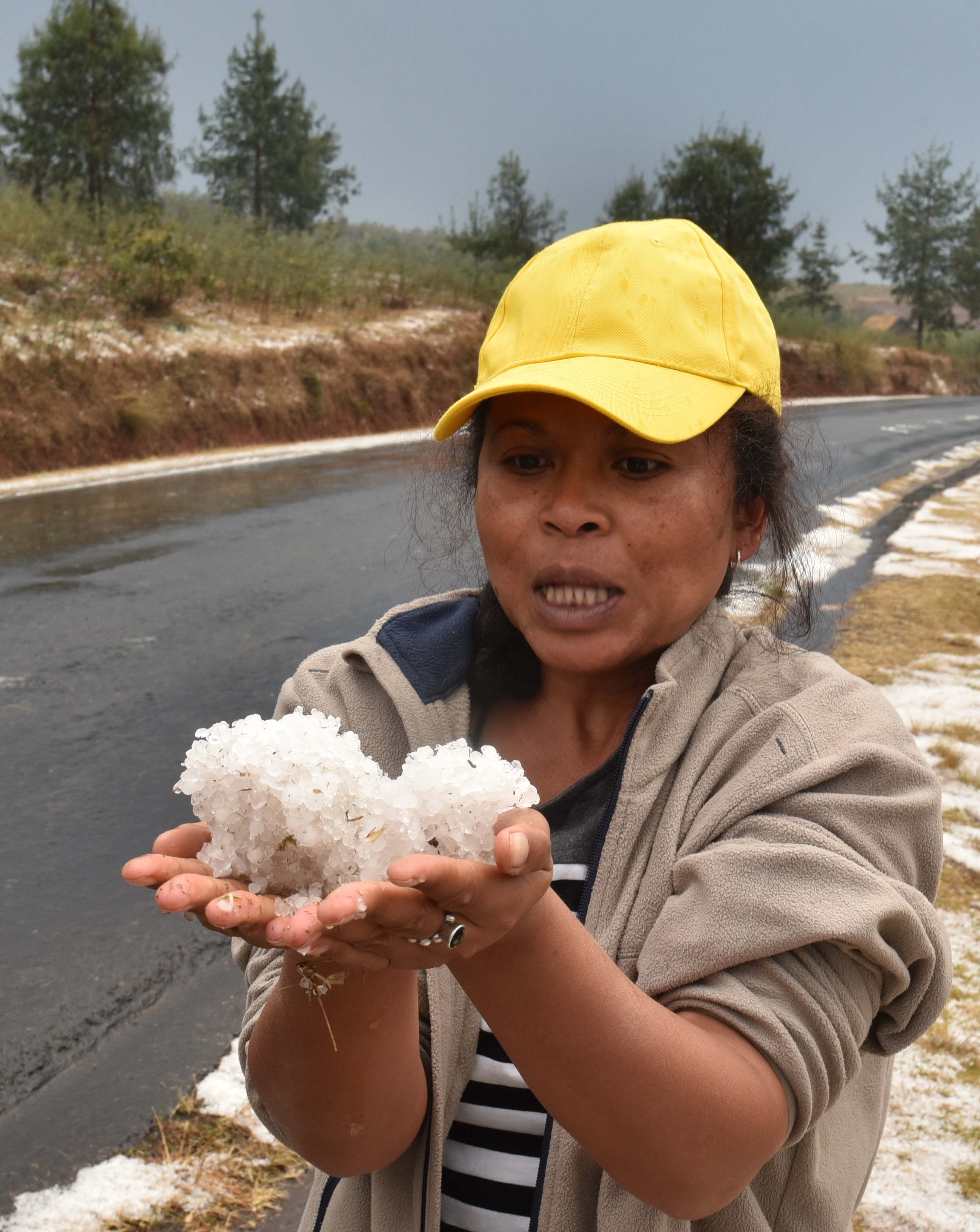
Back on the road and the skies turned black for a good old  rainstorm. More of a surprise was when the rain turned to hail and briefly provided a photo opportunity for some very different and unexpected weather conditions!
Nadia with a handful of hailstones

Nadia with a handful of hailstones

The high temperatures ensured that soon the ice had melted and we continued safely to our hotel where, as for the rest of the trip, John and I each had a private suite with mosquito nets provided where necessary.

Tuesday, 13 September 2016 – one month to go!

In exactly one month time I should be on my way to Heathrow to escape British Winter before the clocks switch to Winter Time. This time, my escape is to the fourth largest island in the world, Madagascar, with the airport some 18 degrees south of the Equator.

‘But there are no cacti in Madagascar’, I hear you say. Well, there are, but none are endemic, with the usual culprits finding the conditions to their liking, thus continueing the non-endemic theme started by Cylindropuntia tunicata in Chile in 2015. In the absence of natural enemies and encouraged to spread by the now declining goat population was causing a real pest here. I expect Cylindropuntia to be again amongst the most successful invaders, but also expect Harrisia and, from ‘the other succulents’, Agave, to be among the aliens. All were brought here by humans, but found the conditions so favourable that they escaped into nature and started to compete with the natural flora.

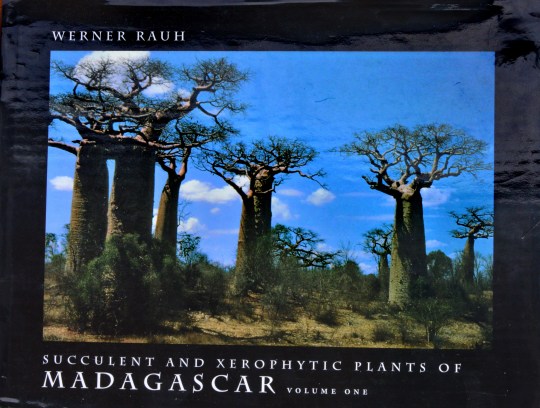
The main image of Madagascar in my mind is the cover image of Werner Rauh’s first book on the Flora of Madagascar, of the giant pachycaul trees, Adansonia grandieri, standing guard along the Avenue of the Baobabs. It is a ‘must see’ place to visit.

the giant pachycaul trees, Adansonia grandieri, standing guard along the Avenue of the Baobabs.

… the giant pachycaul trees, Adansonia grandieri, standing guard along the Avenue of the Baobabs.

But the Baobabs are not the only ‘fat stemmed trees’ on the island. There are members of the Family Apocynaceae (Adenium and Pachypodium) and Euphorbiaceae to name but a few, that all possess these fat stems. I have come across them on my travels, in Australia, South Africa, Namibia and in Mexico, to the point that I thought that I could do a presentation on the subject, but not before having seen the Madagascan giants.

‘But you know nothing abouty these plants!’ I hear you say. Again, correct, but my library and the internet provide just about all the information I need and I have actually grown (and killed) a number of Pachycauls since my visit to South Africa and Namibia in 2012 and we are being guided by French botanist, Christophe Quenel, recommended to us by BCSS CactusWorld editor Al Laius, who has travelled with him before. Just as knowledgeable (?) as I am, is my UK fellow traveller John Childs, who is also looking forward to pointing his camera at the Pachycauls, while we both also hope that lemurs and chamelions will cross our lenses.

As usual, I plan to write up my reports of what we see on a daily basis for publication in the Cactus Trip Diaries Blog. It is likely that internet facilities to send out these epistles on a daily basis may be difficult to find, so that I expect them to be released in batches when ever wifi is available. And I don’t expect these to be ‘broadband’, just a thin fragile wire, so that images may have to wait until we arrive back in the UK in mid November. The images and movie clips will be sorted and arranged to become a digital presentation and I have already accepted many invitations from BCSS Branches to show What I saw Last Winter in 2017.

You can subscribe to this Blog, to receive new postings by email, as soon as they are published.

I hope you’ll join us next month!