Just another WordPress.com site

Christophe’s itinerary included one night of ‘camping, please bring a sleeping bag’. As regular readers of the Cactus Trip Diaries might know, camping is not my favourite activity in a ‘looking for plants’ trip. As usually we fly into cactus country, we are keenly aware of checked-in luggage limits, normally one case weighing 23 kg. Once you look at what is available in terms of camping equipment, it’s easy to see that the equipment can take up most of the weight allowance. The afternoon before the planned camping event has to be spent shopping for provisions, it’s best to arrive at the chosen site while there is still day light, the ground where you lay down your sleeping bag seems to get harder and less comfortable as you get older and the next morning it’s best to wait until the sun has dried off the dew that has wetted the outside skin of the tent, before packing it away. Increasingly, I wake up with a headache due to the amount of wine consumed to act as an anaesthetic to cope with the hard ground.

So, as the night under canvas approached (tomorrow) I decided to ask Christophe for a bit more information. Was this event in permanent luxury tents, with beds etc? He laughed, not at all. Was there an alternative option? Not really. Ah well, it’s only for one night, but I wasn’t looking forward to it!

I turned to the internet and Triadvisor to learn more about last night’s stay at Sous le Soleil de Mada and found an excellent 5/5 review by SSSuchan from Canada who had stayed here last year:

‘This is a peaceful hotel set on a high plateau surrounded by farmland and villages. Construction of the complex started 11 year ago by the owner and was completed with the help of the local Zafimaniry people. The hotel consists of one main building which serves as the dining hall. The rooms are small private bungalows scattered about the property. All of the buildings on the site are constructed using Zafimaniry methods, design and materials.

The rooms are clean and smartly decorated. The bathrooms are small but efficient with constant hot water provide by an in-room instant gas heating system. Electricity is provided via generator but only for a few hours a day. I found the bed to be quite comfortable. Being winter it was extremely cold but the bedding provided ample insulation for a good night of sleep.

I only had one dinner at this property and both preparation and the quality of ingredients were excellent. Breakfast was less spectacular but it was good nonetheless.

Service here was exceptional. Brigitte and her son Pierre are both on site and they are warm, kind people who are constantly attentive to the needs of their guests. Conversation was pleasant and guests were treated to some of their flavoured rums. The local staff whom they employ were friendly and efficient as well.

The property offers opportunities to sit around a fire pit, lounge under the stars or just sit back and relax. Due to the location and availability of resources some things being very basic and availability of some things cannot be guaranteed but there is much here to make up for any lack. Definitely worth a stay.’ I totally agree!

Ravenala madagascariensis

Ravenala madagascariensis, a.k.a. the ‘traveller’s palm’, native to Madagascar.
I has been looking for a nice specimen of Ravenala madagascariensis, that is native and kind off a symbol of Madagascar and here, in the garden was the above plant. It is not a true palm but is closely related to the southern African genus Strelitzia and the South American genus Phenakospermum.
Back on the road, we made one stop, a low hill S3524 to see
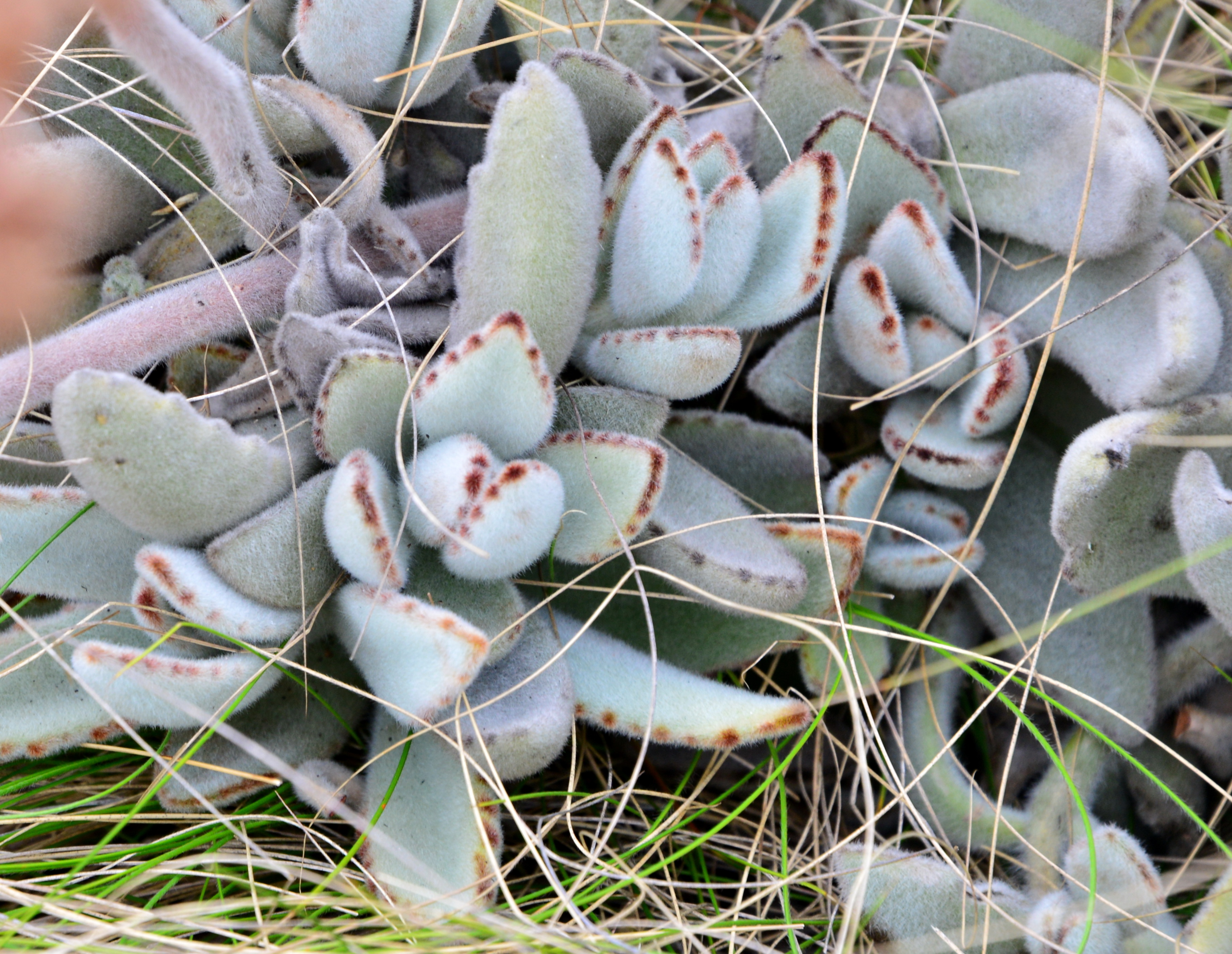
Kalanchoe tomentosa

Kalanchoe tomentosa

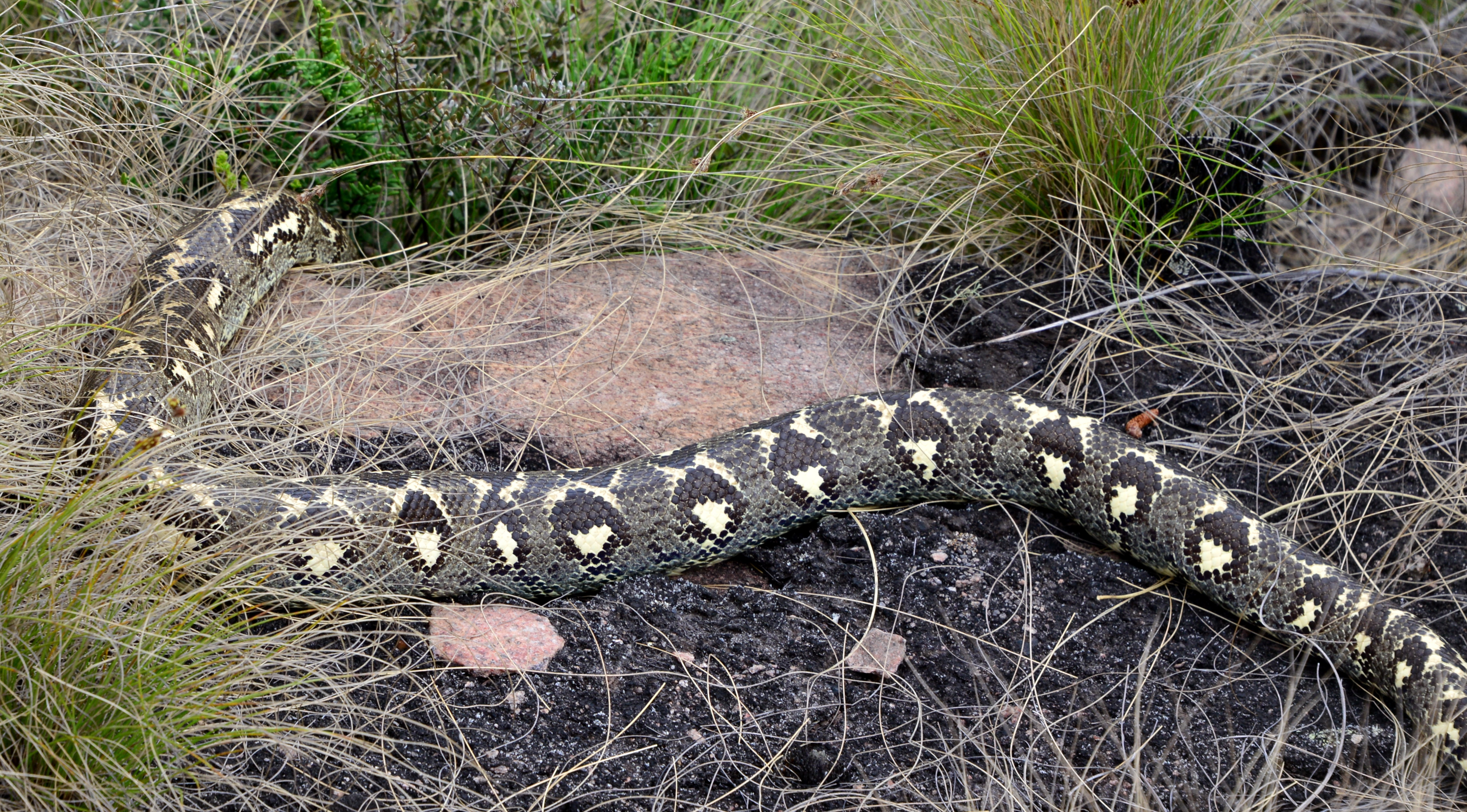
Madagascar Tree Boa - Sanzinia madagascariensis

Madagascar Tree Boa – Sanzinia madagascariensis
Also on this site, Christophe found this large snake, a Tree Boa, in the grass. We were reassured that there are no poisonous snakes on the island!   The Aloe here is:
Aloe conifera

Aloe conifera

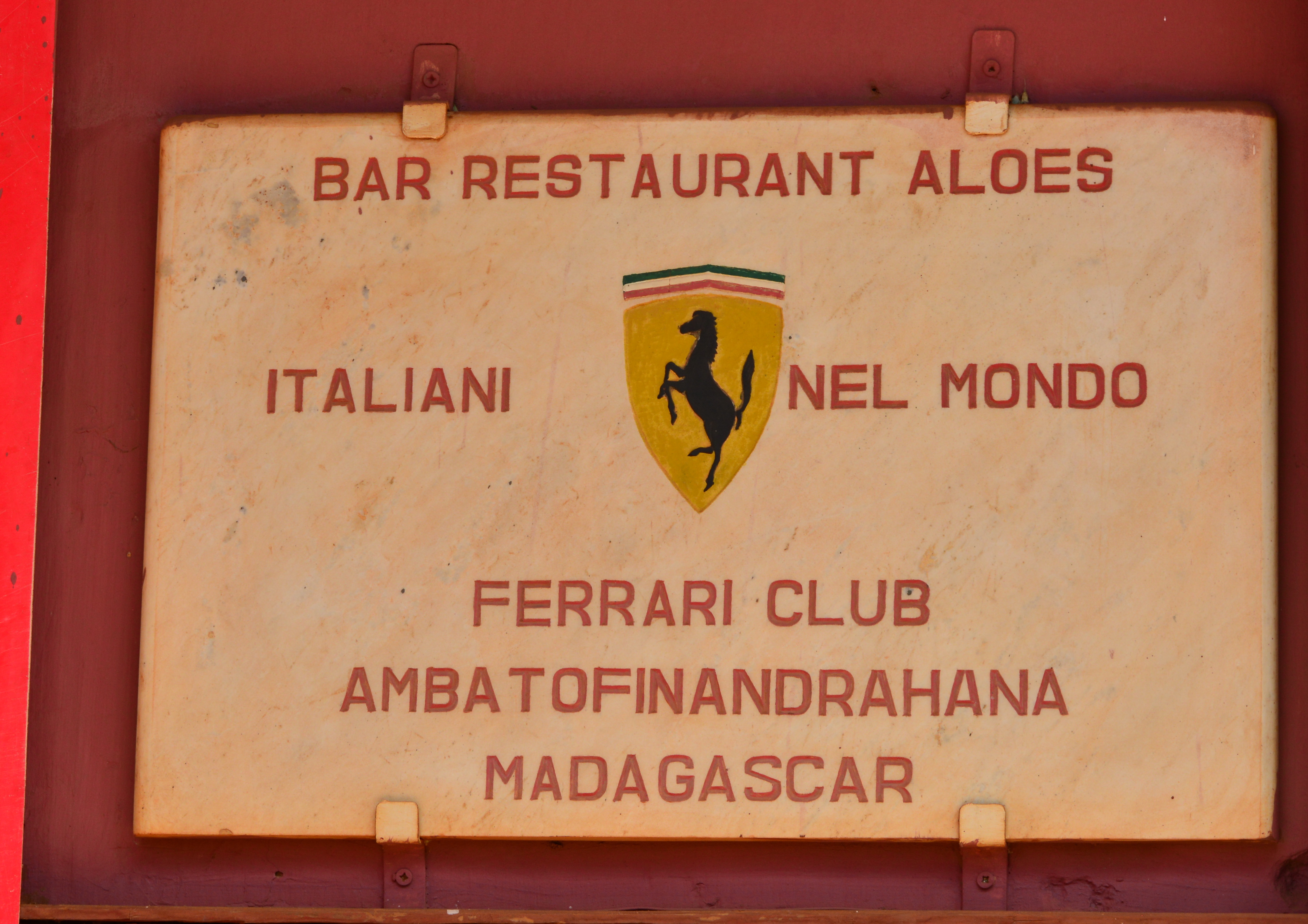
We had lunch on the terrace of Hotel Aloes, apparently with an Italian owner, judging by the plaques on the wall:
Ferrari Fan Club

Ferrari Fan Club

There was a similar plaque for Juventus.

We had been bumped by the Hotel that Christophe had booked due to the arrival of a coach party of some 20 French tourists. They felt bad about the double booking, but I could see the economic sense of it. They had found us rooms in the house owned by a former Madagascar minister who had moved to the capital before she was sacked on corruption charges. The rooms were comfortable but the shared toilet and shower facilities were a little primitive with state of the art toilet, washbasin and shower – but no running water – the water pipes to the house were still stored in the garden. So there were large water tanks with smaller containers to fill up the cistern to flush the toilet or to pour water (cold) over yourself to have a shower.  When we got home from dinner at the original hotel, the landlady in our hotel asked if we wanted some hot water for a shower. Thanks, but she was too late.

While waiting for dinner, we witnessed guests running wrapped in bath towels from the shared shower cubicles down stairs to their rooms upstairs, past the dining room. Serves them right for pinching our rooms!
I believe that last night was the first without a mosquito net over the bed. Christophe assured us that there were no mossies this high (too cold) and no standing water that is needed in the mossie life cycle. The Anja Community Reserve consists of some 30 hectare of dry forest nestled at the base of three, large granite mountains that dominate the landscape. Guides were at hand to take us on a range of walks. With other places to see on our way to the next destination, we opted for the short circuit, but unbeknown to us, Christophe asked for a customised extension so that we could add to our tally of succulent plants seen in nature.

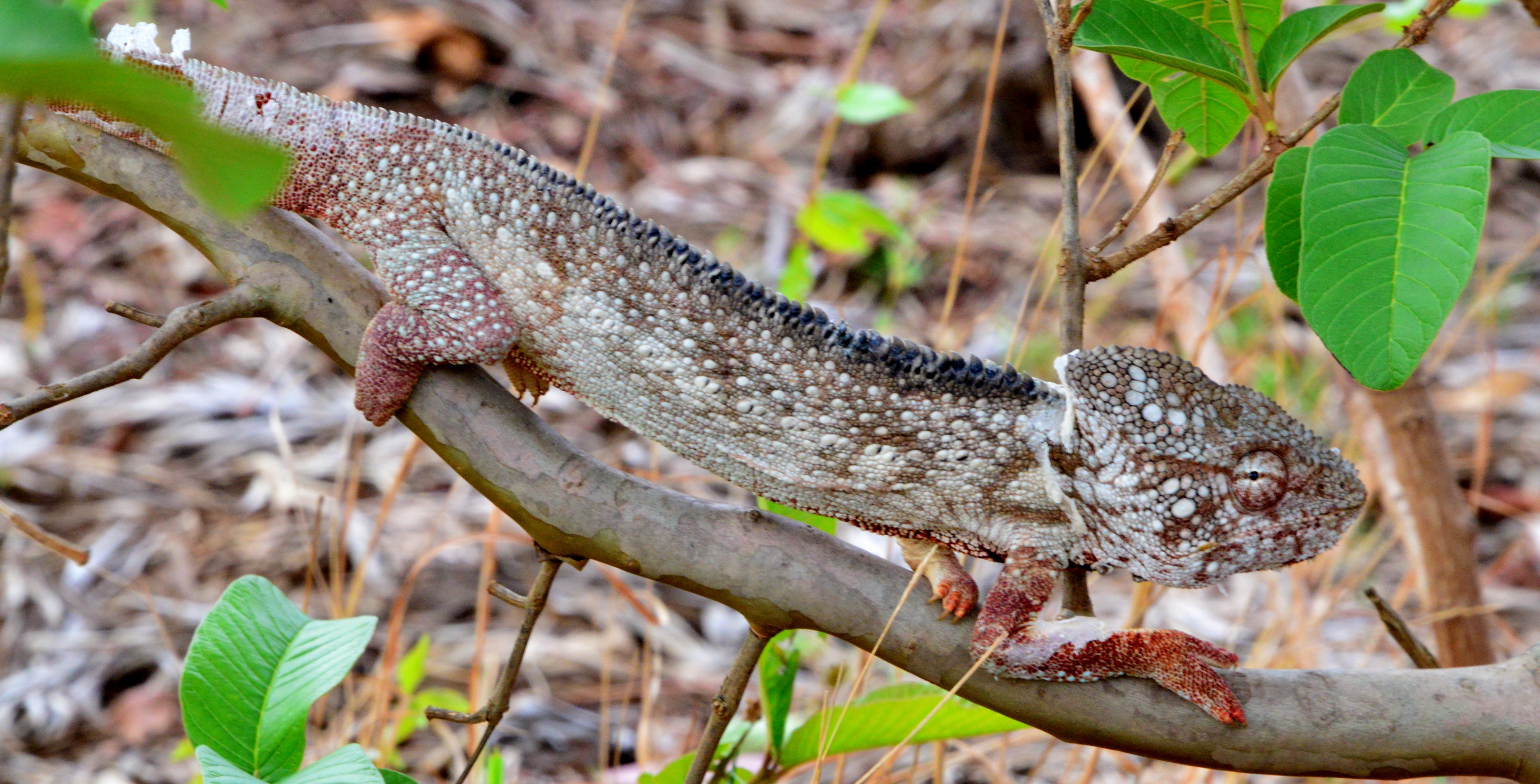
I looked forward to the opportunity to photograph some more lemurs but was also pleased to see an impromptu appearance of a Chameleon. Again, there were two guides, a wildlife spotter and a guide who was fluent in English and provided explanations and names of plants.

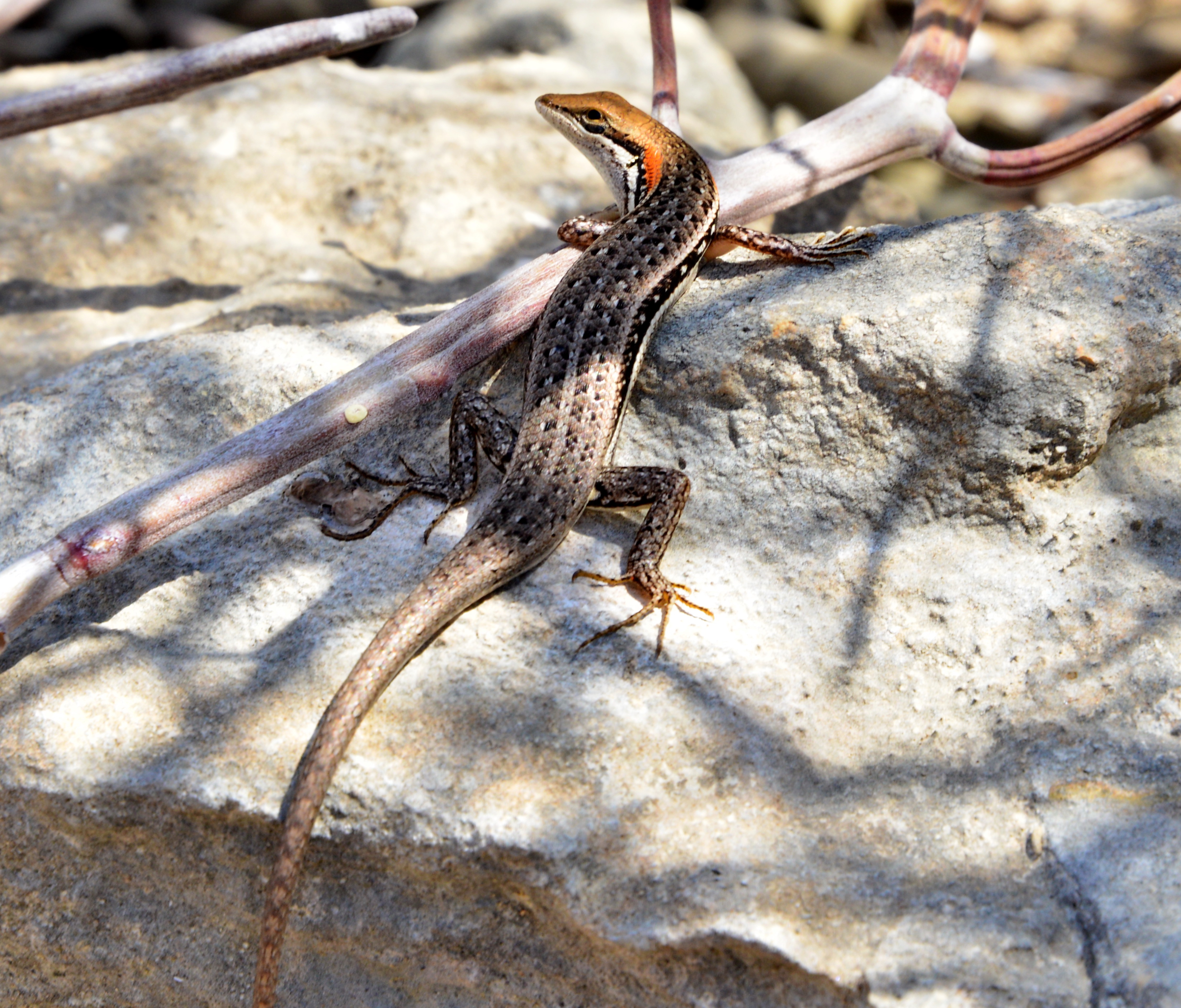
Zonosaurus madagascariensis

An ‘Androngo’ or Madagascar Girdled Lizard (Zonosaurus madagascariensis)

The ID of Chameleons is quite tricky, due to their ability to ‘change colour’ to merge in with their surroundings, so that the one that you see can look quite different to the ones in images on the internet. And of course, it’s always difficult to tell fact from fiction on information found on the internet. With a deep interest in a specialist subject like cacti, you get to know the sites that are reliable and those that are just pure fantasy. The name Zonosaurus madagascariensis was suggested on the Anja website, but searching for images of lizards under that name shows quite a different reptile.  With over 200 species of Chameleon recorded, I’ll need to look at quite a few more images before I can spot a match. So if you are sure that you know the correct ID of this and other lizards (incl. chameleons) then I’d be glad to hear your opinions.

As things must have a name, I’ve christened it Chammy again. Having found us the Chameleon in a tree, our spotter ran off again and came back with some grasshoppers that he had caught, pricked on the end of a stick and waved it some 20-30 cm from the Chameleon. Chammy would lean towards the insect and, quick as a flash, would fire it’s rolled up tongue, catch the cricket and swallow before I could focus my camera – again shooting against the light and with numerous twigs and leaves in the way was quite a challenge. All my attempts to catch the action failed. I should have tried movie mode, but how many grasshoppers can a chameleon eat before it is full for the day?

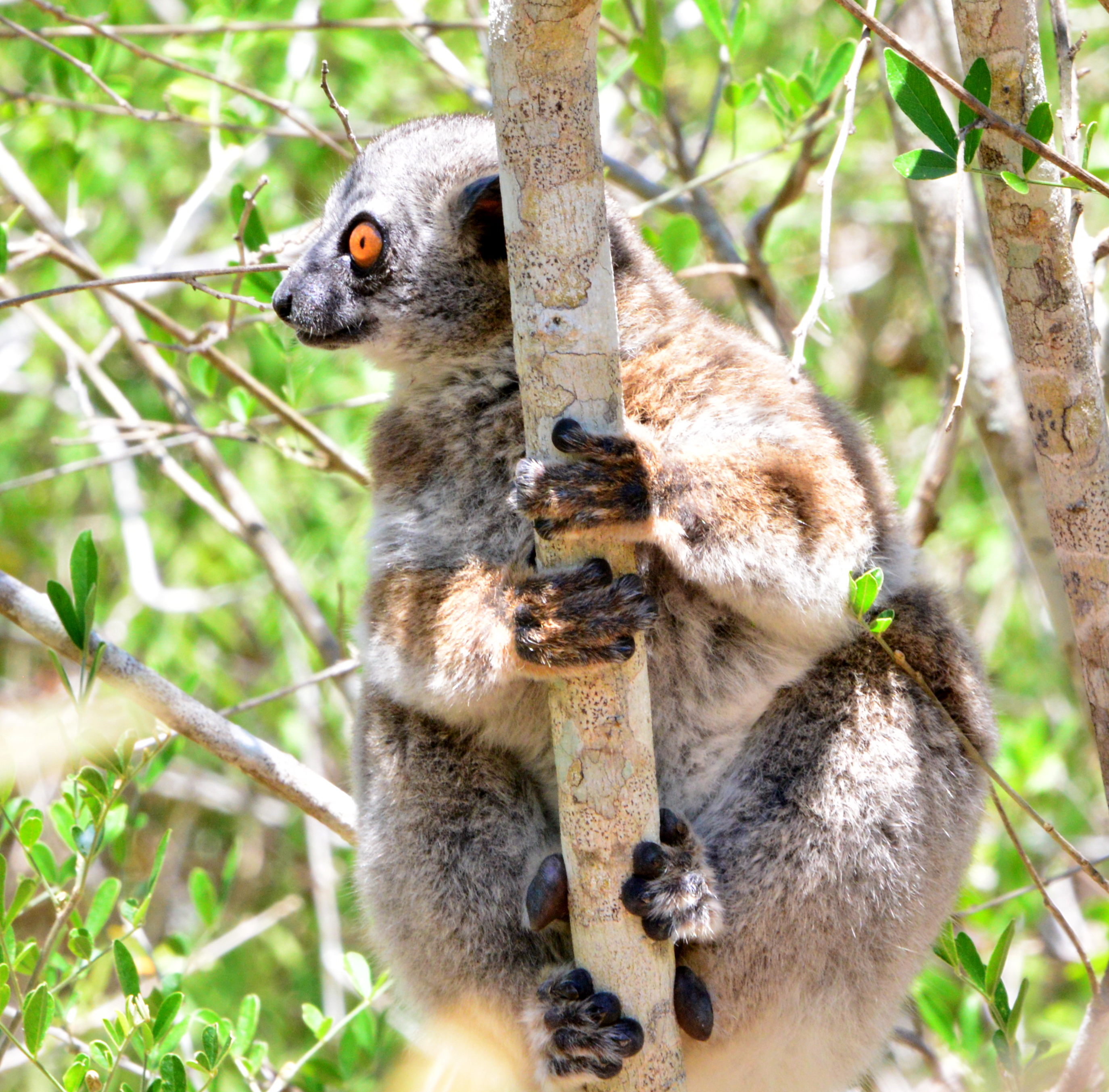
Our spotter called to tell us that the lemurs – ring tailed, i.e. Lemur catta, had arrived. We moved to a spot at the edge of the forest where some small reservoirs had been dug that contained water. The lemurs, again, some with young on their back, had come to drink and also seemed keen to lick the rocks. Our guide explained that the leaves that Lemurs eat in the forest contain toxins and that the animals come to drink and lick the rocks for minerals that counteract the toxins.

This was an ideal location for photography and I have (way too?) many images and some video as well.

Lemur catta

Ring-tailed lemurs – Lemur catta

They found another family, this time of nocturnal lemurs, for us, but these were hidden, high in the trees, so impossible to get any half decent shots. The rest of the 90 minute walk was focussed on plants. Lots of (for me) new and unfamiliar names, probably ignorant of the significance (rarity) of some of them. I’ll stick to showing you some of the things that impressed me the most, probably because I had the species at home or because of the unusual nature of the plants:

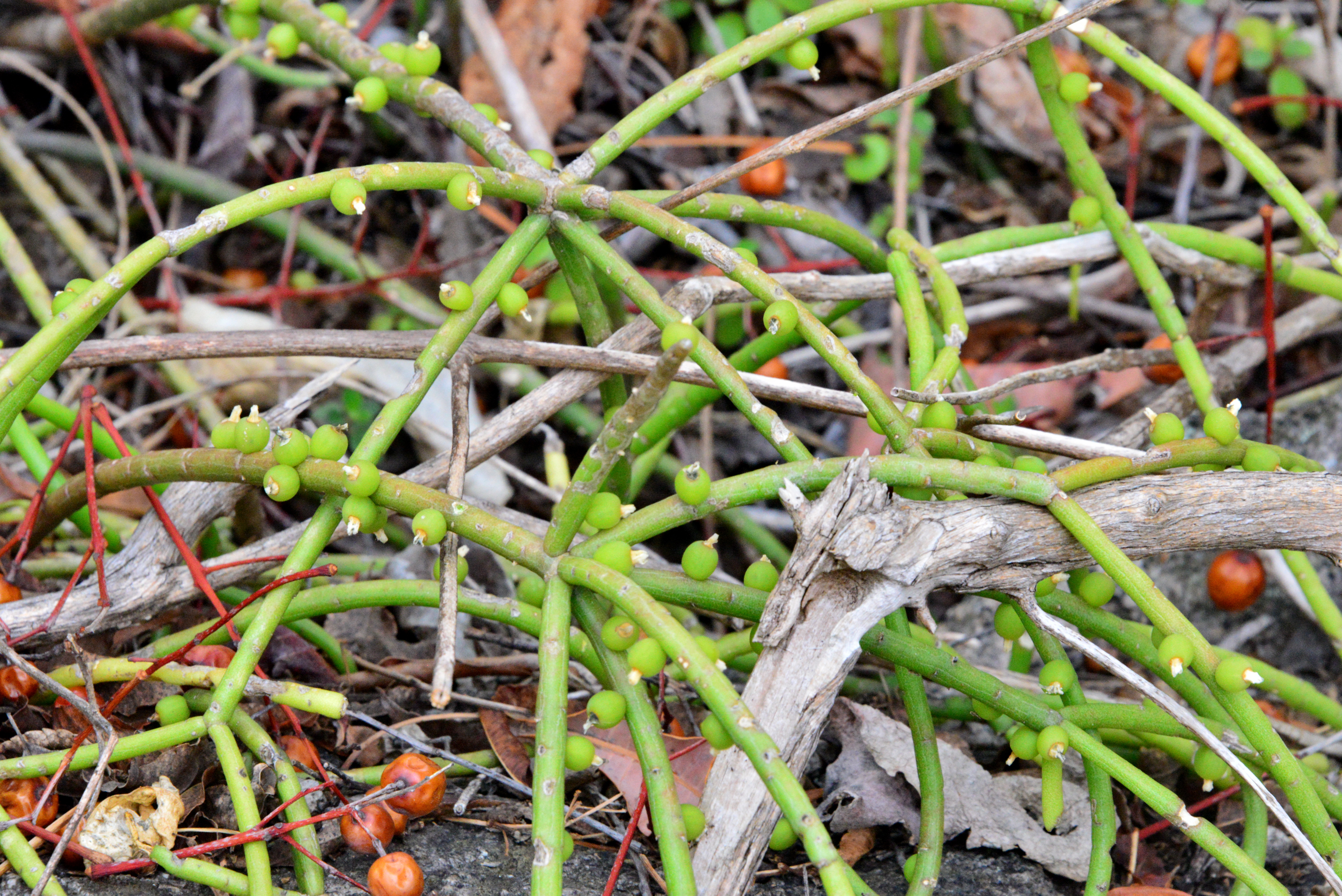
Rhipsalis baccifera

Rhipsalis baccifera

Rhipsalis baccifera is the only cactus believed to occur in nature in the Old World. It is usually accepted that the Cactaceae evolved after the earth’s surfaces broke up and the super continent, Gondwana split, simplistically creating the New World (the Americas) and the Old World (Europe, Africa and Asia). So how did this cactus get to ‘the other side’ of the planet? Discussions on the subject range from long studies and numerous scientific papers, to conversations around camp fires and meetings of cactus enthusiasts, usually accompanied by plentiful supplies of alcohol and rarely based on correct and accurately remembered facts. Definitely a plant of interest that previously I had seen in its accepted homeland of Brazil.

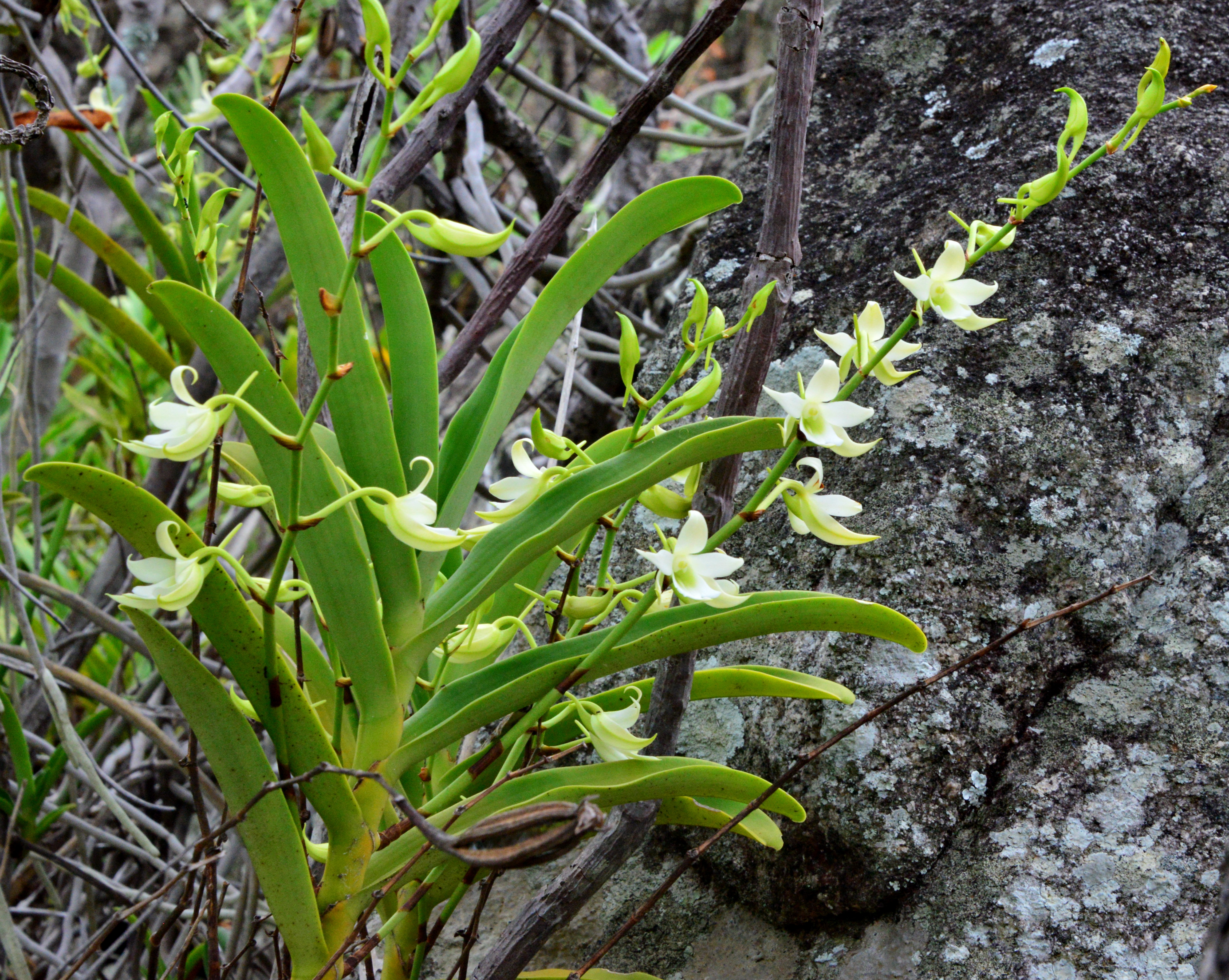
Next, soon after I slipped and lost my footing on the narrow path (no harm done, just a bruised leg and pride) we passed an impressive Orchid, in flower:

Sobennikoffia humbertiana

Sobennikoffia humbertiana

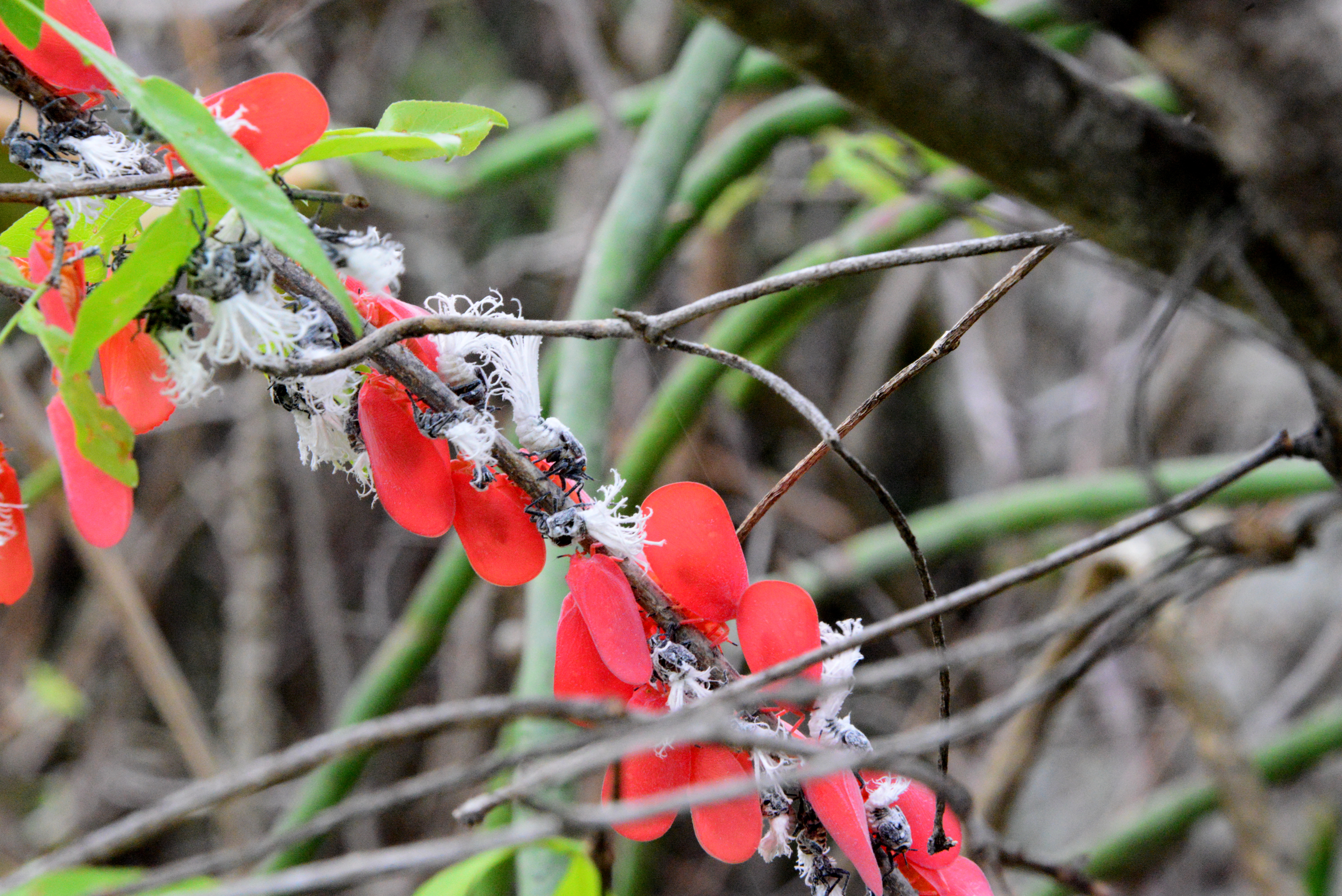
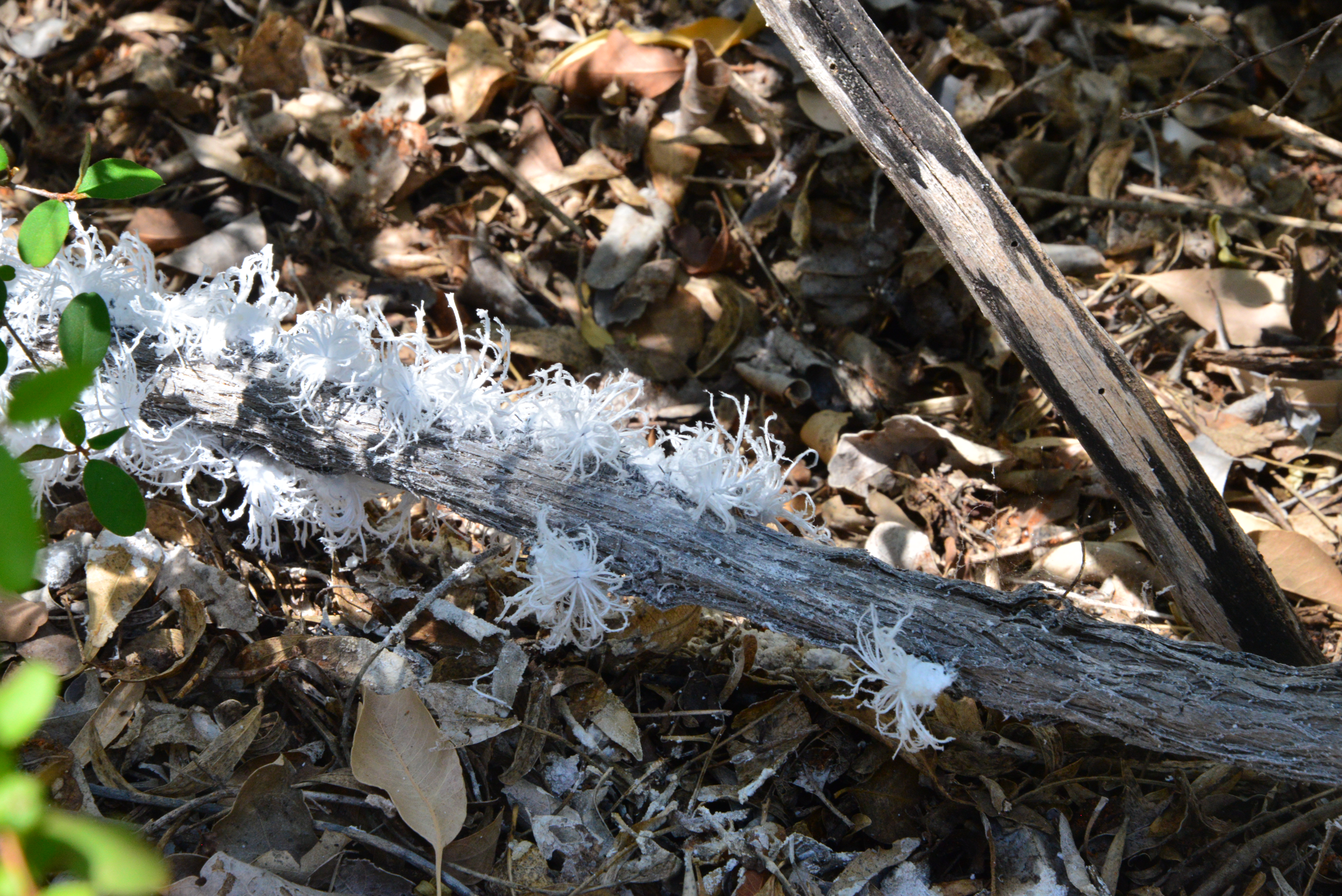
You may recall how a few days ago in the Arboretum d’ Antsokay we found, photographed and videoed what I described at ‘huge mealy bugs’. These have since been IDed as a Madagascan flatid bug, Phromnia rosea. Then we only saw the nymph phase of the bug. Here was saw both the nymph and adult phases:

Madagascan flatid bug - Phromnia rosea

Madagascan flatid bug – Phromnia rosea

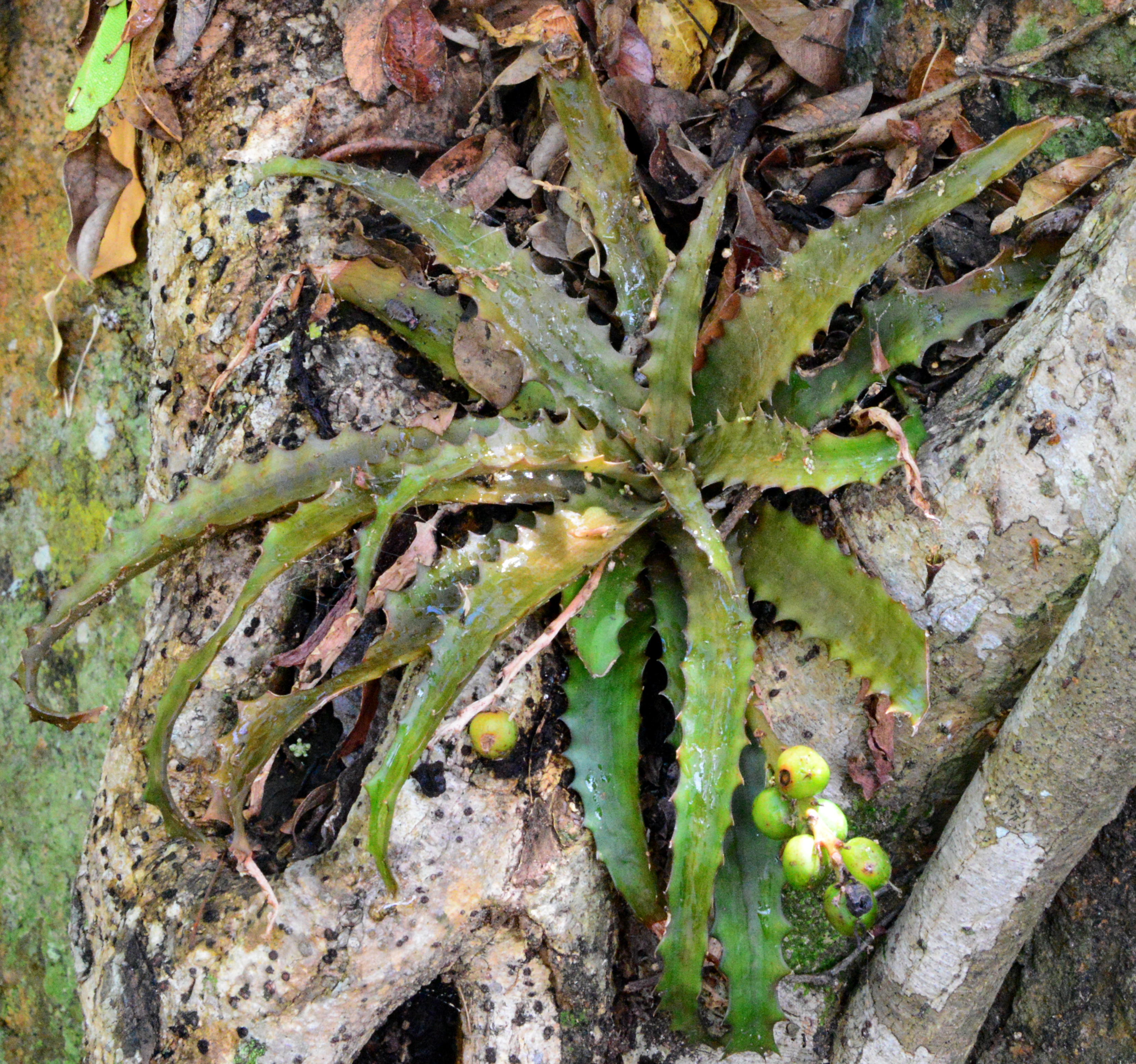
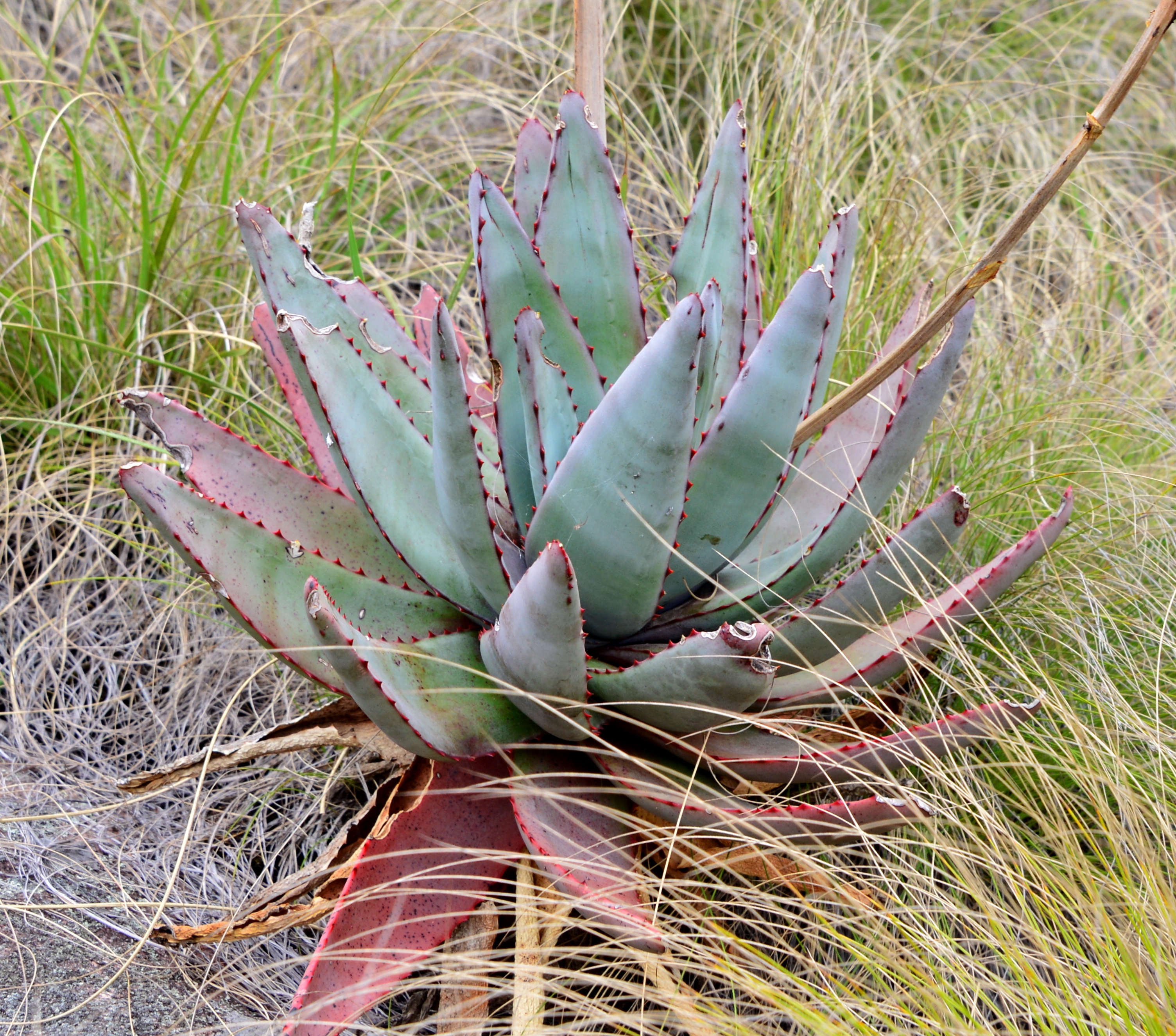
Finally, we were shown to a rock, in the shade of trees, where a ‘recently discovered Aloe’ grew. Earlier this year, while giving a talk at BCSS Wiltshire Branch where a member is a keen grower of Malagasy succulents was offering an Aloe for sale that was the plant seen here:

Aloe sakarahensis

Aloe sakarahensis

Quite a range and number of interesting things, and it was only approaching midday!

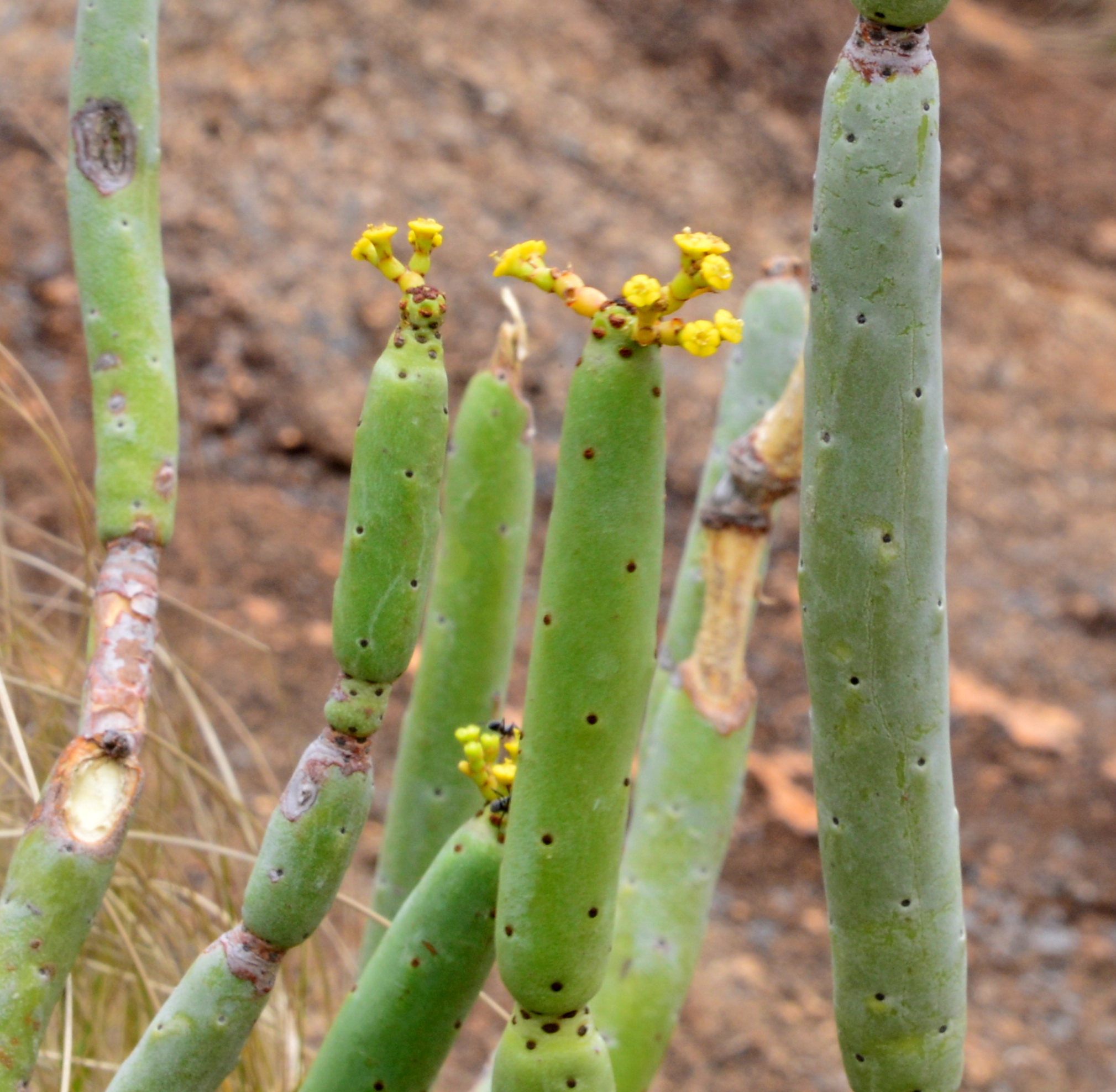
Just outside the Reserve we made our next Stop, S3519, where we saw Euphorbia alluaudia subsp. alluaudia

Euphorbia alluaudia subsp. alluaudia

Euphorbia alluaudia subsp. alluaudia

Earlier in the trip I had mentioned that I had enjoyed Chinese meals in every country that I had visited. Keen to add Madagascar to the list we had lunch in the town of Fianarantsoa, where Christophe knew a good Chinese restaurant, The Panda Restaurant that even gets a 4.5 star-rating on Tripadvisor! As soon as we had stopped, we were surrounding by the usual group of kids and teenagers. Instead of begging for sweets and presents, these youngsters spoke good English and were selling post cards that they claimed that they had made at school. Where do you learn your English, I asked. At school. I explained the I was Dutch, and immediately a few of the kids switched to German! I was impressed but explained that being Dutch meant that I came from Holland, not Germany. ‘Ask me to buy cards in Dutch and I’ll buy some’, I joked. When we came out of the Chinese, a few of the kids were still there and one of them said ‘Goede morgen, heeft U een kadootje voor mij?’in reasonable Dutch! There are lots of foreign volunteer workers in Madagascar and clearly this included a Dutch or Flemish speaking person who had been consulted. Well done! Enterprising! I bought ten of his card as a reward. He was ever so pleased and has shown his friends that the best get rich.

I still have to get together with John to swap our images. He may have pictures of my negotiations.

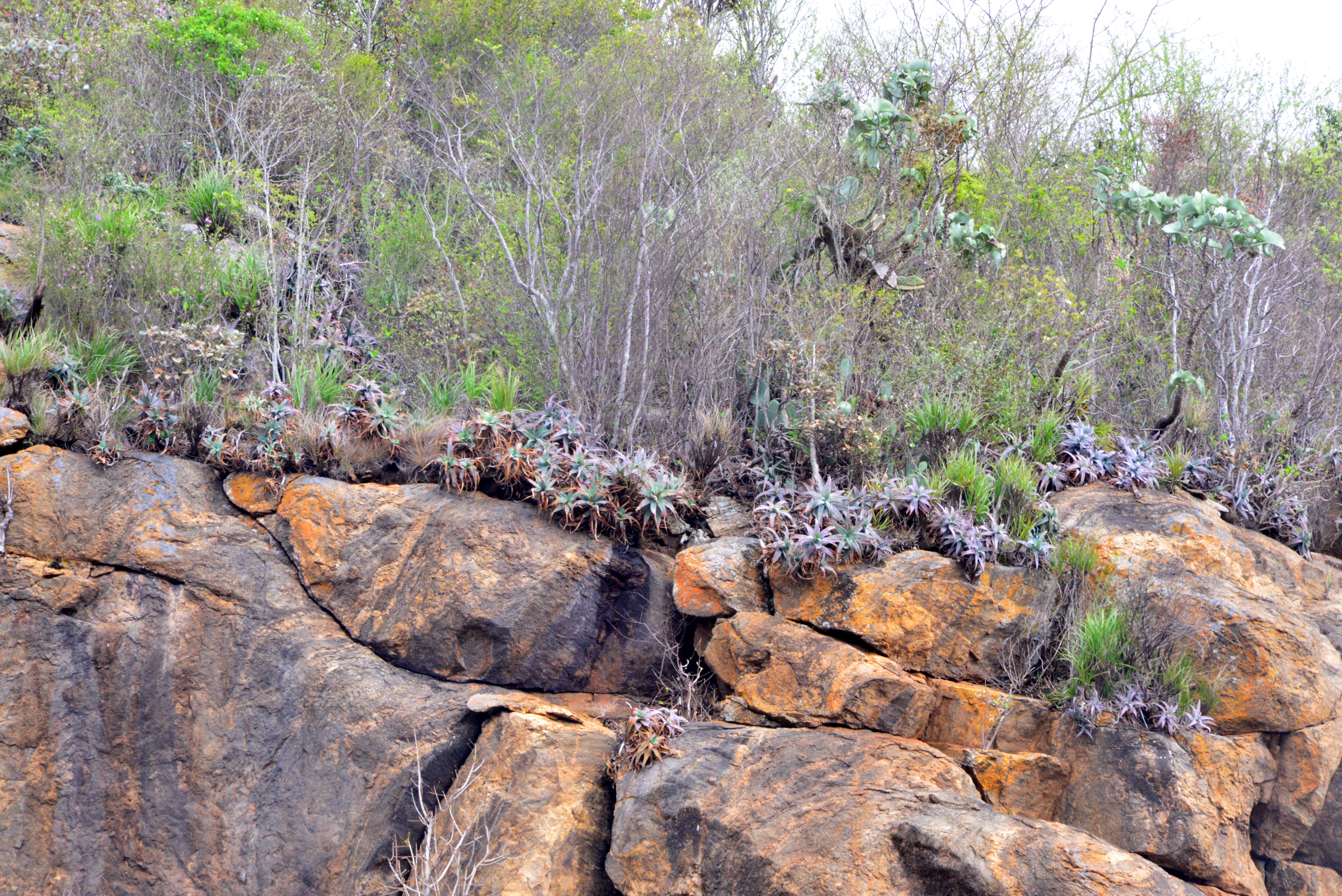
We stopped along RN7 for a fairly scenic, but not too special stop. ‘Do we have a puncture?’ I asked cheekily. Christophe smiled and pointed at the edge of the escarpment above us. ‘Aloes!’ I pointed my 300 mm zoom lens at the edge and sure enough, there was a thick stand of Aloes.  I’m not climbing up there! I protested, quite happy with the view standing next to the car. 

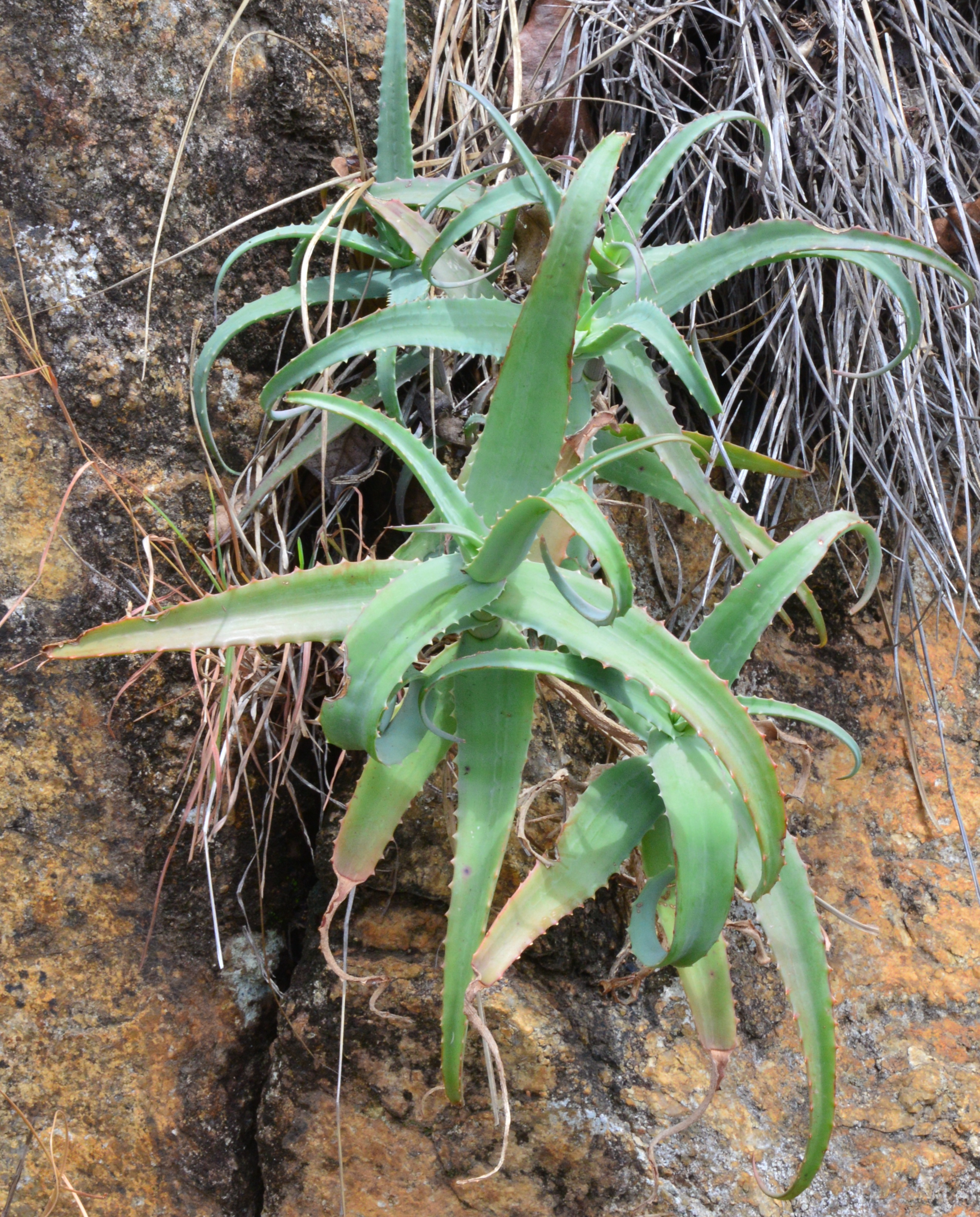
Aloe accutissima

Aloe accutissima

Aloe accutissima

Aloe accutissima right along the side of the road

Fortunately there were some more Aloes (same taxon?) right along the side of the road, where it had been cut into the hillside with lots of other interesting things, including Delonix regia, Euphorbia enterophora, Kalanchoe fedtschenkoi and an Opuntia sp.

Next another hill stop, not too steep and with the promise that the plants of interest started about half way up. Plants here included Aloe accutissima, Euphorbia horombensis, Pachypodium lamerei and Senecio decaryi.

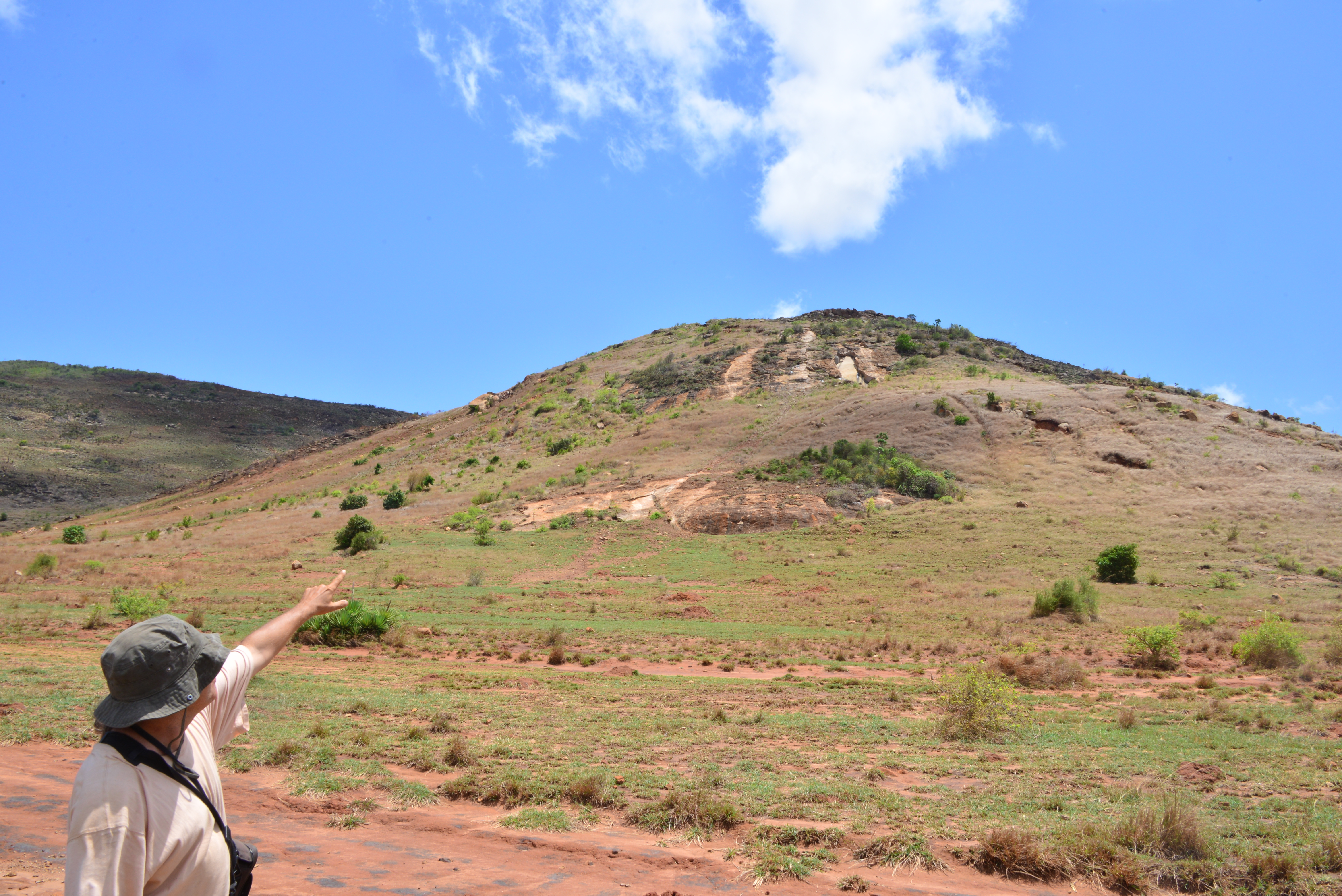
Another hill

Another hill

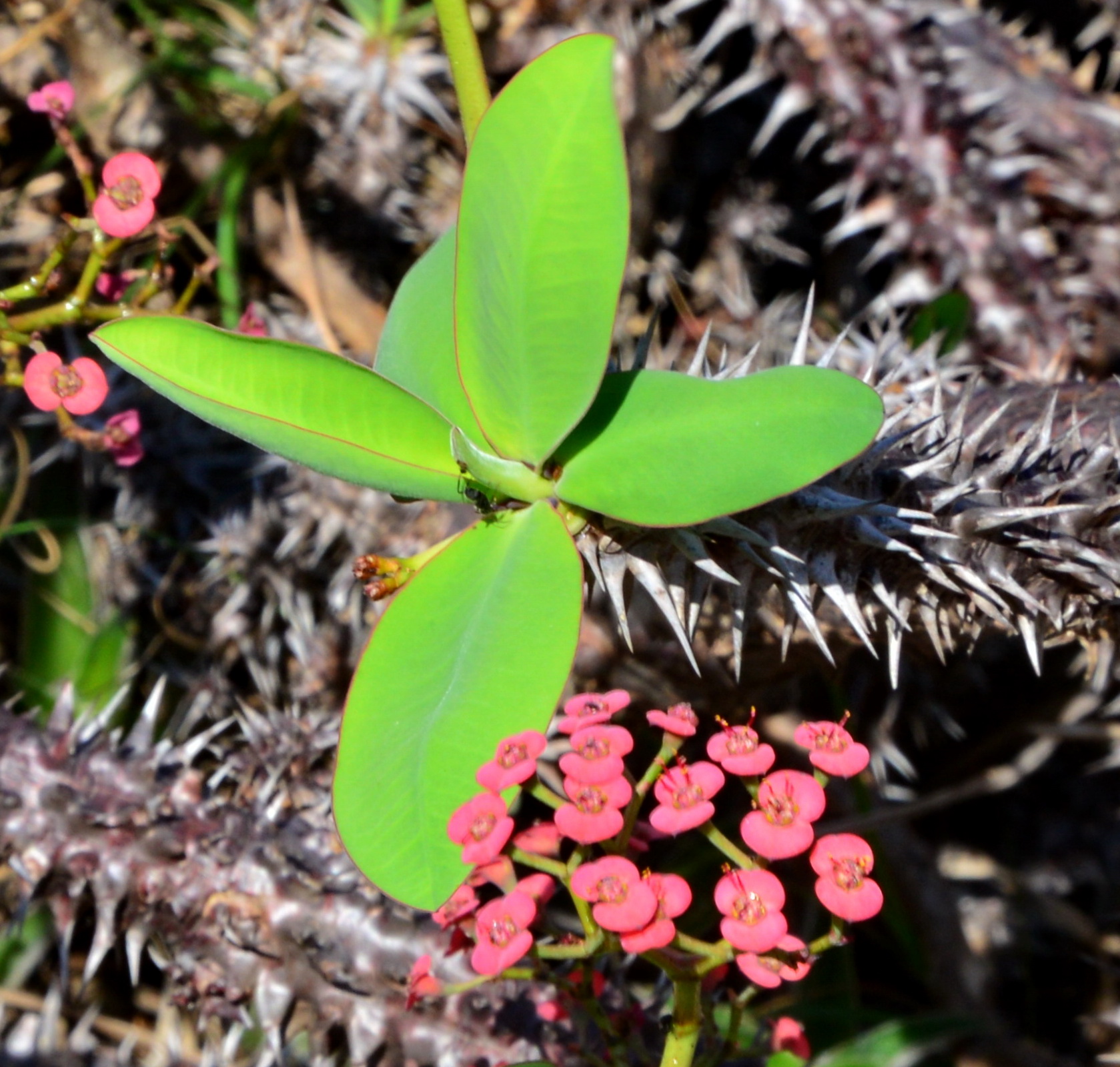
Euphorbia horombensis

Euphorbia horombensis

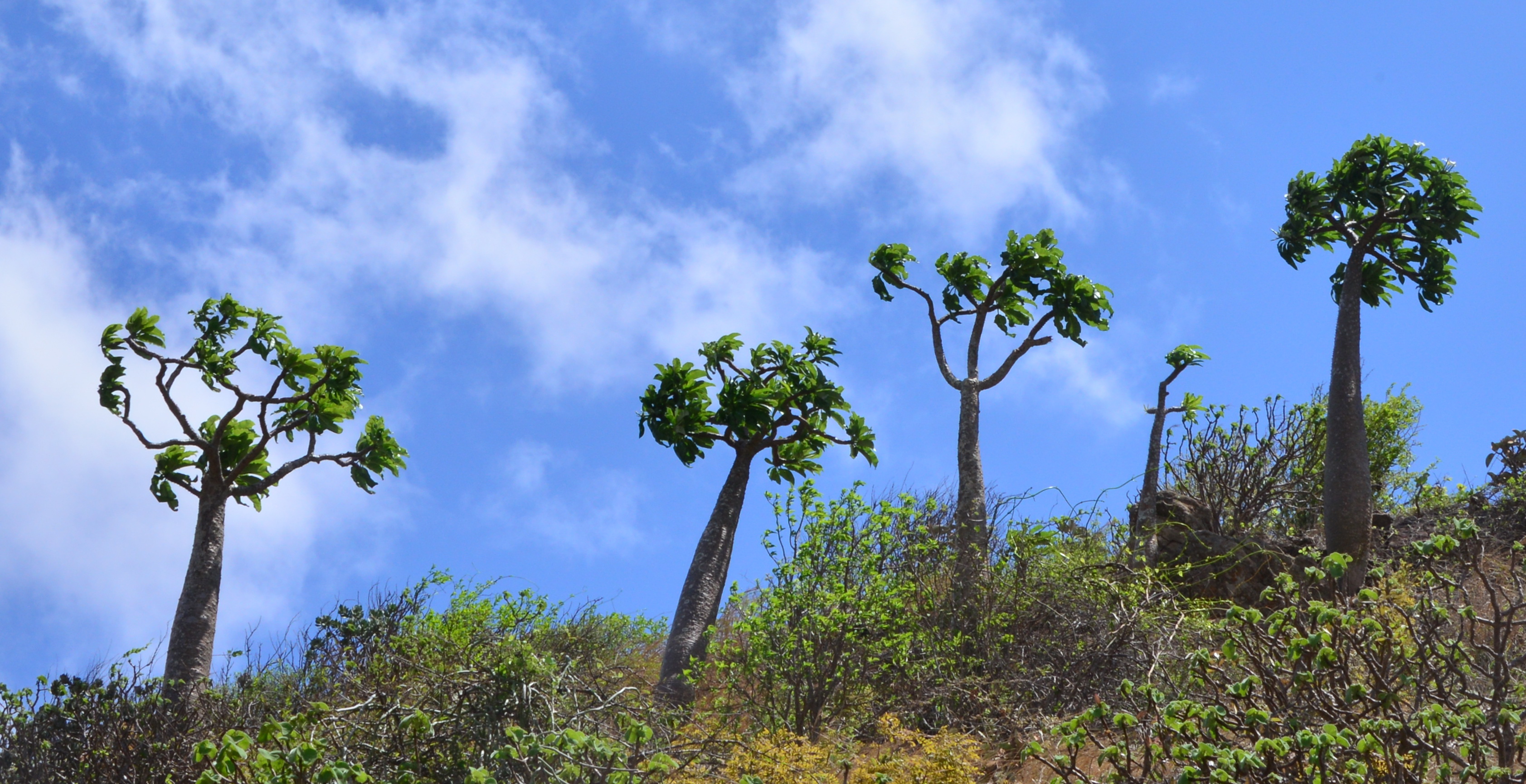
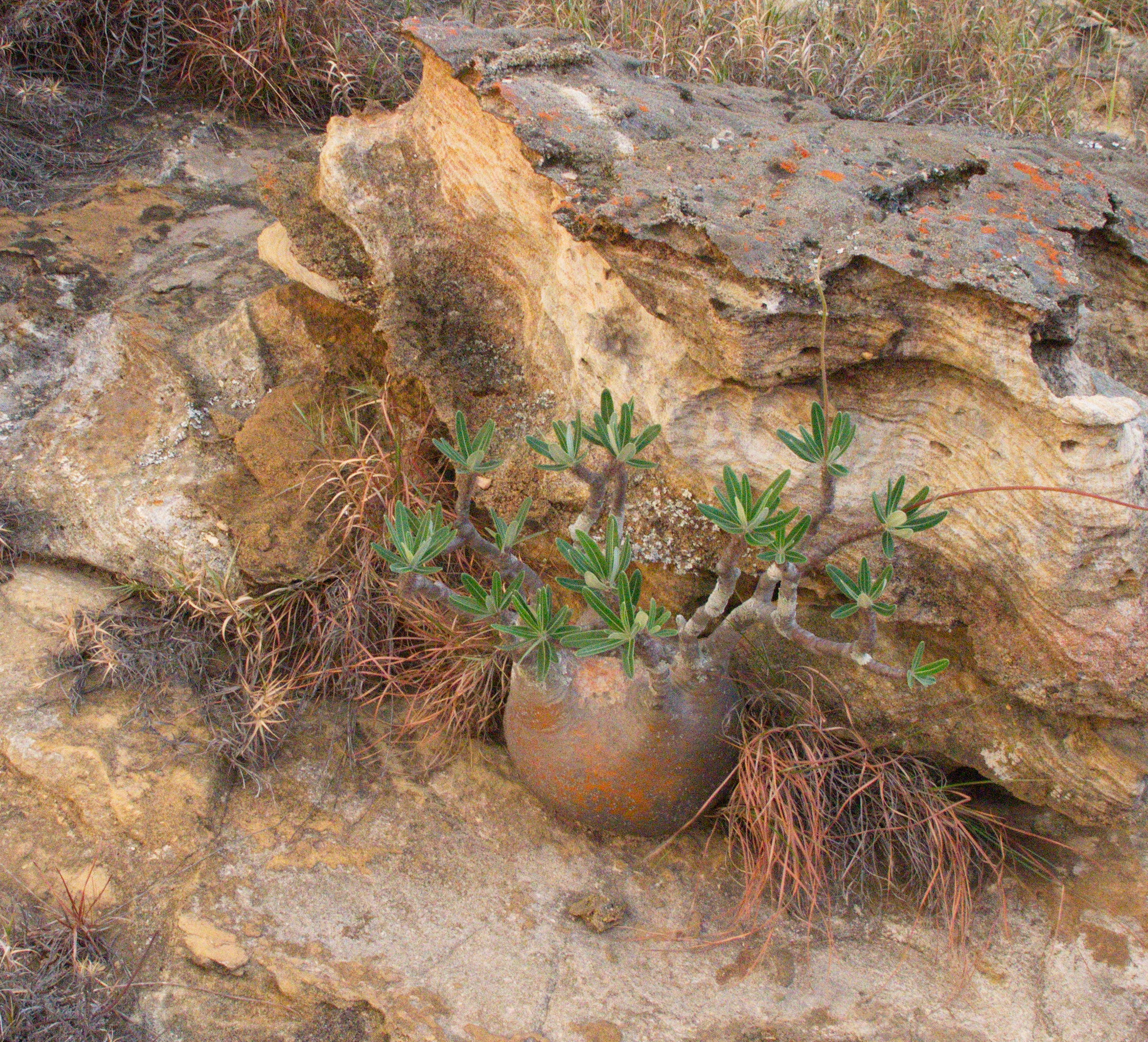
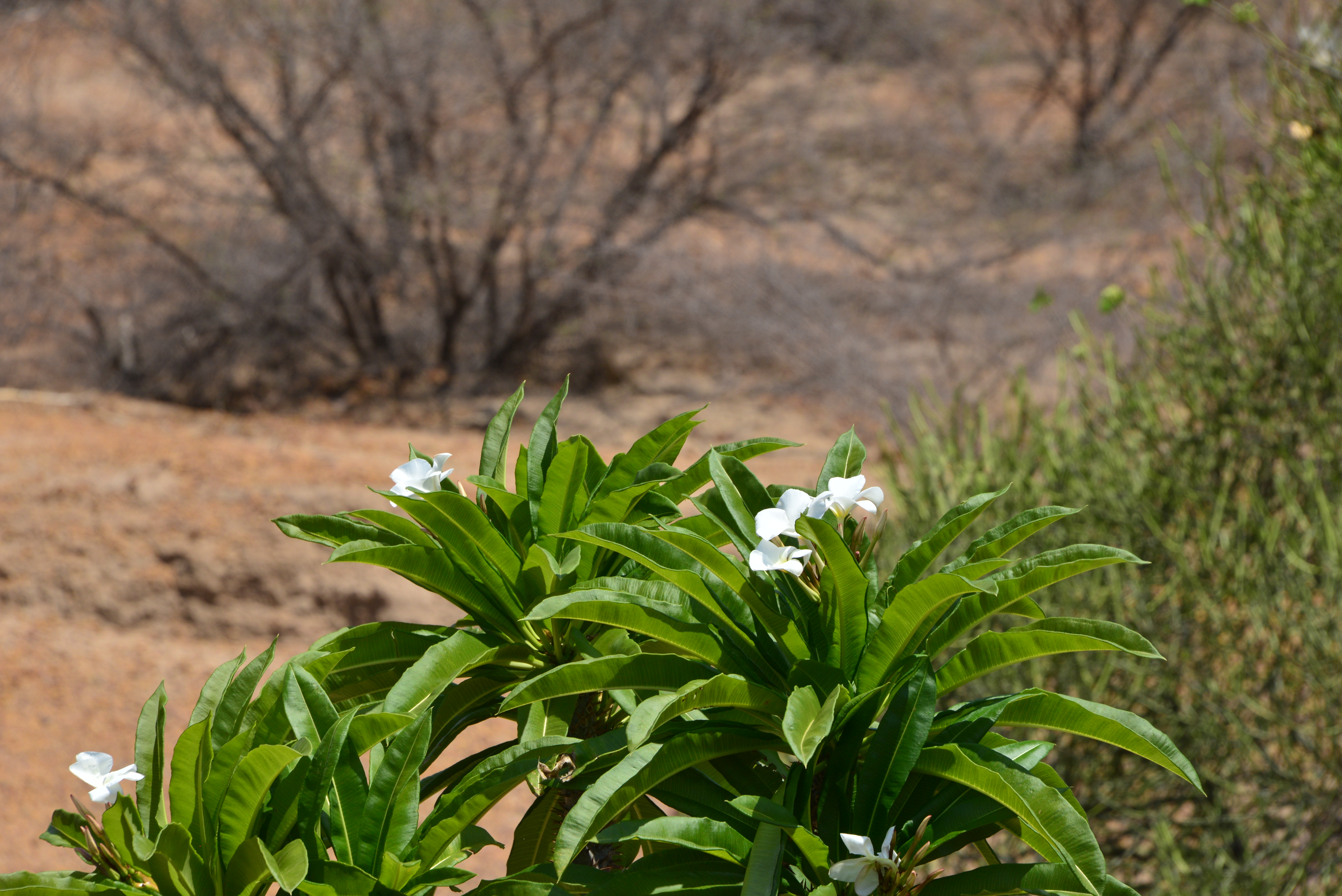
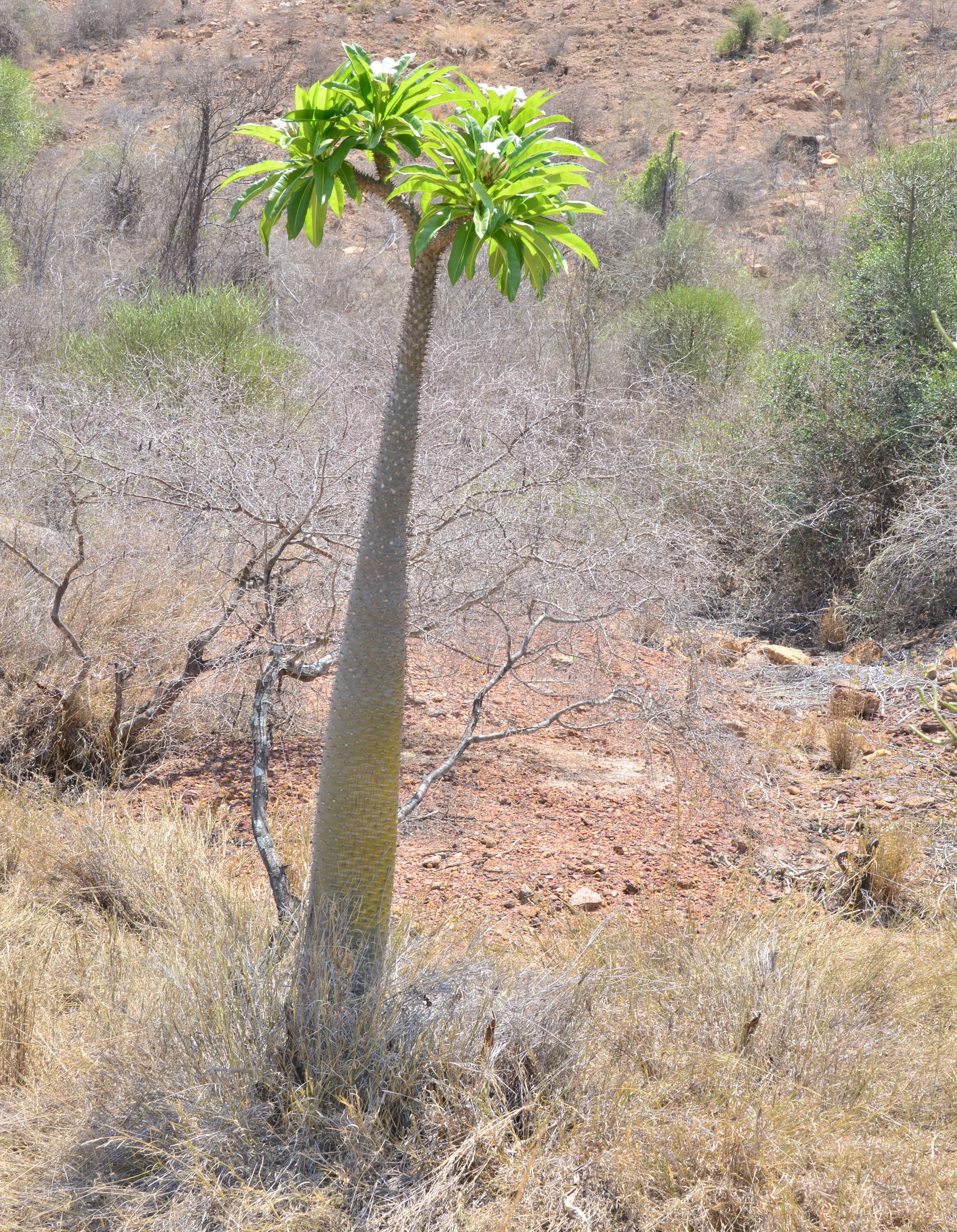
I include this image of Pachypodium lamerei for Brian Bates in sunny Bolivia, who commented earlier that he thought that P. lamerei gets fatter than the plant shown in a previous posting. Perhaps in the UK or in the US, but here in Madagascar slim is beautiful. These plants are 3m (9ft) plus in height.

Pachypodium lamerei

Pachypodium lamerei

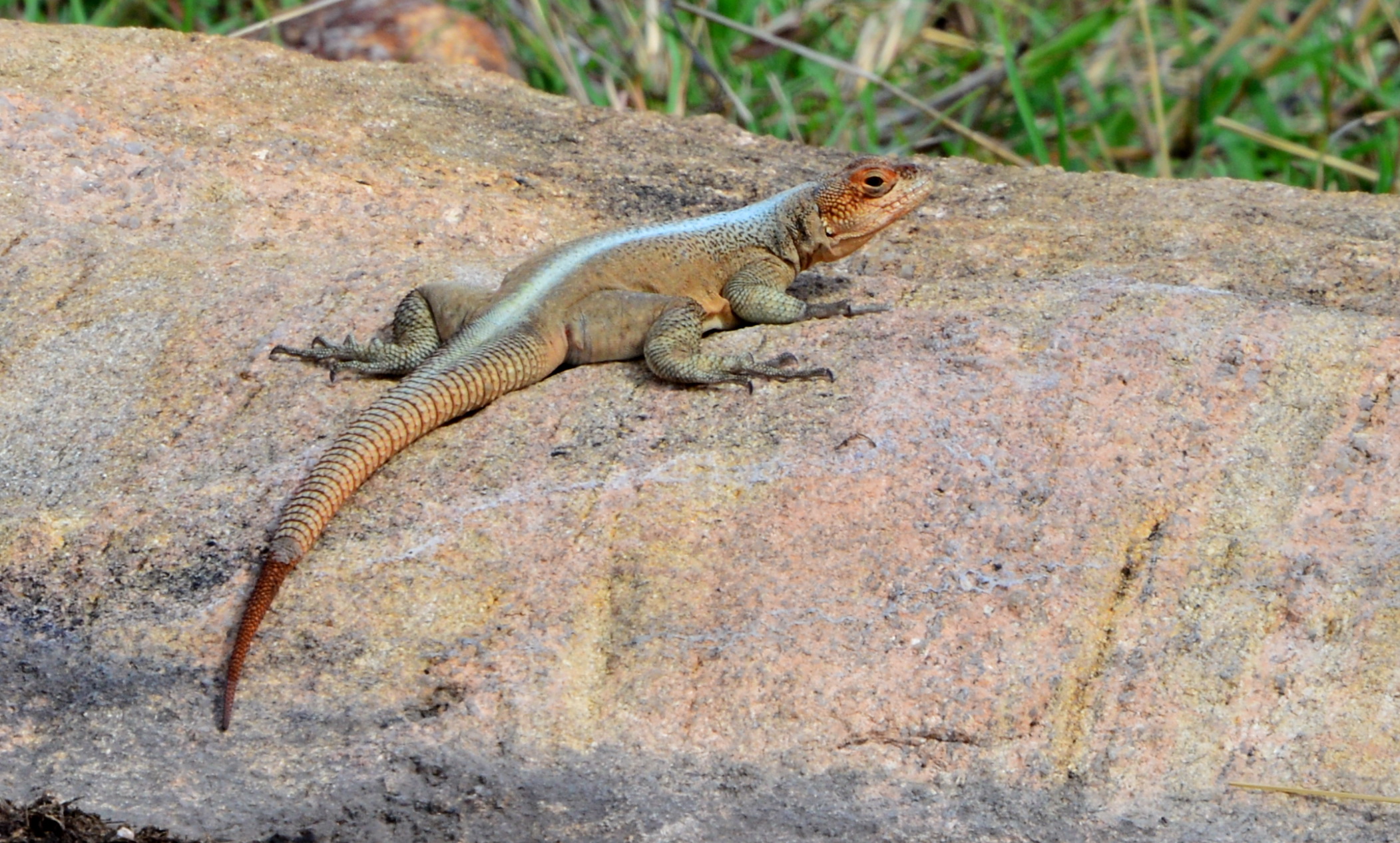
This lizard must have fallen asleep on the tarmac road when they were putting down the white line in the middle of the road!

White striped lizard

‘White striped lizard’

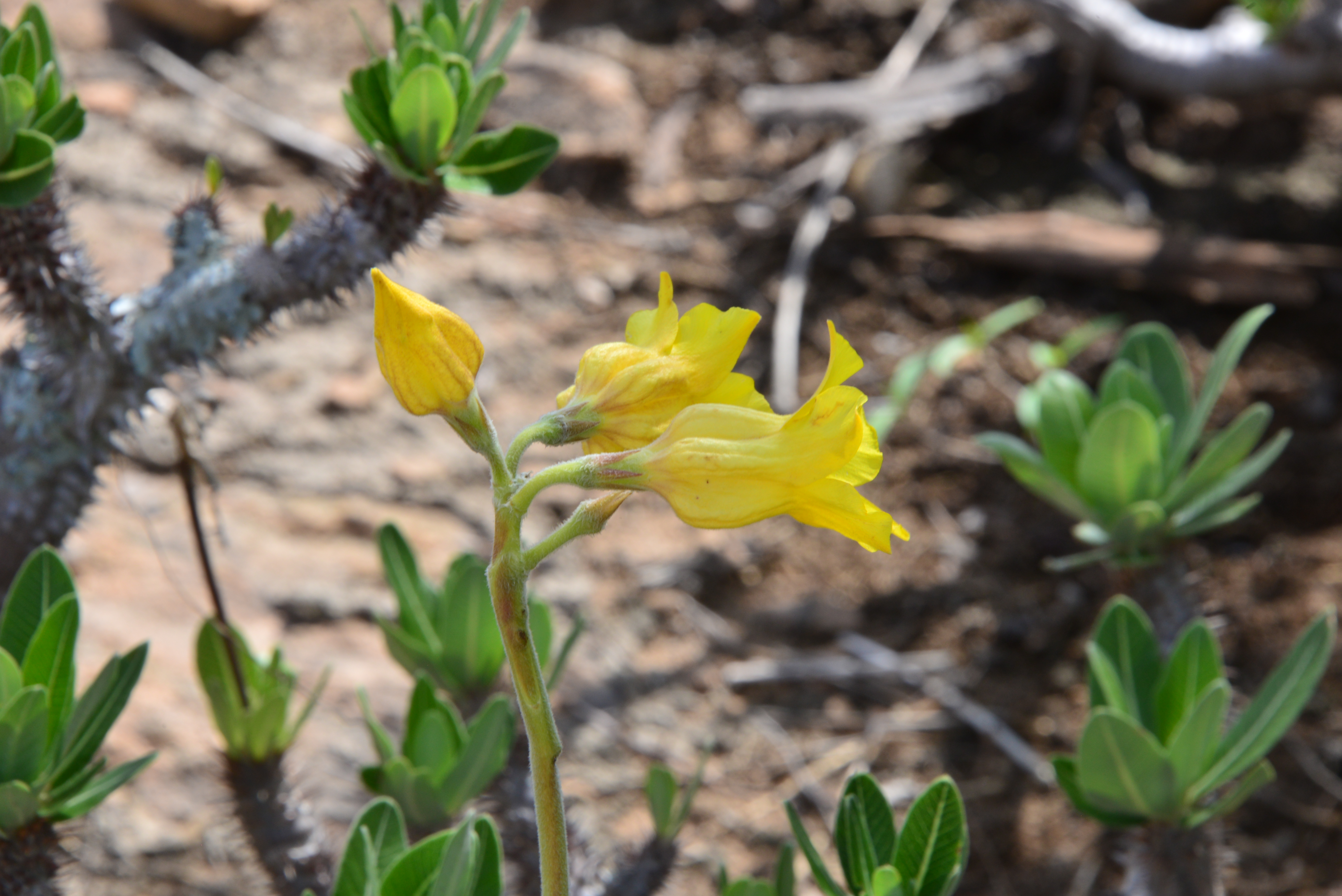
The Pachypodium here has a different flower shape – must look up details in Roosli’s Pachypodium book. Christophe did give me a name and I’ll kick myself when I find it – I just kicked myself as promised: it’s Pachypodium horombense.

S3512: Pachypodium sp. flower

S3512: Pachypodium horombense. flower

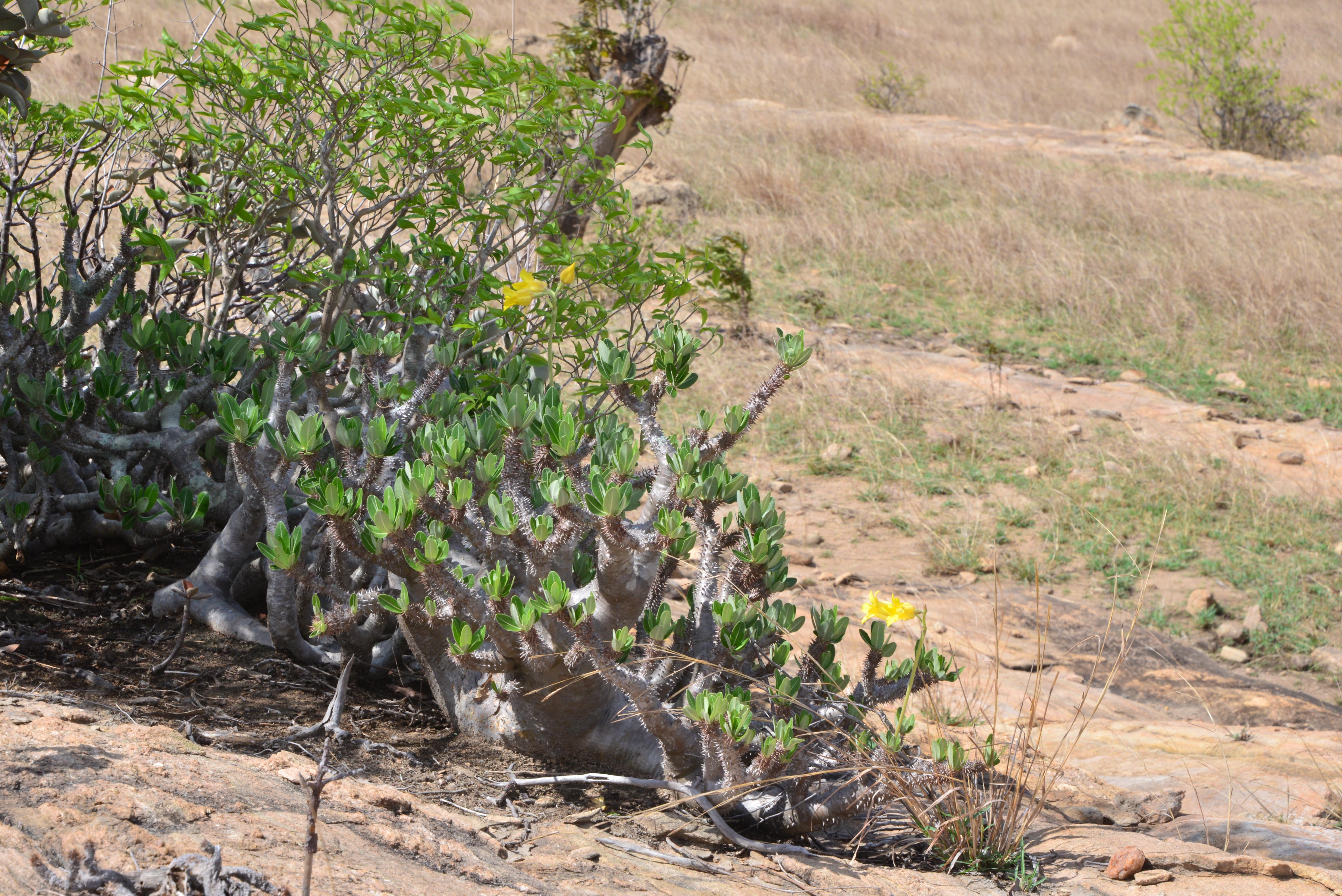
Pachypodium sp

S3512: Pachypodium sp

The next Stop (S3513) was an inselberg with three different Euphorbia taxa:

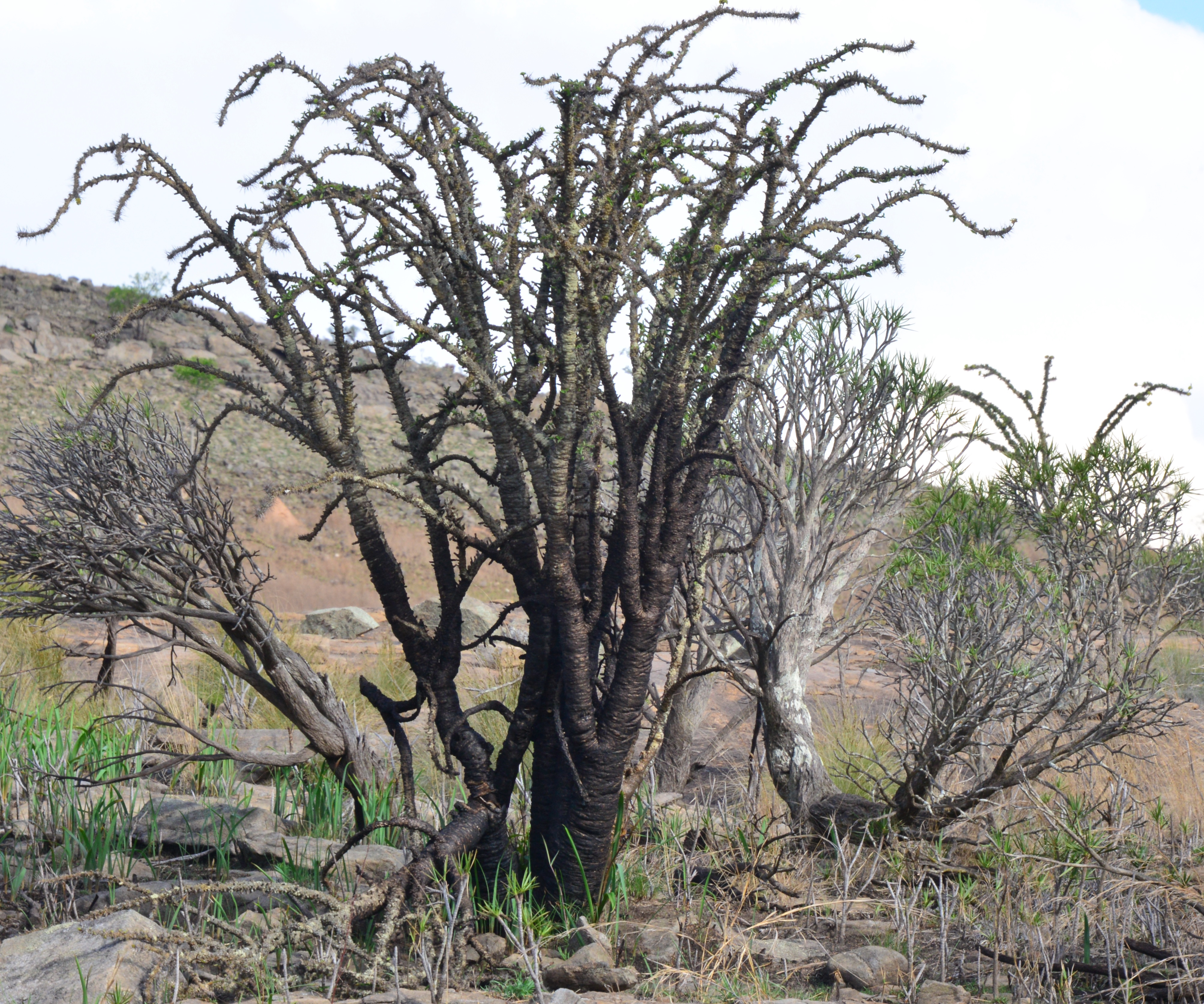
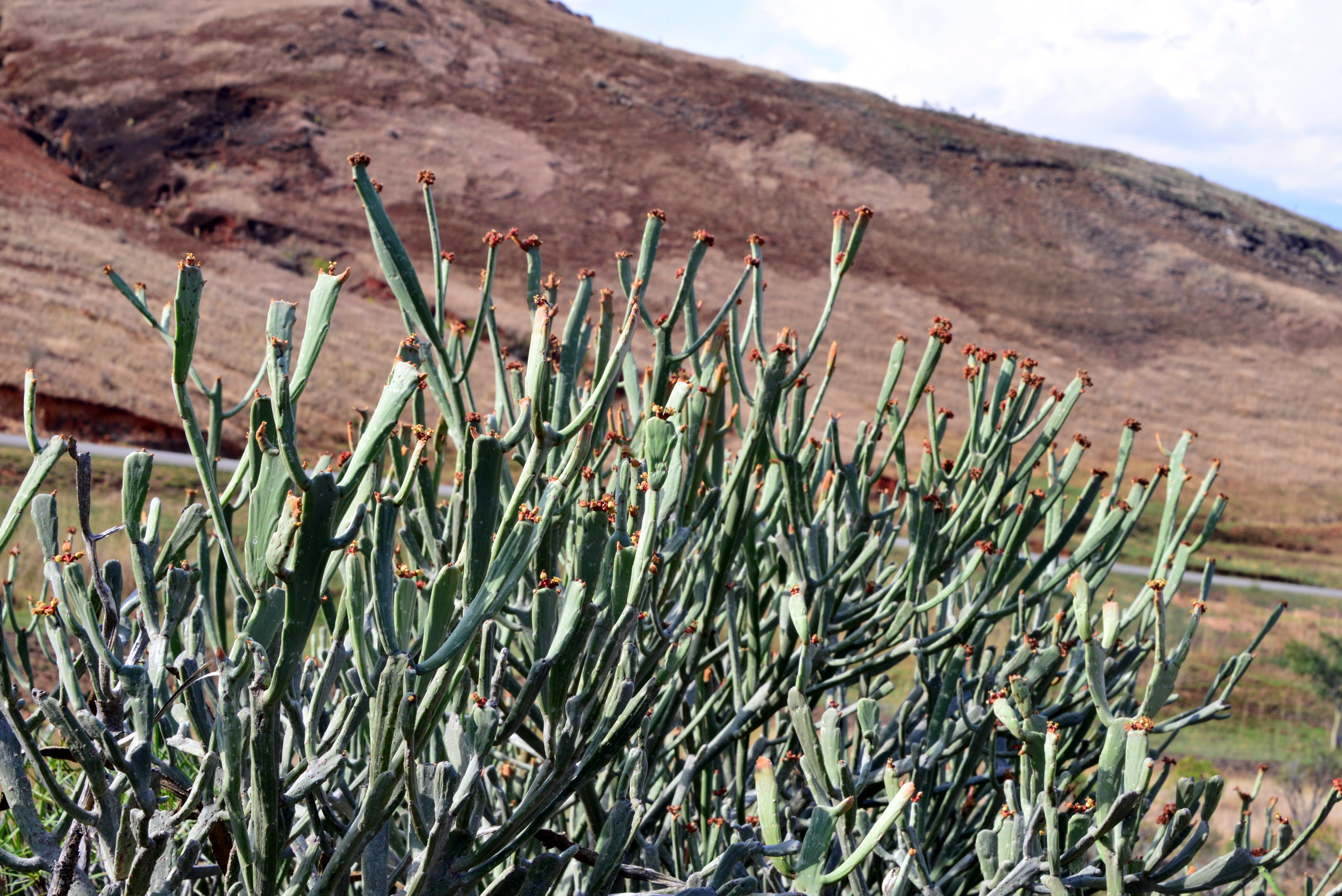
Euphorbia didieroides; tall plants, over 2 m (6 ft) tall with clusters of flowers without stalks

Euphorbia didieroides

Euphorbia didieroides

Euphorbia duranii, a large shrub

Euphorbia duranii

Euphorbia duranii

Euphorbia enterophora subsp crassa

Euphorbia enterophora subsp crassa

Euphorbia enterophora subsp crassa

verdict: all too big for glass house or living room cultivation.


We were staying in chalets at Ranohira in the Parc National de l’Isalo.

Christophe drove us to the Parc’s administrative office where John and I paid our admission fee and paid the Parc’s guide to take us on the short walk, aimed mainly at seeing a family of Ring-tailed Lemurs.  We walked to a semi permanent tent camp where guides were busy preparing a cooked breakfast (or was it lunch) for the tourist guests. We turned down the offer of a bite to eat, but did enjoy a cold Coca Cola while waiting for the lemurs. Our guide assured us that they would e here in around 15 minutes, as though, like trains and busses, they ran to a time-table. He kept disappearing, listening for their calls to  announce their imminent arrival and sure enough, after some 20 minutes, they ‘arrived’. They were outside the camp, in the trees and difficult to catch on camera due to tree stems, branches and twigs and shooting against the sun, resulting only in silhouettes. After a while they came down and made there way to a small stream, with John and me in hot pursuit.  It appeared that they spent most of the day higher up (and cooler) in the hills but came down at regular times to drink from the stream. There were Ficus trees growing along the stream with their peculiar fruits that come from the stems rather than from branches and twigs as expected from other flowering trees. I found myself an excellent spot and caught some excellent shots of the first family until they disappeared as quickly as they had arrived, to make room for a second family group, again of some ten to twelve individuals, with young, that made for the Ficus trees farther along the stream. I remembered my slogan ‘if it moves, film it’ and switched my cameras to movie mode, catching some great footage that will become part of next year’s presentations.

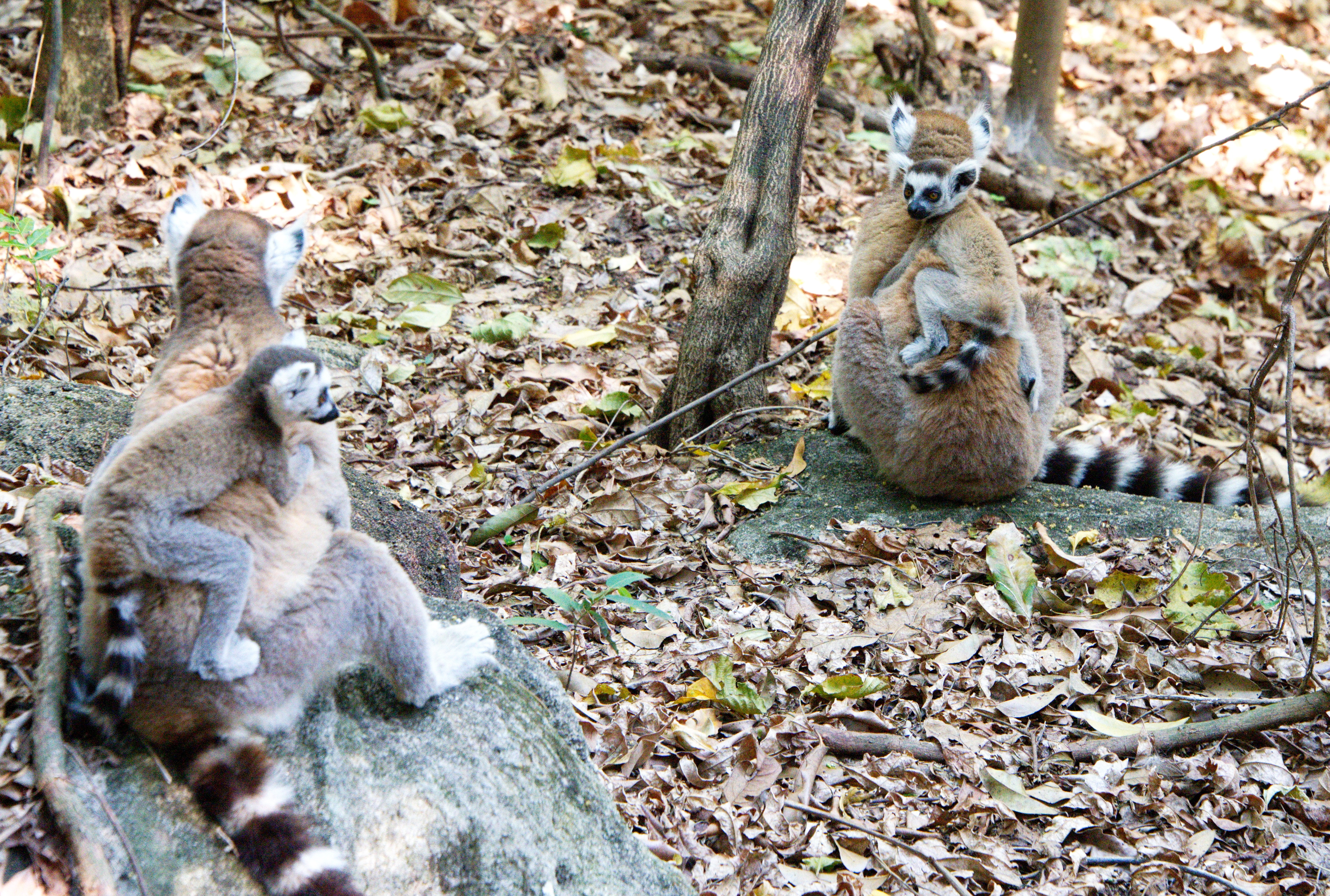
Ring-tailed lemurs

Ring-tailed lemurs with young. Why do they always turn their back on me?

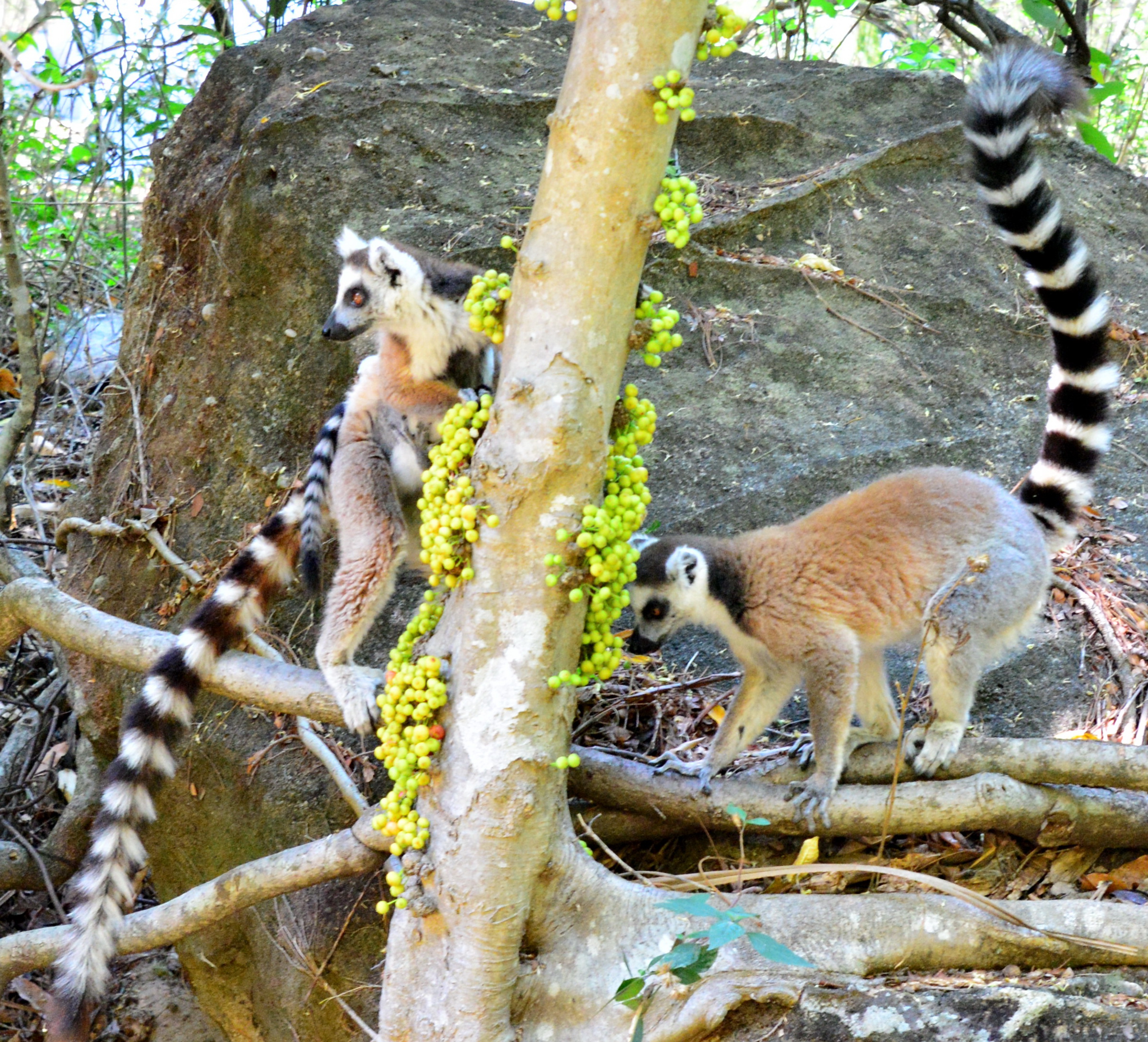
... because they were looking for food! Ficus fruits.

… because they were looking for food! Ficus fruits.

We may have taken too long over lunch as we met up again with our guide for a drive through the Parc to look around at the rock formations with a short walk for a group of Pachypodium densiflorum. One of my problems is that I have been rather spoilt on scenery by walks in many US National Parks, in Brazil, Peru, Bolivia, Chile and NW Argentina. Yep – I’ve seen hills and mountains. Sorry to sound like a spoilt kid!

Pachypodium densiflorum

Pachypodium densiflorum

I left the comfort of Auberge de La Table, sad at having to leave behind the two Gekko’s that had kept the insect count down to a minimum in my chalet. We were still on asphalt, on RN7, Route Nacional 7, the main road from Toliara to Antananarivo. ‘Will we do anymore rough driving?’ I asked, almost with a hint of disappointment? ‘Oh yes!’ came the answer.

We stopped to take pictures of a small number of Pachypodium lamerei, in leaf and in flower. I had to climb a small hill to get pictures of the flowers.

Pachypodium lamerei in flower

Pachypodium lamerei in flower

Pachypodium lamerei - some 3m tall

Pachypodium lamerei – some 3m tall

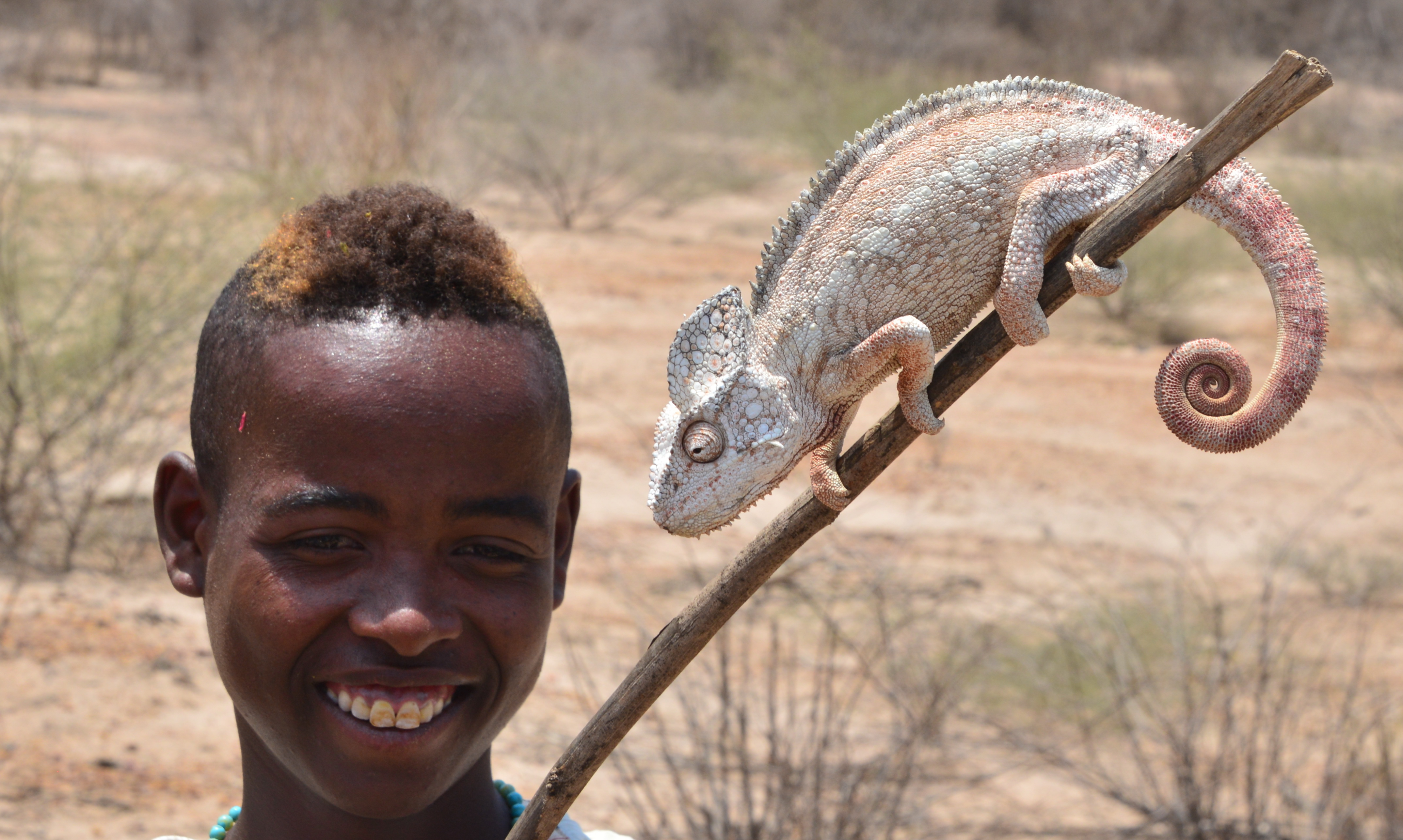
We were soon joined by a few kids with sticks, showing us their pets, Chameleons that I christened Chammy and Chummy. The kids requested 5,000 ariary for us to take pictures of each Chameleon. We did not go into specifics such as how many pictures we could take for this amount, but started snapping away.

Chameleon on a stick

Chameleon on a stick

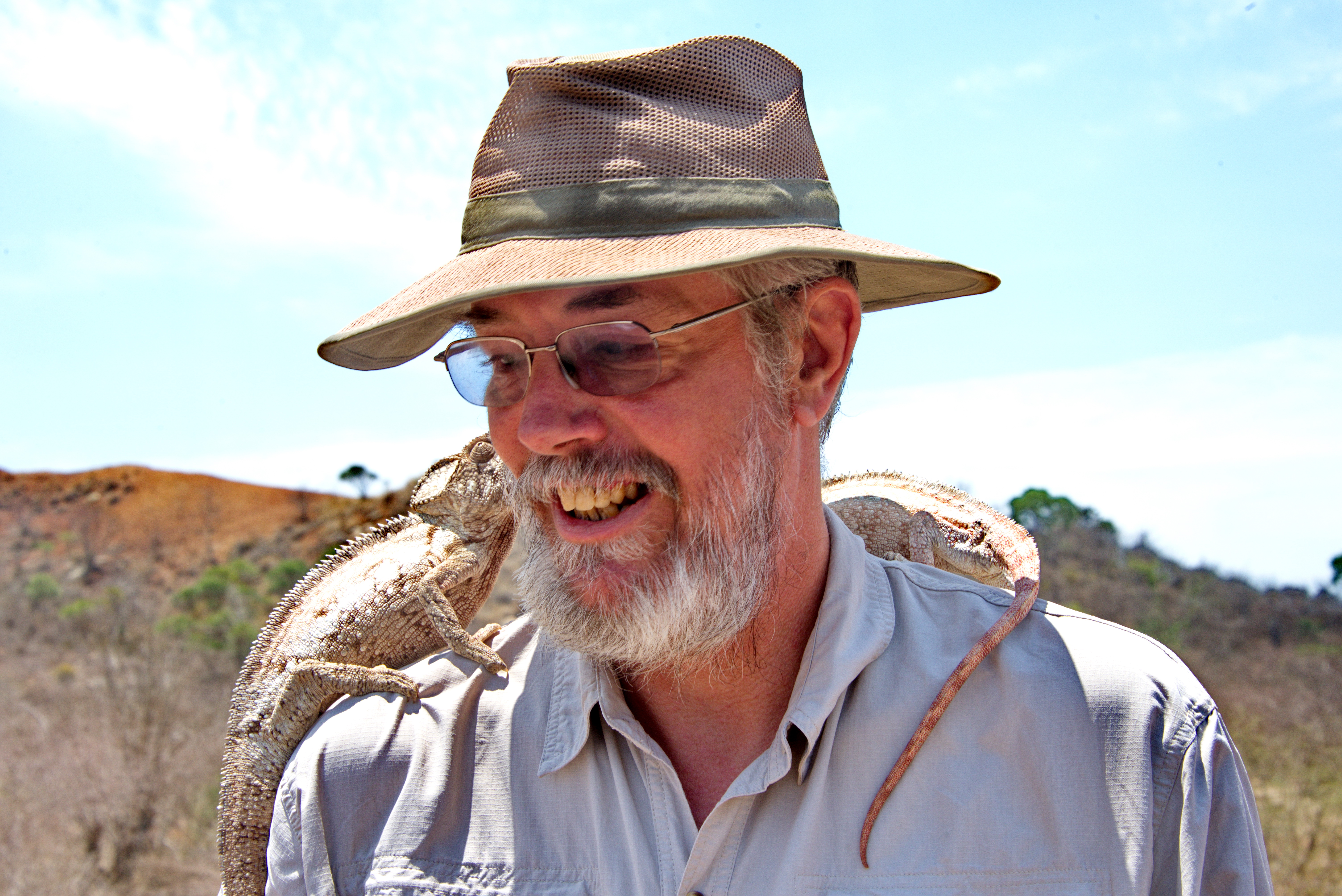
Soon we got fed up with Chameleon’s on a stick, so I asked for the animals to be transferred to my shoulders and asked John to use my camera for some pictures.

Chammy & Chummey - they seem to want to come to England

Chammy & Chummey – they seem to want to come to England

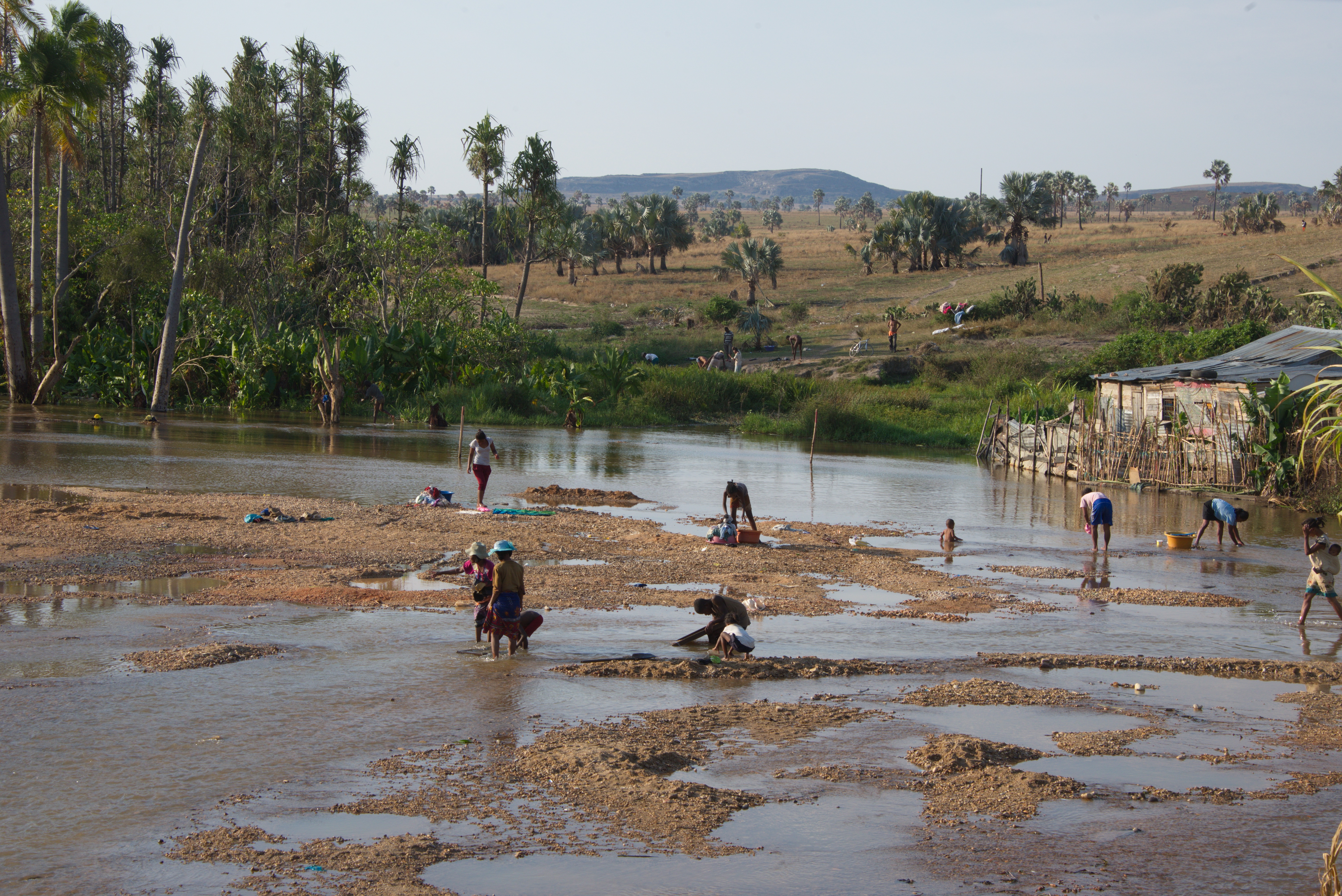
Farther along, a village known for its gem stones and precious metal dealers. Lots of big luxurious houses and sparkling 4x4s among the usual shacks and huts.

Panning for gold and gems

Panning for gold and gems

Again, the sun was low in the sky – not the best light for plant photography, especially as we were looking for tiny geophytic plants. They were soon found and as before, their caudex was hidden underground.

Euphorbia primulifolia var. begardii

Euphorbia primulifolia var. begardii

Having seen the local flora and fauna in the Arboretum yesterday, today Christophe wanted to take us to St. Augustin and see Aloe descoignyi var augustina in nature. We left the comfort of the hard top and were back to bouncing along dirt tracks again, on a scenic coast track. We passed a sea-cucumber farm; nothing like a mass of greenhouses as found in het Westland in the Netherlands, but partitioned off sections of the bay in the Indian Ocean. Sea cucumbers are not plants but are marine animals with a leathery skin and an elongated body that are farmed here for export to China where they are sold for consumption. I was surprised to learn that there are some 1,700 different species!
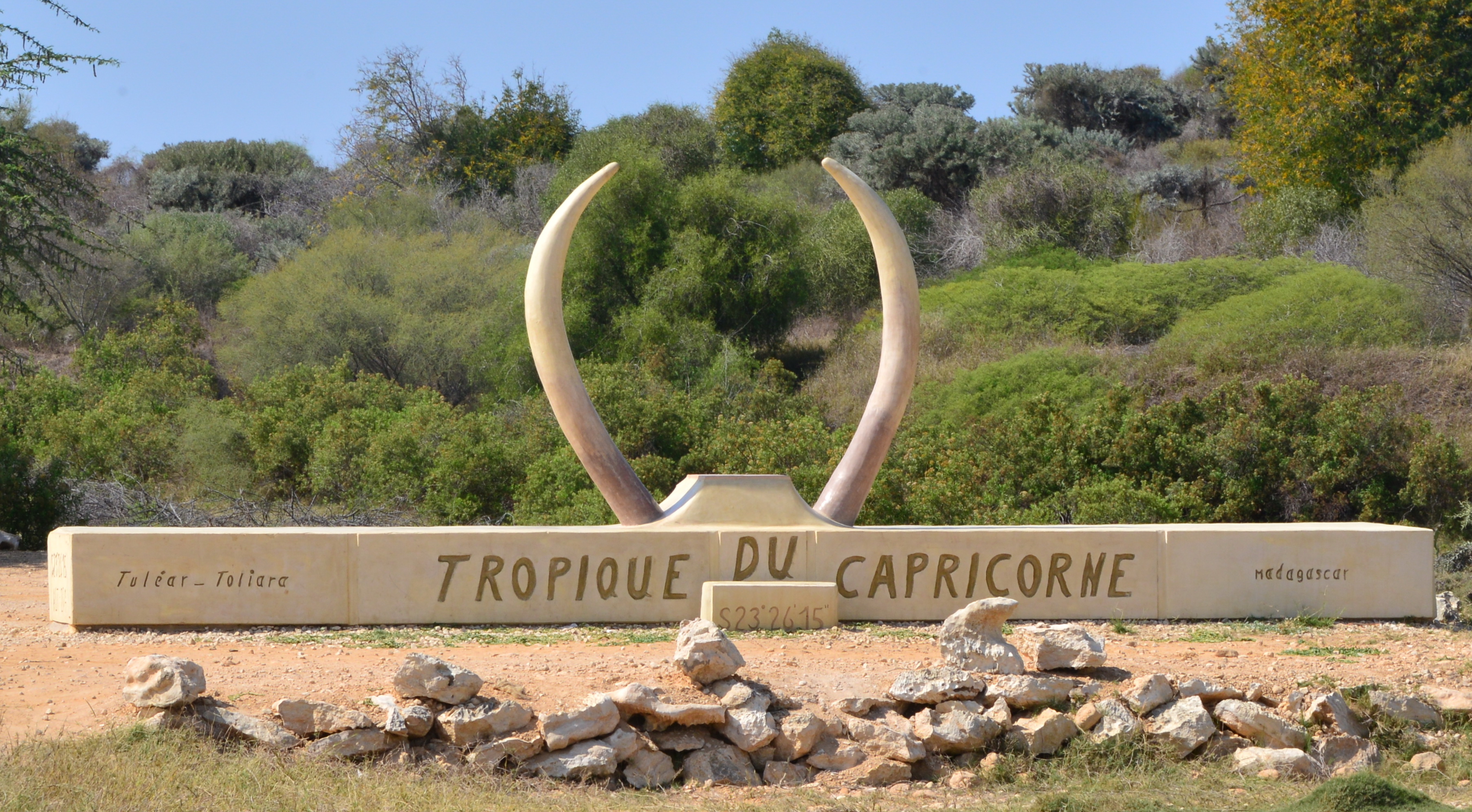
The track went into the Protected Area of Tsinjoriake and before too long we stopped for pictures at the monument marking our passing of the Tropic of Capricorne.  Nadia waskeen to have her picture taken here as she was born under the star sign of Capricorne.

Tropic if Capricorne marker

Tropic of Capricorne marker

A familiar sight, as we had posed with similar markers in Namibia, north of Antofagasta in Chile and in NW Argentina, as well as at the Tropic of Cancer marker in Baja California and on the Mexican mainland. Although each marker has the precise coordinates of the tropics written on them, Nature rarely cooperates rarely in accordance with human expectations. Planet Earth spins around the sun with an axial tilt of 23.4371 degrees which corresponds to the latitude of the Tropics – Cancer in the Northern Hemisphere and Capricorne here in the Southern Hemisphere. A graph showing the zonally averaged monthly precipitation on Earth shows that after the North and South Pole, the latitude of the Tropics are the two most arid regions on Earth, which is of course of interest to those interested in cacti and the other succulents that are adapted to life in extremely arid conditions. May be I should consider a presentation of ‘What I Saw at the Tropics’?  But the Earth’s spin around its axis has a wobble so that the exact position of the Tropic can vary by a few meters each year around the 23.4371 degrees mark.

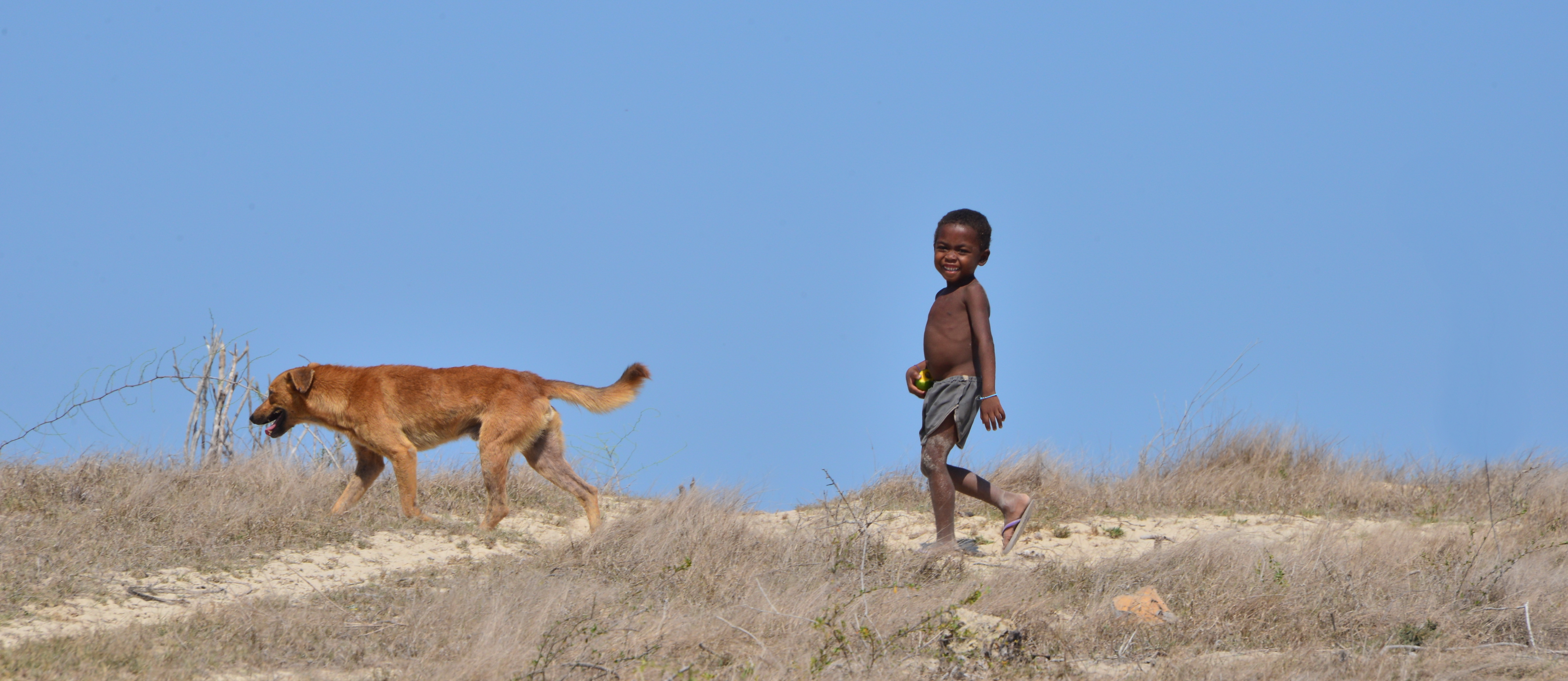
Boy and dog

Boy and dog

This boy, walking his dog, personifies the happy smiling character of the Malagasy people, waving and keen to inspect images that we had taken on our camera’s monitors. The exception was in the tourist hotspots where immediately begging hands would reach out and requests for bonbons (sweets) and cadeaux (presents) were made.

Christophe parked the car and pointed to a sandy footpath leading up a hill. ‘About one hour to the Aloes’ he announced. Should I wait by the car, in the nice cool breeze coming off the bay? Or struggle up the hill in the boiling heat? I reminded myself that I was here on a plant trip and decided to take just one camera and 1 litre of water (cold when we set off this morning, but around my body temperature as I carried it up hill.)  I must have acclimatised since that aborted hill on my first day in Madagascar that had shaken my confidence. This path was not as steep and at a steady speed we walked up the hill, with Christophe pointing out plants of interest.

Lizard

Lizard

We paused for images of lizards that followed our progress, offering the opportunity to lookover our shoulders to note good progress up the hill. Once at the summit, the news came that we had to walk down the other side and up another hill to get to the small Euphorbia that was our other target plant, but again, already seen before ‘in captivity’ in the Arboretum.

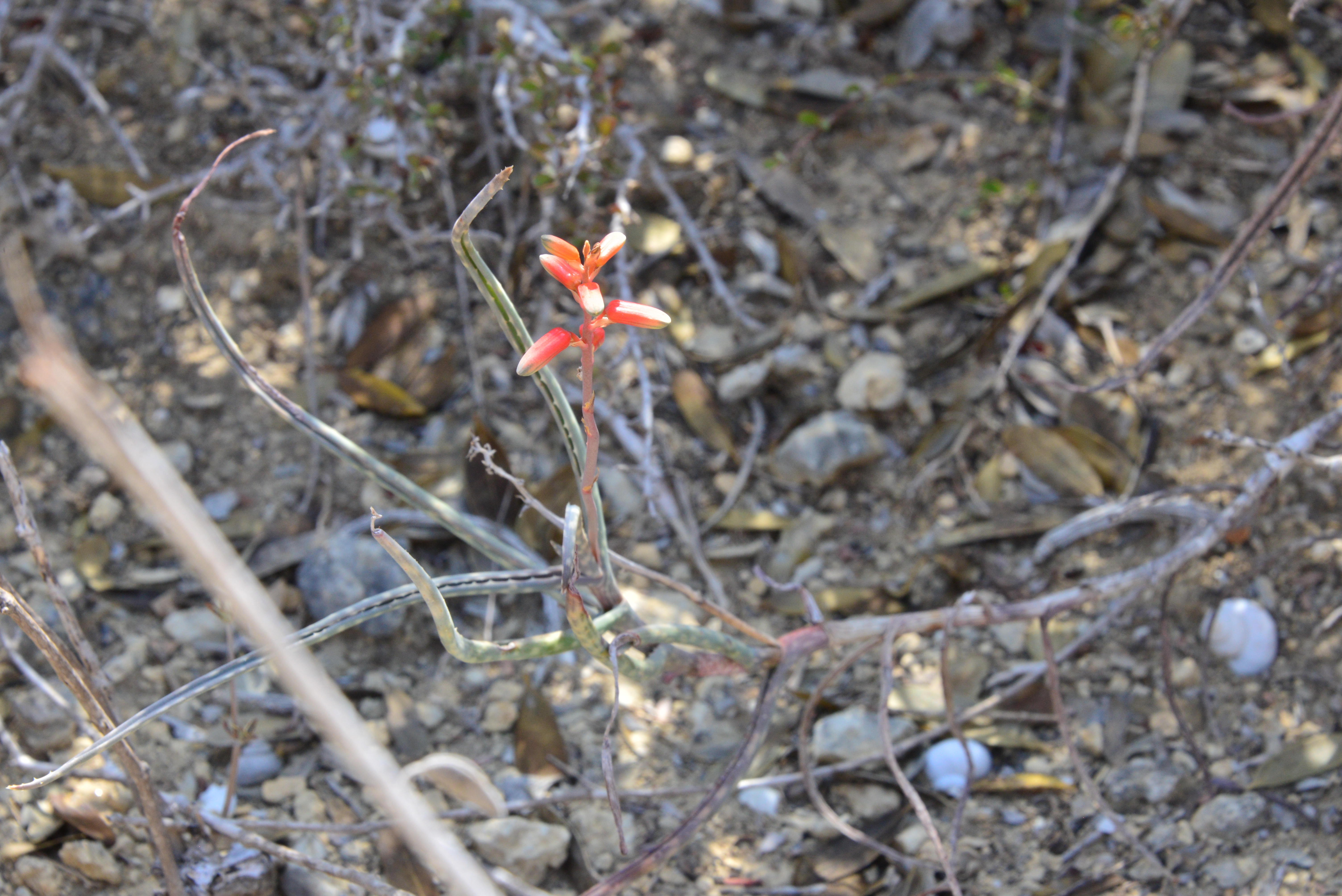
Nadia was the first to spot another miniature Aloe, Aloe antandroi (Kew reports it as A. antandroy), a small grass aloe, related to Aloe isaloensis. Its leaves are narrow, dark bronze, 5 inches long, 0.25 inches wide (6 mm), edged by small soft thorns. The undersides of its leaves has white spots.

Aloe antandroi

Aloe antandroi, very thin leaves, but its red flowers were the give away.

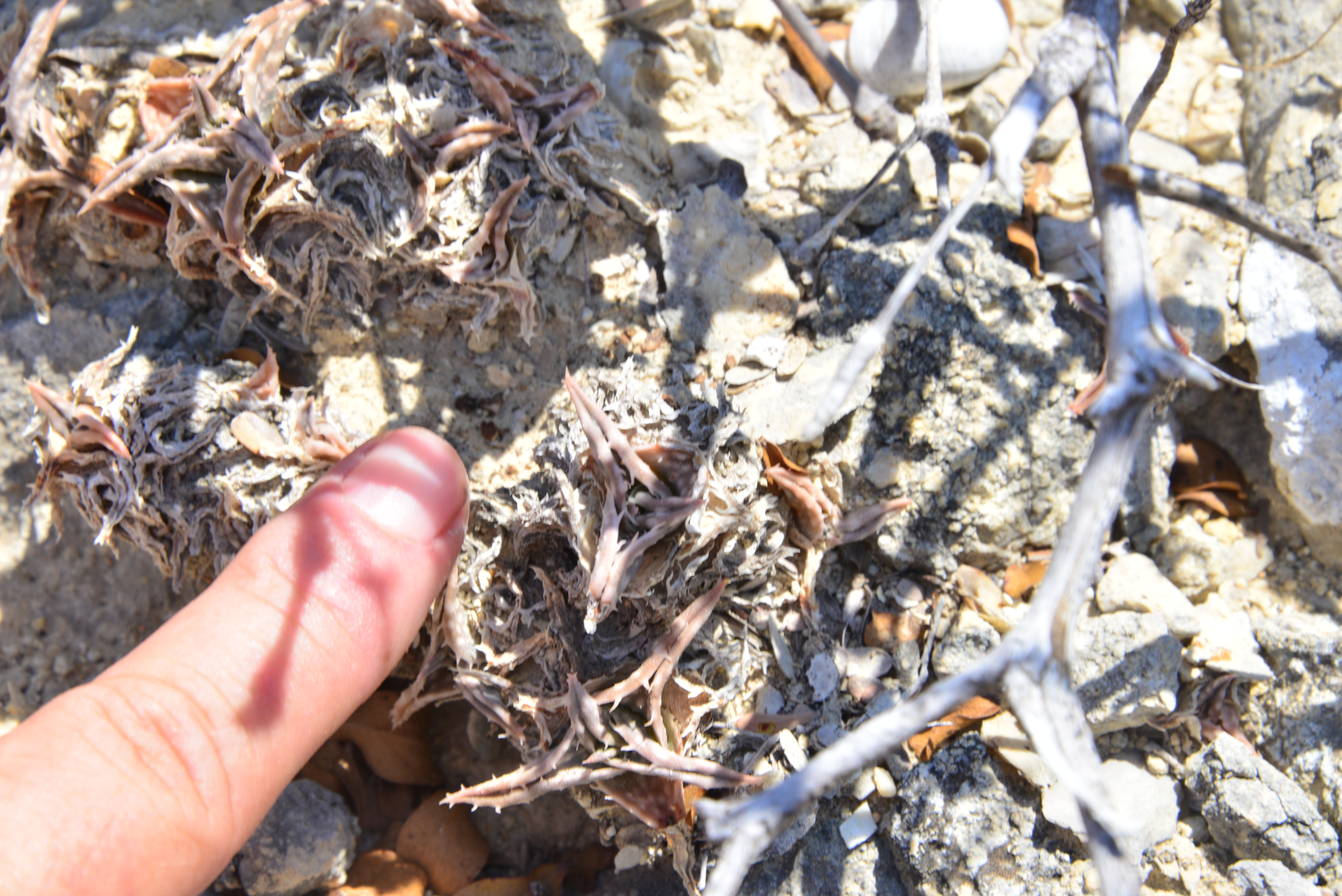
Not much farther, and still on the way down from our first hill, Nadia again was the first to spot clusters of Aloe descoignsii.

Aloe descoignsii

Aloe descoignsii

Just as in the Arboretum yesterday, I was a little disappointed seeing the smallest Aloe in habitat. Christophe assured me that after the rains started anytime soon (?) this plant would show off its leaves in all their glory. I had first become interested in this small Aloe when I saw it in the collection of John Bleck in Santa Barbara, Ca, who used it in creating his hybrid ‘Lizard Lips’ that is still popular in cultivation and often distributed amongst the hobby as a raffle prize in Branch raffles. I’m sure that is also among the parentage of the wonderful hybrids created by Kelly Griffin and Karen Zimmerman in California that aim to create plants with the best leaf patterns, surface textures and teeth along the leaves’ edges.

We searched in vain for the small Euphorbia that should have been found on the other side of the path. Christophe and John went on to search some more on the steep rock side opposite our hill, but John reported finding only a few small plants in this harsh environment.

We had over taken and been overtaken by a bus that seemed to be part of a Guinness World Record attempt at getting as many people as possible in and on the top and sides of a bus. We were unsure if, while we enjoyed lunch overlooking the bay, the bus had reached its terminal and changed its passengers for an even larger number or had just collected even more passengers for the World Record attempt. Amazing. How many UK traffic violations could the bus driver have received. Where is Health & Safety when it’s needed? Later I found a painting at one of the hotels that shows another attempt at the record. That painting too is being framed in Amesbury as I catch upon my notes.

Where is Health & Safety?

The Health & Safety manager sits on the roof of the driver’s cab.

Toliara turned out to be a large buzzing town. Christophe took us to the artisan market, on the beach, where we enjoyed picking up small stocking filler type souvenirs (mainly for myself) and negotiating with the store holders to arrive at a price where we both felt that we had made a fair deal. There were lots of larger, more expensive and perhaps less ethical items on offer, but these were just not practical until the end of the trip.

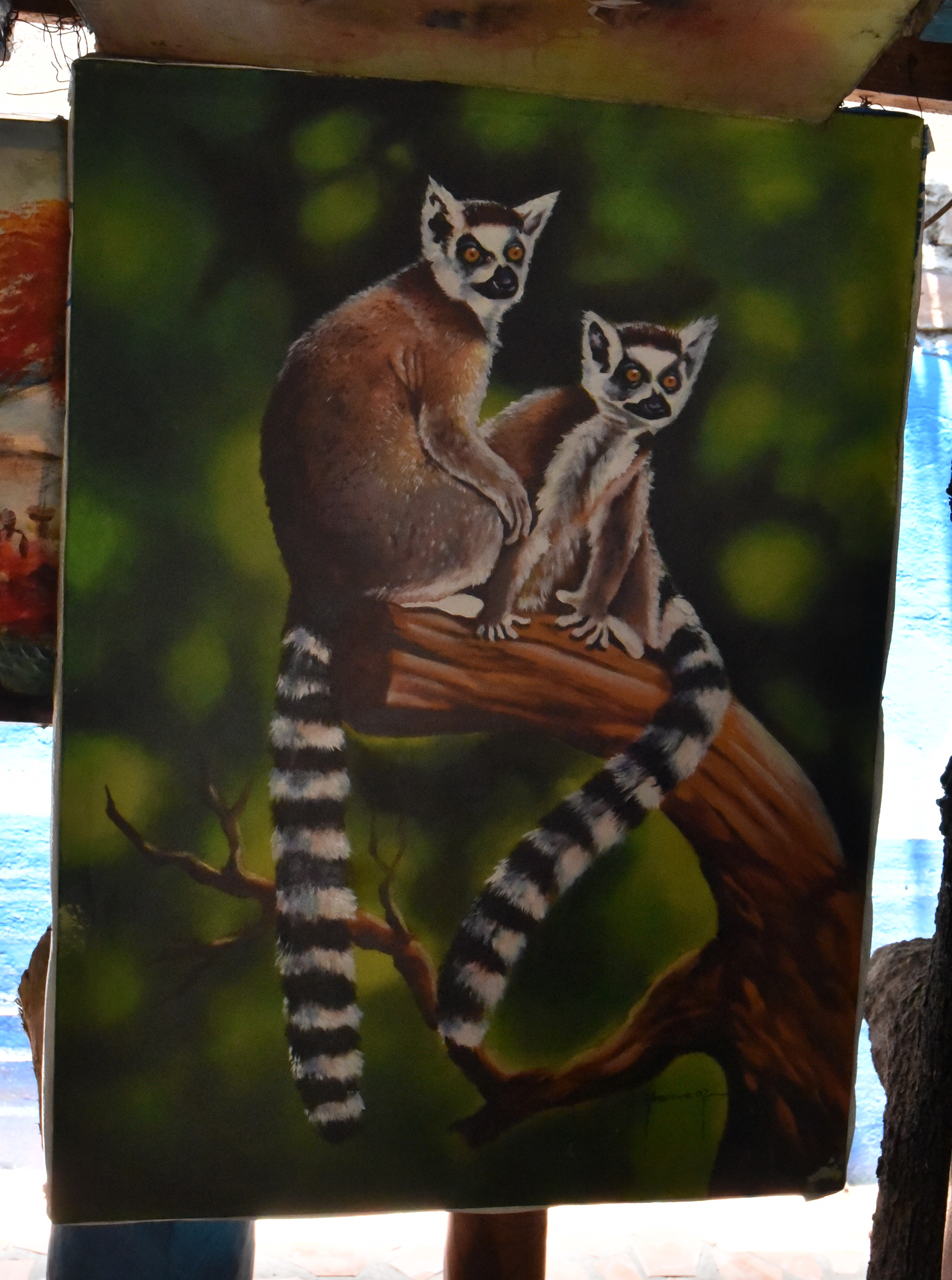
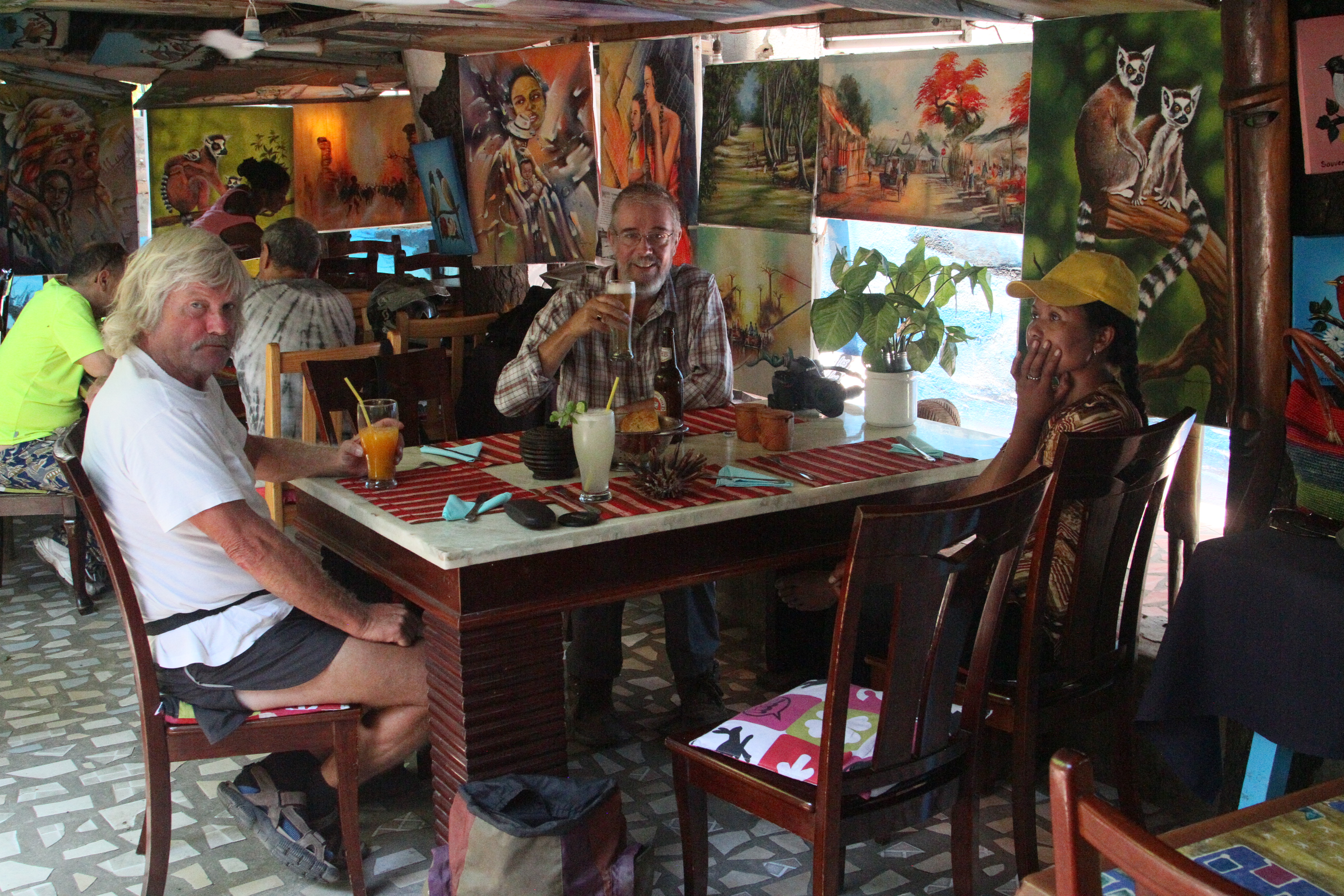
Christophe took us to an Italian restaurant for a pizza. The walls of the restaurant were covered in paintings by local artists. The price, in ariary seemed like a huge amount but quite reasonable in Euros and even better in Pounds Sterling. The folded copy of the Sun Newspaper had gone down in volume since our arrival, but was still enough to afford the purchase. We would return to town the next day when the banks would be open so that I could change more Euros. But how would I get the picture home? Simple, they would take it off the wooden frame and roll it into a tube for easy transport. The image below shows the picture before packing. Back in England, getting it put into a proper frame costs the same as the painting itself.

Ring-tailed lemur painting

Ring-tailed lemur painting

The painting, stillon the wall

The painting, still on the wall

We continued out of town and soon arrived at a turning sign posted to the chalet complex that would be our home for the next two nights at Auberge de La Table and the Arboretum d’Antsokay. Yes, back in comfort and with wifi in the bar / restaurant when the electricity is on. By now the discipline of daily blog postings had gone out of the window, so I made do with just a few brief messages to assure friends and family that all was great. Although the chalets were again very comfortable, many of the rooms where we stayed relied on solar energy and did not provide sockets in the rooms to enable camera batteries and laptops to be charged. After the car battery problems, now resolved, I had not even considered asking to use the car chargers that I had brought along. So daily priorities were to charge laptops, so that images held on the camera could be downloaded to the laptop, then to clear the memory cards in the camera before attempting to split the images into sensible ‘stops’. The accommodation complex and the arboretum was established around 1980 on the initiative of Swiss amateur botanist Hermann Petignat, whose son, Andry,  is a good friend of Christophe and Nadine. Christophe is acknowledged as a contributor to two books co-written by Andry: ‘Baobabs of the world’ (2012) and ‘Guide to the succulent plants of South-West Madagascar (2016) both with text in French and English. Both books were on offer in the souvenir shop which also provided one of few opportunities to use my credit cards,  so came back to the UK..

What is the point of staying in an Arboretum without taking the opportunity of a guided tour by Christophe. Again, there was clear and very useful labelling on the trees and shrubs that again would come in useful for plant IDs back home. It turned out to be quite a long walk and the best light had gone as we got back for a beer before dinner. ‘Do you want to go back for another walk?’ Christophe asked. No thanks, as I was checking my emails and had two cameras full of images to download before the power went off. I thought he had been joking but he and John joined the garden’s guide to take a look at a family of nocturnal lemurs that were due ‘to perform’.

Here is a selection of today’s images:

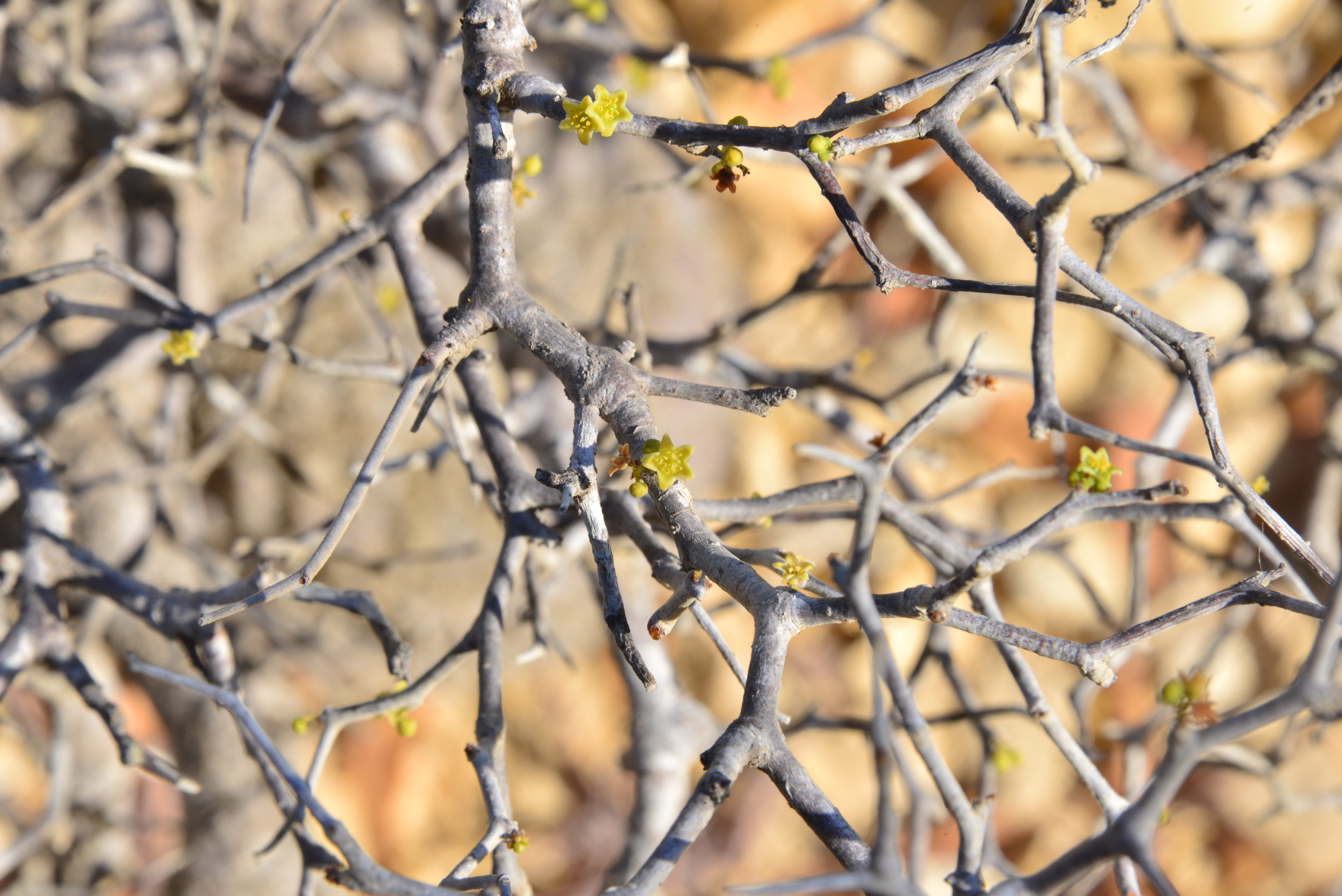
Operculicarya pachypus

Operculicarya pachypus

Angie grows a Operculicarya pachypus in a pot in the living room. I’ve often wondered why. If it’s for the flowers – don’t bother! Tiny!
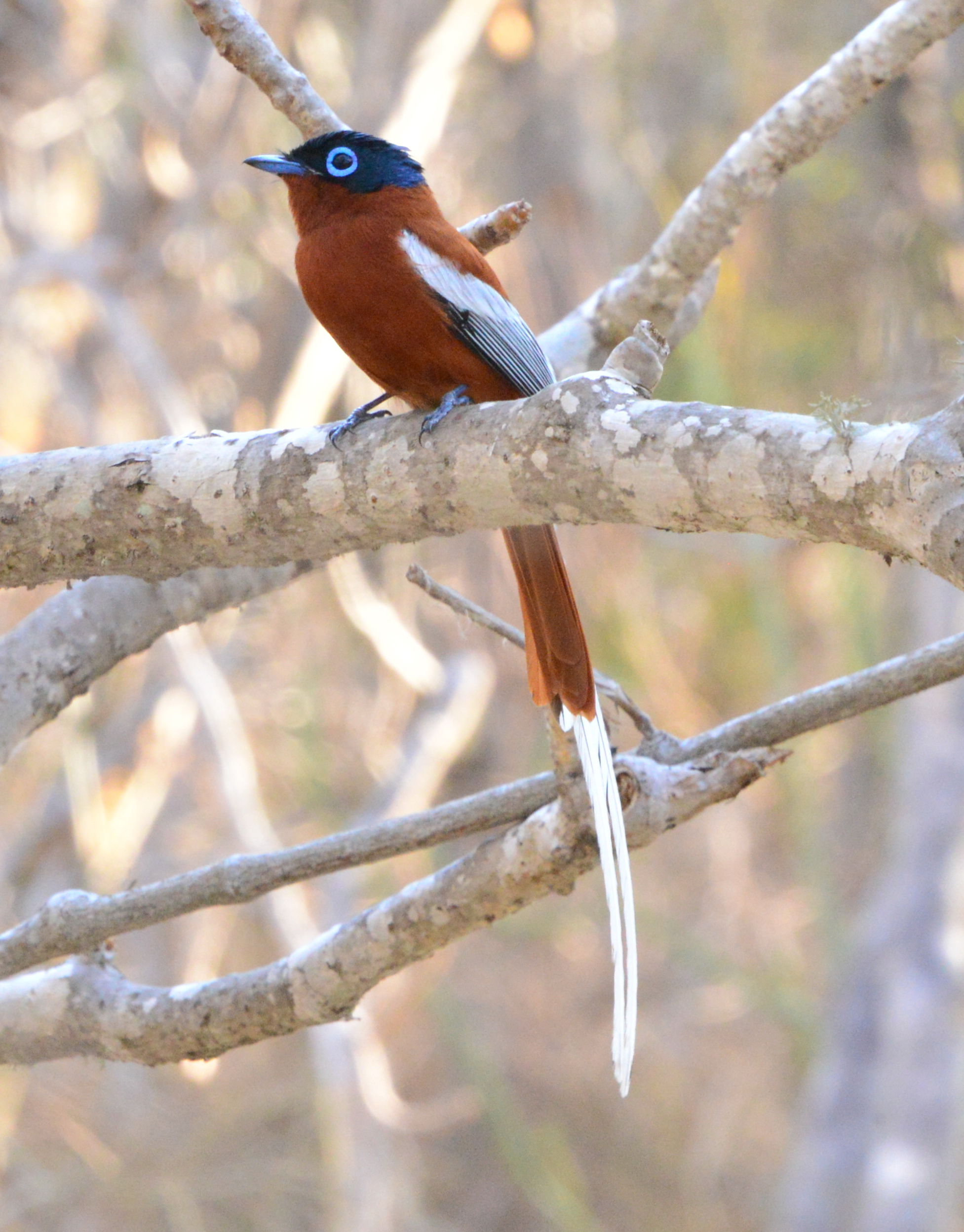
Terpsiphone mutata - Madagascar paradise flycatcher

Terpsiphone mutata – Madagascar paradise flycatcher

Between all the stems, branches and twigs, it was nice to find this splash of colour! You won’t find this bird in Angie’s living room!

Arboretum d'Antsokay

Arboretum d’Antsokay

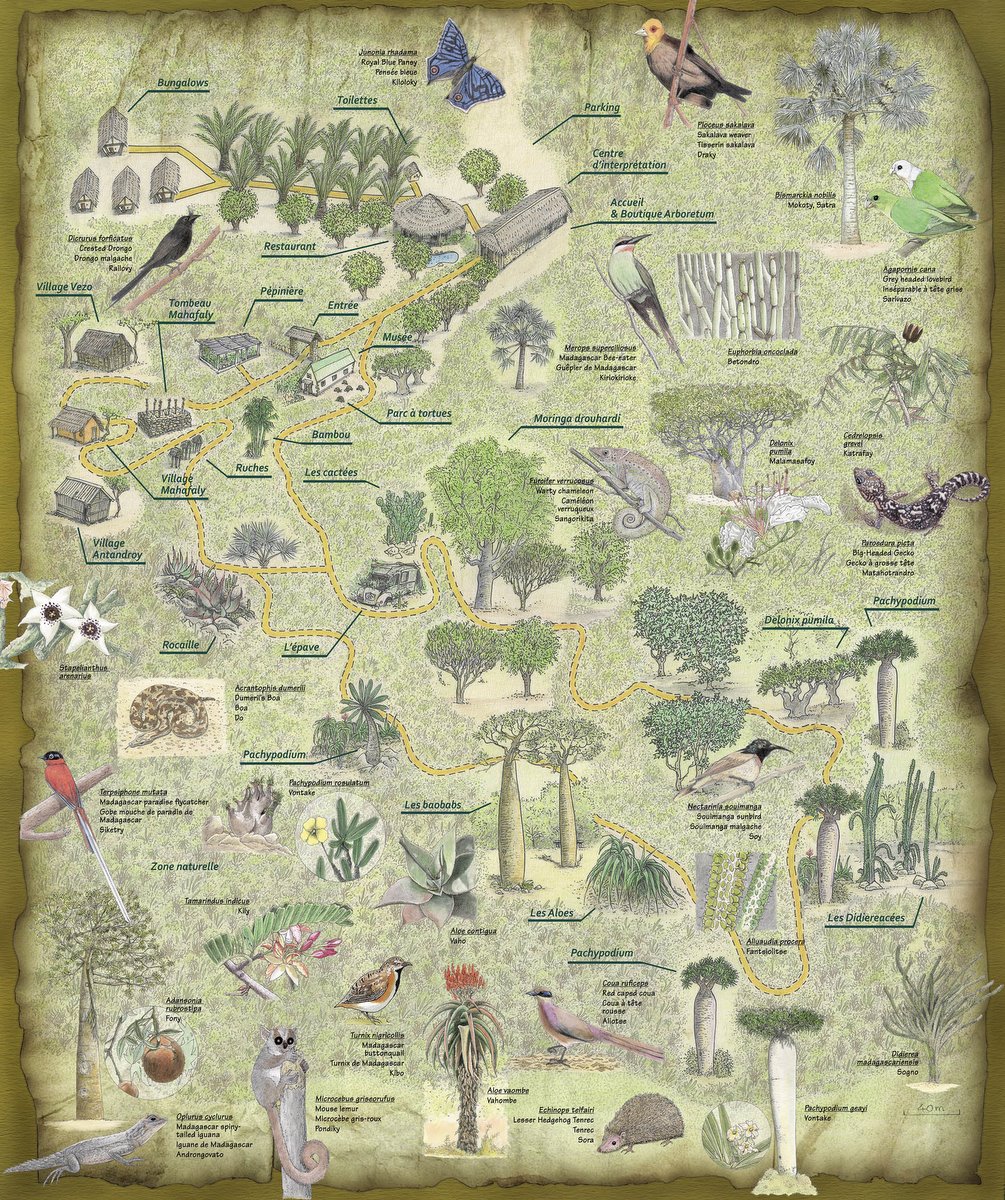
This map of the Arboretum provides perhaps the best view of the huge number of things that we saw and photographed. Well worth a visit!

Please take a look at

Saturday 29 October – around Ifaty

for an updated version, including images.

I forgot to mention THE event of yesterday – after what seemed to be an eternity of bouncing along rough roads – yes, we had been warned! – we hit new, smooth asphalt. No potholes (yet) so I guess that this stretch had been opened very recently. Why? as apart from a few carts drawn by zebu, and two mopeds we saw no traffic until we got to the bustling part through the town of Ifaty. We were some 15 km from the town of Toliara (or Tulear or Toliary depending on your age, religion or preference).

Christophe and Nadia needed to get to the town to take the lottery element out of starting the car and to get the puncture fixed. The activities organised by the Bamboo Club included a guided tour of the local botanic garden, the Foret de Baobabs and so John and I found ourselves in a zebu drawn ox-cart, fitted with a mattress for our European rears, for the short ride to the ‘Foret de Baobabs’ botanic garden with two guides to educate us. They spoke good English and did a great job, leading us through a maze of tracks and showing us all sort of plants, mainly of medicinal use, but also those of interest to a Cactus & Succulent plant lovers audience. A great help for when I get round to putting names to some of the pictures taken in nature during the trip.

One of our guides would run off to gather or spot some wild life that can not be guaranteed to be rooted to a particular spot, while the other guide explained the medical uses of some of the plants. When I told him of some of the pills that are part of my daily breakfast routine, he was very knowledgeable – he was studying medicine at University, looking at all aspects of the subject.

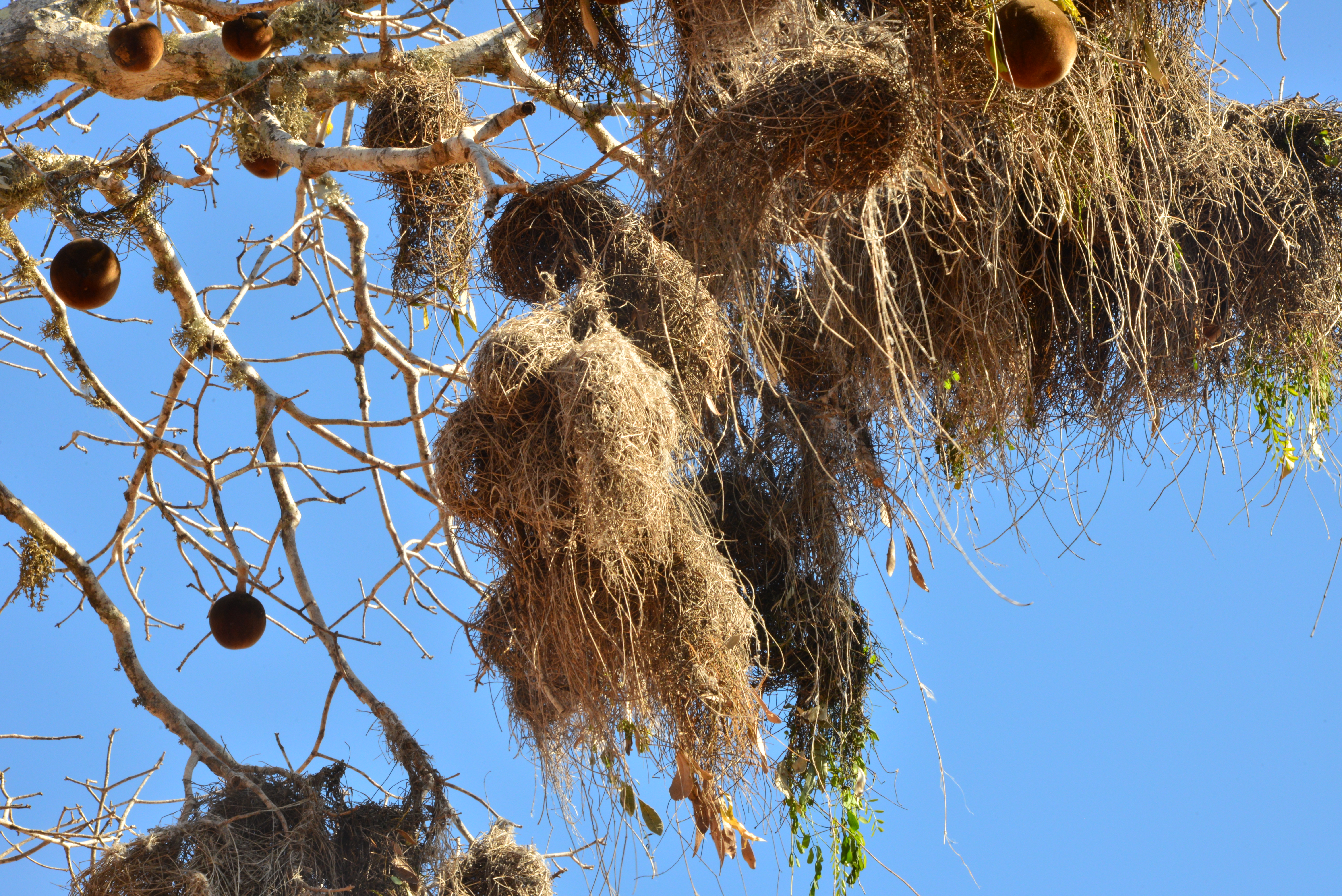
We saw a large weaverbird’s nest in one of the baobabs,

Weaverbird's nest amont baobab fruits

Weaverbird’s nest among baobab fruits

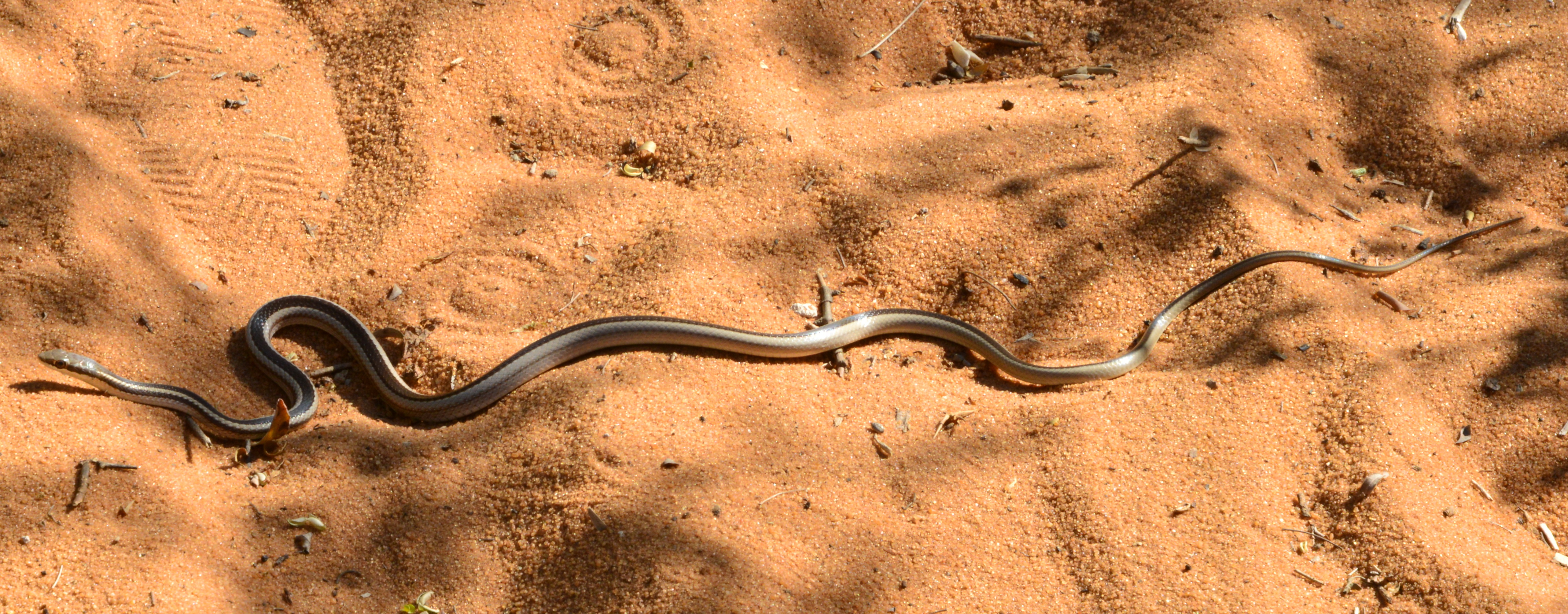
a trail in the soft sand that led to a snake of the constrictor group,

Constrictor type snake

Constrictor type snake

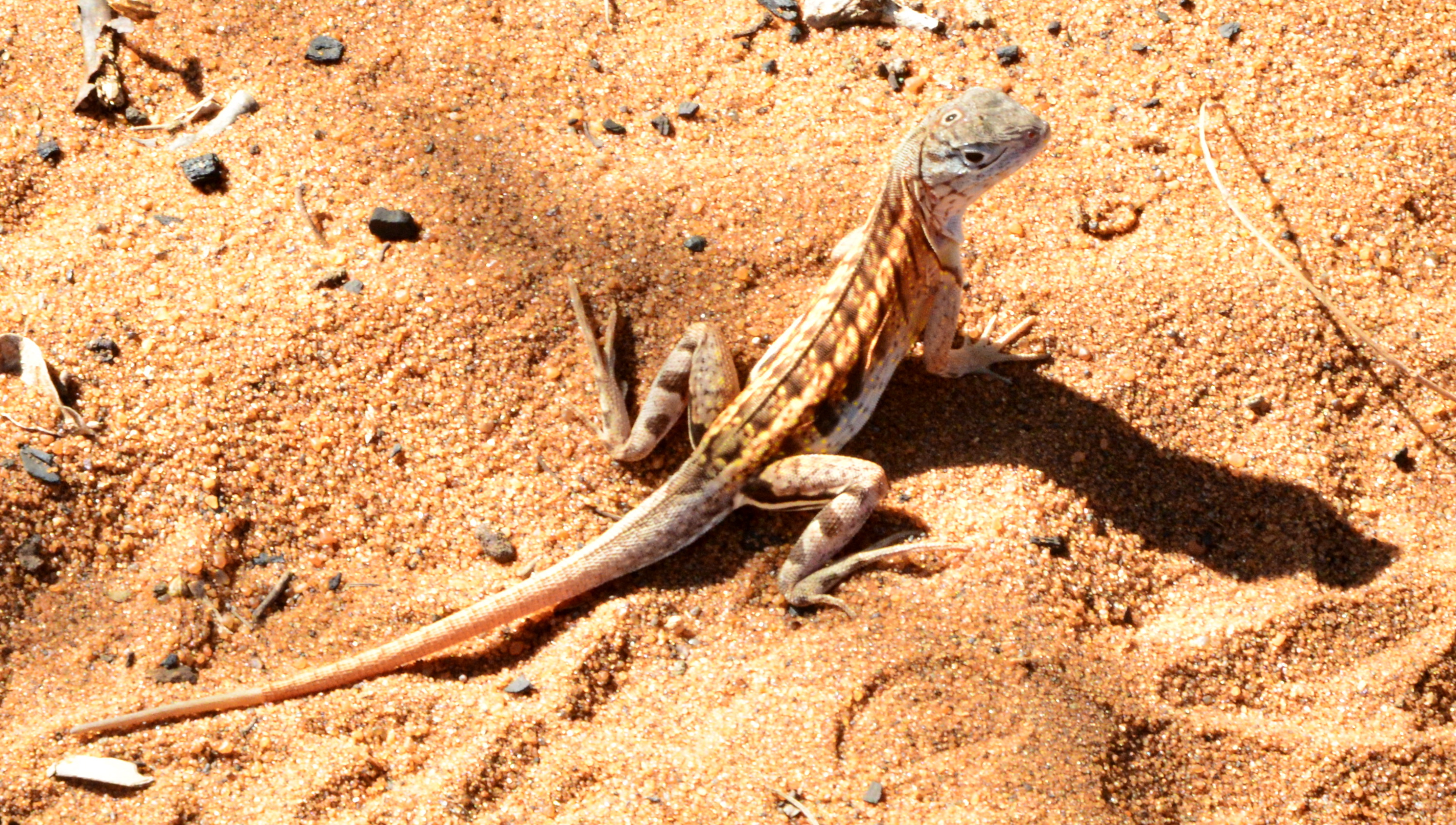
at least three different species of lizard,

Three-eyed lizard - Chalarodon madagascariensis

Three-eyed lizard – Chalarodon madagascariensis

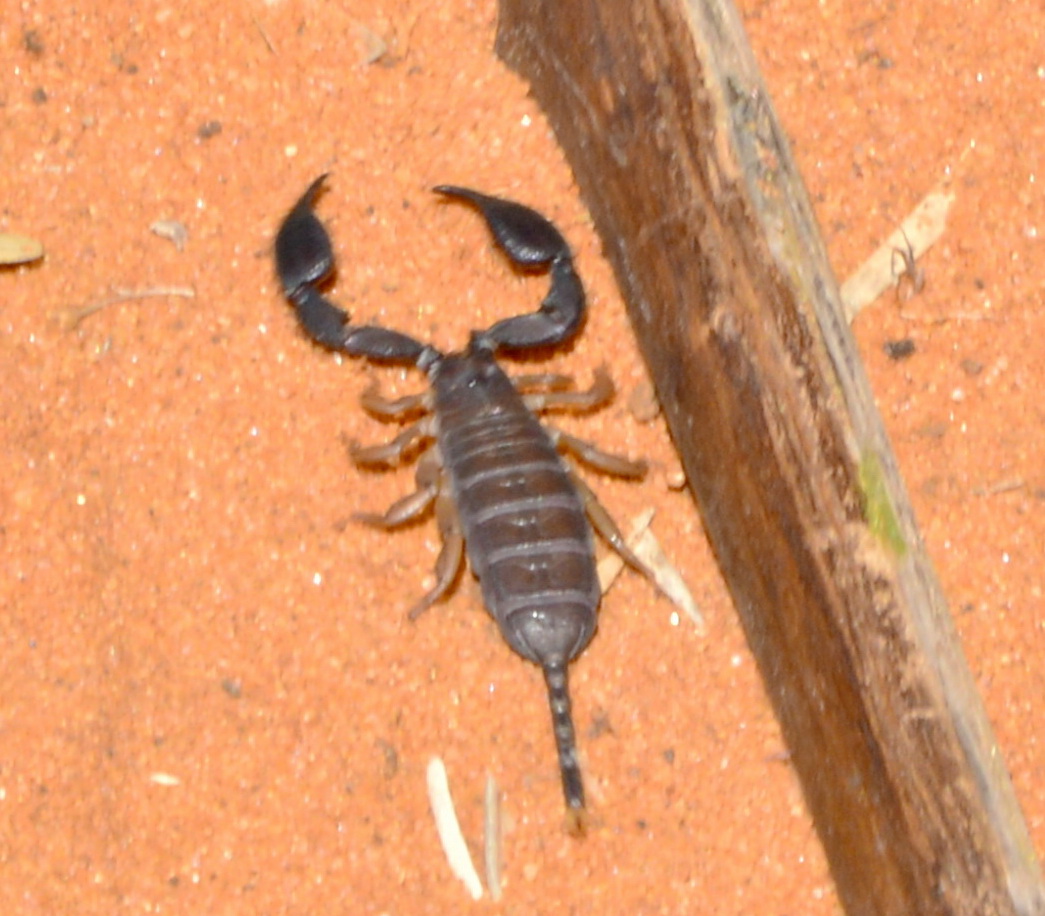
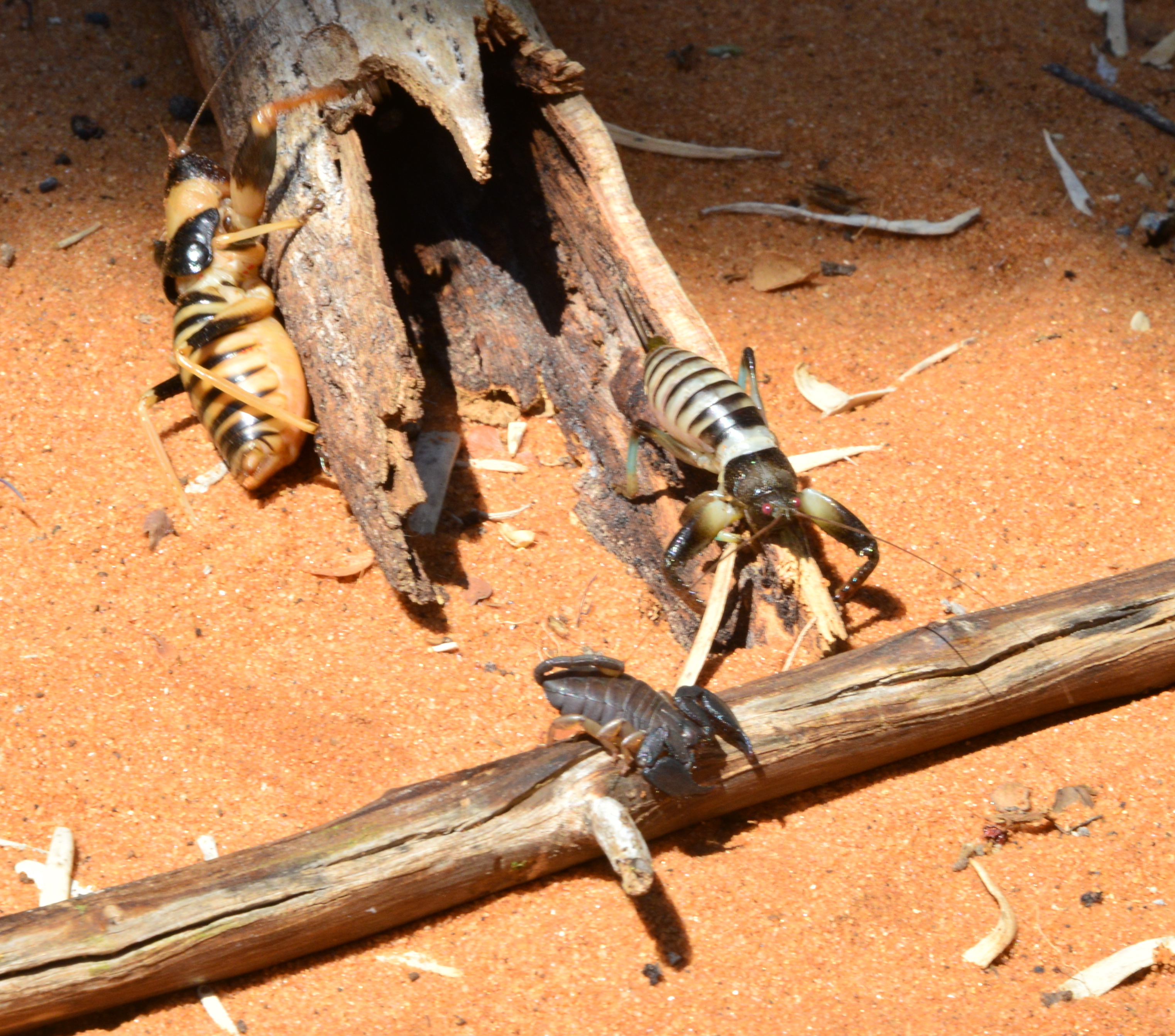
nearly stepped on a very well camouflaged nightjar (bird), asked why there was no obvious regeneration of the baobabs, only century old giants showing signs of old age and much more. Our guide showed us three twigs, some 30 cm ( 1 ft) tall and told us how these had been grown from seed sown 20 years ago! He thought that growth could be faster if the plants received more water and nutrition in cultivation, but it certainly put the plant’s reputation as a slow grower into context! We saw a fish eagle couple at their nest high in the top of a baobab. Our ‘spotter’ guide brought us three scorpions that he had found hidden underneath old rotting branches. Two were of the same species, with the female carrying the formidable sting.

Scorpion #1

Scorpion #1

All three scorpions

All three scorpions

All of a sudden there was an unexpected rush as a lizard which must have been curious to see what was going on, rushed in, believing that the scorpions were his lunch. Our guide used a stick to knock the female scorpion with sting from John’s boot, before it could cause him any harm. No body was hurt and the lizard left hungry.

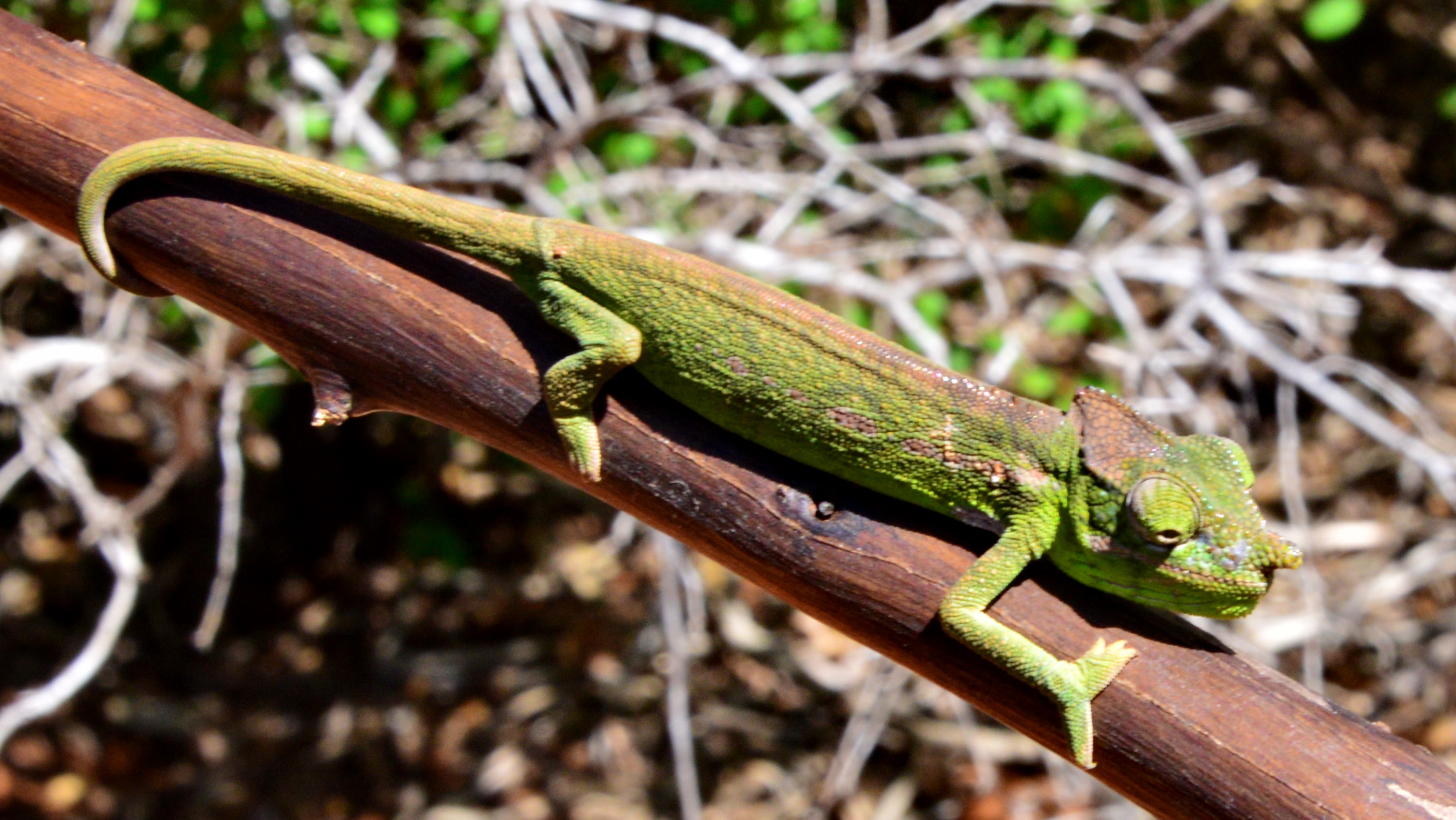
In addition to the lizards, our spotter also managed to find a chameleon:

Chameleon sp

Chameleon sp

It took a while before we were able to ID these enormous ‘mealy bug’ type insects, you need to read on to find the answer on future pages:

'gigantic mealy bugs'? read on for the answer.

‘gigantic mealy bugs’? read on for the answer.

Our outing was complete when our spotter reported having found a group of lemurs in the trees ahead. Lemur taxonomy is controversial and I use the term to cover all Malagasy primates Unlike the plants in this garden, the Lemurs did not come with ID tags. They stayed in the trees and were difficult to catch on camera as twigs and branches distracted the automatic focussing. What ever their name, they always look cute.

Lemur sp

Lemur sp

Back at the Bamboo Club, Christophe and Nadia had returned and reported that the alternator had been replaced with a new one so that we could stop pretending to be religious by saying a prayer before Christophe would try to start the car.

The Hotel laundry goes to work

The Hotel laundry goes to work

I believe that the original plan had been to stay two nights at Salary, so I was glad that there was an opportunity to move on a day early to the much more comfortable accommodation at the Bamboo Club on the beach at Ifaty. I introduced the staff to my own variation of the French drink, Pastis, mixing it with a bottle of Sprite into a refreshing long drink. Some French guests looked on in disbelief as I first added an ice cube and then the Sprite to the neat Pastis. Disgraceful. Members of a German coach party seemed to like the idea and were seen to order some themselves.

My chalet had two double and one single bed, all to myself and there were huge ceiling fans to cool me down until the electricity went off after I had fallen asleep. There were three dead cockroaches underneath the beds, but that was the only negative. A huge plus was that while there was electricity, there was wifi in the bar that entertained us with a great range of Rock and Soul music. What a contrast. Obviously I have become a spoilt brat, but hey, I can live with such accusations!  Finally an opportunity to catch up with some 200 emails – mostly adverts and Facebook messages, but also a couple of bookings for talks in 2017.

Looking forward to tomorrow’s zebu cart ride to the local botanic garden!