Just another WordPress.com site

We’re back in civilisation for a day or two, which means in the rather comfortable Club Bamboo (http://www.bamboo-club.com/)

There was a small cheer as we hit tarmac for the first time in over a week, from memory.

This is just a quick update for friends and family who might have become worried about the long silence. We’re still having a good time, still very hot & sweaty and amazed at some of the things that we’ve seen that I’ll try to cover in more detail by updating the diaries once I get home.

We know that we’ve hit civilisation when the price of a bottle of cola doubled in price – but still very affordable compared to the UK.

I see that there 184 emails waiting for my attention, so more later, time permitting!

Cheers

John & Paul

in The Bar of Club Bamboo

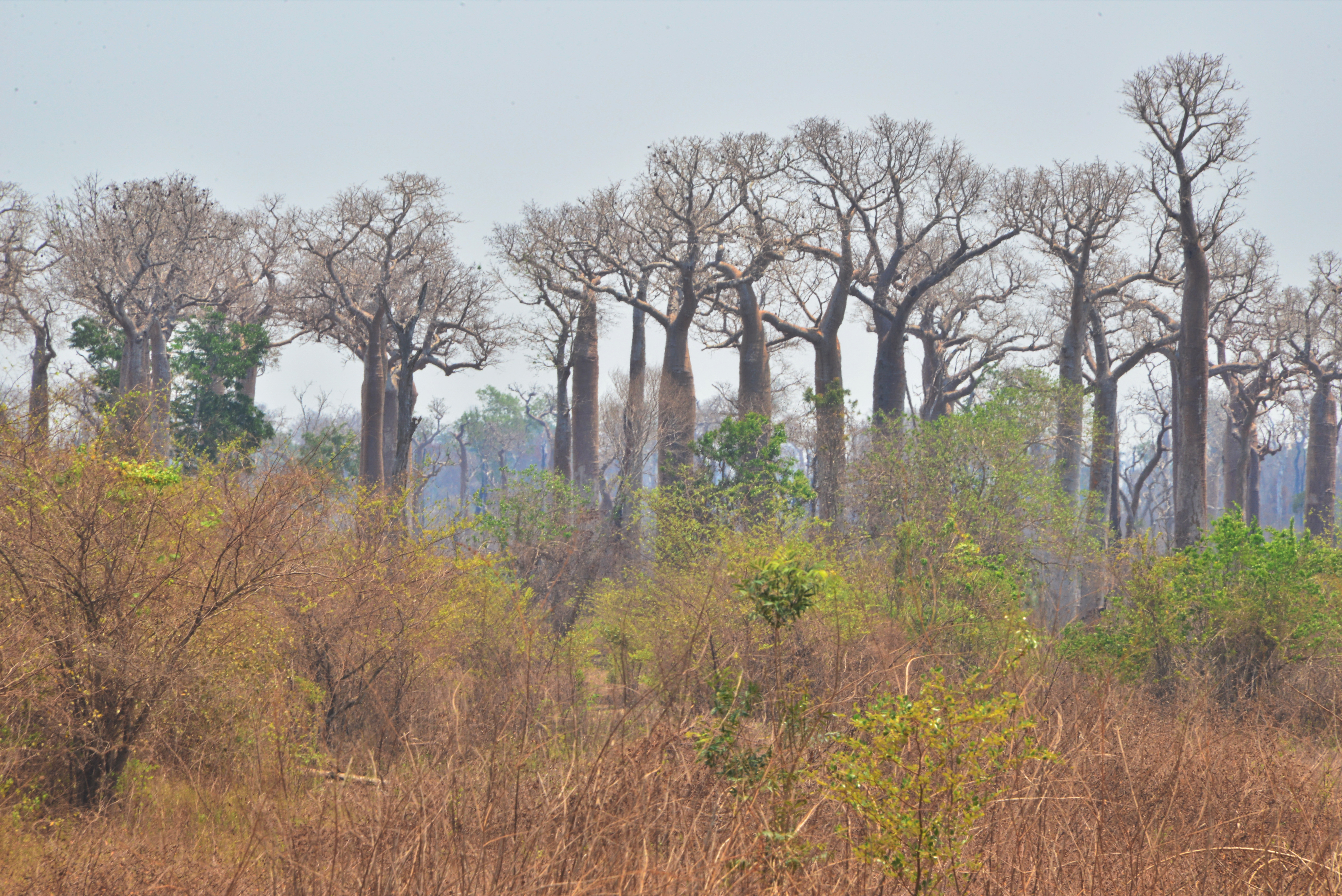
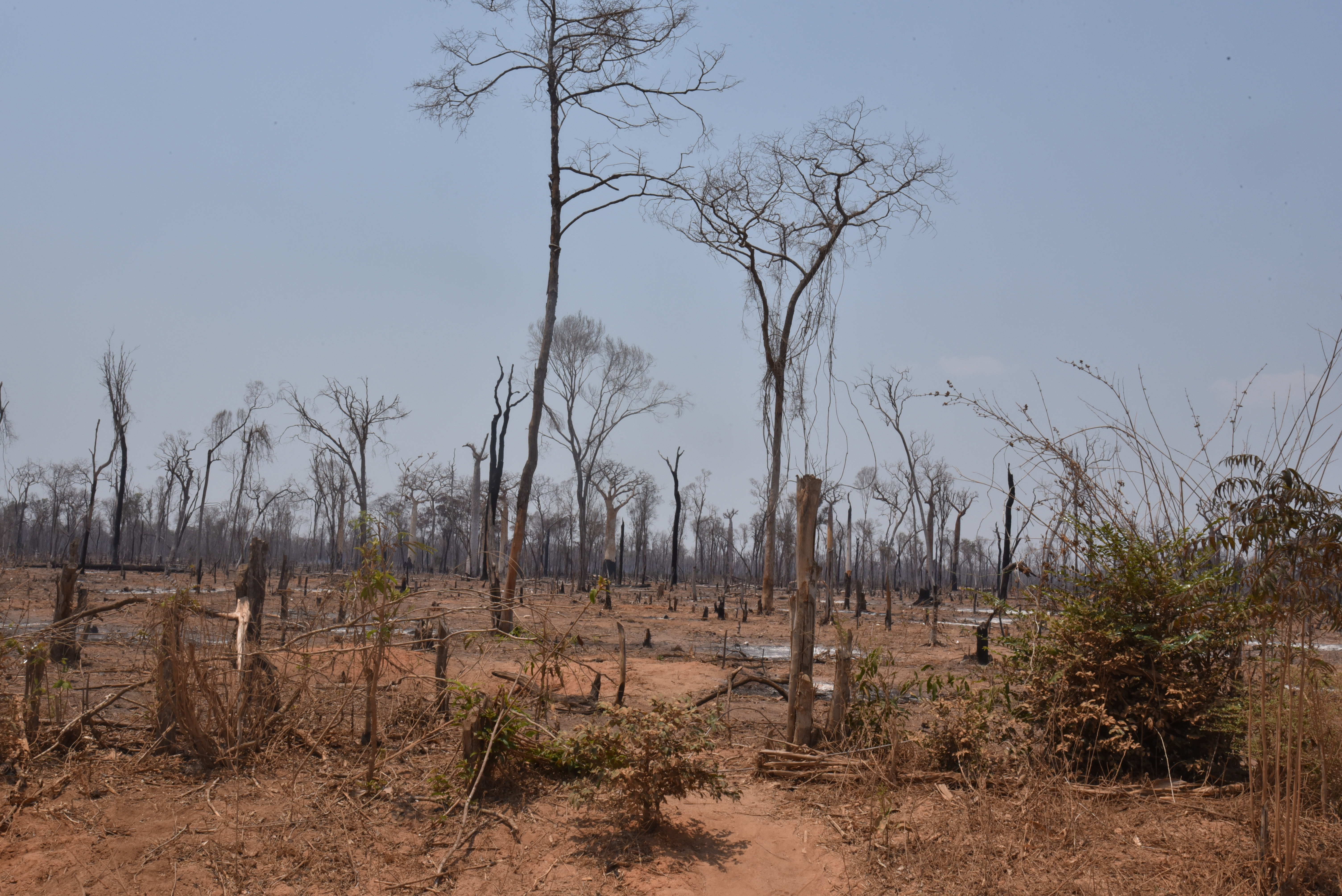
Again, the track bounced through the dry forest with plenty of Baobabs alongside between the shrubbery or standing on burning or still smouldering fields. Plenty of signs of ground clearing but little evidence of re-using the land for agriculture.

Our itinerary says of Salary: ‘an authentic Malagasy hotel, perched at the top of a dune with a magnificent beach at its feet. Possibility of making an exploration in the forest of mikéas.’  My memories of the day are limited to arriving mid afternoon at the village. Images taken reveal another drive through the dry spiny forest with baobabs along the side of the track. The internet helps with ‘Salary is a true gem with probably the nicest totally wild beach of the whole country. It takes about 4 hours to get here from Tulear on a 4×4‘. We were now just over half way our 28 day tour and I was happy to treat it as a place to relax, i.e. have a nap in the single huts and a trip to the shared outside toilet and shower facilities. Angie usually takes care of bringing or packing torches, but this time these were missing, so I had got used to using my laptop screen as a torch as I ventured out for my midnight bladder call. Here, it really was pitch dark, with a cloud cover keeping out any light from stars and the moon. I had walked the route to the toilet during daylight but had forgotten to remember the high second step onto the soft sand near where the car was parked. The resulting tumble gave me plenty of opportunity to search the sky for moon and stars, until I had managed to find and switch on my laptop again. Note to self: MUST pack a torch and batteries for Mexico!

The small settlement was authentic Malagasy witch chicken, ducks and a turkey, apparently unaware that Christmas was approaching were running around between the young children of the village, not bothered by cats and dogs lazing in the heat. John went for a swim but found the sea warmer than his bath water back in England and observed that any cooling effect had been undone by the time that he had reached the top of the chalet  at the top of the sand dune again. Had we been the typical sea, sun & sand holiday makers, the place would have been ideal. As it was, the rest day was very much appreciated and Christophe and I had a go at putting names to some of the more obscure (for me) plants that I had photographed. I decided to use the caption facility in the metadata displayed on my ACDSEE image browser / editor but was disappointed to find later, after I had backed up the image files to the plug in hard drive that I had brought along that much of the data entered had not been saved or had got lost in transferring the files. Unlike my MS database where the data entered is automatically saved as the cursor is moved to the next field, this is not the case for the ACDSEE metadata input screen where the data entered for each field has to be saved by pressing the return key. Lesson learned!

Despite the somewhat primitive accommodation, they had laid on a great dinner, of grilled fish, sautéed potatoes and a variety of vegetables, washed down with bottles of THB (Three Horse Brewery) pilsner beer

Authentic Malagasy village at Salary

Authentic Malagasy village at Salary

Although I have described all (most) of our accommodation as very comfortable, with John and I enjoying our own individual en-suite facilities, the main difference with other hot places that I had visited when it was hot was the lack of air-conditioning. It made me realise how elsewhere we would lower our core temperature in air-conditioned environments before venturing out into the heat to photograph our plants. Although our chalets here, on Coco Beach were right on the beach, with at times a nice cooling breeze making doors slam, this morning there was no breeze when Christophe suggested taking a walk to some different caudiciform plants. It was a level path, taking about 60 minutes each way. Let’s give it a go – it was always possible to abort the walk if things got too hot.

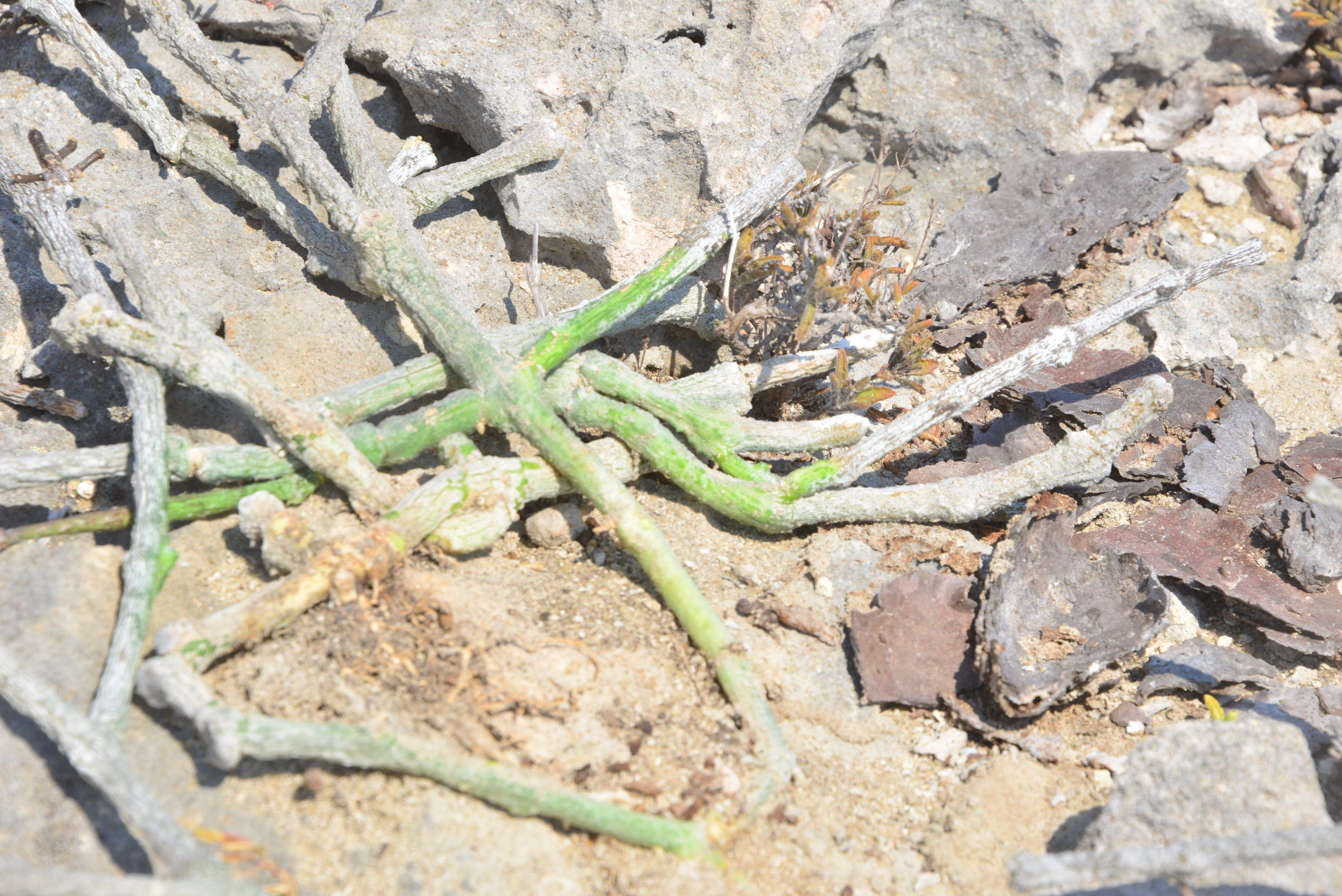
I amazed myself at some of the plants that I photographed – certainly not the huge photogenic plants seen elsewhere. May be Wiebe Bosma, my Asclepiad expert friend in the Netherlands can confirm names. First, Christophe became quite excited about what looked tome to be bunch of dead sticks that he explained was an Asclepiad although I wrote down (and then lost) the name given. Christophe is guiding some more Brits around Madagascar as I write these catch-up entries, so is unable to help until his return.

Asclepiad sp ?

Asclepiad sp ?

I should explain that the greenish coloured stems had been covered by rocks when this plant had been discovered by Christophe and was covered over again once the images were taken.

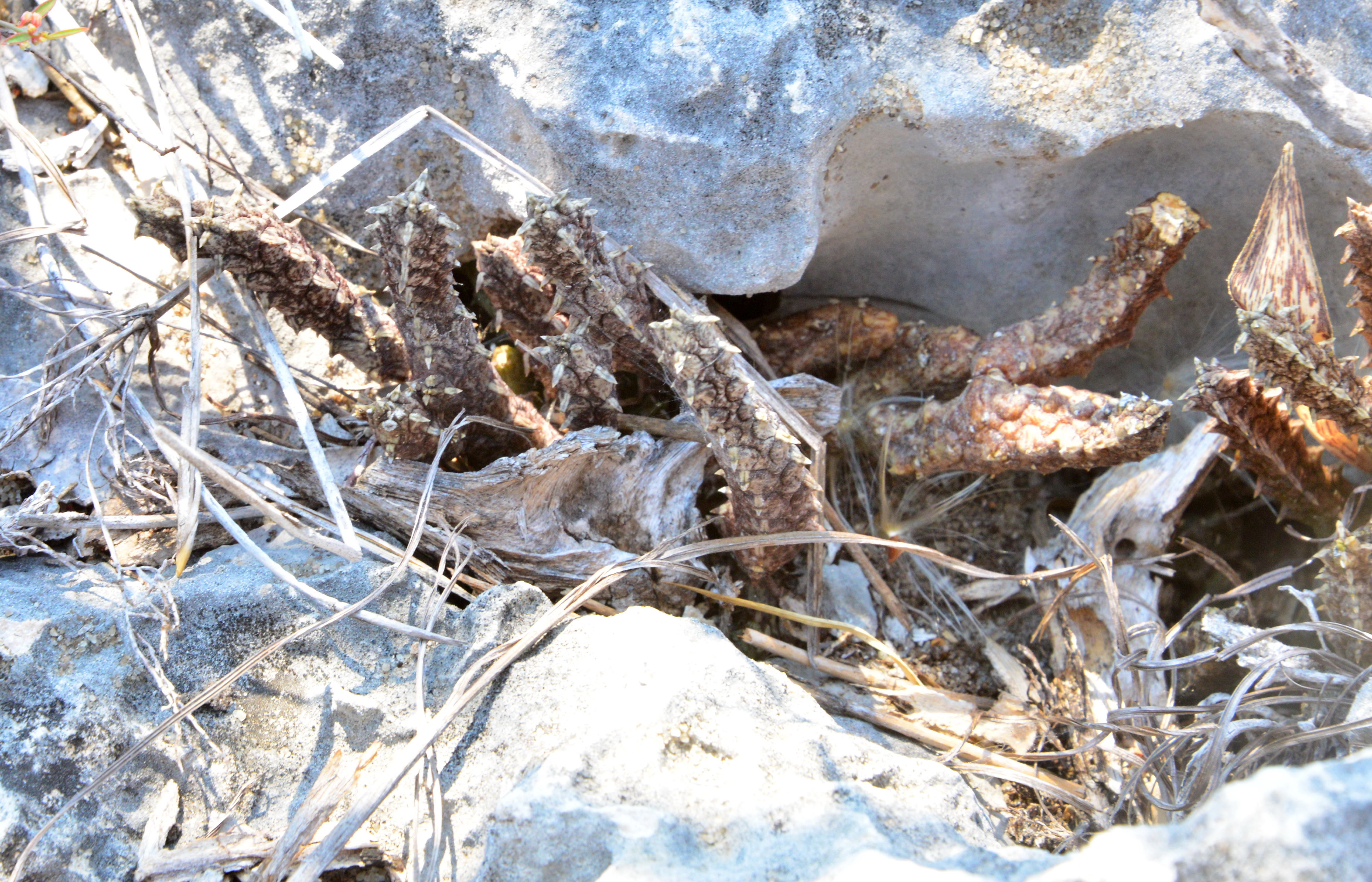
Plant #2 for Wiebe was found by Nadia.

Asclepiad sp ?

Asclepiad sp ?

Shame that we were perhaps a day too early for the bud on the right of the picture to open. Good luck Wiebe!

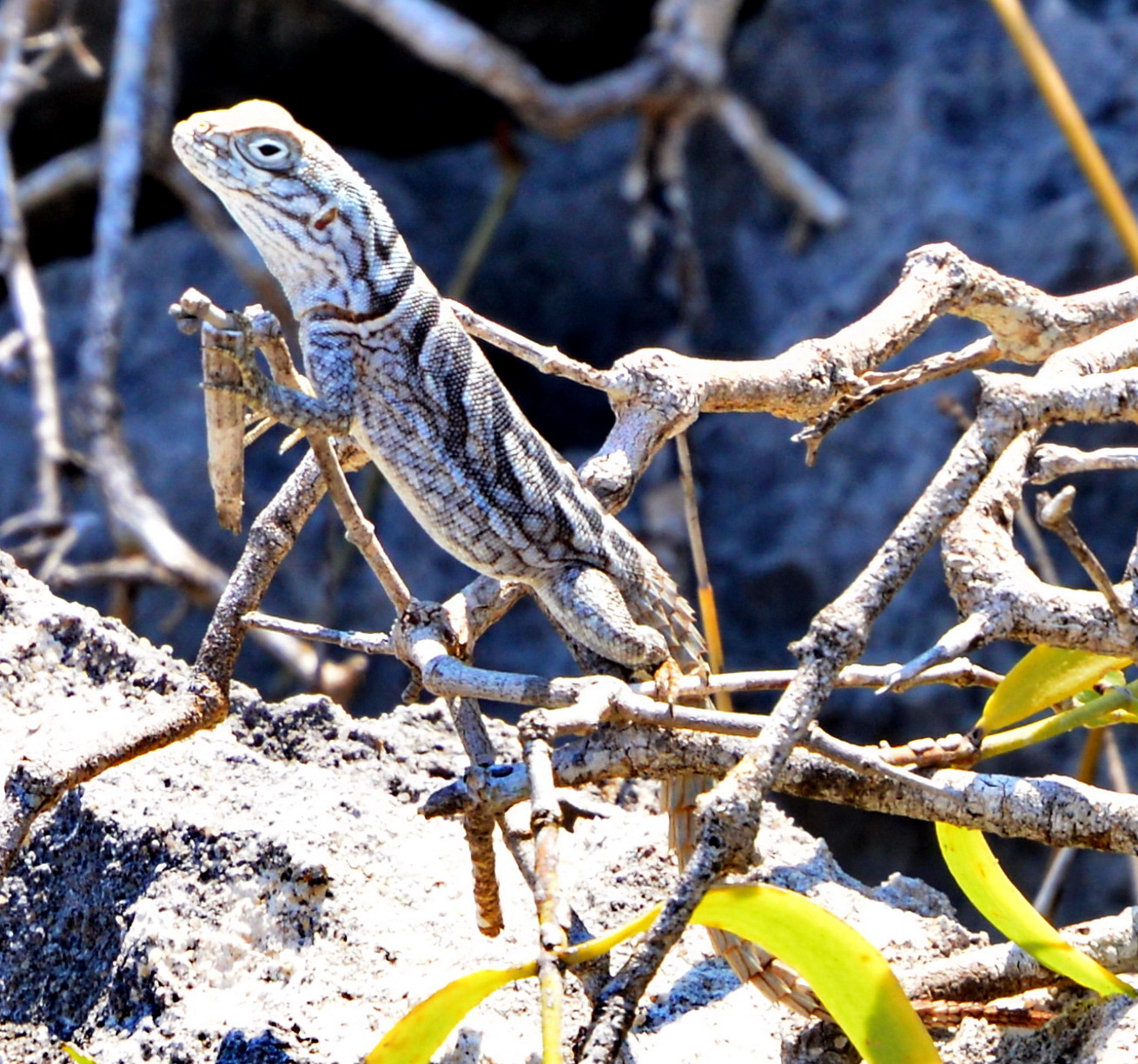
Lizard sp.

Lizard sp.

This lizard is also waiting for an ID. It is one of many that crossed our camera lenses.

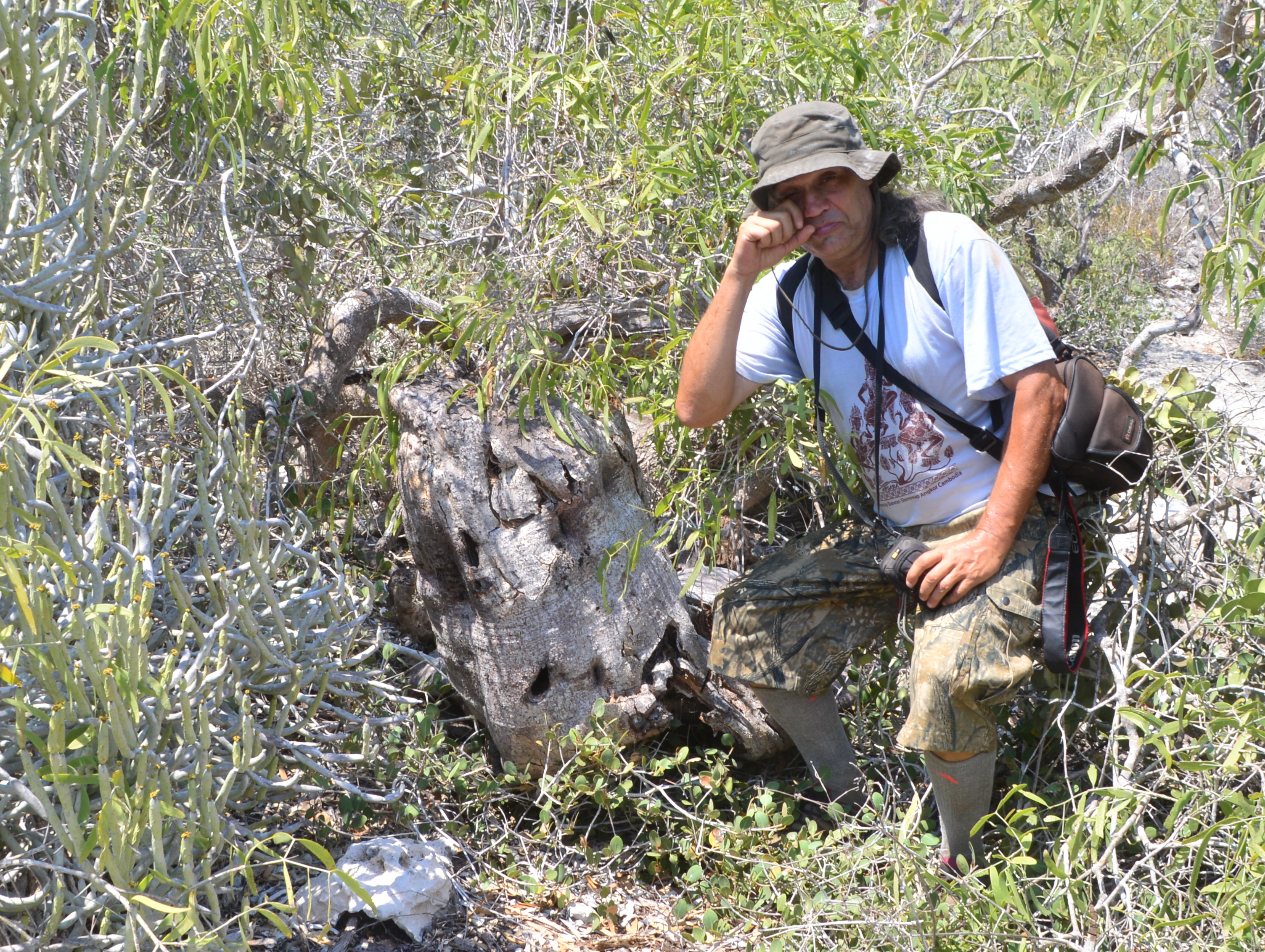
Cyphostema elephantopus

Cyphostema elephantopus

Next we found Christophe wipe away a tear as he found the decaying remains of an old friend, a Cyphostema elephantopus. He is pictured on page 114 of the ‘Guide to the succulents plants of SW Madagascar’ by Andry Petignat with this plant in happier days. It serves as a reminder to us as we like to visit ‘old friends’, such as Smiler, in the Atacama Desert, that one day we may find that when re-visit our friends that they may be in declining health, or worse. Fortunately Christophe and Nadia knew of some more plants of this species growing near by, but sadly, these plants too looked as if they had passed their best-by date. They seemed to be of similar age. Had they simply reached the end of their natural life span or was there a common reason for their decline, such as an increasingly dry (or wet?) climate?

At the foot of one of the Cyphostema I was happy to find an Orchid that looks to be the same species that grows on Angie’s windowsill in Wiltshire. Now if only she could remember where she had acquired that plant ….

Oeceoclades spathulifera

Oeceoclades spathulifera

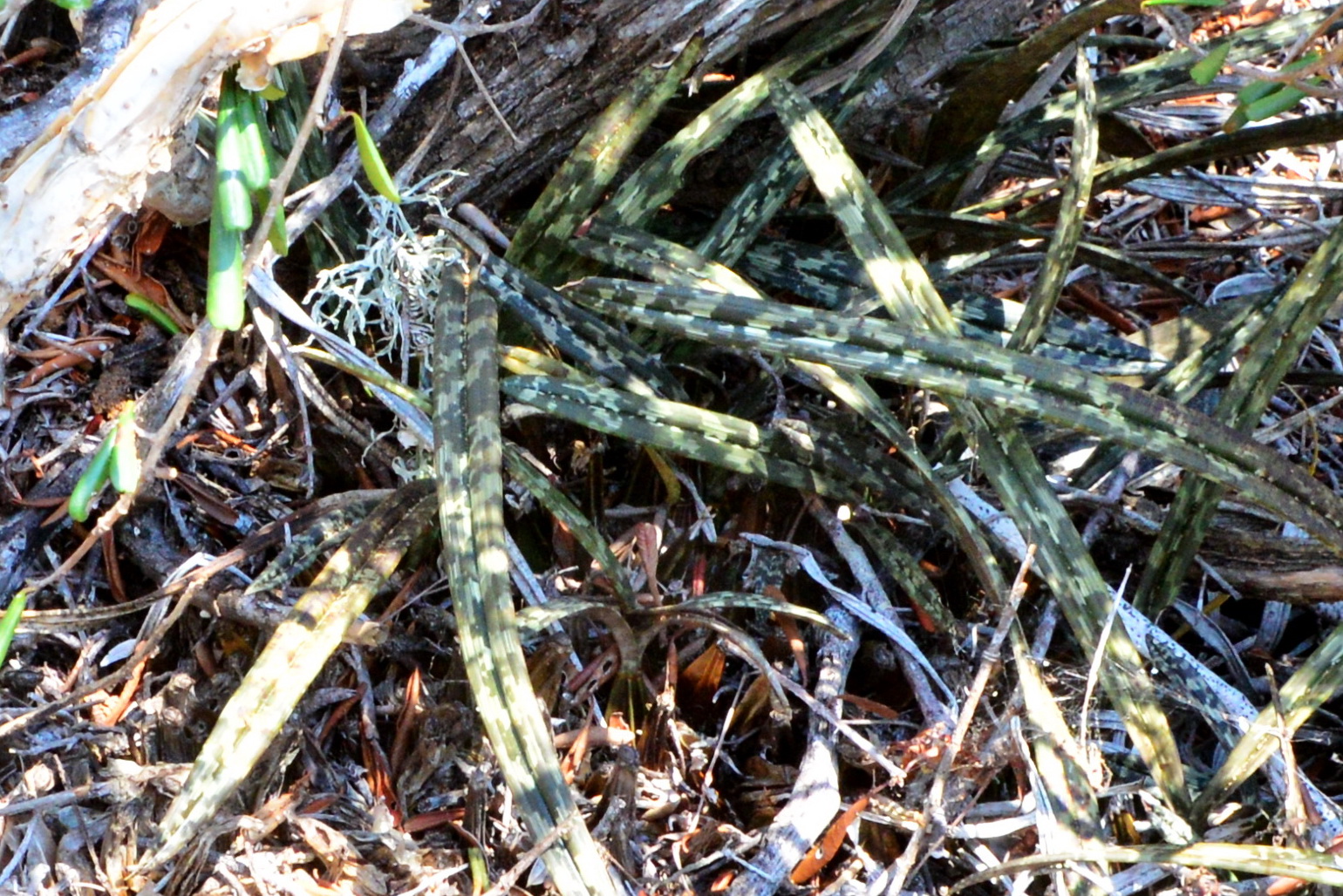
There are a number of similar and closely related species but the differences between them are in the flower and here, none were found. It was difficult to get a good picture of the orchid as it prefers to grow in the shade underneath shrubs.

Once again, the car battery failed to turn over the starter motor and we were stuck until Christophe had tracked down the muscular owner of the property where we had parked, to help us to push start the car back into life.

There was a cooling breeze when we returned to our chalets and we could download our images and scribble down rough notes once the electricity came on, late afternoon.


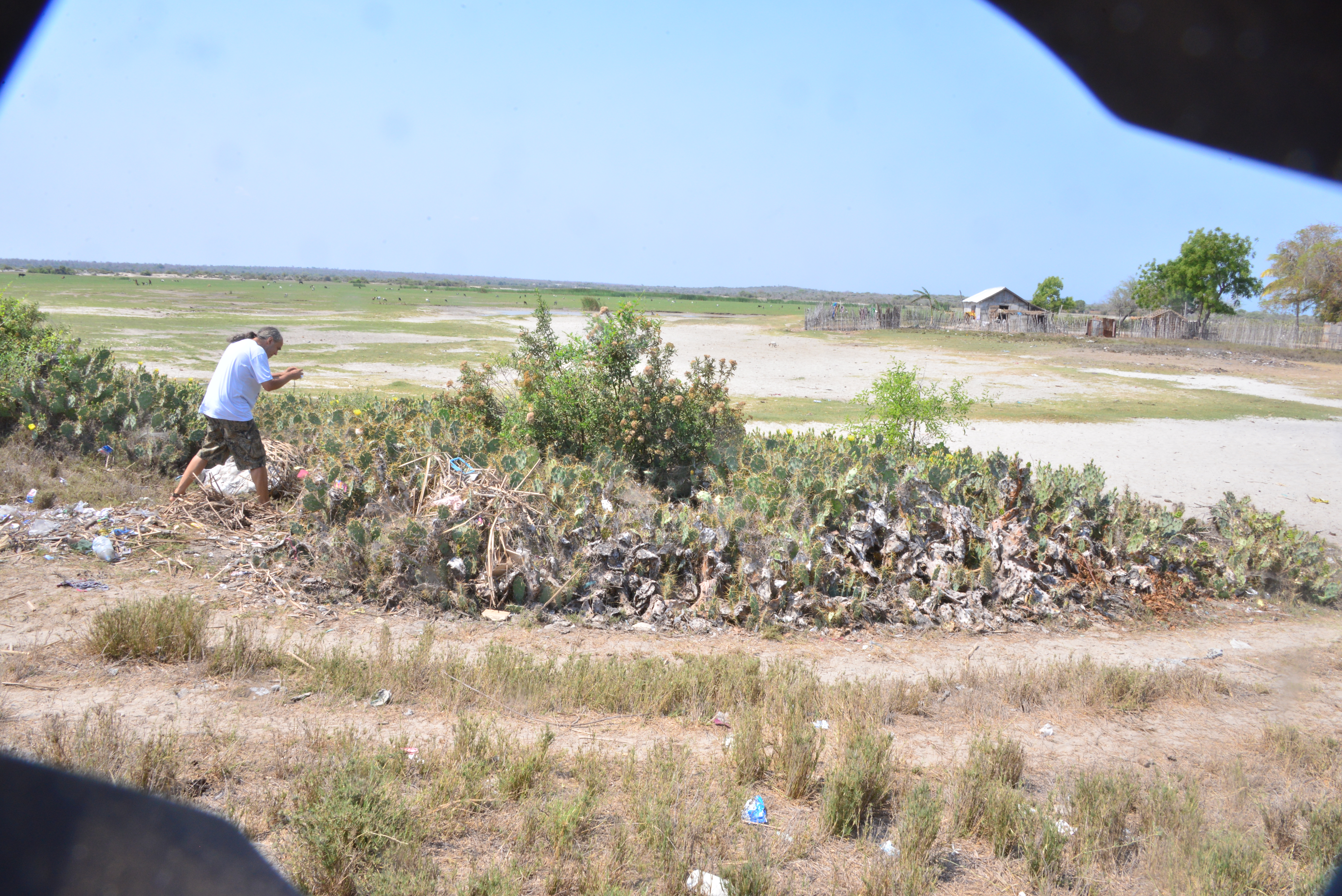
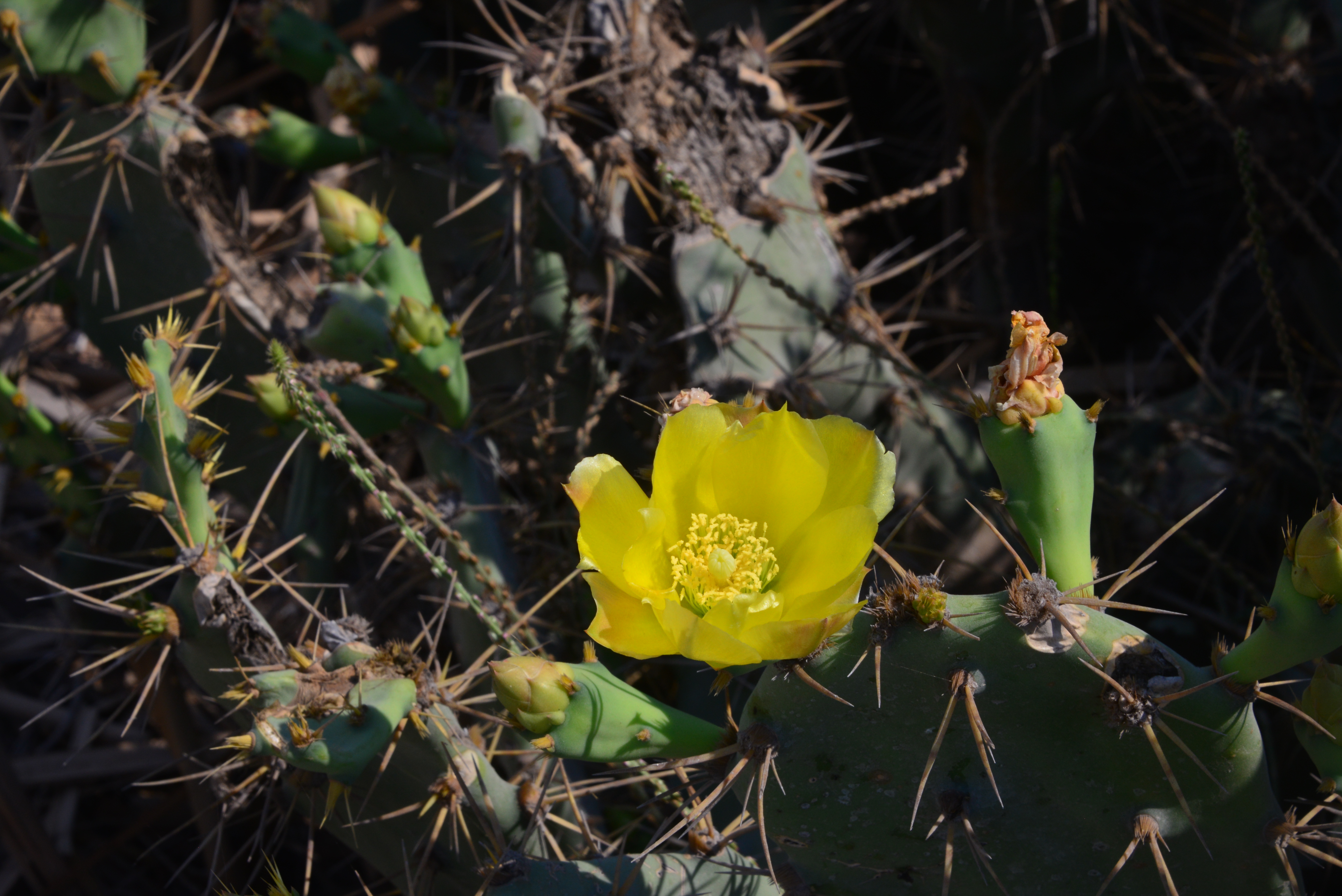
The Cactus Trip Diaries focus of course on members of the Family Cactaceae, although as true C&S freaks, we also take an interest in some of ‘the other succulents’. The presence of Opuntia species on Madagascar is well known. We had been seeing a range of Opuntia along the road, most densely around settlements and villages where, despite the spines, they served as food for cattle and goats, but also, for human consumption. So what is the species that dominates? It reminded me of Opuntia dilleni, that we had seen on Cuba. A brief search on the internet suggests that it might be O. monacantha. But it will take some time to resolve the ID, as I fight against time to finish the Diaries before we leave for Cologne in a few weeks time. Both have spread widely outside their ‘natural’ distribution area, although, after many years during which some cacti have been exported to arid areas as cattle fodder, the true origins of the invaders may be difficult, if not impossible, to determine. Their invasive nature is not in question. We only saw one specimen of Cylindropuntia tunicata and that was in a botanic garden. Let’s hope that it remains there, carefully locked up when the gardens close at 5 p.m.

The cactus patch outside the village of Morebo

The cactus patch outside the village of Morebo

Opuntia monacantha? or O. dillenii?

Opuntia monacantha? or O. dillenii?

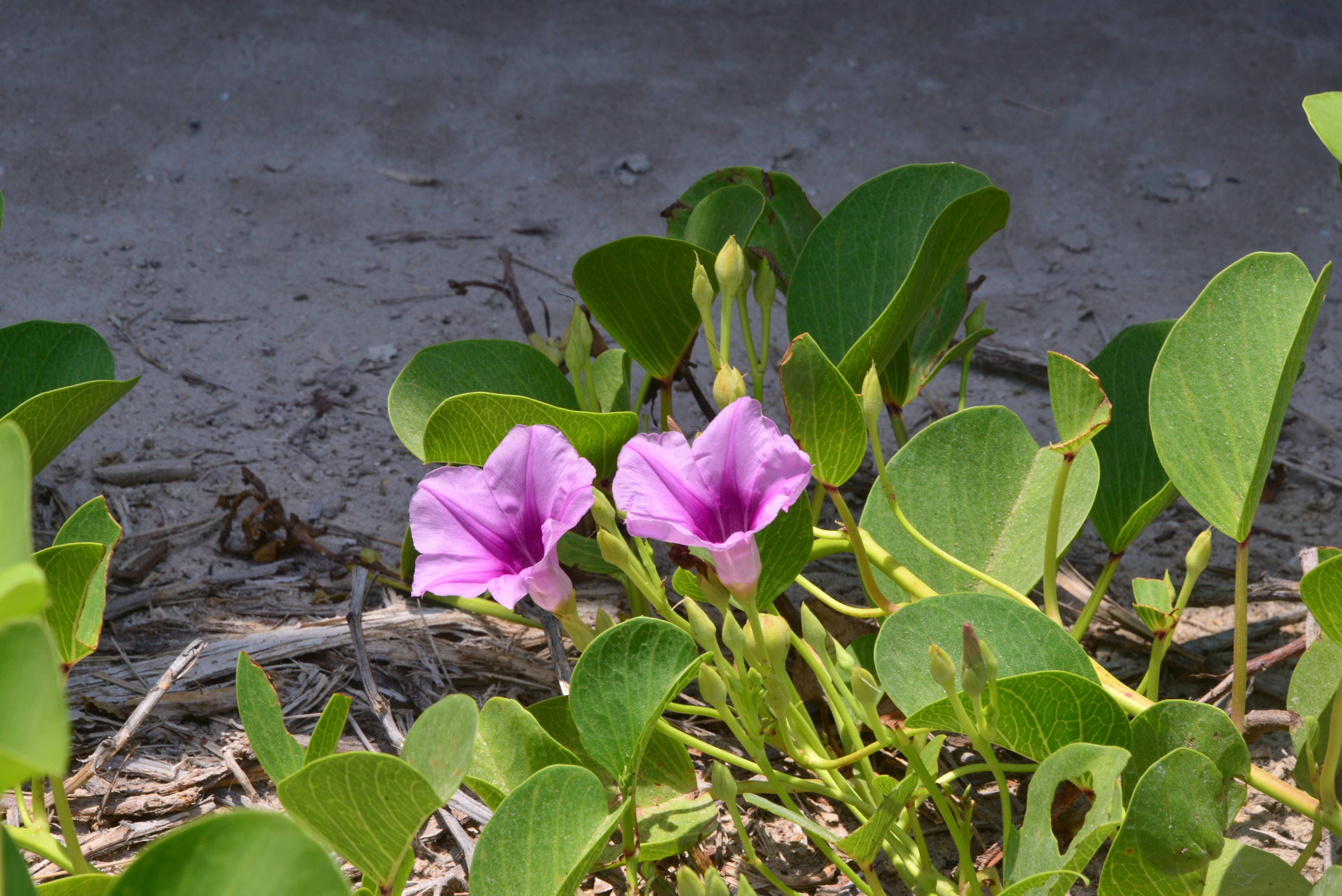
At the next stop, Ipomea bolusiana provided a colourful ground cover plant. Below the ground is a large turnip-like caudex which is often displayed above the soil in cultivation.

Ipomea bolusiana

Ipomea bolusiana

And of course there were plenty of Baobabs in the dry forest on the edge of a Mangrove forest as we speeded and bounced along a bumpy sand track towards Andavadoaka, our home for the next two nights.

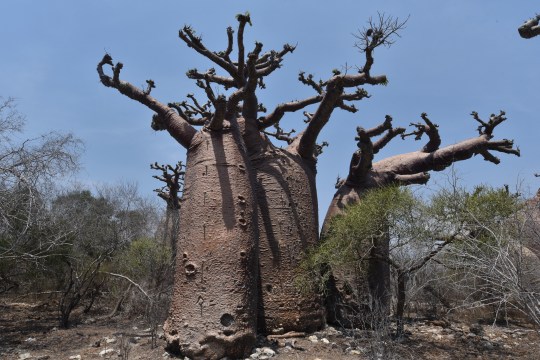
We started to see a few baobabs again. The flat arrangement of branches at the top suggest Adansonia grandidieri, but the trees are much more stunted than those that we had seen in and around the Avenue de Baobabs. The conditions here are much drier, and probably have been so for the last 600 years plus, the age of these plants.

It seemed to take no time at all to take close to 100 images as I wandered about these giants and apart from the three of us (Nadia stayed out of the sun, in the car) not another tourist or for that matter, anybody else, around. A great experience. We did not have a GPS with us on this trip, but I’m sure that I must be able to find this group of trees on Google Earth, once the Diaries are up to date.

Dr Who's Daleks, Adansonia grandidieri

Resembling Dr Who’s Daleks, Adansonia grandidieri have been waiting here to be photographed for some 600 years


Manja had not been my favourite stop over. It rained just before our arrival and we were the last car to squeeze into the car park compound. I thought about the challenge of getting out with a flat battery in the morning. The accommodation was a long way from the very comfortable accommodation from previous nights. Yes, John and I each had our private suite with bathroom and toilet but we were warned that the electricity could go off any moment. There was a huge cockroach on the bedroom wall and I tried to whack it with my trainer, still soaked from yesterday’s boat ride. The wall appeared to consist of reed that moved as the cockroach got my size 11, which did not seem to have any affect. The camp consisted of rows of chalets, each separated by paper thin walls, so you could enjoy the sound of farting coach parties all round. It reminded me of the scenes of a Vietnamese war film that I had seen in the seventies. Still, my Martini Sleeper reputation – ‘Anytime, Anyplace, Anywhere’ is still in tact as I turned on to my good ear and shut the world outside of my mosquito net out of my mind. No sooner had I made myself comfortable or the power was cut. Around 3 a.m.my bladder demanded emptying so I switched on my laptop and by the light of the screen found my way past the giant cockroach and once back in the safety of the mosquito net was soon off to sleep again.

The car answered our prayers and fired up at first request. I was glad to leave Manja behind.

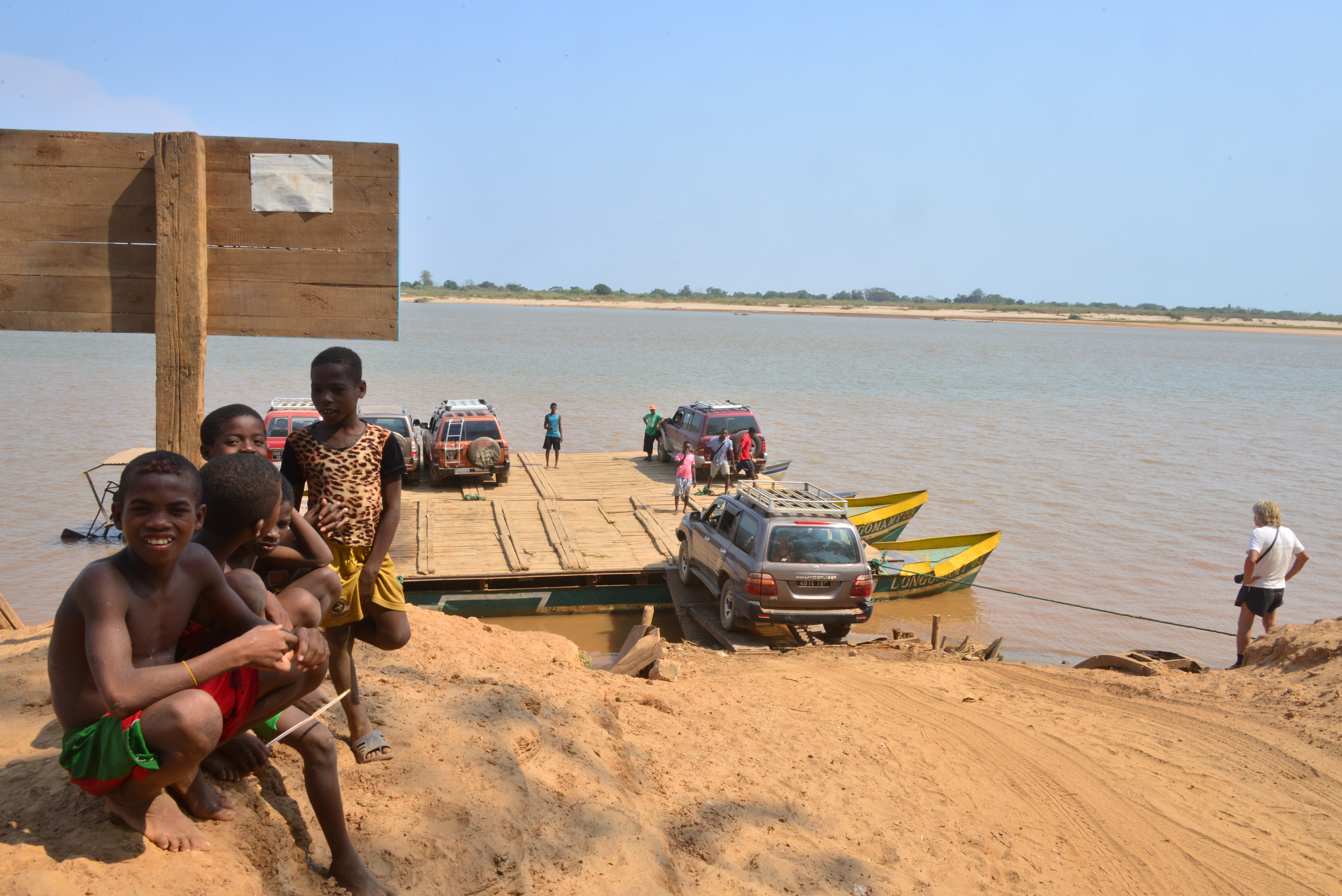
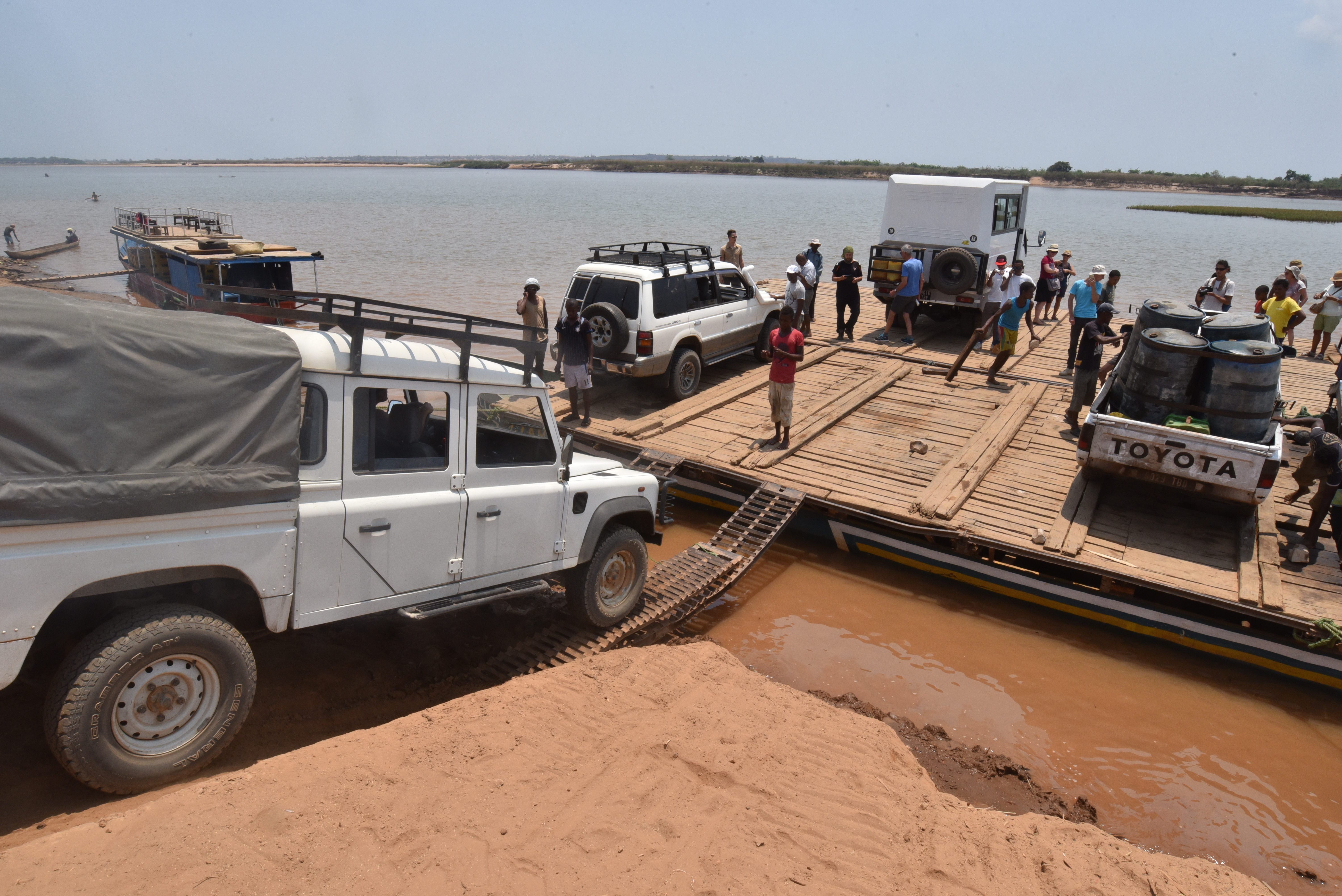
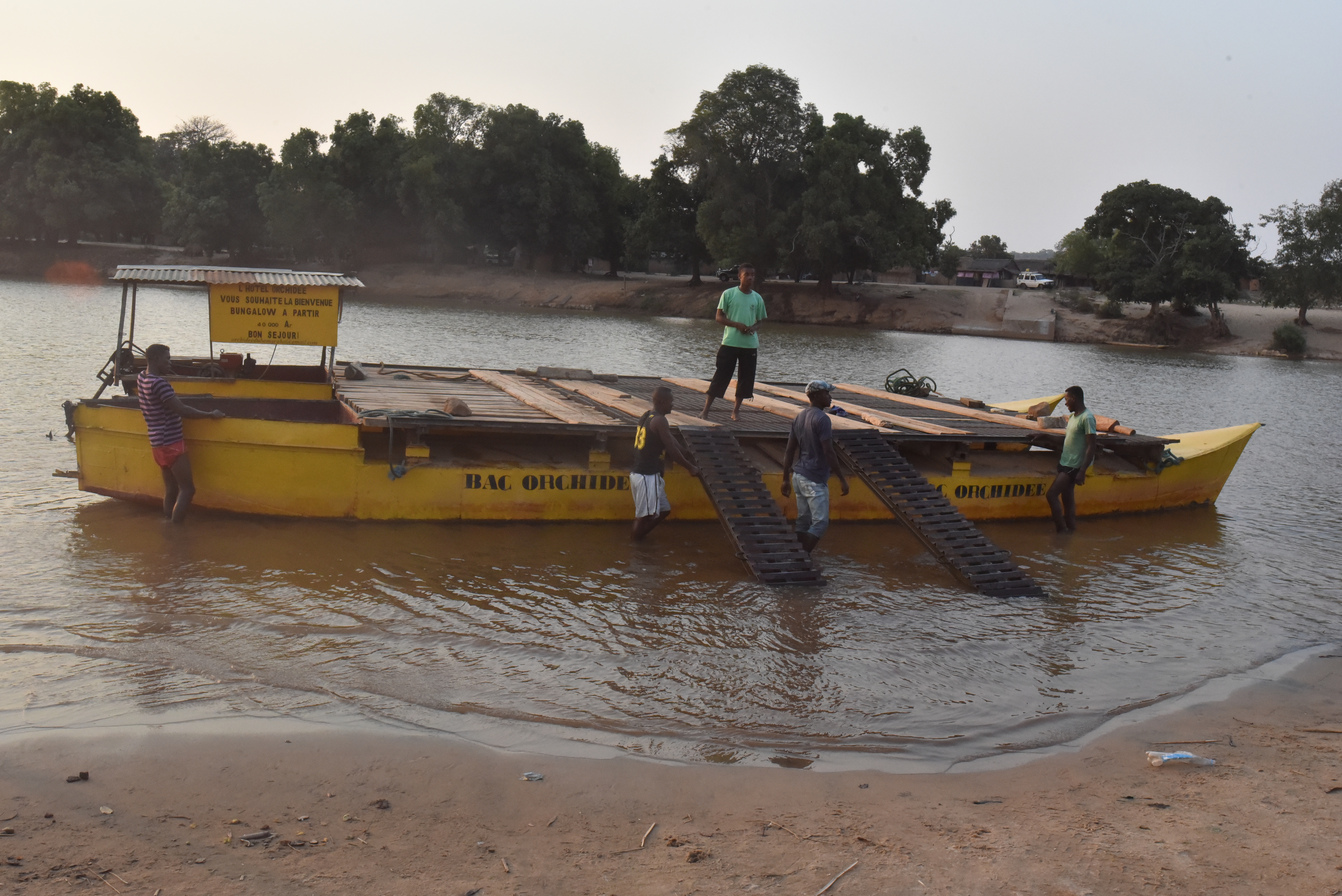
We had to cross another river and while waiting, were able to observe at least three cars from previous crossings, stuck in the soft sand on the opposite shore. Soft wet sand was again the problem and the more that the cars tried to get out, each with its crowd of passengers, advisors and helpers, the more the sand became disturbed. Christophe and I watched another car leave the ferry, made a brave attempt at full speed, but then slowed down to rubber-neck at the first car, stuck to over its axels in the sand and it too joined the victims. One of the locals on the ferry confirmed our opinion to stick the car in 4×4 mode, get into 2nd gear and keep a steady speed – not slowing down. Do you know the best path through? Of course, for 5,000 ariary (less than £1.25) he would take us through. Done! And he was as good as his word, as we passed the stranded vehicles who would probably struggle for a few more hours to get out.

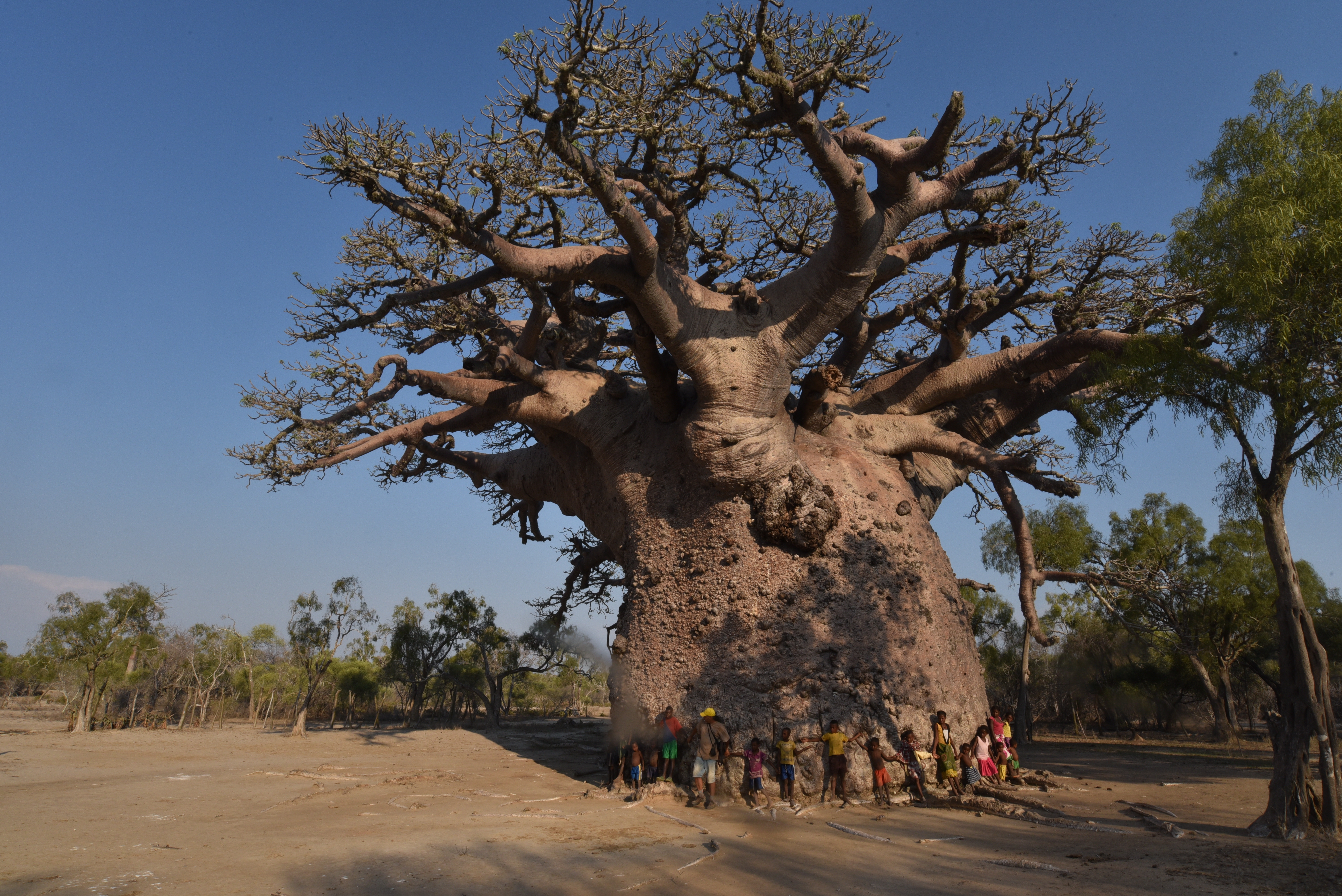
The other highlight of the day was a visit to what is alleged to be the oldest Baobab tree in Madagascar. We found a fony baobab (Adansonia rubrostipa) called La grand-mère (the Grandmother) that researchers found consists of three perfectly fused stems of different ages. The radiocarbon date of the oldest sample was found to be 1136 ± 16 BP.  The study also revealed that the trees are mostly hollow. (see Searching for the Oldest Baobab of Madagascar: Radiocarbon Investigation of Large Adansonia rubrostipa Trees by Adrian Patrut, Karl F. von Reden, Pascal Danthu, Jean-Michel Leong Pock-Tsy, Roxana T. Patrut, Daniel A. Lowy).

But how big is it? We took turns to have our pictures taken for scale, but we felt tiny and insignificant. Most of the village had followed us out, after we had paid the fee to access the tree, so I asked Nadia to ask the lady who seemed to be ‘in charge’, to ask all the kids to hold hands to try to get all round the tree. They managed to get only half way! They had negotiated a participation fee of 10,000 ariary for their posing! Better than bonbons!
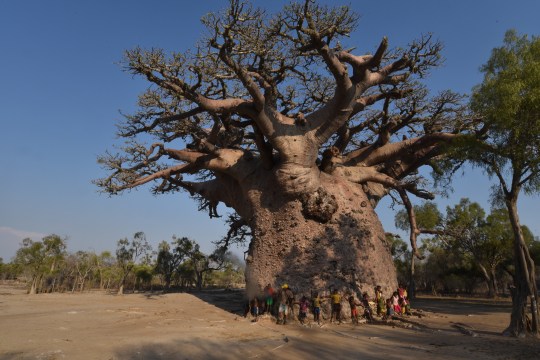
La grand-mère

La grand-mère, the oldest biggest baobab in Madagascar

It has a height of 7.47 m and a circumference at breast height (cbh) of 9.67 m. Too big for my collection!
I asked Christophe about the apparent lack of seedling plants. He explained that there was no simple answer, as seedlings are very hard to ID. More later. There were certainly plenty of fruits with plenty of seed.

I remember many conversations around camp fires in the Chilean Atacama Desert about the possible age of the huge clumps of Copiapoa. Memories of conclusions are usually coloured by the quantities of red wine consumed at such discussions.

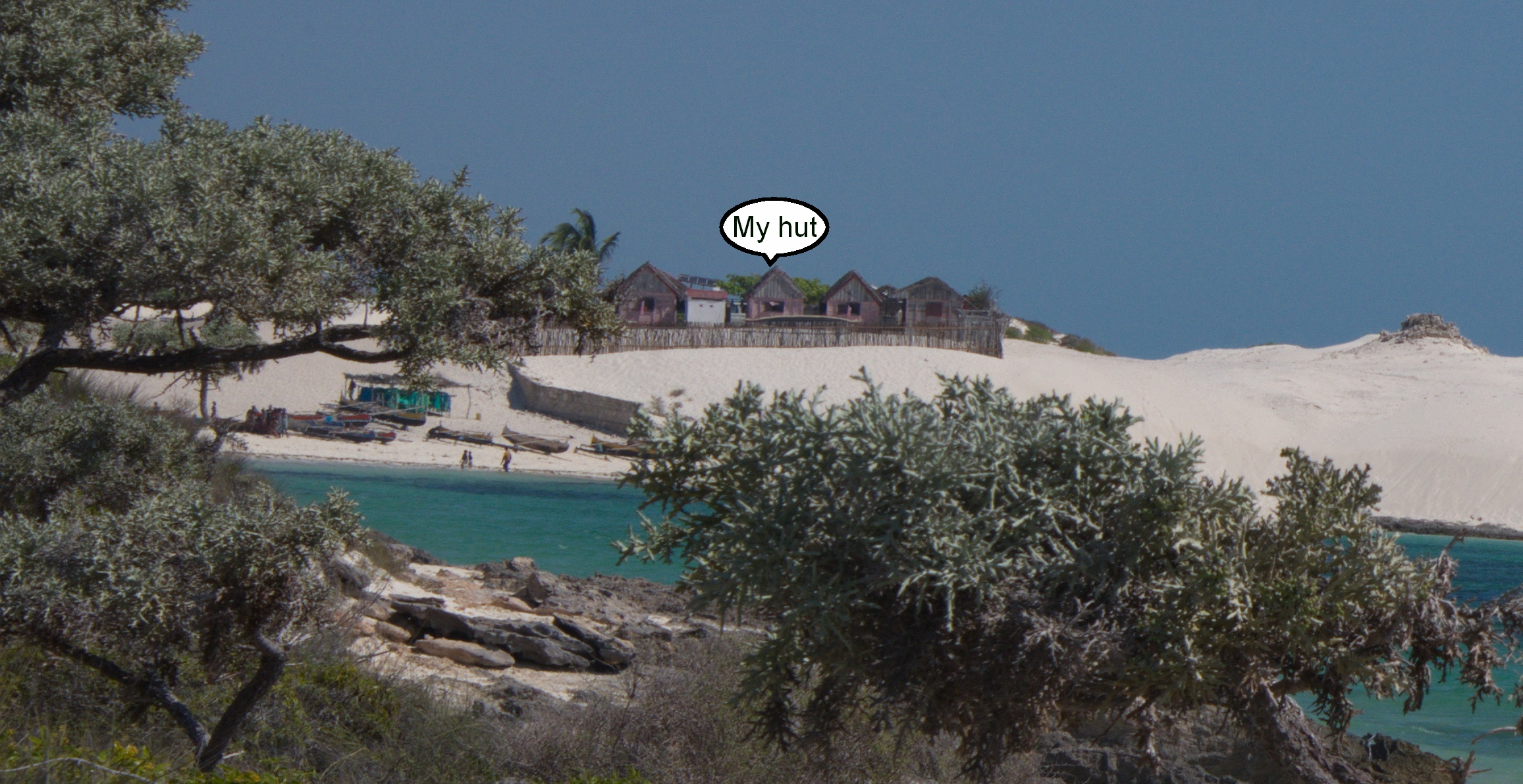
We find ourselves again in a very comfortable ‘camp’, at an eco tourism resort  at http://menabelo.com/

Again, electricity is rationed and there are no mains sockets in our suites: camera batteries and laptops can be charged centrally in the kitchen / reception area. The place is run by a French couple, roughly my age, who spent six months in Madagascar and then swap with another couple in the south of France for the rest of the year.

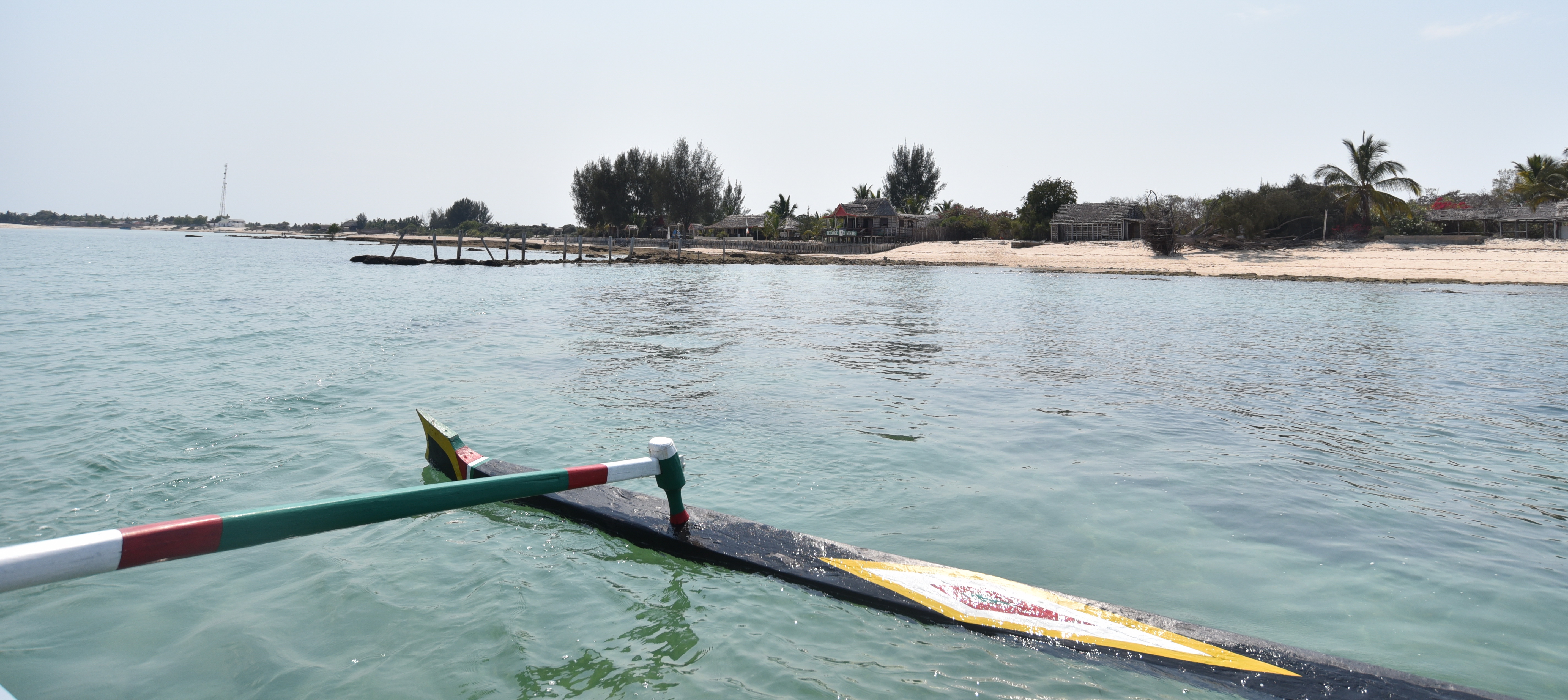
We spent an hour after breakfast watching the Malagasy sailing ships pass by until our landlady suggested taking a boat ride in a manned canoe with a miniature canoe alongside as a balancing aid.

Our camp, from our canoe

Our camp, from our canoe

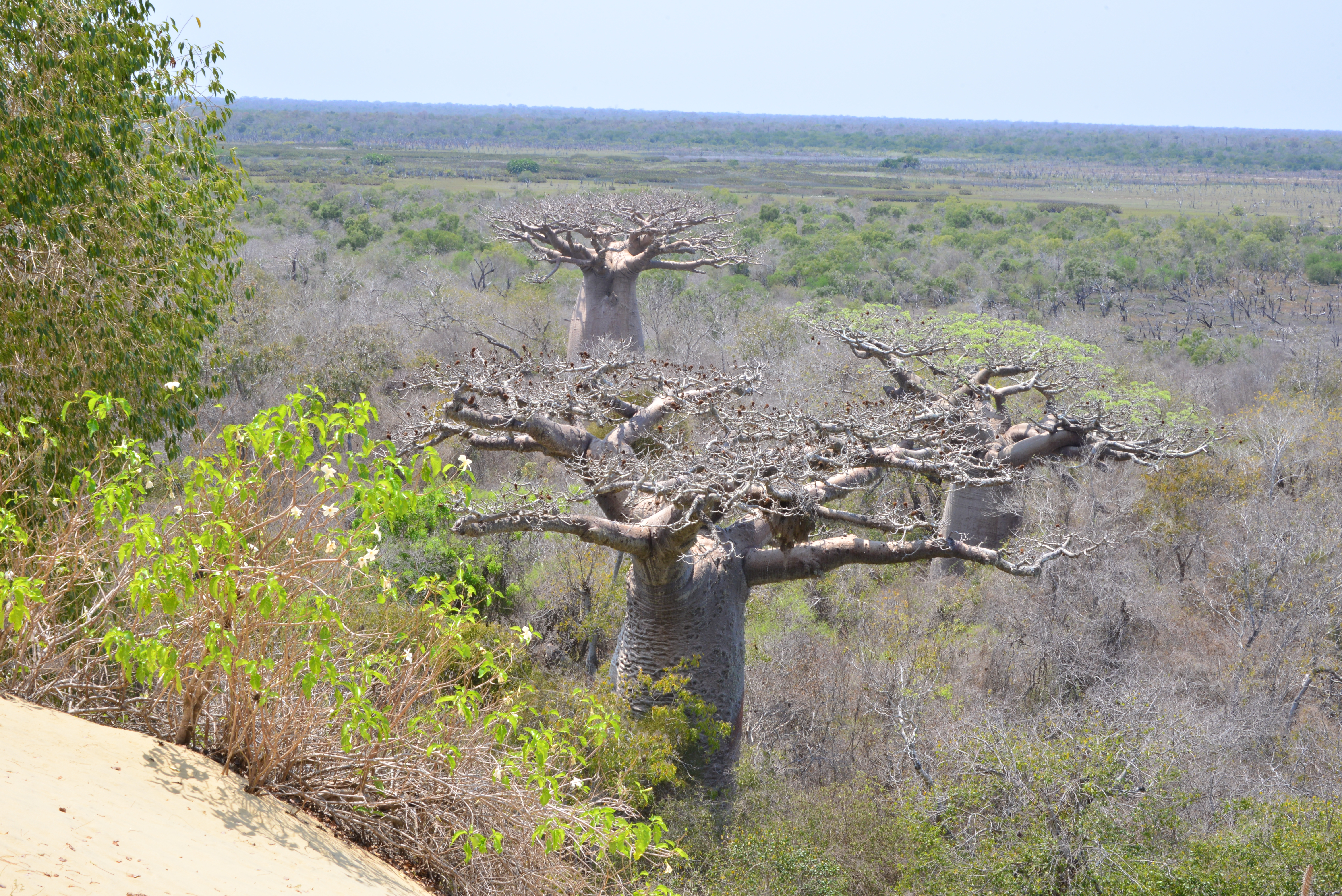
They recommended following the coast until the sand dunes got higher. Climbing to the top offered a nice view over the dry forest featuring a number of Baobabs.

The first hurdle to cross was how to get into the boat. I had only bought to heavy duty trainers that I stood up in and having witnessed my father-in-law loose both legs through diabetes, I was not about to risk picking up a cut or small wound by walking barefoot onto the rocky beach into the water. The water was like bathwater – please add a bit of cold water!

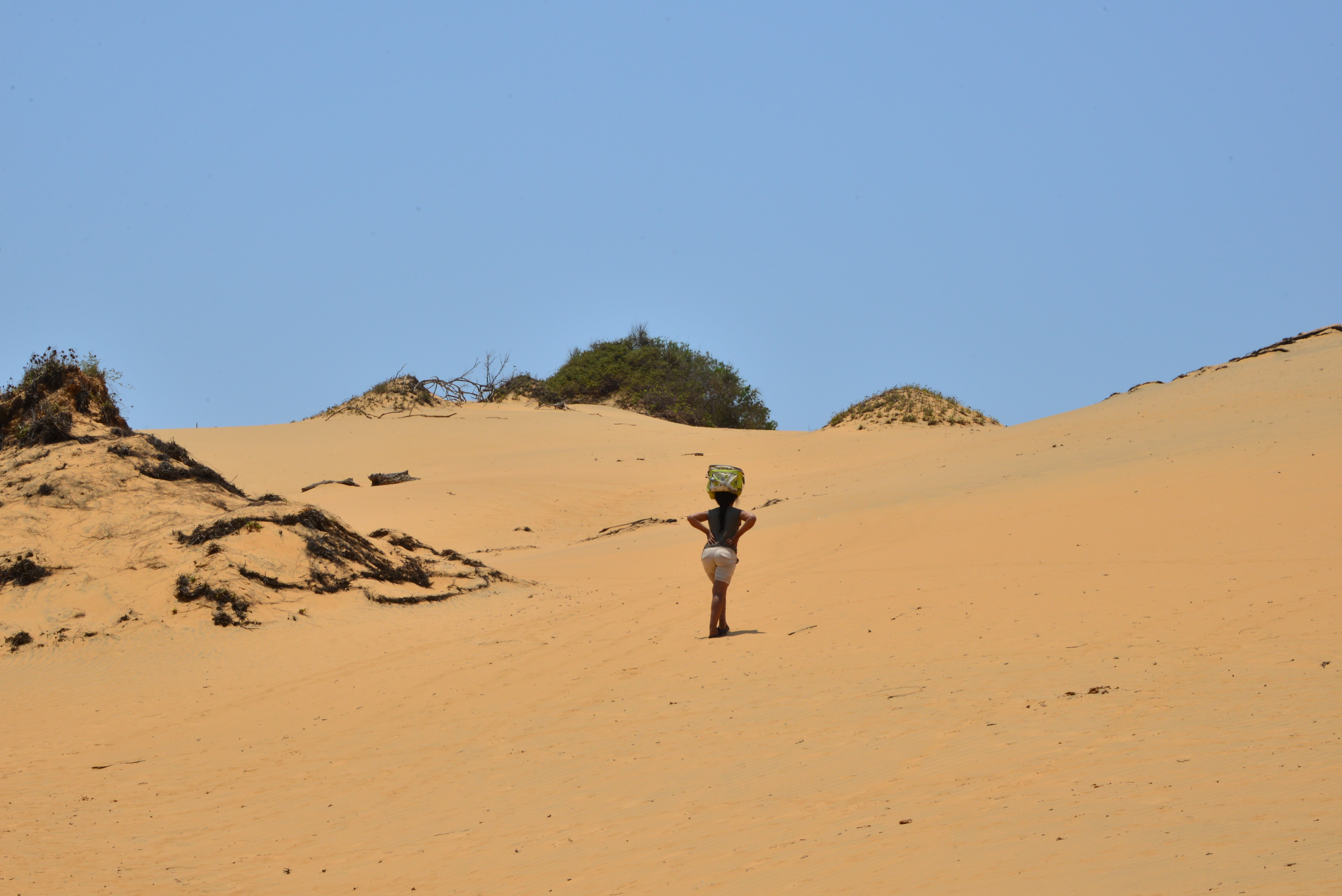
After just over an hour the c 100 m high sand dunes came into view and we landed. Those who have climbed sand dunes before will know that it’s two steps up before sliding one step down. Not easy in the boiling heat, particularly when Nadia marches by, carrying a big bag with our picnic lunch and water bottles on her head! Lower centre of gravity I guess – it doesn’t always pay to be tall!

Baobab forest at the foot of the sand dune

Baobab forest at the foot of the sand dune


Nadia walked straight past me as I struugled up the sand dune!

Nadia walked straight past me as I struggled up the sand dune!

I don’t remember too much about today, so it must have been a driving day, after a somewhat late start. Today’s images don’t help very much. So I’ll explain the car conditions. As I have mentioned earlier we are in Christophe’s Land Rover Revenger, bought in 2010. It is ideally suited as the reliable work horse in these demanding conditions although is rather limited in its comfort features. Windows are moved up and down with a manual winder, the air-conditioning consists of driving with all windows and central logging consists of Christophe walking round the car to check that we have all remembered to push down the lock button on our doors. Luxury extras are all well and good but potentially can break down and do not help our aim to get face-to-face with the plants. Today’s drive led along soft sandy tracks through the dry forest – dense shrubbery that was difficult to penetrate in person or with our cameras.

Christope spotted some large parrots in a tree, but it was difficult to get a clear (camera) shot of them, due to the camera insisting on focussing on near invisible twigs in the way.

Parrots in the tree tops

Parrots in the tree tops – the Greater Vasa Parrot – Corocopsis vasa

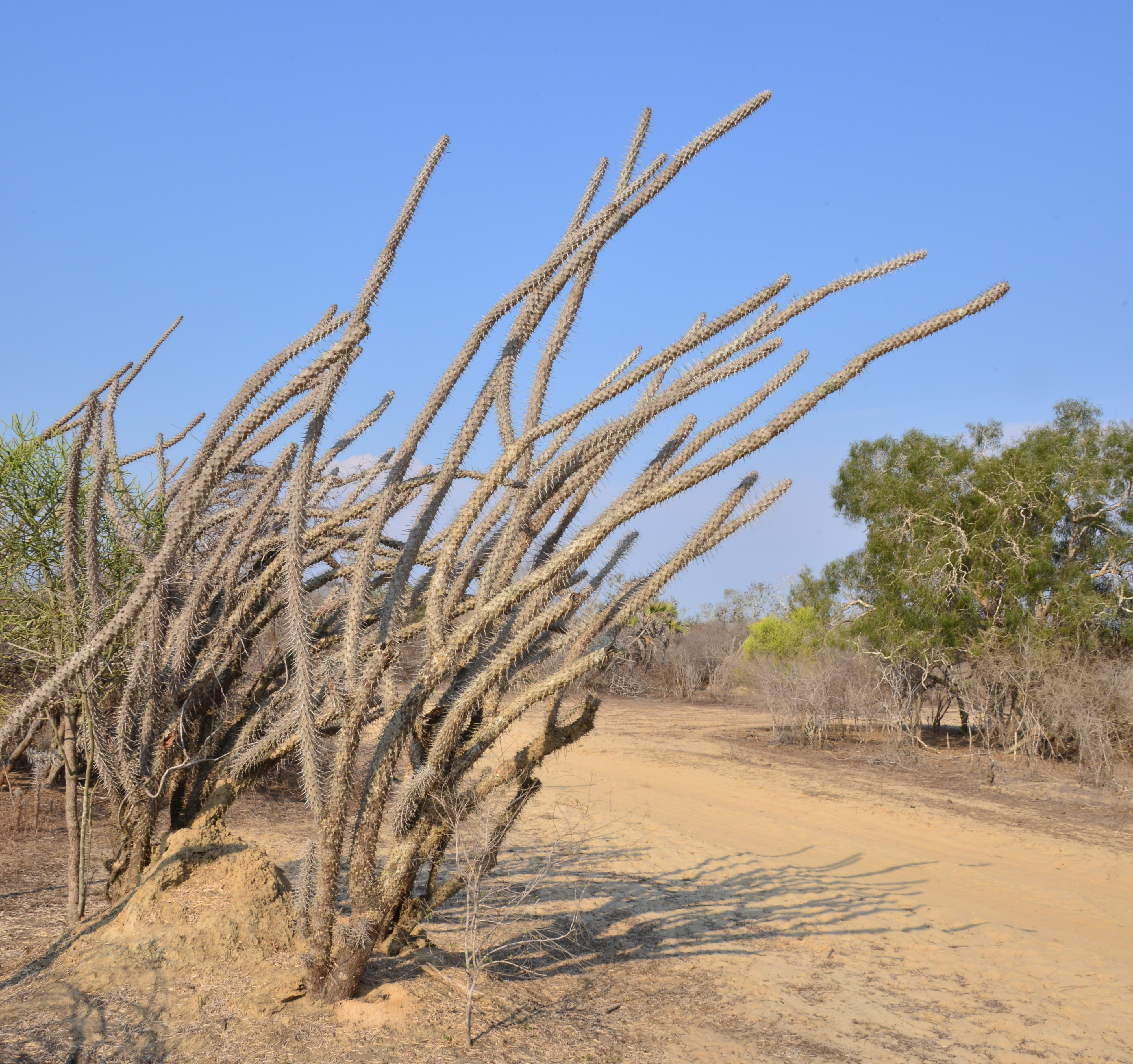
For a while it seemed as though there were cacti growing between the trees and shrubs, but a closer look revealed that these were the first Didierea madagascariensis.

Didierea madagascariensis

Didierea madagascariensis

Christophe did all the driving during the trip, although John would be more than able to drive in an emergency as he also owns a Land Rover Revenger back in the UK. Nadia made her home behind Christophe and although John and I had agreed to take turns for the front passenger seat, I found a low shelf below the dashboard rather uncomfortable as it crashed into my shins as we speeded along the sandy track. And so I volunteered for the right hand back seat position.

We also passed and photographed numerous more baobabs, but reaslly, how many do you want to see!?

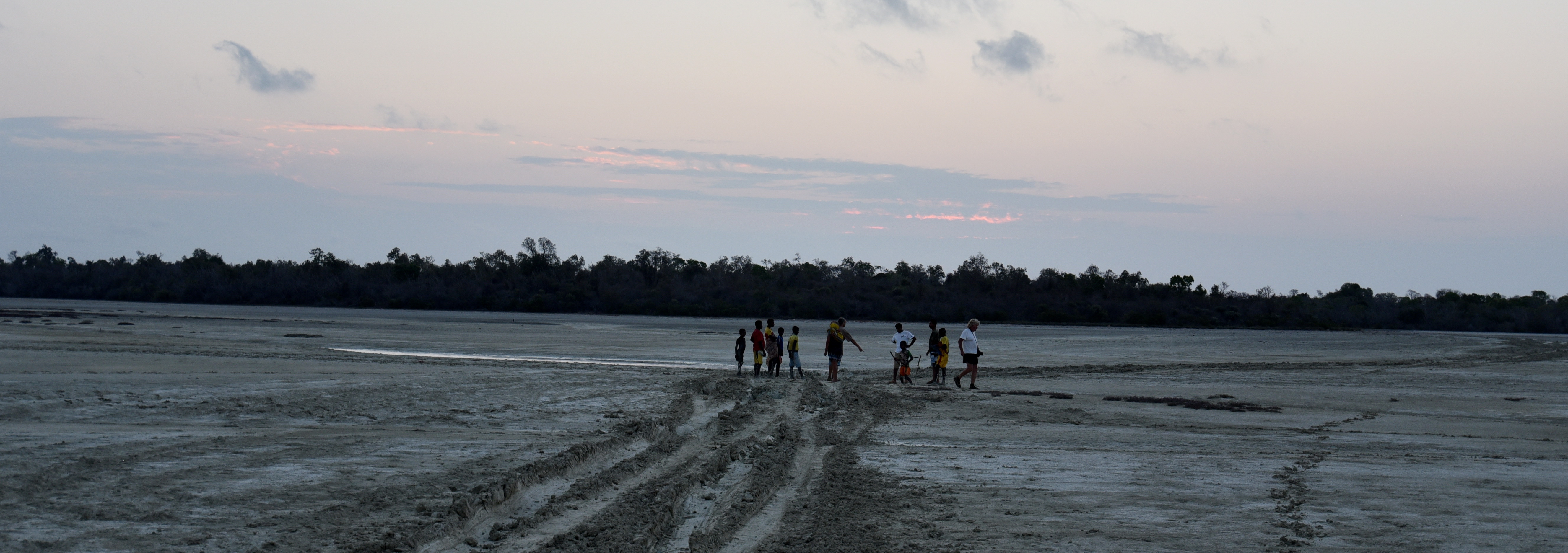
As the sun was on its way down, a signpost suggested that we were in the Kirindy Mitea Forest Reserve. We reached the edge of the forest and looked over what looked like a snow covered field. With temperatures of 30C plus?! Not likely! A salt flat? Or just white sand? Whatever the substance was, it seemed to fill Christophe with a mixture of fear and respect. He had become stuck here before and we saw a number of very capable pick ups and 4×4 SUVs including Toyota Landcruisers stuck up to their axels in the stuff. There were several tracks on to the sand. We avoided those with cars already stuck, as they were surrounded by locals offering advice and moral support. There were also number of large trucks on the track at the edge of this dry lake, hanging about like vultures, ready to pounce to charge the victims for their towing services.

Christophe and Nadine had a chat with one of the crews who advised that the track we had selected was fine. We drove on, until we reached an area where the track had been badly churned up by a previous victim. The truck with our ‘advisors’ had followed us and their leader now suggested a route that would see us through.

The sand flat.

The sand flat.

As the sun had all but set, the time for discussion was over – action was needed! Christophe had left the engine running, so no need to attempt a push start! Get her into 4×4 second gear and drive her through at a steady even pace. It seemed all so easy after we got through safely!


9#8

I forgot to mention that yesterday our car, a Land Rover Defender 2010, suffered a flat battery as we left the second ferry crossing on Wednesday. Not a huge problem, as we were on a down facing slope and it never takes more than a few minutes for a group of locals, mainly children, to crowd around us to request ‘bonbons’ (sweets) or a cadeau (present). As a result we had more volunteers than could find space on the rear bumper to give us a push. However, it was a little surprising that the battery had become flat, given all the miles that we had been driving. A replacement battery was obtained at Hotel Orchidee that worked fine yesterday, but required another team of pushers this morning. Clearly there was a different problem – related to the charging of the battery, rather than its ability to hold its charge.

It is remarkable how religious a group of non religion practising people are, when faced in the middle of nowhere with a car that has developed a problem. Prayers were quietly said in the car, parked down hill when possible.

We had to cross the two ferries again on the way back to Morondova and while a party of pushers had been alerted to our predicament, a loud cheer went up each time as the car responded to the turn of the ignition key.

The second ferry

The second ferry, with a potential team of pushers, just in case …

In Morondova, we arrived safely at the, again, very comfortable Hotel Chez Maggie where wifi was available if the town’s electricity was on, which happened at infrequent intervals. Even then, this was far removed from broadband, able to download a few emails, but certainly not images or Diary postings.

We enjoyed a nice relaxed breakfast at the very comfortable Hotel Orchidee du Bemahaha  at the entrance to the village of Bekopaka before today’s outing to the Tsingy de Bemaraha National Park.

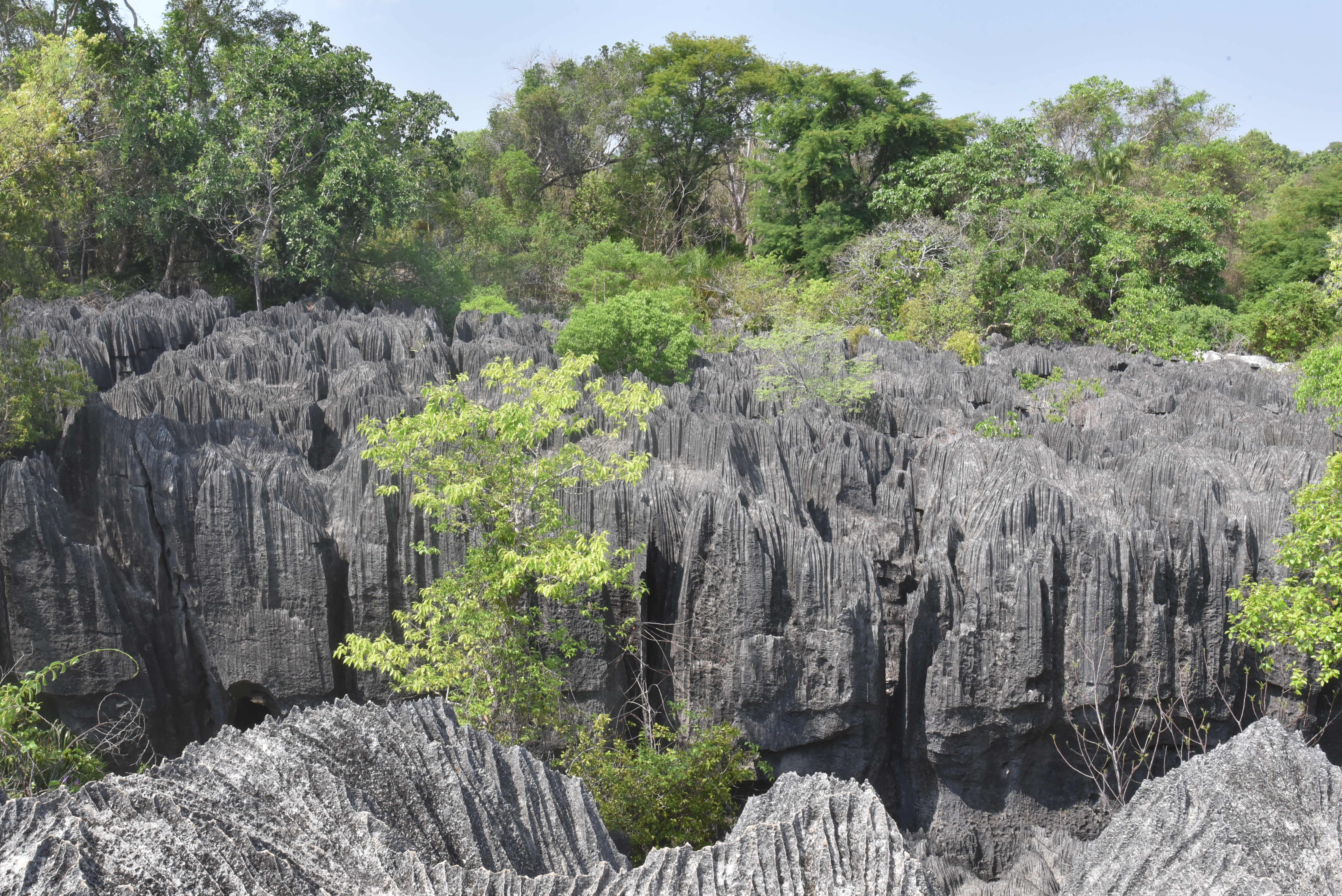
This morning, John and I were taken on a guided tour of the ‘easy’ circuit of the Park. The Tsingy is a Malagasy term, meaning ‘where one cannot walk barefoot’ while another website suggests ‘walking on tiptoes’. It refers to eroded limestone rock formations where over millions of years, water has eroded the rocks creating a desolate landscape of razor edged hills. I have seen similar landscapes in Brazil where again we navigated the rocks with great respect and still picked up a few cuts.

I’ll let the pictures do the talking:

The Tsingy National Park

Landscape in the Tsingy National Park

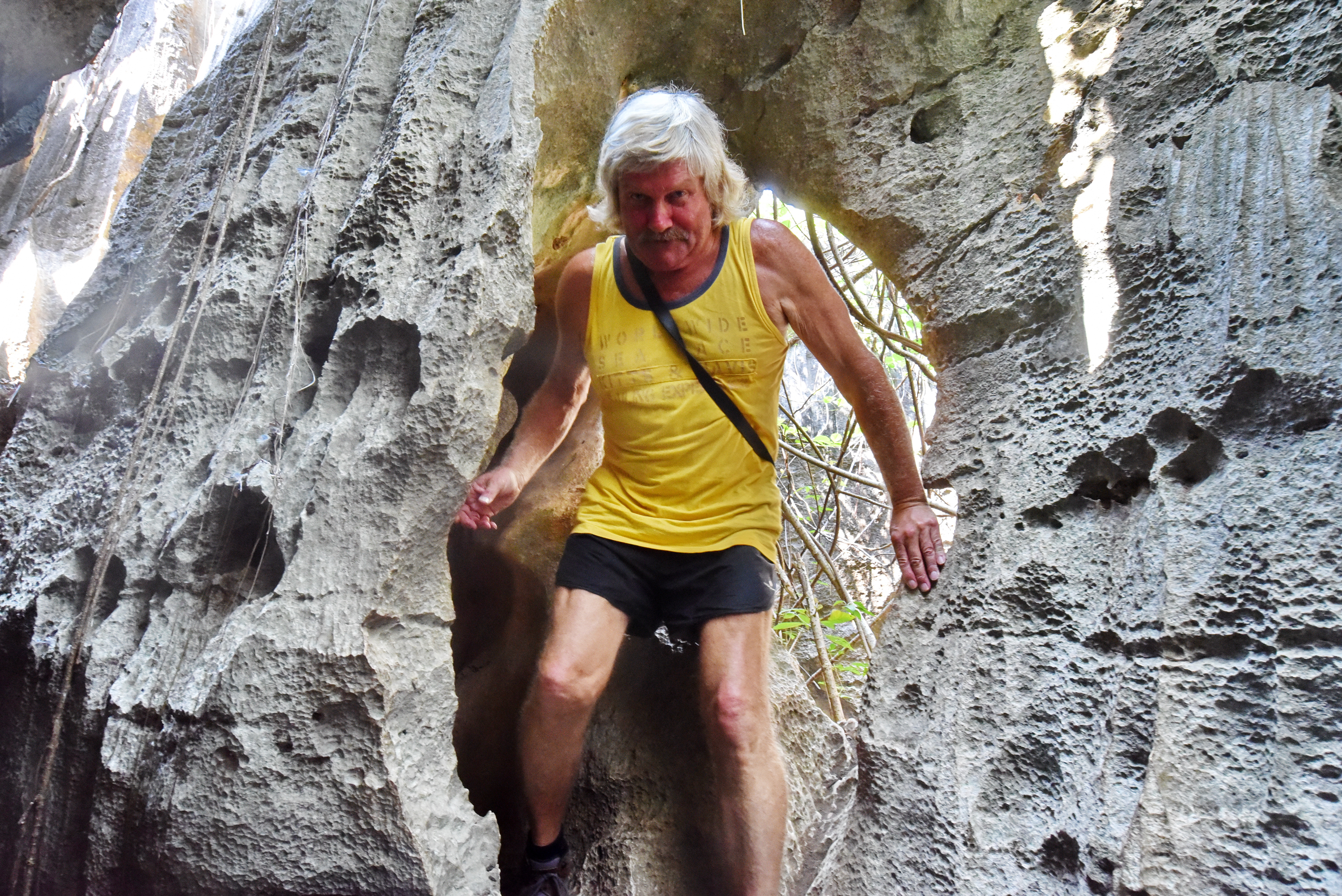
To make this terrain accessible for humans, an extensive system of wooden walk ways with hand rails has been built that zigzag through canyons where the exposed roots of the local strangler fig trees lead towards daylight and where occasionally our heads pop above to tops of the rocks.

John emerges from the rocky landscape

John emerges from the rocky landscape

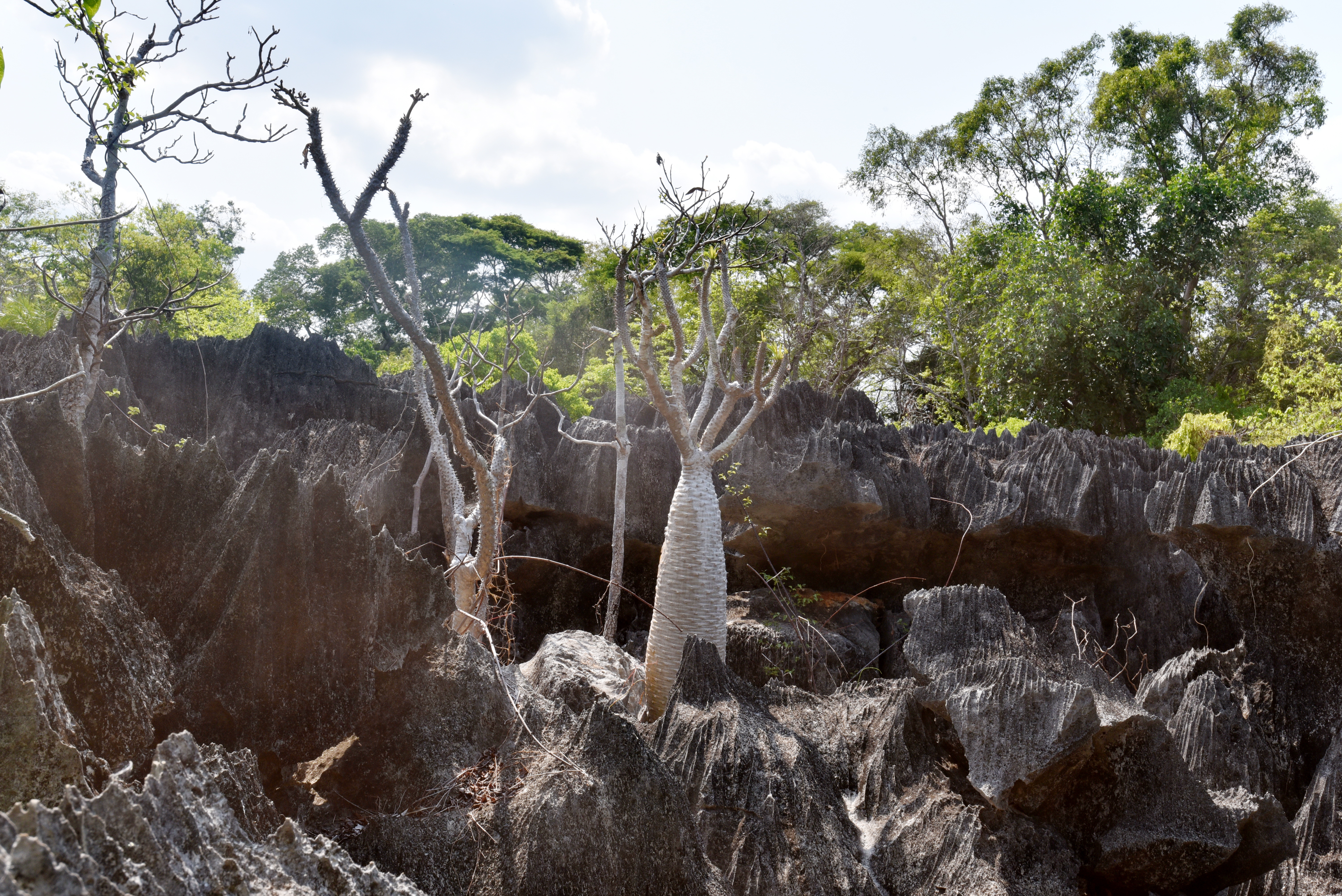
If I understood our guide correctly, the Pachypodium here is Pachypodium menabeum, not a name that I am familiar with. A search on the internet suggests that this name, dating back to 1934, was declared invalid but has recently been resurrected.

Pachypodium menabeum

Pachypodium menabeum

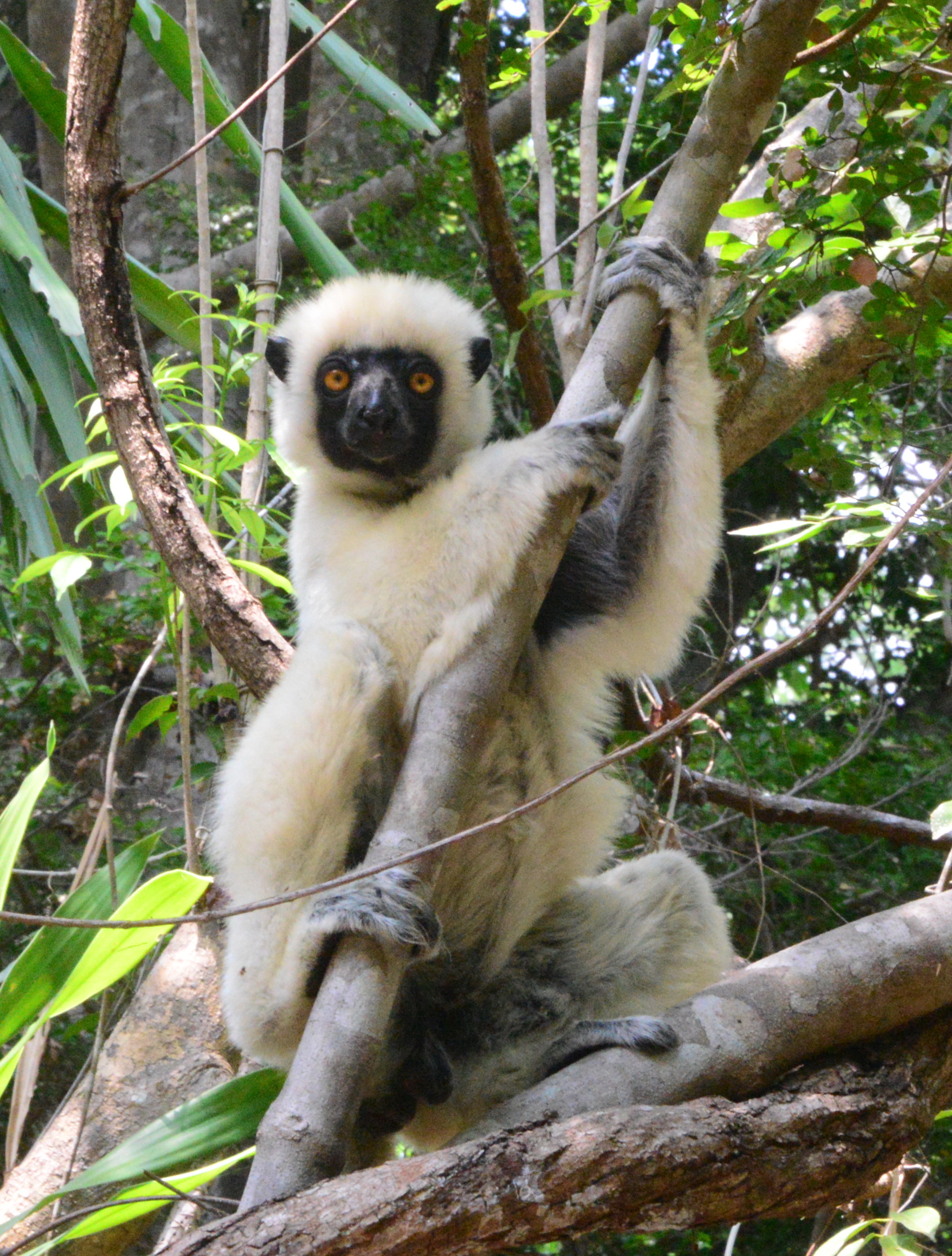
The walk was made no easier by the high temperatures (around 35 C) combined with high humidity and by lugging heavy cameras and supplies of water with us. Our guide took pitty on me and carried the bottles and the heaviest of my camera+lens. As we were nearing the end of our walk, our guide became excited as he had spotted a family group of lemurs along the track.

Lemurs!

Lemurs! Verreaux’s sifaka

I enjoyed a rest at Hotel Orchidee, catching up with emails, when the router was on and organising the images taken to date. Call it ‘Trip Admin’ 🙂

And John? He went back for another guided tour, in a canoe, up the river, to inspect a cave.


Still very satisfied with yesterday’s afternoon at the Avenue de Baobabs with the chameleon as a support extra, I was pleasantly surprised when I started to recognise that wer were passing places that we had seen yesterday! Sure enough, we were driving back to the Avenue de Baobabs and enjoyed the opportunity to take some more images under quite different light conditions and with fewer tourists in the pictures.(S3468)

The Avenue is as much a staged tourist attraction as, for example, Stonehenge on the Salisbury Plain back home. The Malagasy instinct seems to be to burn down nature with the intention to plant crops to feed the rapidly expanding population. As a result the Baobabs (Adansonia grandidieri and Adansonia za) stand as exposed soldiers on parade with little vegetation. Lots of market stalls where the locals earn their money from tourism rather than from agriculture. As we saw as we drove through the Avenue and on through a low dry forest, similar to the Caatinga forest in North Eastern Brazil, this is the usual habitat for these ancient giants, but of course it is a lot less inviting for tourists to fight their way through ‘thorns on everything’ shrubbery to get to the Baobabs.

S3468 - Natural Baobab habitat

The Baobab forest beyond the Avenue, where plants still grow in a low forest.

Deforestation in progress

Deforestation in progress

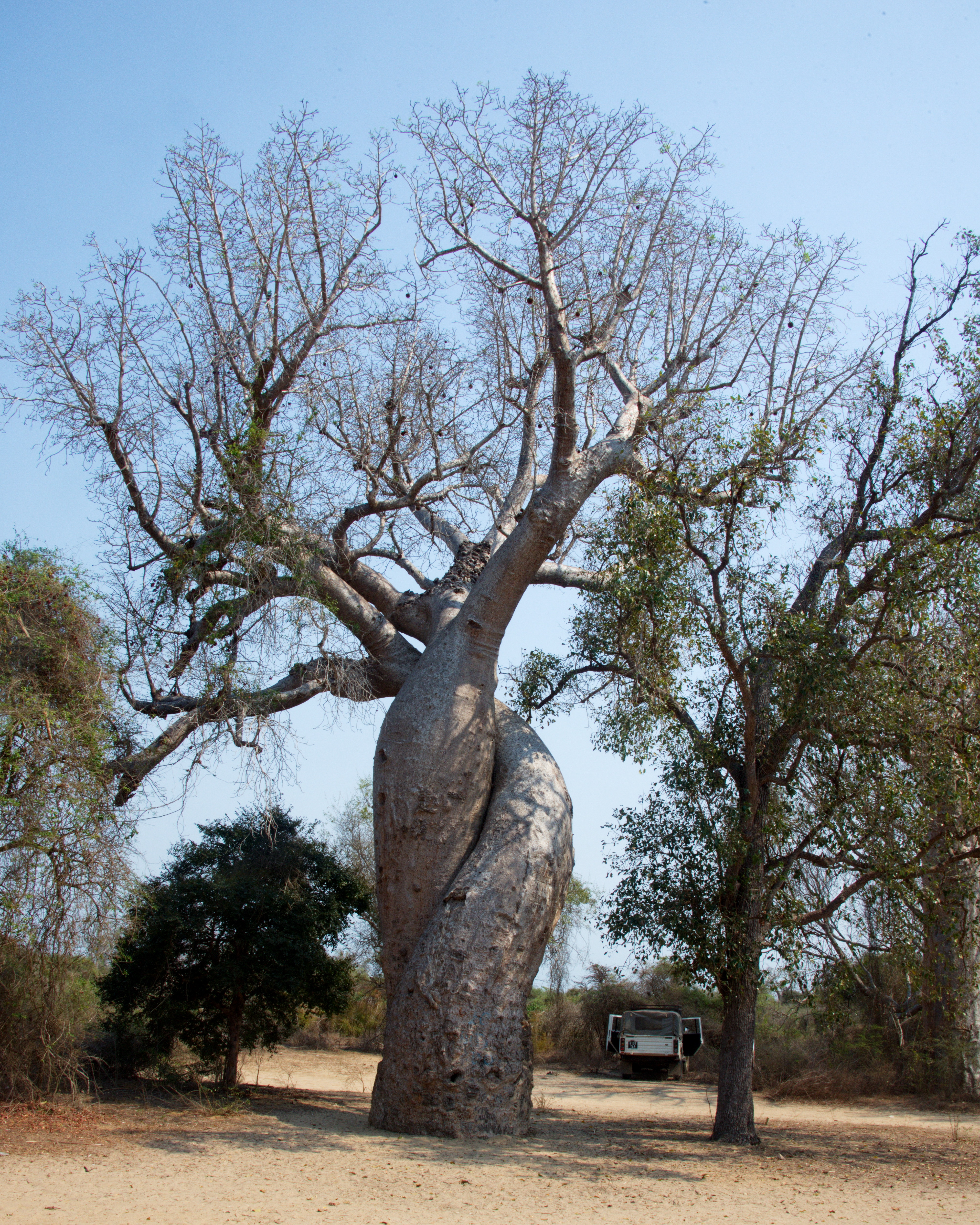
Les Amoureux

Two entwined baobabs known as Les Amoureux (Adansonia rubrostipa)


Ferry ride

First of two ferry rides to get to today’s destination, crossing the Tsiribihina river

Second ferry