Just another WordPress.com site

This posting replaces the earlier ‘filler’ message
Soon after leaving the hotel, Christophe spotted a cloud of fluffy seed, not unlike a dandelion in a light breeze. The source here were the seed horns characteristic of the Family Apocynaceae. These belonged to a Pachypodium growing on the edge of a garden, P. rutenbergianum.
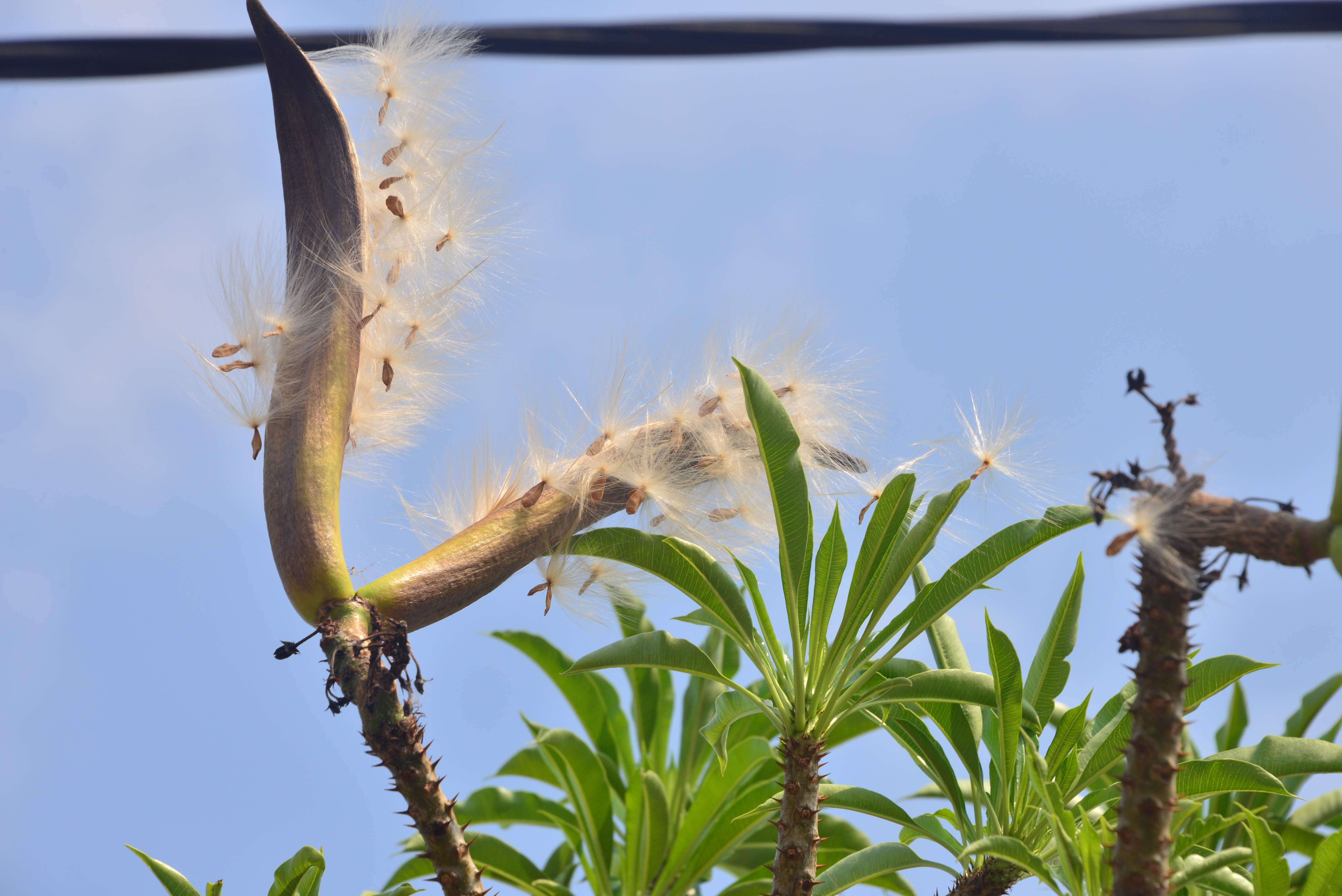
Pachypodium rutenbergianum

Pachypodium rutenbergianum fruit and seeds

We were not too fussy about where the plant grew, any Pachypodium image at this stage was fine by us, so cameras clicked.
Distances are great in Madagascar, with an area of 587,041 km2 (226,597 sq mi) it is the 46th largest country in the world – the UK with an area of 243,600 km² (94,060 sq miles) ranks 78th in the world. So again, the sun was low in the sky as we drove in and out of Morondovia and headed to the famous Avenue of the Baobabs.
Christophe explained that although the landscape here of these giants standing in open fields may be ideal for a tourist attraction, with lots of small stalls selling a rather limited range of souvenirs, mainly woodcarvings of a famous individual tree entitled The Lovers (Les Amoureux) which actually grows some 7 km away from the Avenue that we’ll see later.
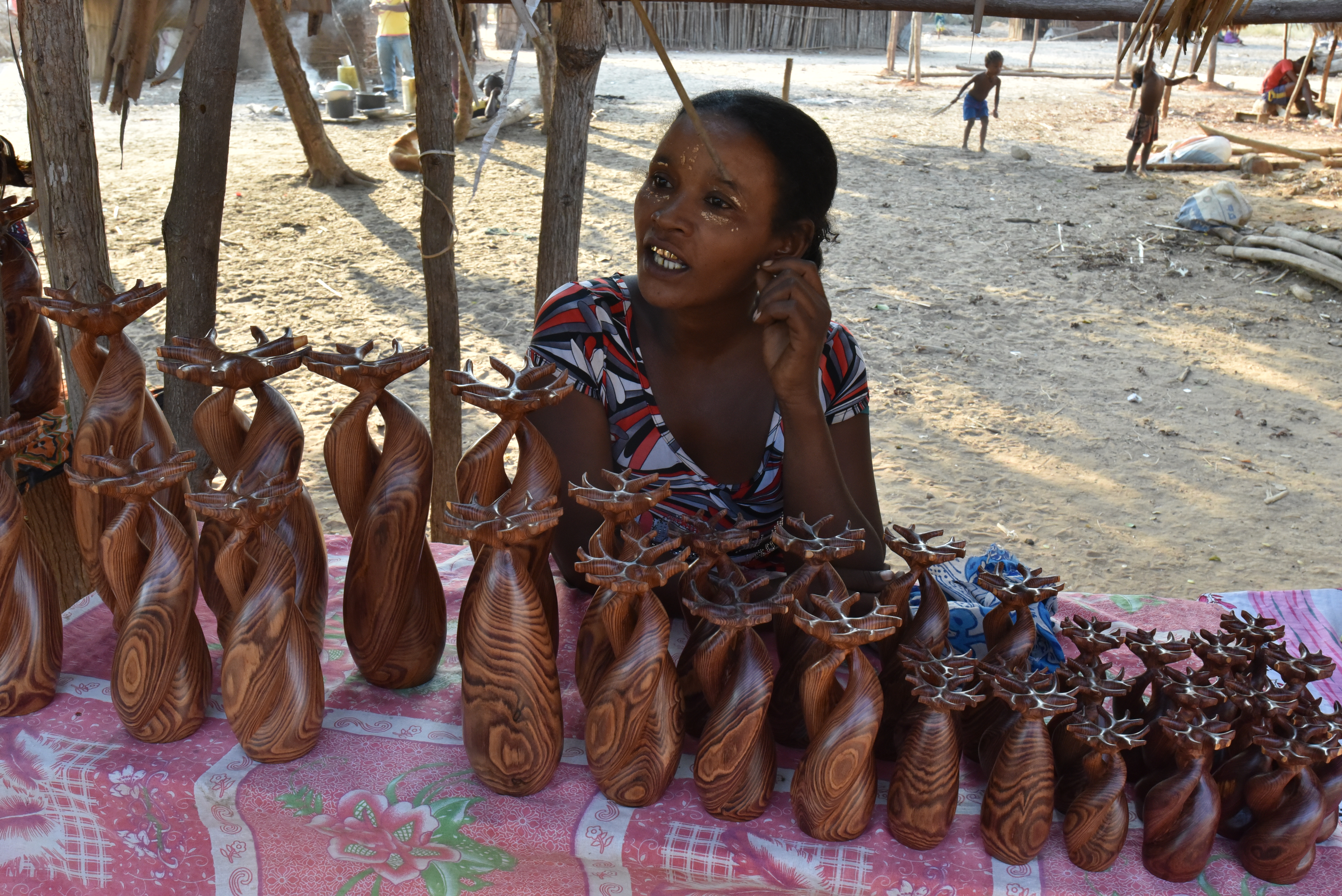
Souvenir stalls at the Avenue de Baobabs

Souvenir stalls at the Avenue de Baobabs

The natural habitat for these baobabs is the low dry forest, similar to the Caatinga of north east Brazil. The Malagasy custom, due to a rapidly increasing population that demands food, is to slash and burn the forest and use it for agricultural development. Dense clouds of smoke from often unattended burning fields and the blackened fields that are left behind are common sights in Madagascar.
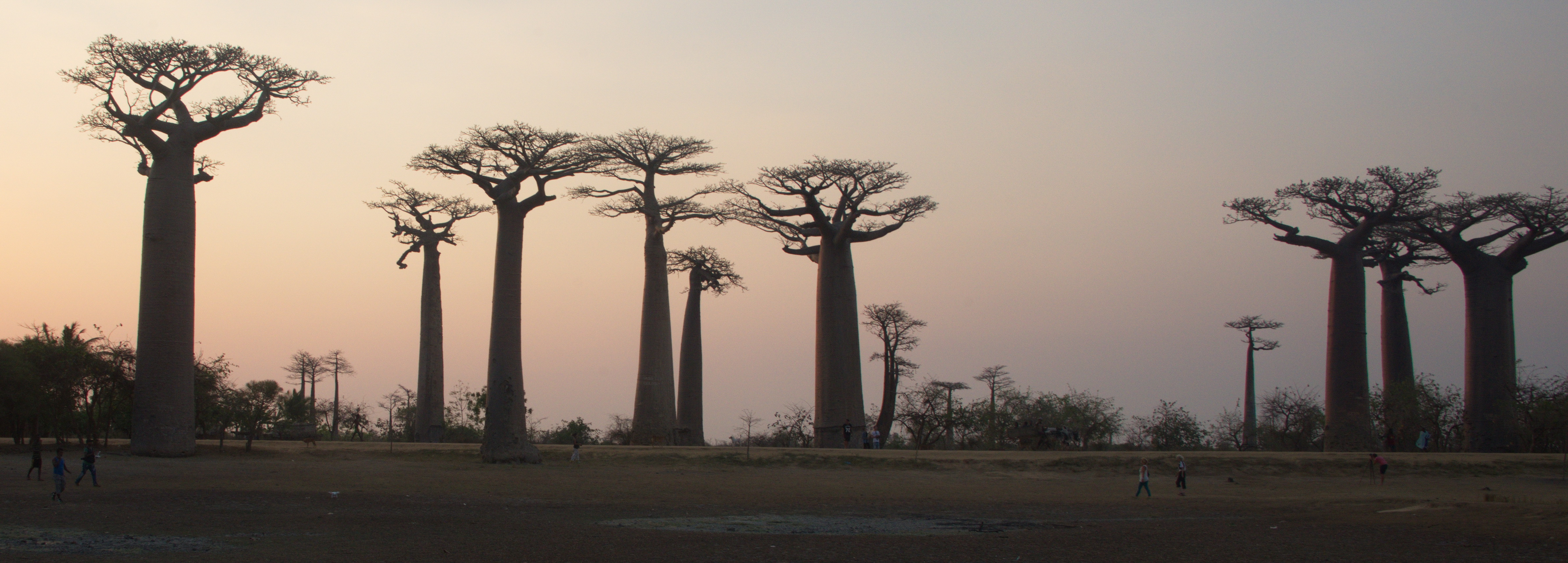
Avenue de Baobabs
Avenue de Baobabs
As we walked around taking way too many images of the 20 to 25 trees in the Avenue, I saw a little gathering of tourists and local kids. The children were charging the tourists 5,000 ariary to take pictures of ‘their’ Chameleon. But there were too many people cluttering the image. Other people were gathering to take the classic sunset image and a small herd of goats was let lose to create a rural scene to enhance our pictures. The kids with the chameleon were distracted and Christophe took pictures as I lifted the chameleon by its tail and moved it to a better position with the baobabs providing the back drop. The chameleon had different ideas and kept moving to a less favourable position. I took a few shots and then the kids came back, wanting money. ‘You snooze, you lose’ was my contribution to their education.
image by Christophe Quénel.
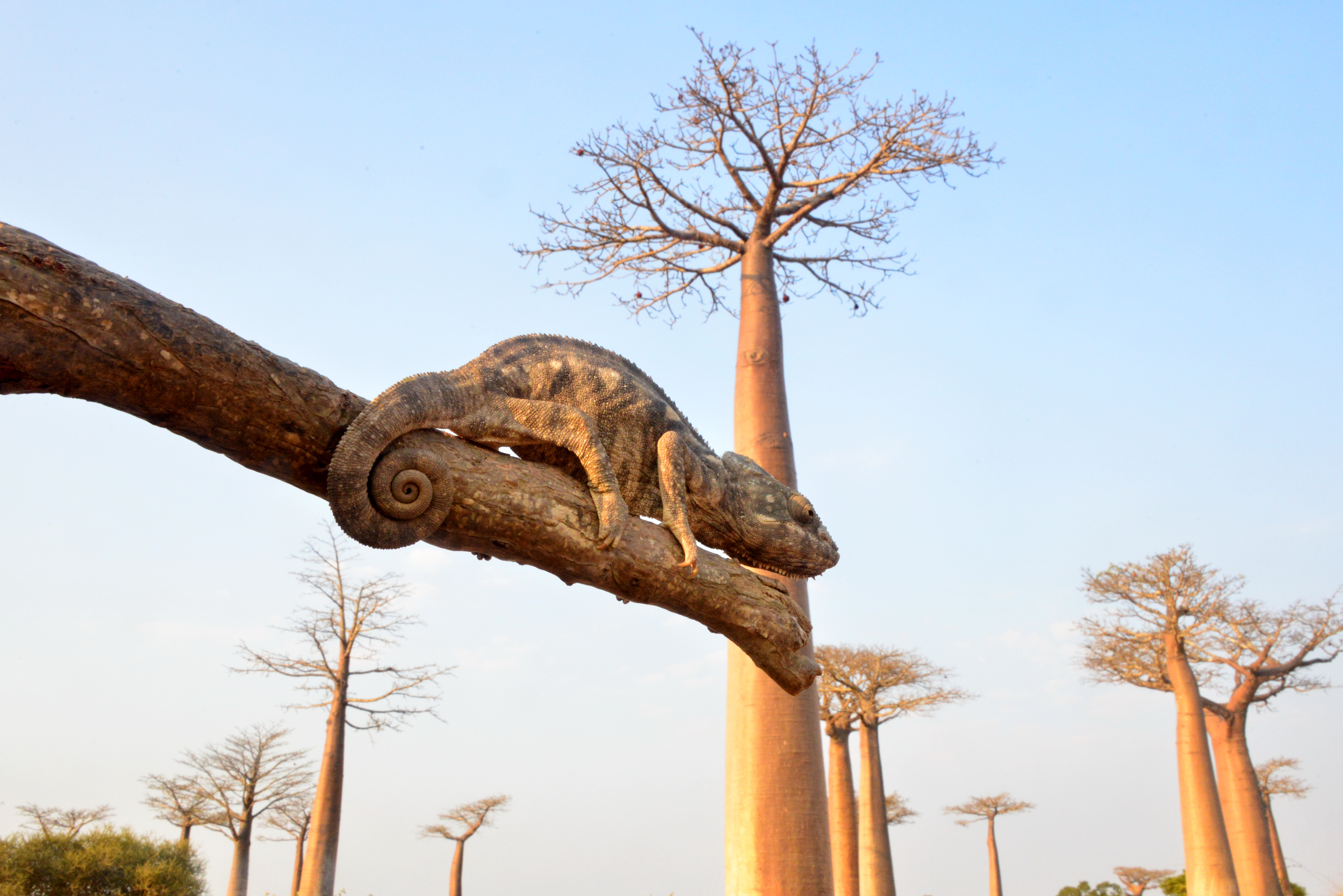
image by Christophe Quénel.

Chammy the Chameleon
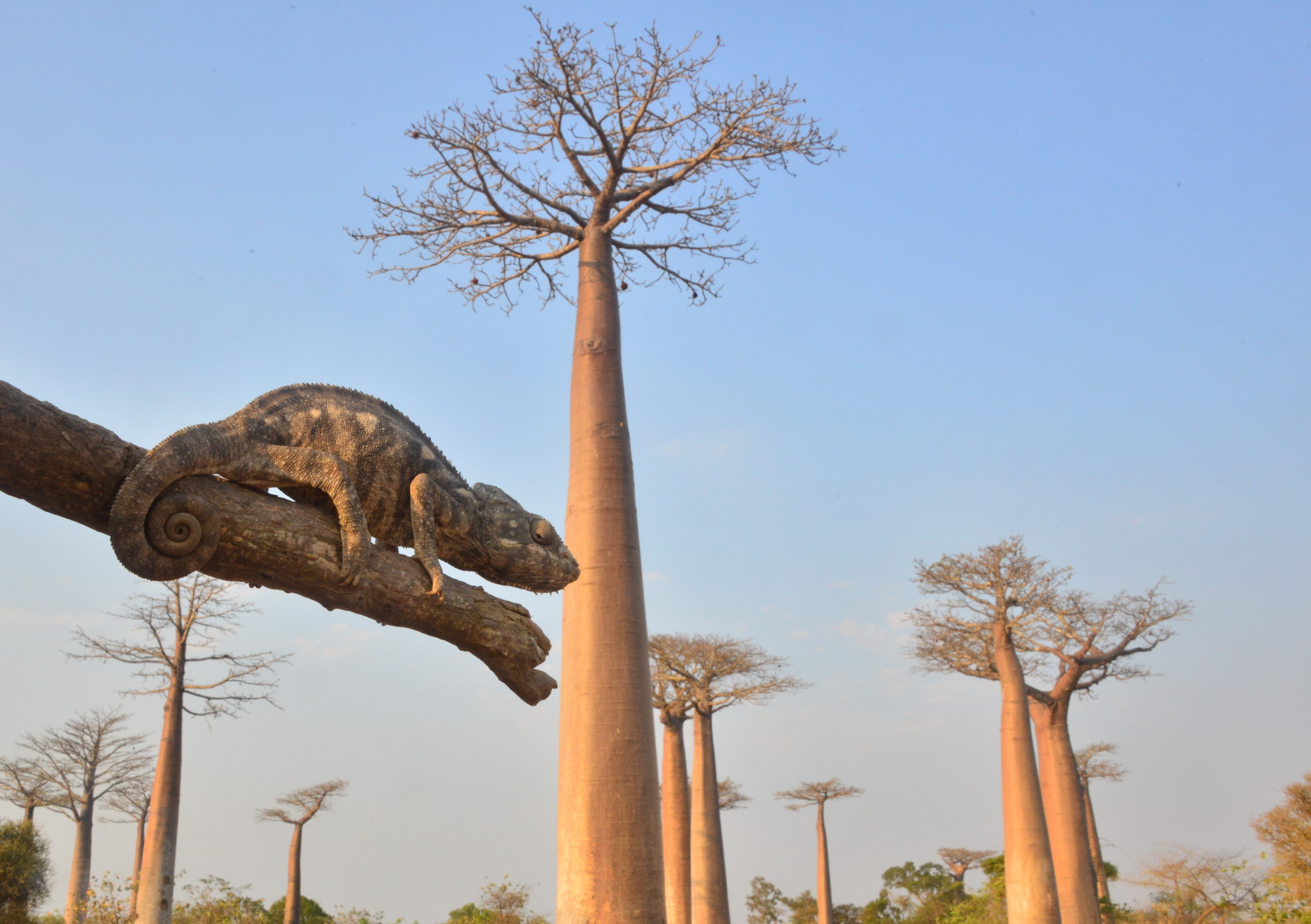
Chammy the Chameleon

Today we reached the famous Avenue de Baobabs at sunset.

This was one of my better shots after I found a friend to pose

Chameleon in Av. de Beobap

Chameleon in Av. de Beobab


Christophe took us for a brief sightseeing tour of Antsirabe, the third largest city in Madagascar and seemingly the capital of ‘pousse pousse’, the French term for rickshaws that here come in three forms: the motorised luxury version, built around a scooter, the one-man power version, built around a bicycle and the version pulled by a young lad, often barefoot, that particularly in heavy traffic seem to be the most manoeuvrable. Our tour took us past the old station dating back to the old colonial days. It is the capital of the cooler central region and was founded by Norwegian missionaries.

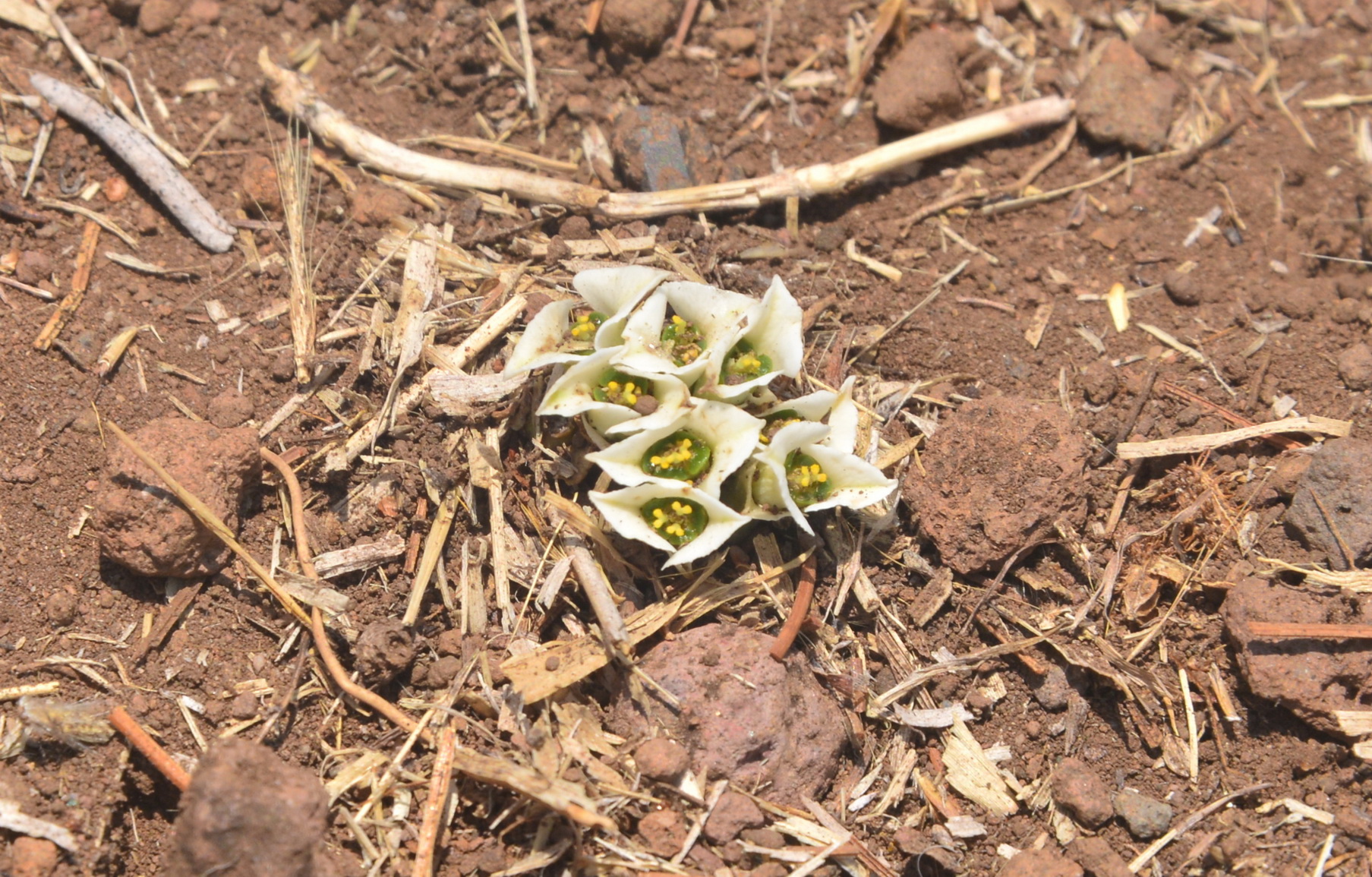
We then headed into the country, past a non-active volcanic crater where a quarry provides Christophe’s pumice for his plant collection back home. Lots of agriculture going on here with rice paddies being prepared for the coming rainy seasons. We arrived at another non-active volcanic crater and were immediately surrounded by kids offering to sell us local gem stones and fossils. The crater was filled with water (Lac Tritriva) and we had to pay a small entrance fee and pay a local guide who told us that the lake was 300 m x 100 m with a depth of 140 m. It is connected to lakes in other calderas of near-by volcanoes. The guide offered to take us on a guided walk through the (imported) pine forest around the lake, but we were interested in the geophyte plants that grow here, Euphorbia primulifolia. These plants are very difficult to find when not in leaf or flower, but our luck was in as Christophe pointed at the flowers all around us.

Euphorbia primulafolia,

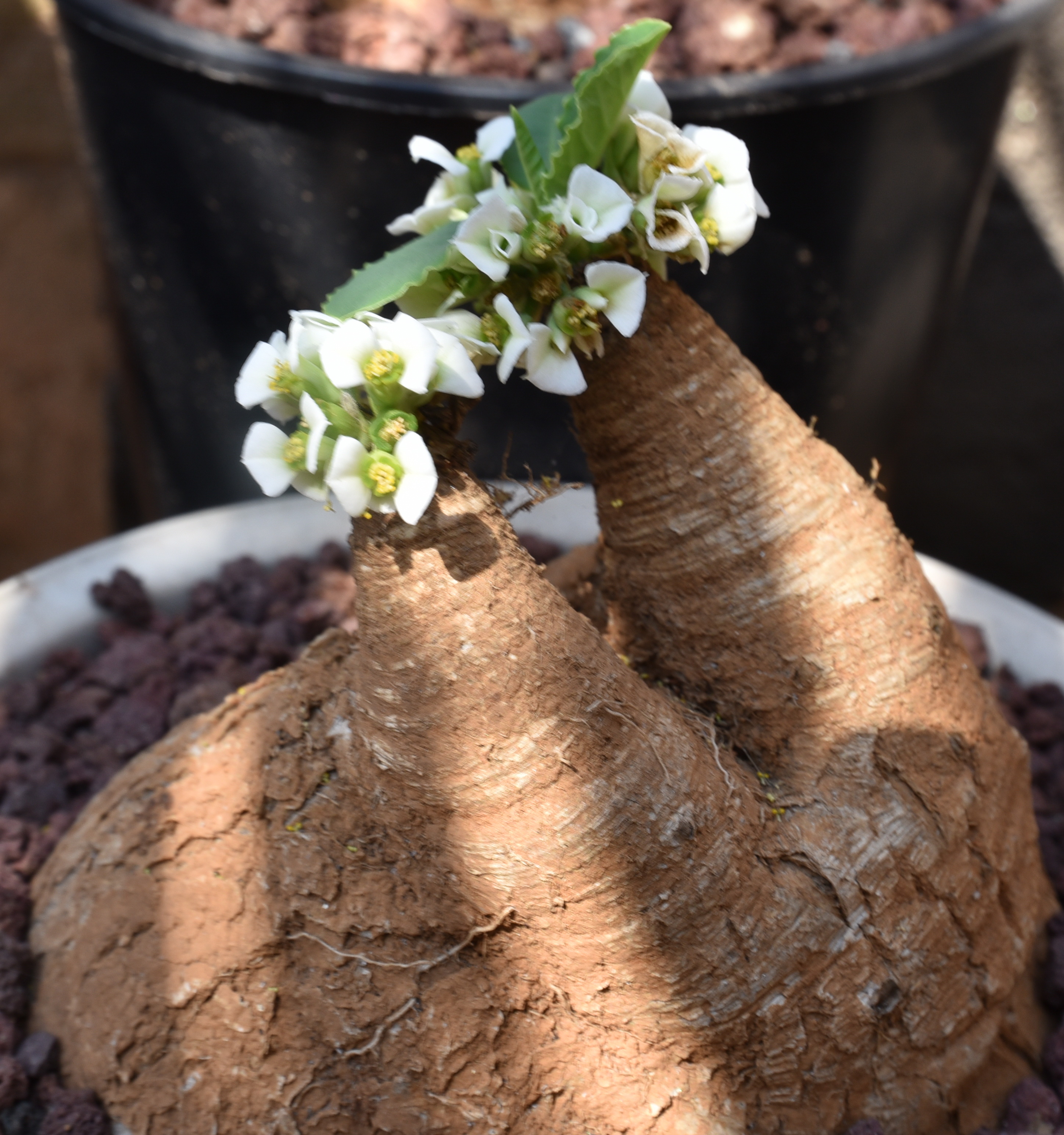
Euphorbia primulifolia, in cultivation, growing with their tuberous root exposed.

Euphorbia primulifolia

Euphorbia primulifolia in habitat, with the tuber buried.

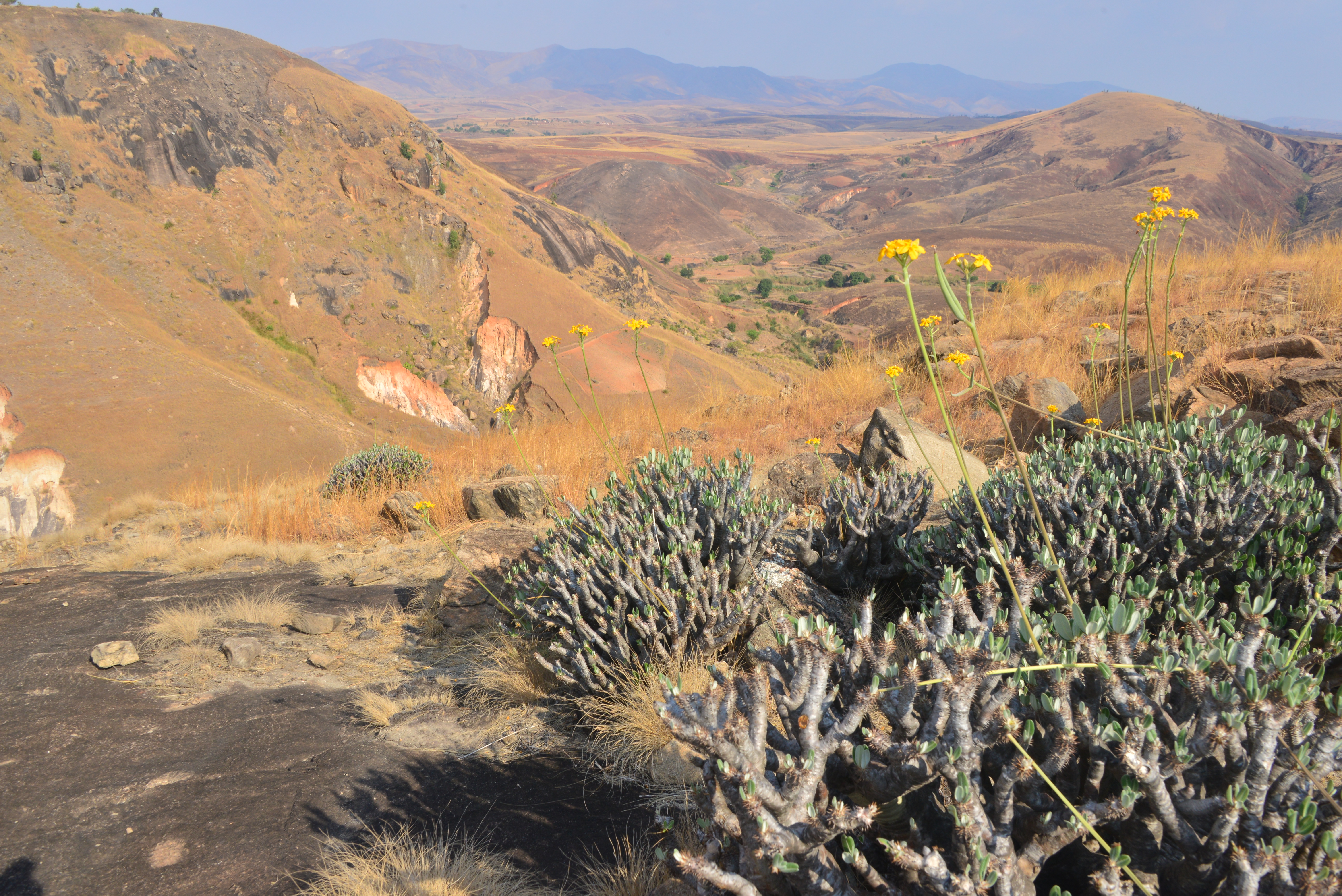
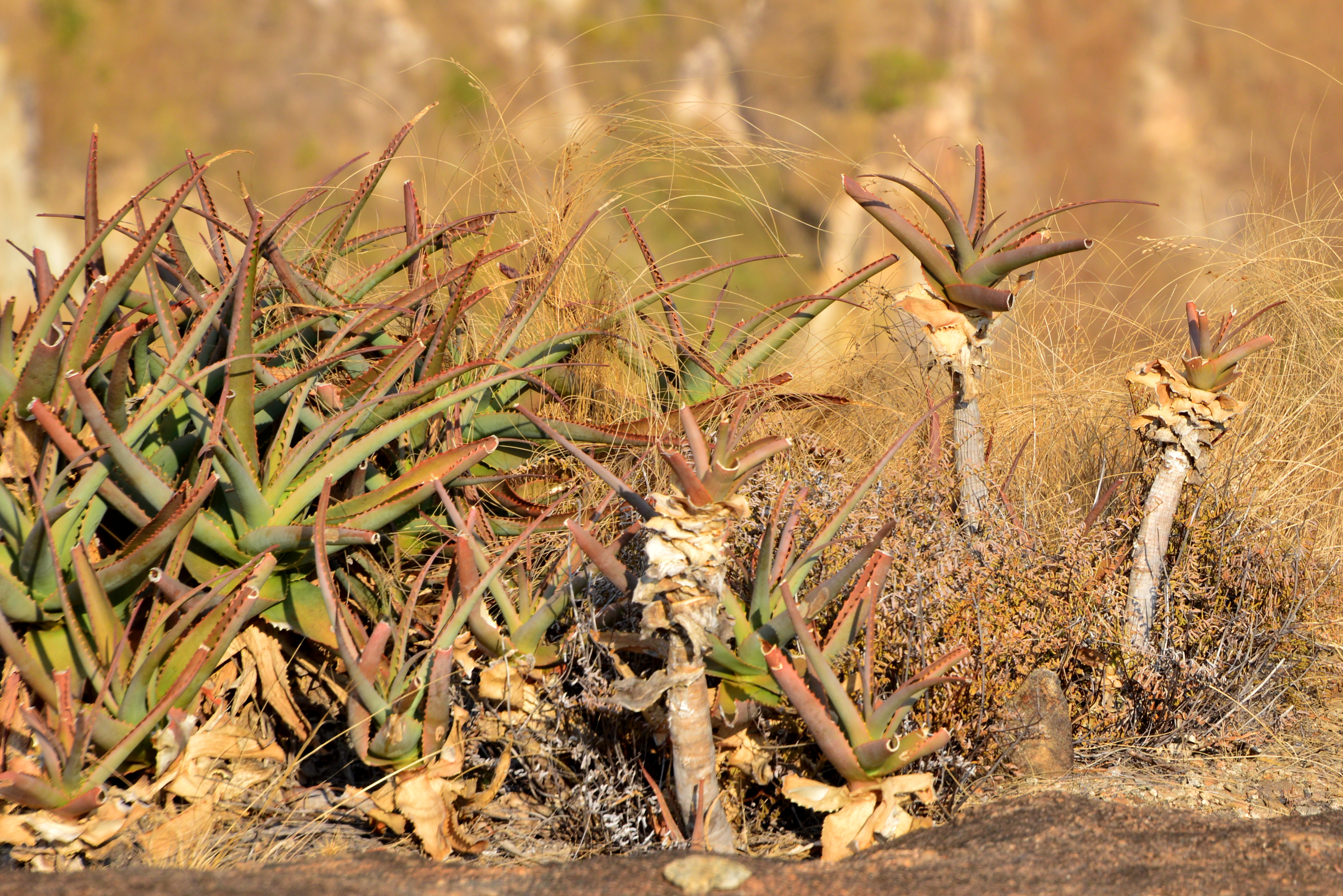
Our journey continued and as the low sun was beginning to colour the scenery a reddish colour we arrived at Mount Mandato, home of Aloe mambotoensis but also an opportunity to take a closer look at Pachypodium densiflorum that we had seen yesterday from a distance. Christophe was sad to notice a decline in the plants since his last visit.

Pachypodium densiflorum

Pachypodium densiflorum

Aloe mambotensis

Aloe mambotensis

After my failure yesterday to climb a reasonably low hill, today’s ‘Mountain’ Mt. Itiby looked quite intimidating as we parked the car.

Again, we’re pushed for time as I write this, so for now I’ll stick to the list of plants that I photographed and the fact that my pride is restored to some extend, although I am still the slowest thing on the road! The ‘invisible hand’ (beta blockers, to protect my heart) won’t allow me to build up to the speed of the others and the statin tablets to help the control of chloresterol have taken their toll on my muscles – dose halved at my last review shortly before take off. But I got there!

So, in alphabetical order we saw:

Aloe capitata var quartziticola
Aloe laeta
Bulbophyllum sp. – a small Orchids
Kalanchoe integrifolia – ranging from small plantlets to shrubs in size
Kalanchoe synsepala the “Walking Kalanchoe.”
Pachypodium brevicaule – bare, in leaf, in bud, in flower and in fruit – the full story!
Pachypodium densiflorum high on a rock, in flower

Pachypodium brevicaule on Mt Itiby

Pachypodium brevicaule on Mt Itiby

For me, the Pachapodium were the highlight of the day. As soon as I had photographed my first one, I was ready to go back to the car – but actually the break for photos helped me to recover a bit. The Pachypodium‘s bark is so smooth, it just demands to be stroked and there was lots of opprtunity to do so. But not for P. densiflorum that, here, only grew high on a large rock, out of stroking range, except for Willy, our local guide who was a former student of Christophe, who took off his sandals (Brian please note!) as an indication that there was some serious climbing for him to do, to bring down some of the flowers to allow us to see the one of the differences between P. brevicaule and P. densiflorum. From a distance, P. densiflorum forms short but clearly visible branches, as it had done in my collection in the UK before it rotted.

Great day!

After a good night’s sleep the world looked wonderful! The sun was shining and we were torn between the breakfast that Nadia had prepared and the plants out on parade in the garden.
Breakfast won, but was followed by the garden tour – there were even cacti bought in France and legally imported into Madagascar. Copiapoa humilis and some Ferocactus that had suffered a brief spell of scorch. It only takes a few minutes to do the damage that  will stay with the plant for a very long time. Christophe pointed out our first Chameleon – much nicer to photograph than lizards as they move nice and slowly.
It did not take long to pack the car and be on our way. The first hour or so was through the sprawling suburbs of Antananarivo, rather like an ant’s nest with pedestrians visiting the local markets and food shops – very colourful. and chaotic. We then hit RN7, the main road out of the capital. It reminded me a bit of MEX 1 in Baja, but with rice paddies along the road. Lots of small settlements. Then we arrived at our first plant location at Site Ecoturistique  Iharanandriana.  We needed to pay a small fee to the local community, strapped on the cameras and off we went. The height of the hill was not too intimidating but the steepness of the eroded track was. Not used to such a burst of exercise, I was soon out of breath and my thighs ached in protest.
John and Christophe waited patiently for me but it soon became clear that the best solution was for me to sit this one out.
I missed out on  an  Aloe and two Kalanchoe, but the site is well documented on the internet, so I did not miss too much.
The next stop was for lunch at  Restaurant Au Coin de Foeie Gras where we had portions of the pate after which the restaurant was named, washed down with a very sweet white wine.
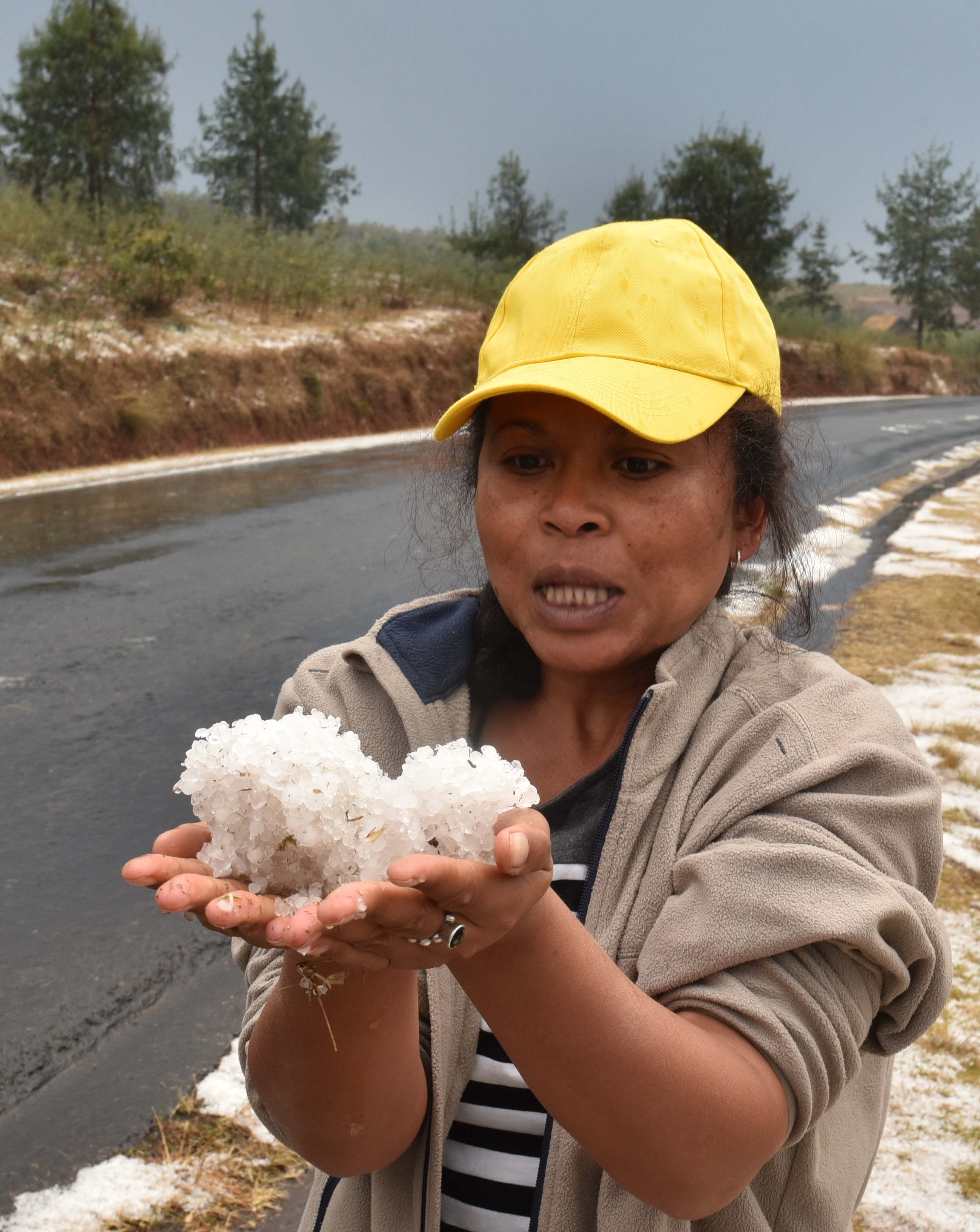
Back on the road and the skies turned black for a good old  rainstorm. More of a surprise was when the rain turned to hail and briefly provided a photo opportunity for some very different and unexpected weather conditions!
Nadia with a handful of hailstones

Nadia with a handful of hailstones

The high temperatures ensured that soon the ice had melted and we continued safely to our hotel where, as for the rest of the trip, John and I each had a private suite with mosquito nets provided where necessary.

In exactly one month time I should be on my way to Heathrow to escape British Winter before the clocks switch to Winter Time. This time, my escape is to the fourth largest island in the world, Madagascar, with the airport some 18 degrees south of the Equator.

‘But there are no cacti in Madagascar’, I hear you say. Well, there are, but none are endemic, with the usual culprits finding the conditions to their liking, thus continueing the non-endemic theme started by Cylindropuntia tunicata in Chile in 2015. In the absence of natural enemies and encouraged to spread by the now declining goat population was causing a real pest here. I expect Cylindropuntia to be again amongst the most successful invaders, but also expect Harrisia and, from ‘the other succulents’, Agave, to be among the aliens. All were brought here by humans, but found the conditions so favourable that they escaped into nature and started to compete with the natural flora.

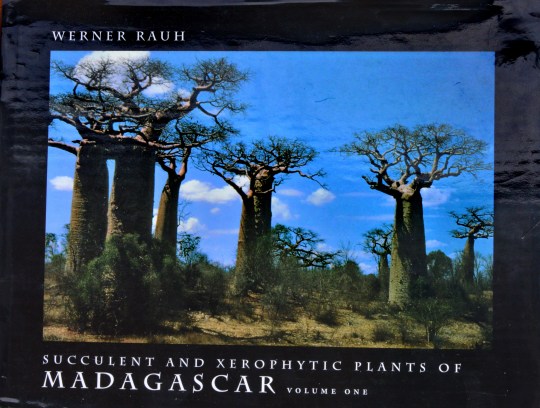
The main image of Madagascar in my mind is the cover image of Werner Rauh’s first book on the Flora of Madagascar, of the giant pachycaul trees, Adansonia grandieri, standing guard along the Avenue of the Baobabs. It is a ‘must see’ place to visit.

the giant pachycaul trees, Adansonia grandieri, standing guard along the Avenue of the Baobabs.

… the giant pachycaul trees, Adansonia grandieri, standing guard along the Avenue of the Baobabs.

But the Baobabs are not the only ‘fat stemmed trees’ on the island. There are members of the Family Apocynaceae (Adenium and Pachypodium) and Euphorbiaceae to name but a few, that all possess these fat stems. I have come across them on my travels, in Australia, South Africa, Namibia and in Mexico, to the point that I thought that I could do a presentation on the subject, but not before having seen the Madagascan giants.

‘But you know nothing abouty these plants!’ I hear you say. Again, correct, but my library and the internet provide just about all the information I need and I have actually grown (and killed) a number of Pachycauls since my visit to South Africa and Namibia in 2012 and we are being guided by French botanist, Christophe Quenel, recommended to us by BCSS CactusWorld editor Al Laius, who has travelled with him before. Just as knowledgeable (?) as I am, is my UK fellow traveller John Childs, who is also looking forward to pointing his camera at the Pachycauls, while we both also hope that lemurs and chamelions will cross our lenses.

As usual, I plan to write up my reports of what we see on a daily basis for publication in the Cactus Trip Diaries Blog. It is likely that internet facilities to send out these epistles on a daily basis may be difficult to find, so that I expect them to be released in batches when ever wifi is available. And I don’t expect these to be ‘broadband’, just a thin fragile wire, so that images may have to wait until we arrive back in the UK in mid November. The images and movie clips will be sorted and arranged to become a digital presentation and I have already accepted many invitations from BCSS Branches to show What I saw Last Winter in 2017.

You can subscribe to this Blog, to receive new postings by email, as soon as they are published.

I hope you’ll join us next month!

Phew! Home safe, sound and tired at 18:00 hrs.

Empty suitcases to have my washing lined up to run the washing machine as soon as the sun hits the solar panels (if it is sunny enough). All pottery, wrapped in my laundry, got through as the six pieces that I bought!

Prepare to do list for tomorrow:

  • Check car battery (it was flat, after three weeks of no action; I should have disconnected the battery before flying out)
  • If needed, call Green Flag insurance for a home visit to get the car started. (It was needed and they arrived 15 minutes after my call!)
  • Check fuel for the car (144 miles left!)
  • Make doctor’s appointment to have toe checked out. As is often the case after walking in the desert, my toe nail (right foot this time) had come off on Friday and was still weeping, so, as all diabetics know, I need to get it checked out! Done.
  • Post the ‘arrived home’ missive for this trip. (Doing it now!)
  • Catch up on missing missives from the trip.
  • Start planning for next trips:
    • To Holland to pick up my sales plants for the coming season from Aad Vijverberg
    • Ferry bookings for trips to Cologne (Angie’s Mum) for June and September
    • To Madagascar once UK clocks turn to Winter time
    • Check clocks all around the house to see which ones I need to turn to Summer Time this coming Sunday. Hooray! Good excuse for a drink on Saturday night to celebrate! Bottle of Malbec added to shopping list.

It’s good to be home again!


Today’s date had been in my Diary for a long time: we fly home around 22:00 hrs tonight.

Usually the day of the flight is just a ‘hanging around waiting’ day, but not short before starting the trip, a solution was provided in early January by Marquita, the programme organiser for the Los Angeles Cactus & Succulent Society who asked if I could give a presentation today. Expecting an evening presentation, I regretted that I would be in flight. After a flurry of emails across the pond we were set: the presentation would be on Saturday morning at 10:00!

After a few hickups with this new presentation about our 2015 trip to Chile, after three reboots, Kita and Eunice managed to fix the problem: run the 1080i rather than the 4k version of the presentation! Thank you ladies for resolving the cause!

In the meantime I had started a long winded introduction of Friedrich Ritter, the most active of cactus explorers in South America who had described new taxa from most countries in South America, where he had settled in Grazino, near Olmue. He bought a piece of land from Pablo Weisser’s father where he built his house. Pablo was a botanist at the time and started collecting seed of South American and western Argentina as assitant to Hans Lembcke. Many of the seeds they collected were sold to Frau Hilda Winter, Ritter’s sister, in Germany and offered for sale through her catalogue as Ritter / FR numbers. After a falling out between Hans and Hilda, Hans and Pablo sold their seeds to the then newly started nursery and catalogue of the Karlheinz Uhlig nursery.  For the full story, please refer to the  Diary pages of 24th October 2015 onwards.

The time moved on to noon, time for a brief chat with members, then six hour before we needed to do battle with Dollar Rent a Car about the insurance they charged us for our Mexican Insurance for the US$ 48 per day of our 18 Day stay in Baja after which ww could check in for our flight. What shall we do?

Eunice suggested a visit to the Orange County Show and Sales where many people that I enjoyed meeting last year during a mini tour of US C&S Societies in California and Nevada would be present. And so we drove across LA to Orange County where I met Jim Hannah who had been to four of these presentation last year, in the car park. Many more friends were found inside the hall. The balance was light (in number) on the Show, in a small side hall, but heavy on the sales of both plants and pots. Could I squeeze a few more pots in? You bet! And so six more pots were squeezed into my cases with Angie also joining in with spending the last of our dollars. They all went in and came out again without any damage in Amesbury, UK.

The chat at Dollar Rent a Car was unsatisfactory and will be followed up with checking out my rights with my credit card company once we get home. My next trip to Baja will be a flight from London via Mexico City to La Paz where we watched a very efficient looking crew at Hertz seemed to provide a very satisfacory service during the 45 minutes that we observed them at work, while waiting for Eunice to arrive.

And so the time flew by before we boarded the Airbus A-380 and I slept most of the way to England, but not before Angie received a text message from son Peter asking if we had missed our flight. No?! Why? Peter had spotted that we’d fly on 19th March and should arrive at around 15:45, but had not spotted that was due to happen the next day! Better than the other way when my pick up from LAX was expecting me the day after arrival!

In a way, the purchase of an extra suitcase at Walmart was the sign that the trip was nearly over and that our minds were becoming focussed on ‘going home’ issues. Today we would do the initial re-pack and visit Steve Hammer for our usual visit for interesting chat, even if we were unable to buy a single plant and without a cactus in sight.

The difference this time was that we’d say ‘Cheerio, see you back in Blighty, old boy!’ to Jonathan, who may have been a Ferocactus Fan since the early 1980s and a Copiapoa Nut since 2013, but whose real passion was for Lithops and so was keen to take more 3D videos while staying with Steven.

Today’s plant of special interest was a member of the Mesembryanthemaceae / Aizoaceae that, if I understood correctly, had not been observed in flower since the days of Linnaeus. Here, in Steve’s shade house was one of the less spectacular plants in the Family (if not THE least spectacular) but it was in bud, ready to open over the next few days. Don’t miss it in 3D, Jonathan to see if it has any redeeming features. I rely on you to tell me its name as although Steve mentioned it a few times, it was on my deaf side, so didn’t even enter one ear and out on the other side – it just never got to the ‘received’ area.

But there were the usual beauties on display that had ‘not for sale/ not affordable’ written all over them; Haworthias of the Elephant’s tooth type that looked as thought they needed ironing or looked a little pale and pots full of Lithops seedlings with all the seeds from just one fruit but incredibly variable, nicely demonstrating the concept of diversity encountered in a single species concept and so frustrating automated species name generators and botanists alike. I lit the touch paper for discussion by suggesting ‘a genus with just two taxa then? Yellow flowers or white flowers?’  It’s been a long standing joke between Jonathan and myself; I’m sure that Steven had heard it before!

We arrived at our Motel 6 in Westminster, CA where we had stayed on our first night in the US and again took Eunice, this time accompanied by her daughter Lachelle, to the Napels Prime Rib Company, where the Blue Cadillac Margaritas and the huge steaks went down a treat.

Back at the Motel, Angie again tried to improve on our previous packing effort. Not bad, but was this carrier bag and its comment coming along as well? Better have another go first thing in the morning!

The approaching end to this trip follows the pattern of its predecessors: find a convenient Motel 6, visit friends, admire collections and visit a shopping mall to get those last minute essentials – in this case an additional suitcase (carry on luggage size) for my new boots and to hold the rucksack etc.

But first, in the ‘visit to friends’ category we met up again with Juergen Menzel at his home, to see the latest cactus novelties and to see the progress of plants photographed on previous occasions. Many plants are outside in the yard where nature takes care of the watering. There is a shade house to protect the smaller plants from the intense sun and heat. After 45 minutes in there It was just too hot for me so I escaped to cool down and to admit that I had failed to find the new Mam that I knew was hiding there somewhere. Once my body temperature was back to approaching ‘normal’, Juergen took me back in and allowed me to photograph his two plants that came from Europe.

It certainly is a very attractive and unusual plant that should be available at ELK next year, no doubt at a steep price.

I sat in the shade under a tree, mesmerised by the large group of Stenocereus eruca, the creeping devil, that started as two 1 m long stems some 15 years ago. These are facts that can not be found along plants in nature.

Juergen concentrated on showing Jonathan the mature Ferocacti planted around the garden – we need not have travelled all around Baja for 18 days – they were all here! But plants in habitat have an additional charm that is difficult to capture even in the best of gardens.

Thank you, Juergen!