Just another WordPress.com site

Happy birthday to Juan!

We started the birthday celebrations with another visit (S1897) to a familiar spot, just before the thermal power station that continues to belch out its ugly fumes. The Eriosyce (Thelocephala) napina were looking in excellent condition, but it seemed that flowering here had been over for some months. Juan reports that in July the foot of Cerro Colorades had been covered with white flowers belonging to a bulb sp.

Euphorbia thinophila, in full growth and in flower here in 2004, could still be found, now that we knew what we were looking for, but was no longer in flower.

The new coast road from Huasco to Caldera was now complete, so we decided to use this rather than to go back to R5. S1898 was at Quebrada Mala, where Copiapoa dealbata looked as magnificent as ever. I took some more pictures of Eulychnia breviflora in flower.

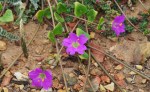
A bit further along Juan had spotted a bright red flower among the annuals that were now becoming more plentiful. (S1899). This was Leontochir ovallei, a rare member of the Alstroemeriaceae, and there were lots! Some were crawling along the ground, others were hanging down rocks, yet others had draped themselves artistically over the cacti. C. echinoides looked bursting with health, obviously having enjoyed a good drink in recent weeks.

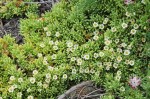
S1900 gave us a sizeable patch of the purple haze – not as plentiful as in 2004, but impressive none the less. Great photos. But I somehow managed to leave my jumper among the flowers. It was destined to remain in Chile anyway, to be replaced with some new Llama / Alpaca jumpers later on.

S1901 was caused by a traffic sign, warning of cacti (!) that Juan had recognised as the place where Eriosyce (Thelocephala) were found on previous visits. Sure enough, without too much searching we found some large plants.

S1902 was for the usual C. calderana / E. (Thelocephala) kraussii.

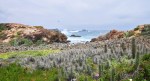
S1903 was again a favourite: km 950, known as ‘Hoot The Virgin’, so named by us as the statue of the Virgin Mary overlooking the Ocean receives a blow on the claxon on any car that passes.

Complete plant lists of all these stops will be available later, or for those too impatient to wait, by searching through reports from previous Copiapathons.
I guess that things could have gone a little more smoothly as the flight with David, Angie and I was delayed by almost three hours. Stil, we arrived safely in Santiago, where Cliff & Ian, booked on an earlier flight that left on time, were already waiting for us. Andres Gabor, our car rental contact since 2003, was waiting to welcome us back to Chile.

The cars selected this time were a Chevrolet Captiva for an 89 day period and a Nisan D21 pick up truck for the next 3 weeks.

Florencia Señoret rang Andres to ask if we had arrived yet and apologised for not being able to meet us at the airport. I reassured her that we could remember the way to her parents’ fundo at Lonquen and only made one wrong turn (they had moved the sign where we should have turned right into her road). It was good to relax after a long 48 hours and return to the Chinese restaurant that had often served us well on previous trips.

Tomorrow we’ll be on our way!!!

Greetings from La Quiaca, Jujuy, Argentina, where the weather is warm and sunny.

Having a great time, but we have a very demanding schedule each day. Diary reports are up to date on my laptop, but the Internet Cafes will not acept memory sticks so that I can update the Diaries.

So, please be patient, as soon as we have a wifi connection I will post the detailed reports. So far: we´ve had 2 punctures and I have managed to lose my debit card

The Desert in Chile was partly in flower and we hope for more on the way back. This is the farthest point we are going from Santiago, so tomorrow we start driving back, but with lots more exciting things to see.

Cheers for now

PK

Today our main target was the Oreocereus ‘forest’ known as the Harry Blossfeld site. It is where Juan and I were speechless with the sights we saw and promised to come back here with Florencia and Angie sometime in the future. Today, that day had come. Just as in 2008, we stopped off in the middle of a housing project between La Quiaca and Yavi. The plant list for S1062, made on 17 December 2008 is mouth watering: Cumulopuntia boliviana, Echinopsis (Lobivia) ferox (syn. Lobivia longispina), Echinopsis (Lobivia) pugionacantha, Maihueniopsis glomerata, Maihueniopsis hypogaea, Maihueniopsis subterranea, Tephrocactus nigrispinus, Tunilla erectoclada or was it Tunilla tilcarensis? Today the location received stop number S1924 and lack of recent moiture made for a much shorted stay and shorter list. C. boliviana was there, as were the Lobivias, shrunken into the ground and after a thorough search we finally found some M. subterranea, each requiring a ‘before’ and ‘after’ images, with paintbrushes in action in between, to make the plants presentable. Next, S1925, was the Blossfeld site, just as magnificent as we remembered it from 2008 and earlier from images shown by Leo van der Hoeven that gave it a ‘must see’ rating in our wish lists of cactus localities. owever, I already had so many images from the 2008 visit that I was struggling to find something different to take a shot at. This was presented by a llama that calmly walked between the plants and stopped occasionally to ‘graze’ at the flowers, buds and hair at the tops of the Oreocereus stems. One image has a close up of the beast looking curious at me, its mouth covered in the wool of the Oreocereus. Inspection of the plants visited showed that this was indiscriminate grazing, not looking for fruit as I had expected. Flowers were damaged and while I guess thare was a minimal chance of pollination resulting, I hardly expect to list Llamas among the pollinators of these Oreocereus. Angie took some movies as well that shows that it requires quite a yank to get the flowers and wool off. I also managed a couple of shots of a very large hummingbird briefly visiting a couple of flowers. The pictures are not sharp enough for inclusion in a talk. I made no attempt to match or add to the plant list for this location in 2008 which is included here for the benefit of those for whom this was the first visit: Cumulopuntia boliviana, C. chichensis (?), Echinopsis (Lobivia) ferox, Maihueniopsis glomerata (ssp. hypogaea?), Neowerdermannia chilensis, Oreocereus celsianus, O. trollii, Rebutia pygmaea,Tephrocactus nigrispinus, a taxon that seems to have mistified the botanists in putting together the NCL. It looks like a very dark spined form of C. boliviana to me. Finally, the white spined Tunilla corrugata and the famous hybrids between xOreocereus celsianus x Echinopsis ferox We decided to drive on beyond this location, S1926 into the hills, but after a short while regretted this as a sharp stone punctured one of the tyres of the Chevrolet. No drama, as the spare was quickly in place. As we drove into La Quiaca a tyre repair shop was easily found and although it was Saturday afternoon, the boss said that the repaired tyre would be ready for collection around 9 a.m. the next day. It was a nasty hole and he recommended that we’d only use the repaired tyre as a spare. Tomorrow we’ll be trying to find Yavias. As everything is so dry, this could be quite a challenge!

First priority today was to get some Argentinean money, so we popped into Tilcara, drove past the Hosteria from previous visits and found the bank just off the town square. It took ages for the paper work to be completed so that I could change my last US$ into Argentine Pesos. Why? They could not find The Netherlands on their computer’s list of countries to record that a Dutchman had exchanged US$200. Everyone else had been milking the ATM machine outside the bank so we could at least fuel up for the days ahead.

S1920 was a scenic stop along the main road. We found Echinopsis (Trichocereus) atacamensis ssp pasacana with various Tillandsia sp. growing between the spines, Echinopsis (Lobivia) longispina, Gymnocalycium saglionis and Opuntia sulphurea.

Oreocereus trollii appearing along the road caused the next stop, S1921.

We made S1922 stopped at a location where in 2008 (S1053) we had found Maihueniopsis (Puna) subterranea, but conditions were much drier now, so although we saw Echinopsis ferox and Maihueniopsis glomerata, M. subterranea remained hidden from sight.

S1923 was for pictures of the Devil’s Backbone, that remains a glorious sight no matter how often you see it.

We arrived in La Quiaca without incident, but unfortunately the Hosteria was fully booked. This is the only hotel that accepts Credit Cards. We were directed to Hosteria Munay that had space but only accepted cash. Never mind, there were banks in town. Accept that the two banks we found did not accept my credit card! Fortunately other members in the group fared better so that we could eat and pay for the hotel.

Just a minor issue as we went to fill up with fuel for our long ride over the Andes: the only official petrol station in town was unable to serve Diesel. We would have made it safely to Susques, the next fuel station, in Argentina, but it was a safe feeling that we managed to buy 10 litres of diesel at the break down garage where they had repaired our Toyota Hilux in 2001.

Just a slight hiccup at the border crossing, leaving Chile (on the outskirts of town) among the piles of papers that had to be presented to temporarily export the car was a car registration document, but unfortunately not for the car that we were driving. Instead, it was for another car with a very similar registration number that must have been part of the rental fleet. These things happen, and we were allowed through.

Crossing into Argentina was also a lot smoother than last time. Great.

S1915 were images taken during the crossing of the Andes. S1916 was the regular stop for Echinopsis atacamensis ssp pasacana. S1917 was for five more images of our crossing of the Salinas Grande, a huge salt lake. S1918 was for our regular stop to see Eriosyce umadeave that David nominated as best looking cactus ever. S1919 was the marvellous descent of the Cuesta de Lipan. It was then a short drive to Maimara were again we stayed in Hotel Posta del Sol. Fortunately they accepted US$ for payment, although I’m sure that we did not get the best rate.

First point on today’s agenda was to get the rear tyre on our car checked. It seemed to be slowly losing air. We knew exactly where to get it looked at from previous trips and sure enough, a large nail was retrieved from the rubber and the hole fixed, all for 4,000 pesos, just over five pounds. Today was all about covering the c. 440 kilometers, so the only stops were leg stretchers and toilet stops and not plant stops. The exception was the traditional stop (S1913) at the statute of the Virgin above Paposo. It has been a regular stop since 2001 but I had never seen it before with so many wild flowers. The Eulychnia here, E. taltalensis was not yet in flower but stems were showing some new growth. Their flowering is later than E. acida and E. breviflora seen earlier on the trip. After an otherwise uneventful trip, we arrived at San Pedro de Atacama and were successful at the second time of asking to get accommodation for the night. Television was dominated by the Copiapó mine workers being brought to the surface. S1914 is for the usual pictures of the Church as the sun was setting. I bought two llama woollen jumpers to replace the one that I had left in the field yesterday.

Today was was a relatively light day, driving wise, as we had planned to do our usual trek into the south of the Pan de Azucar National Park, visit the view point El Mirador, on to Las Lomitas and then down towards Planta Esmeralda.

Great plan! but ……

We stopped as usual just before the southern entrance of the park, where the Copiapoa cinerascens were also showing the effect of recent moisture. Here (S1904) they grow on dark coloured rocks, making for a very nice picture with the Pacific Ocean in the background.

A bit farther along, where C. cinerascens was actually labelled and growing abundantly on sand, the paint brushes came out again (S1905). This is a sure sign that we were going to be looking for Thelocephala, this time E. (T.) kraussii, known originally from this Ritter location as T. malleolata. It turns out that I had always been looking for these a bit farther along on Playa Blanca. By the way, the paintbrushes are used to brush away the sand and dust that usually hide the plants from sight.

We made a quick stop at the ranger’s centre to see if we could get the key for the chain that blocks the track to El Mirador. Bad news! The whole northern part of the park is now out of bounds to visitors. That includes El Mirador and Los Lomitas! The excuse given was that this was to protect the guanaco, but we know that these animals are already well protected and that numbers were increasing dramatically over recent years. Ingrid had heard that a group of visitors on scrambler motorbikes and doom buggies had torn through causing lots of damage. OK, so there is a need to prevent repetition, but surely this is a little heavy handed, with some very interesting cacti no longer accessible.

Juan and I will be contacting the senior heads to see what can be done for our next visit in November. I would love to inspect the Eulychnia at the Penguin colony on Isla Pan de Azucar to see how their nesting habits differ from those on Isla Chañaral.

S1906 was for the stop at the new barrier across the track to El Mirador, but also taking in the field of C. cinerea ssp columna-alba where Angie has a date, each time that we pass with an ondividual plant that she’s christened ‘Smiler’, due to the elongated crested head.

S1907 was an impromptu stop for first one, then several Eriosyce rodentiophila. Usually these plants occur as one or two isolated individuals, but here were quite a few plants growing in close proximity from each other.

So we were forced to leave the National Park by the eastern exit, turn north on to Ruta 5, then turn left again towards Chifuncho, then south towards Planta Esmeralda.

S1908 was for some Portulaca sp at the turning to Quebrada La Madera to point the other car towards the Guanillos Valley (called Huanillos valley on sign posts).

In the Guanillos Valley we first made for the traditional C. laui  stop, (S1909) where C. esmeraldana was also looking good and in abundance. I fail to see the reason for giving these plants a new name, C. angustiflora, as they look identical to plants growing with C. laui and C. grandiflora to the north of La Madera and at Las Lomitas.

S1910 was our usual visit to Alan Craig’s memorial. The Thelocephalas (T. esmeraldana) that had escaped me on previous visits were now up and reasonably easy to find, but not in flower

S1911 was a quick visit to Ritter’s Type Locality for C. columna-alba. As it was getting late, the low sun made the dense stand of plants here even more impressive.

It was really much too late to look at the population of red flowered Copiapoa near the turning to the road to Taltal. These large mound forming plants are called C. taltalensis ssp desertorum these days, but as at every visit I have only encountered red flowering plants I assume that Ritter named the plants twice to sell twice as much seed. Today, numbered S1912, it was the last stop on a very full day.

We stayed the night in Hotel Gali and had dinner in Club Taltal where we were recognised by the staff. Hotel Gali had been extended and there is now a lift to take you to your rooms on the third floor. A nice positive change after the less pleasant changes at Pan de Azucar NP.


Today was planned to be a driving day, to get away from Santiago and into cactus country. We still managed the traditional stop at Pichidangui (S1895) that confirmed that everything looked greener than on most previous visits.

S1895 - Pichidangui flowers

S1895 - Pichidangui flowers

A quick stop at the Pronto at Los Sorcos, just before the Fray Jorge National Park for a hot dog and a cup of coffee.

S1896 was another old favourite stop, overlooking the village of Los Hornos and Quebrada Honda. We failed to find the crested Copiapoa coquimbana that we had seen in previous years but found a cristate Echinopsis (Trichocereus) coquimbana instead. Checking up my notes indicates that on past stops I had always reported E. acida growing here, but this time, easily distinguishable by its flowers and hypanthium, E. breviflora can also be confirmed to grow here. Useful information to add to the Eulychnia book that Paul Hoxey and I have been working on.

Juan had phoned ahead and booked us into Hotel Skitniza.

This trip promises to be more like a cactus tourist trips, visiting old places rather than extensive exploring. For David of course, everything is new and he has been heard to mumble that it’s like having died and gone to cactus heaven.

After a sound, solid night’s sleep, I woke up 5 minutes before the alarm went off at 7.  Amazingly, we all woke up and got ourselves organised to wave goodbye to Flo at 9.

Nothing too exciting to report. We made two cactus stops

S1895 was our traditional first plant stop at Pichidangui and S1896 again was the car park above Los Hornos, north of La Serena. Flo had booked us in at Hotel Skitniza, familiar from previous trips.

Along the road we noticed that everything looked comparatively lush and green, but no evidence of the spectacular Desert in flower yet.

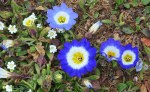
Wiebe asked if there were still new things to see? Certainly! At Pichidangui I managed to get the photos I wanted for the Eulychnia book that Paul Hoxey and I are writing (the draft failed to arrive on time for our departure), and there were many Nolana and Calandrinia in flower. The weather was quite overcast and we even had a light drizzle on a couple of occasions.

The excitement for me came at Los Hornos, where I had recorded Eulychnia acida before, but this time also spotted a few plants of E. breviflora in flower. Flower sections were taken and photographed. I don’t recall this as a place where we have seen the two growing together before. No sign of intermediates etc.

By 8 p.m. we were sitting down to dinner – excellent sea food – and by 10 were snoring our heads off.

So lets hope that on Monday we see signs of the flowering desert!!!!