Just another WordPress.com site

Archive for March, 2014

Wednesday 12 March 2014 – San Luis de la Paz to Matehuala

And so I’m back at Hotel Las Palmas in Matehuela, and it seems that nothing has changed in two years. Today was supposed to have been a driving day to cover the 300 + km with random stops along the way. The 57, D (toll road) in places is a fast road, averaging 100 km p.hr ‘Random’ means that I had selected three stops close-ish to Matehuela, where cacti that were new to Cliff and Ian had been reported from.

Driving along, we passed the Microondas (Microwave towers) at Nunez, – where Ariocarpus bravoanus ssp hintonii grows, but this is on the grounds of a cement factory and perhaps unsafe in the middle of day. But it also meant that Huizache Junction was near by – always good for a stomp around, both at the top of the hill (S3055) where this microwave station stands, with a second stop at the bottom (S3056), just as in 2011. When ever I have talked to people in the UK who have been here the question comes : ‘Did you see. X?’ Often the answer was no and even now, I photographed plants that I did not see in 2011 while some that I had hoped would be seen in better light, were not there. Spooky! Space ships rotating the plants at night?

Anyway, the Ariocarpus retusus looked magnificent and healthy as though specially watered for our inspection but the Lophophora williamsii seemed to have been visited by a Shaman who had collected roughly half of the big clumps that we had seen here for his religious ceremonies, leaving the other half to recover for another year. Full plant lists added 5th May 2014.
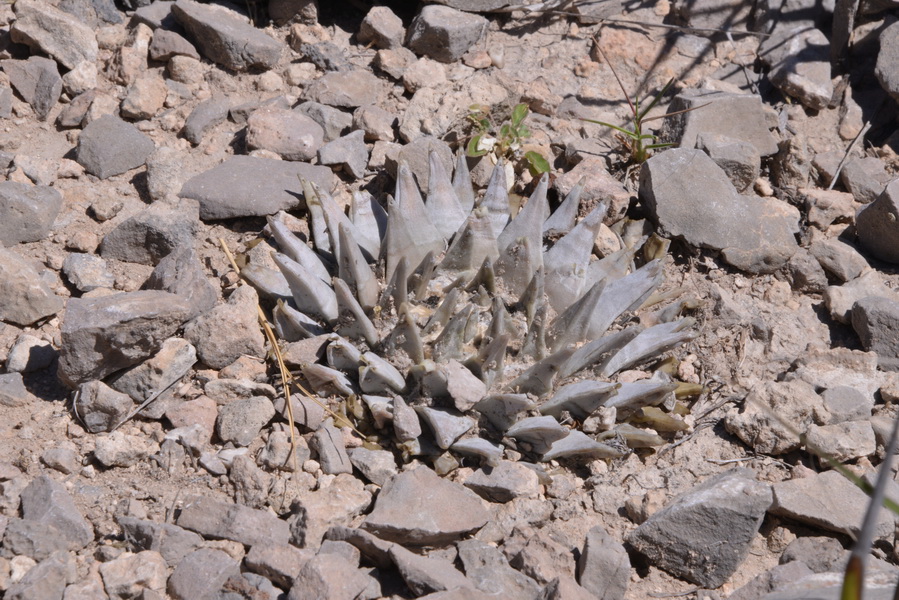
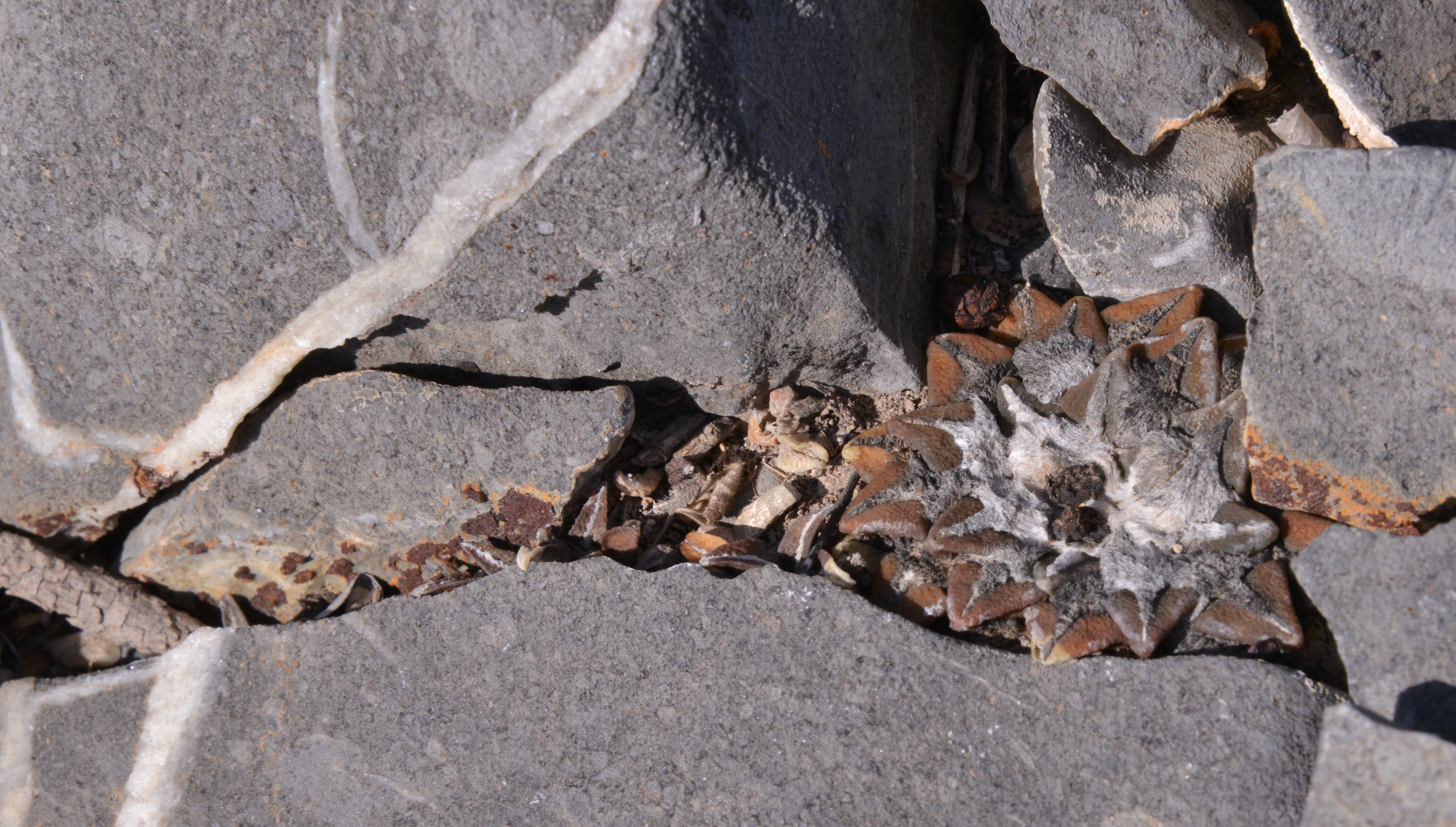
Ariocarpus retusus - El Huizache Junction, San Luis Potosi

Ariocarpus retusus – El Huizache Junction, San Luis Potosi

S3055 at the top, gave us: Agave lechuguilla, A. stricta and A. sp. Ariocarpus retusus, Coryphantha sp, Cylindropuntia leptocaulis, Echinocactus horizonthalonius, E. platyacanthus, Echinocereus pectinatus, Ferocactus pilosus, Lophophora williamsii, Mammillaria sp. Mammilloydia candida, Neolloydia matehualensis, Opuntia microdasys, Opuntia sp, Sclerocactus (Ancistrocactus) uncinatus, Thelocactus bicolor and a Yucca sp. Not a bad crop for one stop, particularly when at the foot you can add Astrophytum myriostigma and Thelocactus hexaedrophorus (?) to the list.

[PS when I got home, I found Turbinicarpus sp El Huizache, a T. polaskii look-alike, at John Pilbeam’s nursery. If we did not see it at the top nor at the bottow, where did it grow? In the middle? I guess that we had just missed it in flower and therefore had walked straight by it.]
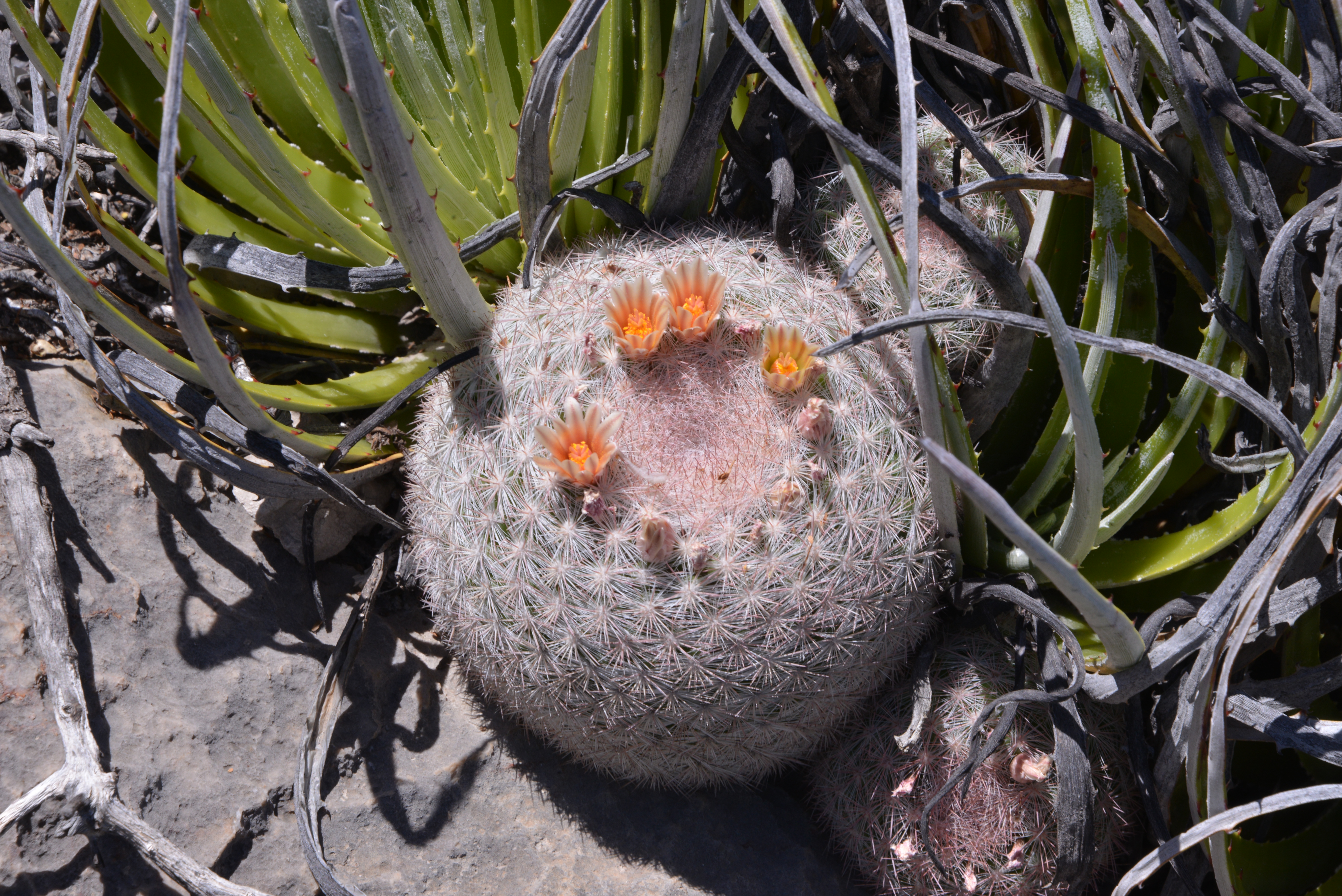
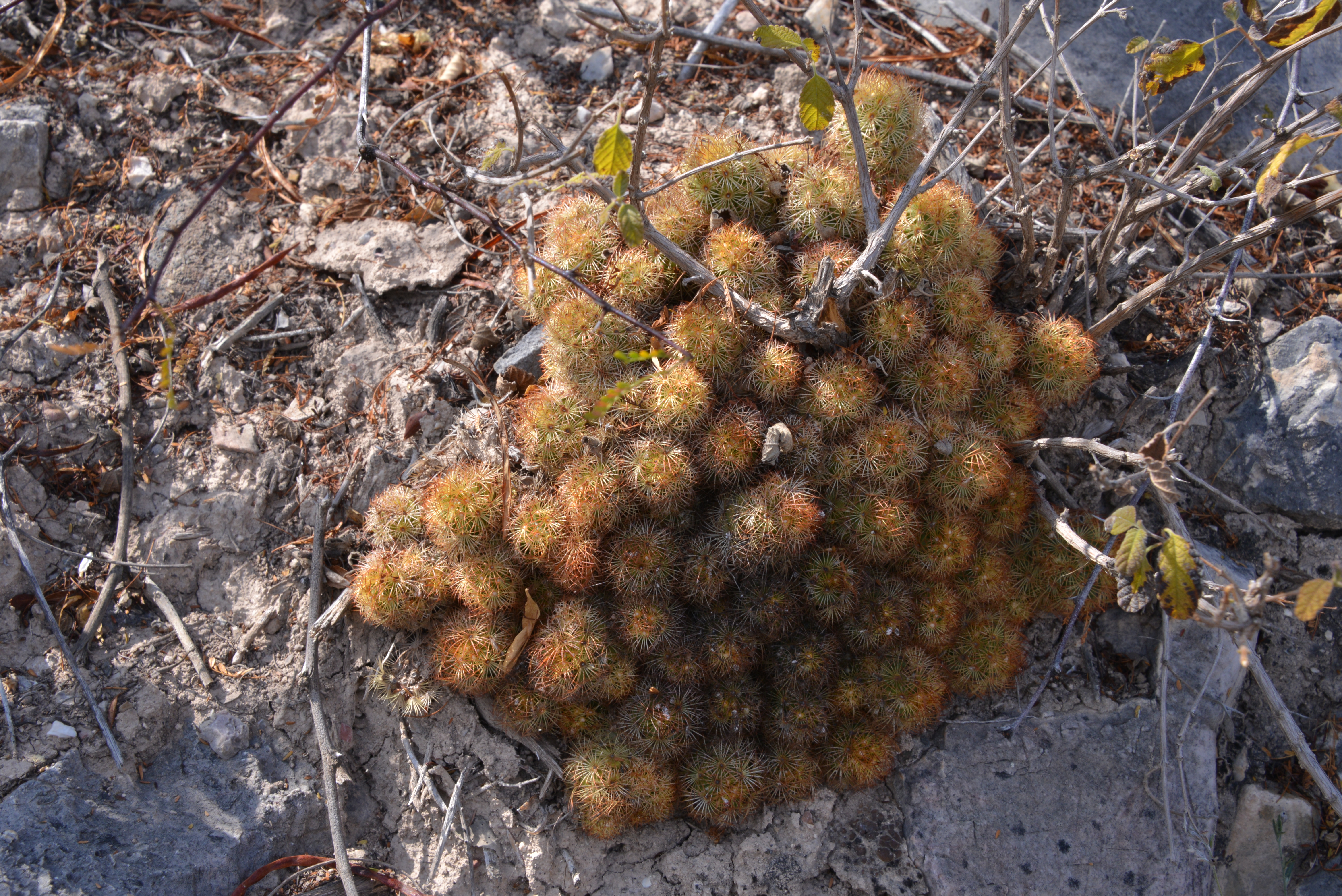
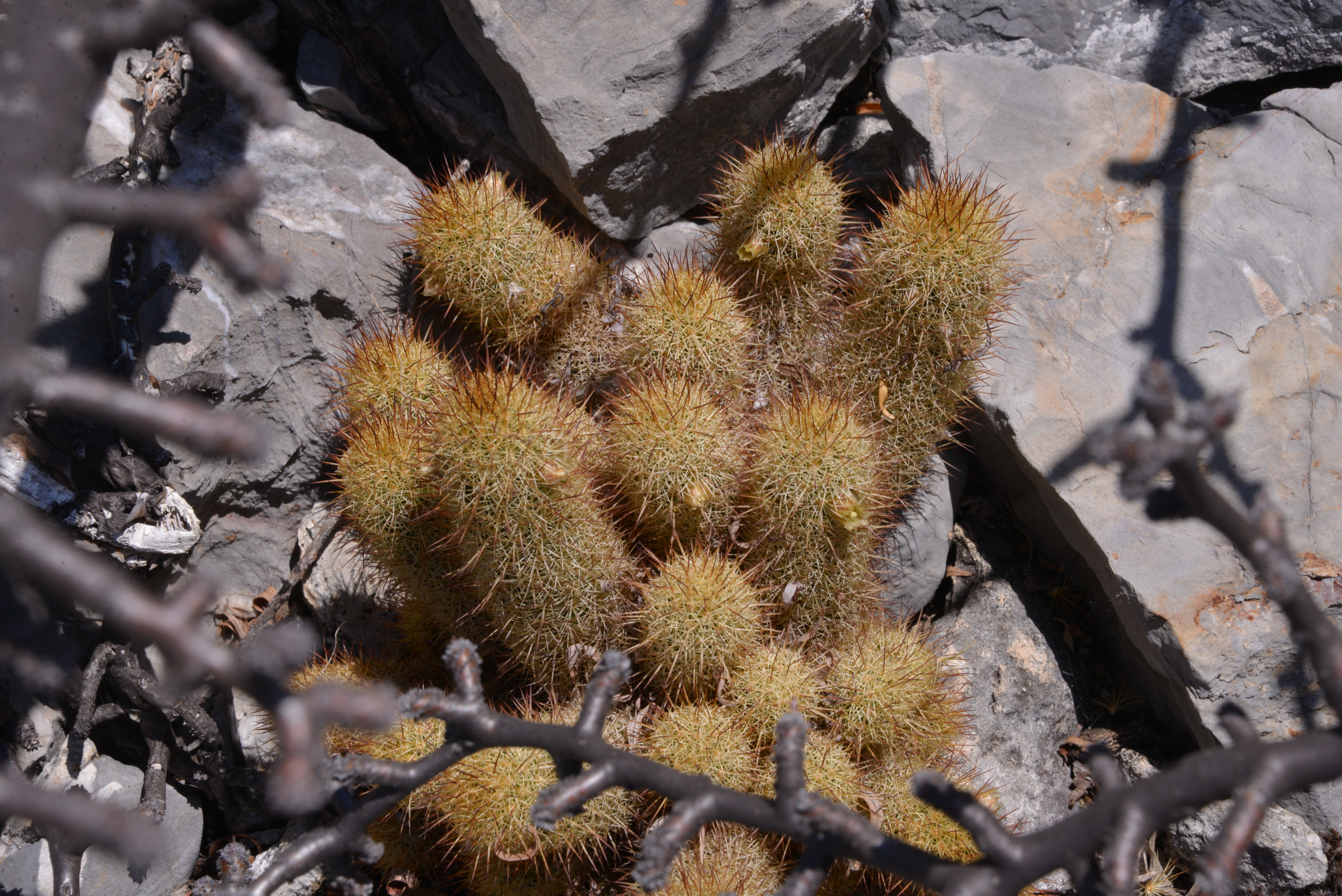
Mammilloydia candida

Mammilloydia candida – S3056

So we arrived safely at the hotel, with good wifi to get tonight’s message out and an excellent meal with Margaritas as a starter.On to our ‘randomly selected stops’. The information in the database is beginning to show its age. The exit off MEX57 for the turn to the first stop no longer existed, just green cultivated land. We turned up the next official road and found some interesting plants, but not those promised. The same thing happened for the next stop and we ended up on a road to El Mezquite where again we saw interesting plants but not the Turbinicarpus polaskii we had hoped to find.

Today the temperature was only 32 C, instead of yesterday’s 37 C and I’m about to join the boys for a beer on the patio – time 20:34.

Life is good.
Tuesday 11 March 2014 – San Luis de la Paz to Xichu

For those who can not wait for the full plant / stop list for today, I suggest that you cheat and look at https://pkcactus.wordpress.com/2011/03/09/ to read what we saw here 2 years and 2 days ago.

There were some differences though. Knowing that there would be no breakfast, we had planned to drive to the Pemex where the OXXO did prepared sandwiches that took care of breakfast, so that we were much earlier on the road and reached the T. alonsoi site earlier, providing time for a more detailed look around. As a result we saw at least half a dozen Mammillaria schiedeana, compared to just one plant in 2011. This time at least three were in flower!

Echinocereus pentalophus was in flower but high on the hillside, tricky to photograph but revealing numerous Turbinicarpus alonsoi around them. Clearly out of reach of past collector visits. Long may that last!

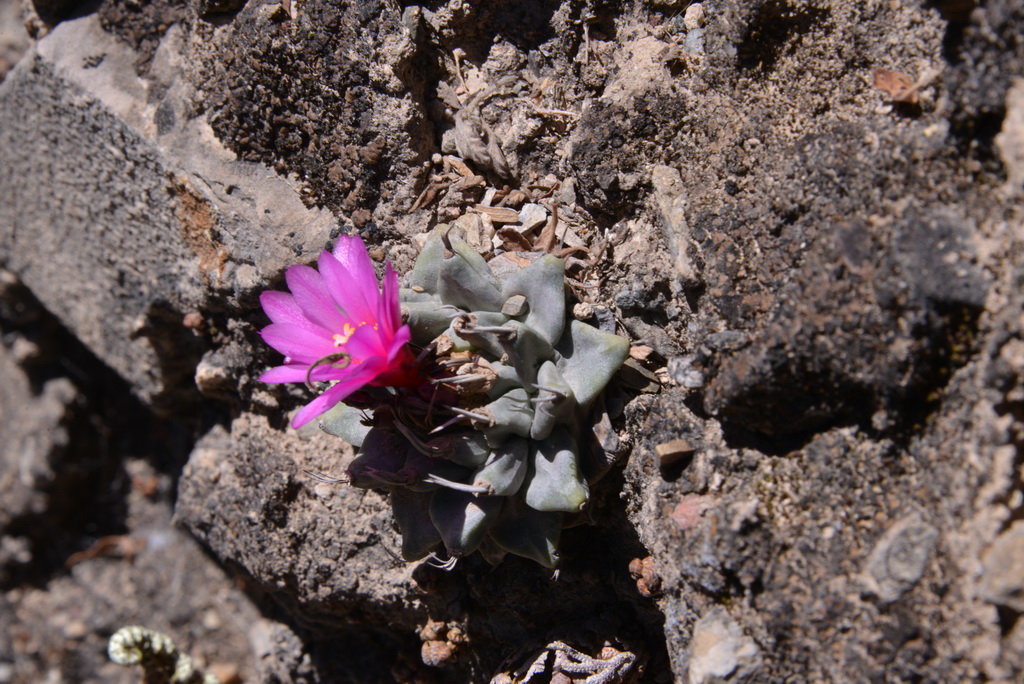
The other difference was that this time we found two plants in flower, the prettiest one is shown below.

Turbinicarpus alonsoi in flower

Turbinicarpus alonsoi in flower – 

The details of today’s stops and plants will have to wait until I get home – sorry.

You’ll have to make do with today’s bonus picture:

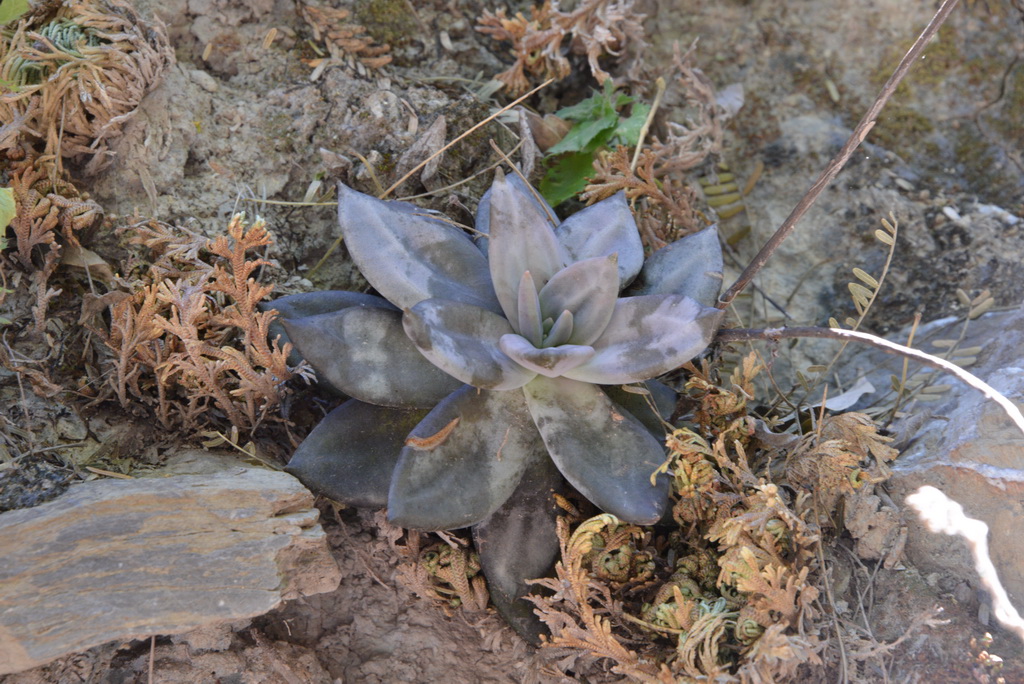
Echeveria xichuensis

Echeveria xichuensis

Now, safely back home, avoiding sneezing in the pollen of  English Spring, I can reveal that we saw:
At S3049, along the San Luis de La Paz to Victoria, Guanajuato road:  Agave gentryi, Coryphantha erecta, Cylindropuntia sp and Opuntia sp.

S3050, farther along the road, for a tree covered with Tillandsia usenoides, a.k.a. Spanish Moss.

S3051 along the Xichu to San Anton road: Agave sp, Coryphantha sp., Echeveria xichuensis, Echinocereus pentalophus, Ferocactus histrix, Mammillaria perbella, Mammillaria schiedeana, Opuntia sp., Stenocereus sp. and Yucca sp.

S3052 & S3053, the Turbinicarpus alonsoi canyons, with Agave sp, Echinocereus pentalophus, Lichen, Mammillaria perbella, Mammilloydia candida and Selaginella sp.

S3054, on the way home had lichen, Mammillaria muehlenfordtii, Opuntia sp and more trees shrouded in Spanish Moss.

We were supposed to have been in the vicinity of Strombocactus disciformis ssp esperanzae but the spot seemed to be a rock wall right next to a farmhouse with people working near by and children playing in the field. Never mind, we had a number of locations for S. disciformis ssp disciformis.

Monday, 10 March 2014 – Tecozautla to San Luis de la Paz

Today’s entry will be simple, short & sweet:

For the second morning I woke up with muscle and joint aches as though I had dragged three heavy bags around Mexico City airport for hours a few day ago.

Oh, I had! No surprise then!

We presented ourselves on the lawn at 8, as before, for breakfast and were served coffee with a smile. This location has by far the best internet connection so I did not mind waiting for the rest of breakfast as it provided the opportunity to fire off partly completed reports for 7, 8 and 9th. That done, I thought it best to stretch my meager knowledge of Spanish by asking if the Senora was going to take our order for breakfast. Sorry, no breakfast today. Thanks for telling us!

We might as well leave then! Except there was a minor complication with Ian’s credit card payment – the poor lady had not heard of the PIN system and had keyed in Ian’s 3 digit security number on the back of the card instead. Then the c 250 km drive to San Luis de la Paz through industrial and agricultural land – no pictures taken.

We made it safely to San Luis de la Paz and are staying in Hotel Parras, next door to the Hotel where I stayed with Eunice in 2011 – this one has front of house car parking.

Tomorrow we go to look for Turbinicarpus alonsoi.

Sunday 9 March 2014 – around Tecozautla: in search of Strombocactus corregidora

We found it!!!

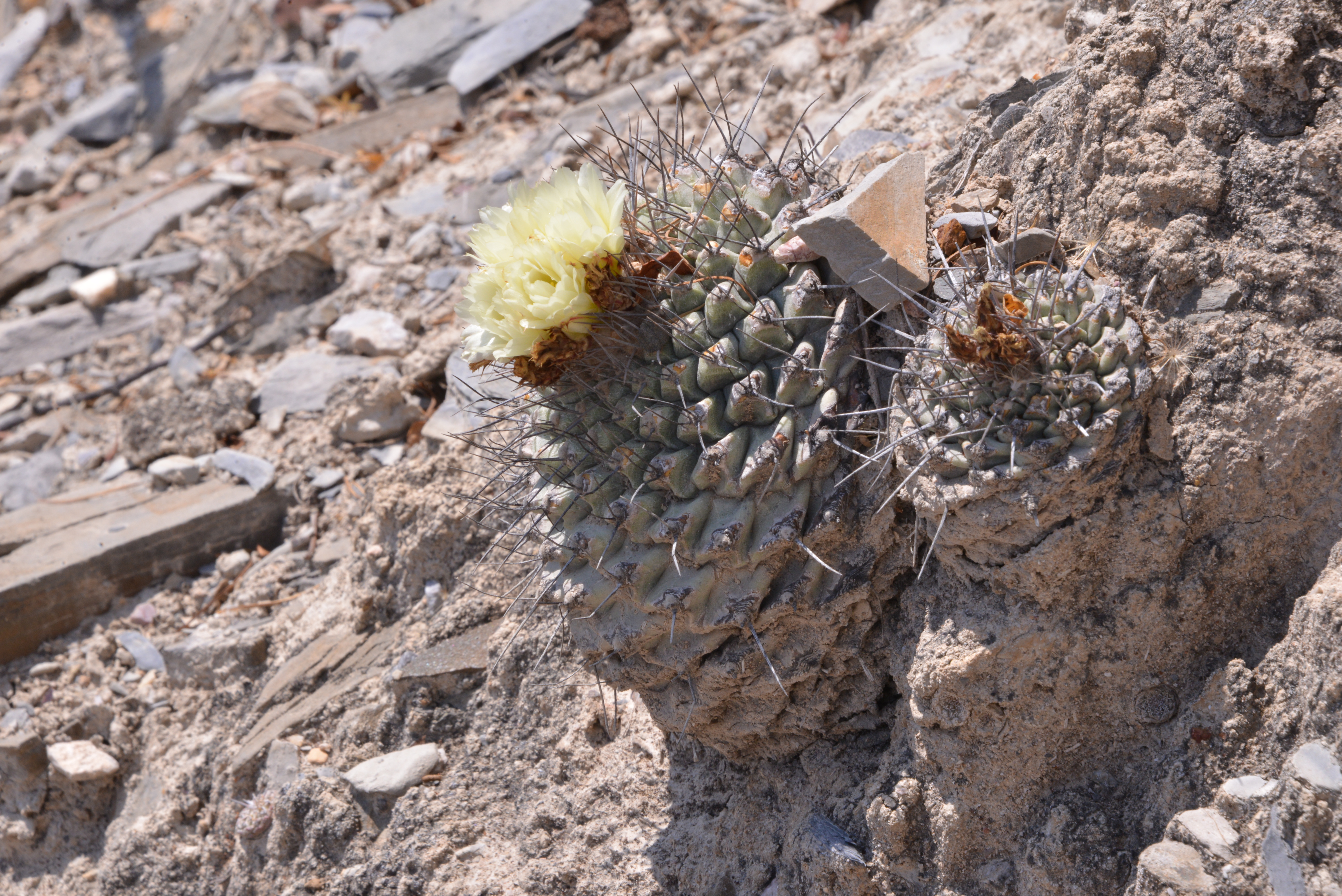
Strombocactus corregidorae

Strombocactus corregidorae – S3047

Many thanks to the global team who helped us to achieve this!

On the day of our visit I promised that there would be ‘more information about today’s exploits to follow’. This is a bit tricky, as I also promised various people who helped us to track this plant down, not to disclose its location. So for now I’ll limit myself to information that is already easily available (Google Search) on the internet. This is how we found where to look. The original description is published in Spanish at http://www.ibiologia.unam.mx/barra/publicaciones/revista81_3/pdf/02-640t.pdf on 17 March 2010. The abstract (English translation) reads:

‘ Strombocactus corregidorae S. Arias et E. Sanchez, from the Infiernillo Canyon, in the Moctezuma River, at the border between the Mexican states of Querétaro and Hidalgo, is described and illustrated. It differs from S. disciformis by its massive body, larger, strong, thick, persistent, black-gray spines, yellow flower, seeds with flat periclinal wall cells, finely reticulate micro-relief, and hilum-micropylar region not covered by a strophiole. An identification key to Strombocactus species, based on stem, flower, and seed characters is included’.

The plants were found on 7 May 2008.

To take the picture of the plant in flower I had to shuffle along a very narrow ledge on very unstable slate-like substrate. There was nothing to hold on to, except an Agave with sharp teeth along the leaf’s edges. Not much to prevent you from falling down a 400 m hillside! Cliff and Ian were shouting at me not to be stupid, ‘you’ll kill yourself’ and other kind words of support, while taking pictures of where my remains would rot if a fall had taken place – it did not!  At the time of writing I have been unable to find any other images of this taxon in flower in habitat – a small triumph, worth being declared mad over.

Other cacti spotted (in safer positions):  Agave difformis, Astrophytum ornatum including one plant some 1.5m (5 ft) tall, Bursera morelensis and B. schlechtendalii, Cylindropuntia leptocaulis, Echinocactus platyacanthus, Ferocactus histrix, fouquieria splendens, Hechtia sp, Mammillaria elongata ssp elongata (no central spines), Opuntia microdasys, Opuntia stenopetala, Sellaginella sp and Thelocactus leucacanthus.

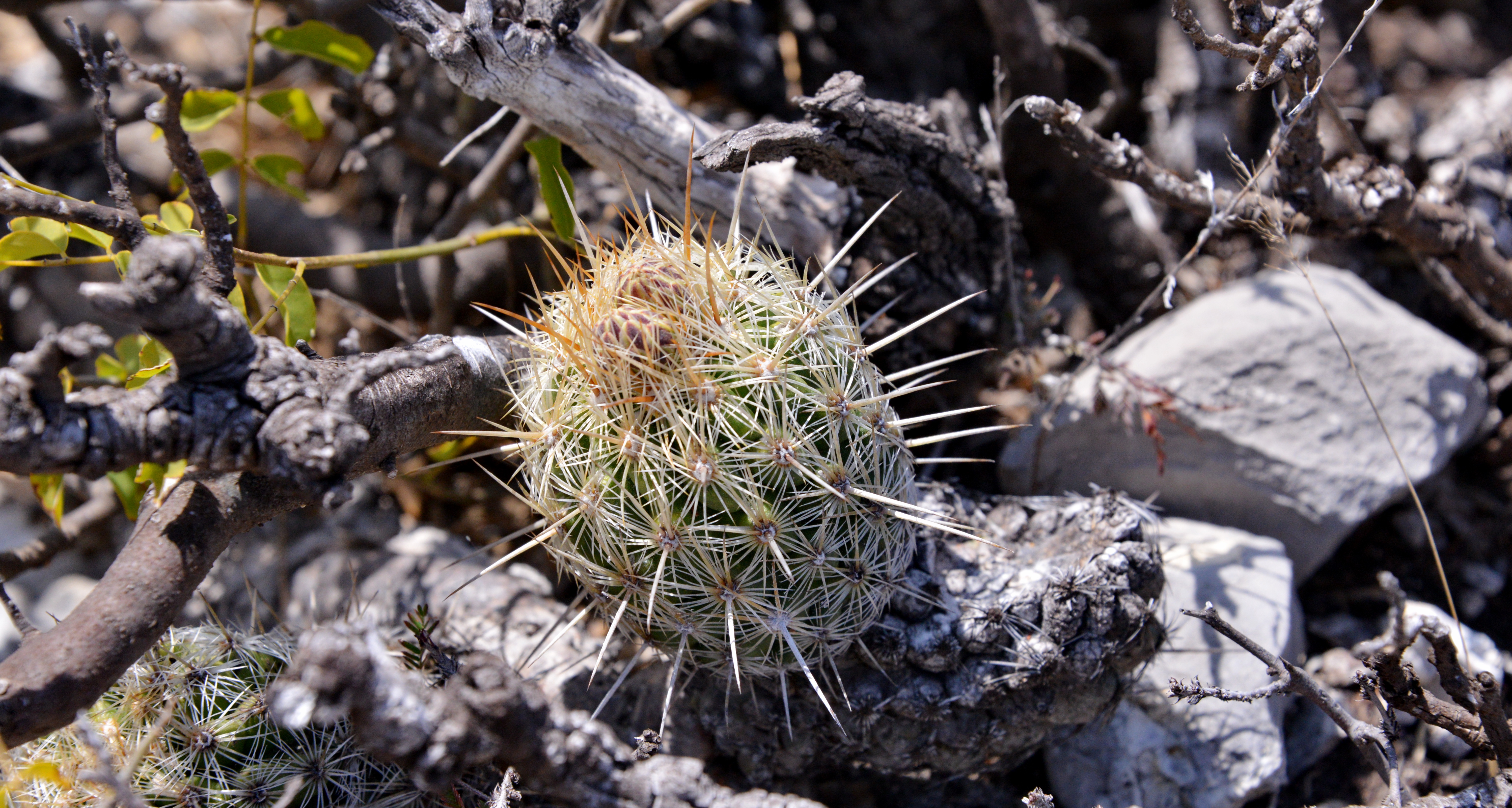
Mammillaria elongata ssp elongata - S3047

Mammillaria elongata ssp elongata – S3047

Saturday 8 March 2014 – around Tecozautla; trip to Zimapan dam

Our target plant for the day was Thelocactus hastifer with T. leucacanthus as a bonus, as we had already seen this yesterday.

A few km from the hotel, passing our first hillside of Echinocactus platyacanthus, giant barrels, the boys, Cliff & Ian, for whom this was a first time experience, begged for a stop. It would have been cruel to refuse. But we’d see many more and there was so much more to see.

S3040 in the order their pictures were taken: Myrtillocactus geometricans, in flower, Echinocactus platyacanthus, Mammillaria sp #1 (large clump), Mammillaria sp #2 – small clump of flat plants), Thelocactus leucacanthus, Stenocereus pruinosa, Stenocereus dumortieri, Coryphantha sp. Hechtia sp, Yucca sp, Ferocactus echidne or F. histrix, with yellow flowers. It seems that during the first few days I have called these Feros ‘echidne’ but later on in the trip changed them to ‘histrix’. Both occur in a similar area, including here in Hidalgo and both can have yellow flowers, although F. echidne can also have red flowers. Here I assume that single stems rather than clustering points to F. echidne.

S3041 – overlooking the lake created by the Zimapan dam provided:

Cylindropuntia sp, Mammillaria elongata, growing on cliff walls and underneath shrubs, Mammillaria albilanata, may be M. perbella, with fruit, Opuntia sp (several) Agave sp. Fouquieria fasciculatus (supposed to have white flowers – none seen), lichen, Asclepias subulata, Bursera sp, Ferocactus glaucescens, Ferocactus hystrix (or is it F. echidne?), Hechtia sp., Mammillaria sp (albilanata?), Mammillaria elongata, mostly ssp echinaria, with central spines. Throughout this trip, whenever we’d see M. elongata, it would be ssp. echinaria. Only tomorrow, would we find the spineless form, ssp. elongata. The NCL reports that ssp. elongata is restricted to cliffs and rocks like the Barranca de Toliman, also in Hidalgo.

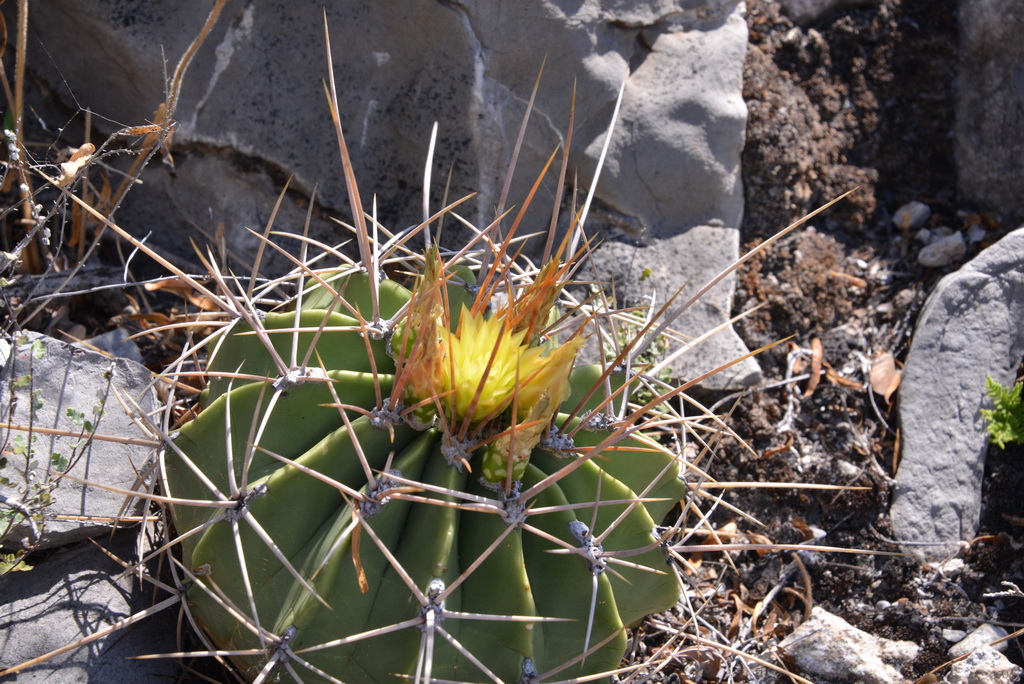
S3042 - Ferocactus echidne or histrix?

S3042 – Ferocactus echidne or histrix?

S3042 – a few hundred meters along from the previous stop – with better car park facilities:

Echinocereus pentalophus, Astrophytum ornatum, Neolloydia conoidea, Ferocactus echidne and F. glaucescens (nice glaucus seedlings in the shade, boring green in the open. Jatropha urens – the evil woman, it stings!, and of course the omni-present Echinocactus platyacanthus.

Mammillaria elongata ssp echinaria

Mammillaria elongata ssp echinaria – S3042

S3043 – as we reached the lake where the road passed through three long tunnels. As we came up for air before we disappeared into the next on, we could see more cactus vegetation. We could not hang about, as there were other cars on our backside so I just snapped away at the hillside for closer inspection later, which suggests that a few Golden Barrels have indeed survived. I believe I caught at least two large golden barrels, Echinocactus grusoni, probably the world’s most common cactus in cultivation, but here, in its type locality practically extinct, as the building of the Zimapan dam left the majority of the ‘grusoms’ several 100 ft below the water level. Before the dam was completed, volunteers, including Charlie Glass, went on rescue missions but as anyone who tried to repot just a medium sized plant might know, this is a weighty issue! 

S3044 – Thelocactus hastifer – Hooray! our target plant of the day. Relatively few plants found, including one large many headed plant growing in shrubs and therefore tricky to photograph.

Thelocactus hastifer - S3044

Thelocactus hastifer – S3044

But perhaps the star of the day was a small, grapefruit size plant of Echinocactus grusoni, golden yellow spination and looking just like the long spined form sometimes seen by the million in Dutch nurseries, raised from cultivated seed. With the local construction work now apparently complete, perhaps the time has come to sow some of the seed available from cultivated plants back, so that once again these golden barrels can be seen in their natural habitat. It’s assuring to see that there is still a natural seedbank from which this species could recover.

S3045:  Ian spotted a change in the geology along the side of the road – vertical limestone bedding and suggested a stop without knowing what we might find. I was tired enough to stay in the car, until my snooze was disturbed by Ian’s cry to come and look: Ariocarpus kotschoubeyanus ssp elephantidens – the point of interest here being that some plants had a clear papillose epidermis, a feature of ‘elephantidens’, while its neighbour had smooth tubercles. Does this variability within a species in a population justify a separate name at ssp. rank? Not for me – cultivar perhaps?

Ariocarpus kotschoubeyanus 'elephantidens'

Ariocarpus kotschoubeyanus ‘elephantidens’ – S3045

Also here, Neolloydia conoidea, Thelocactus leucacanthus, Ferocactus echidne, Coryphantha sp

Friday 7 March 2014 – LAX to Tecozautla

An adventurous arrival.

My flight arrived about 15 minutes early. Customs & immigration were a doddle. Went to the luggage collection carousel and my bag was amongst the first to come off. I turned around and found a row of car rental kiosks. Mexico City Airport has two terminals, with the run ways in between. I arrived at T1 and Ian and Cliff, direct from London, at T2. We had information that suggested that Hertz car rental had kiosks at both terminals that would take customers to the central car pick up point. The information was wrong! After dragging my bags (no courtesy trolleys) to the kiosk, I was greeted by a rep who brought out a motorised 6 seater ‘golf trolley’ to take me to ‘central’ – but still at Terminal 1. I looked for an arrival board, but could not see any T2, i.e. the London flight arrival information – they were due to arrive 30 minutes after me.

At the ‘Central Hertz kiosk at T1’ there was some confusion, as the prepaid car had already been checked out – by Mr Thompson & Mr Woolnough! OK, I’ll wait then.

I expected them to find me at Terminal 1. That was indeed their attention, but they made A GRAND TOUR OF Mexico City instead, similar to getting lost in the traffic! Meanwhile I was dragging my luggage around the various exit / pick up doors, returning to my friends at Hertz for updates. Finally the news that my English friends had returned from their involuntary sightseeing trip. Fwew! They had been parked in the T2 carpark and were told not to move. My friends at Hertz#1 had organised a junior colleague to take me to #2. He was an excellent racing driver, but spoke no English and once at T2 asked me in Spanish where I wanted to go. ‘The Car Park’, I said, unaware that there were two, one up (Departures), and one down (Arrivals). I opted for up. There I was dumped. I asked a policeman where I could find the Hertz desk. I followed a few left then right instructions, then asked again, eventually arriving at the desk where they were expecting me. Another new Hertz friends brought out his golfing trolley and would take me to Cliff & Ian. The Hertz friend also had to make a small delivery at the same time – four very large white boxes, looking like a delivery of cocaine. Eventually I met up with Cliff & Ian, whose flight, due 30 minutes after mine, had arrived 90 minutes ahead of schedule. They felt very chuffed at having completed all the admin and to greet me with the car ready to leave. When we did meet, we had lost some 3 hours!

This brought us in the middle of rush-hour, although the rush hour concept seems to extend to 24/7.

With great foresight, I had packed my SatNav at the top of my rucksack, so we were quickly off. Our car, reg starting TXS, so christened Texas, had its own SatNav system built in. Hertz had wanted to charge for this, but Ian pointed out that we did not want one as we had brought our own. As they could not remove or disable it, it was thrown in as a freeby. It was actually branded as ‘Hertz Never Lost’ ……. which soon proved to be a misnomer. Although, to be fair, unless all SatNavs in a car have identical settings (fastest time / shortest distance / include or exclude toll roads or U-turns etc.) they are likely to come up with similar routes, but are not guaranteed to do so. Add ‘navigator’s common sense’ to the mix, unaware of roadblocks 100 km farther along etc and things become interesting. Fingers crossed that tempers do not get frayed.

Considering the size of Mexico City and the volume of traffic, it was a miracle how fast we got out of town. The experience was similar to getting out of downtown Santiago or downtown Buenos Aires, Lima, Peru, or me as a foreigner driving around LA.

We made a couple of leg stretch stops and were immediately impressed with the number of ticks we could add to our ‘first time seen in habitat’ list. Our hotel, in Tecozautla does have wifi, but the signal is not strong enough from our room, so we are downstairs on the lawn in front of the breakfast kitchen, with a steady supply of beers.

S3038 – El Jague to Calpulalpan, Hidalgo: Agave salmiana, Opuntia sp., Tillandsia recurvata

S3039 – Along the San Juan del Rio to Huichapan stretch of the MEX45: Coryphantha sp, Cylindropuntia sp, Echinocereus enneacanthus, Ferocactus latispinus, Lichen, Mammillaria sp, Myrtillocactus geometricans, Opuntia sp. Stenocactus obvallatus, Thelocactus leucacanthus, Tillandsia recurvata.

Just a word about names in field lists: As you can see, they are the best effort by the originator (here me) to get it right, so unless I’m sure, I prefer to put ‘sp.’ rather than to cause more confusion than is already around. Where we visit somebody else’s location, with named plants, we’re likely to use their names unless we are 100% sure that the name was not found here. Later I may come back and correct a name, but in reality that is unlikely once a list has been put out – there’s simply no time until the next trip and talks in between. Perhaps in years to come once my travelling days are over. Never believe a field list blindly, no matter who has produced it. It is not unusual for different lists to visit the same location and mention different names for the same plant found. I have images for all names suggested – too many to publish all, but ask if you want to query a particular name.

Thursday 6 March 2014 – Bellflower to LAX

A relatively unadventurous day so far: got up for breakfast at Mimis, a kind of upmarket Denny’s with French menus, followed by an ‘everything out of the car’ session an everything out of the bags’ session a session to merge the outputs of the foregoing with the ‘fresh out of the washing machine’ and then a session to redistribute the total pile over the ‘check-in bag’, the ‘carry on bag’ the ‘lap-top and camera bag ‘ and my jacket, the ‘wear as a coat’ bag.
Some how the ‘neatly fold clothes’ phase got missed out – again!
As I looked through the papers for ’check in flight’, the ‘return rental car’ papers passed by. ‘Return car by 14:30‘ I read. It was 13:00 and we still needed to get the car washed! So return car associated tasks now became item one of the critical path analysis.
Automated car wash was indicated – $5 instead of $20 for a handwash. It wasn’t very good, but did the track. I had to drive to the Dollar depot at LAX but without SatNav, as the last 4 weeks had shown it to require it’s first update from purchase.
So Eunice grabbed an old SatNav system and some cables out of a drawer and we were set to go
As I was going through the carwash, I realised that the Dollar rental car paper work was still on the table at Eunice’s, so back to pick it up.
Despite the volume of traffic, the car was checked in 15 minutes before its deadline.  ’Thanks for using Dollar, Sir, Hope to see you again!’  Quite a different car rental story compared to the Alamo saga in Chile!
Now the waitng stage – write catch ups on Diaries. Technically my flight leaves tomorrow at 00:10
The next report will come from Mexico City – Hidalgo

Wednesday, 5 March 2014 – around California

California is larger than you might think.

After a leisurely breakfast, we made a 2 hr 30 drive to El Cajon, east of San Diego, to visit  Juergen Menzel a.k.a. Cactus Jordi on the internet. Google images for Cactis Jordi will give you a marvelous selection of images of beautiful cultivated plants, mostly raised from seed. Out in the garden a large Welwitschia mirabilis had taken 12 years from sowing to grow to this size, providing some indication of similar conditions between California and its native homeland in Namibia

There were also old friends, plants seen on previous visits that were looking good! The two plants labelled Eulychnia castanea spiralis that had flowered since I had last seen it (article in the pipeline) seemed to revert back towards ‘normal’ but still with a long way to go. Very intriguing plants. It was great to see that Spring had arrived, at least in southern California with many cacti and succulents providing a great display of flowers.

All too soon it was time to go – we had to be at the Gates C&S Society at the San Bernardino County Museum at Redlands, near Riverside. Woody Minnich was giving an alternative presentation on his trip to Madagascar, this time pt2, featuring some marvelous shots of the baobab trees. Woody had invited to join him and Newsletter Editor Buck Hemmenway, his wife Yvonne and her mother and aunt for a pre-meeting bite to eat.

C&S Societies are as much about socialising and discovering what members grow and the conditions that challenge them. I lost count of how many members were there but I guess 40-50. Eunice and I were asked to judge the table show and a magnificent bunch were again on display. This time a number of Bushman’s Candles were my favourites. Fortunately the plants in the two classes were owned by the same people, so it did not matter greatly which came first and which came second, although for all we knew, as some of the plants were entered by a couple, there might be extreme competition between the two of them.

We then enjoyed ‘snacks’ – we could have missed the pre-talk meal and not gone hungry! All these activities had taken their time and my mind was turning to all the things still to be done before my flight to Mexico City the next day. Rather than sneak out during the middle of woody’s talk, we said our goodbyes to Woody and to Buck and Yvonne – Good luck in South Africa!!

Tuesday, 4 March 2014 – trip to Catalina Island, CA

Yes, another trip to an island named in honour of Saint Catalina, this time the Pacific island that is part of Los Angeles Co., rather than the island in the Gulf of Cortez south of Loreto, in Baja California Sur.

In both cases the attraction was to see an endemic succulent – the massive Ferocactus digueti in Baja and Dudleya virens ssp hassei here. A visit to the Botanic Gardens, originally created by Mr Wrigley – he of discovering chewing gum fame, thus helping to create the stereotype image of an American of a gum chewing individual – of course also gun slinging and smoking Marlboro cigarettes or Cuban cigars.

The recent weather system seems to have settled back to fairy land blue skies and sunshine, leaving people to mop up their homes and roads. Palm trees leave a mess after strong winds and heavy rain!

Where as Isla Santa Catalina was uninhabited and our journey to the island was made on a panga, disembarking on a pebble beach, we arrived at Avalon on Catalina Island by catamaran – similar to the Pompey to Isle of Wight foot passenger ferry, except that this was a 75 minute journey.

As usual, just because you are at the town from where the plants are reported, that does not mean that they grow down the middle of Main Street, so where do we start looking? There were places that hired out golf carts that are the main form of transport on the island, lined up along the steep rockwall on the road towards the shops and restaurants. We went for the shade of the rockwall side and soon spotted the Dudleyas growing there, but with a lot of debris between us and the plants. By selecting the best viws, we managed to get some good shots.

We found Tourist information who suggested a walk up to the Botanic Garden, but with the mercury pushing 30C + the trolley service, without windows as it’s aircondition system, was a more attractive option. Dudleya hassei was in the ‘Catalina Island endemics’ section of the garden. Plants looked a lot cleaner and their ID was confirmed by clear labels – providing perfect images to crop to blend in with true habitat pictures in future presentations. We climbed to the top of Wrigley’s monument, photographed a Catalina Island endemic fox scavenging around a waste bin  and caught the trolley back to town where we succumbed to souvenirs and margaritas, before strolling back to the pier to catch the Cataline Flyer. The rockwall where earlier we had photographed Dudleya in the shade was now bathed in sunlight offering a new and better selection of shots.

The boat trip back provided more images as the sun set with the island behind the horizon.

We had overdosed on fresh air so enjoyed a good night’s sleep after emptying a bottle of Malbec.

Another great day!

Sunday, 2 March 2014 – visit to Long Beach C&S Society

It was still raining when I got up, but we found a dry spell to drive out for breakfast and another to drive to the new meeting place for the Long Beach Cactus & Succulent Society where our friend Woody Minnich was today’s speaker with one of his presentations on a trip to Madagascar. What better way to spend a rainy Sunday afternoon!

As you browse through The Cactus Trip Diaries you’ll read how we travelled together in 2005 on Guillermo Rivera’s cactus tour of NW Argentina and again in 2009 on Marlon Machado’s tour of Rio Grande do Sul in Brazil.

Long Beach was the first US C&S Society where I have gave a presentation in February 2008. Wow, doesn’t time fly! So in addition, to a great talk there was also an opportunity to renew friendships with folks that I first met in 2008 – too many to mention, with the exception with Vern Yandell, who in 2008 greeted me with a few words of Dutch, learned as his wife was originally from the Netherlands.

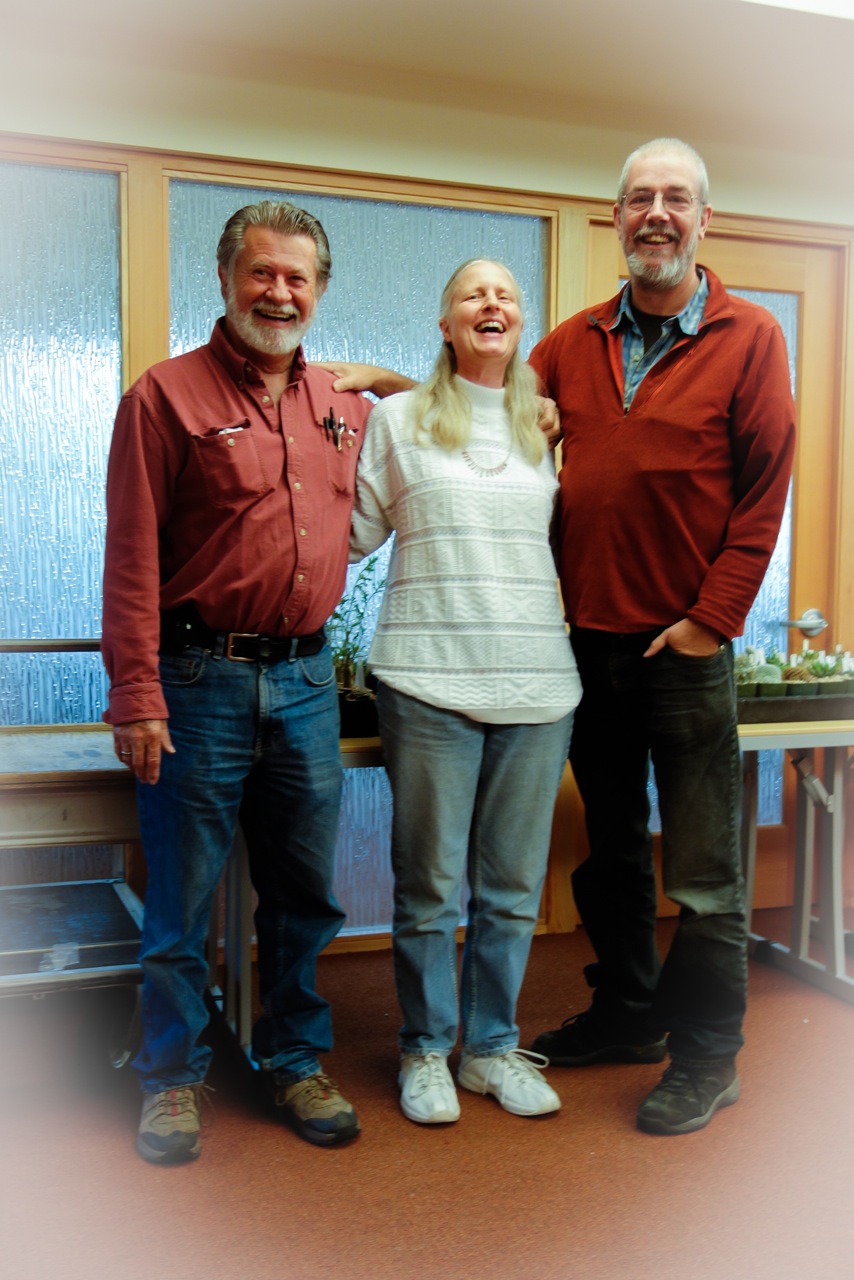
Left to right: Woody. Karen Ohlinder and PK

Left to right: Woody. Karen Ohlinder and PK