Just another WordPress.com site

There are just two Ferocacti reported from the State of Michoacan. We saw F. lindsayi yesterday and we were now heading with no more than names of towns to an area in the hope to find F. reppenhagenii, aka as F. alammosanus subsp. reppenhagenii.

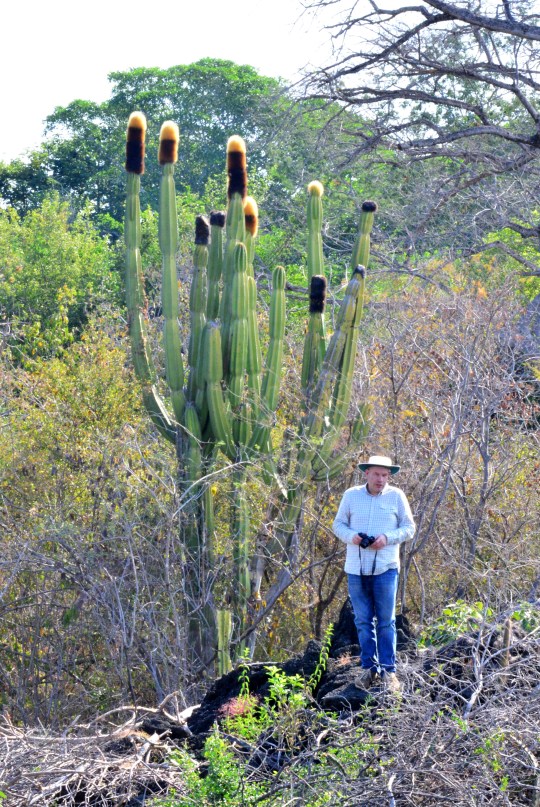
SatNav systems are wonderful if you know how to use them. Three SatNav systems in the same – every mobile phone these days has the capability – can be confusing. There are many roads that lead to Rome and the same can be said for Coalcoman. I had planned a route first to Dos Aguas, then to Coalcoman. It was meant to be a tortuous slow road taking some 8 hours to cover just 199 km. SatNav had us arriving at our final destination a few hours earlier than anticipated. We seemed to be heading north, rather than west, which was a worry. After a while I had ruled out the confusion caused by windy roads. At this time I was more interested in looking where we were going than spotting plants of interest and so was very glad that the others in the car had their eyes peeled as the unanimous shout of ‘Militaris’ went up. A quick U turn and we were able to park the car almost next to the plant (behind a fence) but also found a second plant across the road close to an area where construction work was in progress.

We persuaded Chris to impersonate Derek Bowdery and pose next to the plant for scale.

2017-02-04 10-36-42.JPG

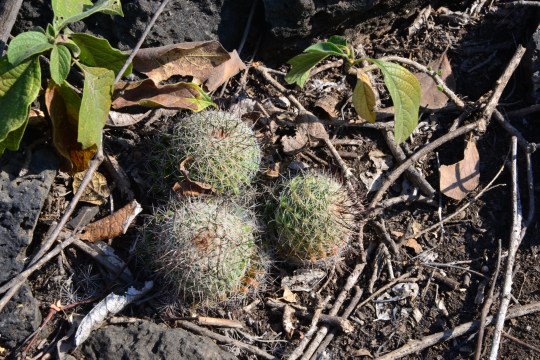
To get to this plant we had to clamber over ground that had been partially cleared for more building work. Many cacti had been bulldozed over. Chris managed to find a small clump of three Mammillaria sp, with another single headed specimen not far away. There were stems showing a white woolly pseudocephalium: Pilosocereus sp – I believe P. chrysacanthus comes from here, also a possible Hylocereus sp. (S3549) Excellent stop!

2017-02-04 10-50-52.JPG

We eventually made it to Dos Aguas, all on good asphalt but instead of finding the poor quality track to Coalcoman, SatNav sent us back the 70 km we had just come to take us on a faster track to Coalcoman. We made another stop (S3550) at Puerto de las Cruces and found a big old tree with about a thousand epiphytes growing all over it. Bromeliads and Orchids and who knows what else.

We reached the town of Coalcoman and the hotel that I had spotted on the internet, the excellent Hotel Plaza San Jorge. We are staying two nights.


Our luck had changed for the better last night as we approached the city of Patzcuaro in the dark at about 8 p.m. after a long day. I announced that I had enough and so mobile phones and SatNavs started searching for nearby hotels. Just at that time the trusted sign of a Best Western Hotel appeared on our side of the road. This will do! And so we woke up this morning in the Best Western Posada de Don Vasco, Patzcuaro. Lovely authentic feel to a very comfortable hotel with excellent food. I managed to take some pictures of the building and the excellently maintained gardens (S3546). The Poinsettias still had their red bracts on display and were about 2 m (6 ft 7″) tall. In the UK they appear everywhere in mid-December as Christmas presents when visit friends and relations over the festive seasons and have usually been killed by overwatering by the time that we take our Christmas decorations down by the 12th day of Christmas.

Our primary target plant today was Ferocactus lindsayi.   Other than the island endemic taxa in Baja California, Ferocactus lindsayi must be the most illusive Ferocactus in cultivation.  Why? It grows quite some distance from the Mexican cactus hot spots and judging from my computer searches in England, there are not many cactus locations reported from Michoacan State. So not too many cactophiles spend their limited holiday time allowance in this comparatively remote area. As a result, few plants and seeds have made it to Europe where it is said to be ‘tricky’ in cultivation.
Today we set off to see F. lindsayi at three different locations, reported by Nigel Taylor and Paul Hoxey some 15 years ago. We also had locations reported by Wolter ten Hoeve, one of which had been visited a week or so ago by Ian & Cliff. The secondary target plant was Pachycereus (Backebergia) militaris.  This was a very popular plant in the 1970s with many top-cuts being imported into Europe for their impressive cephalia.  As we headed south on MEX37D, we tried to get off past Nueva Italia on the old (Libre) road but must have missed the turning. SatNav must have been set to ‘fastest / shortest route and pointed us onto the toll road. Yes, very fast and smooth, but without opportunities to stop once we started to see P. militaris either side of the road.
We had the GPS coordinates for Ian & Cliff’s stop and this took us off the MEX37D, first onto the Libre and then on a side road that ended in a dead end after we had passed and marked Ian’s spot. To get off the 37D, we hade to pay the toll for the previous stretchand I notived that the toll booth was at the hamlet of Las Cañas. Ralph Martin’s field number list shows ‘WTH 786 – Wolter ten Hoeve: On a steep rocky hill, South of Las Cañas on MICH-10, Michoacán, Mexico in 2009′. As we drove to Ian’s coordinates, I became sure that this was the same spot.
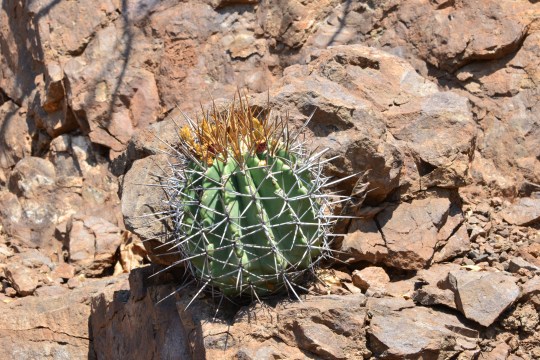
We parked up and pointed our cameras to the exposed hillside and with my 300mm lens could clearly see a dozen or so plants, high on quite a steep hill, with excellent tight barbed wire at the foot of the hill. We walked along the track to look for easier access and were fortunate to spot one plant, with fruits, roughly at eye-level. Here we queued up and in turn took 3-4 pictures from different angles. One of the fruits was examined and the seed was found to look ripe. We then went to explore on the other side of the fence. I made my way back to the car to the spot described in some detail by Ian and arrived, just as Chris came down to it from the other side.
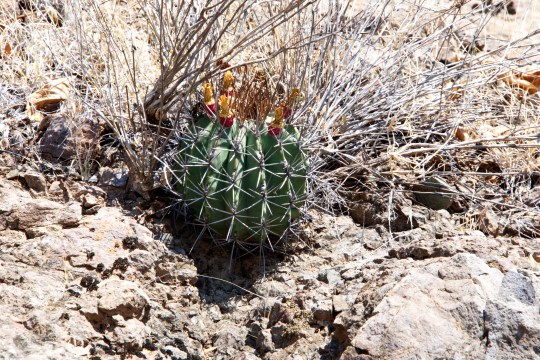
Ferocactus lindsayi S3547

Ferocactus lindsayi S3547

2017-02-03 12-54-24a

We successfully negotiated the barbed wire and found some more plants, some mature and in fruit but also a number of seedlings, I’d guess about five years of age. [PS: Probably much more like 15 years or more, having seen 12 year old plants since.]
Wolter and Ian both reported Mammillaria growing here as well. Wolter reports M. beneckei, as does Ian, with an additional two ‘different taxa’. In addition to the cacti mentioned, the hills were quite densely covered in ceroids, of which I recognised Pachycereus pecten-arboriginum that I saw in Baja California Sur and in Sinaloa on previous trips. But there were other ceroid taxa present that will need a bit more detective work for their name later.  
We drove on, towards the Nigel Taylor site, now off the 37D with a difficult entrance when huge trucks come charging up from behind. There are now a small number of polytunnels where, I assume, the plants used to grow.  We carried on in the hope to get back on to the Libre, but gave up about 5 km before reaching the Pacific Ocean, made a U-turn and headed back to Nueva Italia to find the Hotel where Ian and Cliff had stayed.
Today we covered another 422 km, exactly the same amount as yesterday and in the heat of around 32 C, very tiring.
Today would be a ‘driving day’ after a good ‘full English’ breakfast at the Airport hotel and a shuttle bus to take us to the Europcar yard and office to pick up our rental car.
We needed to cover 465 km (289 miles) mostly on toll road motorways, once we had fought our way out of the Mexico City traffic, but with daylight until 18:30 I thought that we could afford a small detour.
I had not allowed for two unforeseen factors:
1) we were given a brand new Jeep Patriot with only 32 km on the clock. In fact it was so new that it did not have any number plates. Instead it had bits of paper with the information, but these temporary plates would not be valid until 11:00 a.m. so our departure was delayed by two hours.
2) a brandnew car with temporary plates, claiming to come from Chihuahua is bound to attract some attention. We were hardly half an hour’s drive from the airport, just getting settled in to our travelling positions, Alain behind the steering wheel, me next to him as navigator and Chris and Jonathan in the back seat or there was a blockage in the road – a police check point.
We were pulled over and ‘robbed’  by some six policemen! The claim was that Alain had not indicated to move to the left carriage way and so we had to pay a fine. Alain looked baffled, sure that he had indicated but realistic enough to know that it was their words against hours and they had all the odds stacked in their favour.  So what is the fine for such a minor traffic offence? – there had been no near misses or damaged vehicles or personal injuries. 1,000 Euros!!! The amount was not given in Mexican Pesos, US Dollars or British pounds but in a nice round number of Euros! There was a strong smell of rats in the air. We have no Euros, just pesos. So their mobile phone calculators came out and an amount of  22,000 pesos was demanded in cash. Can we go the the police station and pay by credit card? No, cash here and now or the amount would increase! We were asked to move the car forward so that it was in line with a mobile office where the money had to be paid. This shielded the scene of the crime from any onlookers. Again, we realised the futility of protesting so coughed up the notes, which now leaves us short for the rest of the trip, but ‘plastic’ will cover that. We went off as fast as we could. My muscles tense each time that we see a police car!
And so we lost quite a few hours. Shall we carry on with our plan, to visit the remnants of a pre-columbian temple? Yes, as with other terrorists you don’t let the bastards win by ruining the rest of your holiday!

On the internet, the Los Atlantes de Tula in the State of Hidalgo, was said to be much less crowded than the larger monument in the Yucatan. No wonder, the direction signs were so poor that it was almost impossible to find. SatNavs have their uses but I’m sure that there is a better route to cover the distance from the MEX57 highway to the site.

2017-02-02 15-09-46 (2).JPG

This is where I took the first pictures of the trip, including those of the cacti that were planted out on the way to the actual monuments. As usual, our time budget does not allow me to include pictures at this time, I’ll add some once I’m back in England.

As a result we did not get as far as Nueva Italia de Ruiz, but found very comfortable lodgings at the Best Western in Patzcuaro. in 76 km we’ll have caught up and if we have to, our itinerary is elastic enough to stay another night in Nueva Italia and explore for some more details on Ferocactus lindsayi. We already have GPS coordinates collected by Ian & Cliff who started their Mexican adventures a week before us, so we need not use time to look at places where the plants no longer exist.

We’ve made it! Not that there was ever any doubt, but it seems that this time I was packed and ready to go about a week (or was it a month?) before the actual departure date. As some of you may know, once I get home I collect all these daily missives into a book in The Cactus Trip Diaries series, select the best images to illustrate it and then get a printed copy for my souvenir shelf. You can also buy them from the Blurb Store but with a large 30 x 30 cm (12×12″) page size and loads of images all printed on premium paper they work out quite expensive as a purchase.

This time I was SO ready that I had started this trip’s book evn before we left, to use as a planning tool. A picture from Google Earth showing today’s route and possible opportunities for a stop. I will use those images in my presentations when I get back.

As you can tell by me waffling on, nothing very exciting happened to day. Chris Hayes, from BCSS Somerset Branch in Taunton arrived in Salisbury by train, we enjoyed dinner at The Harvester and I then had my customary last minute panic and double checking if I had packed everything I thought I had.

By 08:00 a.m. we were on the road. What should take one hour on a normal clear day took 1:15 in light rush hour traffic so that we arrived at Terminal 5 earlier than anticipated. Jonathan had already arrived and was waiting at the Nero Coffee shop, where I started collecting some of the less useful trip statistics: Chris and Jonathan had each brought a toilet roll for unforeseen emergencies, with Jonathan packing a second one, just in case.  But where was Alain? Thanks to mobile phone technology we soon tracked him down – he had already checked in his luggage and had cleared immigration and security. We joined him and discovered that he too had packed a toilet roll. Do we think that there are no toilet rolls available in Mexico? I usually leave the UK paperless and obtain a small emergency supply in the first hotel where we stay.

The flight left about ten minutes late but we still arrived half an hour early at Mexico City Airport. They are building a new airport, with posters depicting the huge new building on display. Grabbed a taxi to the Ramadan Aeropuerto Hotel and an hour later were sitting in the restaurant, enjoying our first margarita, waiting for our rib-eye steak. By now we were running on vapours, struggling to answer some of the easiest questions, such as what is my name? I can assure you that this was due to tiredness rather than excess alcohol. As soon as my head hit the pillow I was asleep, thus completing the first day of the 2017 Mexico Cactus Trip.


Best wishes for 2017 to all regular readers of The Cactus Trip Diaries.

In exactly one month’s time I’m off with Alain Buffel, Jonathan Clark and Chris Hayes for another cactus trip to Mexico.

Like the Baja trip in February 2016, this trip will focus on seeing and photographing cacti in the genus Ferocactus, this time the taxa growing in the southern states of the Mexican mainland. We hope to see:

Ferocactus alamosensis subsp. reppenhagenii, F. latispinus and F. lindsayi in the state of Michoacan

F. echidne, F. glaucescens, F. histrix and F. latispinus – all in Hidalgo

F. flavovirens, F. haematacanthus, F. hamatacanthus, F. macrodiscus, F. recurvus and F. robustus – in Puebla

as well as F. recurvus subsp. greenwoodii in Oaxaca.

Of course, whenever a different cactus, or other succulent plant, should cross the lenses of our cameras we’ll be sure to press the shutter.

Our flights have been booked for a while, as well as the first night’s hotel near the airport. I just need to see if there are any good deals in the New Year’s (car rental) sales.

Although I have never been to these states before, so that finding hotels with internet access may be a bit hit and miss, I hope to be able to publish daily reports of what we found on these pages.

I hope that you’ll enjoy following us on our adventures.

Waiting at airports can be a frustrating affair, especially late at night. Many large international airports provide a free wifi service, if only for a limited period. Not at Ivato International Airport, the official name for the airport that serves Antananarivo. There were a number of connections with information about the stands where you could obtain a password or pay for access, but all these were closed.  Not surprising, as ours (to Nairobi’s Jomo Kenyatta Airport) appeared to be the only flight to leave at 02:40 in the morning of the 10th!

Flights, waiting at Nairobi and meeting up with Angie and Billy at Heathrow were all uneventful, i.e. went perfectly according to plan. Angie told us that our flight still did not exist, even though we were standing next to her.

The only fact worth missing is that our flight from Nairobi was only partly filled, leaving John and I with a spare seat between us to stretch our legs for the long flight.

Tasks ahead include:

Finishing this Blog (done on 24 November)

Copying the text and images into book format, using the Blurb on-line publishing function. (nearly finished as I copied text each time that a blog was posted). Jonathan Clark has kindly offered to do the proofreading once a draft .pdf version of the book format is available.

Selecting some 400 digital images and movie clips to prepare a 45 minute presentation for the 2017 presentation season (partly completed as many of the images included in this blog will be included)

Finish planning for the next trip, a Ferothon in Mexico. Tickets for our flight on 1 February are booked and the outline route needs to be firmed up.

See you all back on the Blog then – Merry Christmas and a happy New Year until then!


I was a bit previous about closing the trip yesterday.

For a start, John’s images reminded me that on the way to Christophe and Nadia’s home, they took us into the capital for a meal at the Cafe de la Gare, the old colonial railway station that boasted the first wifi connection for four days. There was an email message from Angie saying that the flight number for our arrival home did not exist. There were no messages from Netflight to suggest cancellations so I asked her to meet us at the airport as arranged.

After breakfast Christophe took a quick look around his collection to see how his plants had survived during his absence (fine) and then John started to sort his images and Christophe and I went through my images and with the help of Christophe’s knowledge and his substantial library were able to put names to many of them including snakes and lizards – a great help!  There was a good deal more that we saw than the plants and wildlife that are included in this blog. The amount that we saw and recorded is overwhelming. It is literally the case that at times we could not see the wood for the trees!

By about ten o’clock, when we were in advanced waiting made, I suggested that John & I might as well wait at the airport, in the hope that there may be wifi available. Christophe took us to the restaurant at the airport where huge tevesision screens announced in French that Donald Trump had won the US presidential election. I aske3d an English speaking waitress if I had understood correctly. She smiled and said ‘yes’ and added ‘Good luck!’ Time will tell how significant in world history this result will prove to be.

We again thanked Christophe for an excellent trip and reminded him that he and Nadia were welcome to visit us in the UK whenever they are visiting his Mum in France.

If the blog has encouraged you to go and see Madagascar and it’s plants and wildlife for your self then I can recommend our guides without hesitation. Contact details and a range of travel options can be found on their website at

Madabotanik

Don’t be put off by the fact that the site is in the French language. On my laptop, if I open up a foreign language website with the Oracle Chrome browser, a right mouse click will provide the option to translate the text to the language for which your computer has been set up. Christophe speaks excellent English so once you meet him at airport, you have no language problems.

Organisers of C&S Conventions in the US and Europe should certainly consider Christophe as a speaker for lectures on Madagascar and its plant conservation issues and on a range of the island’s succulent plant genera. His favourite plant group are the Euphorbiaceae, he is fascinated by the huge range of diversity in the family – from almost invisible geophytes to tall trees.

Do look out for his articles in the various specialist and general C&S journals!

Christophe can be contacted by email at christophe.quenel@yahoo.fr

Jean Baptiste joined us for breakfast and to wish us a safe journey back to the capital.

It was still a 390 km journey over Route 35 and RN7. All smooth asphalt? I enquired. Christophe smiled. ‘I wish!’ was his reply. I knew from experience that it is often easier to navigate a reasonable dirt track than to zigzag along a poorly maintained hard top road trying to avoid the pot holes.

We made it to Ambositra where we were able to buy some souvenirs, easier now that we had a much clearer idea of how much money we had to spare – no point taking Malagasy currency home, except samples of each of the notes to make a display in a picture frame to hang in the ‘Madagascar Room’ at home in Wiltshire. The town is well-known for a street full of artisan shops, including wooden sculptures and very attractive marquetry. We made our purchases and found a small restaurant for lunch and a beer. I immediately fell in love with a framed piece of marquetry hanging above the door: a row of Zebu heads. Where can I buy one? The owner did not know. Is this one for sale? No, sorry, it was a present from a friend. Nadia had already had lunch while John and I were shopping and went out again. She had been up and down the souvenir stalls and had tracked down a somewhat smaller framed piece of marquetry in a stall a few hundred meters away. We agreed the price and I was a happy bunny, especially as I also found a small tray, again beautifully decorated with different inlaid woods and had negotiated a good combined price for the two items.

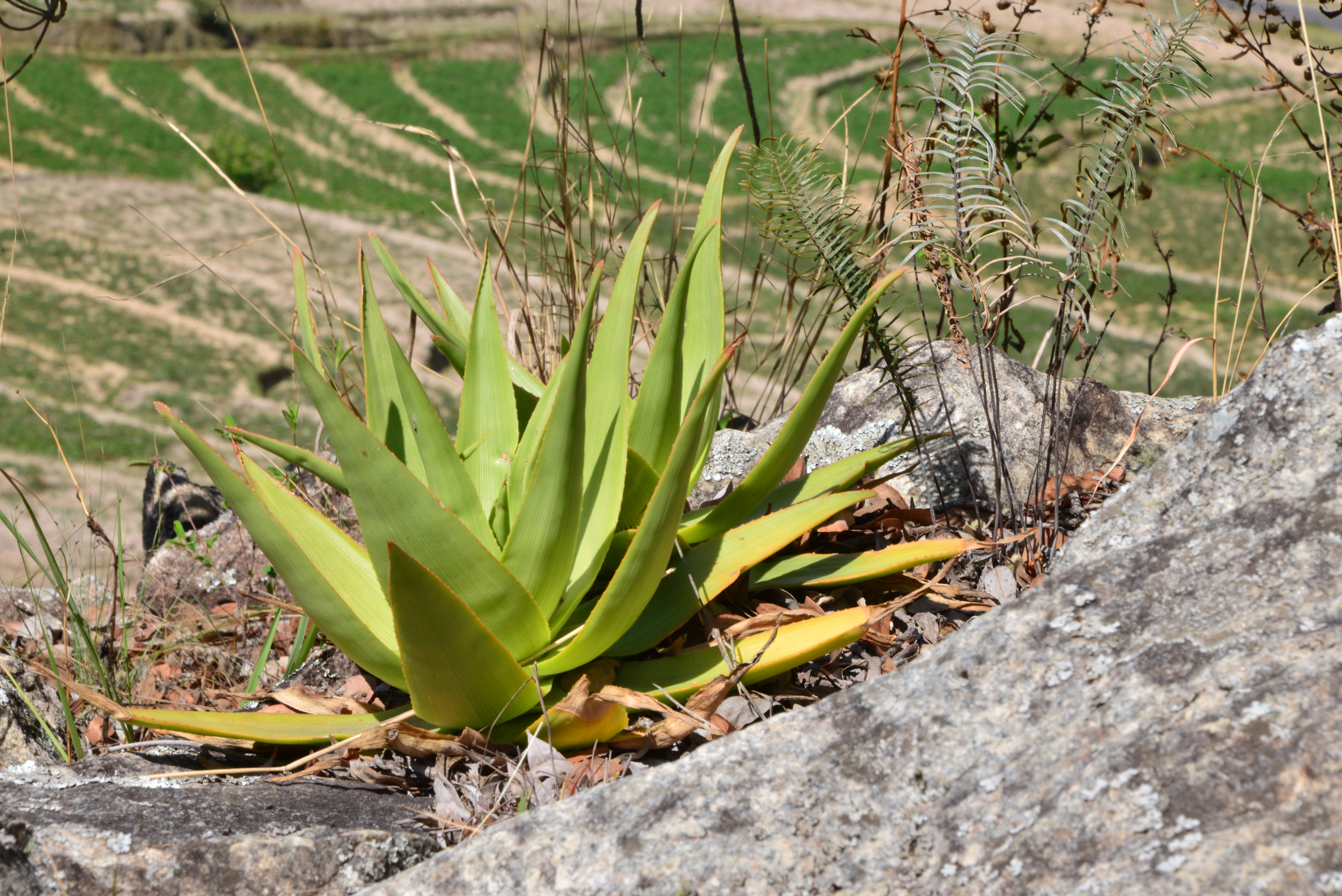
We had to move on to get to Tana at a reasonable time, but Christophe found time for one more stop for plants in habitat, on a hill near the road, surrounded by a small village and rice paddies.  The Aloe is Aloe manandonae

Aloe manandonae

Aloe manandonae

We stopped for the last time, but not for plants, at the Boulangerie – Patisserie Mirana in Antsiribe where we had enjoyed snacks and breakfast during our stay in the town at the start of our trip, nearly four weeks ago.

We arrived at Nadia & Christophe’s home in the dark and soon afterwards, following the now famous Pastis & Sprite as a nightcap. It was good to be ‘home’ – even though we still had some 48 hours to go before reaching our homes in the UK

It was a great trip, thanks to Christophe & Nadia who took great care of us and were very patient to travel at my speed. Thanks also to John for being a great travel companion, as on previous trips.

As I finish off this missive, the postman has just dropped a memory stick with John’s imagesthrough the letter box – thanks John, that will keep me busy now that the blog is complete for this trip!

It was a bit cozy in our tent as John and I laid stuffed like sardines in ourt respective sleeping bags in our tent. Fortunately, my near legendary ability to sleep anytime, any place, anywhere was still working and I was off as soon as I closed my eyes. When I made my night time bladder run out, John had gone, including his sleeping bag. That left more space in the tent when I got back from my mission.

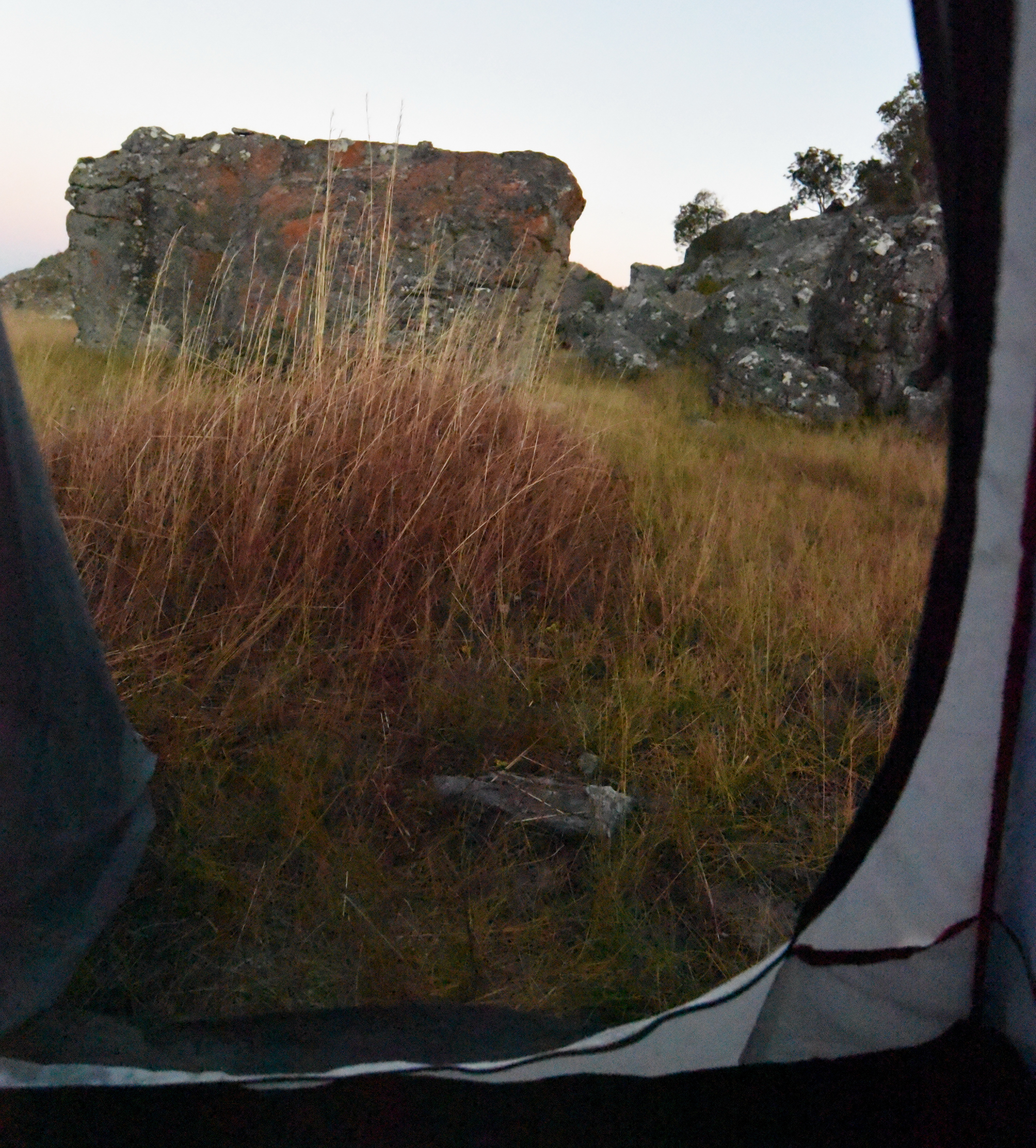
View from my tent

View from my tent as I woke up

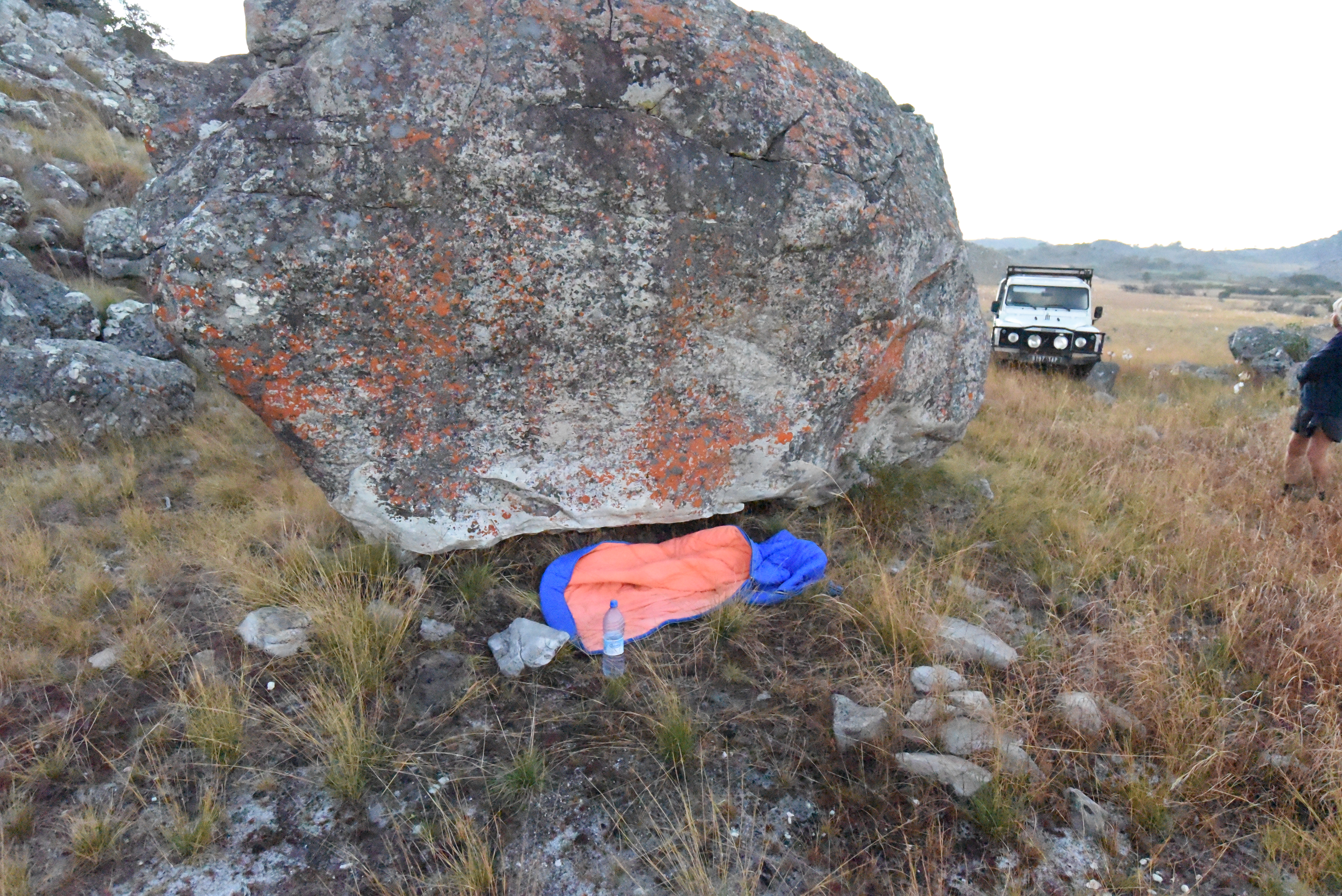
John had left the tent soon after I had dropped off and had taken his sleeping bag to the other side of the rock that you can see above.

John's camp site

The ground was no softer here than it was in the tent

Nadia preparing breakfast.

Nadia preparing breakfast.

Nadia was already preparing breakfast: baguettes, an omelette and coffee finished by freshly prepared pineapple.

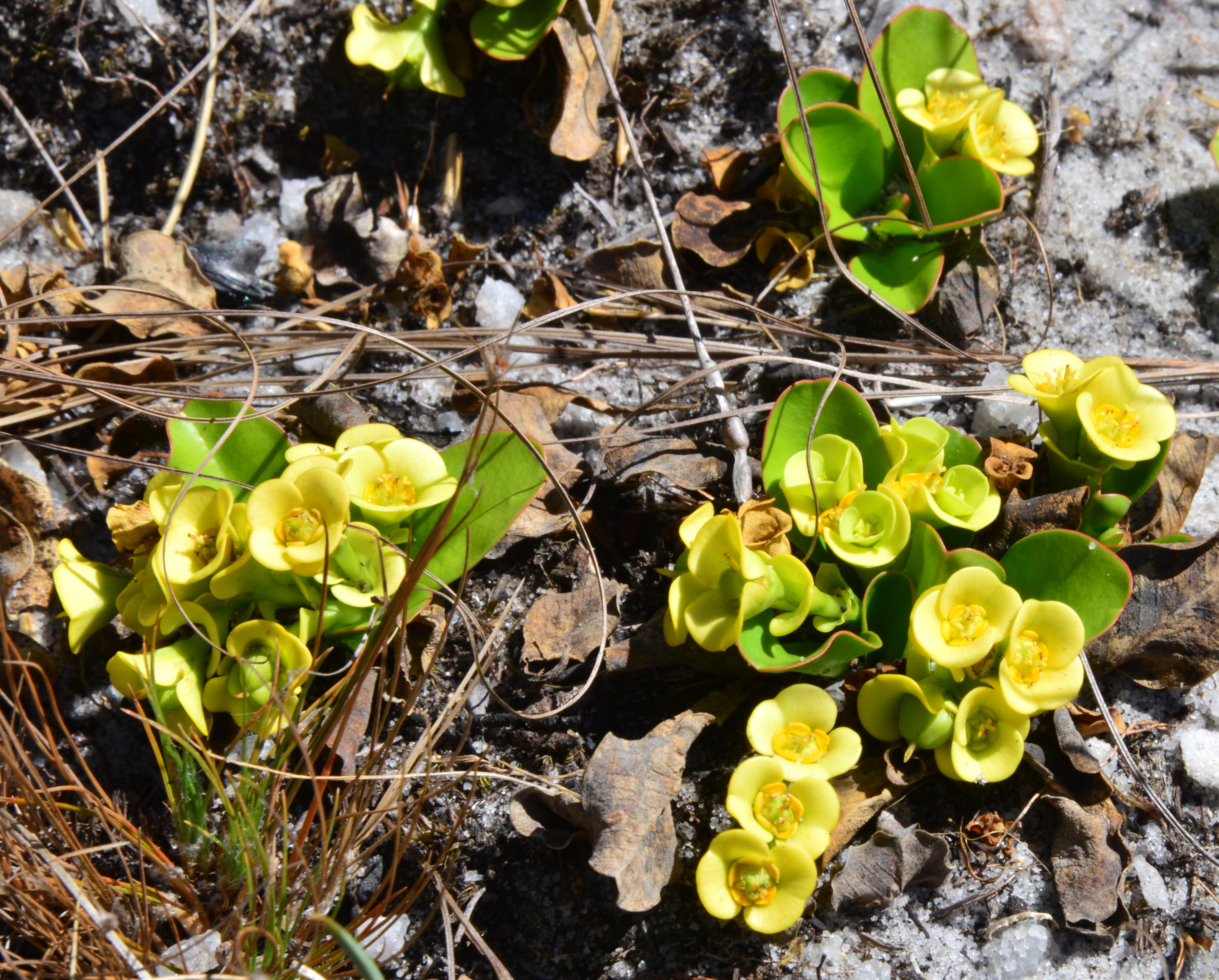
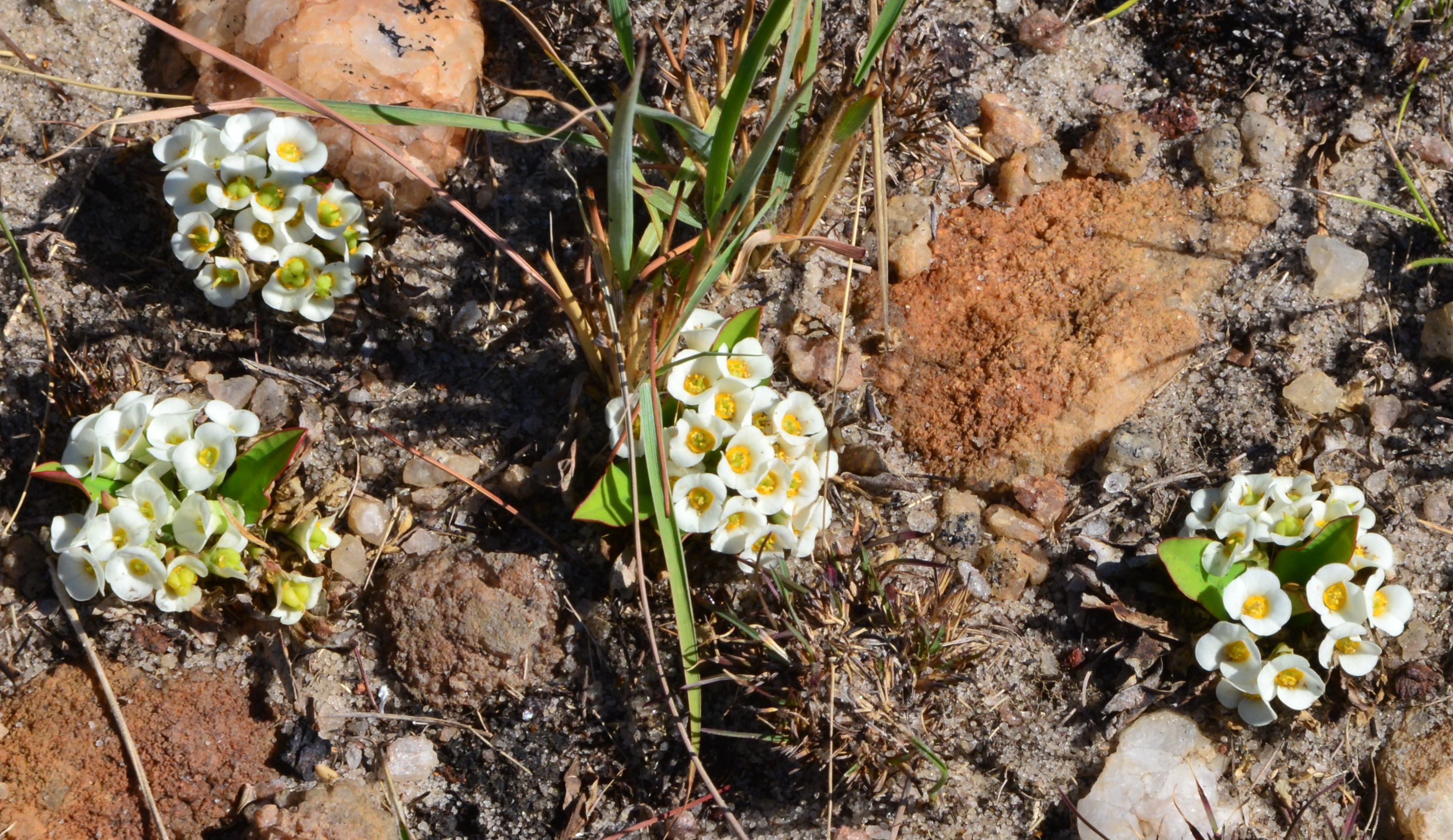
Euphorbia quartitzicola

Euphorbia quartitzicola

The scenery looked great by the morning light. Christophe, Jean, John and I went back on the track for another 5 km to see some other plants, leaving Nadia to clean up ‘at home’:

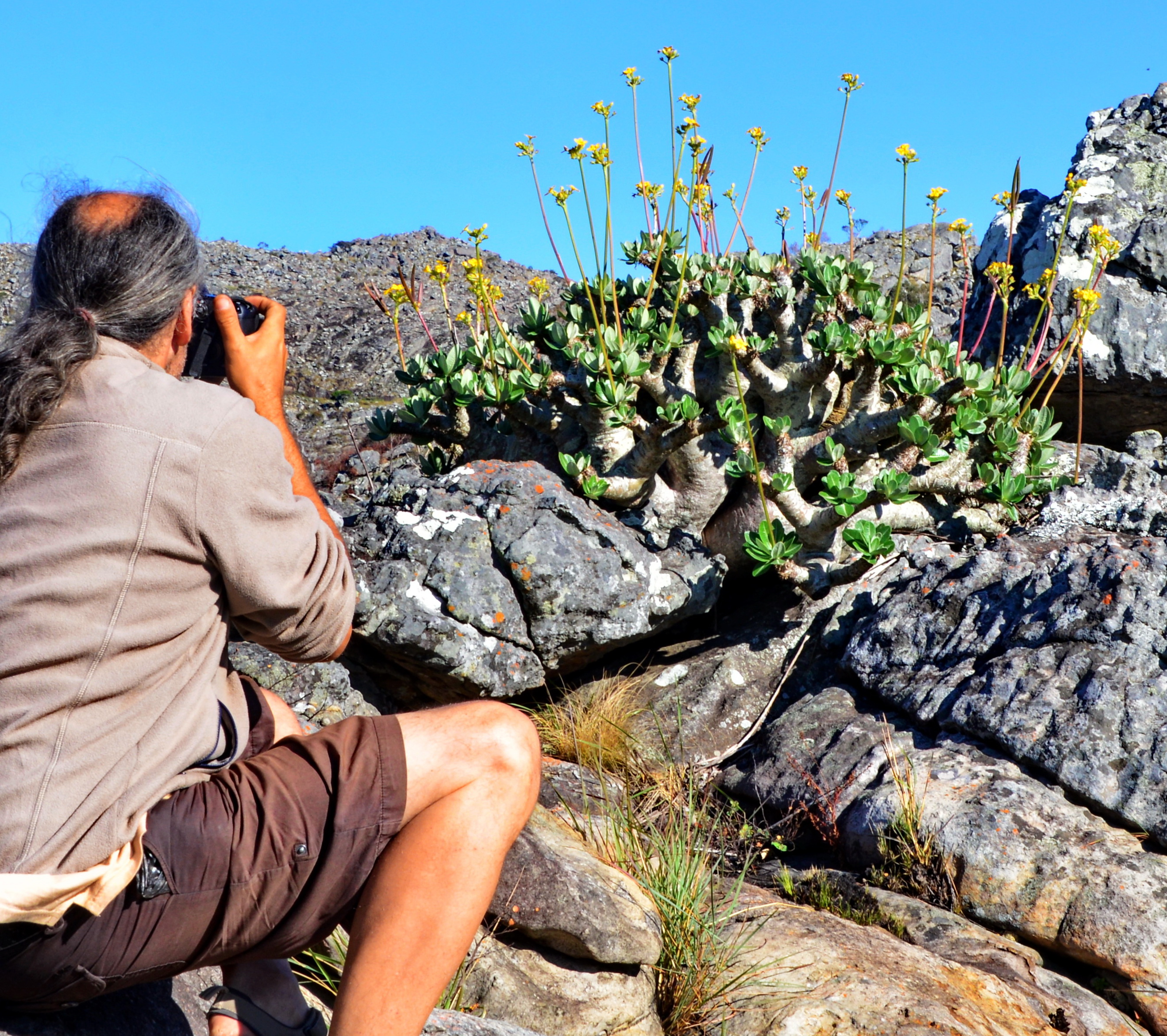
Pachypodium densiflorum

Pachypodium densiflorum

Euphorbia itremensis

Euphorbia itremensis

Is E. itremensis just a white flowered form of E. quartziticola or a good species for various reasons other than flower colour? We saw much more yellow flowers in total during our stay on the Massif then these white flowered plants. I joked and asked Christophe to show me a red flowered plant. He took us to another location but there were no red flowered plants on show. Different flowering time? I joked and asked him to show me a form with purple flowers with orange spots but he told me that he was still working on that one in Photoshop!

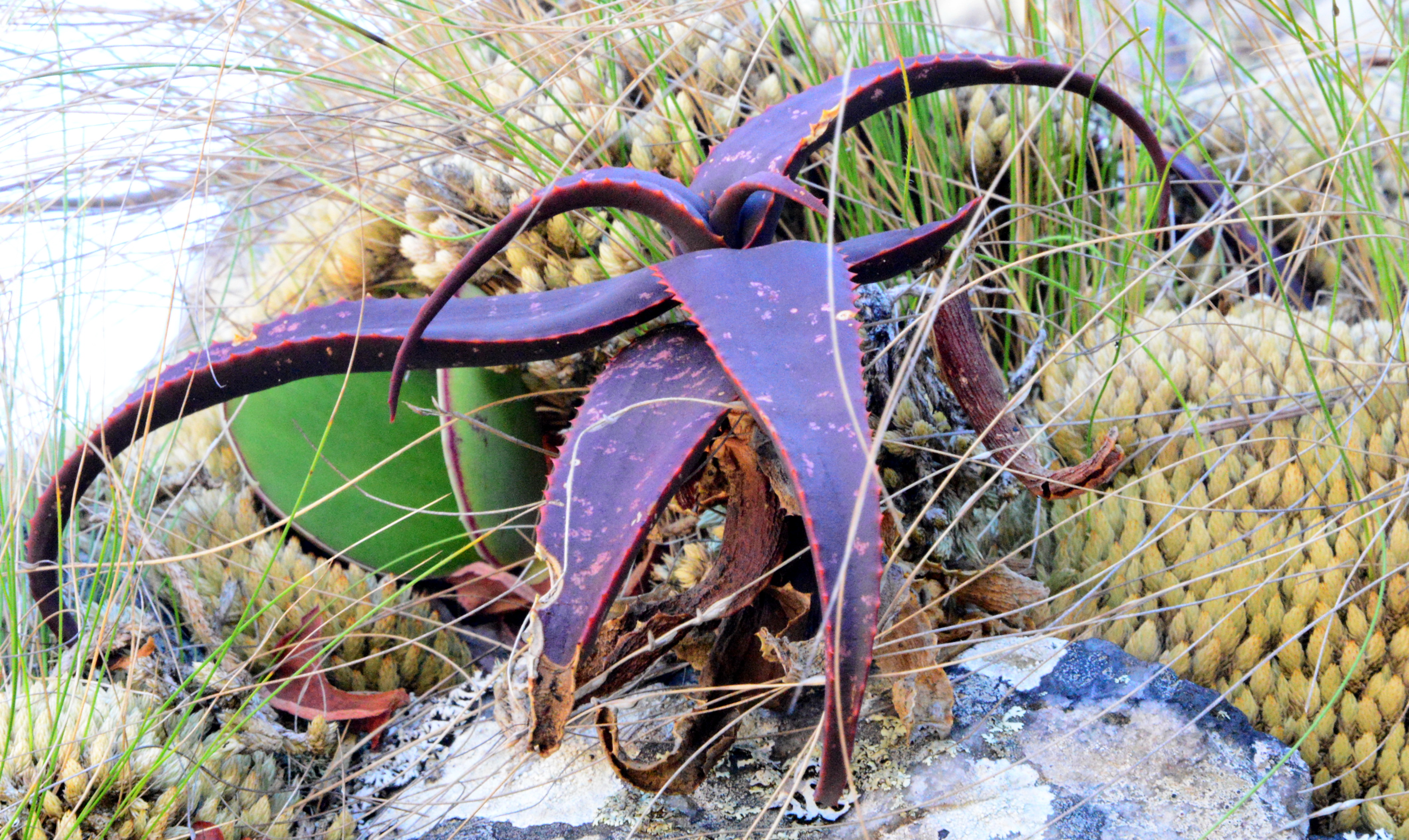
Next Jean took us to a site for Aloe erythrophylla grows. On the internet it is said to be rare in cultivation, probably as much for the remoteness of its restricted habitat – it is endemic to the Itremo Massif – as anything else. Difficult to photograph, as the visible plants were high on the rocks with the sun at the wrong angle.

Aloe erytrophylla

Aloe erythrophylla

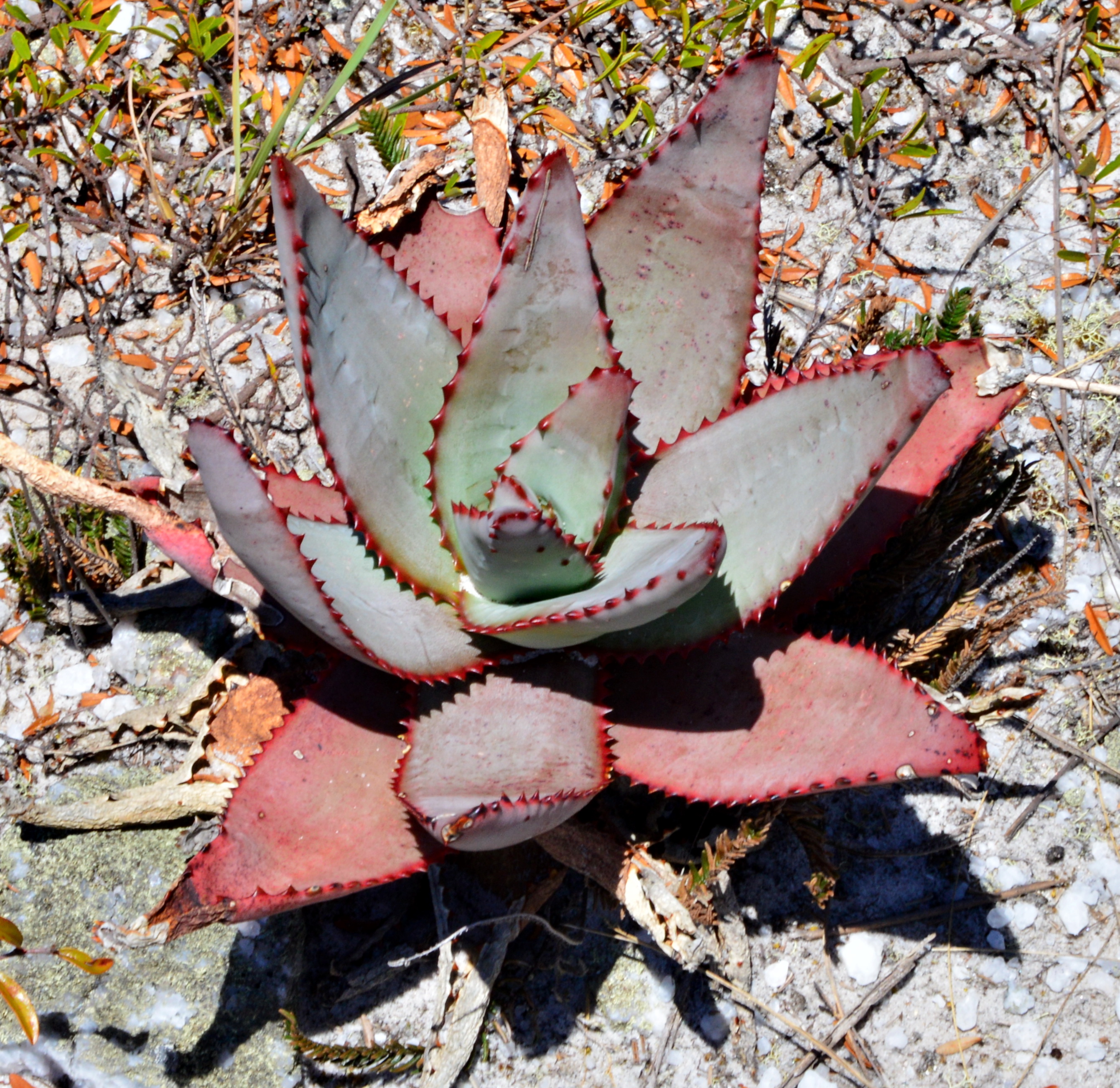
At the next stop there were two Aloe, both basking and fully exposed to the sun at an altitude of c 2,000 m, still growing on quartz. It would be interesting to know the soil pH, which for Uebelmannia populations in Brazil, also on quartz, was around pH 3.5, equivalent to strong Hydrochloric acid. Must take a field pH kit on future trips.

Aloe capitata var quartziticola

Aloe capitata var quartziticola

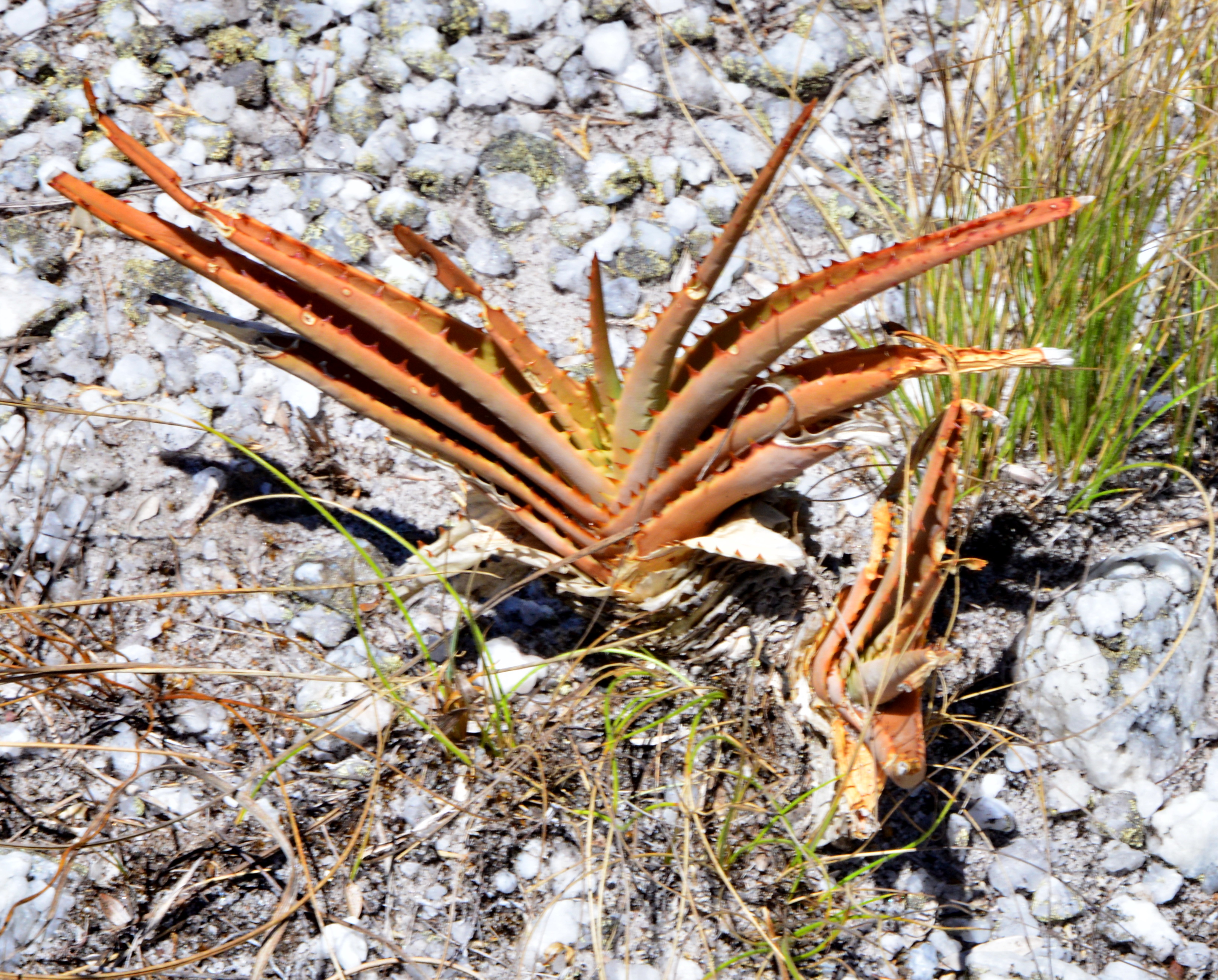
Aloe compressa var. schistophila

Aloe compressa var. schistophila

This second Aloe differs ‘from the bunch’ seen so far by its distichous leaf arrangement that persists even on large mature plants. We did not see flowers, but the internet reports that the inflorescence is unbranched with the flowers clustered at the tip.

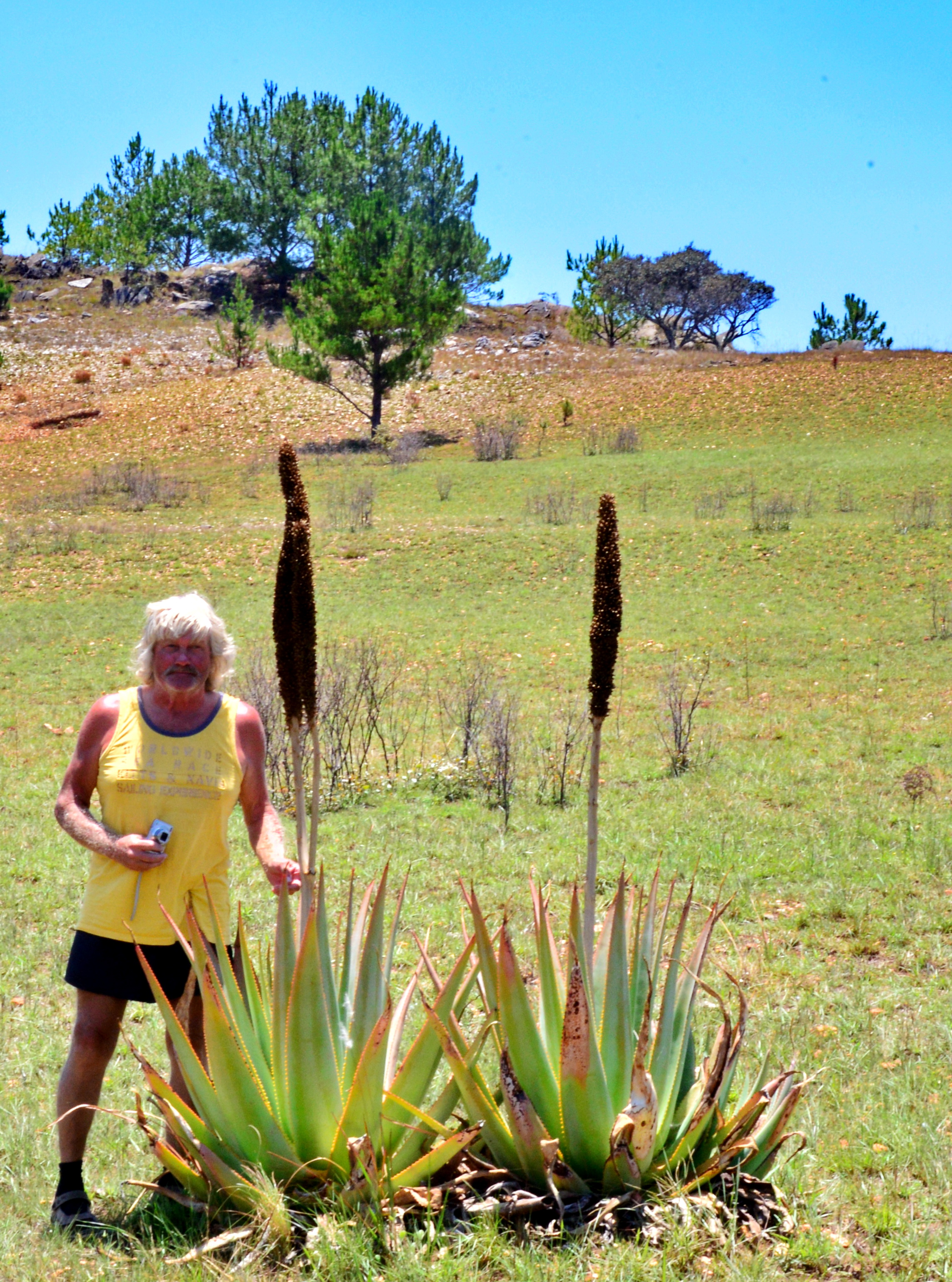
Today was certainly Aloe Day! At the next stop we were shown Aloe macroclada. These were large plants with a large (finished) inflorescence full of seeds. In the picture below, John acts to provide scale to show the size of this Aloe. Too large perhaps for a UK hobby glass house but should be a hit in gardens in California. The leaves have been shown to have the same healing properties as Aloe vera that could become an important local industry.

Aloe macroclada

Aloe macroclada

We reached the administrative office in Itremo village. Again, a crowd of curious locals crowded round. We decided to give the warm Cola a miss but did find the project representative who collected our due for our visit – well worth it!

Soon after the village we stopped at the site where we did not have enough time to take pictures yesterday for another Aloe, Aloe capitata var.cipolinicola.

Aloe capitata var.cipolinicola

Aloe capitata var.cipolinicola

This species is again better suited to a Californian garden than a UK hobby greenhouse!

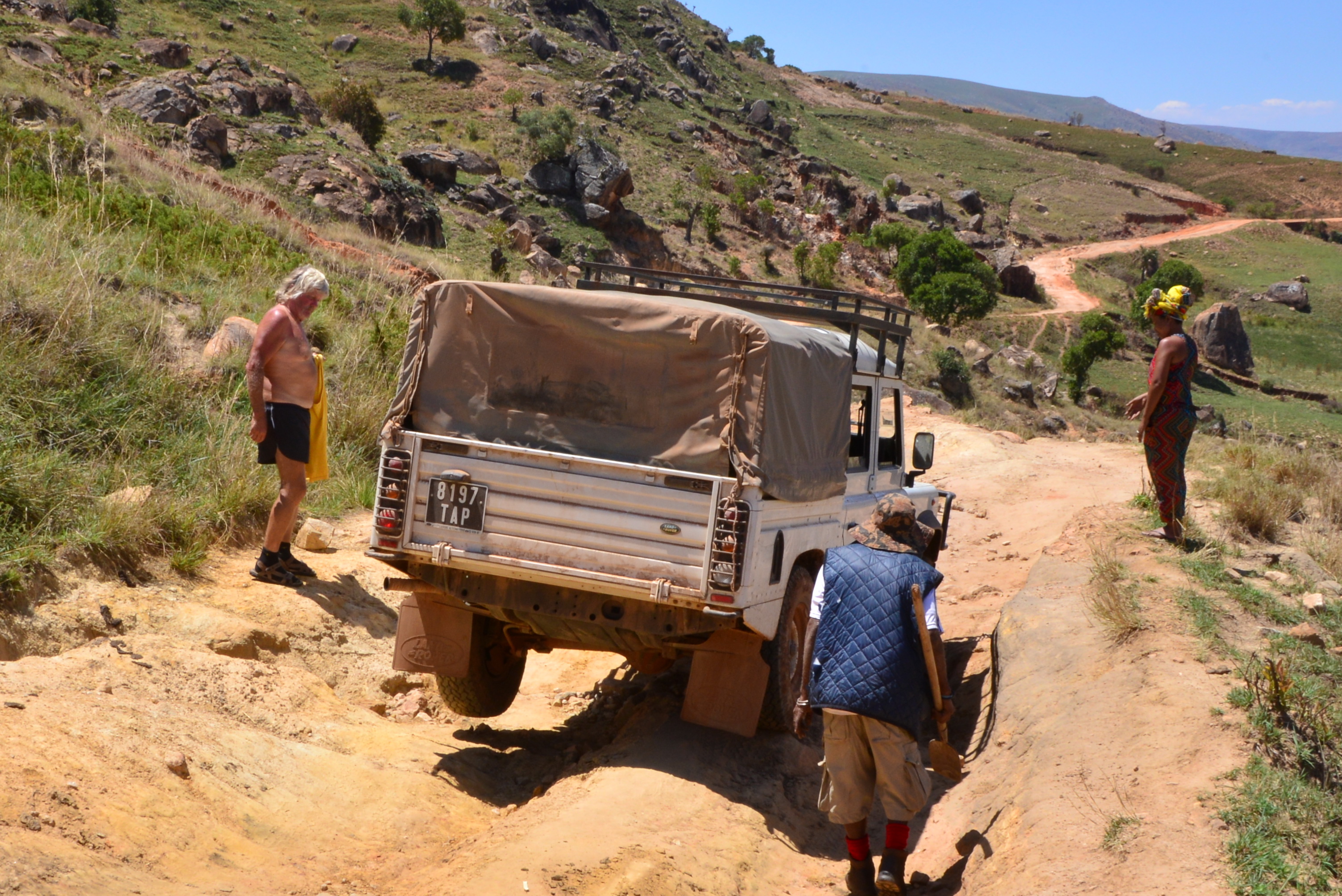
We reached the worst stretch of the track and again it was a case of ‘everybody out’ (except driver Christophe) who carefully followed Nadia’s and Jean’s instructions while John and I photographed and videoed the car’s very slow progress, often with just three wheels in touch with the track. We still had the bridges to go!

3x4 wheel drivging

I guess this is 3×4 wheel drive driving!

As James Brown would have said about the next challenge: ‘Take it to the Bridge!’

'Take it to the Bridge!'

‘Take it to the Bridge!’

It was so nice to get back to get back to asphalt, even though there were lots of potholes, and a nice cold THB beer back at the hotel.

I know that a few days ago I would have gladly missed out on this outing, but I’m very glad that Christophe encouraged me to have made this unforgettable adventure!

Thank you Christophe – fantastic driving, thank you Nadia for your great cooking and thank you Jean for showing us some great plants!

And so the day of our camping adventure tonight had arrived. I packed my sleeping bag and an extra set of clothes in case it got cold at night. Christophe had arranged that we could leave all our luggage in one room in the hotel in Ambatofinandranaha where we would return after our night under canvas.

We were greeted at breakfast by Jean Baptiste, a Malagasy botanist who lives in this town with the unpronounceable name (Ambatofinandranaha). John and Christophe went to see him and his garden yesterday afternoon while I stayed in the hotel to back up the images to date prior to our camping adventure – no internet of course. Jean has been acknowledged in a number of books including the Aloe of Madagascar by father and son team Castillon. He knows his Aloes and has discovered a number of new Malagasy Aloes.

Jean was with us as a guide, essential on the poor tracks. For years he had explored the area on foot. Not such a bad idea as it took us some 8 hours to cover the 40 km! This included some road side stops to photograph plants, scenery and road conditions. It also included a stop to rebuild a bridge, something that we had to repeat the next day, on the way back!

This had better be special! It was!!!
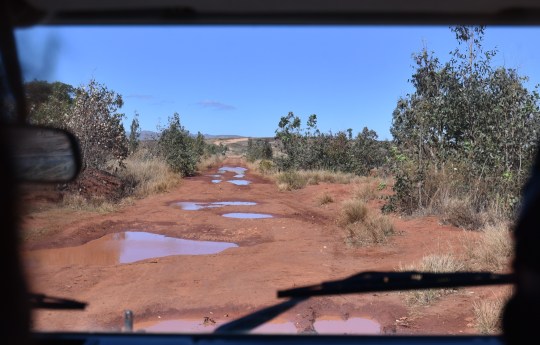
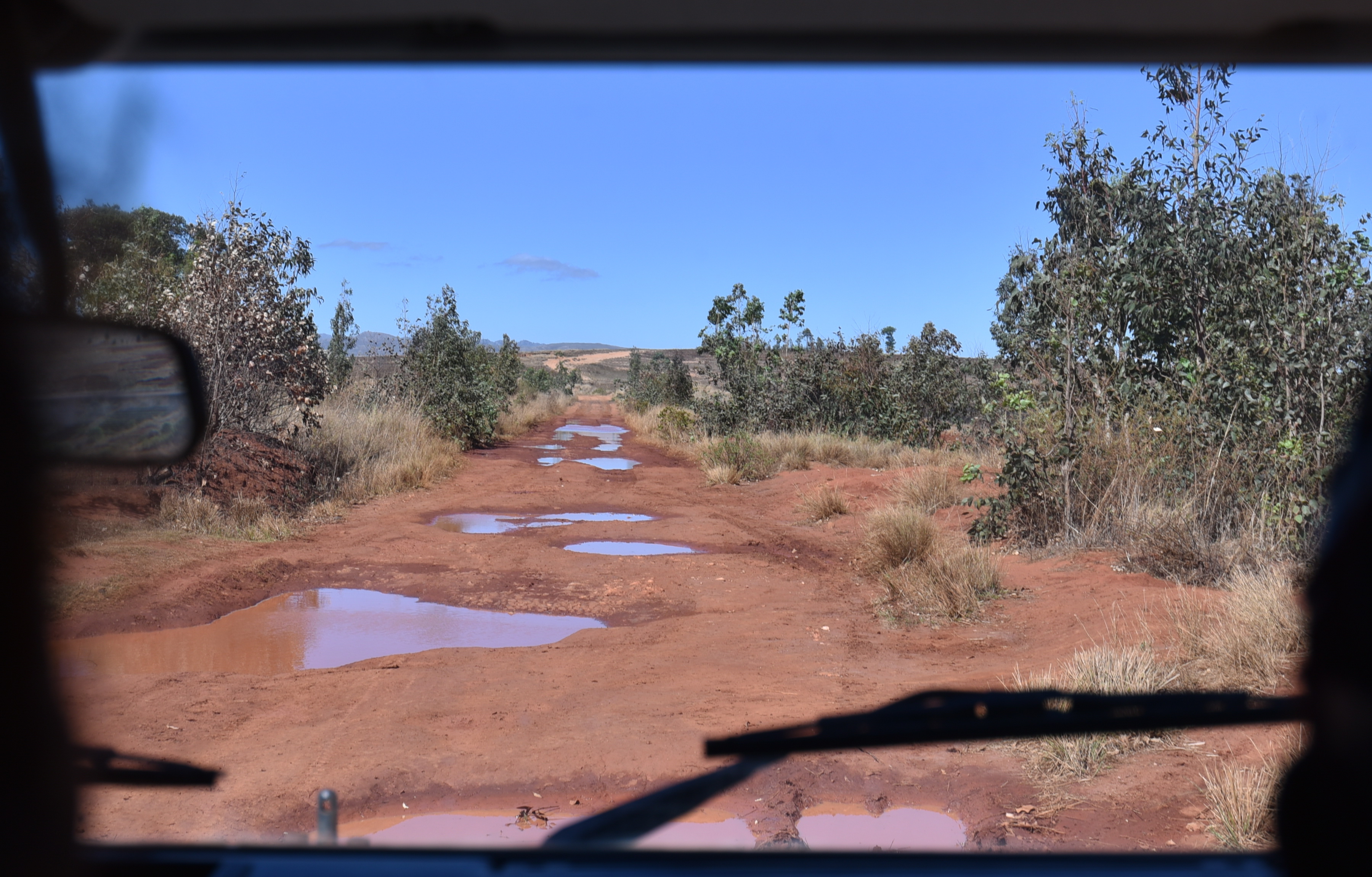
View from the back seat

View from the back seat

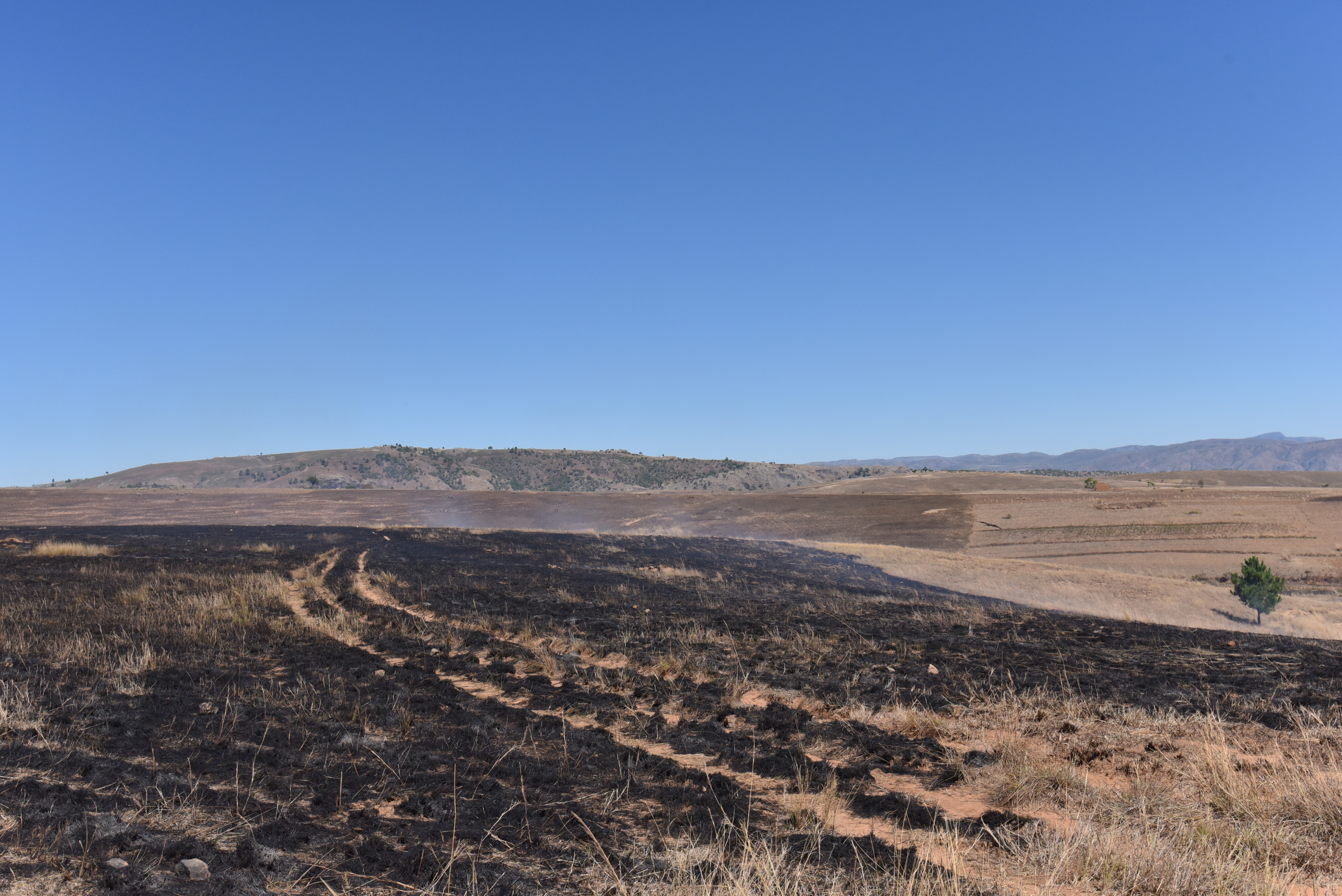
There had been some rain a few days earlier and there were still puddles on the track. This was the start of the rainy season that could turn the track into an impassable mud pool. Fingers crossed for a dry 48 hours, otherwise we might not get home in time for our flight home. We drove over the mostly gently rolling hills past small forests, rice paddies and burnt fields, always seeing two to three house settlements somewhere in the landscape. The population of the island is increasing at an alarming rate!

Madagascar has lost more than 33% of its forests since the 1970s and has attained the highest soil erosion rates in the world of 20,000-40,000 tonnes/km²/year. These statistics are difficult to visualise – not until you drive through the country do the figures take on meaning, as you drive past reasonably burned fields and see the large areas that are now rice paddies as the growing population tries to feed itself.

Burned fields

Burned fields are a common feature of the landscape

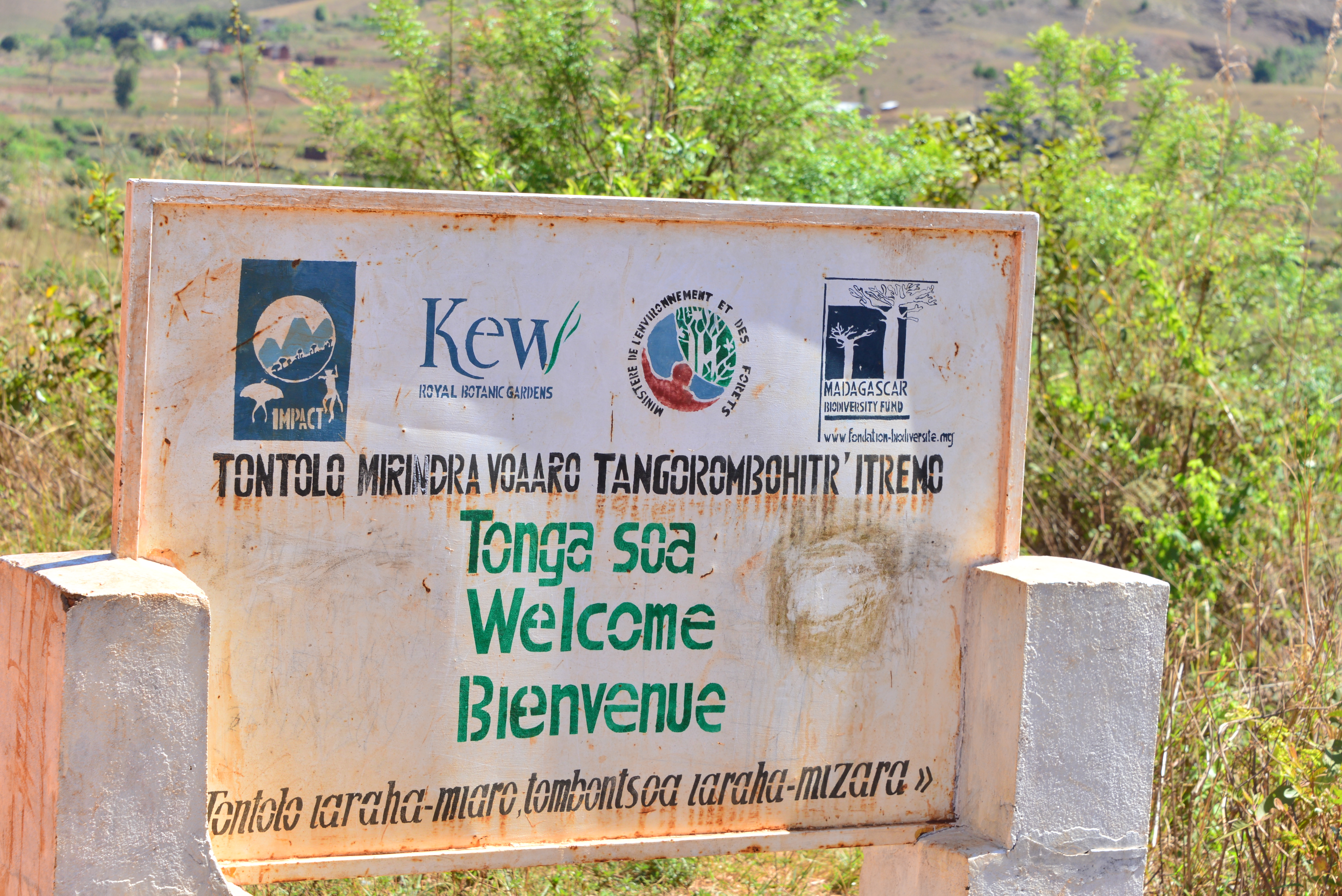
The Itremo Massif is part of a conservation project where Kew is one of the partners of a 273 km² protected area in the central highlands in Madagascar. Quoting the Kew website for the project: ‘Initial botanical surveys have revealed over 560 species of plants, of which around 10% are only known from the Itremo Massif. Highlights include 3 species of lemur, 9 species of chameleon and a critically endangered frog.’ Check out the video included on the site that gives a good overview of this.

Sadly, collecting of some of the species for the C&S Hobby is quoted as a major threat to the species concerned. Some of the pachycauls that we saw and photographed must be of a significant age and it will take many more years for these to be replaced by nature.

The poor quality of the track leading to Itremo is of such poor quality that it should discourage Eco tourists to travel here, although the price of plants offered for sale in Europe could make commercial collection of plants by the truck load an attractive proposition. In other countries the tell tale signs of holes left in the desert ground tell the story. Fortunately we did not see any such signs on our trip.

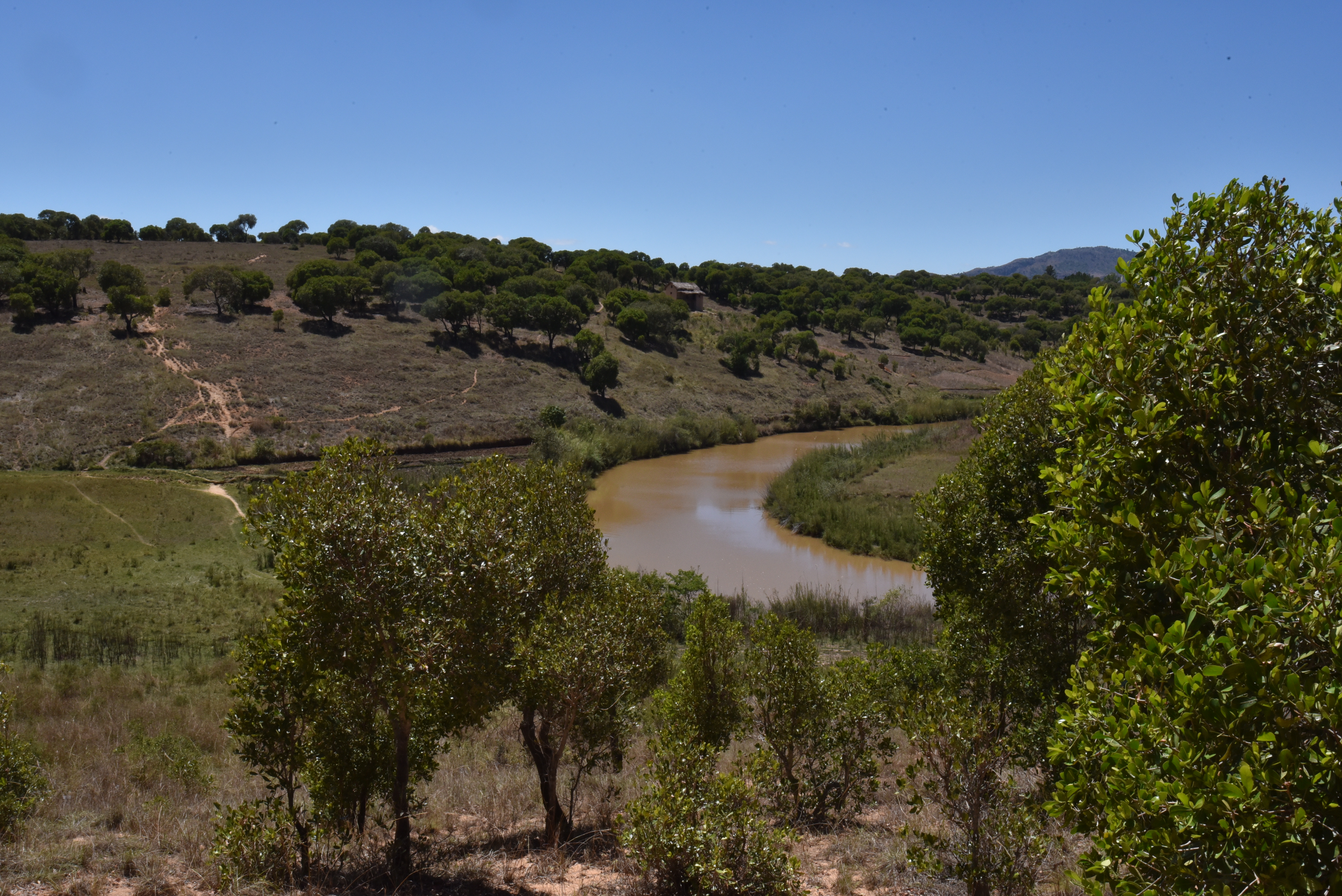
We made slow but steady progress until we came to a nice looking river valley
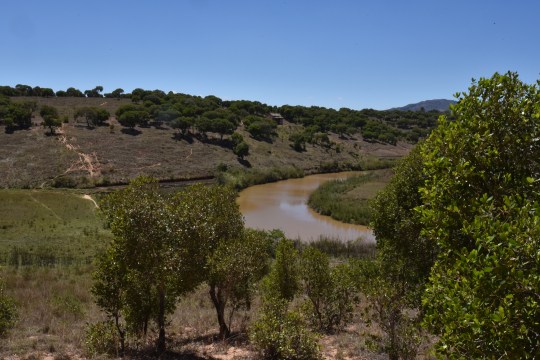
nice river valley

nice river valley

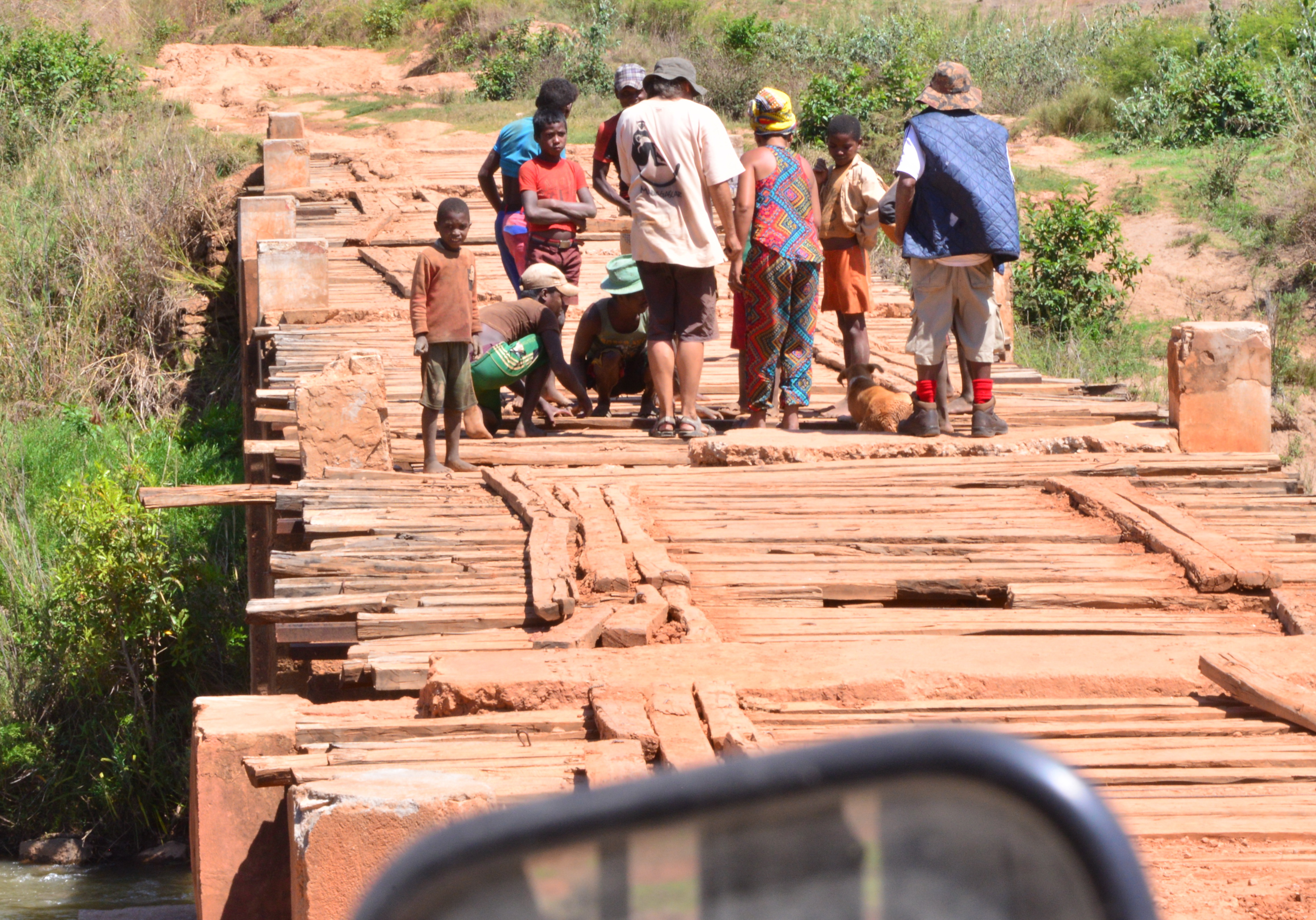
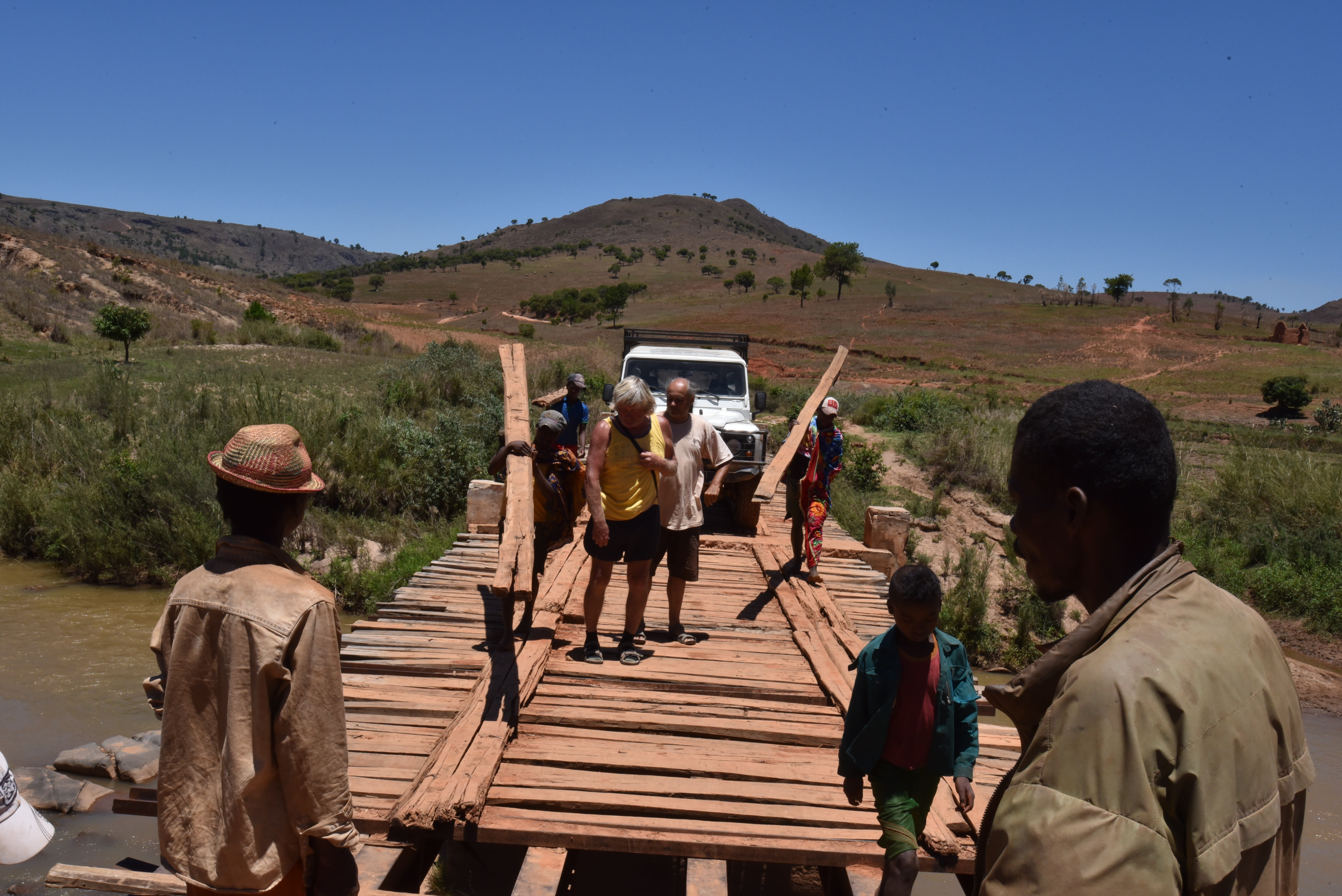
Unfortunately we needed to cross the river to continue our journey. Fortunately there was a bridge, unfortunately it did have a significant number of planks missing. What to do? Jean Baptiste suggested that supply trucks pass along this road and often carry some planks to overcome such events, so suggested a wait. I managed to cross the bridge on foot and after about 500 m came across a second, longer bridge, again with half the planks missing. It should be possible to take planks from this bridge to the first bridge, fix it, cross it and then strip down #1 to fix bridge #2. The plan was communicated to the twenty or so members of the community of all ages who started the task of moving wood immediately, leaving a small team of negotiators to agree the price of the work. 10,000 ariary, about £2.50, for both bridges and an assurance that our team of bridge builders would still be available the following day to reverse the task and allow us over again for the same price.
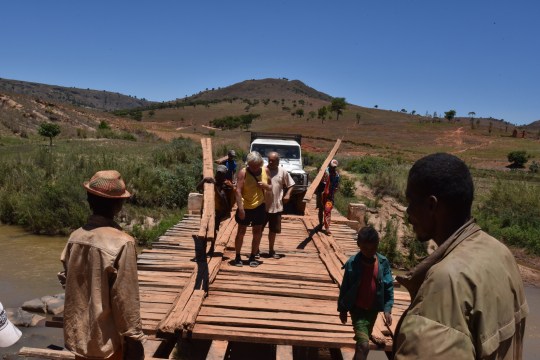
Bridge building

Christophe and John supervise the bridge building

Their were signs at the second bridge suggested that this was not an entirely unusual experience for the community as a dozen ladies had set up a small cafeteria serving coffee, roasted nuts and fruits. Good to know for the return journey.
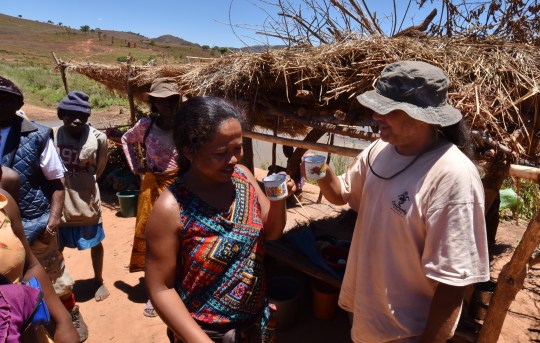
Bridge Cafe

Nadia and Christophe enjoy a cuppa coffee at ‘the Bridge Cafe’
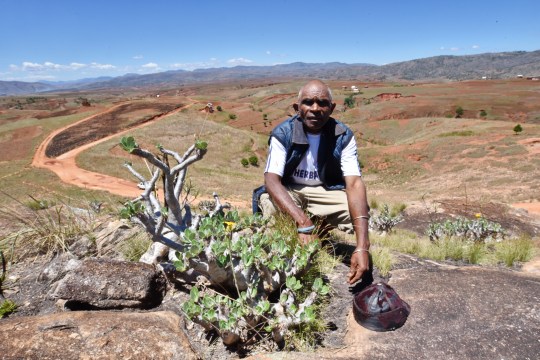
Jean Baptiste

Jean Baptiste on top of a low hill covered in Pachypodium densiflorum

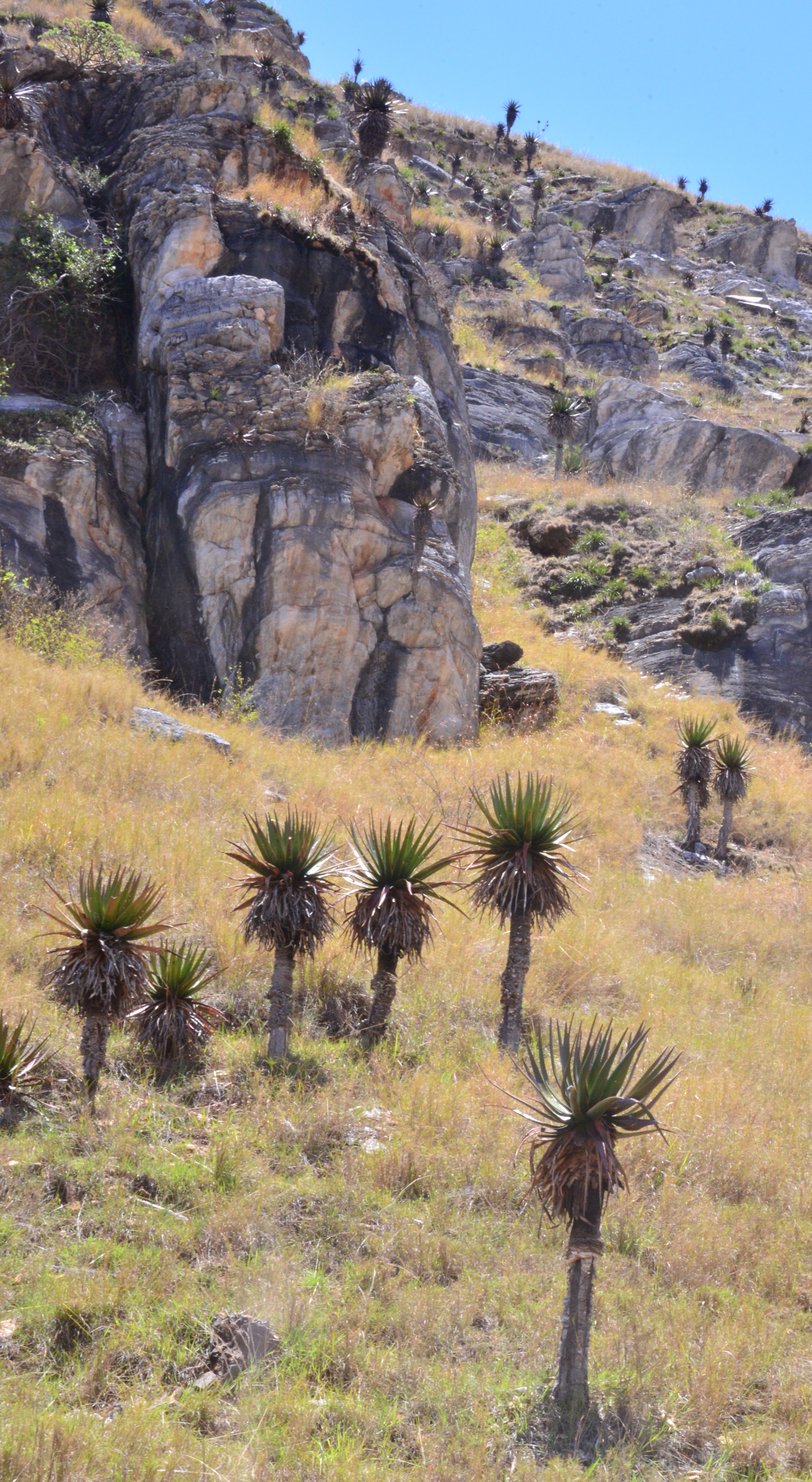
We passed a hillside with lots of tall Aloes. As the bridge incident had taken quite some time, Christophe allowed us to take some pictures from the car but promised that we’d have a longer stop on the way back, tomorrow. Not long after we entered the village that was home to the Reserve’s admin office.
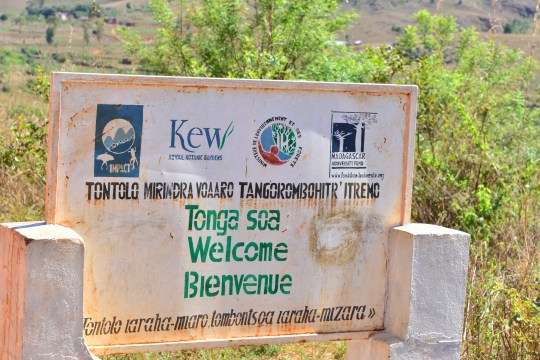
Entering the Reserve

Entering the Reserve

We reported to the admin office but there was no one home – it was Sunday. We promised to stop by the next day and promised to pay our fees then. There was even a hotel, Hotel Clement. We went into the restaurant for a nice cool Coca Cola, but although there was a fridge, there was no electricity, so it was luke warm. A crowd of people had gathered. They all seemed to know Jean who chatted with most of the adults.
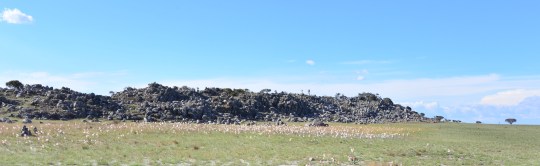
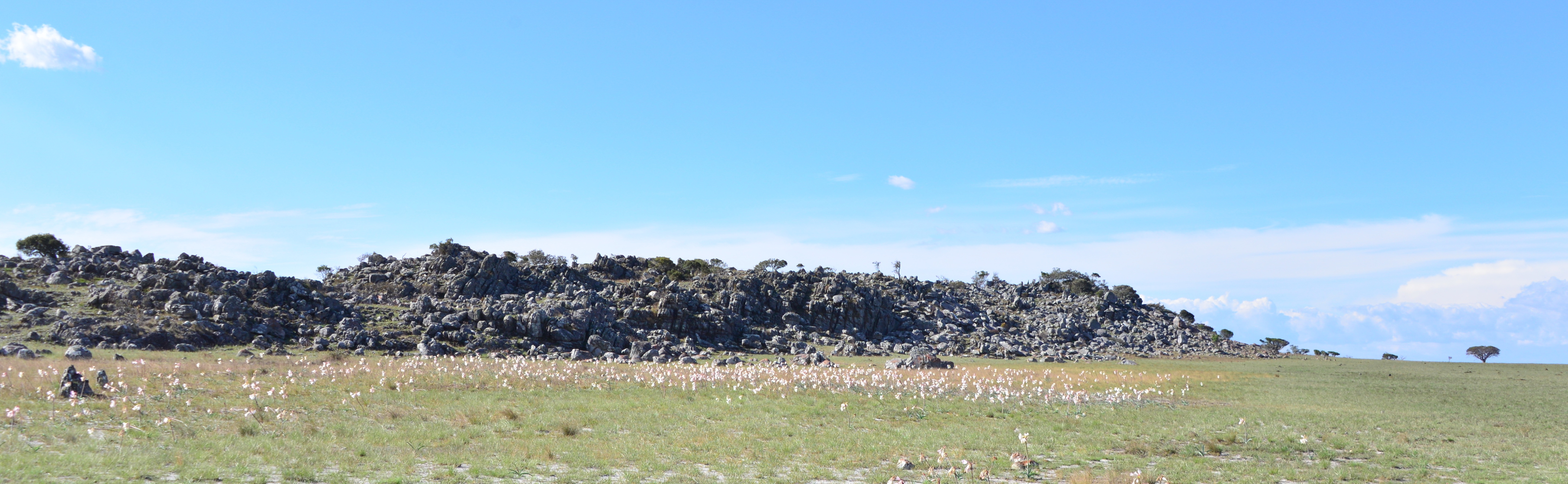
Field full of bulbs in flower.

Field full of bulbs in flower.

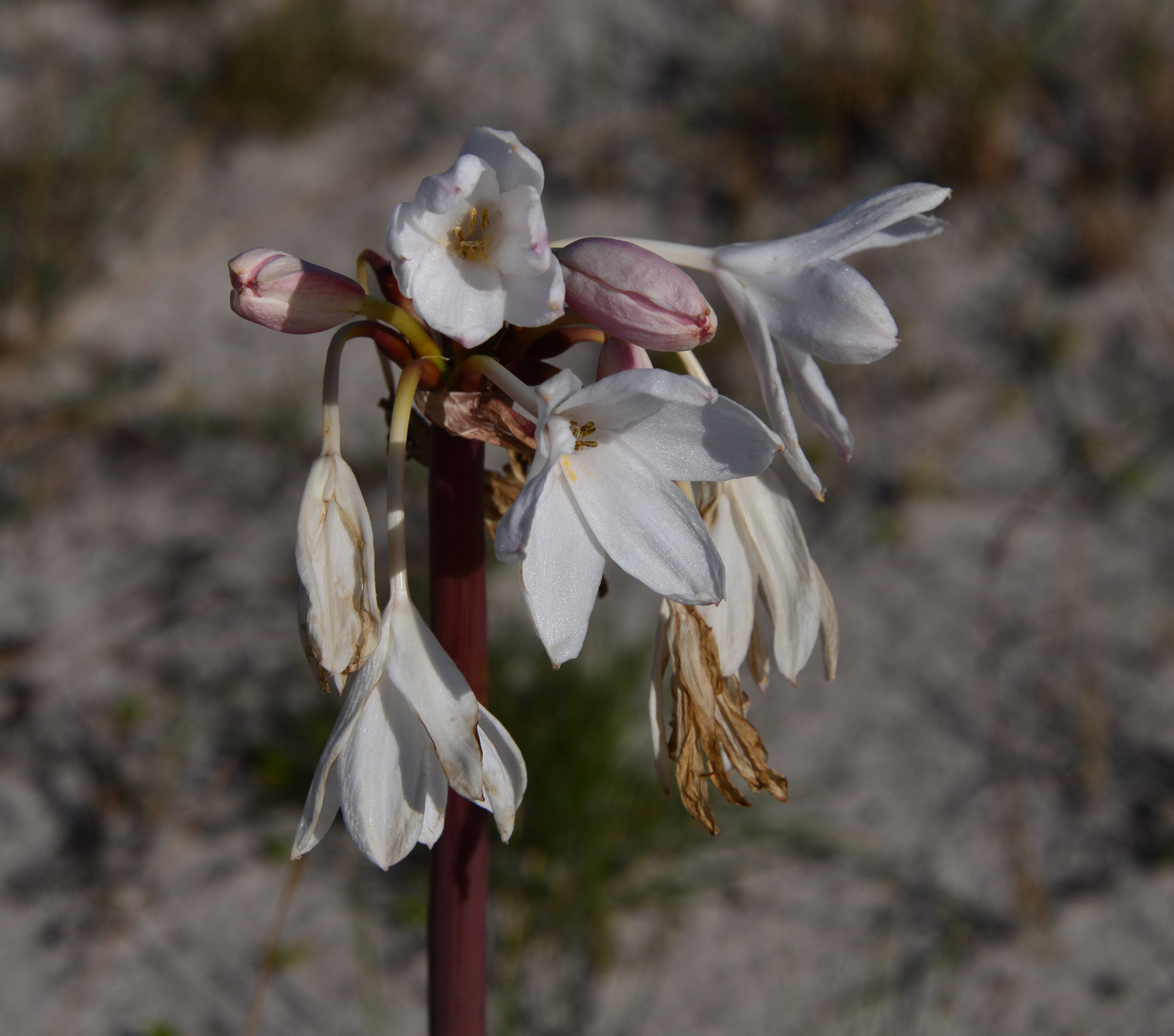
We drove on and eventually turned a corner and were confronted be a flat grass covered area full of white flowers. These were

Crinum sp. in the Family Amaryllidaceae.

Crinum sp. in the Family Amaryllidaceous.

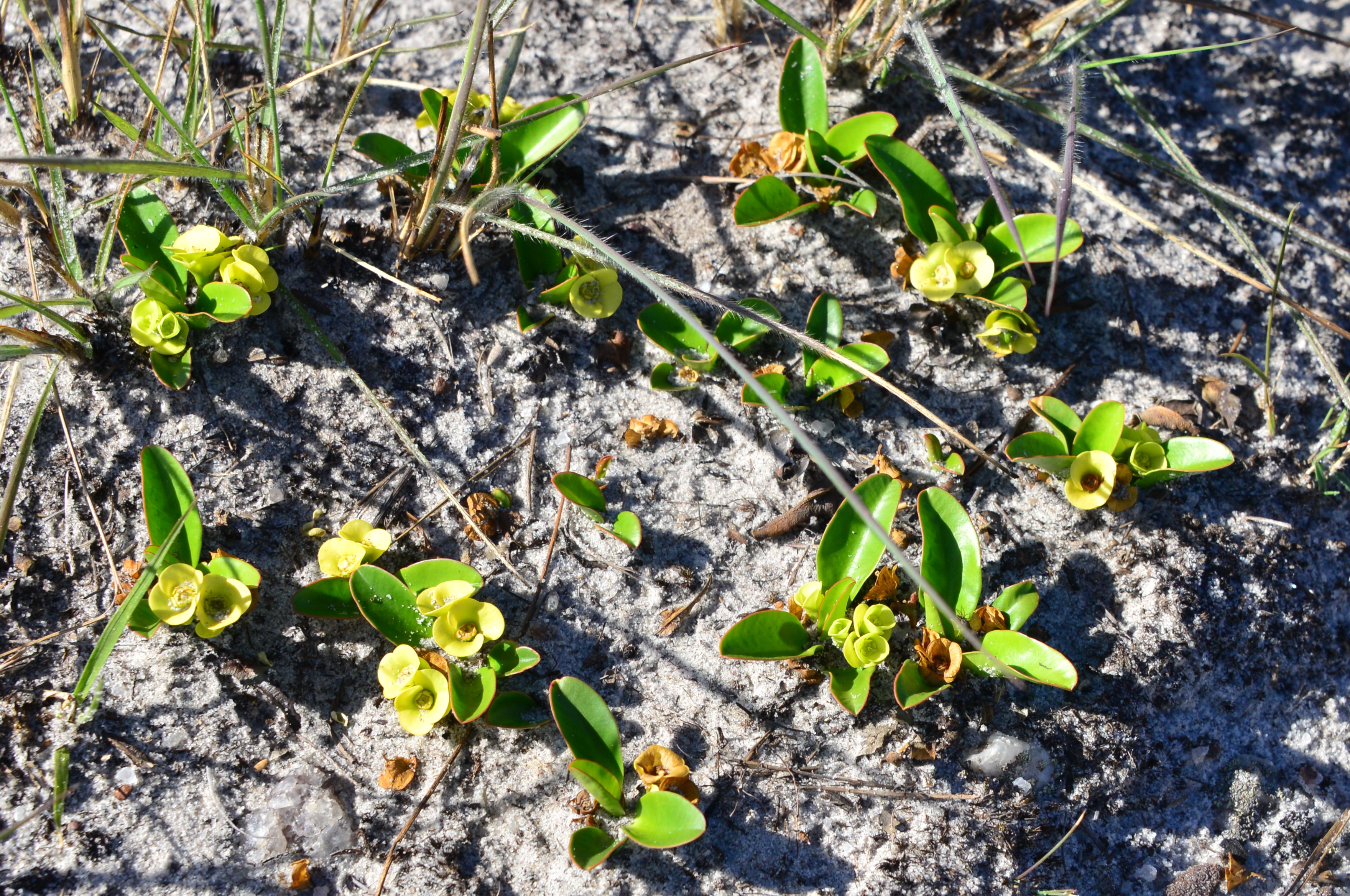
We took a lot of pictures until we noticed that these plants grew in quartz sand and pebbles and that hidden between the grass were hundreds of small plants with yellow flowers: Euphorbia quartziticola, the target plant that we had made this hard drive for! Christophe told us that our planned campsite was near by, se we drove on and were pleased that this area too was covered in the Crinum sp. and on quartz sand / gravel. And sure enough, the ground was covered in yellow flowers!
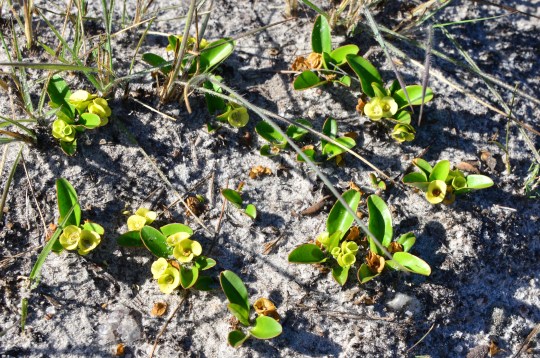
Euphorbia quartziticola

Euphorbia quartziticola

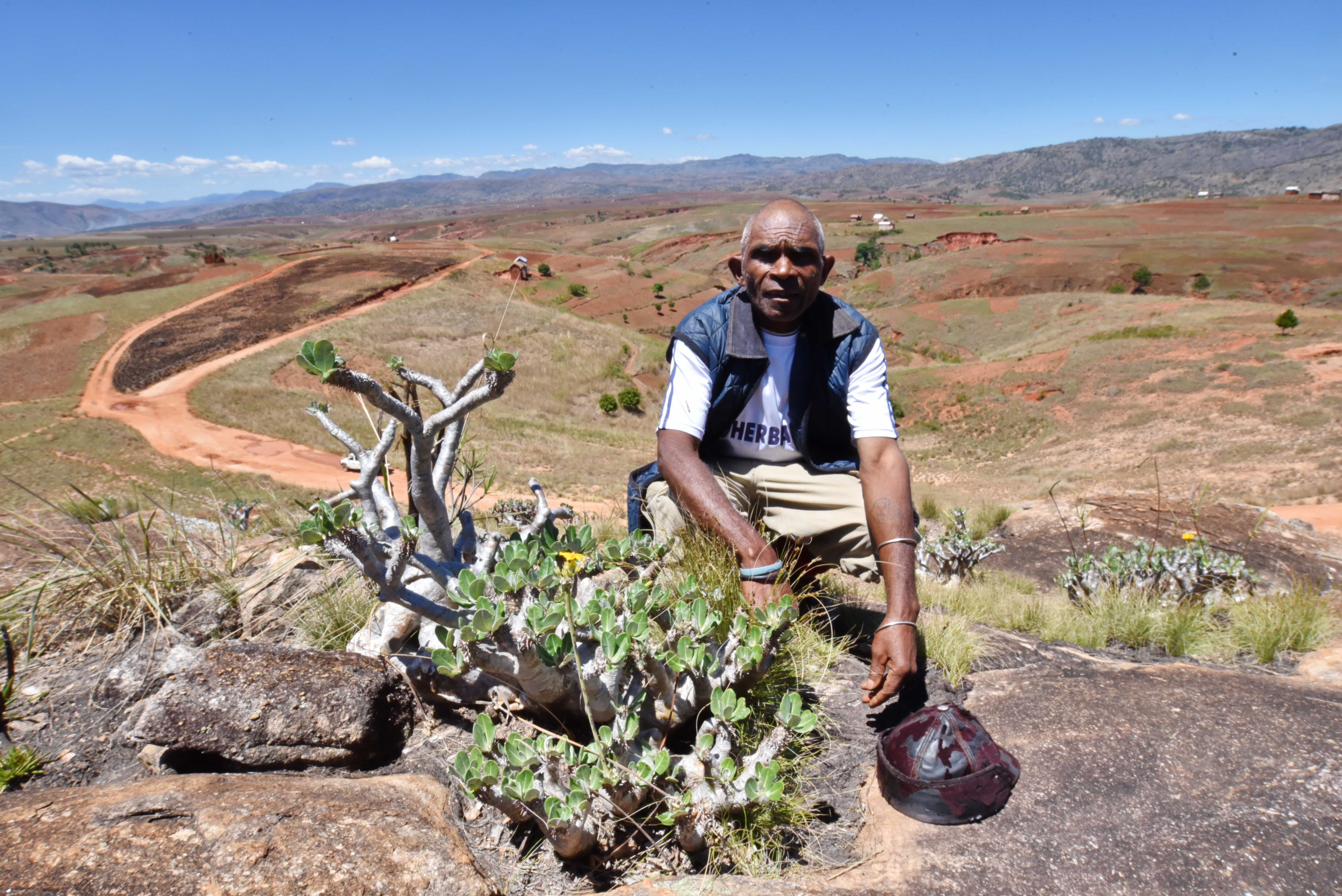
John and I were sent away to let Nadia and Christophe set up the tents. I followed Jean who was collecting wood for tonight’s campfire. Where are the Eulychnia when you need them? Oh yes, in Chile. He pointed out a small area with shrubs and told me to look for Pachypodium brevicaule. Easy to find! There must have been some twenty plants, partly buried, unlike the plants earlier on the trip found on Mt Ibite that were mostly growing fully exposed above ground.
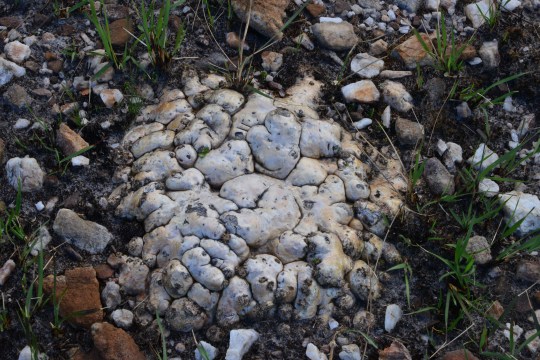
Pachypodium brevicaule

Pachypodium brevicaule

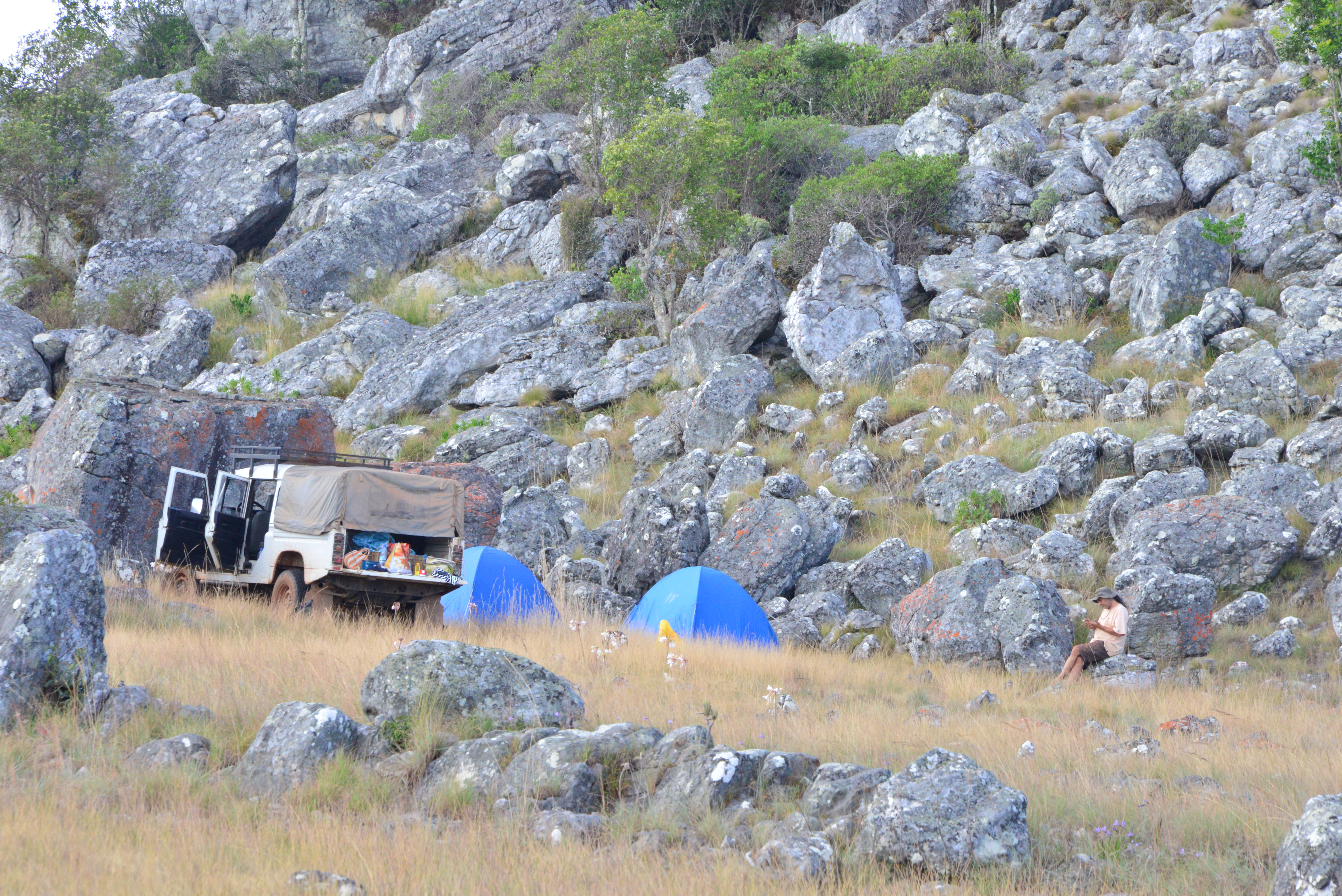
When I got back to our camp, the tents were up.

Our camp site

Our camp site

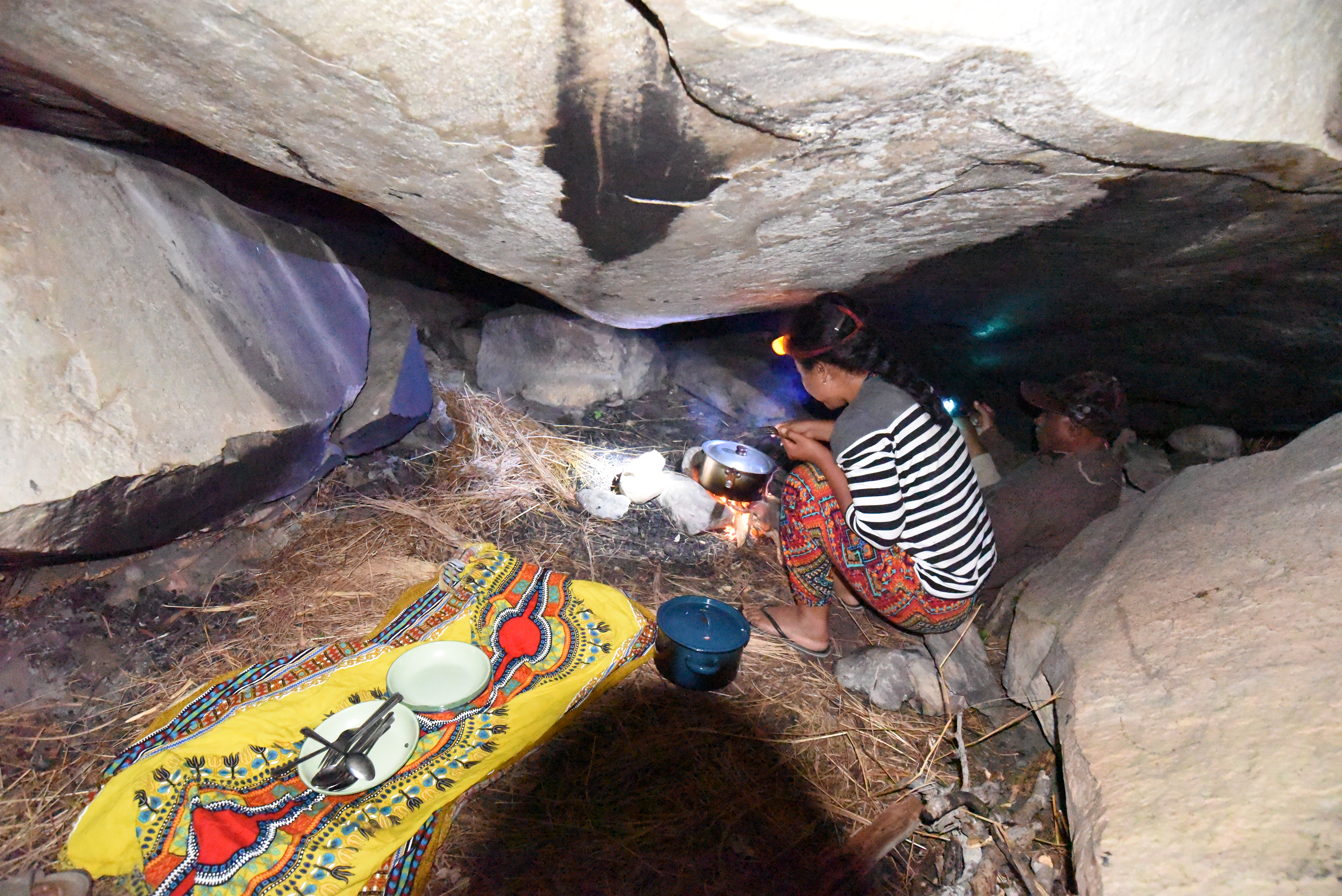
The ground was hard as I remembered from other camping sessions and there was a distinct lack of 5 litre bottles of Chilean Cabinet Sauvignon. Nadia had brought along a small bottle of rum, so at least we toasted her dinner in style!

Nadia preparing chicken and rice

Nadia preparing chicken and rice