All images today, the last before tomorrow’s departure, are filed under S3764, and include:
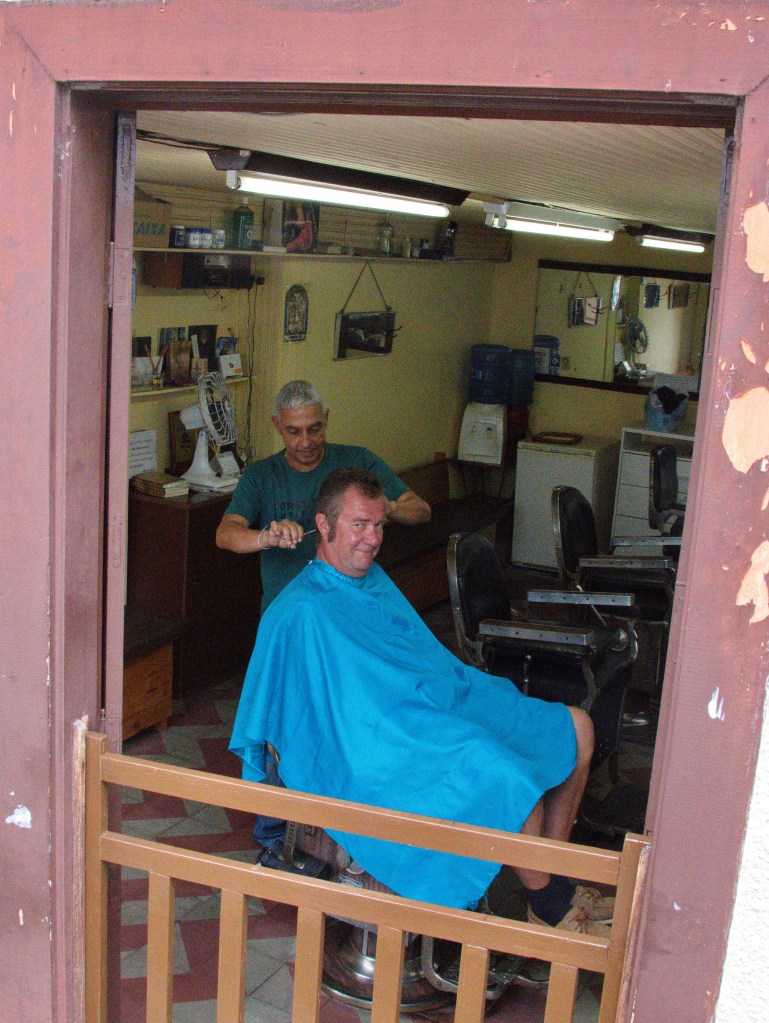
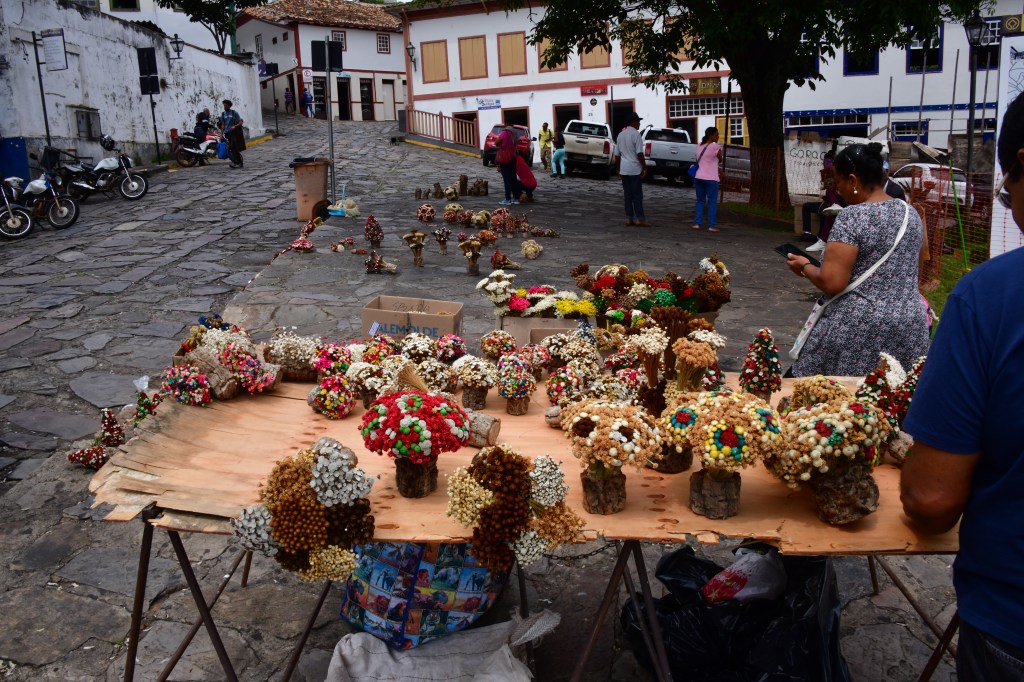
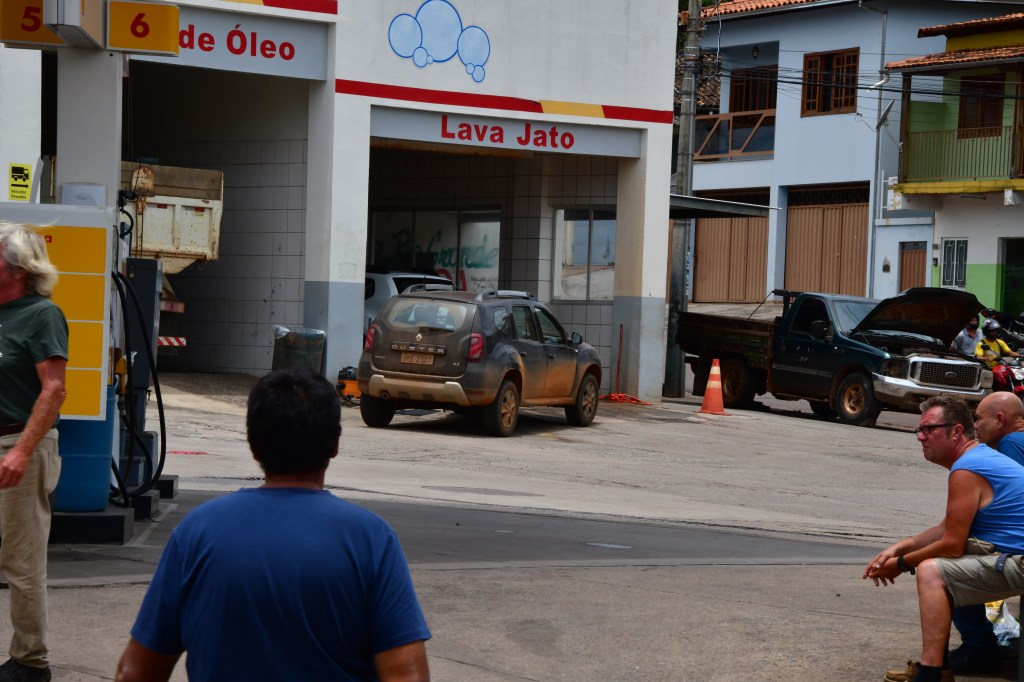
Alain’s traditional haircut on holiday. Both the ‘patient’ and the ‘hair doctor’ were fluent, unfortunately in different languages!Christmas decorations made from Eriocaulaceae flowers. Conservation?Another Cactus Trip, last day tradition: The Car Wash!
Alain had persuaded Chris to join him in leaving a day early, while John and I joined Marlon to take him home and on to Belo Horizonte for our originally booked flight. After our missed flight from Sao Paulo Airport on arrival, Alain was terrified that he would miss the flight home as well. John and I arrived at the Sao Paulo departure gate with 10 minutes to spare before boarding started, so all was well.
We still had the usual reserve day, in case of breakdowns or sickness left, so Marlon asked for suggestions for any visits for today. After yesterday’s visit to U. horrida and because I missed out on the Inhai plants on day one due my fall, I proposed taking another look at the plants near Inhai.
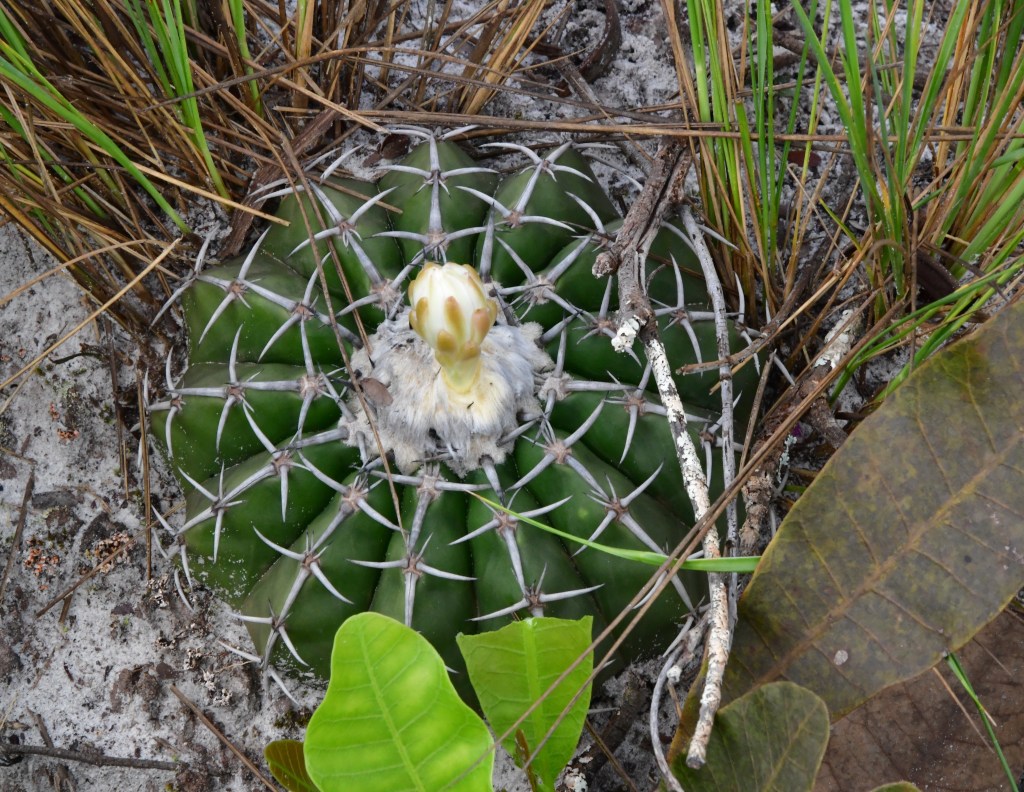
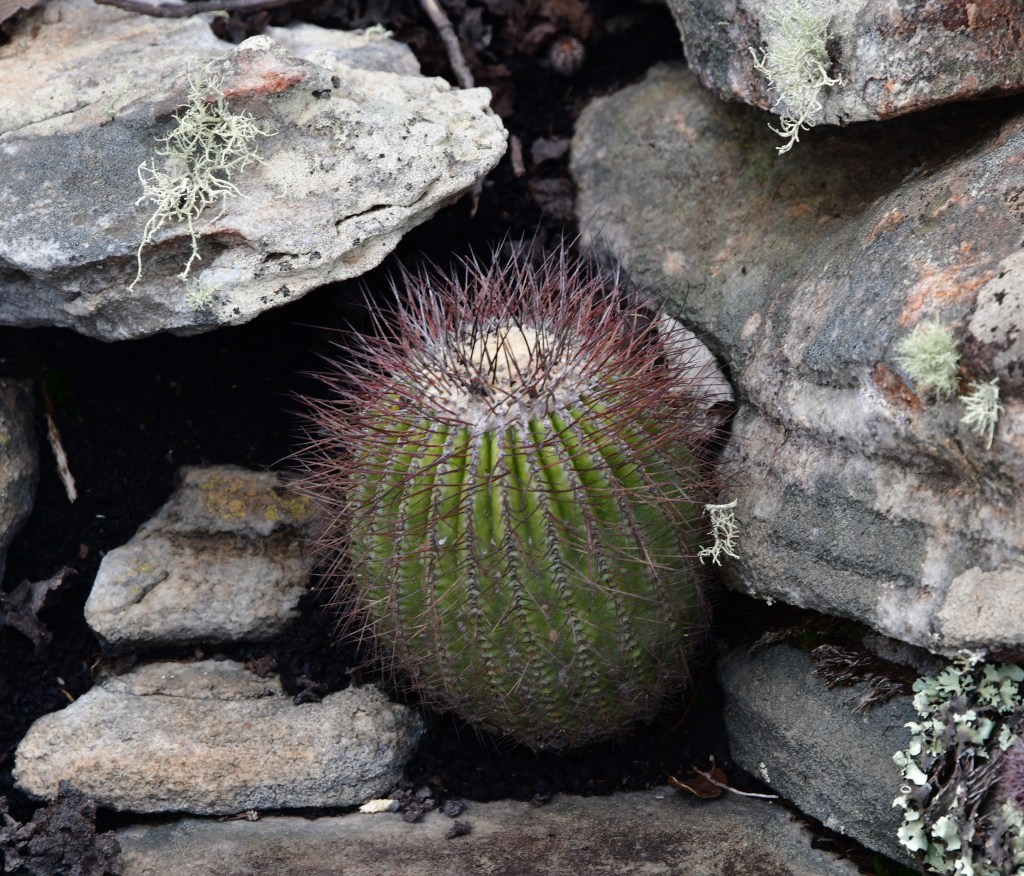
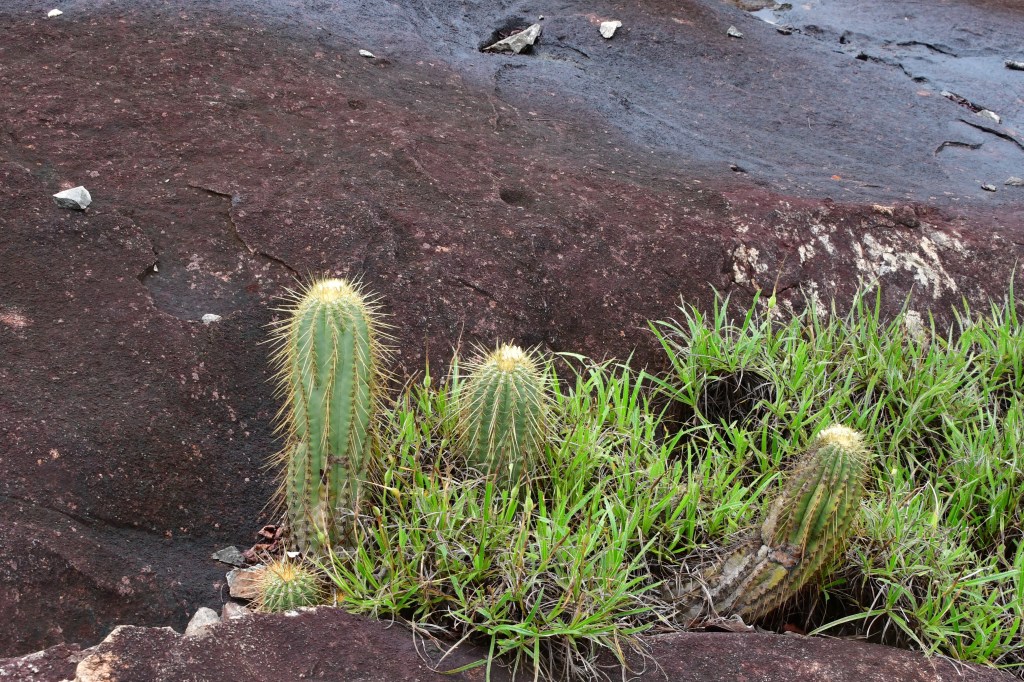
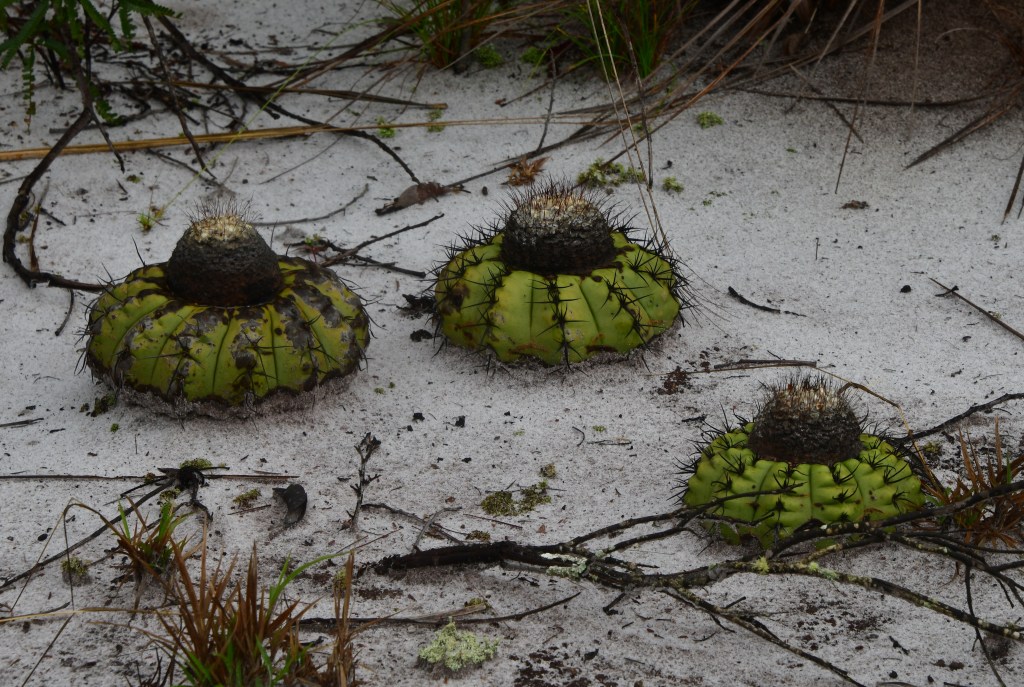
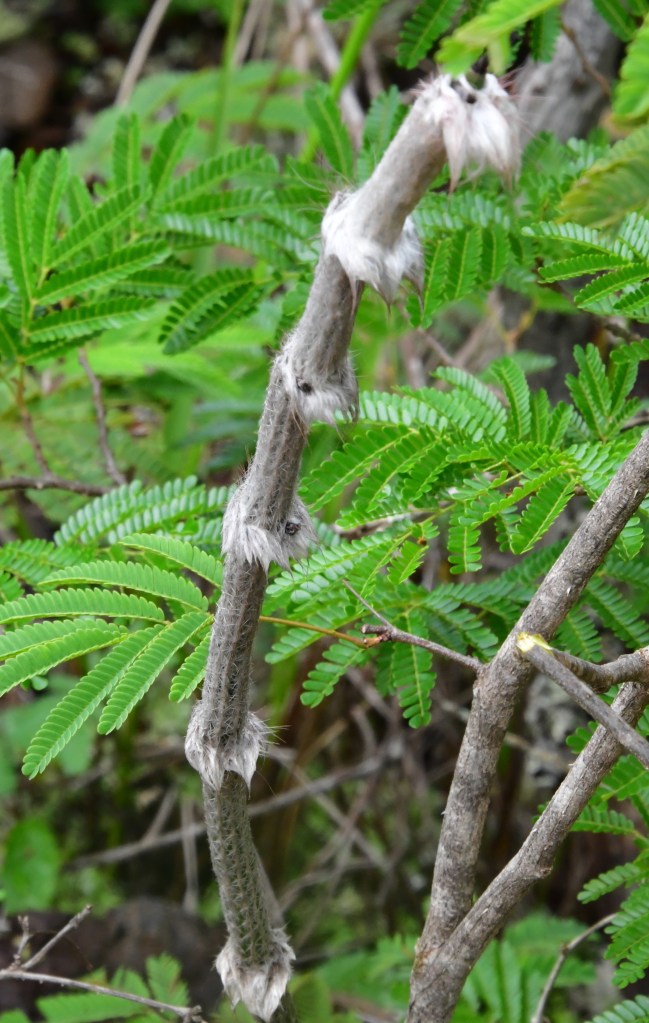
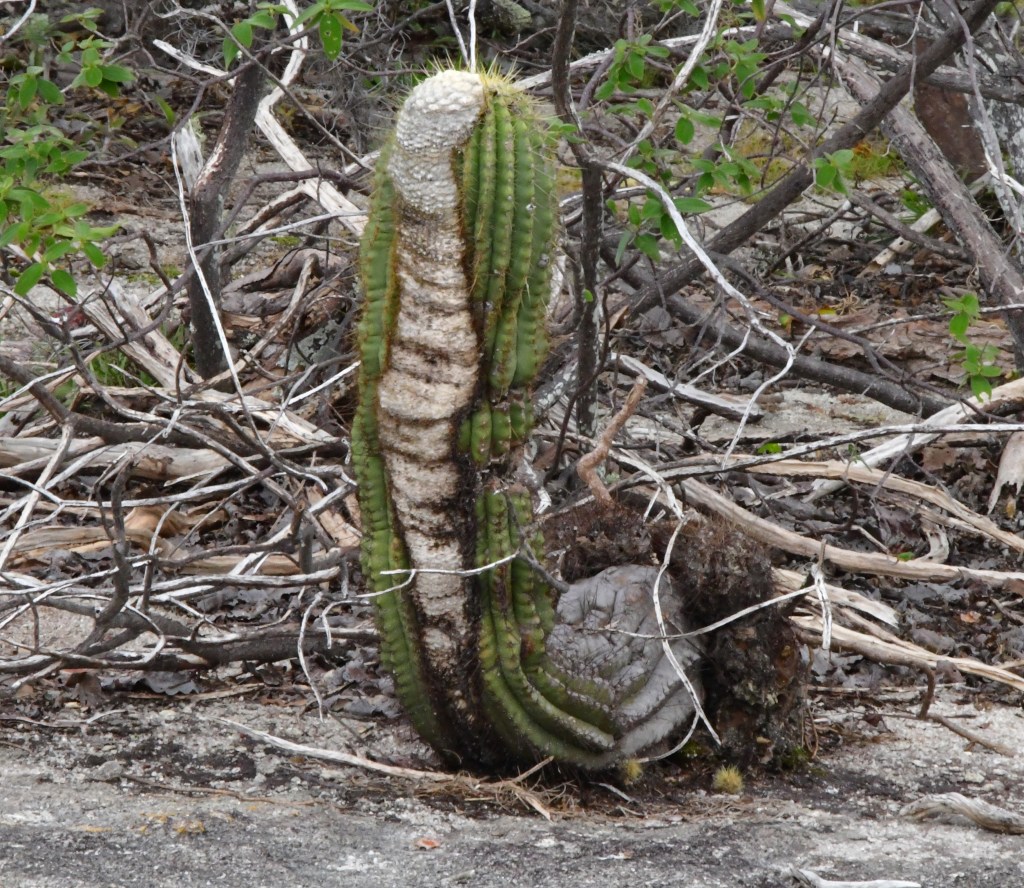
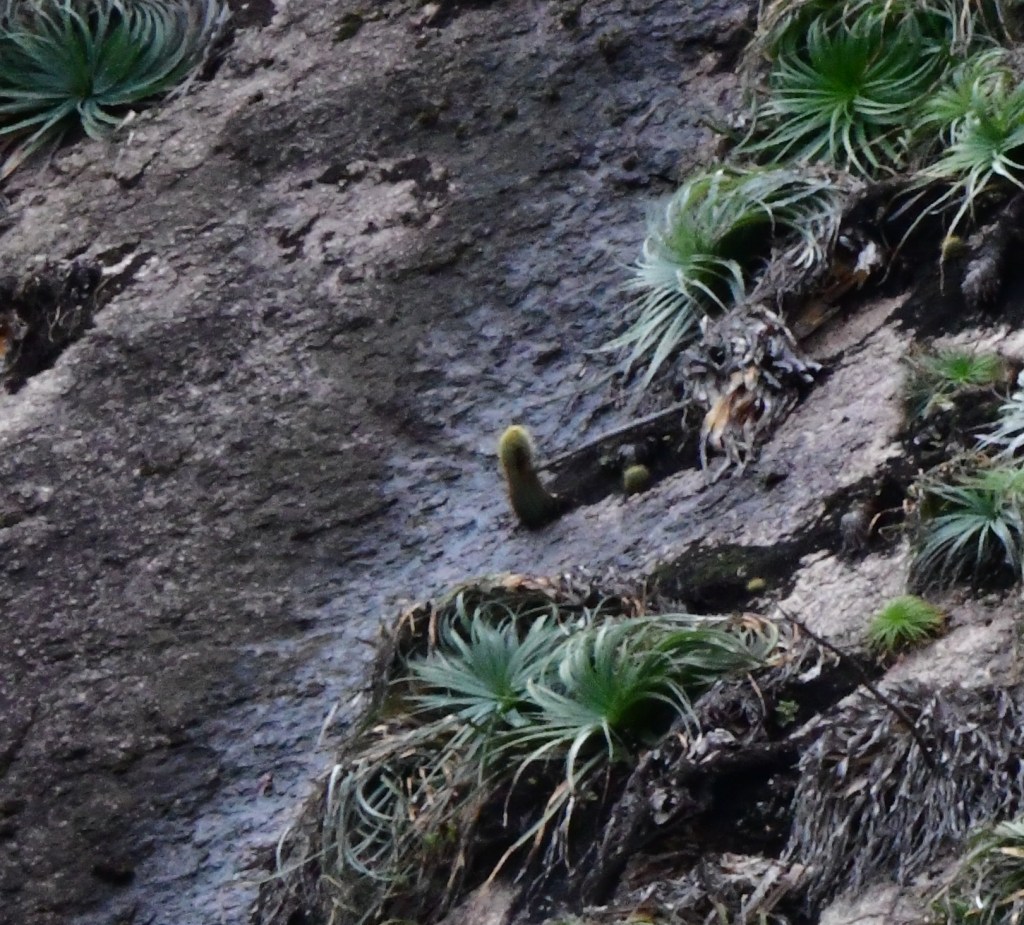
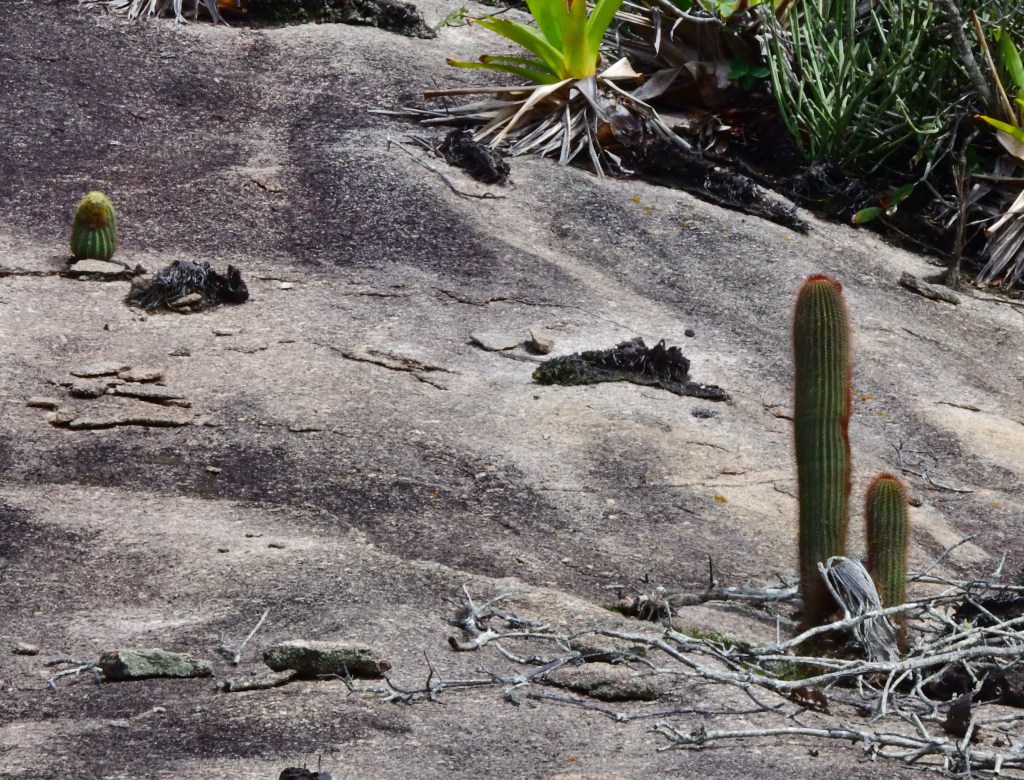
So after a bit more sightseeing in Diamantina and purchases of some of the semi-precious stones we went back to Inhai. After a month to acclimatise since our first visit here must have helped, although I was grateful for the help that John and Chris gave me to get to the spot where on 16 November 2009 I found a beautiful trio of long spined plants. Surely, these must be the same taxon as what we had seen yesterday as U. horrida. The interesting thing looking at the Inhai plants in more detail, is that as well as long spined plants there were also a good number of ‘normal’ U. pectinifera, so that I am tempted to suggest that U. horrida could be a mere synonym of U. pectinifera.
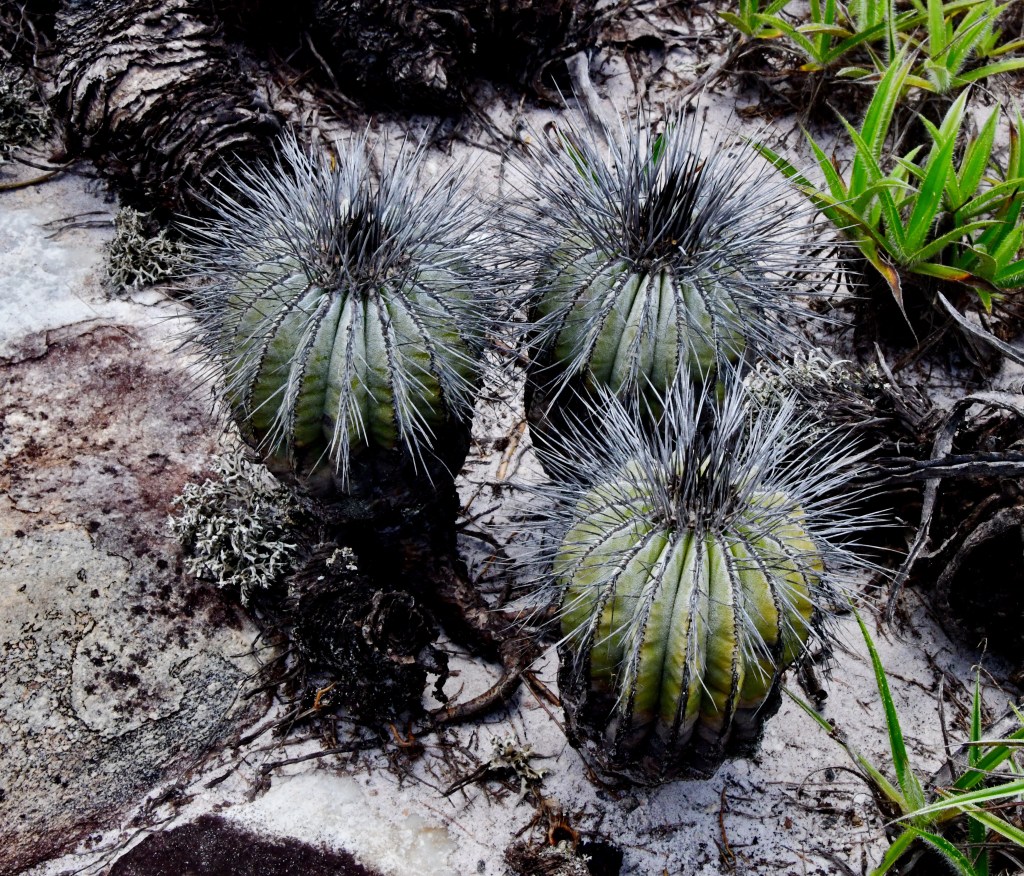
So the trio of long spined U. pectinifera again had their pictures taken. Back home I noticed that the plants had not seem to have grown in the last 9 years! Come to think of it, neither had I! Just a lot weaker than in 2009!
The Trio at S3764 near Inhai. Rarely have I been so tempted to invite a plant to come home with me, but I’m pleased that they are still there, to be enjoyed at a future visit and by others in the meantime.S3765: Discocactus placentiformis getting ready to flower tonight. There must have been a full moon tonight!
I admit it, I’m a collector! No, I don’t go out with a shovel to dig up cacti to come home with a case full cacti, but if there are x species in a genus, I’d like to have photographed them all. There was just one more species to complete the full set of Uebelmannia, U. horrida, to get the full set. Today was the day!
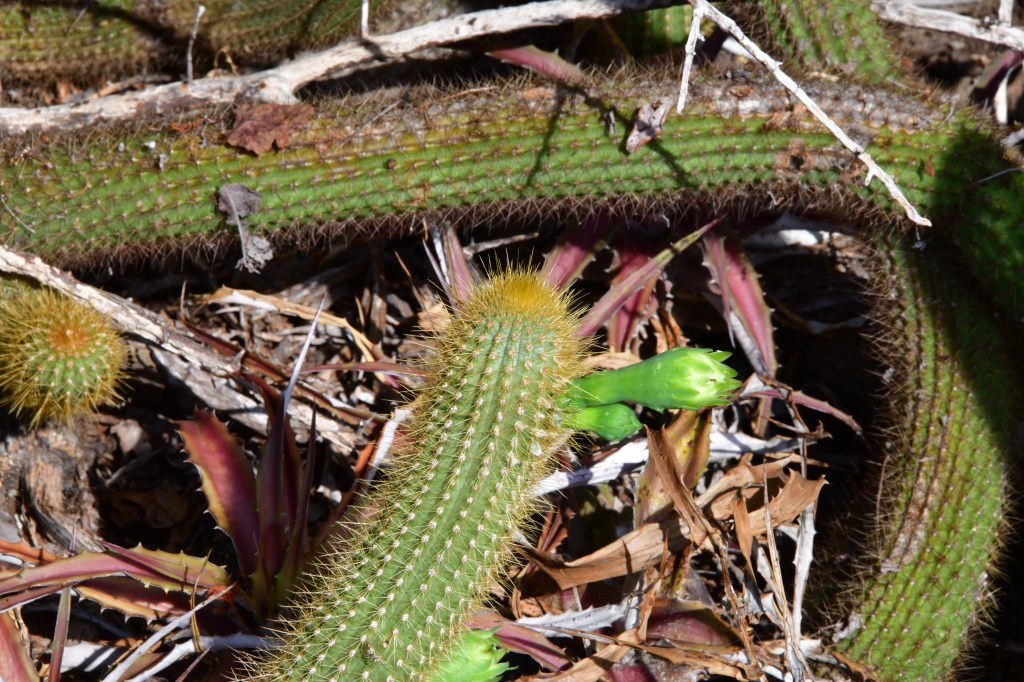
But first we visited another Arrojadoa that grows here, together with Discocactus placentiformis. There were some groups of young stems emerging from an underground tuber. Other plants were single stems with a prostrate growth habit. In 1999 we failed to reach the only location known at the time for this Uebelmanna taxon. Our attempt included ‘the original Dutch dismount’ as I demonstrated my only attempt of riding a horse on a cactus trip, necessary to cross a river, in 1999.
Rudolf Schulz and Marlon managed it on a second attempt after we had already returned to England. Marlon claimed that the plant’s name refers to the degree of difficulty of reaching the plant, horrible!
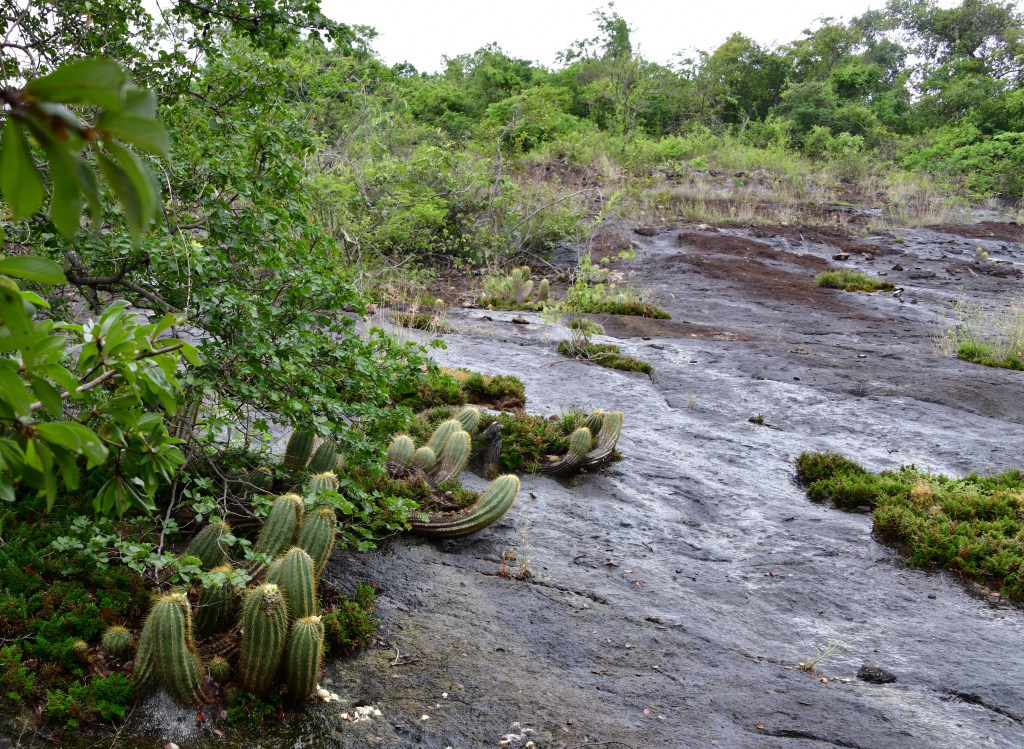
This time we would try a new location recommended by Gerardus Olsthoorn that was accessible by car. Marlon had not yet seen this location. We stopped at Gerardus’ coordinates. Great! No hills. Just a level rocky terrain that allowed us to keep our feet dry.
And so, I can claim having seen the full set of Uebelmannia in habitat!
But first we stopped for the Arrojadoa (S3760).
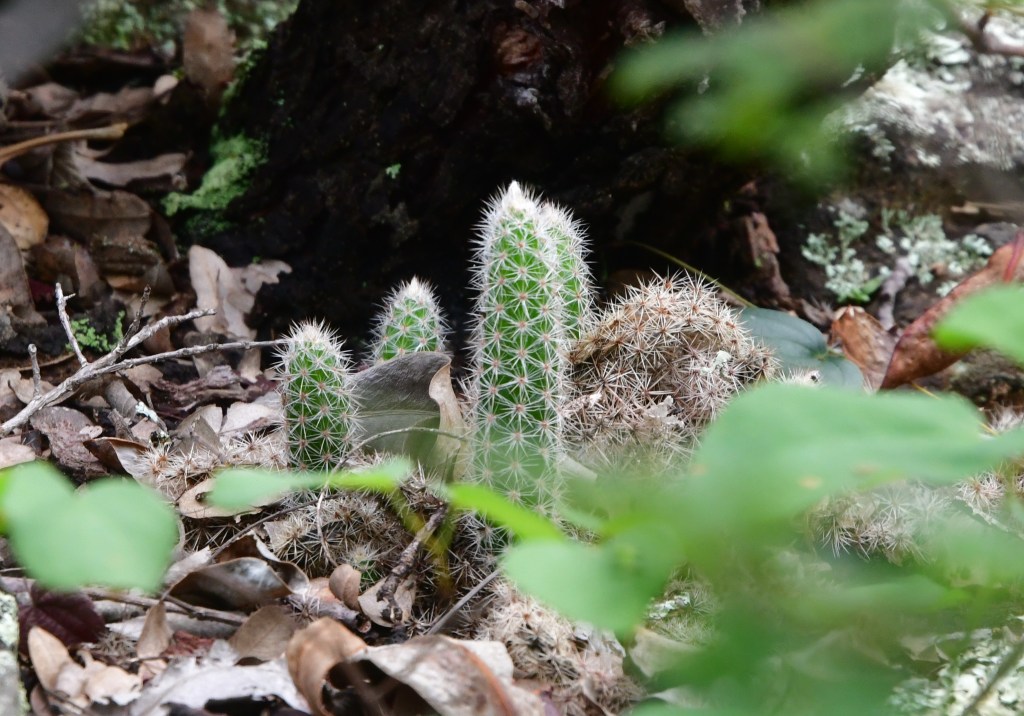
S3760: young stems of Arrojadoa sp. (A. dinae?) emerging from an underground tuber, now that the rains have returned.
Also here were large Discocactus placentiformis, Cipocereus minensis and Pilosocereus pachycladus.
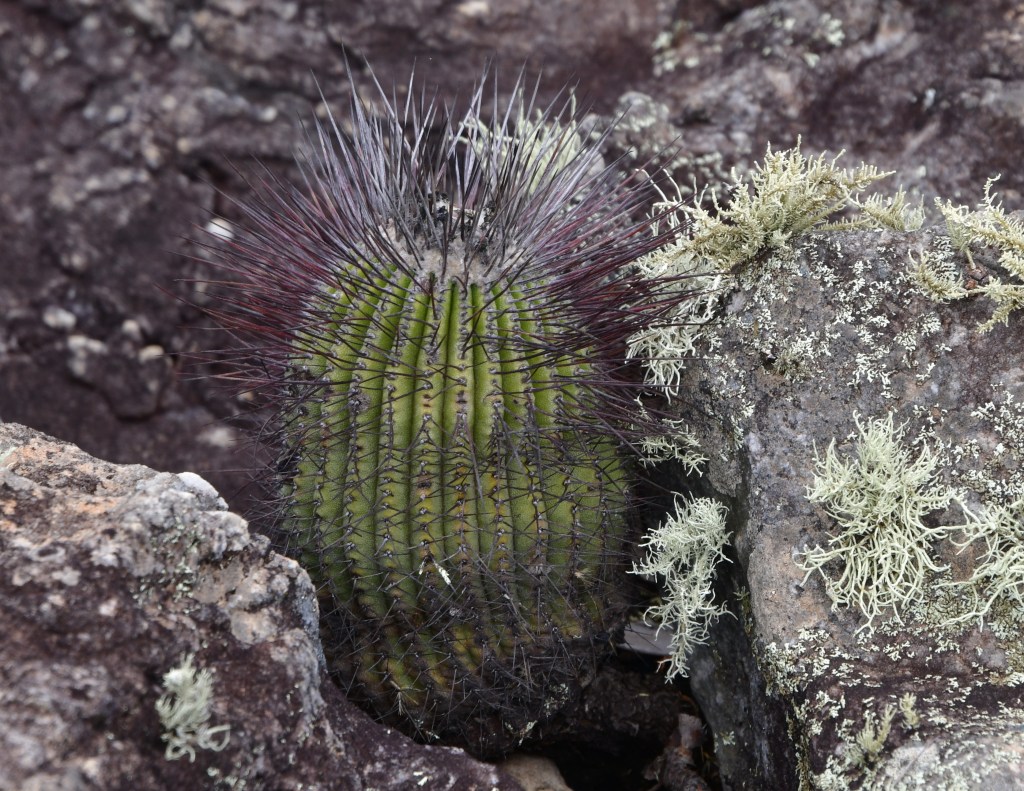
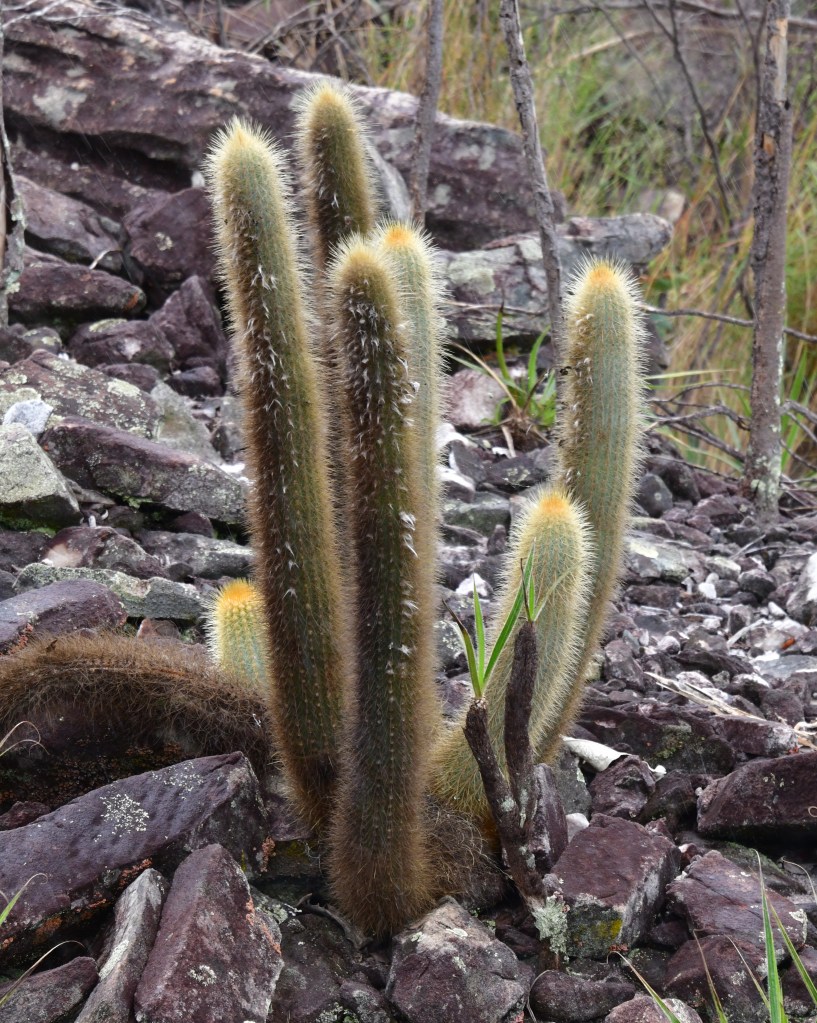
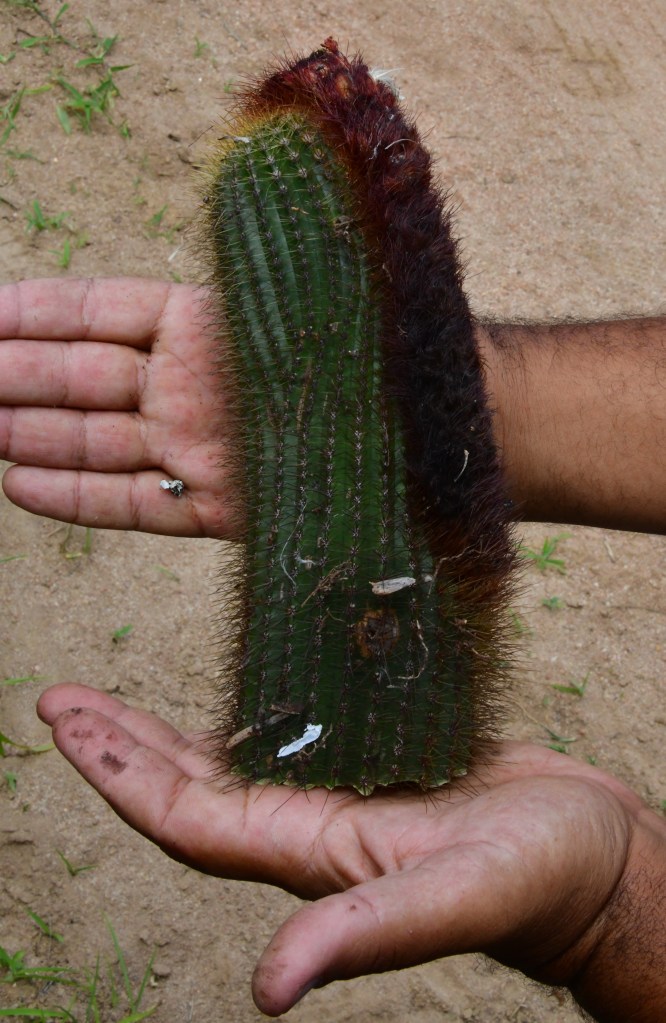
Then on to S3761 with the same taxa as found at the previous stop, plus, on lichen covered rocks ‘Uebelmannia pectinifera with extra long spines’. But wait a minute, these looked very similar to the plants that we saw on day 1 of our trip and that Rudolf and Marlon called ‘the Inhai population’ of U. pectinifera. I have been looking for such long spined plants for sale at specialist nurseries and at ELK for the last 20 years, but never seen one offered for sale. There are such plants offered for sale on E-Bay and on similar on-line websites but these seem to be ‘steal-on-demand’ plants with all the images clearly taken in habitat. I would only consider buying plants that fit the description but were raised from seed in Europe.
S3761 – Uebelmannia horrida Gorgeous spines!S3761 – Uebelmannia horrida These beautifully spined plants surely deserve to have more than one image here.
S3762 was for images of a row of ovens used to convert Eucalyptus trees to charcoal.
We were back in Diamantina in time for some touristy pictures for the colonial architecture. This time we were booked in to a hotel in the centre of town, to avoid the taxi fare for our night time drinking! Even here, prices were so cheap that we had a room each. The real cost was on our legs as we had a fair walk up the steep roads to and from the car park.
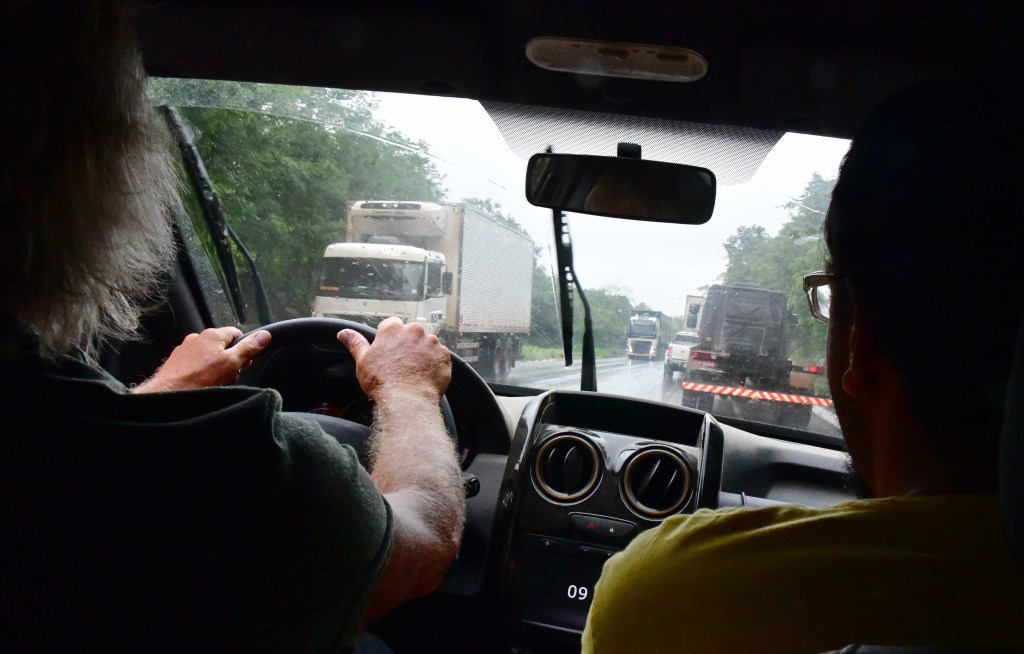
The BR-251 in pouring rain must be my least favourite road. Much of it is a wide two lane hard top with potholes large enough for a small saloon car to disappear into. The spray coming off the road surface is dense enough for the front of the truck that you want to overtake to be invisible. You need to concentrate on the left hand side of the truck to find a gap, so you miss the speed restrictions and speed cameras on the right hand side of the road. Alain was good at taking a broom to the front and back lights of the car at every petrol station – perhaps a bit too good, also cleaning the number plates so that the speed traps could send us speeding tickets once we got home.
Soon after Baracao, we turned right, still on tarmac, and drove through a made Eucalyptus forest. Miraculously the rain had reduced to a trickle, but after 30 minutes, just as we had taken all the images we wanted the volume increased again. We admitted defeat to the rain. It’s just no fun to walk under grey skies and get wet, even if the temperatures were higher than most days in the UK. Just one stop, S3759. We saw Discocactus sp., Pilosocereus sp. and an Arrojadoa sp. The light was too poor to get good pictures or ID.
Each time that I was in Grao Mogol (1999, 2009 and now, in 2018) there was tension about our ability to see the cactus that had been the cactus that got us here: Discocactus horstii.
In 1998, the area around the hill arguably is the only place on earth where this little diamond in the cactus world is said to grow. Plenty of rumours that new populations had been found, some 200 km to the north or to the north east, but this is a hilly, inaccessible country and unless we could get our hands on GPS coordinates that showed such a location to be reasonably accessible by car, we would leave it to younger and better equipped explorers.
In 1999, Brian Bates’ Nissan Patrol with Bolivian registration plates attracted a good bit of police attention as it was parked in the square in front of the Grao Mogol Pousada, with the local police station on the opposite end of the square. Brian had four large plastic crates on the roof of his car and Marlon had collected branches of Bursera trees for a Russian collector that were in the crates. Marlon had found a local botanist specialising in Brazilian trees who knew where D. horstii grew.
The local police told us that this would not be allowed as the plants were now protected from illegal collection. Marlon again proved the use of a member of the party speaking the local language. He explained that Keith and I were authors and had written a book including pictures of Brazilian cacti.
We were very keen to see and photograph D. horstii in nature and to tell the story of the plant that was now severely threatened with extinction due to collection. We would be happy to spread the word for future visitors through articles and our websites to explain rules and regulations for visiting the plants, accompanied by park officials or police officers who could make sure that we would not collect anything illegal. We had a great time, but the number of images taken were somewhat limited as we were still using 35 mm slide film. Things had changed quite a bit by 2009 when Cliff and I visited the town with digital cameras. We went to the authorities in the Prefeitura Municipal for instructions and permits to visit D. horstii. It was a bit more complicated than that. The reserve was the responsibility of the State, and the municipio had no responsibility or authority there and could not grant permission.
We managed to find the offices for the State Conservation Agency. Closed, with minimal signage about their name, what they did or when they were open. We eventually found them open, but got no further than a hike with Volunteer Jajo.
Now, in 2018, the weather was the main barrier. The local weather forecast reported rain for the next few days – not the best weather as the track to the horstii site was quite steep. Maron suggested a drive east to Adao Colares which was likely to be drier and where he knew of two populations of the western-most Coleocephalocereus aureus. We were glad to have something to do.
S3755: westernmost Coleocephalocereus aureus Recent rains made it much to slippery to venture onto the rocks.S3756: Last Coleocephalocereus stop of this trip.
We returned to Grao Mogol for lunch (S3757) and drove past our hotel towards the river. Here, on the quarts ‘beach’ we found large Discocactus pseudoinsignis, while keeping our eyes open for diamants that were still found here a few years ago. Needles to say that we found no diamonds!
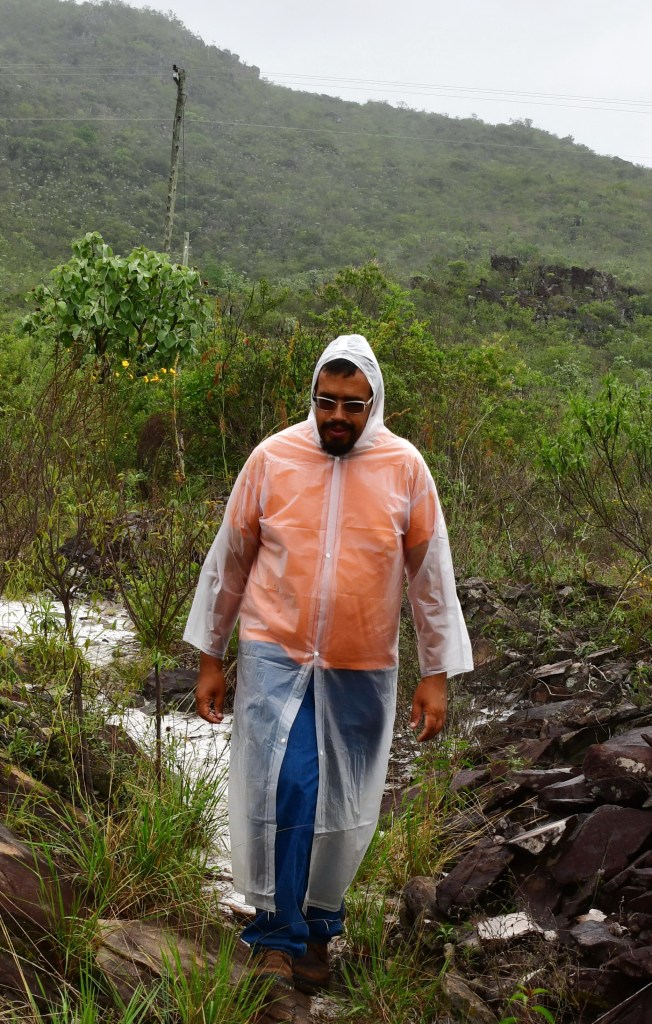
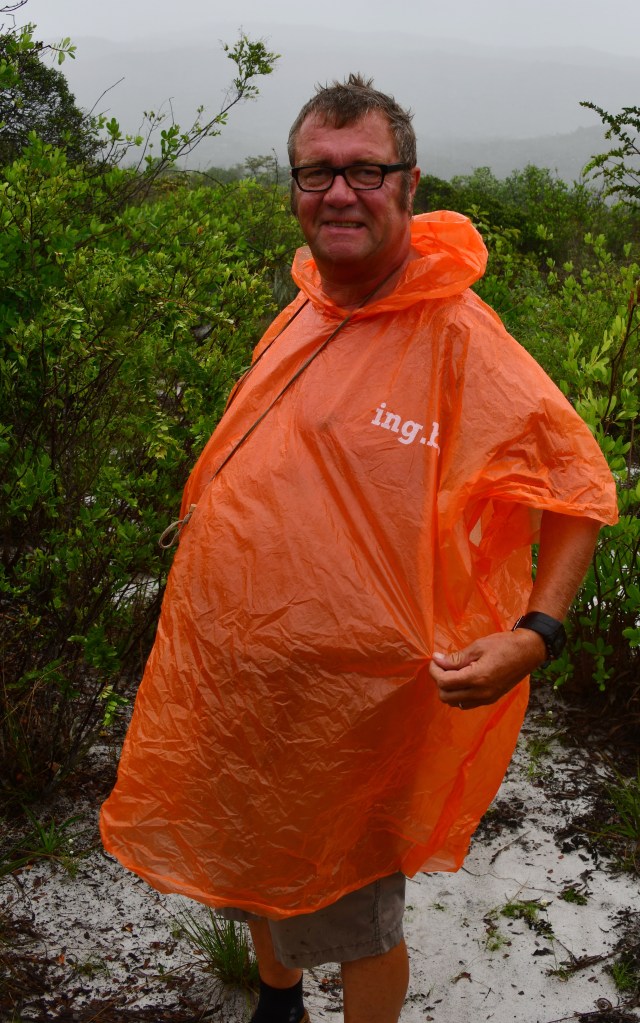
S3758: Marlon searching for Discocactus (and diamonds!) in the rain.Alain showing off the latest fashion in rain wear, here from Europe, modelling a fashionable orange number sponsored by a Dutch bank!S3758: Micranthocereus auri-azureusS3758: Pilosocereus fulvilanatus The cephalium looks much nicer when dry!S3758: Discocactus pseudoinsignis
S3752: The image, taken from the car sums it all up. Dark and wet, dodging to overtake the slower lorries on BR-251.
Marlon had scheduled just one stop, S3753, while pictures taken from the car are filed under S3752.
S3752 took us off the BR-251 into Eucalyptus forest. After a while we stopped along the track and Marlon went to explore. He had been here some three weeks before we arrived with Leo van der Hoeven and Gerardus Altshoorn. Since then, the wet season had started and the abundant rain here had transformed the dry clearings between the trees into a shrub filled forest of shrubs in leaf, dripping with water. Although the rain had stopped for now, as we touched a tree or moved a branch, we got a good soaking.
Eventually we reached a clearing where Marlon pointed out an Arrojadoa. In 2009, we had been shown A. dinae subsp. eriocaulis var. albicoronata in the park at Grao Mogol where we had hoped to see Discocactus horstii. A few years ago, Leo had found the plants here and, finding them distinct from the plants at Grao Mogol, called these plants Arrojadoa hoevenii n.n. Leo had been growing these plants in the Netherlands and in England and had given me one of each. Too me, they did not look different. Neither did the plants here look different from the plants at Grao Mogol, not to me and not to Marlon who, as a result, had declined Leo’s invitation to publish a formal description.
I’ve forgotten the name of the small Discocactus that grows here too, on dark rocks, rich in iron.
S3752: Small Discocactus sp.S3752: Arrojadoa hoevenii n.n.
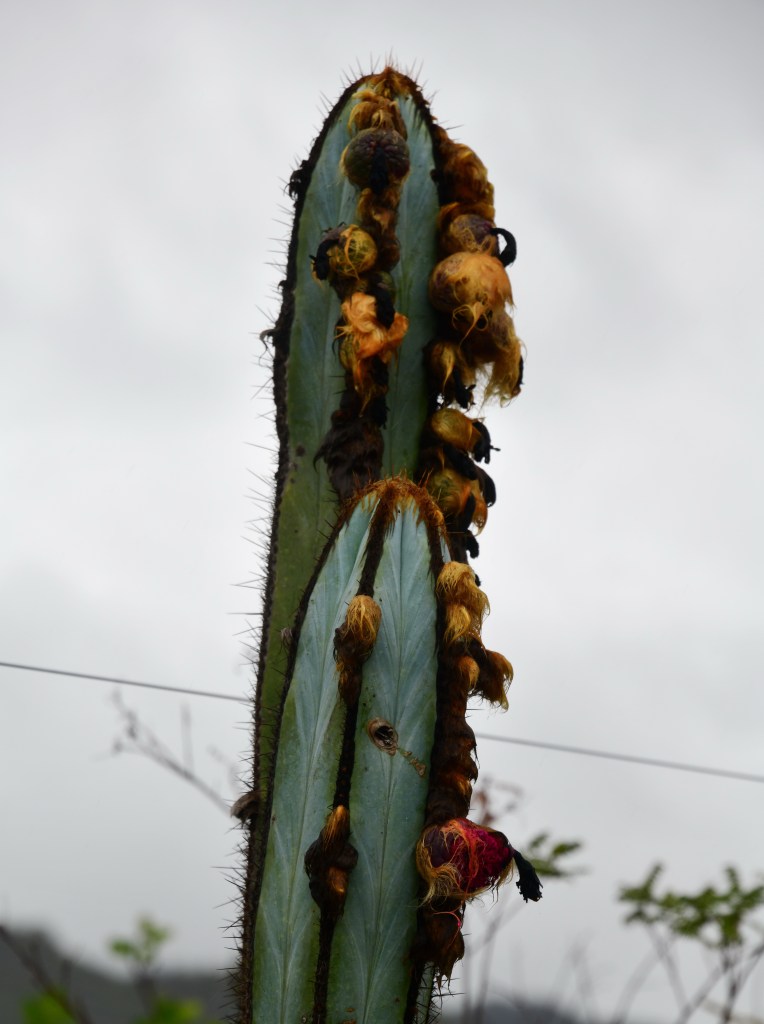
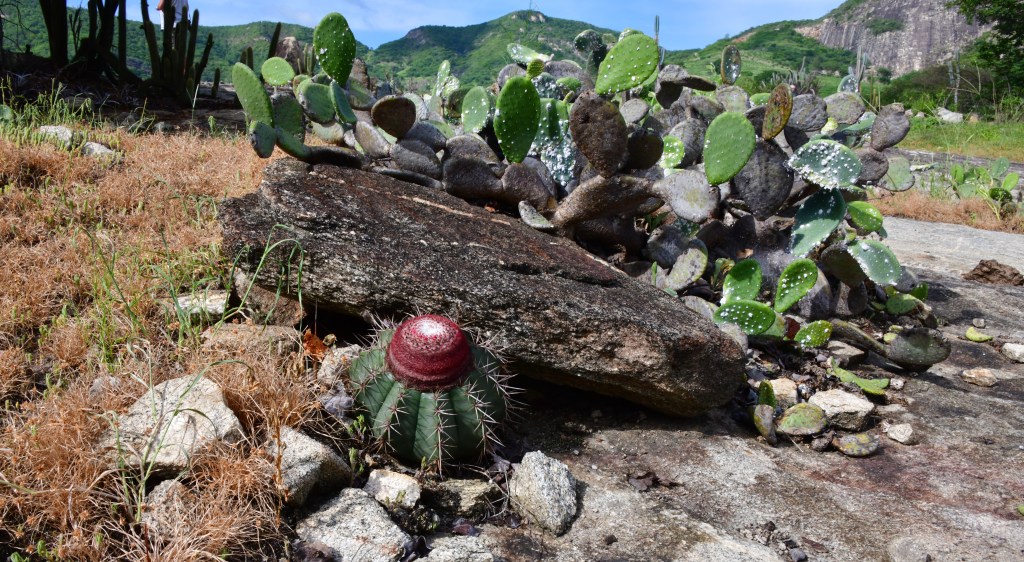
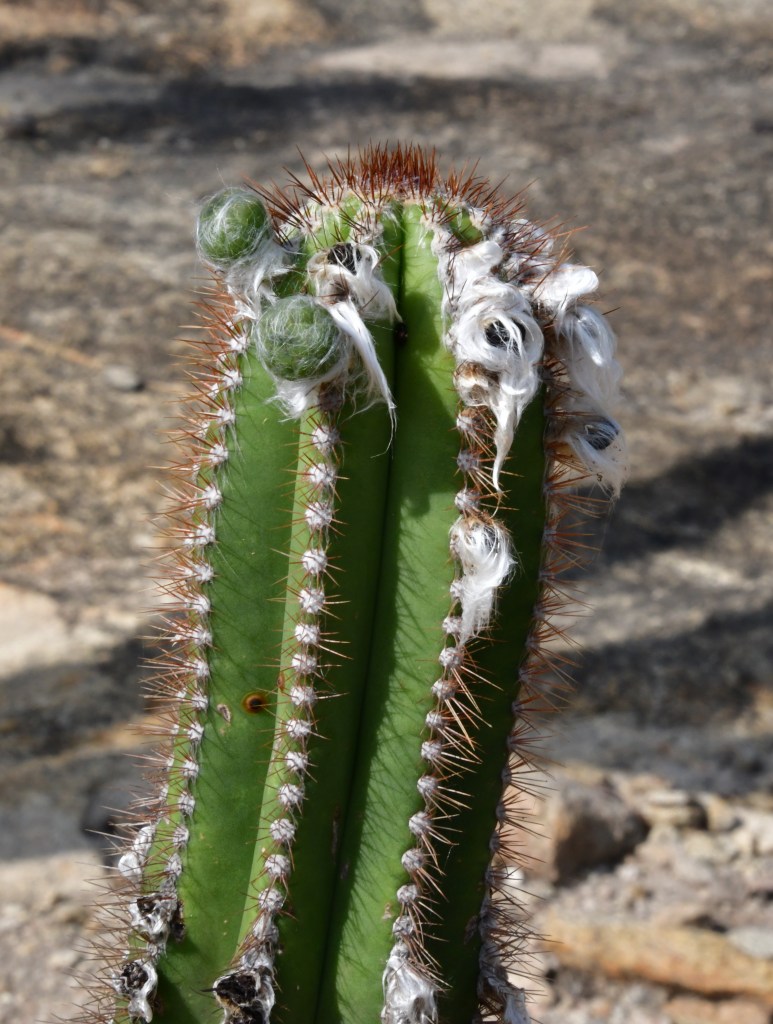
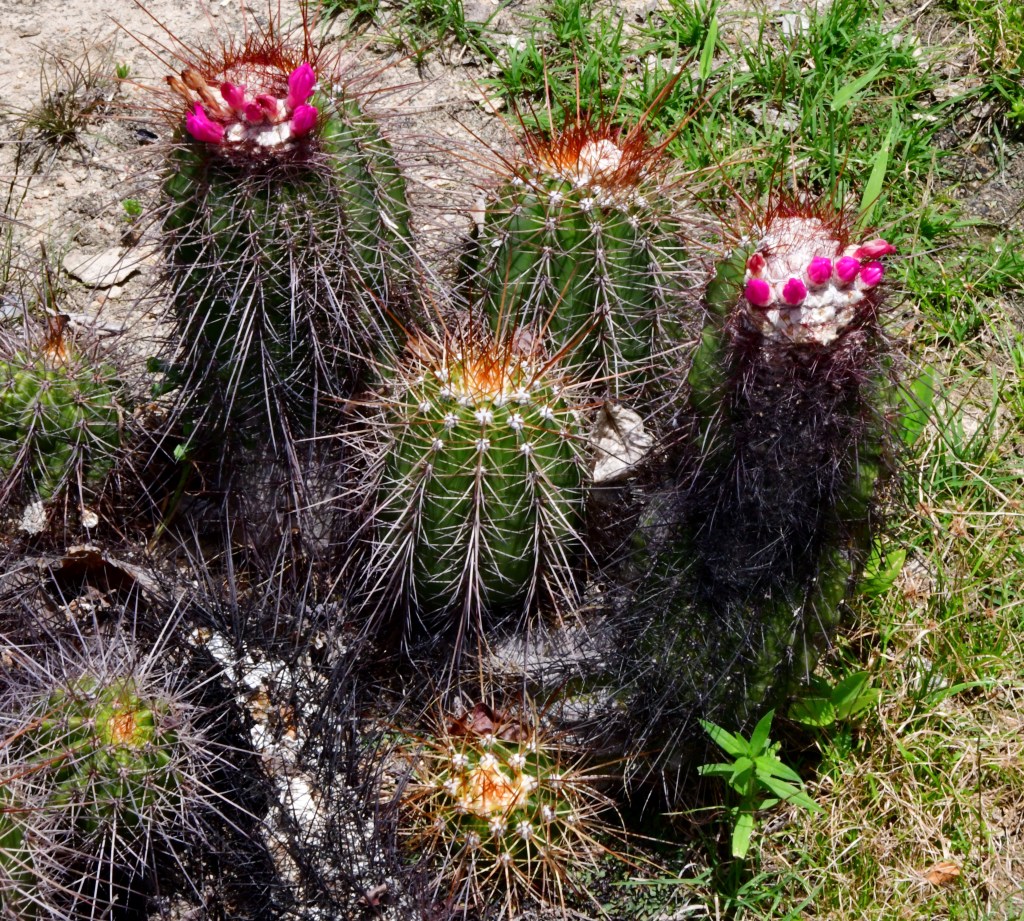
At S3749 we enjoyed Alain scaling a metal gate as a true athlete, but in slow motion. On the other side we found a Melocactus sp. and a ceroid in flower that I have been passing off as Pilosocereus multicostata, except that the flower is wrong for Pilosocereus.
S3749: ID anyone?S3749: The Tacinga inamoena was covered in mealy bug!
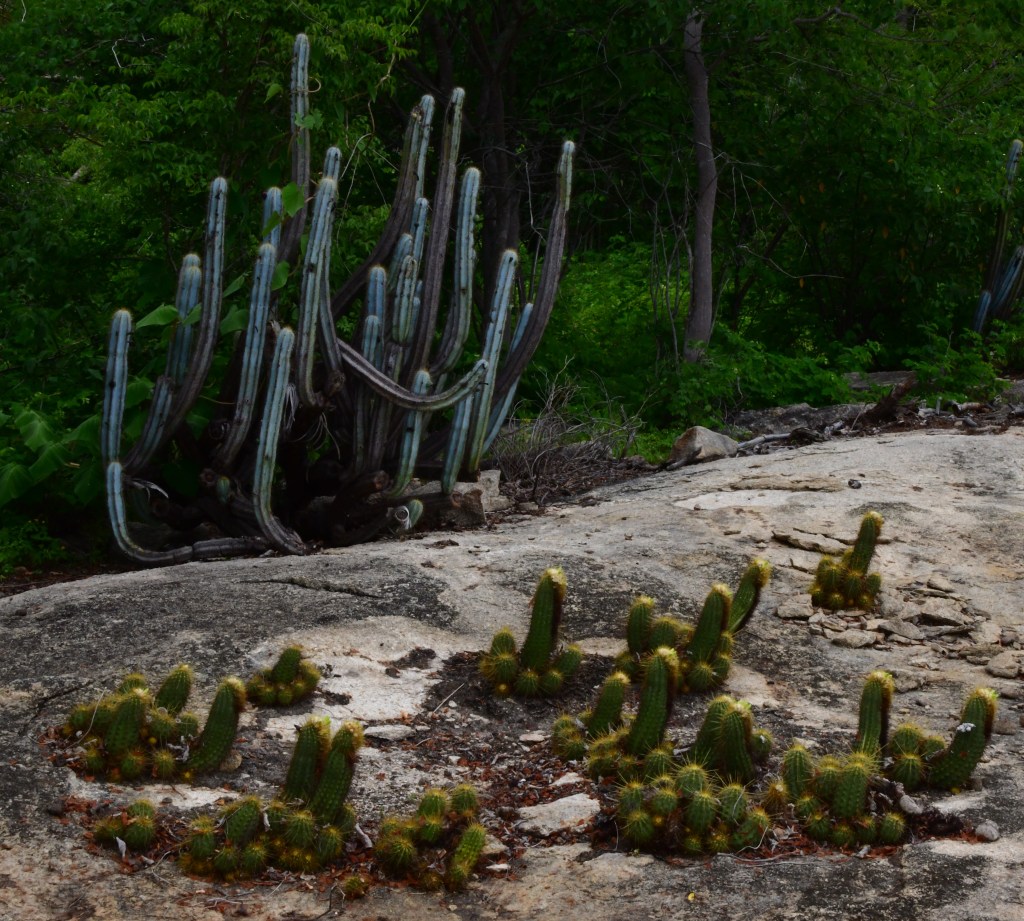
Compared to the azure blue Pilosocereus stems, the green bodied P. floccosus seen here was quite boring.
Pilosocereus floccosus
More of the same appeared at S3750 while S3751 was a site that Cliff and I had visited in 2009 with Coleocephalocereus (Buiningia) aureus subsp. elongatus. Beautiful and impressive plants!
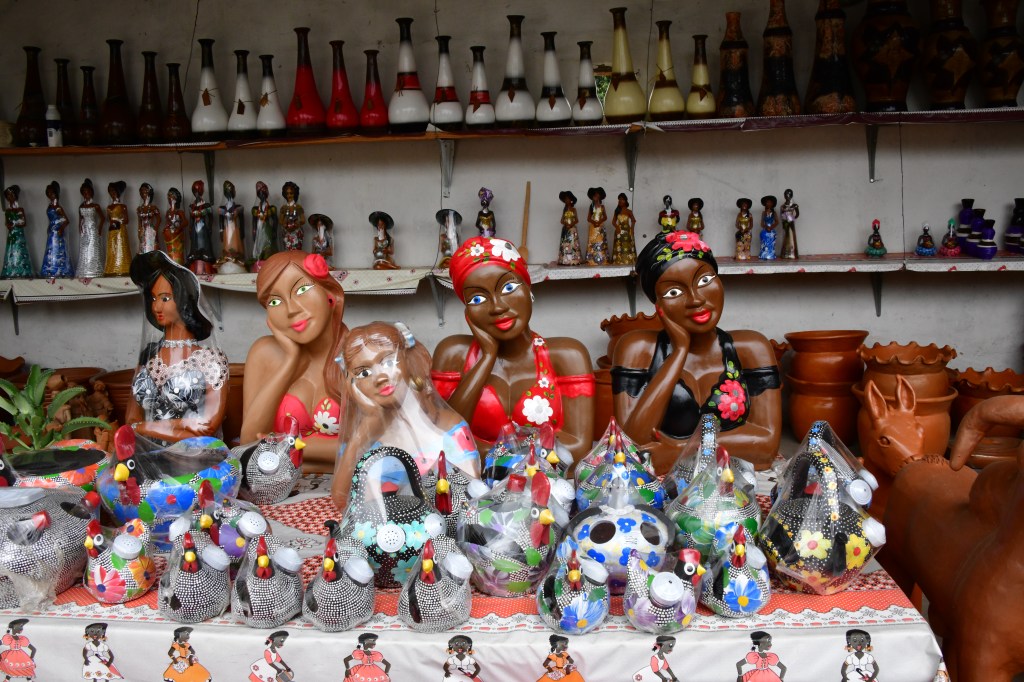
S3746 was a triumph for creative solutions to conservation issues. On previous visits we would regularly come across roadside stands where locals displayed their crafts and produce for sale to passing tourist trade. The ‘produce’ included cacti, mostly Melocactus, dug up locally and disposed off if they started looking past their best by dates, to be replaced with a fresh crop.
S3746 – sponsored market stalls
Over time, the stall holders received training to produce higher quality souvenirs, the ramshackle stalls were replaced by a short ‘street’ of stone built stalls, kitted out like formal shops and wifi had been installed so that stall holders could advertise via the internet and accept credit card payments for their goods! No plants were offered for sale. Result!
In 1999 there was just one location for Coleocephalocereus purpureus. Now there are several more, but the original has been destroyed. This is S3747.S3748: Sadly at this location, C. purpureus was destroyed.
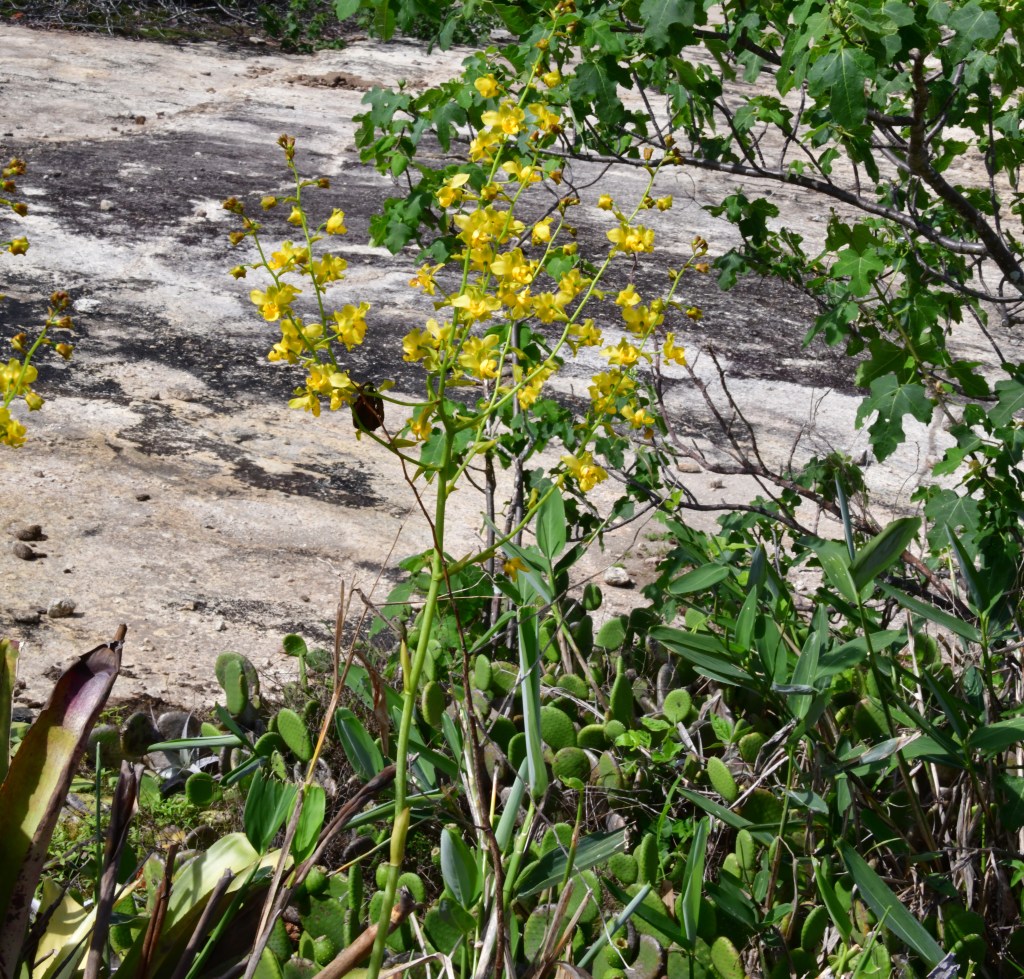
After yesterday’s full on Coleocephalocereus explorations, today promised more of the same. S3737 gave us C. aureus as well as a Melocactus sp. (I’m sure that Marlon provided species names for Alain that he would share later, but not yet due to lack of time since coming home.), Pilosocereus pachycladus (?) and Tacinga funalis and T. inamoena as well as Bromeliads (Bilbergia sp. and Dyckia sp.). A large yellow flowering terrestrial orchid completed the roll call here.
Large yellow flowered orchid sp. and Tacinga inamoena
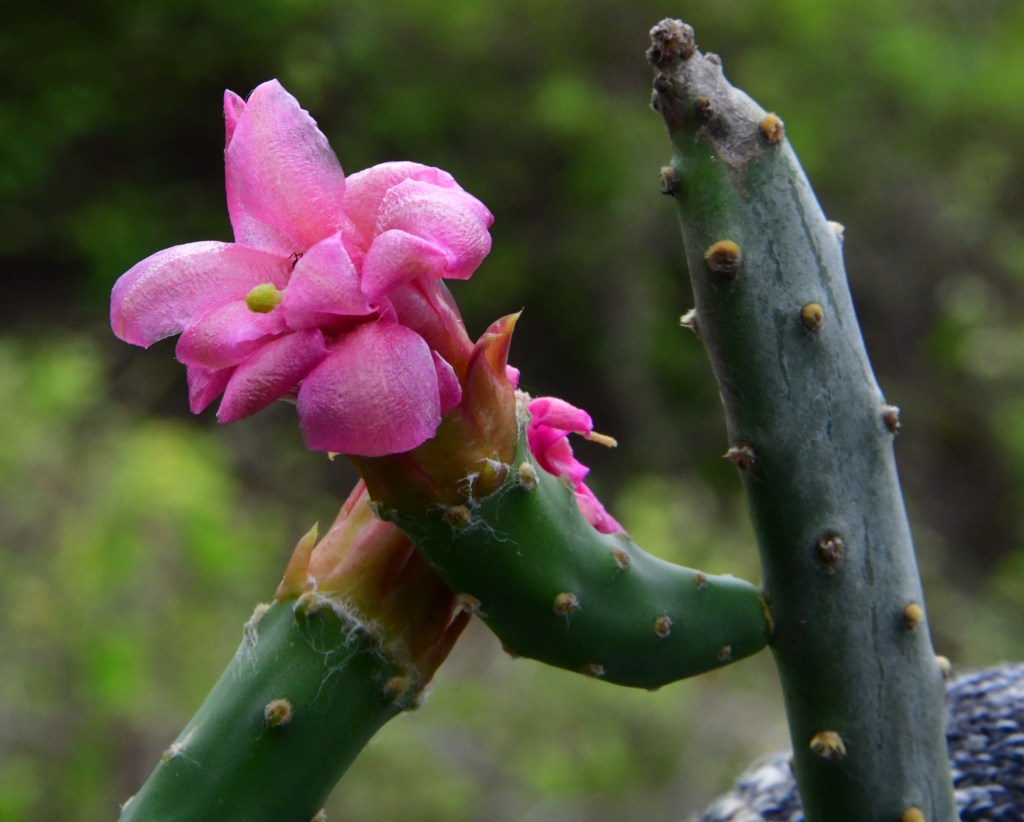
Again hot and humid at S3738 where I photographed Tacinga funalis or is it T. braunii? Pictures elsewhere on the internet are very similar to each other and may be mislabelled. Perhaps their photographers are as confused as I am. Marlon, please help! Here is what we saw:
S3738: Tacinga sp.
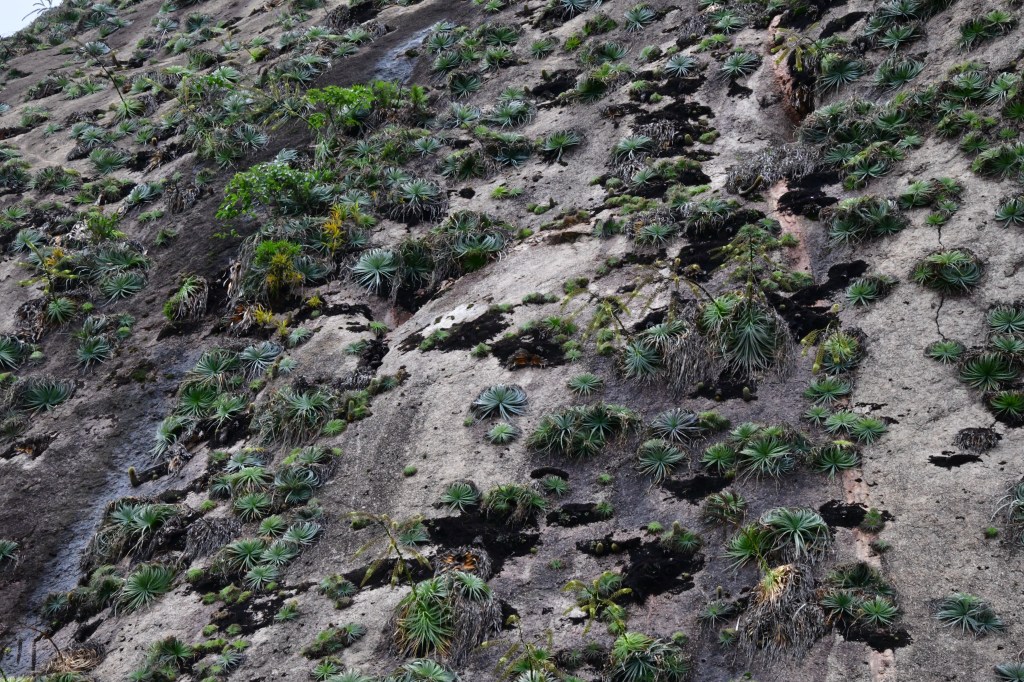
The cropped close ups of the inselberg look as though there are Coleocephalocereus growing between the Bromeliads, or are they burned Bromeliad stems? Very similar situation compared to S3739. Here there was competition from a small herd of cattle.
It started to rain so it became more difficult at S3740 to get useful images as light levels dropped. My guess is that what we saw were the sp. nova.
The sky had cleared again by the time we reached S3741 where we saw Pilosocereus sp. S3742 had the Coleocephalocereus sp. nova and the rocks were dry enough for the others to walk up to touching distance of the plants. I was happy to stay in the car.
S3742
The three images taken at S3743 shows that the inselbergs were again shrouded in clouds – time to get back to our hotel!
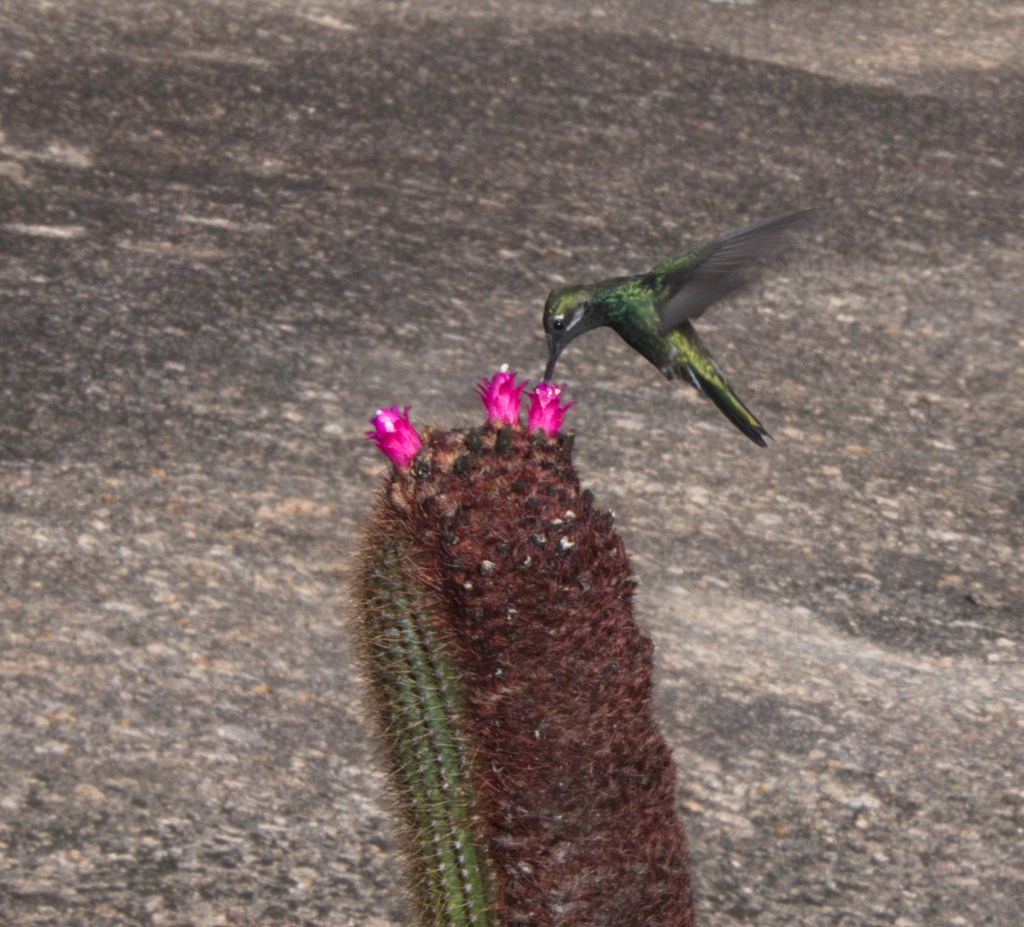
Today we followed the valley of the Rio Jequitinonha to Almenare. Marlon wanted to explore the Valley for new Coleocephalocereus locations. Some were Buiningia locations while some were of a yet to be described species. Marlon collected material for herbarium specimen and I took images of the pollinators: a solitary bee and a hummingbird that attacked me, as I was wearing a red shirt.
We stopped at any inselberg that we passed, but most were too steep to climb. Still, I managed to pick up cacti growing on the hills between the Bromeliads covering the hill with my 300 mm zoom lens. We assumed that any short yellow spined stems were B. aurea while taller, darker spined stems were Coleocephalocereus sp. nova.
S3730 – as close as we could get to the inselberg. Making a crop of the above photo showed up a number of ‘our Buiningia aureus’.S3730 – crop of the image above this one.
S3731: the inselberg was too far away to take meaningful crops. There were some candidates for the dar spined ‘sp. nova’, but they could equally be the burnt stems of the tall Bromeliads. Inconclusive. There were some amazingly azure blue stems of a Pilosocereus sp. growing near the car.
At S3732 there was flat limestone terrain with similar looking plants but close enough to stroke! No doubt! Buiningia aurea!
It was another hot humid day, so I stayed in the car, kept company by a white horse for scale, why I took pictures of the Pilosocereus, while the others climbed up the hill (S3733). Marlon was the last to return to the car, holding a top cut of the new Coleocephaluscereus species in his hands. I could not resist taking a quick look. There were more of these plants here. They were about 150 cm or more tall and solitary.
S3733 – sp. nova herbarium sample
S3734: we passed through a gate on to a farm yard where we parked the car. Walking up the hill – not too steep, we first saw and photographed Buiningia aurea and then, higher up, but still manageable, we found the sp. nova. I’m not quite sure where it fits in. It’s taller than any Buiningia that I have seen, there is only C. goebelianus in the Simplex group. The remaining taxa, as far as I have seen, all crawl up the inselbergs, again, unlike the plants here. Marlon’s description should clarify matters, I hope.
S3734 – Both taxa of Coleocephalocereus together.
It was another hot and humid day, so I decided to sit the next stop (S3735) out. Marlon was late returning, and was reported to try taking image of the sp. nova pollinators. Taking images of hummingbirds is not the easiest thing to do, particularly with a mobile phone! I went to take a look and found Marlon with a flowering stem. I was wearing a red shirt, a hummer’s favourite colour, and had to step back as it tried to see me off.




 The Cactus Trip Diaries