Just another WordPress.com site

The rain was still pouring down as we woke up. It was a quick swim to the restaurant and a full breakfast. So instead of the planned activity of driving to El Cielo National Park, a cloud forest, we decided to make it a driving day and head for Tamaulipas in the hope that things might be drier at lower altitudes. Soon after we crossed the border with TAM, the wipers could indeed be switched off.

Before that, we had driven down the long and winding road, passing by trees covered in Tillandsias, rocks covered in ferns and trees covered hillsides that included Beaucarnea recurvata with its large panicles waving above the tree canopy. Very difficult to get a descent picture. There are nine species, but B. recurvata is the only one listed for San Luis Potosi and Tamaulipas, so that will do. True giants.

It was dry when I eventually spotted Cliff’s car from MEX 85, parked along the track.  It took no time to find Thelocactus bicolor subsp schwarzii but they seemed at least twice as large as in March. Lots of Ariocarpus trigonus, and a few of Sclerocactus (Ancistrocactus) scheeri, all looking as if they were on steroids.

Whereas in March the village near where they live had seemed to have been deserted for some years, allowing plants to recover from the damage done by the goats and cattle that the villagers owned, this time the village was populated again and the cattle were back, but ‘parked’ in a field outside the area where the cacti grow. So where was Astrophytum asterias? By now, Ian, Sarda and Cliff had returned from their explorations and soon showed us the first few, so that we could get our eyes in. Wow, they had also grown, happy to grow in mud! But at 27C in October, the conditions are different enough to suggest that we should not try this in the UK. Tomorrow the temperature is forecast to be 30C with 100% humidity. Boil in a bag cultivation should work!

Astrophytum asterias

Astrophytum asterias


Today we repeated the trip from Rio Verde to Palomas and repeated the stops from previous occasions, starting with the Ariocarpus retusus ‘scapharostoides’ stop. Again, I searched in the ‘forest’ around Pylon #1, to no avail. The vegetation was too lush, hiding the thorns on the Acacia trees, while trying not to slip over as the cows had ensured that often I was almost ankle deep in manure. The others had walked straight on to Pylon #4 where the same plants seen in March were photographed again, this time surrounded by grass and Tagetes with their yellow flowers, but no flowers, or buds or evidence of spent flowers on the Arios – we’re still not sure if we have missed the flowering season or are too early (S3153).

S3154 was a quick stop for a mass (or mess?) of epiphytic cacti hanging from the tree branches – Disocactus? Hylocereus? Also lots of Tillandsia.

S3155 was for a location for which Ian had data for Lophophora viridiscens. He came back to the car disappointed, as the coordinates were now at the bottom of a reservoir, under meters of water. While he had been tracking the location down, we had wondered about the place and had found Ariocarpus kotschoubeyanus, Lophophora viridescens, Mammillaria sp, Coryphantha maiz-tablensis and Echinocereus enneacanthus and E. pentalopus.

S3156 was a random toilet stop, but while we were waiting for Cliff to catch up (their car had low ground clearance so could not keep up unless risking losing the exhaust), Alain had managed to find some Lophophora williamsii ‘koehressii’ – I remain unconvinced about these form names. Aian there were epiphytic cacti, E. enneacanthus, C. maiz-tablensis and large Sclerocactus uncinatus.

For S3157 we were back at ‘michelinman’, a massive Echinocactus platyacanthus, growing close to the largest Ferocactus histerix that I have ever seen.

One more stop, S3158 for Leuchtenbergia principis was nearly at the crossroads for the main road to Ciudad del Maiz. By now it had started to drizzle. Ian not only found the Leuchtenbergia but managed to find it in full flower – another candidate for my wall back home! (It’s picture that is).

Leuchtenbergia principis

Leuchtenbergia principis among the Agave lechuguilla and Mammillaria perbella

The drizzle became harder once we were back in the car and was quite persistent when we found a hotel with running water (through the yard) and a good restaurant almost next door. Let’s hope the weather clears a bit, I don’t really fancy ‘cactus in the rain’ as a theme for a future talk.


Just 12 km from the hotel, heading north on Mex 120, we reached our favourite Strombo disciformis stop. Cliff had parked on an earlier pull over and so we slotted in too, always nice to see a ‘different’ location, even if it’s only some 200 m away: S3150a and S3150b. Again the density of Strombocactus here was fantastic and lots more pictures were taken, including of a bright coloured snake, still asleep, that relied on its camouflage until everyone had taken its picture and we prodded it with a stick. It’s waved its little rattle as it slid into the bushes, but I could hear no noise – too young to have fully developed a rattle? or me too deaf to hear it?

S3151 was again a stop from March, but again the scenery was so different with lush vegetation and the occotillos in full leaf, but yellowing.

Next it was a long drive along Mex 120 through the Sierra Gordano, high through the clouds, with fog and drizzle to keep us in the car.

By 4 p.m. we were again at the Stop for Turbinicarpus lophophoroides (this time S3152) near Rio Verde where this time the plants were very turgid and mostly growing above ground, some with the remains of recent flowering, looking quite different from previous occasions.

We completed the day with one of the best meals to be had in Mexico, rib-eye steak and a remarkably nice Mexican Cabernet Sauvignon. Yum yum.

Sunday we should see E. platyacanthus ‘My Old Friend’ again, and ‘Michelinman’!


Once again the LHR – MEX flight took exactly one hour less to land than scheduled. So we had to wait for Alain’s flight that was now due one hour after us and for Bart, who had set his alarm clock ion the hotel airport for our published arrival time.

Neither mattered, as Ian had switched car provider to Dollar, who were slightly cheaper, had to wait for their stand to open at 7:00. So Alain, Bart  & I were off after arranging to meet at a set of GPS coordinates along the MEX 120.

Bart drove for the first day, taking the more than tricky Mexico City stage. Some how we managed to avoid all the cars that seemed sure to be aiming for us. I heaved a sigh of relief as we found ourselves on MEX57 and at least all the cars were going the same way.  Around 9:00 we stopped for fuel and breakfast and it was still early as we turned off on to the 120 at San Juan del Rio.

We had were overtaken by Ian’s car party with Cliff and Sarda, but passed them again when they stopped to buy a month’s supply of oranges at a roadside stop. It appeared that there were two tracks to the site, we overshot the first one and took the second and so missed meeting the others at the first stop (S3147). Stenocactus sp , Myrtillocactus geometrizans, Corypantha sp and Ferocactus latispinus (just one plant, in bud) were found, with Mammilaria painteri also reported by the others.

With still plenty of tome to spare, we decided to drive on to the Zimapan lake and repeated last March’s experience stopping at the same spot (S3148) as in March to find Mammillaria perbella, M. elongata subsp echinaria, Neolloydia conoidea, Coryphantha octacantha (I have not yet counted the spines to confirm the name). I surprised myself by retracing a small Ferocactus glaucesence, growing in the shade of an overhanging rock, with a wonderful glaucus epidermis. In nature they tend to look more beaten up when exposed in full to the Mexican sun.

We drove down to the lake, passed through the tunnel and turned back again, along the road we had come, to the last stop made in March, full of Thelocactus leucacanthus (not in flower this time) and Ariocarpus kotschoubeyanus ‘elephantidens’. These are the target for this trip, or rather, catching them in flower. They had had the required rain and the whole scenery was much more lush than in March, making it much more difficult to find the Arios. Once we got our eyes in, they were quite easy to find again – there were so many – but only few plants were in bud. One plant had flowered – pale pink – but wildlife had nibbled away most of the petals. Good tip – don’t expect the plants too look as they do in pots in our collection, unless slugs and snails visit your collection.

And on to the Hotel Boca Sierra in Vizzaron where Ian, Sarda and Cliff had already secured the rooms to our liking, so a quick shower and off to dinner, where Cliff and Bart had two very interesting looking fish.

It seemed as though we were here only yesterday!


Just a week since I arrived back home, I’m off again. Another late night flight, so time to spare to set the scene for ‘Mexico 2014 Part II’.

Soon after the March trip to Mexico I mentioned to my fellow travelers that it would not take much arm twisting  for me to put the plans for Peru in October on ice and repeat the whole trip again to get the benefit of all those Ariocarpus that we saw, but this time in flower!

This time the Tres Amigos are joined by another three: Ian’s wife Sarda, keen to see what all the fuss is about, Alain Buffel from Oostende, Belgium and Bart Hensel, from Vinkeveen in the Netherlands, this time spread over two cars.

Alain has been in Texas and northern Mexico for the last month or so and confirms that the Arios are in bud, ready for our arrival. Some in Texas could just not wait and were already in flower. I’m told that the exact flowering time is determined by when the autumn rains took place. We’ll see. In any event, a stroll through the desert in the Mexican sun is more enjoyable than the cold wet weather that we have been enduring in the UK during the last week. Ironically the sun is out today and it looks like it could be a nice day, so I better get on with a last look at my plants piled in the conservatory and tell them to look after themselves for the coming month.

We arrive back on 10 November and last night I have already booked the ferry tickets for our next trip to Cologne, Germany and a long week at Angie’s Mum’s.

Jetlag? Doesn’t seem to happen if you keep on the move!

As usual, I’ll try to send out daily reports of what we see during the trip, wifi reception and health permitting.

Normally the day of the flight is a matter of getting up and then waiting. But my flight was not until 23:35, so that would be a long wait.

Ruth and John must have understood and decided to pamper me for one more day by taking me for a day out at Crocodile Steve Irwin’s Australia Zoo!

We had a wonderful day, despite a brief rain shower and sat in the famous Crocoseum, an arena where we were treated to endemic birds such as parrots and raptors and (carefully) hand fed crocs.

All the entertainment made the day soon pass and after uneventful flights I safely arrived back home in the UK.

Certainly a very memorable experience with a heap more friends added to my virtual Christmas card list (I’m actually the world’s worst sender of Christmas cards so don’t be disappointed that a seasonal wish here to all my friends around the globe is all there is. It avoids the risk of missing someone out.

CRICKEY!!!

CRICKEY!!!


Angie reported that temperatures back home in England had dropped to -1 C during the night but had climbed back to double figures during the day.

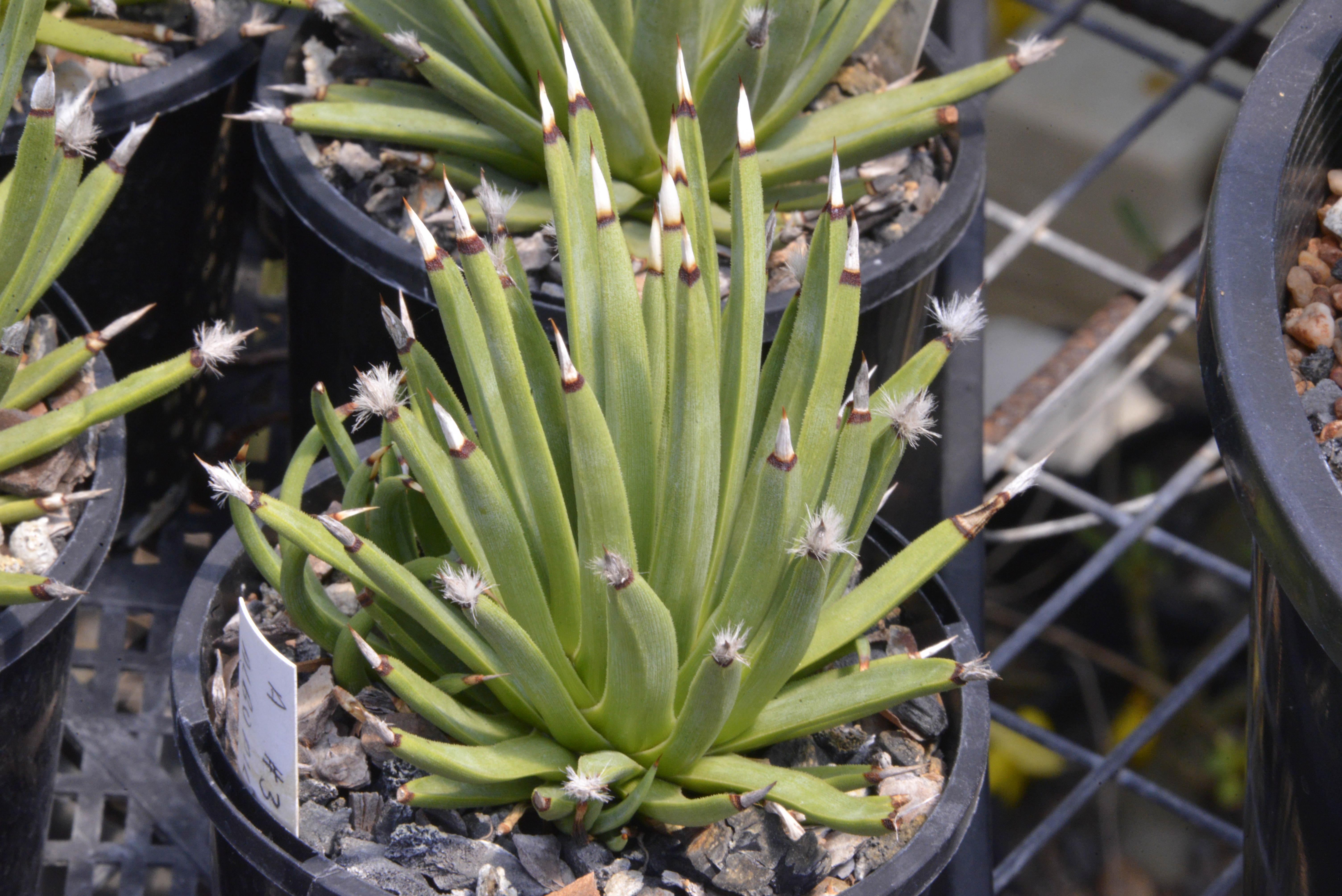
Here in Australia, Spring produced higher temperatures than England in the heat of summer!  At the Convention I had shown John and Terry a 6 minute movie clip from a trip through Huasteca Canyon, near Monterrey, NL, that included images of Agave albipilosa. These would be highly desirable plants if  the fluffy bits at the end of the leaves were present by the time that nursery men like to take their plants to market, at around 18 months. In England, plants raised from seed some five years ago were still without fluffy bits. Terry said that his plants were some three years of age and had produced their fluffy bits after three years, so I was happy to take some pictures.

Agave albipillosa at some three years of age, complete with fluffy bits

Agave albipillosa at some three years of age, complete with fluffy bits

I had already seen evidence of Terry’s growing skills in his Asclepiad presentation, but I was now looking at quite a number of plants representing all the taxa in the impossible to grow (for me) Pseudolithos. It turns out that these plants all come from Somalia, probably in another fog desert. More travelling for me? No thanks, Somalia is currently just a little bit too dangerous for my liking.

Some of the Pseudolithos plants looking in great shape. In England the frequent sound of rain on the greenhouse roof might kill them!

Some of the Pseudolithos plants looking in great shape. In England the frequent sound of rain on the greenhouse roof might kill them!

While enjoying our chat about cultivation tips, I suddenly came over very dizzy. I beat a hasty retreat to the shade of the veranda where Terry’s wife provided a couple of glasses of cold water that I sipped down and immediately started feeling better. The temperature on the shaded veranda was 34 C, while where Terry and I had been chatting in the sun, the temperature was around 45 C. A timely warning of how high temperatures can creep up on you when you’re distracted by great plants! I’ll be sure to wear my hat and look for the shade in Mexico, where in autumn / Fall, temperatures can still soar.


By the time that I got up, Karen and Debra had already been taken to the airport for their early morning flight to Newe Zealand for a short holiday break. Sorry to have missed you, but hope to see you in California in February 2015.

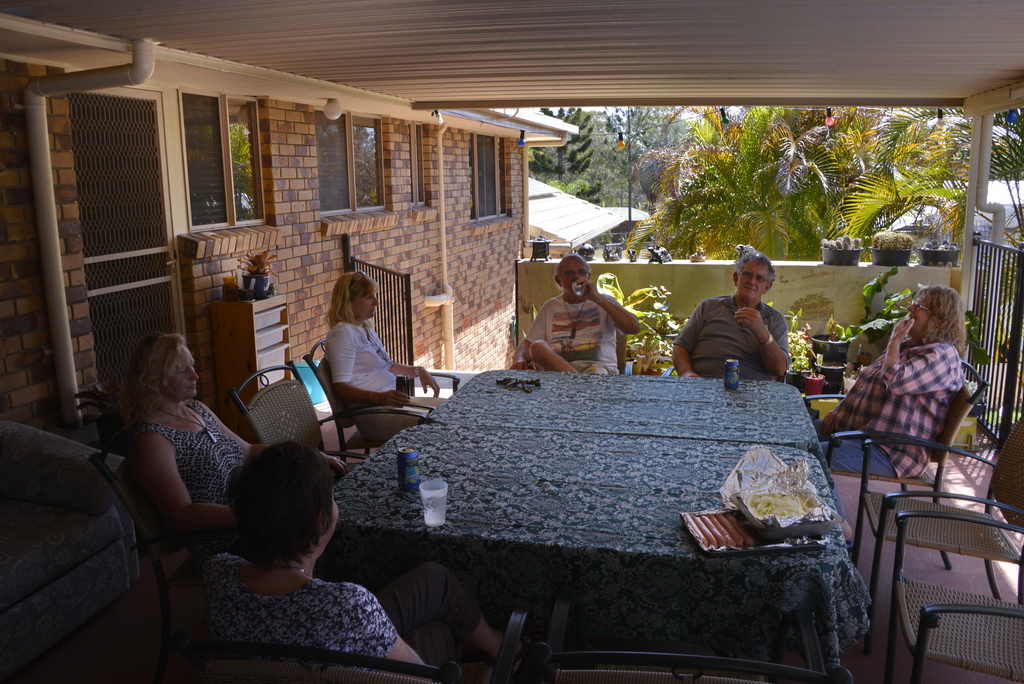
Today a few cars of delegates game by for a look around their collection, a bite to eat and a drink.

The New Zealand contingent waiting patiently while out of sight John is firing up the BBQ and Ruth is preparing salad in the kitchen

The New Zealand contingent waiting patiently while out of sight John is firing up the BBQ and Ruth is preparing salad in the kitchen

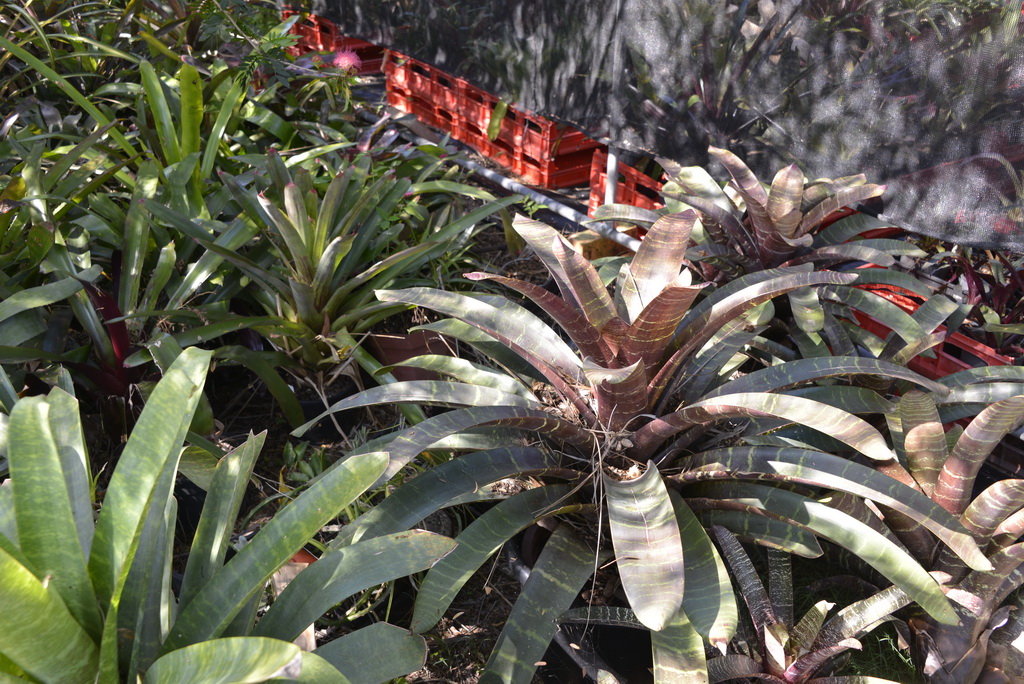
The perfect opportunity to join in with the visitors for the guided collection tour. Again, the collection included a large number of Bromeliads, reflecting the fact that John is a past President of the Bromeliad Society. While air-plants take up relatively  little space, quite a few of the terrestrial Bromeliads get quite large.

Lovely markings and colours on these Bromeliads - sorry, I could not find a label.

Lovely markings and colours on these Bromeliads – sorry, I could not find a label.

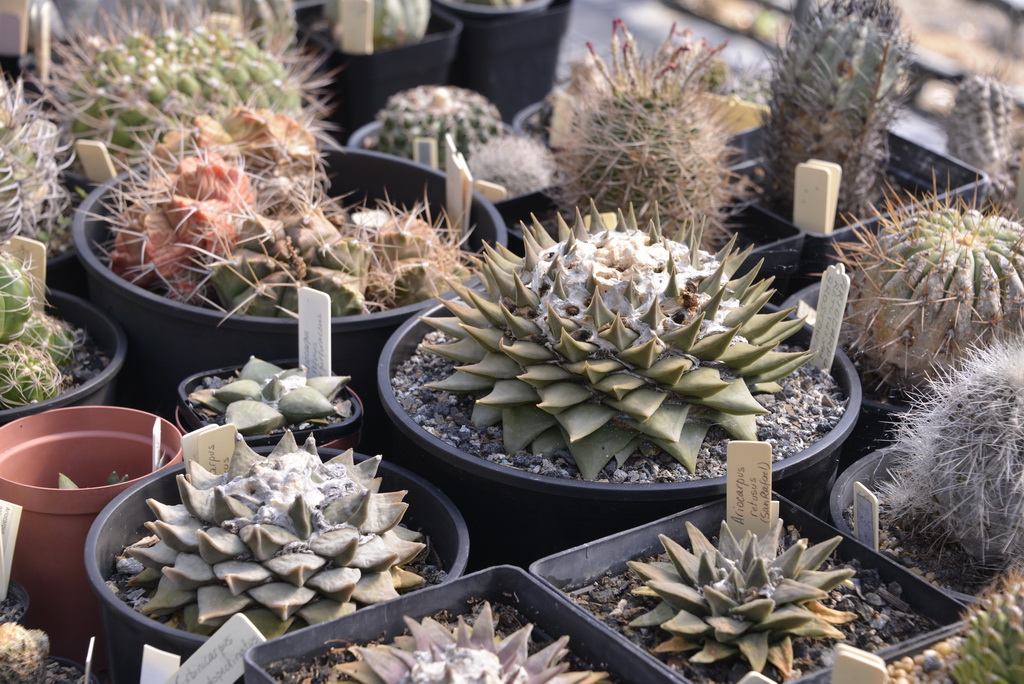
Some great and mature Ariocarpus again reminded of plants I'd see in nature in a few days time.

Some great and mature Ariocarpus again reminded of plants I’d see in nature in a few days time.


John is a true collector and has collections of the least likely of objects including a group of garden gnomes living in the garage. No worries, no pictures – just of plants.

Another plant inspection.

Another plant inspection.

A quick summary of the last day of the official convention:

Breakfast at 7:15 preceded the final plant sales and at 8:55 the bell called us back to the hall where I was first on the bill, presenting the ‘world premiere’ of a new presentation called ‘FOG’, the result of (another) night of too much Belgian beer at ELK when I observed that after seeing the camanchaca in Chile, the garua in Peru, the ‘marine layer’ in California, I should really go and see the results of a similar fog along the Skeleton Coast along the edge of the Namib Desert. In 2012 I went on a 9 week trip to South Africa and Namibia to do just that and so built up a nice portfolio of the flora that is found at and around the tropics of Cancer and Capricorne. A great excuse to show a very diverse selection of plants that thrive (or perhaps ‘survive’ is more appropriate) in these hard environments. Living on the edge!

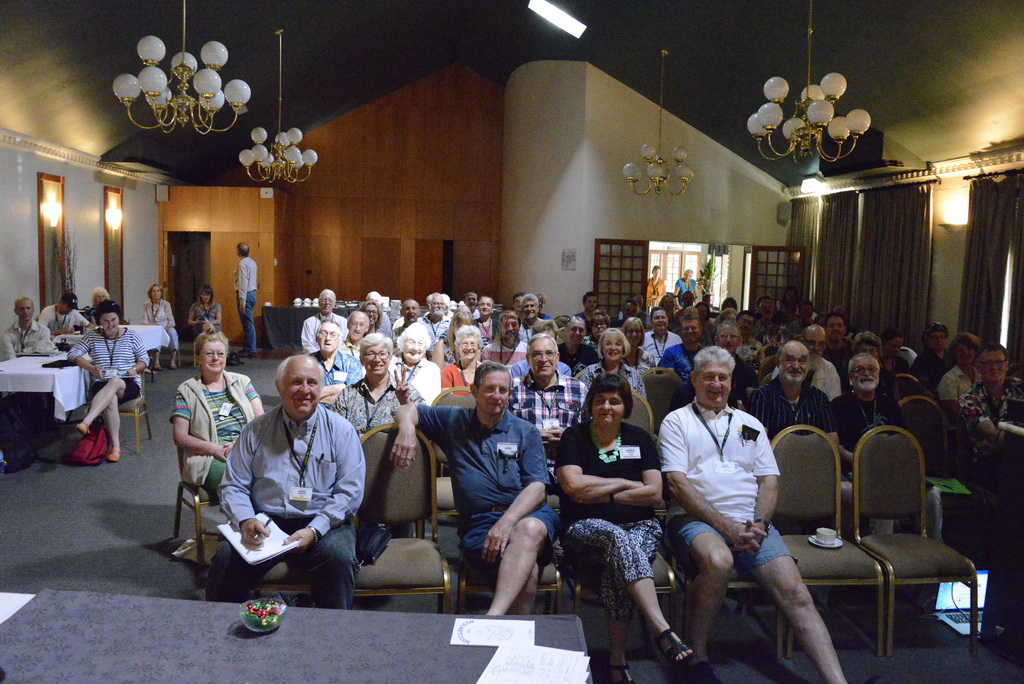
A speaker's view: my audience at the start of the world premiere of FOG that I hope touise in next year's What I Saw Last Winter presentations.

A speaker’s view: my audience at the start of the world premiere of FOG that I hope to use in next year’s ‘What I Saw Last Winter’ presentations.

Next, Ruth Higgins showed us the Crassulaceae seen in Oaxaca, Mexico, an excellent presentation of what I can look forward when I plan to visit the area in 2015.

After the morning tea break Terry Tierney showed off some of his Asclepiadaceae, of which we’ll see more when Ruth and John take me on a private visit later during my stay.

Karen Zimmerman followed with her second presentation: An Insider’s Tour of the Desert Collections, in the place where she works, The Huntington Botanic Gardens in San Marino in California. I visit this garden every time that I’m in LA and already look forward to my next visit in February 2015. Again, the corner where the Creeping Devils creep around was a highlight for me.

Paul Forster presented the Haworthia Wars Part II, explaining the rational behind the splitting of this popular genus into three. In the absence of a taxonomy police to inspect the labeling of our plants, I wonder how long it will take before all the labels in our collections have been changed.

After lunch, Dan Downie presented Lophophora – the Peyote Cactus, a courageous talk without the distraction of digital wizardry to read out some interesting facts about what must be the most written about cactus on the planet.I find that all the taxa in the genus look very similar, but understand that each differ in the alkaloids that they contain, so I guess that one needs to have a good chew on them when encountered in the field, to be able to decide on the species name.

Ernst van Jaarsveld closed the proceedings with a very interesting talk: Welwitschia mirabilis – a living fossil from the Namib Desert. Again, for me, the talk was a mixture of bringing back happy memories of seeing this icon of the Namib fog desert in the wild and learning (for me) new facts about this plant such as the fact that fossil evidence has been found in NW Brasil that suggests that this plant was around at the time that the continents split and Dinosaurs walked the planet. As I mentioned earlier, I am very happy to have the biggest and best book ever produced on a single taxon, well two if you count the namibian and angolan subspecies.

As you can tell from the previous few day’s reports, I had a great time and probably spent a little longer on them than I should, considering that in about 24 hours time I’m off for four weeks in Mexico. There is still last minute packing to do and a final attempt to track down some habitat locations along the route that are worth a stop to stretch our legs.

So, my attempt to be brief on the remaining pages is by no means a reflection of my lesser enjoyment of the events.

Starting at 8 a.m. we were again on a Magical Mystery Tour, with Bus #1 visiting the collections of Greg & Alice Daniels, Bob & Judi Proctor finishing with afternoon tea at Paul Forster’s. I must have been on Bus #2, as we made the trip in reverse order, meeting up with Bus #1 at Bob & Judi Proctor’s for a BBQ lunch.

Rather than waffle on again, I’ll make this an illustrated report:

Paul Forster’s

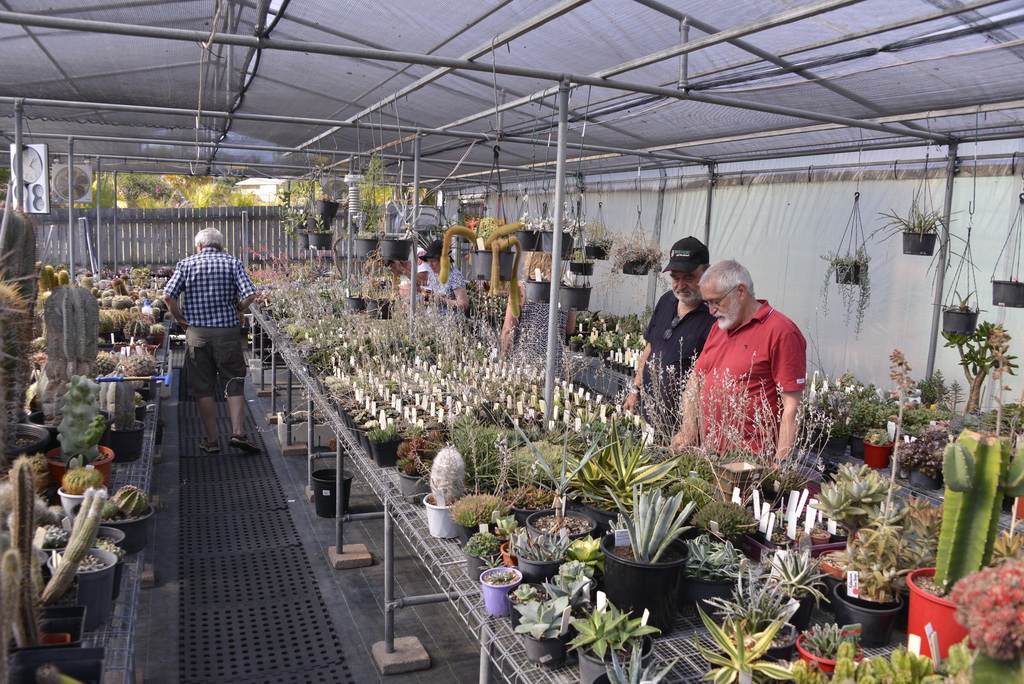
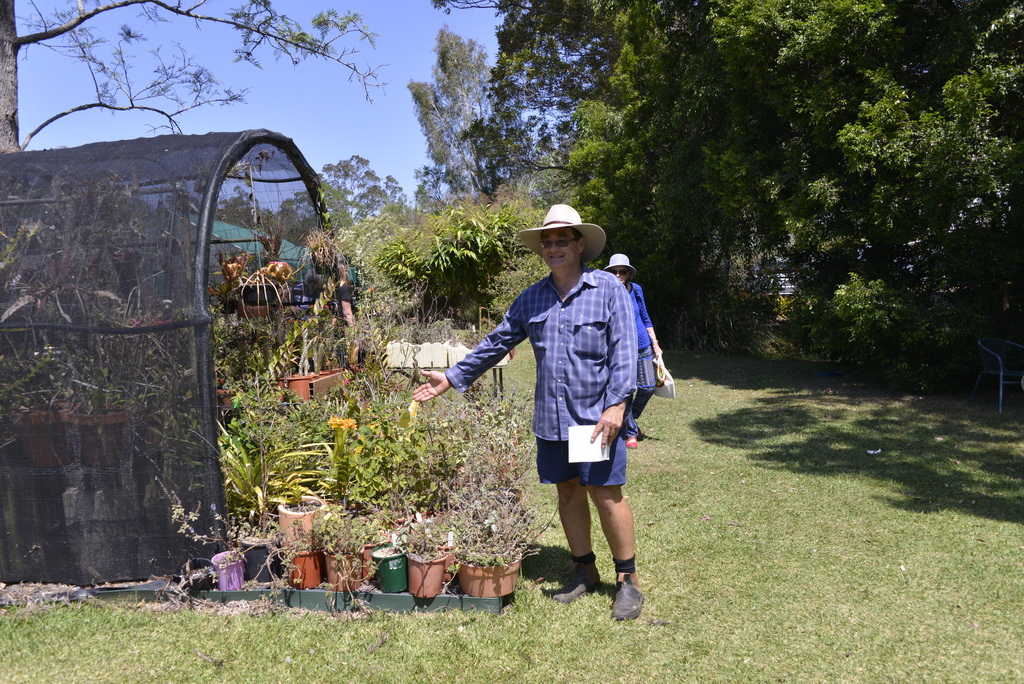
Paul Forster showing us his plants growing in green houses spread over his property.

Paul Forster showing us his plants growing in green houses spread over his property – here mainly Bromeliads in a poly-tunnel structure covered in shade cloth.

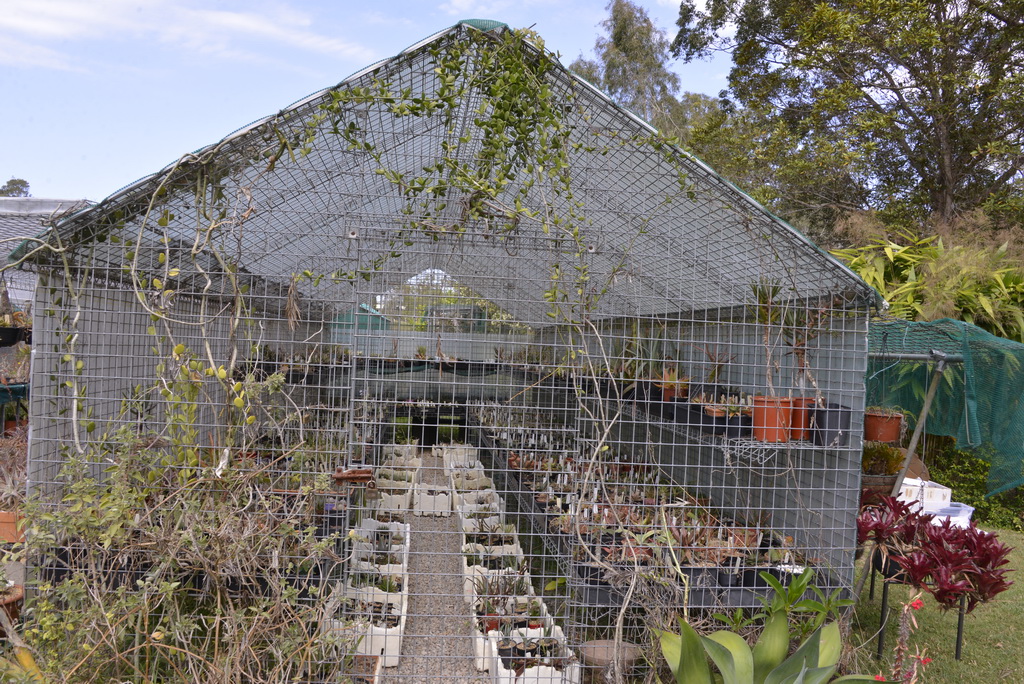
Protection: from what for who?

Protection: from what for who?

Horticulture often involves growing exotic plants in a controlled environment. Even endemic plants might need some help to look their best. Unlike in England, where we need structures to keep our plants warm and dry, while here the aim is to protect plants from too intense light and heat while ensuring good air circulation. The cage above would also assist in keeping young children and pets at bay or are kangaroos and wallabies a real threat?

Unfortunately, in waiting for the crowds to pass on to give my camera a free run at the plants, it turns out that I missed seeing Paul’s excellent Haworthia collection that every one was talking about once we were back on the coach.

Bob & Judi Proctor

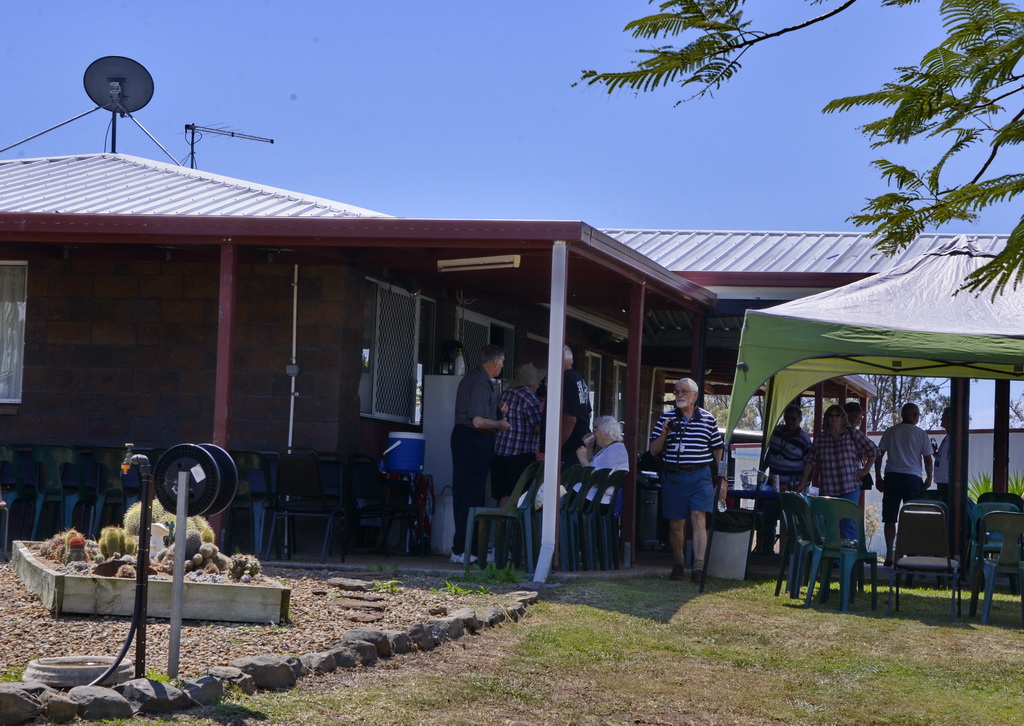
Bob & Judi Proctor's BBQ lunch

Bob & Judi Proctor’s BBQ lunch

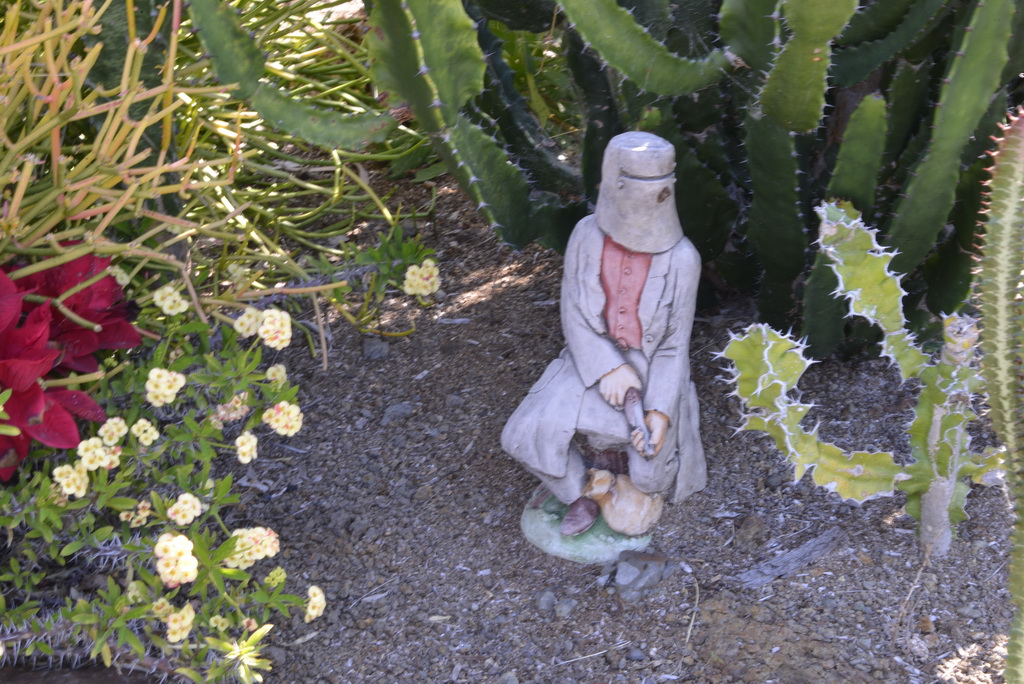
Australian folklore: Ned Kelly

Australian folklore: Ned Kelly

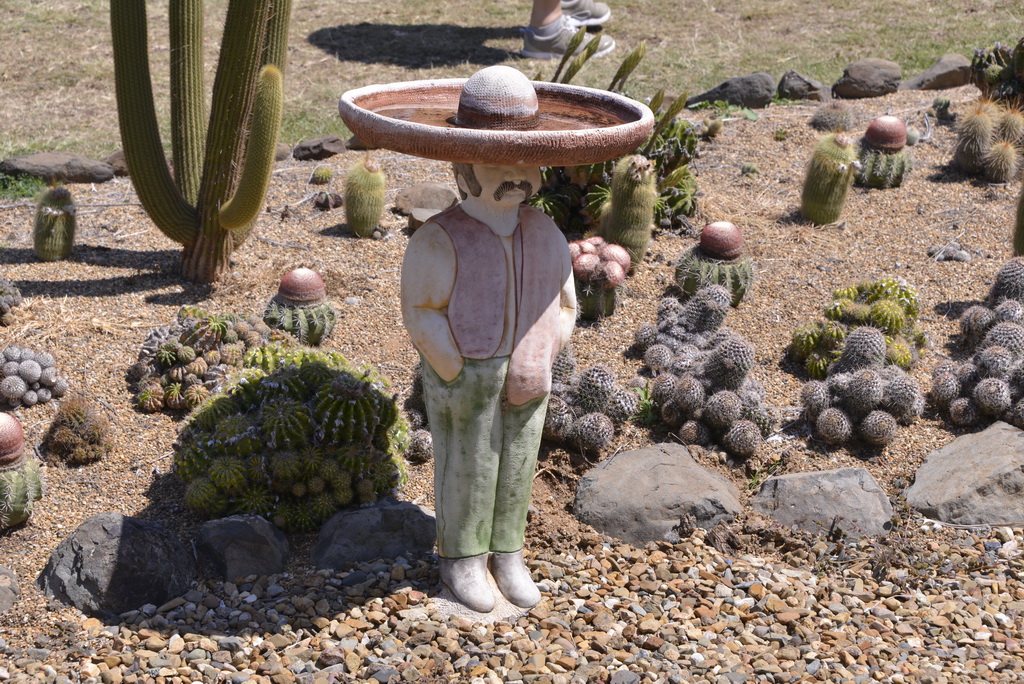
Getting me in a Mexican mood

Getting me in a Mexican mood

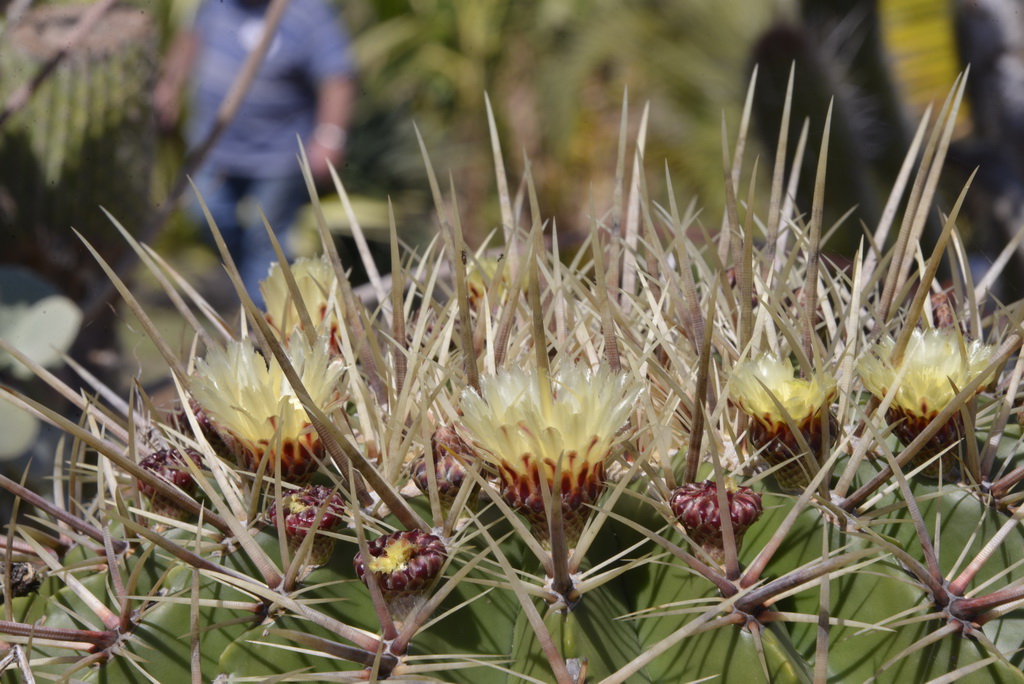
... and another reminder of where I'll be in 2 weeks time: Ferocactus histrix

… and another reminder of where I’ll be in 2 weeks time: Ferocactus histrix

Greg & Alice Daniels

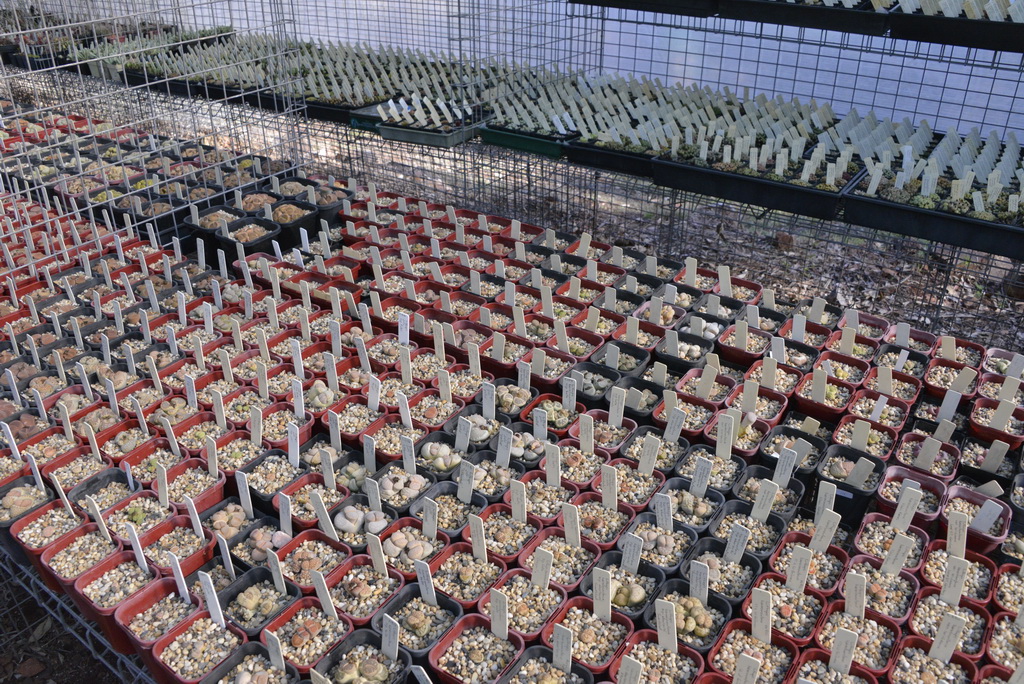
Detailed, well labelled collection, with plants for sale - here are the Lithops

Detailed, well labelled collection, with plants for sale – here are the Lithops

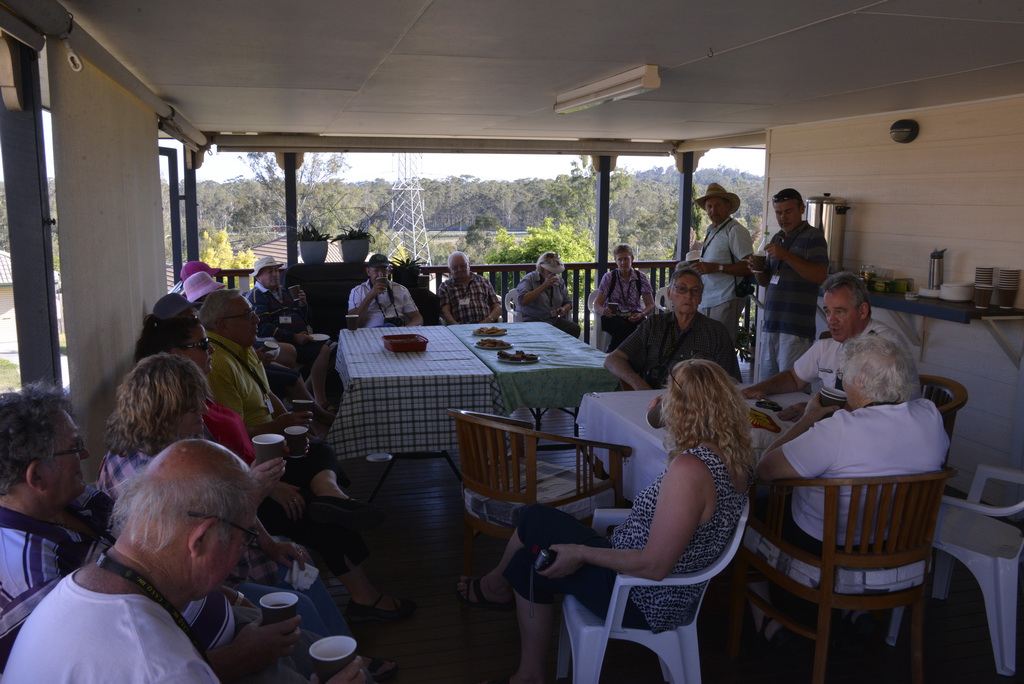
If an army marches on its stomach, so does a C&S convention, more great Ozzie hospitality

If an army marches on its stomach, so does a C&S convention, more great Ozzie hospitality!