Just another WordPress.com site

Archive for February, 2017

Thursday 9 February – Rio Verde to Cuidad Valle

I came across a copy of an email written today to Ian Woolnough in response to his email enquiring how I was.
I replied: ‘Could be better! Alain was first to go down with the dreaded lergy. We then took it in turns, me last. Today I was limited to hanging in my seat.

Also lap top is playing up so driving a bit in the dark.’

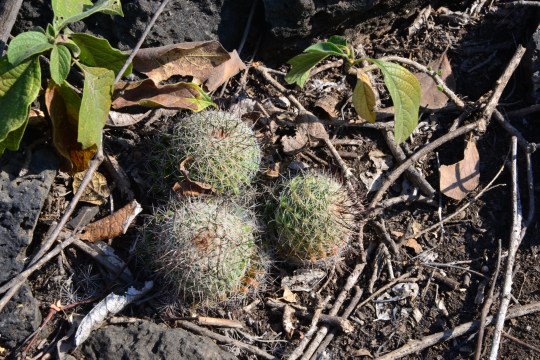
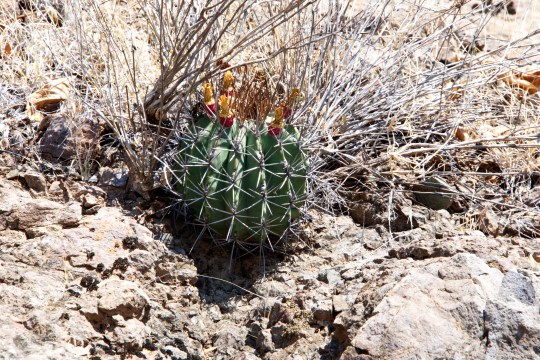
I still managed to take images at three stops. The first (S3564) was near Rio Verde to show Chris and Jonathan the Turbinicarpus lophophoroides site. Last year Alain and co. failed to find any plants, this year we found more than a dozen very dehydrated plants and holes where plants had disappeared. Illegal collection? Or natural death? A parasite has been observed by others affecting some of the 15 populations reported by other explorers between Rio Verde and Ciudad del Maiz.

Wednesday 8 February – Queratero to Rio Verde

Driving through San Luis Potosi I now felt on more familiar territory, having visited the State three times before.
We passed through the town of Vizaron and stopped at ‘our usual’ Strombocactus disciformis stop S3561.
I can’t remember much about S3562, except that I took two images: one of a Ferocactus echidne, that didn’t turn out too well and one of Mammillaria elongata that turned out worse – time for some more cough medicine and paracetamols.
Alain was excited to show us a Ferocactus at S3563, which he thought looked ‘different’ when he was here in 2016. They did look ‘different’, as noted by Britton & Rose and George Lindsay. who called it Ferocactus victoriensis and F. echidne subsp. victoriensis respectively. When I get home I must look up the differences and also sort out where fma. rafaelensis fits in.

Tuesday 7 February – Colima to Queretaro

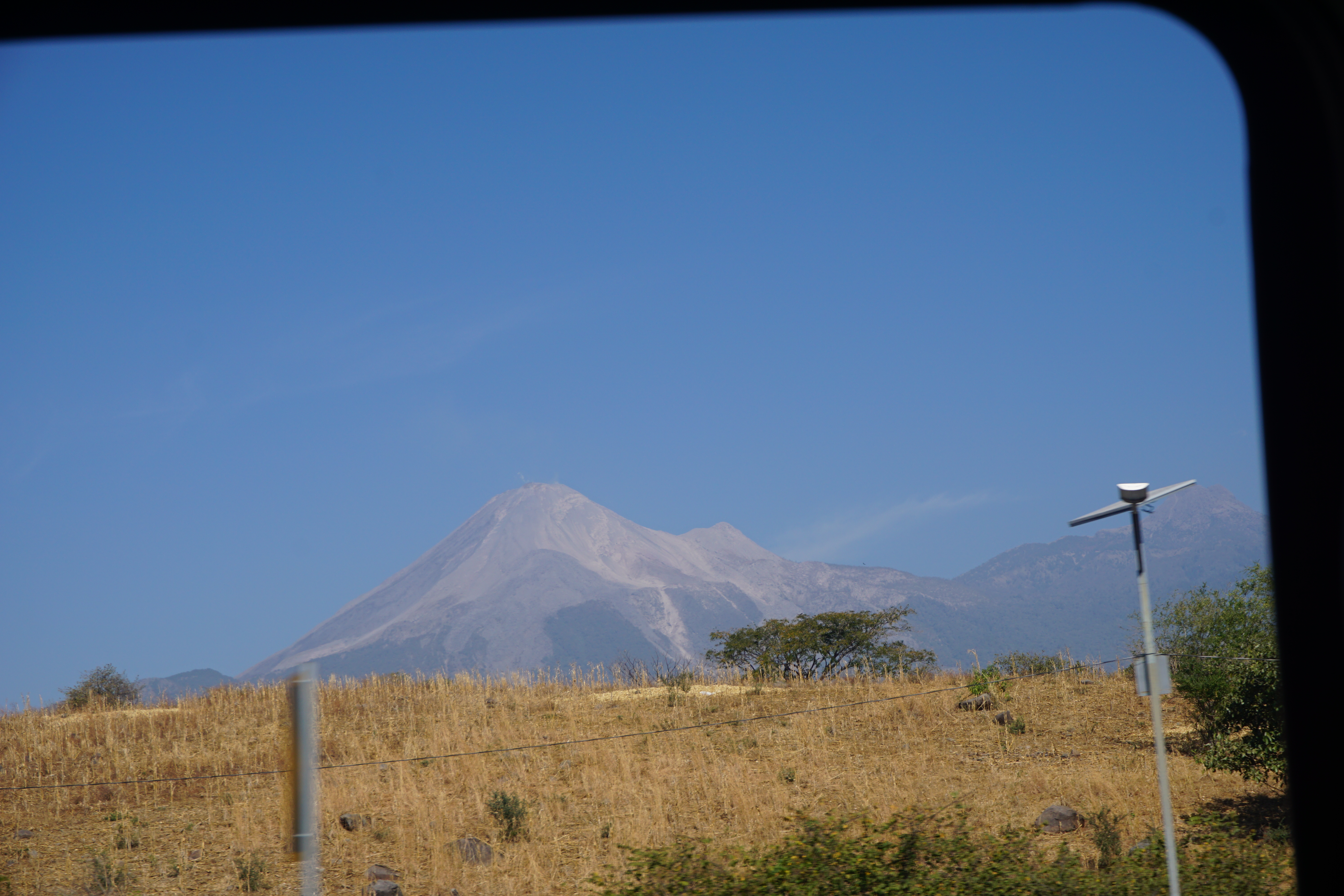
The cold mentioned yesterday hits fast and overnight I woke up with the feeling of raizorblades in my throat. During the day I developed a raised temperature, slowing me down, just taking three pictures  at the Best Western in Colima. Chris and Jonathan’s room had a small balcony from which you could observe the volcano that had been in the news due to its recent explosion. It was far away and difficult to see through the haze and volcanic output.
None of us had the energy to get closer, with our cold dulling our enthusiasm and with cactus habitats tempting us away.
What we saw was a good deal less spectacular than yesterday’s image from the internet.

Volcan Colima

Best image of Volcan Colima (photo Chris Hayes), but no smoke!

Monday 6 February – Coalcoman to Colima

The first part of today’s drive is again through the Sierra Madre Sur, the southern part of the Sierra Madre Occidental, before a flatter terrain crossed into the State of Colima.
This time, the attraction is to spend the night in view of the Volcan de Colima that was reported on the BBC News as erupting, briefly pushing the Trump inauguration into the background as I was preparing the details for this trip.
The spectacular image below is from the internet and is what we hoped to see.

Image of Volcan Colima erupting Copyright Cesar Cantu.

As an educational exercise, I can report that once we were out of the mountains, the state is covered in banana trees.
It seems that several of us have managed to catch an Airport / flight cold. I’m OK so far, but there is no escaping such bugs in the confines of a car.

Sunday 5 February – around Coalcoman

Today’s entry in the itinerary says ‘explore for F. reppenhagenii around Coalcoman’. Well, we explored by car and some on foot and saw lots of interesting plants, many in flower, but few cacti and certainly no Feros. As in previous reports, when there is a draught of cacti, the texts of these missives tends to concentrate on wonderful scenery, details of the hotels and the food and their respective costs, to which I say ‘Ditto’.

So I’ll test the width of the broadband and see if I can upload some pictures.

Lots of flowering trees - ID anyone?

Lots of flowering trees – ID anyone?

Correct substrate, with cacti, but no Feros

Correct substrate, with cacti, but no Feros

bulb in flower

Bulb in flower

Saturday 4 February – Nueva Italia to Coalcoman

There are just two Ferocacti reported from the State of Michoacan. We saw F. lindsayi yesterday and we were now heading with no more than names of towns to an area in the hope to find F. reppenhagenii, aka as F. alammosanus subsp. reppenhagenii.

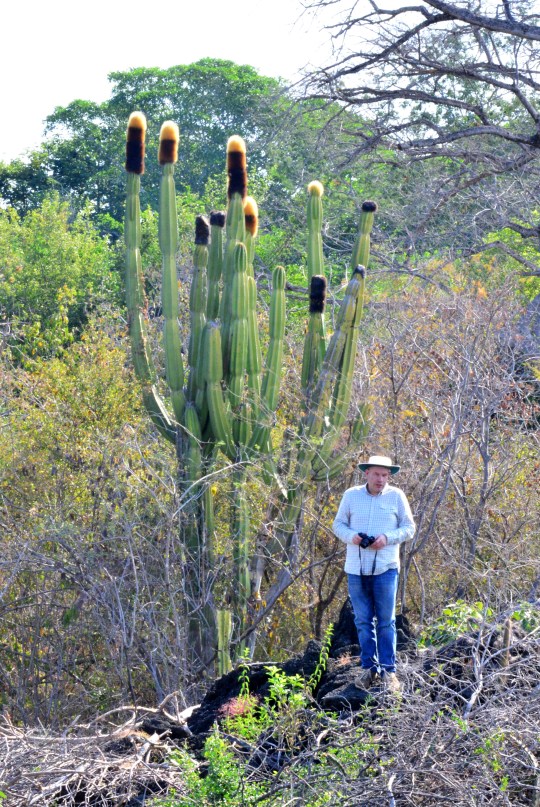
SatNav systems are wonderful if you know how to use them. Three SatNav systems in the same – every mobile phone these days has the capability – can be confusing. There are many roads that lead to Rome and the same can be said for Coalcoman. I had planned a route first to Dos Aguas, then to Coalcoman. It was meant to be a tortuous slow road taking some 8 hours to cover just 199 km. SatNav had us arriving at our final destination a few hours earlier than anticipated. We seemed to be heading north, rather than west, which was a worry. After a while I had ruled out the confusion caused by windy roads. At this time I was more interested in looking where we were going than spotting plants of interest and so was very glad that the others in the car had their eyes peeled as the unanimous shout of ‘Militaris’ went up. A quick U turn and we were able to park the car almost next to the plant (behind a fence) but also found a second plant across the road close to an area where construction work was in progress.

We persuaded Chris to impersonate Derek Bowdery and pose next to the plant for scale.

2017-02-04 10-36-42.JPG

To get to this plant we had to clamber over ground that had been partially cleared for more building work. Many cacti had been bulldozed over. Chris managed to find a small clump of three Mammillaria sp, with another single headed specimen not far away. There were stems showing a white woolly pseudocephalium: Pilosocereus sp – I believe P. chrysacanthus comes from here, also a possible Hylocereus sp. (S3549) Excellent stop!

2017-02-04 10-50-52.JPG

We eventually made it to Dos Aguas, all on good asphalt but instead of finding the poor quality track to Coalcoman, SatNav sent us back the 70 km we had just come to take us on a faster track to Coalcoman. We made another stop (S3550) at Puerto de las Cruces and found a big old tree with about a thousand epiphytes growing all over it. Bromeliads and Orchids and who knows what else.

We reached the town of Coalcoman and the hotel that I had spotted on the internet, the excellent Hotel Plaza San Jorge. We are staying two nights.


Friday 3 February – Patzcuaro to Nueva Italia de Ruiz

Our luck had changed for the better last night as we approached the city of Patzcuaro in the dark at about 8 p.m. after a long day. I announced that I had enough and so mobile phones and SatNavs started searching for nearby hotels. Just at that time the trusted sign of a Best Western Hotel appeared on our side of the road. This will do! And so we woke up this morning in the Best Western Posada de Don Vasco, Patzcuaro. Lovely authentic feel to a very comfortable hotel with excellent food. I managed to take some pictures of the building and the excellently maintained gardens (S3546). The Poinsettias still had their red bracts on display and were about 2 m (6 ft 7″) tall. In the UK they appear everywhere in mid-December as Christmas presents when visit friends and relations over the festive seasons and have usually been killed by overwatering by the time that we take our Christmas decorations down by the 12th day of Christmas.

Our primary target plant today was Ferocactus lindsayi.   Other than the island endemic taxa in Baja California, Ferocactus lindsayi must be the most illusive Ferocactus in cultivation.  Why? It grows quite some distance from the Mexican cactus hot spots and judging from my computer searches in England, there are not many cactus locations reported from Michoacan State. So not too many cactophiles spend their limited holiday time allowance in this comparatively remote area. As a result, few plants and seeds have made it to Europe where it is said to be ‘tricky’ in cultivation.
Today we set off to see F. lindsayi at three different locations, reported by Nigel Taylor and Paul Hoxey some 15 years ago. We also had locations reported by Wolter ten Hoeve, one of which had been visited a week or so ago by Ian & Cliff. The secondary target plant was Pachycereus (Backebergia) militaris.  This was a very popular plant in the 1970s with many top-cuts being imported into Europe for their impressive cephalia.  As we headed south on MEX37D, we tried to get off past Nueva Italia on the old (Libre) road but must have missed the turning. SatNav must have been set to ‘fastest / shortest route and pointed us onto the toll road. Yes, very fast and smooth, but without opportunities to stop once we started to see P. militaris either side of the road.
We had the GPS coordinates for Ian & Cliff’s stop and this took us off the MEX37D, first onto the Libre and then on a side road that ended in a dead end after we had passed and marked Ian’s spot. To get off the 37D, we hade to pay the toll for the previous stretchand I notived that the toll booth was at the hamlet of Las Cañas. Ralph Martin’s field number list shows ‘WTH 786 – Wolter ten Hoeve: On a steep rocky hill, South of Las Cañas on MICH-10, Michoacán, Mexico in 2009′. As we drove to Ian’s coordinates, I became sure that this was the same spot.
We parked up and pointed our cameras to the exposed hillside and with my 300mm lens could clearly see a dozen or so plants, high on quite a steep hill, with excellent tight barbed wire at the foot of the hill. We walked along the track to look for easier access and were fortunate to spot one plant, with fruits, roughly at eye-level. Here we queued up and in turn took 3-4 pictures from different angles. One of the fruits was examined and the seed was found to look ripe. We then went to explore on the other side of the fence. I made my way back to the car to the spot described in some detail by Ian and arrived, just as Chris came down to it from the other side.
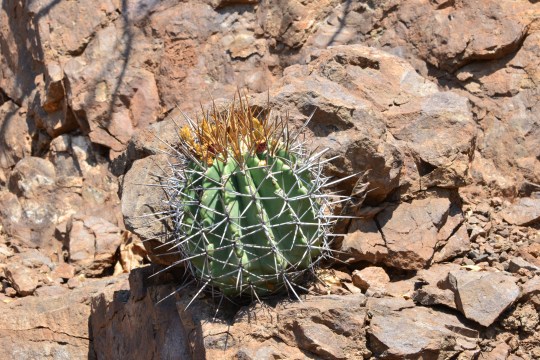
Ferocactus lindsayi S3547
Ferocactus lindsayi S3547

2017-02-03 12-54-24a

We successfully negotiated the barbed wire and found some more plants, some mature and in fruit but also a number of seedlings, I’d guess about five years of age. [PS: Probably much more like 15 years or more, having seen 12 year old plants since.]
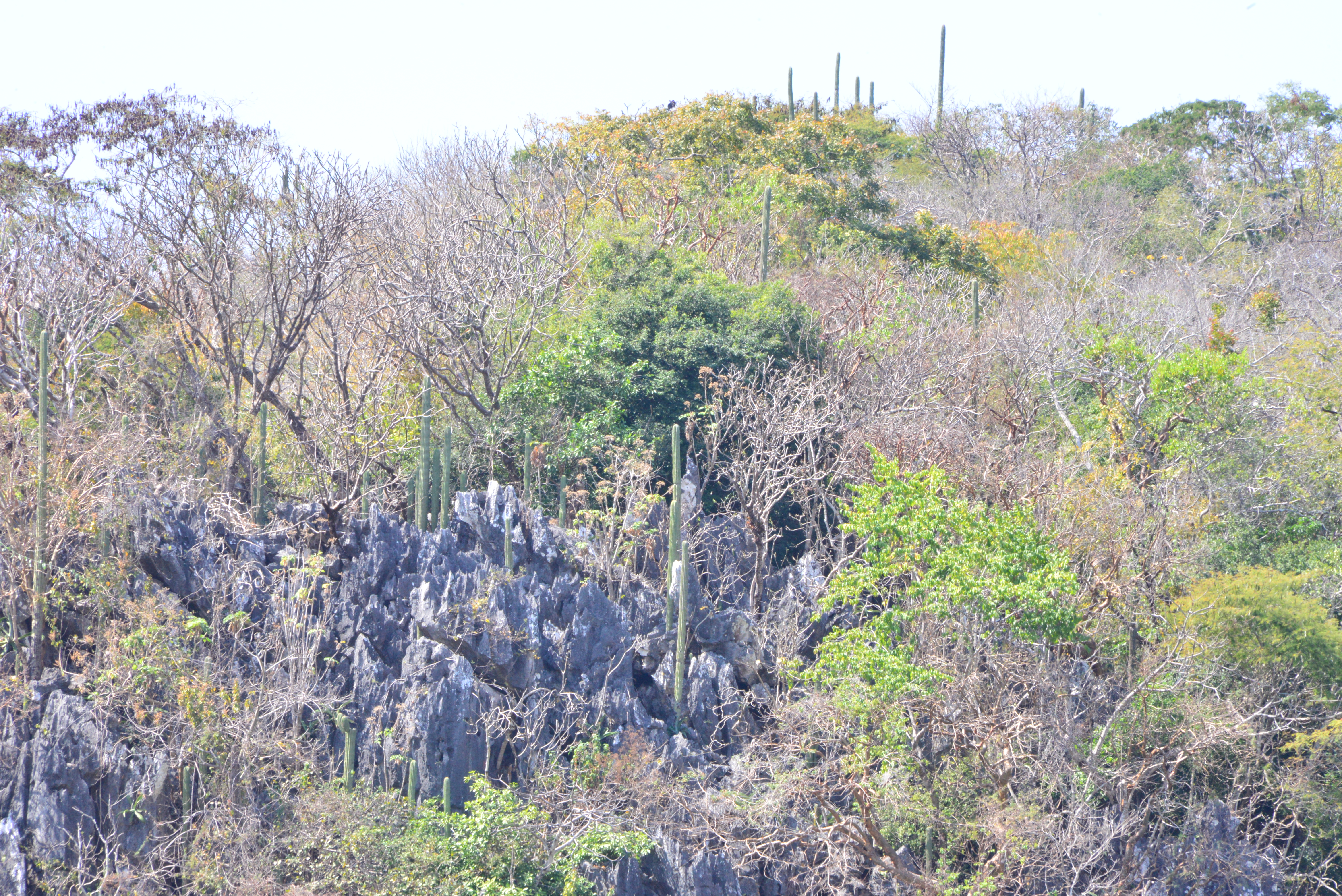
Wolter and Ian both reported Mammillaria growing here as well. Wolter reports M. beneckei, as does Ian, with an additional two ‘different taxa’. In addition to the cacti mentioned, the hills were quite densely covered in ceroids, of which I recognised Pachycereus pecten-arboriginum that I saw in Baja California Sur and in Sinaloa on previous trips. But there were other ceroid taxa present that will need a bit more detective work for their name later.  
We drove on, towards the Nigel Taylor site, now off the 37D with a difficult entrance when huge trucks come charging up from behind. There are now a small number of polytunnels where, I assume, the plants used to grow.  We carried on in the hope to get back on to the Libre, but gave up about 5 km before reaching the Pacific Ocean, made a U-turn and headed back to Nueva Italia to find the Hotel where Ian and Cliff had stayed.
Today we covered another 422 km, exactly the same amount as yesterday and in the heat of around 32 C, very tiring.

Thursday 2 February – Mexico City to Patzcuaro

Today would be a ‘driving day’ after a good ‘full English’ breakfast at the Airport hotel and a shuttle bus to take us to the Europcar yard and office to pick up our rental car.
We needed to cover 465 km (289 miles) mostly on toll road motorways, once we had fought our way out of the Mexico City traffic, but with daylight until 18:30 I thought that we could afford a small detour.
I had not allowed for two unforeseen factors:
1) we were given a brand new Jeep Patriot with only 32 km on the clock. In fact it was so new that it did not have any number plates. Instead it had bits of paper with the information, but these temporary plates would not be valid until 11:00 a.m. so our departure was delayed by two hours.
2) a brandnew car with temporary plates, claiming to come from Chihuahua is bound to attract some attention. We were hardly half an hour’s drive from the airport, just getting settled in to our travelling positions, Alain behind the steering wheel, me next to him as navigator and Chris and Jonathan in the back seat or there was a blockage in the road – a police check point.
We were pulled over and ‘robbed’  by some six policemen! The claim was that Alain had not indicated to move to the left carriage way and so we had to pay a fine. Alain looked baffled, sure that he had indicated but realistic enough to know that it was their words against hours and they had all the odds stacked in their favour.  So what is the fine for such a minor traffic offence? – there had been no near misses or damaged vehicles or personal injuries. 1,000 Euros!!! The amount was not given in Mexican Pesos, US Dollars or British pounds but in a nice round number of Euros! There was a strong smell of rats in the air. We have no Euros, just pesos. So their mobile phone calculators came out and an amount of  22,000 pesos was demanded in cash. Can we go the the police station and pay by credit card? No, cash here and now or the amount would increase! We were asked to move the car forward so that it was in line with a mobile office where the money had to be paid. This shielded the scene of the crime from any onlookers. Again, we realised the futility of protesting so coughed up the notes, which now leaves us short for the rest of the trip, but ‘plastic’ will cover that. We went off as fast as we could. My muscles tense each time that we see a police car!
And so we lost quite a few hours. Shall we carry on with our plan, to visit the remnants of a pre-columbian temple? Yes, as with other terrorists you don’t let the bastards win by ruining the rest of your holiday!

On the internet, the Los Atlantes de Tula in the State of Hidalgo, was said to be much less crowded than the larger monument in the Yucatan. No wonder, the direction signs were so poor that it was almost impossible to find. SatNavs have their uses but I’m sure that there is a better route to cover the distance from the MEX57 highway to the site.

2017-02-02 15-09-46 (2).JPG

This is where I took the first pictures of the trip, including those of the cacti that were planted out on the way to the actual monuments. As usual, our time budget does not allow me to include pictures at this time, I’ll add some once I’m back in England.

As a result we did not get as far as Nueva Italia de Ruiz, but found very comfortable lodgings at the Best Western in Patzcuaro. in 76 km we’ll have caught up and if we have to, our itinerary is elastic enough to stay another night in Nueva Italia and explore for some more details on Ferocactus lindsayi. We already have GPS coordinates collected by Ian & Cliff who started their Mexican adventures a week before us, so we need not use time to look at places where the plants no longer exist.

Wednesday 1 February 2017 – Amesbury, England to Mexico City

We’ve made it! Not that there was ever any doubt, but it seems that this time I was packed and ready to go about a week (or was it a month?) before the actual departure date. As some of you may know, once I get home I collect all these daily missives into a book in The Cactus Trip Diaries series, select the best images to illustrate it and then get a printed copy for my souvenir shelf. You can also buy them from the Blurb Store but with a large 30 x 30 cm (12×12″) page size and loads of images all printed on premium paper they work out quite expensive as a purchase.

This time I was SO ready that I had started this trip’s book evn before we left, to use as a planning tool. A picture from Google Earth showing today’s route and possible opportunities for a stop. I will use those images in my presentations when I get back.

As you can tell by me waffling on, nothing very exciting happened to day. Chris Hayes, from BCSS Somerset Branch in Taunton arrived in Salisbury by train, we enjoyed dinner at The Harvester and I then had my customary last minute panic and double checking if I had packed everything I thought I had.

By 08:00 a.m. we were on the road. What should take one hour on a normal clear day took 1:15 in light rush hour traffic so that we arrived at Terminal 5 earlier than anticipated. Jonathan had already arrived and was waiting at the Nero Coffee shop, where I started collecting some of the less useful trip statistics: Chris and Jonathan had each brought a toilet roll for unforeseen emergencies, with Jonathan packing a second one, just in case.  But where was Alain? Thanks to mobile phone technology we soon tracked him down – he had already checked in his luggage and had cleared immigration and security. We joined him and discovered that he too had packed a toilet roll. Do we think that there are no toilet rolls available in Mexico? I usually leave the UK paperless and obtain a small emergency supply in the first hotel where we stay.

The flight left about ten minutes late but we still arrived half an hour early at Mexico City Airport. They are building a new airport, with posters depicting the huge new building on display. Grabbed a taxi to the Ramadan Aeropuerto Hotel and an hour later were sitting in the restaurant, enjoying our first margarita, waiting for our rib-eye steak. By now we were running on vapours, struggling to answer some of the easiest questions, such as what is my name? I can assure you that this was due to tiredness rather than excess alcohol. As soon as my head hit the pillow I was asleep, thus completing the first day of the 2017 Mexico Cactus Trip.